History
The line originated with the Odawara Express Railway (Odakyū's predecessor). A railway licence for the corridor between Ōno-mura and Fujisawa-machi in Kōza District was granted on 4 October 1926. Construction of the inland section — then designated the "Fujisawa Line" — began on 1 April 1928 from the Ōno signal box (the site of present-day Sagami-Ōno Station) toward Fujisawa, and construction of the "Katase Line" between Fujisawa and Katase-Enoshima began on 13 February 1929. The combined route opened on 1 April 1929 as the Odawara Express Railway's Enoshima Line, running from the Ōno signal box to Katase-Enoshima with the entire line double-tracked from the outset and 13 stations in service. According to Japanese sources, the original Katase-Enoshima station building — modelled on the legendary undersea Dragon Palace (Ryūgū-jō) — was constructed at a then-substantial cost of ¥18,000.
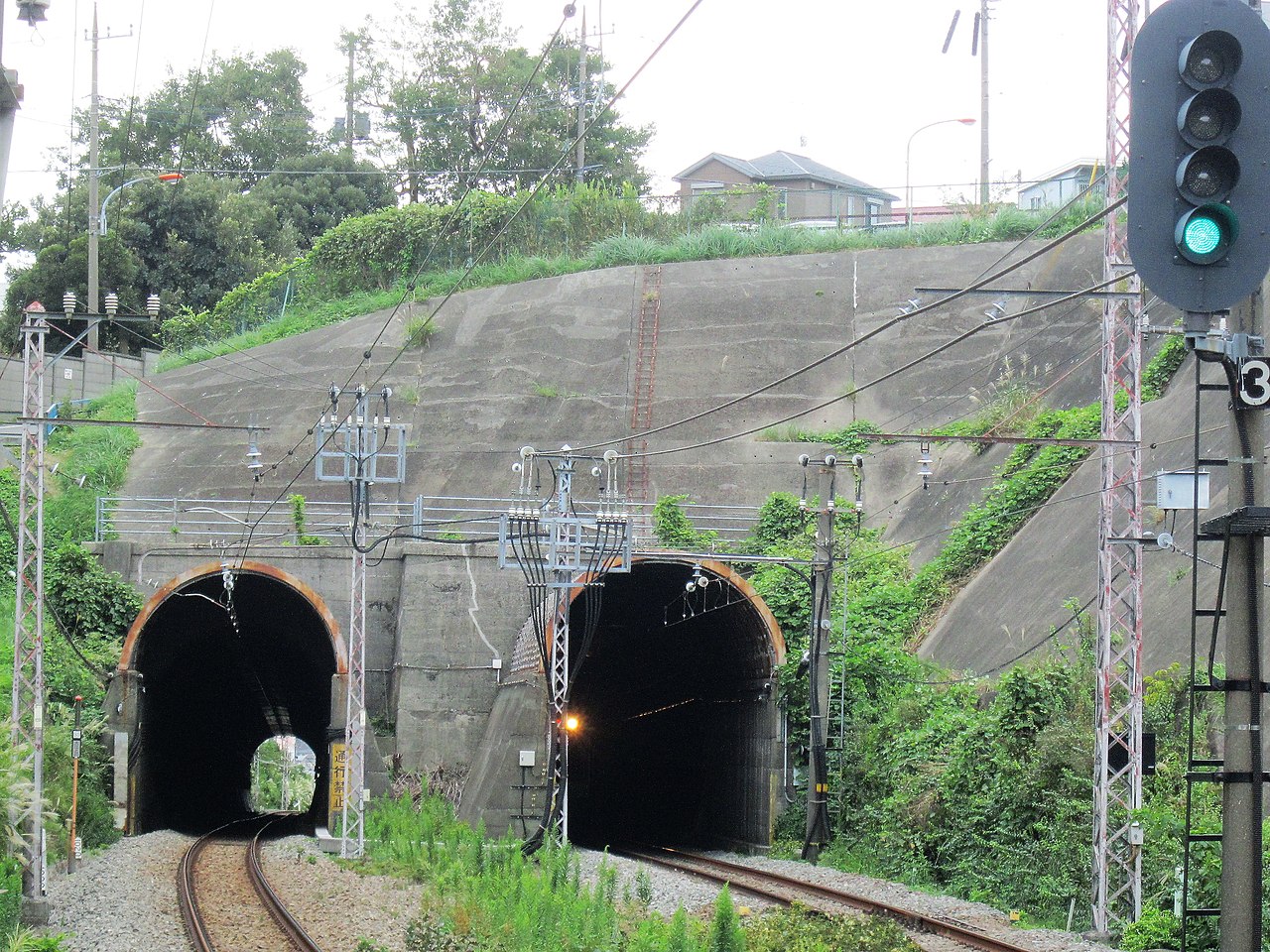
The alignment reflected several early constraints. The branch from the Odawara Line was originally intended to diverge near Zama (today's Sōbudai-mae), but because the land there was largely farmland the junction was instead placed at Sagami-Ōno, where the surroundings were mostly woodland. Approaching Fujisawa, the line entered the built-up area from the west to ease land acquisition; to avoid running directly parallel to the existing Enoshima Electric Railway (now the Enoshima Electric Railway / Enoden) — which the Railway Ministry had directed it not to duplicate — the route was laid out to reverse direction at Fujisawa, producing the switchback that still characterises operations there.
The line's corporate ownership changed twice in the 1940s. On 1 May 1942 the operator was merged into Tokyo Kyūkō Dentetsu (Tokyu) as part of the wartime "Greater Tokyu" combine; the English-language account describes this as a forced government-directed merger. During the Pacific War the Fujisawa–Katase-Enoshima section was designated a non-urgent line and reduced to single track on 16 November 1943, with the recovered steel reused for the war effort. When Tokyu was broken up after the war, the Enoshima Line was transferred to the newly founded Odakyū Electric Railway on 1 June 1948, and the double track was restored in two stages — Fujisawa to Hon-Kugenuma on 18 September 1948 and Hon-Kugenuma to Katase-Enoshima on 10 April 1949. Freight services operated on the line between 1944 and 1966: freight handling began at Shin-Chōgo on 27 November 1944 and was abolished on 6 November 1966.
The network filled in over the following decades. Sakuragaoka Station opened on 25 November 1952; Zengyō opened on 1 October 1960; and Shōnandai — later a major interchange — opened on 7 November 1966, the day after freight ceased. Continuous welded ("long") rail was first laid on the line in the Sakuragaoka–Kōza-Shibuya section in 1984, and its installation across the entire line was completed by 1997. In 1997 Sagami-Ōno Station was also shifted about 0.2 km toward the Shinjuku side as part of an operating-distance revision, and in 1998 Mutsuai Station was renamed Mutsuai-Nichidaimae.
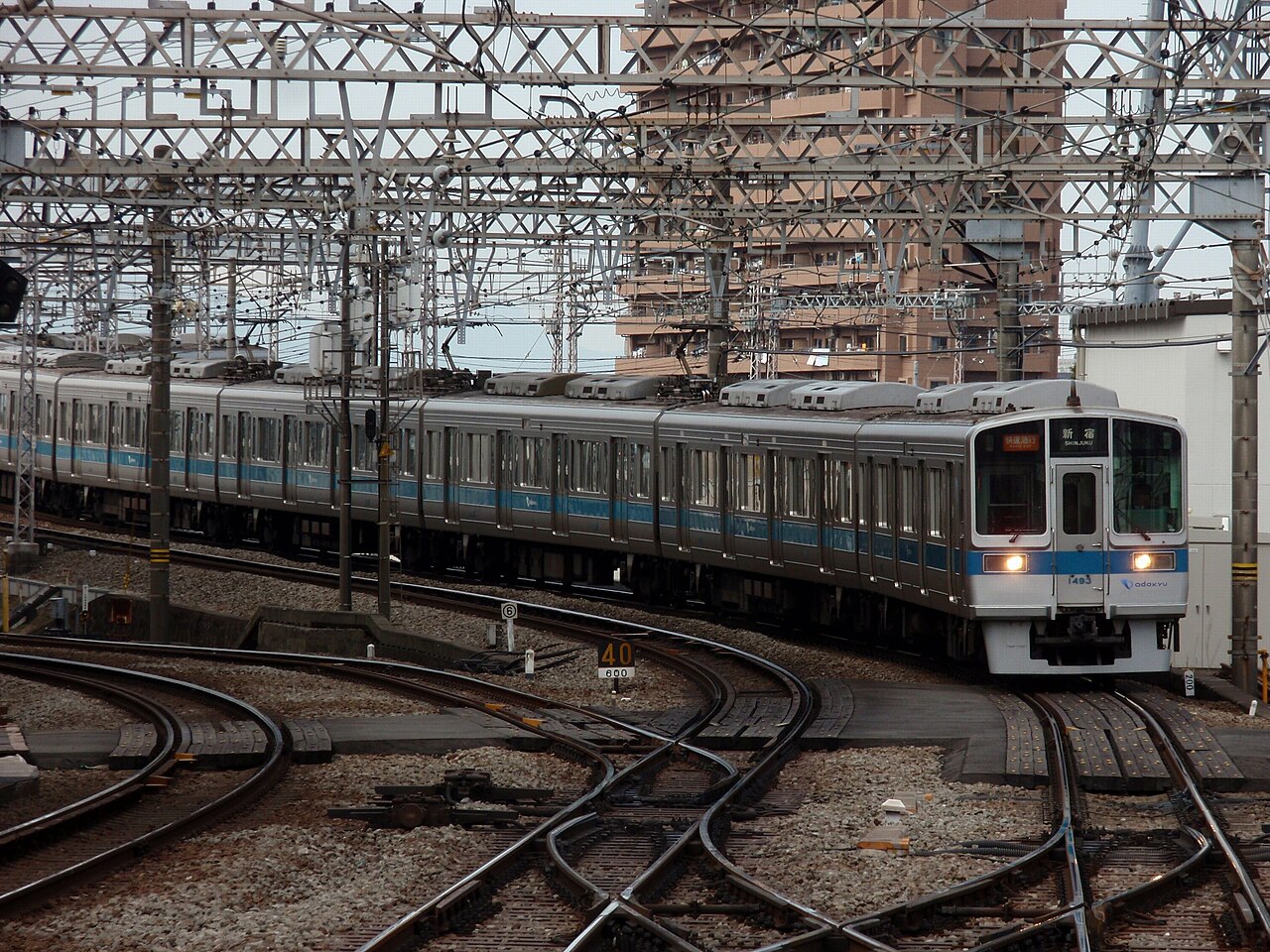
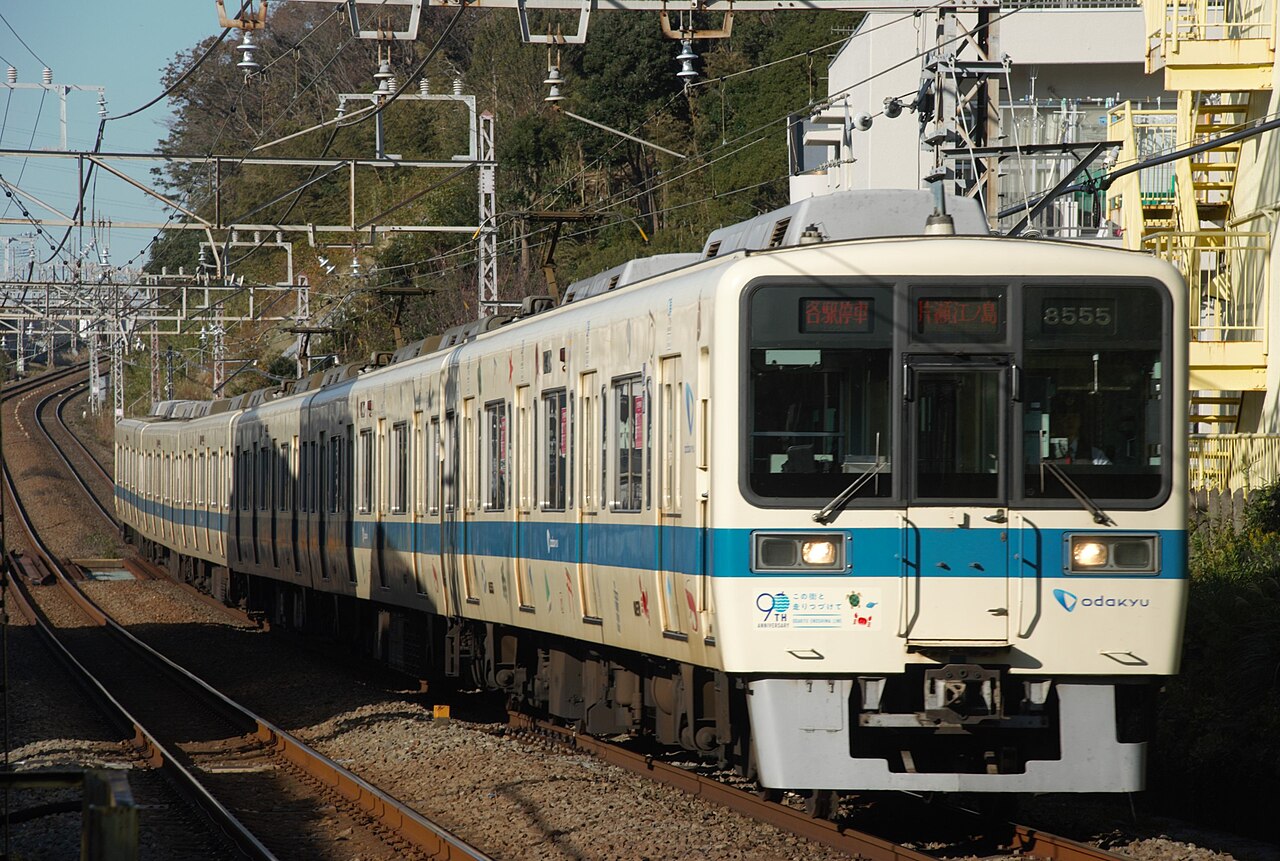
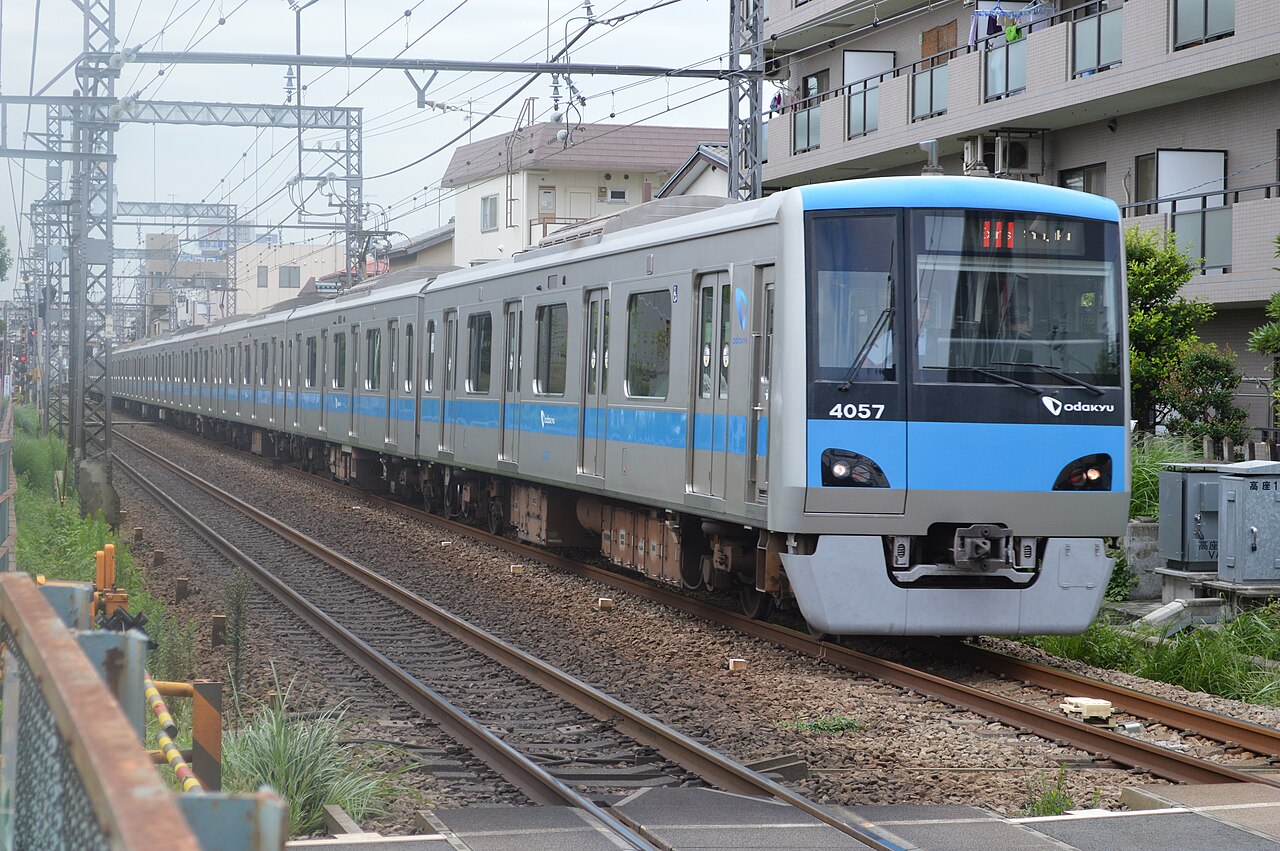
Today the Enoshima Line has 17 stations, is double-tracked throughout, is electrified at 1,500 V DC overhead, uses 1,067 mm gauge, and has a maximum operating speed of 110 km/h. Premium and express services — the Romancecar limited expresses, rapid express, and express trains — run through from the Odawara Line at Shinjuku, while most local trains turn back within the line at Sagami-Ōno or Fujisawa. Limited expresses carry the names Enoshima and Homeway. In a timetable revision on 12 March 2022, most through Odawara-line services to and from Katase-Enoshima were discontinued — apart from one early-morning Shinjuku-bound express and the Romancecar limited expresses — so that rapid express and express trains now generally begin and end at Fujisawa, where local services are also split at the switchback. The line interchanges with numerous radial routes from the Tokyo and Yokohama directions, including the Tōkyū Den-en-toshi Line, the Sagami Railway (Sōtetsu) Main Line and Izumino Line, the Yokohama Municipal Subway Blue Line, and the JR Tōkaidō Line, and it connects at Fujisawa with the Odakyū-group Enoden.
Timeline
- 19264 October: a railway licence is granted for the Ōno-mura – Fujisawa-machi corridor in Kōza District.
- 19281 April: the Odawara Express Railway begins construction of the inland "Fujisawa Line" from the Ōno signal box (now Sagami-Ōno) toward Fujisawa.
- 192913 February: construction of the "Katase Line" (Fujisawa – Katase-Enoshima) begins. 1 April: the line opens as the Odawara Express Railway's Enoshima Line (Ōno signal box – Katase-Enoshima), double-tracked throughout from the outset, with 13 stations.
- 19421 May: the operator is merged into Tokyo Kyūkō Dentetsu (Tokyu) as part of the wartime "Greater Tokyu" combine; the EN account describes a forced government-directed merger.
- 194316 November: the Fujisawa – Katase-Enoshima section is designated a non-urgent line and reduced to single track during the Pacific War.
- 1944Freight handling begins at Shin-Chōgo on 27 November; freight services would run on the line until 1966.
- 19481 June: Tokyu is broken up and the Enoshima Line transfers to the newly founded Odakyū Electric Railway. 18 September: the Fujisawa – Hon-Kugenuma section is restored to double track.
- 194910 April: the Hon-Kugenuma – Katase-Enoshima section is restored to double track, completing re-duplication of the line.
- 195225 November: Sakuragaoka Station opens.
- 19601 October: Zengyō Station opens.
- 19666 November: freight handling on the line is abolished. 7 November: Shōnandai Station opens.
- 1984Continuous welded ("long") rail is laid on the line for the first time, in the Sakuragaoka – Kōza-Shibuya section.
- 1997Line-wide long-rail installation is completed; Sagami-Ōno Station is also shifted about 0.2 km toward the Shinjuku side under an operating-distance revision.
- 199822 August: Mutsuai Station is renamed Mutsuai-Nichidaimae.
- 202212 March: a timetable revision discontinues most through Odawara-line services to/from Katase-Enoshima (except one early-morning Shinjuku express and the Romancecar); rapid express and express trains now generally start/end at Fujisawa, where locals are split at the switchback.
Sources
Facts last verified 3 June 2026.
Gallery 3 photos
Every photo for this page — tap any image to view it full-size. All from Wikimedia Commons (credit under each).