History
The whole Shinjuku-Odawara line was opened in a single step on 1 April 1927 by the Odawara Express Railway Co. The Japanese account records that the line opened with 38 stations and a Shinjuku-Odawara journey time of two hours twenty minutes, and that a signalling-system failure threw the timetable into serious disorder on the very first day; the English account likewise notes that, because the duplication (double-tracking) works were not finished until October that year, there were initial timetable and signalling problems. On 29 April 1927, Prince Chichibu and Prince Takamatsu travelled between Shinjuku and Odawara - the first time the imperial family rode the Odakyu line, the connection the English article gives as the reason the whole line was opened at once. The initially single-track section from Inadanobori (today Mukogaoka-Yuen) to Odawara was double-tracked on 15 October 1927, completing double-tracking of the entire line, and express operation began. Although primarily a passenger line, the carriage of gravel began in 1930.
In wartime the company lost its independence: on 1 May 1942 it was forcibly merged into Tokyo Kyuko Dentetsu (the Tokyu Corporation), becoming part of the so-called "Greater Tokyu," and it was at this point that the name "Odawara Line" came into being. With the break-up of the Greater Tokyu, Odakyu Electric Railway was newly established on 1 June 1948 and the Odawara Line was transferred to it - the operator that still runs the line today.
The post-war decades turned the line into a hub for through-running. On 1 August 1950, through service began over the Hakone Tozan Railway line as far as Hakone-Yumoto, made possible once dual-gauge track was commissioned (the Hakone Tozan Line is 1,435 mm gauge, the Odawara Line 1,067 mm). On 1 October 1955 a connecting line between Shin-Matsuda and Matsuda Station was completed and through operation began onto the Gotemba Line of the then Japanese National Railways (today the Central Japan Railway Company), opening the way for limited-express service onto that line. To serve as a bypass into central Tokyo, mutual through operation with the Eidan Subway (now Tokyo Metro) Chiyoda Line began on 31 March 1978 via Yoyogi-Uehara, initially only during weekday peak periods; the English article adds that some trains continue beyond the Chiyoda Line onto the East Japan Railway Company Joban Line.
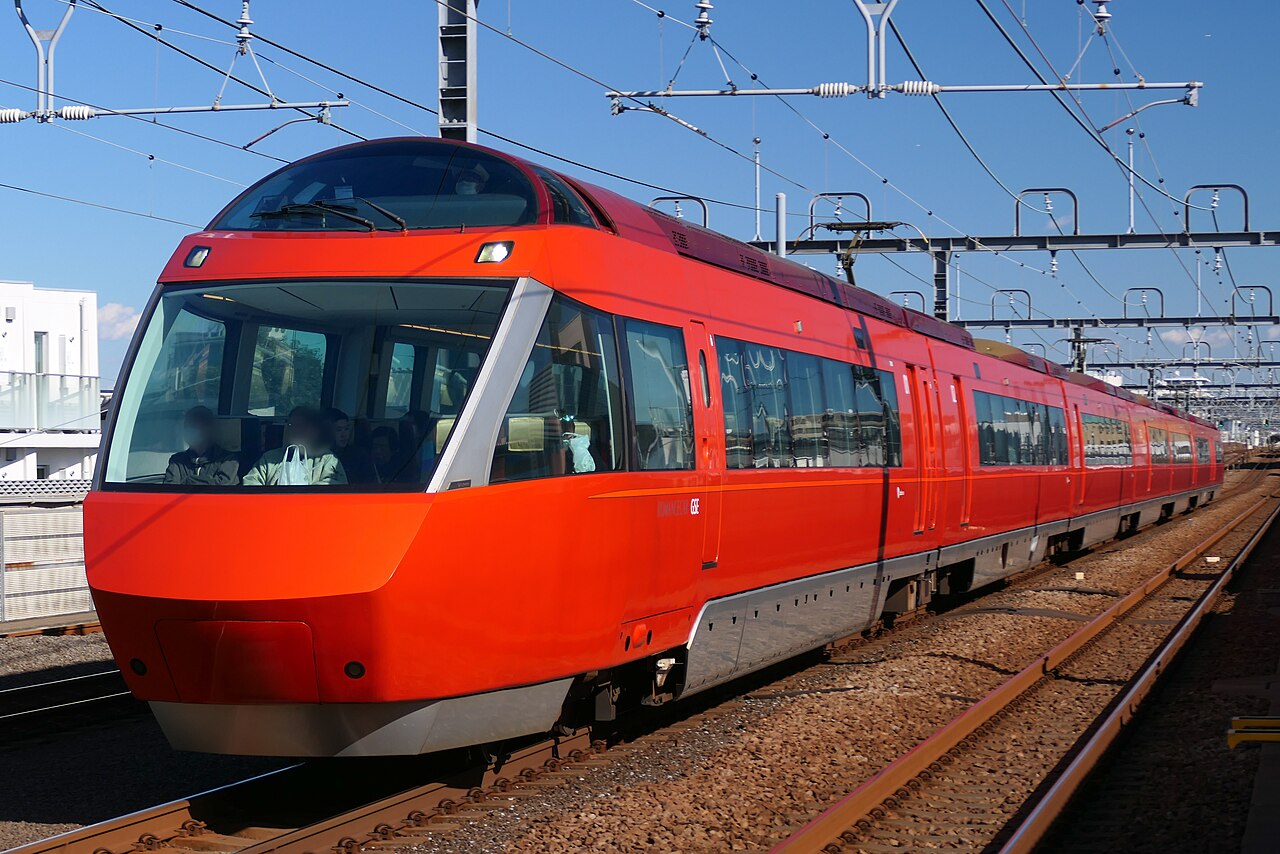
Today Odakyu Electric Railway operates a broad range of services on the line. At the top is the Limited Express, collectively branded "Romancecar," which carries a seat charge and runs to destinations including Odawara, Katase-Enoshima on the Enoshima Line, Hakone-Yumoto on the Hakone Tozan Railway, and Gotemba on the Central Japan Railway Company Gotemba Line. Below it run, with no extra charge, the Rapid Express, Express, Commuter Express, Semi Express, Commuter Semi Express, and all-stations Local services; many Local, Semi Express and Commuter Semi Express trains continue onto the Tokyo Metro Chiyoda Line, and some extend onto the JR Joban Line. The line thus has two faces - a commuter and school-commuting artery into central Tokyo, and a tourist route toward Hakone, Shonan and Enoshima - and over the Shinjuku-to-Odawara and Shinjuku-to-Fujisawa corridors it competes with the JR East Shonan-Shinjuku Line, against which Odakyu keeps fares lower and runs Rapid Express trains to improve journey times.
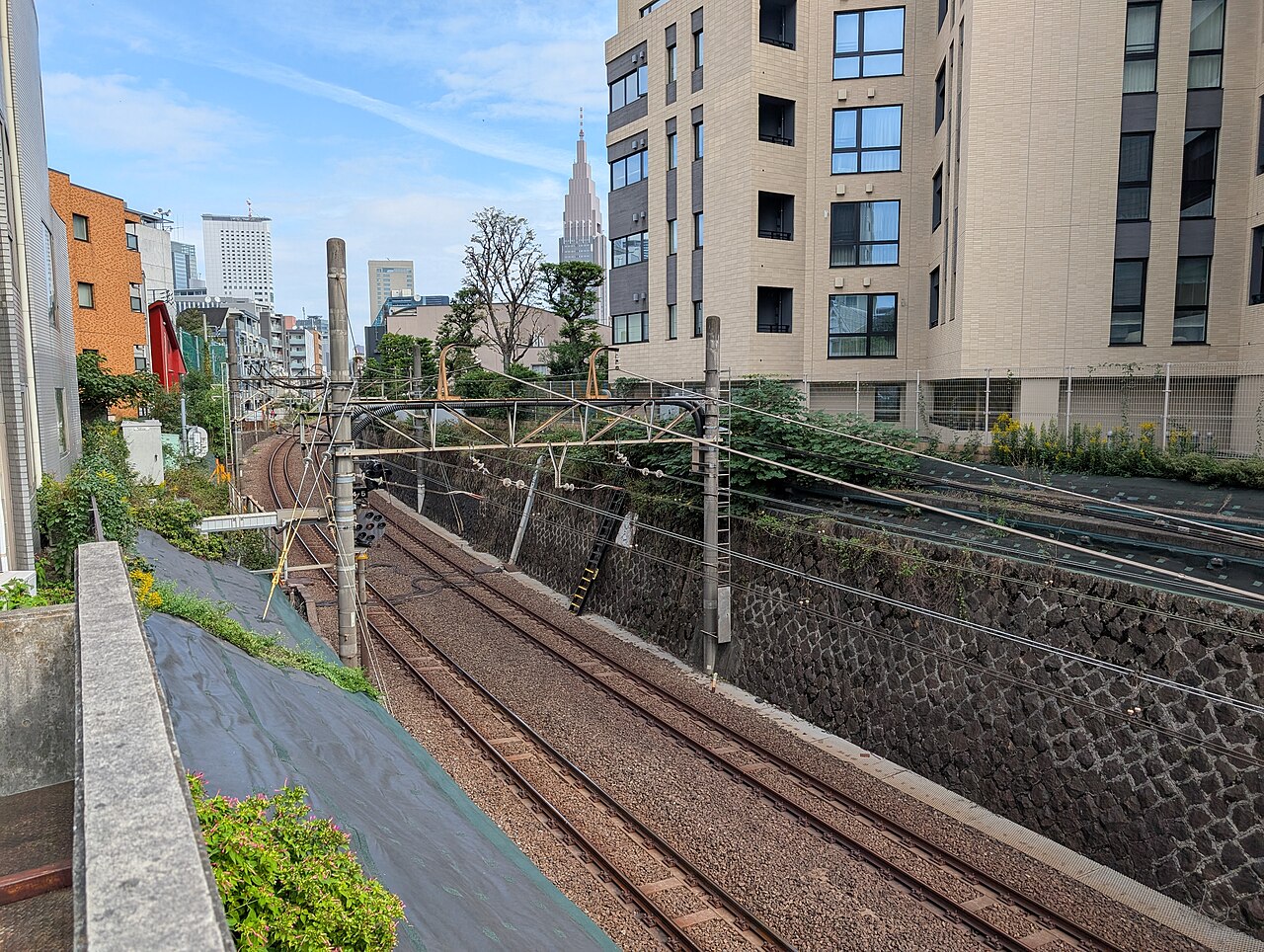
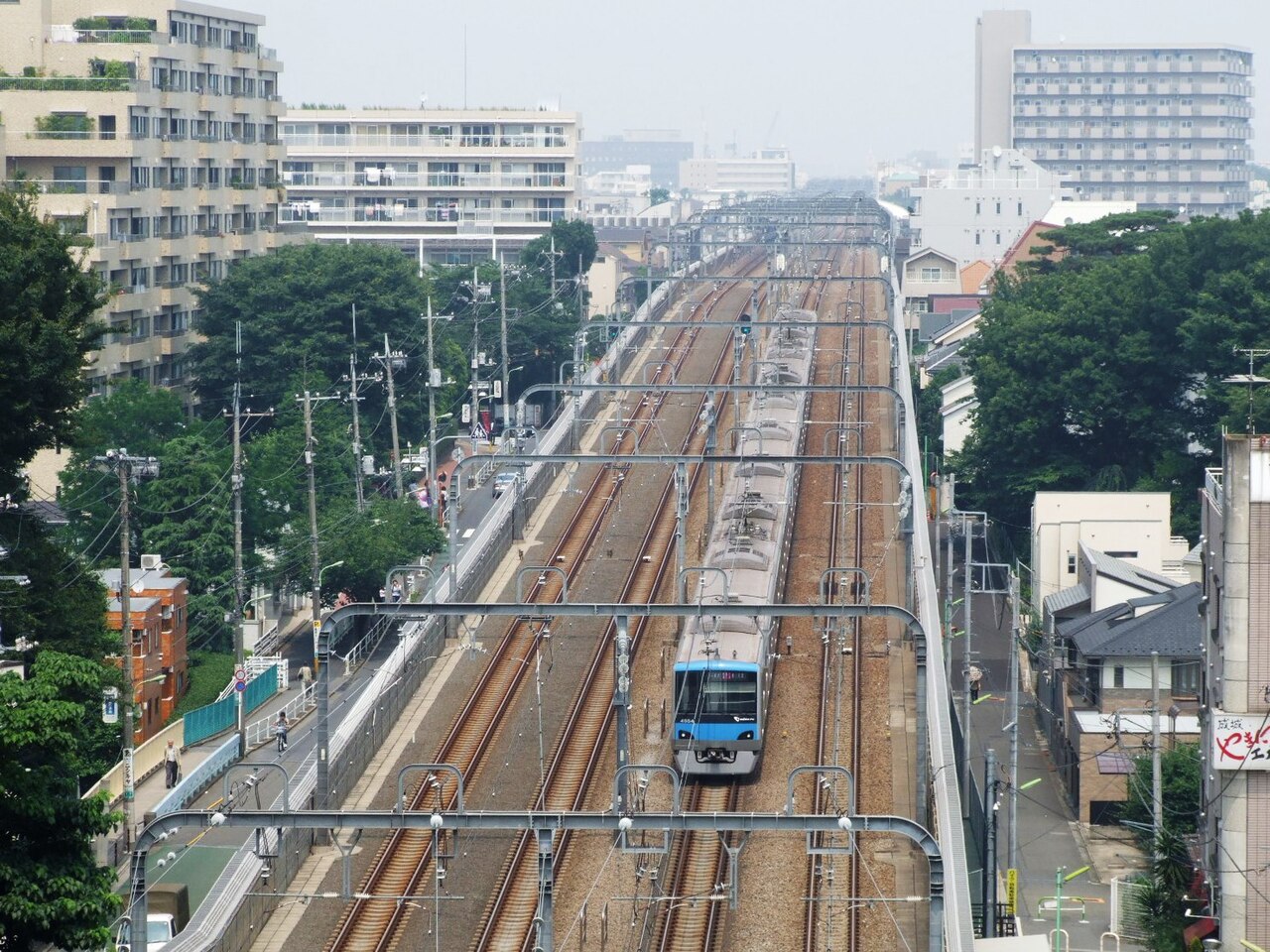
The line's defining modern project has been the long campaign to relieve congestion by quadruple-tracking and grade-separating its Tokyo end. Increasing traffic from the 1970s led to upgrading plans formed in 1985, but land-acquisition difficulties stalled major work until construction began in 2013; the project, carried out between Yoyogi-Uehara and Mukogaoka-Yuen, quadrupled the trackage and stacked the tracks underground to allow more express services. A viaduct was originally planned but was changed to underground tracks. The Japanese record dates the completion of the Yoyogi-Uehara-Umegaoka continuous grade-separation to 23 March 2013 and the completion of quadruple-tracking between Yoyogi-Uehara and Noborito (a section of 11.7 km) to 3 March 2018, followed by a timetable revision on 17 March 2018 that raised morning-peak frequency to 36 trains per hour and extended Chiyoda Line through-service to Isehara. The effect on crowding was large: on the most-congested Setagaya-Daita-to-Shimo-Kitazawa section the peak-hour congestion rate had been 194% in fiscal 2017 - the second-highest among the major private railways of the Greater Tokyo area, behind the Tokyo Metro Tozai Line at 199% - and fell to 146% in fiscal 2024. Reported daily ridership on the line was 1,493,451 (daily, 2010).
The line has also seen serious incidents. On 28 January 1946 an Odawara-bound train that had suffered a brake failure near Ohatano ran backwards down the gradient and derailed and overturned at Tsurumaki, killing 30 people. On 6 August 2021 a stabbing took place aboard a train running between Seijogakuen-mae and Soshigaya-Okura.
Timeline
- 19271 April: the Odawara Express Railway Co. opens the entire Shinjuku-Odawara line in a single step, with 38 stations and a journey time of 2h20m; a signalling failure disrupts the timetable from the first day. (29 April: Princes Chichibu and Takamatsu ride the line, the first imperial-family use.)
- 192715 October: the initially single-track Inadanobori (now Mukogaoka-Yuen)-Odawara section is double-tracked, completing double-tracking of the whole line; express operation begins.
- 1930Carriage of gravel begins on the line.
- 19421 May: the company is forcibly merged into Tokyo Kyuko Dentetsu (Tokyu) as part of the "Greater Tokyu"; the name "Odawara Line" originates.
- 194628 January: an Odawara-bound train with a brake failure near Ohatano runs backward down the gradient and derails at Tsurumaki, killing 30.
- 19481 June: on the break-up of the Greater Tokyu, Odakyu Electric Railway is newly founded and the Odawara Line is transferred to it.
- 19501 August: through operation begins to the Hakone Tozan Railway line as far as Hakone-Yumoto, enabled by dual-gauge track (Hakone Tozan 1,435 mm; Odawara 1,067 mm).
- 19551 October: the Shin-Matsuda-Matsuda connecting line is completed and through operation begins onto the (then) JNR Gotemba Line, opening the way for limited-express service.
- 197831 March: mutual through operation begins with the Eidan (now Tokyo Metro) Chiyoda Line via Yoyogi-Uehara, initially only at weekday peaks. (The same date, Yoyogi-Uehara-Higashi-Kitazawa, 0.7 km, is quadruple-tracked.)
- 1985Plans are formed for a track-upgrading (quadruple-tracking) project on the Odawara Line; land-acquisition issues then stall major work.
- 2013Construction of the quadruple-tracking project begins; the Yoyogi-Uehara-Umegaoka continuous grade-separation is completed on 23 March.
- 20183 March: quadruple-tracking between Yoyogi-Uehara and Noborito (11.7 km) is completed; the 17 March timetable revision raises morning-peak frequency to 36 trains/hour and extends Chiyoda Line through-service to Isehara.
- 20216 August: a stabbing occurs aboard a train running between Seijogakuen-mae and Soshigaya-Okura.
- 2024Peak-hour congestion on the most-crowded Setagaya-Daita->Shimo-Kitazawa section is 146% (down from 194% in FY2017, then second-highest among Greater Tokyo major private railways behind the Tokyo Metro Tozai Line's 199%).
Sources
Facts last verified 3 June 2026.
Gallery 3 photos
Every photo for this page — tap any image to view it full-size. All from Wikimedia Commons (credit under each).