History
The line's deeper origins lie in a route that was never built. In 1958 Odakyu applied for a licence for a "Shiroyama Line" running from Tsurukawa Station via Zushi (Machida), Fuchinobe, Kamimizo and other points to Shiroyama in what is now Sagamihara; that scheme, which had targeted opening in 1961, never reached construction because of funding problems and the emergence of the Tama New Town development plan, but Machida and Sagamihara regard it as the starting point of later proposals to extend Odakyu rail toward the Yokohama and Sagami lines. The Tama Line itself grew out of national new-town planning. Following the promulgation of the New Residential Town Development Act on 11 July 1963, the Tokyo Metropolitan Government drew up a plan to develop Tama New Town and, mindful that many of its residents would commute into central Tokyo, asked both Odakyu and Keio Teito Electric Railway (today Keio Corporation) to build new lines as "new-town railways." In parallel, the 1962 Urban Transport Council Report No. 6 had proposed a "Tokyo Line 8," and the corridor was later fixed as "Tokyo Line 9"; the council's 1972 Report No. 15 added the Hashimoto–Kitami section, advancing development of access from Tama New Town to the city centre. Odakyu first sought, in 1964, a licence for a 30.5 km Kitami–Shiroyama route running by the most direct path into the new town, but rapid suburbanisation, soaring land prices and organised local opposition in Komae and Inagi led the company to change the plan to branch instead from near Yurigaoka; it then re-aligned the route to create a new junction station, Shin-Yurigaoka, and in 1967 obtained a licence for the Shin-Yurigaoka–Shiroyama line.
Odakyu began its own construction work on the Tama Line in June 1970, and from 1972 the line was built under the Japan Railway Construction Corporation's private-railway construction scheme — the corporation (since renamed the Japan Railway Construction, Transport and Technology Agency, JRTT) constructed the line while Odakyu operated it and paid for the work. The first section, from Shin-Yurigaoka to Odakyū-Nagayama, opened on 1 June 1974 with local services only, and the line was extended to Odakyū-Tama-Center, the central station of Tama New Town, on 23 April 1975. The line was built as double track throughout, but Odakyu was unable to capture a large share of traffic between central Tokyo and Tama New Town: because the parallel Keio Sagamihara Line offered direct through trains to the Shinjuku and Toei Shinjuku Line area from its opening, and because of a fare difference, the Tama Line lost a considerable number of passengers to it, and for years it operated like a quiet local line, with short trains shuttling within the line and a transfer required at Shin-Yurigaoka for Shinjuku. A 1979 timetable revision made all trains four cars.
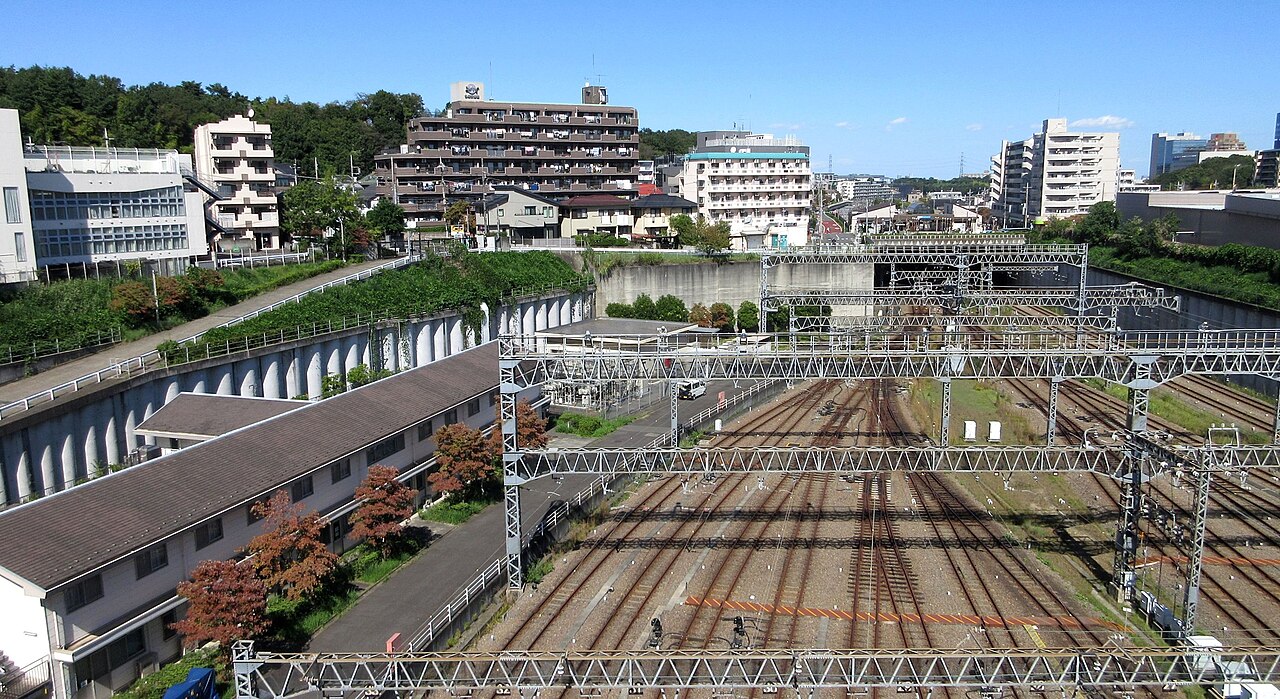
The corridor toward Hashimoto, where Odakyu would have competed directly with Keio, was never built; the licence as far as Shiroyama lapsed in 1987, formally ending that extension plan. Instead the line was extended in the other direction, to the Karakida district, where Keio was not a competitor — an extension whose origins lay in a 1969 memorandum with local residents over construction of the Tama Cleaning Plant, which included a request for a rail extension and a new station. Construction of the Odakyū-Tama-Center–Karakida section, together with a new rolling-stock depot, began in December 1987; building the depot required excavating to a depth of 25 metres and removing about 760,000 cubic metres of soil. Karakida Station opened on 27 March 1990, and the depot beside it entered service at the same time.
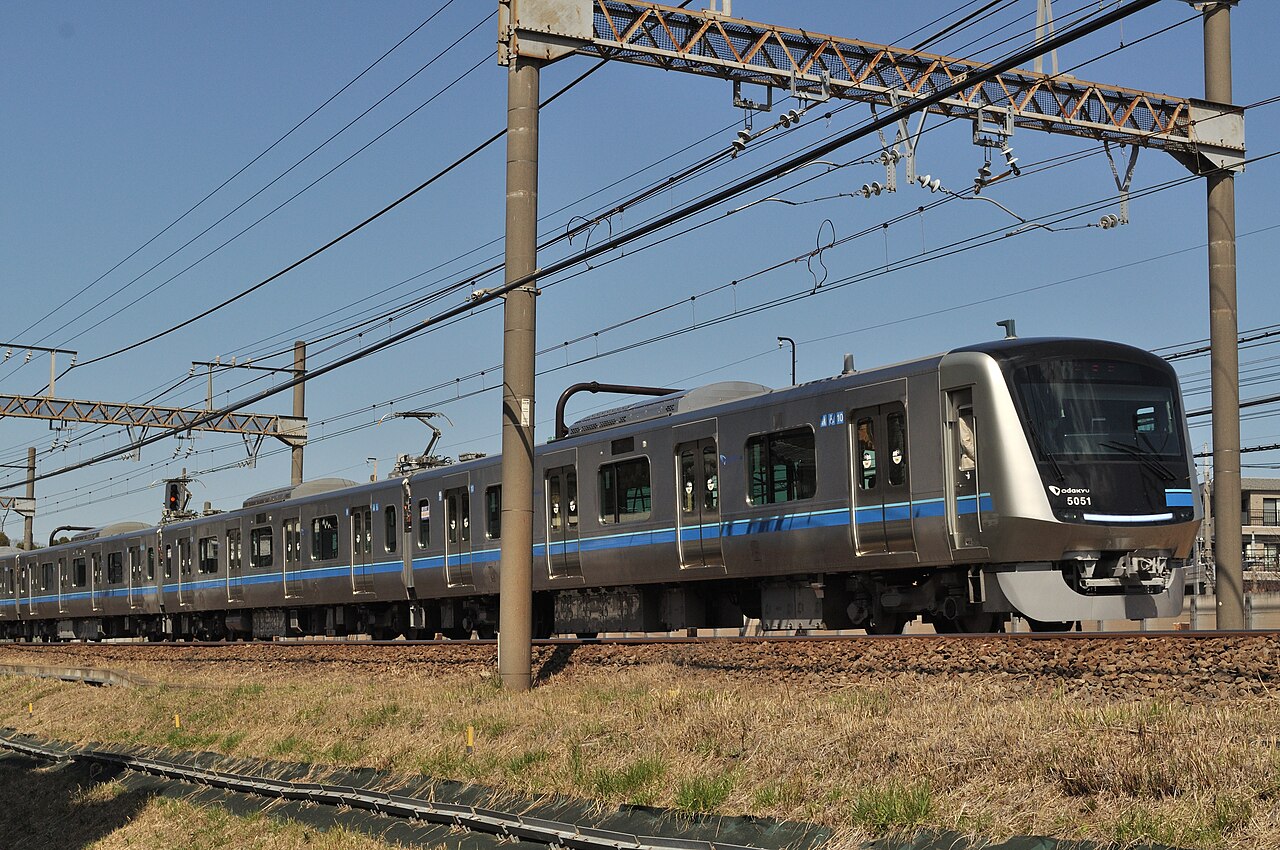
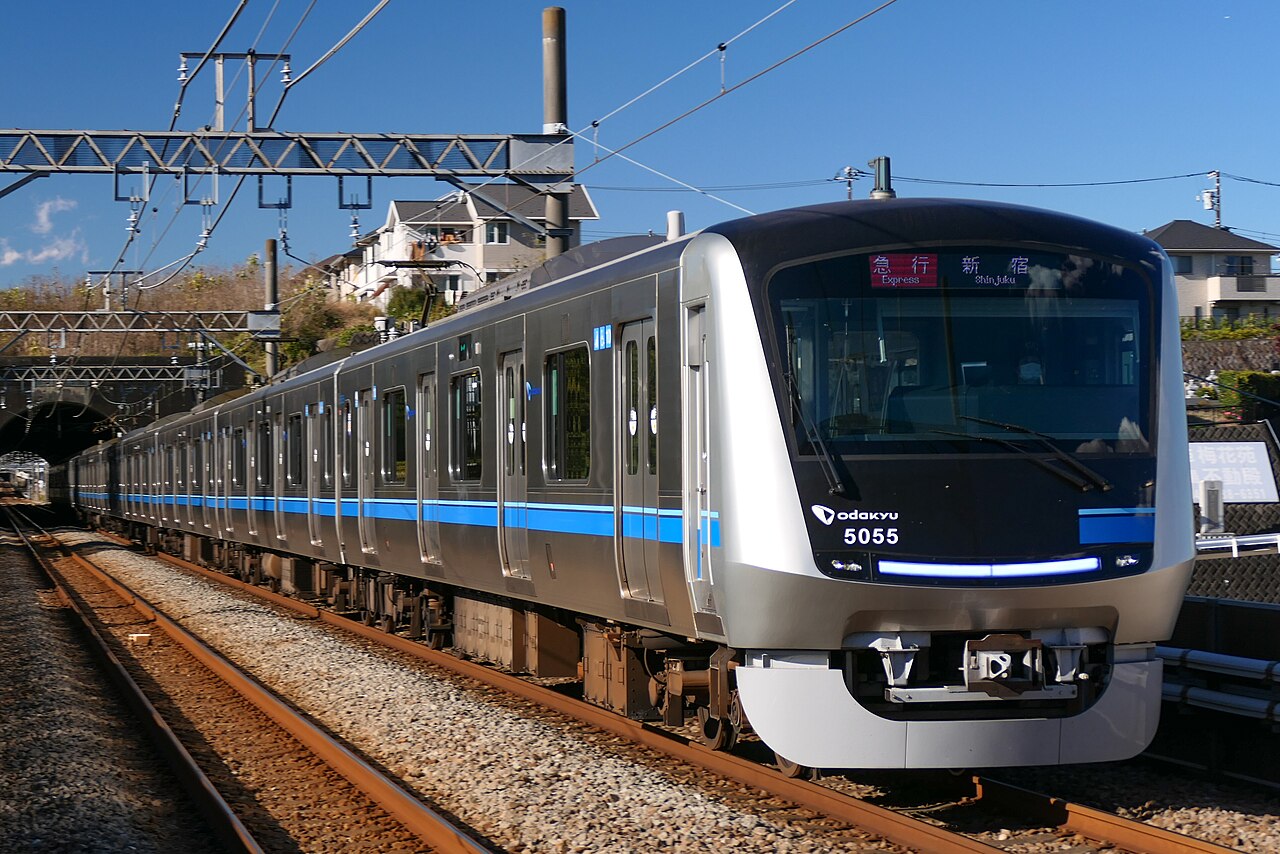
Direct services toward central Tokyo developed in stages. On 2 December 2000 a through Express service onto the (then) Teito Rapid Transit Authority — now Tokyo Metro — Chiyoda Line began, realising the original "Tokyo Line 9" concept; the Tama Express (Tama-kyūkō) followed on 23 March 2002. The opening of Haruhino Station on 11 December 2004, timed to the opening of the surrounding district, came with a new sectional service toward Shinjuku, and rapid services introduced from around 2000 succeeded in increasing ridership and shortening journey times. With the completion of the Odawara Line's quadruple-tracking, the timetable revision of 17 March 2018 overhauled Tama Line services: new Rapid Express and Commuter Express trains were introduced, the Tama Express and semi-express were abolished, and the line's premium services were switched from Chiyoda Line through-running to direct Shinjuku running, with an Odakyū-Tama-Center–Shinjuku best time of 33 minutes. Through service to the Chiyoda Line, which had ended in 2022, was restored in the timetable revision of 15 March 2025.
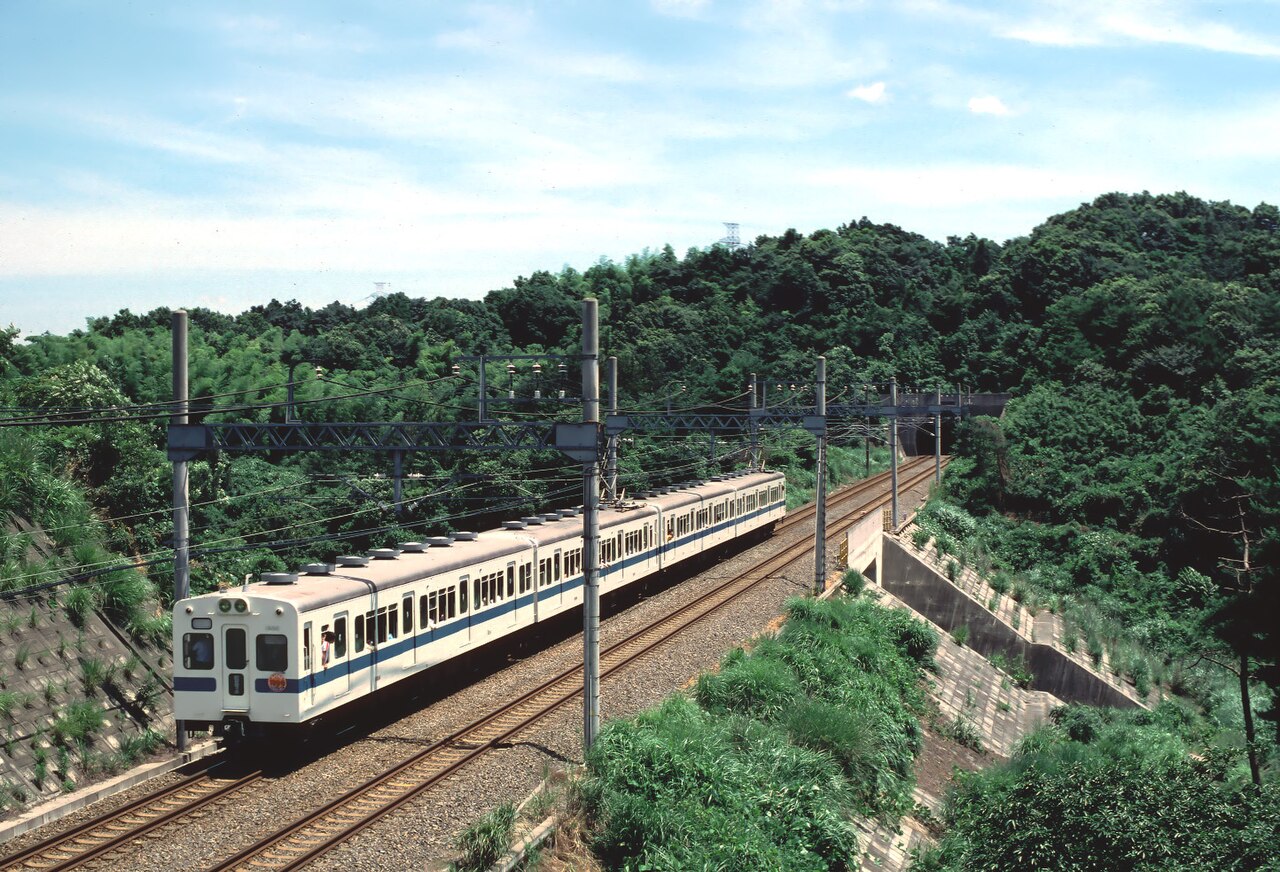
The line carries a line code of "OT" and has eight stations; its maximum line speed is 110 km/h. Over its history it has seen weather-related incidents, including landslides between Kurokawa and Odakyū-Nagayama caused by typhoons on 11 October 1991 (which led to the scrapping of two 2600-series cars) and on 16 September 1998, and service suspensions during the rolling blackouts that followed the 11 March 2011 Tōhoku earthquake.
Timeline
- 1958Odakyu applies for a licence for the "Shiroyama Line" from Tsurukawa toward Shiroyama (now Sagamihara); targeted for 1961, it is never built but becomes the precursor of later extension plans.
- 196311 July: the New Residential Town Development Act is promulgated; the Tokyo Metropolitan Government plans Tama New Town and asks Odakyu and Keio Teito to build new-town railways.
- 1964Odakyu applies for a licence for a 30.5 km Kitami–Shiroyama route; local opposition and land prices later force a re-plan to branch near Yurigaoka.
- 1967December: Odakyu obtains the licence for the Shin-Yurigaoka–Shiroyama (Shin-Yurigaoka–Odakyū-Tama-Center) line.
- 1970June: Odakyu begins construction of the Tama Line as its own work.
- 1972The line becomes a private-railway-method construction project of the Japan Railway Construction Corporation (later JRTT).
- 19741 June: the line opens between Shin-Yurigaoka and Odakyū-Nagayama, with local services only.
- 197523 April: the line is extended to Odakyū-Tama-Center, the central station of Tama New Town.
- 197926 March: timetable revision; all trains become four-car formations.
- 1987March: licence obtained for the Odakyū-Tama-Center–Karakida section; the Shiroyama licence lapses, ending the Hashimoto-direction plan; construction of the Karakida extension and depot begins in December.
- 199027 March: Karakida Station opens, completing the line at 10.6 km; the adjacent rolling-stock depot enters service.
- 199111 October: a typhoon-induced landslide between Kurokawa and Odakyū-Nagayama closes the section until 13 October; two 2600-series cars are scrapped.
- 199816 September: a typhoon causes another landslide between Kurokawa and Odakyū-Nagayama.
- 20002 December: through Express service to the Teito Rapid Transit Authority (now Tokyo Metro) Chiyoda Line begins, realising the "Tokyo Line 9" concept; rapid services introduced around this time raise ridership.
- 200223 March: the Tama Express (Tama-kyūkō) through service to the Chiyoda Line is introduced.
- 200411 December: Haruhino Station opens between Kurokawa and Odakyū-Nagayama, with a new sectional service toward Shinjuku.
- 201817 March: timetable revision; Rapid Express and Commuter Express introduced, Tama Express and semi-express abolished, premium services switched from Chiyoda-through to Shinjuku-direct; Odakyū-Tama-Center–Shinjuku best time 33 minutes.
- 202515 March: timetable revision restores through service to the Chiyoda Line (ended in 2022).
Sources
Facts last verified 3 June 2026.
Gallery 5 photos
Every photo for this page — tap any image to view it full-size. All from Wikimedia Commons (credit under each).