History
The line began as a private undertaking. The Tachikawa–Ōme section was opened on 19 November 1894 by the Ōme Railway (青梅鉄道), a company incorporated on 18 December 1893, and was built as a 762 mm gauge line. It was extended about 2 km as a freight-only section to Hinatawada the following year (1895), with passenger services reaching Hinatawada in 1898. A defining early decision was the regauging of the whole line from 762 mm to the 1,067 mm Japanese standard in 1908, which let it integrate with the national network. The line had been built primarily to carry limestone out of the western hills, and for much of its early history its timetable was dominated by freight.
Construction pushed steadily up the Tama valley. A freight-only section reached Miyanohira in 1914 and Futamatao in 1920; passenger services were extended to Miyanohira in 1923, the same year the entire line was electrified at 1,200 V DC. In 1929 the line was extended to Mitake, the company renamed itself the Ōme Electric Railway Co. (青梅電気鉄道), and in 1930 the voltage was raised to 1,500 V DC. Passenger services reached Mitake in 1935.
The Ōme Electric Railway was nationalised on 1 April 1944, a wartime acquisition that brought the line into the state railway and gave it its present name, the Ōme Line; the Tachikawa–Nakagami section was double-tracked the same year. Simultaneously the state took over the partly built line of the Okutama Electric Railway, which had been constructing a route from Mitake to Hikawa (now Okutama). That section opened on 1 July 1944, completing the line in essentially its modern form. (The Okutama Electric Railway survived the nationalisation of its railway, renamed itself Okutama Kōgyō, and continues today as a limestone quarrying and transport business.)
Post-war development concentrated on capacity and signalling. The Nakagami–Haijima section was double-tracked in 1946, and direct services to Tokyo began in 1949. The Haijima to Higashi-Ōme section was double-tracked between 1961 and 1962, centralised traffic control (CTC) was commissioned in 1971 — the same year Hikawa Station was renamed Okutama — and the long-running limestone freight traffic, the original reason for the line, finally ceased in 1998; JR Freight's freight operating rights over the Haijima–Okutama section were formally abolished in 1999.
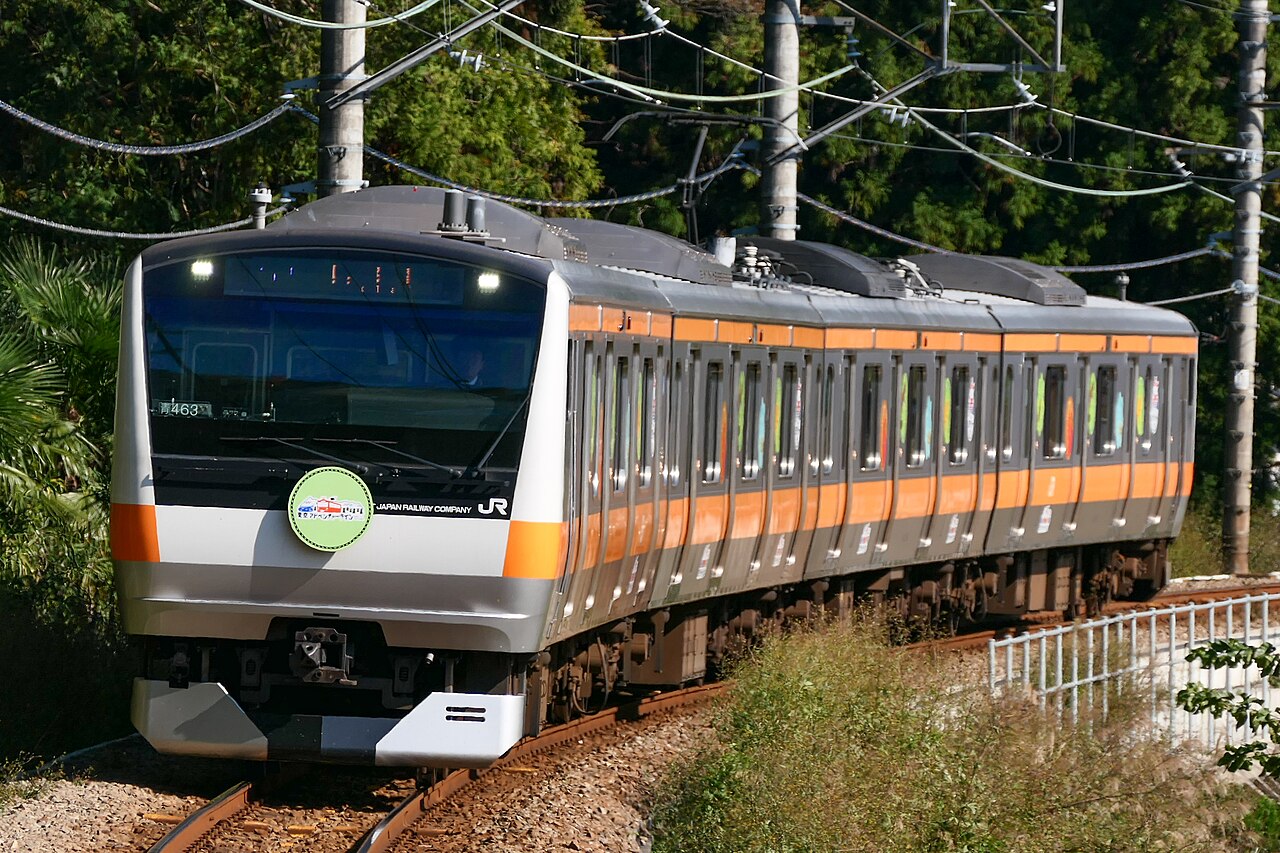
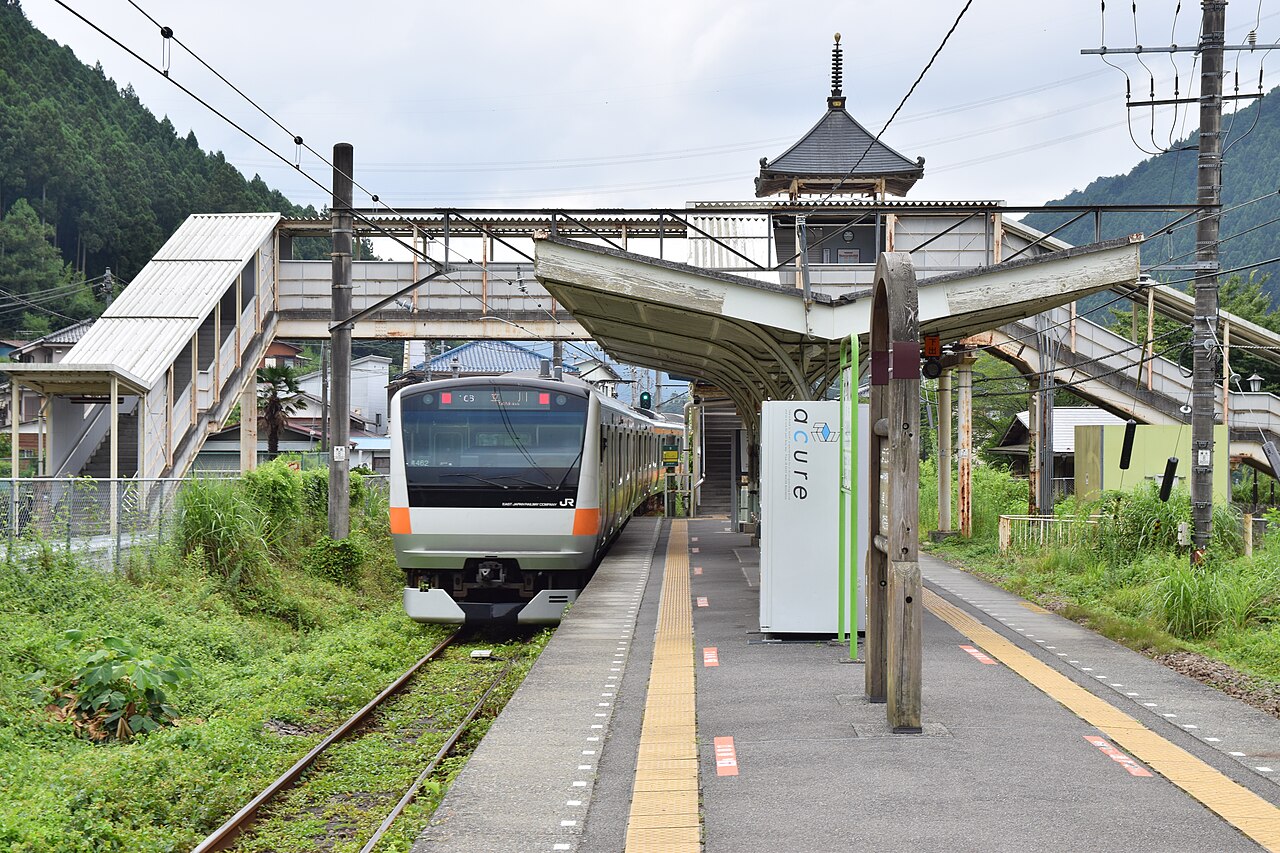
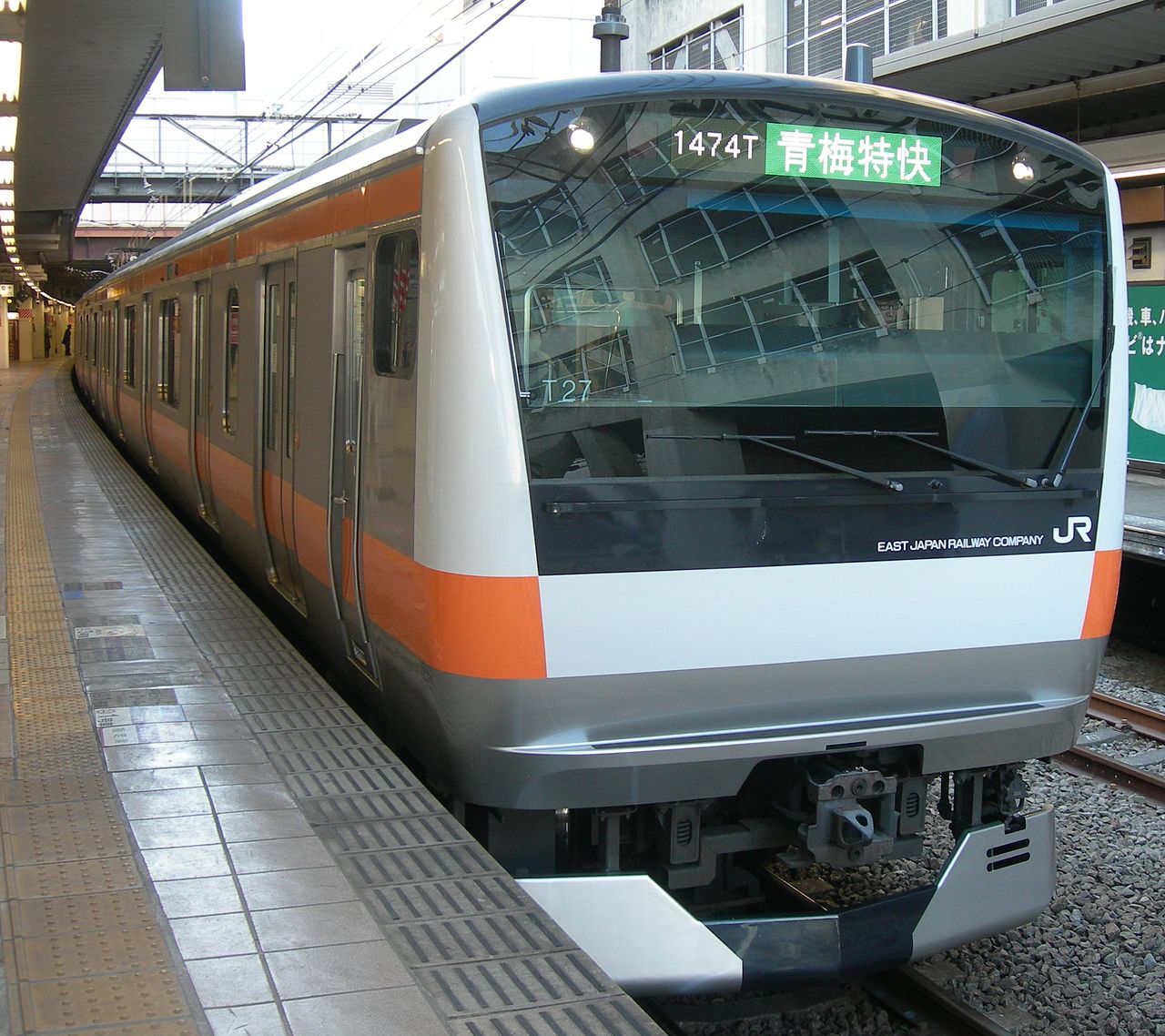
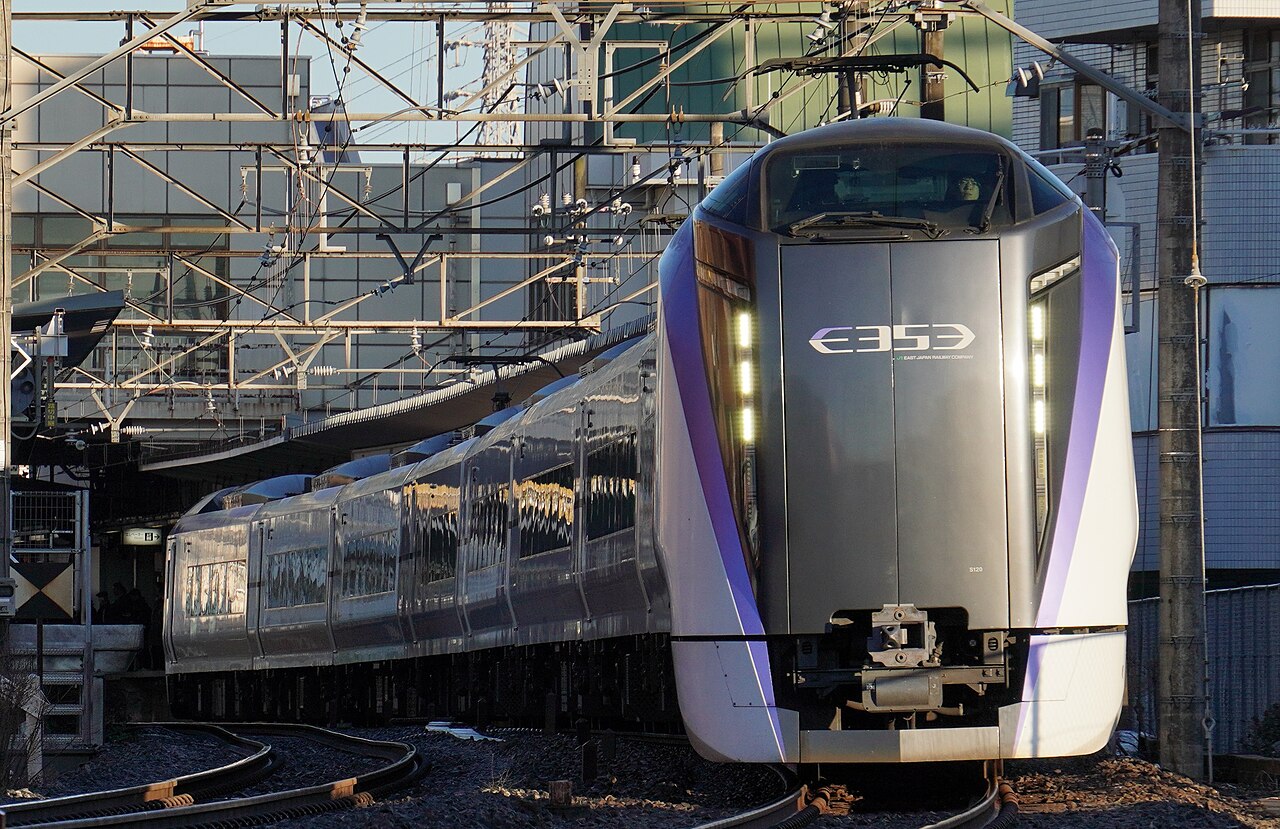
On 1 April 1987, with the privatisation and break-up of Japanese National Railways, the Ōme Line passed to JR East, while the Japan Freight Railway Company (JR Freight) became a secondary (Type-II) operator over the line. JR East runs the present passenger service, normally worked by E233-0 series electric multiple units in 10-car and 6+4-car formations; 209-1000 series sets, normally confined to the Chūō Rapid Line, occasionally appear as far as Ōme. The line carries Ōme Special Rapid and Holiday Rapid Okutama services alongside local trains and through trains from the Chūō, Itsukaichi and Hachikō lines.
More recent changes reflect the line's split personality between dense commuter territory and a quiet mountain branch. Station numbering (JC51 to JC74) was introduced on 20 August 2016. In 2018 JR East gave the scenic Ōme–Okutama section the nickname "Tokyo Adventure Line" (東京アドベンチャーライン), launched on 14 September 2018. From the timetable revision of 18 March 2023 the line's operation was almost completely divided at Ōme Station, with very few trains now running the full length of the route, and one-person (driver-only) operation began on the Ōme–Okutama section. Green (first-class) car service, first announced in February 2015 for the Chūō Rapid and through-running Ōme Line trains, was extended to the Tachikawa–Ōme section in March 2025.
The line's history includes a notable runaway-vehicle incident: on 19 February 1952 four freight wagons stabled at Ozaku Station began to move on their own, ran away down the gradient as far as Fussa, and collided with stationary wagons — an event known as the Ōme incident. A separate piece of the line's heritage is the Tokyo Waterworks Bureau line that ran 7 km from Hikawa (Okutama) to the Ogouchi Dam, built between 1952 and 1957 to carry the dam's construction materials; with 23 tunnels and 23 bridges, it passed to the Seibu Railway in 1963 and to the Okutama Limestone Quarrying Co. in 1978, and survives, long out of service, as the Mizune Freight Line.
Timeline
- 189419 November: the Ōme Railway opens the Tachikawa–Ōme section as a 762 mm gauge line.
- 1895A roughly 2 km freight-only extension to Hinatawada opens.
- 1898Passenger services are extended to Hinatawada.
- 1908The entire line is regauged from 762 mm to 1,067 mm.
- 1920A freight-only extension reaches Futamatao (Miyanohira had been reached in 1914).
- 1923Passenger services extended to Miyanohira; the whole line is electrified at 1,200 V DC.
- 1929The line is extended to Mitake; the company is renamed the Ōme Electric Railway Co.
- 1930Line voltage is raised to 1,500 V DC.
- 1935Passenger services are extended to Mitake.
- 19441 April: the Ōme Electric Railway is nationalised and the line is named the Ōme Line; Tachikawa–Nakagami double-tracked. 1 July: the former Okutama Electric Railway section Mitake–Hikawa (now Okutama) opens, completing the line.
- 1949Direct services to Tokyo begin.
- 195219 February: four freight wagons run away from Ozaku to Fussa and collide with stationary wagons (the 'Ōme incident').
- 1962The Haijima–Higashi-Ōme section completes double-tracking (begun 1961).
- 1971CTC signalling is commissioned; Hikawa Station is renamed Okutama.
- 19871 April: JNR is privatised; the line passes to JR East, with JR Freight as a Type-II operator.
- 1998Limestone freight services on the line cease.
- 1999JR Freight's Type-II operating rights over the Haijima–Okutama section (30.3 km) are abolished.
- 201620 August: station numbering (JC51–JC74) is introduced.
- 201814 September: the Ōme–Okutama section is nicknamed the 'Tokyo Adventure Line'.
- 202318 March: operation is almost completely divided at Ōme Station; one-person operation begins on the Ōme–Okutama section.
- 2025March: Green-car service is extended to the Tachikawa–Ōme section; the Ōme Limited Express is discontinued.
Sources
Facts last verified 3 June 2026.
Gallery 3 photos
Every photo for this page — tap any image to view it full-size. All from Wikimedia Commons (credit under each).