History
The line was not originally a national project. It was built by the Sagami Railway (Sagami Tetsudō — the company that today survives as Sōtetsu Holdings, the parent of the present-day Sōtetsu network) for two stated purposes: to link the Tōkaidō Main Line with the Chūō Main Line through the centre of Kanagawa, and to haul gravel quarried from the Sagami River. The first section opened on 28 September 1921, running from Chigasaki to Kawasamukawa — a stretch of 4.0 miles (about 6.44 km) that included a dedicated gravel-carrying branch from Samukawa to Kawasamukawa. The line was then extended in stages: a gravel branch from Samukawa to Shinomiya opened in 1922, the section from Samukawa to Kurami opened on 1 April 1926 and on to Atsugi on 15 July 1926, and the final segment from Atsugi to Hashimoto opened on 29 April 1931, completing the through route. The early operation was modest in scale: company records note that in the mid-1920s the engine depot had only two locomotives working the line.
The line acquired its present name through a corporate merger. On 1 April 1943, under the direction of the Tōkyō-Yokohama group, the Jinchū Railway and the Sagami Railway were merged, and the name "Sagami Line" was adopted to distinguish the original Sagami Railway route (today's JR Sagami Line) from the former Jinchū Railway route (today's Sōtetsu Main Line and Sōtetsu Atsugi Line). The name "Sagami" thus derives from the railway company, not directly from the old province.
During the Pacific War the line was nationalised. On 1 June 1944 the Chigasaki–Hashimoto section, together with the Samukawa–Shinomiya branch serving the Sagami naval arsenal, was taken over by the state as a wartime-purchased private railway (senji baishū shitetsu). The stated reason for nationalisation was strategic: under the wartime regime, the Hachikō, Yokohama and Sagami lines together were to secure a bypass route should the capital come under attack. The purchase, executed under the Land Transport Control Order, covered the 35.3 km Chigasaki–Hashimoto and Samukawa–Shinomiya sections at a price of 3.9 million yen.
For decades after the war the Sagami Line remained a lightly used, non-electrified rural line. Gravel extraction from the Sagami River was prohibited around 1964, sharply reducing freight traffic, and the line became one of the most loss-making in the Kantō region: its operating coefficient (a cost-to-revenue index where values above 100 indicate a loss) reached 374 in fiscal 1971 — the third worst among Japanese National Railways (JNR) lines in the Kantō region, behind only the Kashima Line at 634 and the Kihara Line at 459. A short branch from Samukawa to Nishi-Samukawa was closed on 31 March 1984, and the line was operated with diesel railcars (notably the KiHa 35 series) right up to electrification.
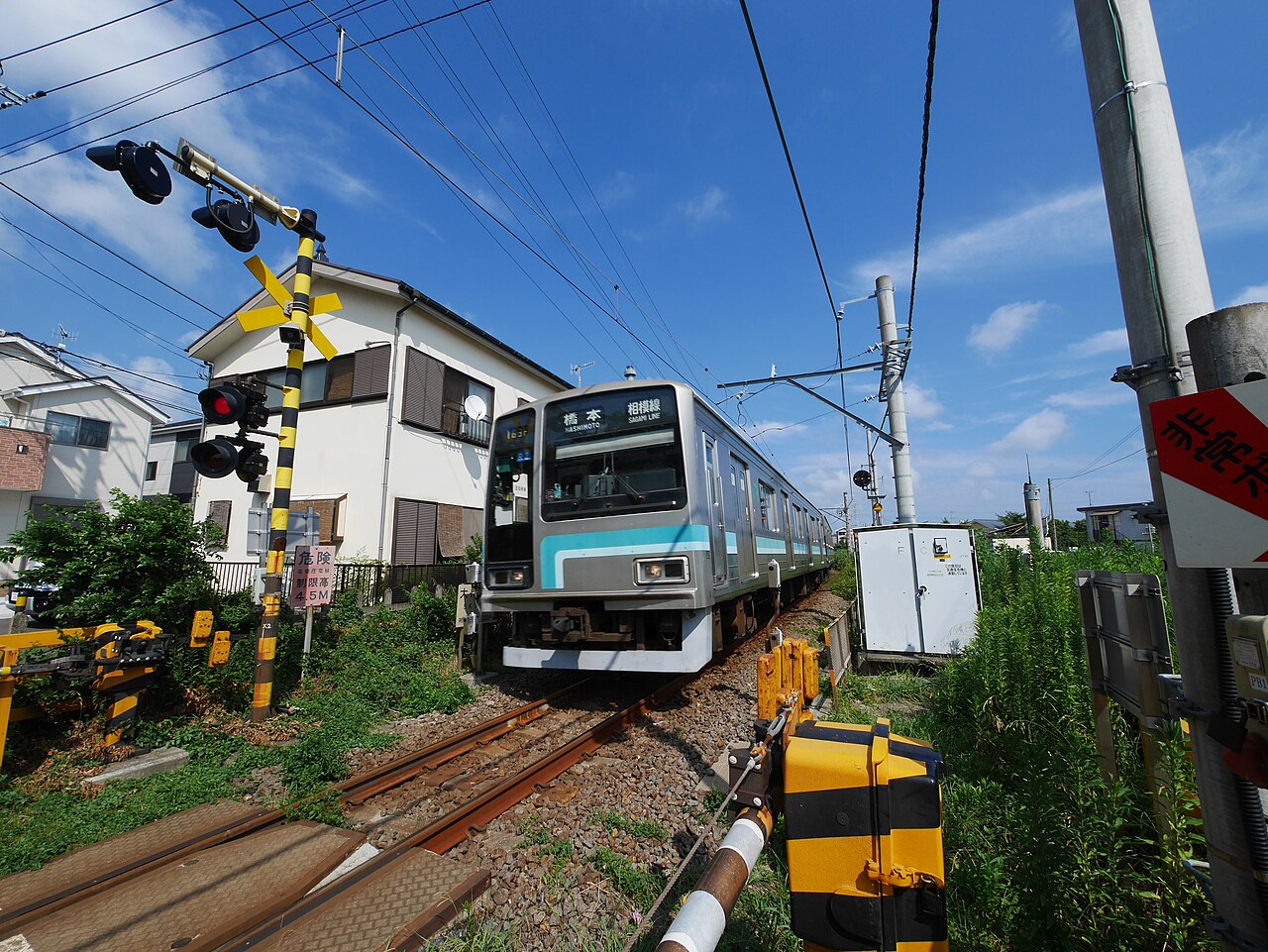
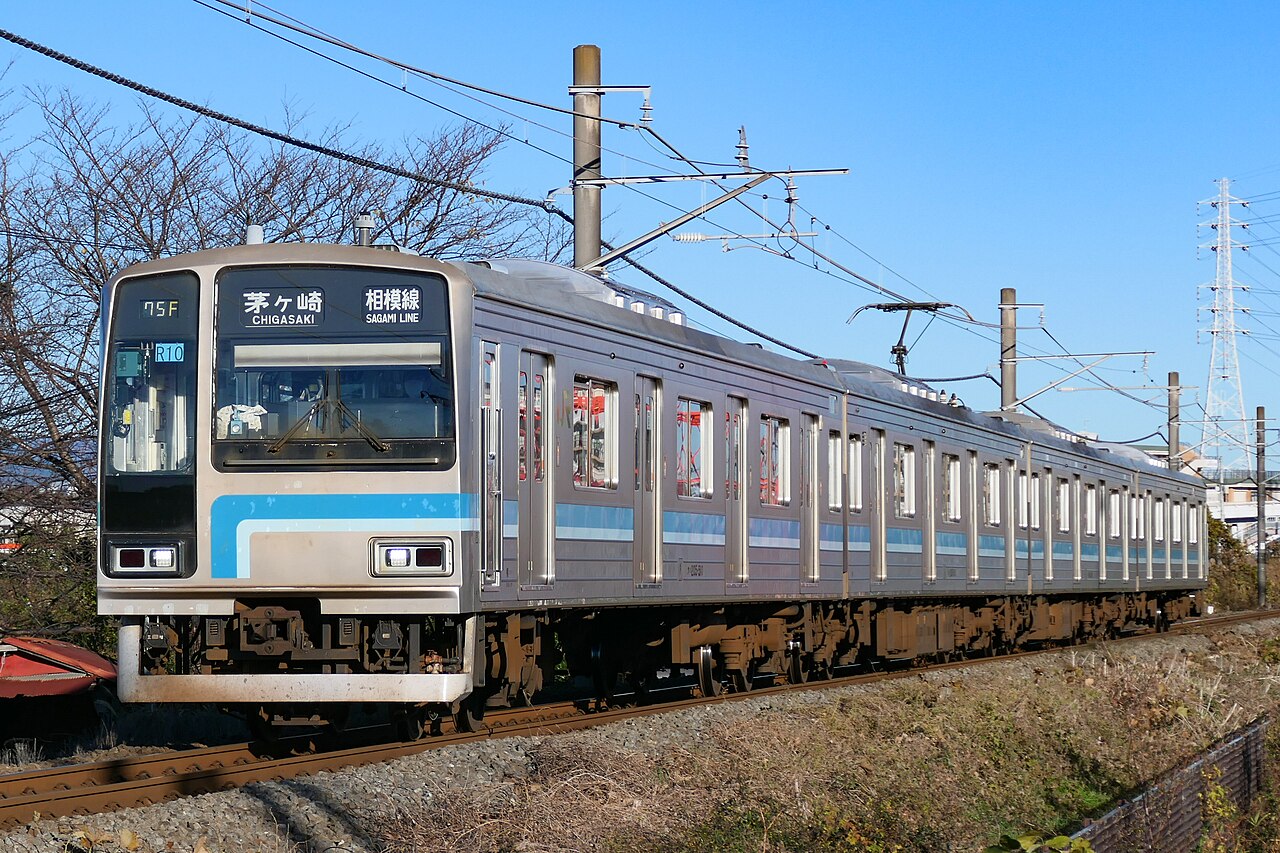
The line's modern character dates from the JNR privatisation of 1 April 1987, after which it passed to JR East. Ebina Station opened on 21 March 1987. The whole line was electrified on 16 March 1991, when newly built 205-500 series electric multiple units — at the time a brand-new design produced specifically for the Sagami Line — entered service and the diesel railcars were withdrawn. Electrification raised speeds, increased the number of services by roughly half, and restored through running onto the Yokohama Line to Hachiōji. With electrification, Kanagawa became the first Japanese prefecture (other than Okinawa, which then had no railway at all) with no scheduled diesel passenger services on its passenger railways.
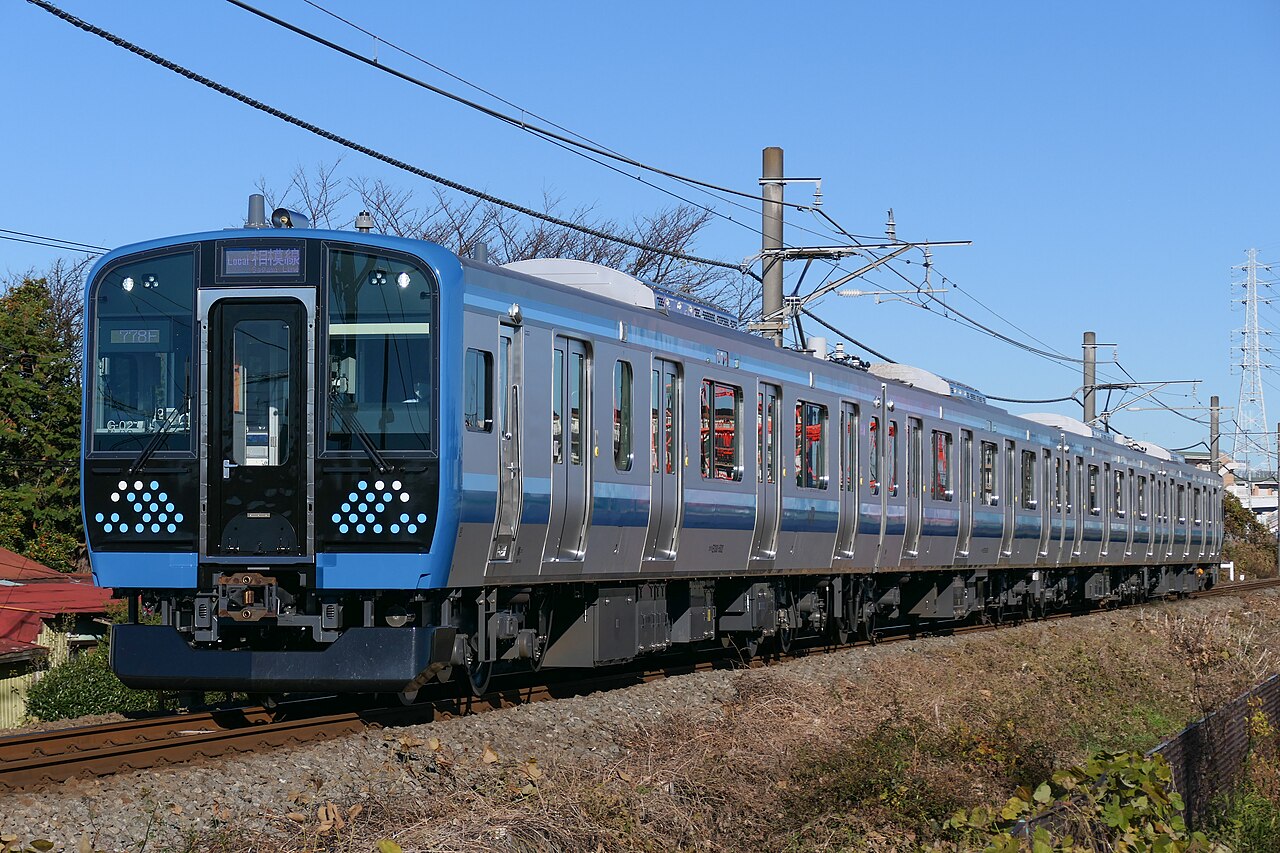
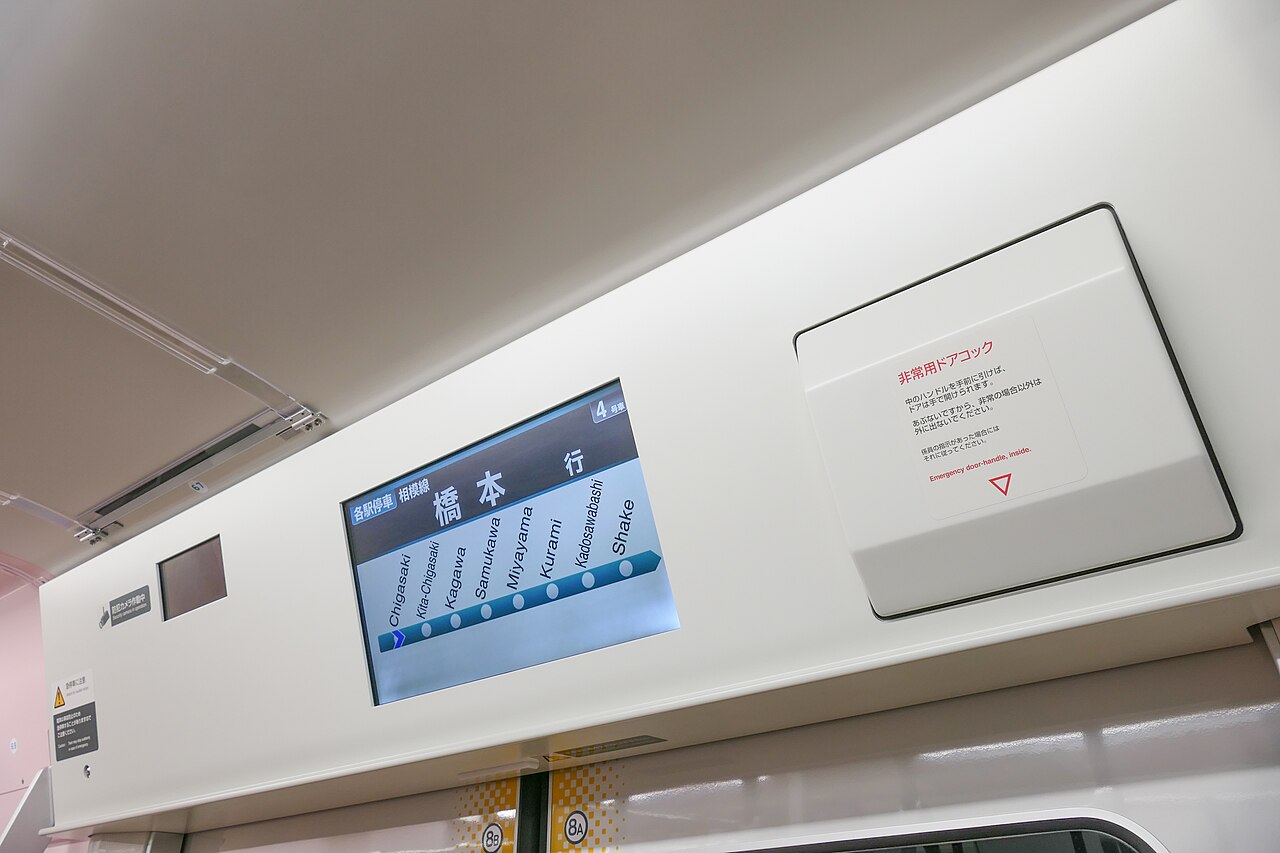
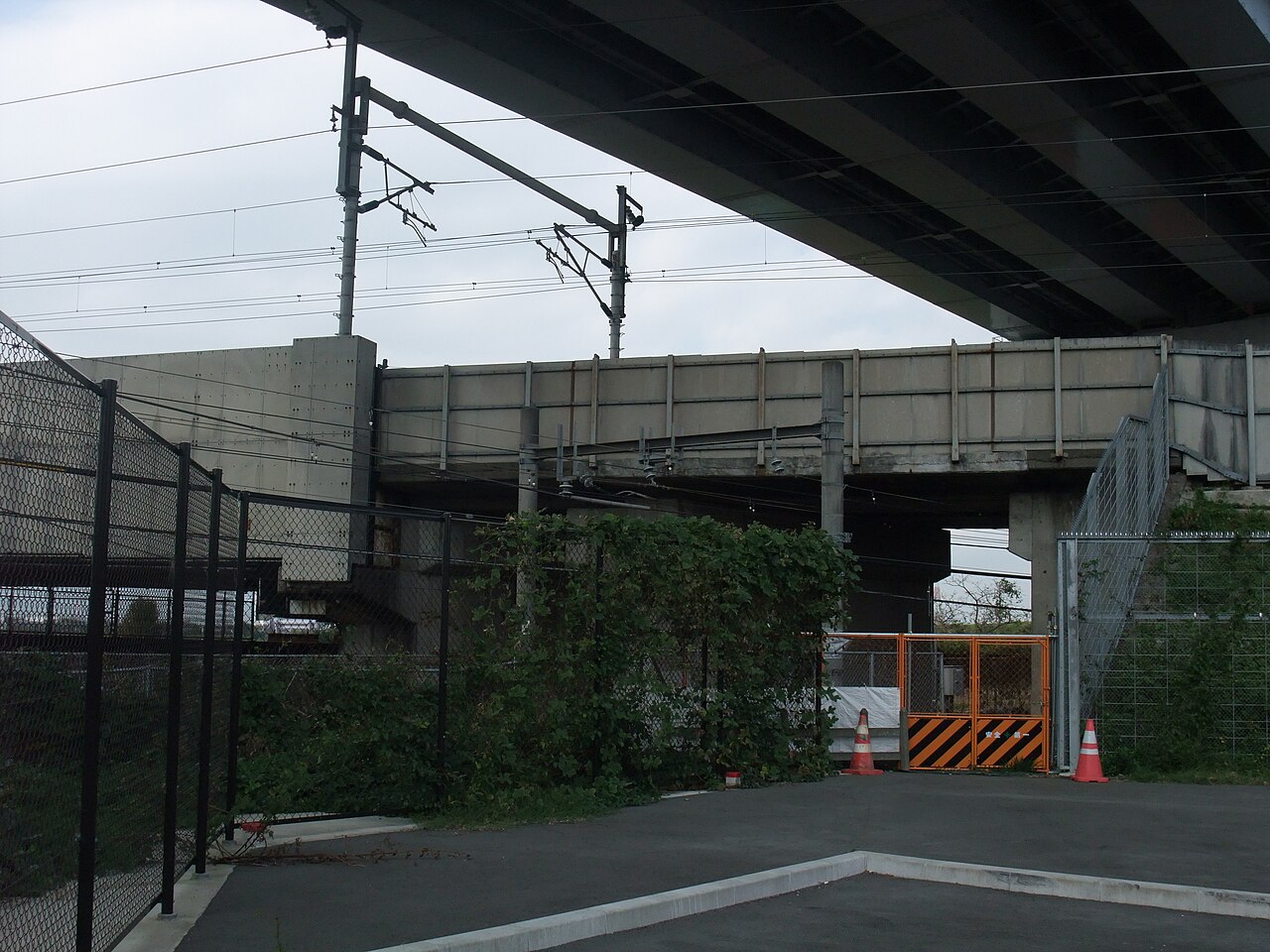
The line is operated today entirely as local (all-stations) services confined to the line itself, running roughly every 15 minutes at peak and every 20 minutes off-peak. From 18 November 2021 the E131-500 series four-car EMUs (12 trainsets, 48 cars) entered service, and from the timetable revision of 12 March 2022 all services were unified as one-man (driver-only) E131-500 operation, ending the through service to the Yokohama Line. Because the entire line is single-track, trains wait at passing stations for opposing services, so end-to-end running times vary widely — between about 49 and 73 minutes toward Hashimoto and between about 46 and 67 minutes toward Chigasaki. The line's endpoints carry future significance: Hashimoto is planned to be a stop (Kanagawa Station) on the Chūō Shinkansen maglev line, and a Tōkaidō Shinkansen station has been sought at Kurami in Samukawa, prompting local calls for capacity upgrades such as additional passing facilities or double-tracking — though JR East has taken no concrete action, given the very large cost.
Timeline
- 192128 September: the Sagami Railway opens the first section, Chigasaki to Kawasamukawa (4.0 mi / ~6.44 km), with a gravel branch to Kawasamukawa; built to haul Sagami River gravel and to link the Tōkaidō and Chūō main lines.
- 1926Samukawa–Kurami opens 1 April; Kurami–Atsugi opens 15 July.
- 193129 April: Atsugi–Hashimoto opens, completing the through route to Hashimoto. The Samukawa–Kawasamukawa gravel branch is closed on 1 November.
- 19431 April: the Jinchū Railway and Sagami Railway merge; the name 'Sagami Line' is adopted to distinguish it from the former Jinchū route (now the Sōtetsu Main Line).
- 19441 June: nationalised as a wartime-purchased private railway. The Chigasaki–Hashimoto and Samukawa–Shinomiya sections (35.3 km) are purchased for ¥3.9 million to secure a wartime bypass route.
- 1964Gravel extraction from the Sagami River is prohibited, sharply reducing freight traffic.
- 1971FY1971 operating coefficient of 374 — third worst among JNR lines in the Kantō region, behind the Kashima Line (634) and the Kihara Line (459).
- 198431 March: the Samukawa–Nishi-Samukawa branch (1.5 km) closes; Nishi-Samukawa Station is abolished.
- 198721 March: Ebina Station opens. 1 April: JNR is privatised and the line transfers to JR East.
- 199116 March: the whole line is electrified; 205-500 series EMUs (built specifically for the line) enter service and diesel railcars are withdrawn. Through service to the Yokohama Line resumes.
- 202118 November: E131-500 series four-car EMUs (12 trainsets, 48 cars) enter service.
- 202212 March: timetable revision unifies all services as one-man E131-500 operation and ends through service to the Yokohama Line (Hashimoto–Hachiōji).
Sources
Facts last verified 3 June 2026.
Gallery 6 photos
Every photo for this page — tap any image to view it full-size. All from Wikimedia Commons (credit under each).