History
The oldest component is the Akabane Line, which opened on 1 March 1885 as a segment of the Nippon Railway's Shinagawa Line. The company was nationalised in 1906, and electric services on the line began in 1909. From 1972 to 1985 this segment was known as the Akabane Line, having been a branch of the Yamanote Line. Earlier attempts to improve commuter rail between Saitama and Tokyo had failed: the Tokyo-Ōmiya Electric Railway, founded in 1928, went bankrupt soon afterwards because of rising land values, and in 1968 the Tokyo Metropolitan Board of Transportation proposed extending the Toei Mita Line to central Ōmiya.
The Saikyō Line itself grew out of a Japanese National Railways (JNR) effort to defuse local opposition in Saitama to the elevated viaducts of the Tōhoku and Jōetsu Shinkansen. During the mid-1970s residents along the planned route staged sit-ins, demonstrations and administrative actions against the high-speed lines north of Tokyo. JNR reached a settlement under which it would build a commuter line to serve these communities in return for being allowed to continue extending the Shinkansen. The new line, tentatively called the "New Commuter Line" (Tsūkin Shinsen), was built alongside the Shinkansen viaduct between Akabane and Ōmiya; construction was applied for in November 1978 and authorised the following month. To provide a depot site and because the corridor's population was expected to keep growing, the then-unelectrified Kawagoe Line was electrified at the same time, with a depot built near Minami-Furuya (today the Kawagoe Vehicle Center).
The line opened on 30 September 1985, with the Kawagoe Line's Ōmiya–Kōmagawa section electrified on the same day; through service to Ikebukuro over the existing Akabane Line began at the same time, and the Akabane Line name fell out of everyday use. Trains initially ran between Ikebukuro and Kawagoe, covering the section in as little as 44 minutes by Commuter Rapid against the 69 minutes the same trip had previously taken with transfers; the opening-day rush-hour boarding ratio reached 150 percent. The first trains were 103 series sets. On 3 March 1986 the line began through service to Shinjuku over the Yamanote Freight Line, which had seen less freight use since the Musashino Line opened in 1973. Services were extended south to Shibuya and Ebisu on 16 March 1996 once new platforms had been built, cutting the Yamanote Line congestion ratio between Yoyogi and Harajuku from over 240 percent to around 200 percent. Through services to Ōsaki and onto the Rinkai Line (operated by Tokyo Waterfront Area Rapid Transit) began on 1 December 2002, linking the western sub-centres directly to the Tokyo waterfront.
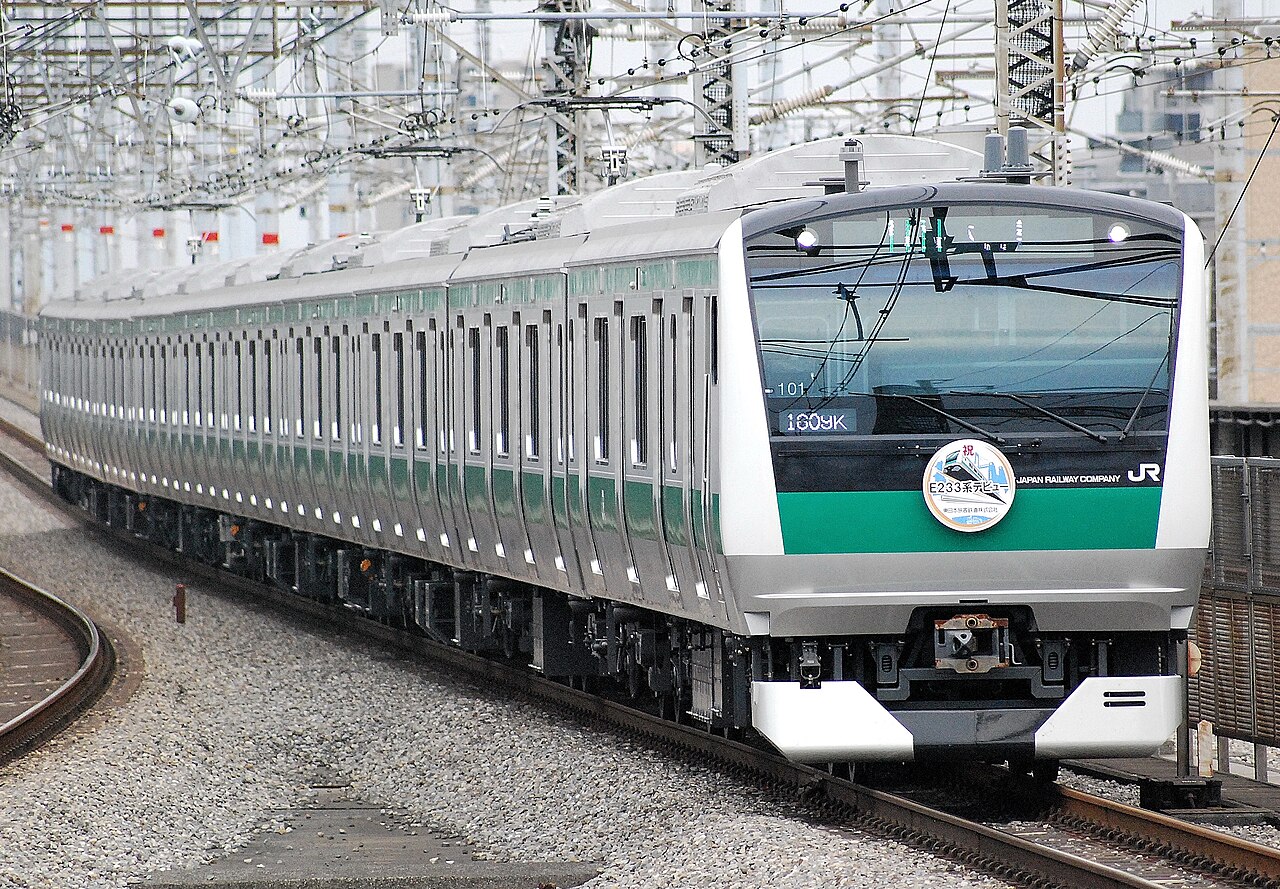
JR East operates the line as both track owner and service operator. There are three service types — Local (all-stations), Rapid, and the rush-hour Commuter Rapid — and between Ikebukuro and Ōsaki on the Yamanote Freight Line all trains run limited-stop while the parallel Yamanote Line provides all-stations service. At the northern end some trains continue beyond Ōmiya to Kawagoe on the Kawagoe Line; at the southern end many continue beyond Ōsaki to Shin-Kiba on the Rinkai Line, or from 30 November 2019 through to Ebina on the Sōtetsu Main Line via the Sōtetsu–JR link. The maximum speed is 100 km/h between Akabane and Ōmiya, 90 km/h between Itabashi and Akabane, and 95 km/h elsewhere.
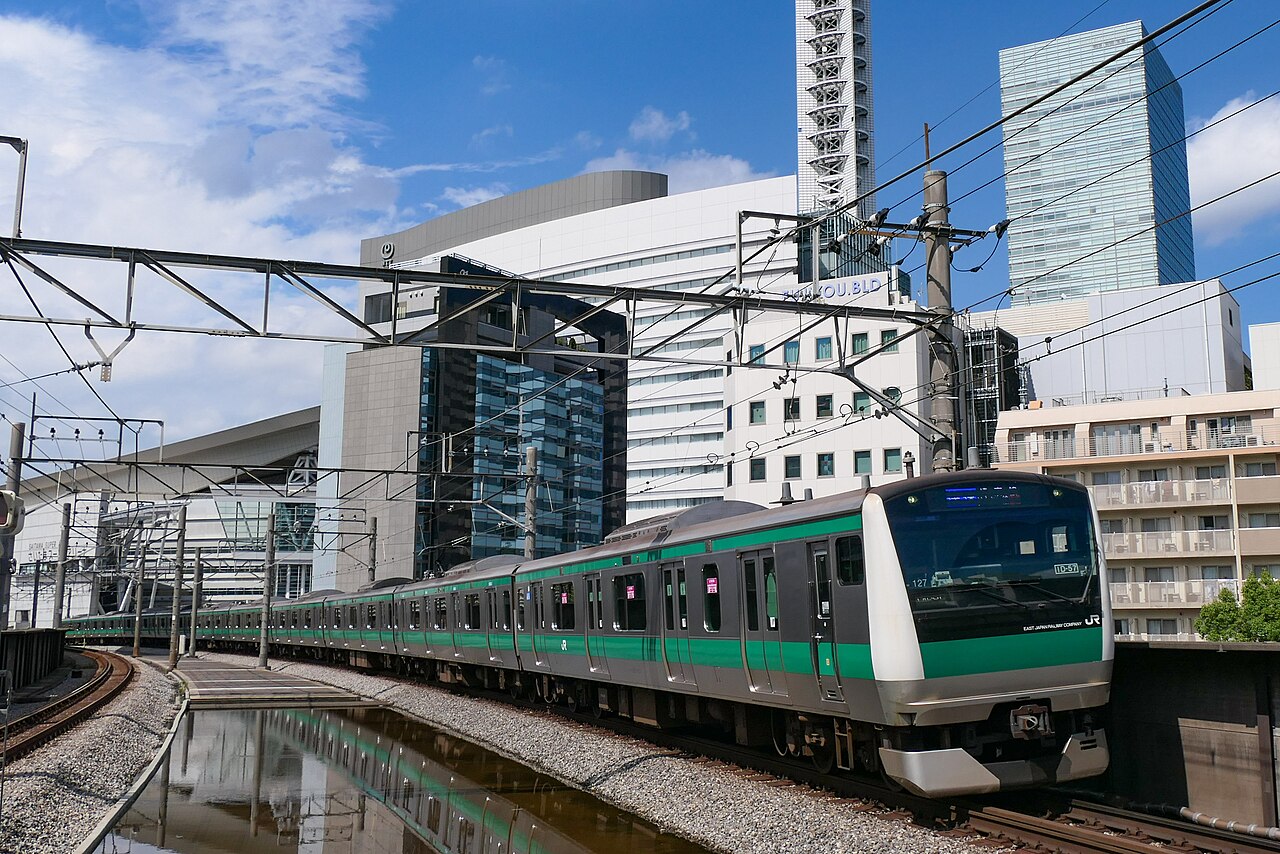
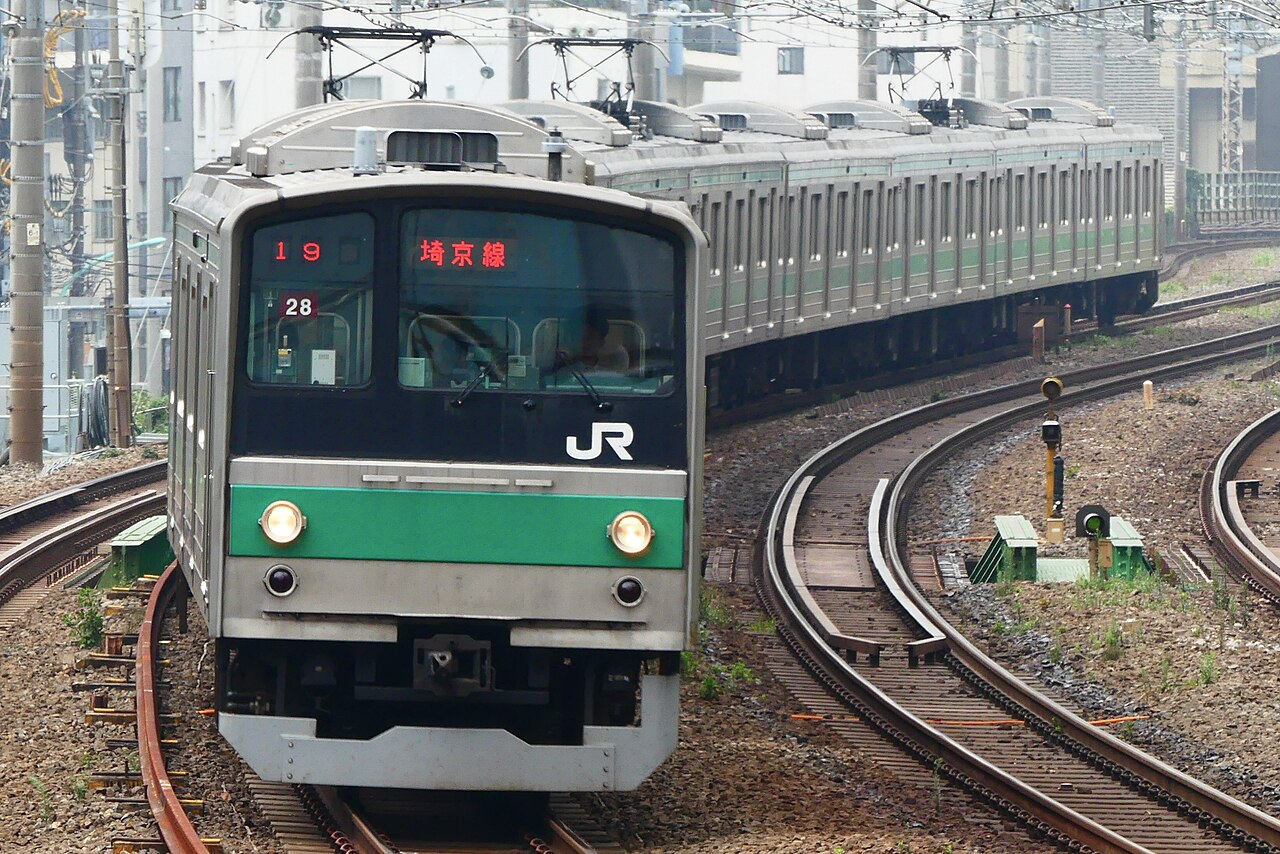
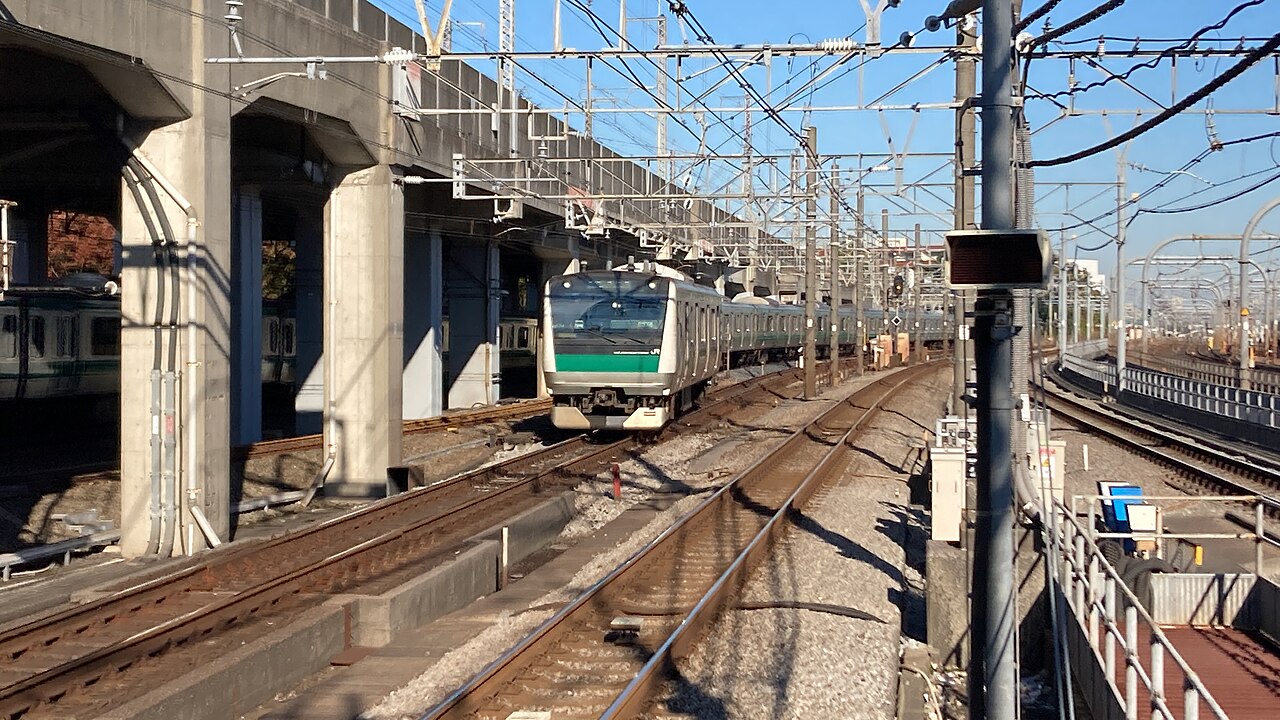
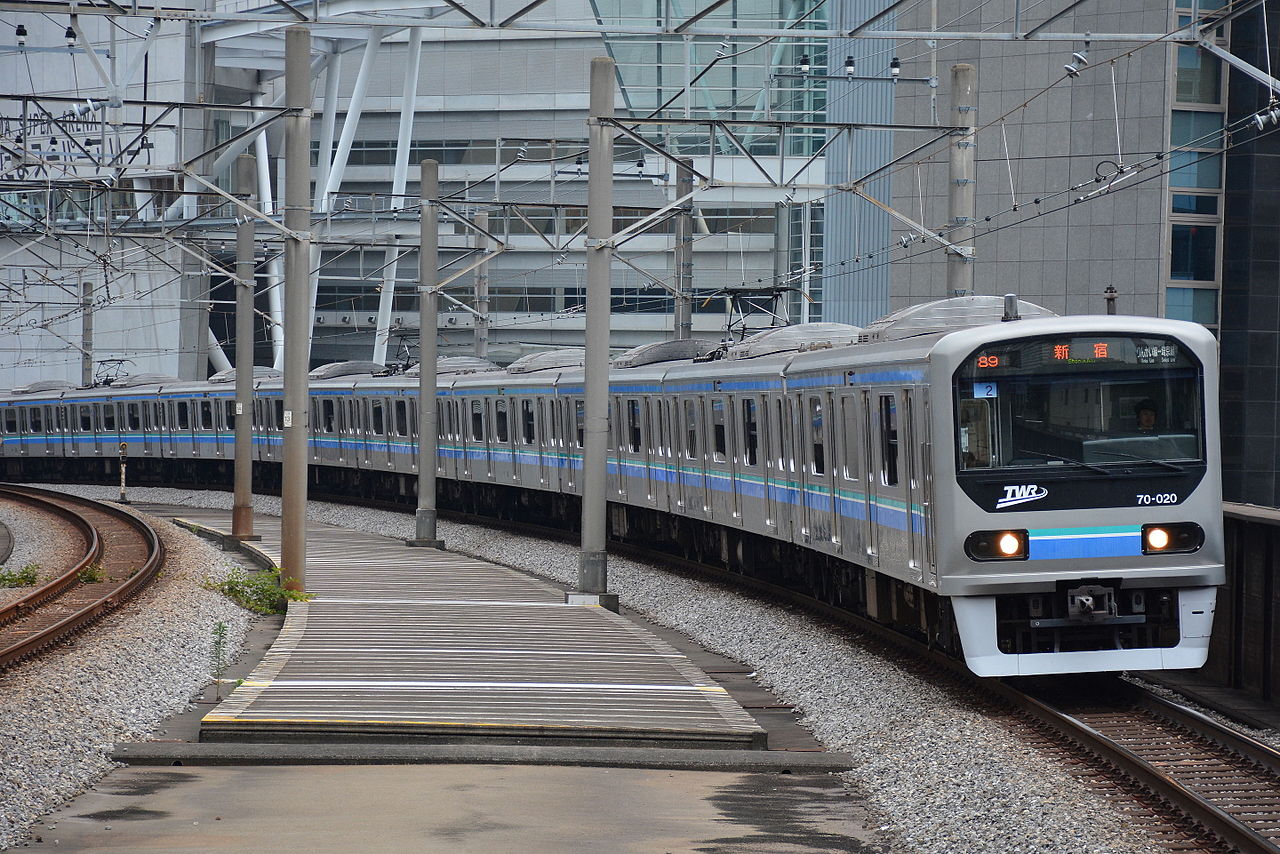
Rolling stock has turned over with the line's growth. The opening-era 103 series was replaced from 1 July 1989 by 205 series ten-car sets, twenty-three of which were delivered by 1 December 1990 to end 103 series operation. The current E233-7000 series ten-car sets entered service in 2013 (JR East gives a start of June 2013), and all 205 series sets had been withdrawn by 27 October 2016. Through-running partners' trains also appear on the line: TWR 70-000 series sets from the Rinkai Line and, from 30 November 2019, Sotetsu 12000 series sets. Station numbering (JA08 to JA26, increasing northward toward Ōmiya) was introduced in August 2016.
The line is associated with two notable distinctions. It has long suffered severe rush-hour overcrowding — the congestion ratio on its busiest section stood at around 200 percent until falling below that level for the first time in fiscal 2011, and was 163 percent on the Itabashi-to-Ikebukuro section in fiscal 2024. That crowding made the Saikyō Line notorious for the highest reported number of groping (chikan) incidents in the Greater Tokyo area: of 2,201 such cases recorded across metropolitan lines in 2004, the Saikyō Line accounted for 217 — the most of any line, ahead of the Chuo Line (Rapid) with 188. JR East responded by introducing what Japanese sources describe as JR's first women-only passenger cars, along with security cameras. The opening of the Shōnan-Shinjuku Line in 2004 and the Tokyo Metro Fukutoshin Line in 2008, both of which parallel parts of the route, alleviated some of the worst congestion.
Timeline
- 18851 March: the Akabane Line opens as a segment of the Nippon Railway Shinagawa Line — the oldest component of the future Saikyō Line route.
- 1906The Nippon Railway is nationalised; the Akabane Line passes into state hands.
- 1909Electric services begin on the Akabane Line.
- 1978November: JNR applies for authorisation to build the "New Commuter Line" (Akabane–Musashi-Urawa–Ōmiya–Miyahara, 22.0 km); it is approved in December and construction begins.
- 198530 September: the line opens; the Kawagoe Line's Ōmiya–Kōmagawa section is electrified the same day. Through service to Ikebukuro via the Akabane Line begins; the Akabane Line name falls out of daily use. 103 series in service; opening-day rush-hour boarding ratio reaches 150%.
- 19863 March: through service to Shinjuku begins over the Yamanote Freight Line.
- 19871 April: JNR is privatised; the line transfers to JR East. The 103 series continues in service initially.
- 19891 July: 205 series ten-car sets begin operation, replacing the 103 series.
- 19901 December: 205 series introduction completed (23 sets delivered); 103 series operation ends.
- 199616 March: the line is extended south to Shibuya and Ebisu over the Yamanote Freight Line once new platforms are completed, easing Yamanote Line crowding (Yoyogi–Harajuku congestion falls from over 240% to around 200%).
- 20021 December: through service to Ōsaki and onto the Rinkai Line (Tokyo Waterfront Area Rapid Transit) begins.
- 2004The Saikyō Line records 217 of the 2,201 chikan (groping) cases reported across metropolitan-area lines — the most of any line, ahead of the Chuo Line (Rapid) with 188. The parallel Shōnan-Shinjuku Line also opens, easing crowding.
- 2013E233-7000 series ten-car sets enter service (JR East gives a start of June 2013), replacing the 205 series.
- 2016August: station numbering (JA08–JA26, increasing northward toward Ōmiya) is introduced. By 27 October all 205 series sets are withdrawn.
- 201930 November: a timetable revision linked to the Sōtetsu–JR link line lets some trains continue beyond Shinjuku to Ebina via the Sōtetsu Main Line; Sotetsu 12000 series sets begin appearing on the line.
Sources
Facts last verified 3 June 2026.
Gallery 4 photos
Every photo for this page — tap any image to view it full-size. All from Wikimedia Commons (credit under each).