History
The entire route between Kobe and Shimonoseki was originally built by the private Sanyō Railway company. The first section, between Hyōgo Station in Kobe and Akashi Station, opened in 1888 (on 1 November per the Japanese record). In 1889 the line was extended east to Kobe Station — as a double-track section connecting with the government railway — and west toward Tatsuno. The Sanyō Railway was progressively extended westward, reaching Okayama and then Fukuyama in 1891, Hiroshima in 1894, and in 1901 reaching Bakan Station (now Shimonoseki); the Japanese record dates the through opening of the Kobe–Bakan route to 27 May 1901. Under the Railway Nationalization Act of 1906 the Sanyō Railway was purchased by the Japanese government and renamed the Sanyō Main Line; the formal line name 山陽本線 was designated in the government railway's naming list in 1909.
Double-tracking (duplication) proceeded over several decades. The Hyōgo–Himeji section was duplicated in 1899 and the Hiroshima–Kaitaichi section in 1903. After nationalisation, further duplications followed — Kamigōri–Yoshinaga in 1910/11, Hatabu–Shimonoseki in 1915 and Himeji–Agaho in 1917 — and work to duplicate the remainder began in 1921, opening in stages until completed in 1930, with the exception of the section between Iwakuni and Kushigahama. There, a new direct inland line that bypassed the coastal route via Yanai required significant tunnelling, and unexpected geological instability delayed its completion until 1934, when it opened as a single track. Although that new line became the Sanyō Main Line at the time, in 1944 the original coastal alignment was double-tracked and returned to the formal Sanyō Main Line, the former bypass becoming the Gantoku Line.
The line was originally connected to Kyushu by rail-ferry from Shimonoseki. In 1942 the Kanmon Tunnel beneath the Kanmon Strait was completed — described in the Japanese-language account as the world's first undersea tunnel — and the San'yō Main Line was extended to Moji Station; a second, duplicating tunnel opened in 1944.
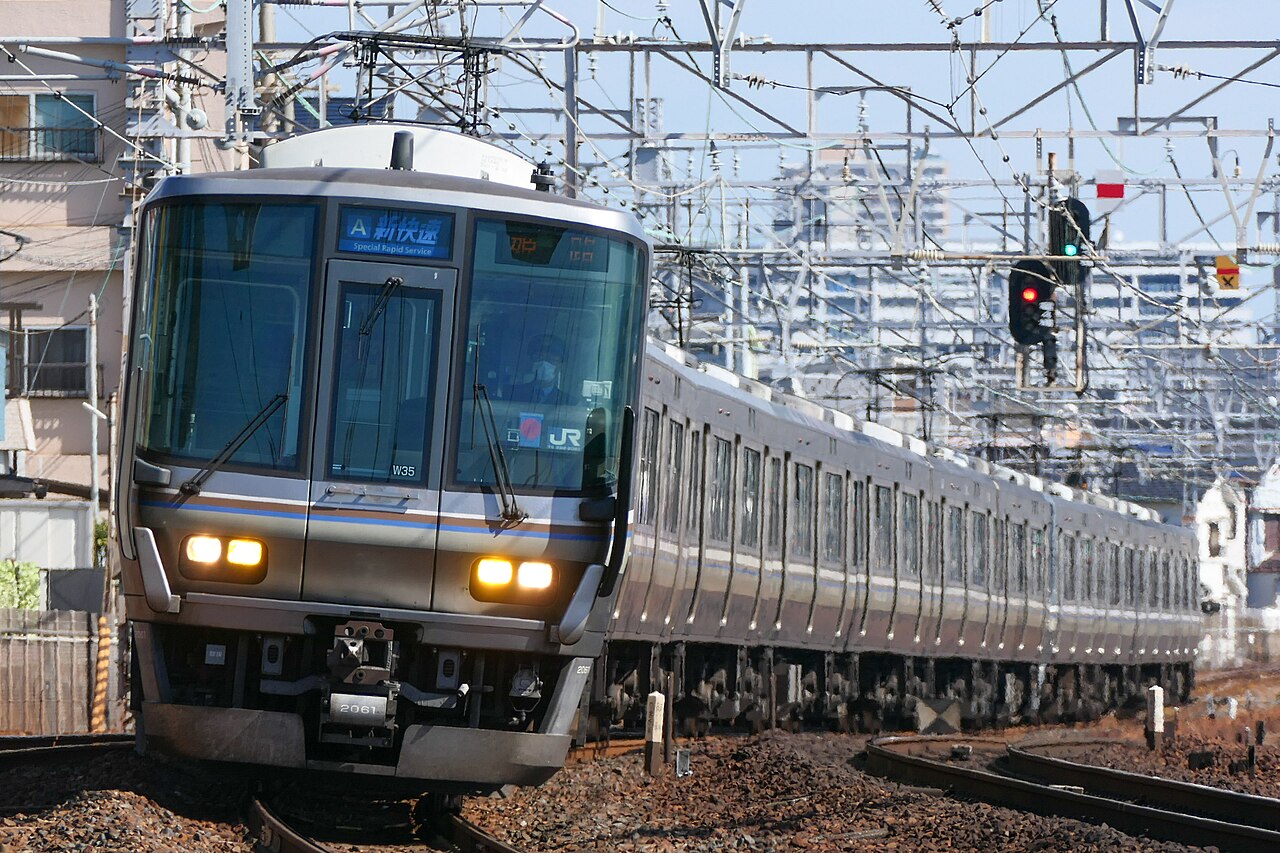
Electrification advanced from the Kansai end westward over thirty years. The Kobe–Akashi section was electrified in 1934, extended to Himeji in 1958 and to Hiroshima in 1962, and the entire line (except the Wadamisaki branch) was electrified in 1964 to coincide with the opening of the Tōkaidō Shinkansen between Tokyo and Shin-Osaka that same year. With that connection in place, limited express and express trains ran frequently across the line toward destinations throughout western Japan. The Wadamisaki Line itself was finally electrified in 2001.
The opening of the parallel San'yō Shinkansen reshaped the conventional line's role. Before the Shinkansen, the San'yō Main Line was a major transport corridor through western Honshū and on to Kyushu, carrying many express services. The Shinkansen was extended to Okayama Station in 1972 and to Hakata Station in 1975; on both occasions many express services on the conventional line were withdrawn, and since 1972 the line has been used mainly by local and freight services. Centralised traffic control (CTC) was commissioned between Mihara and Shimonoseki in 1984.
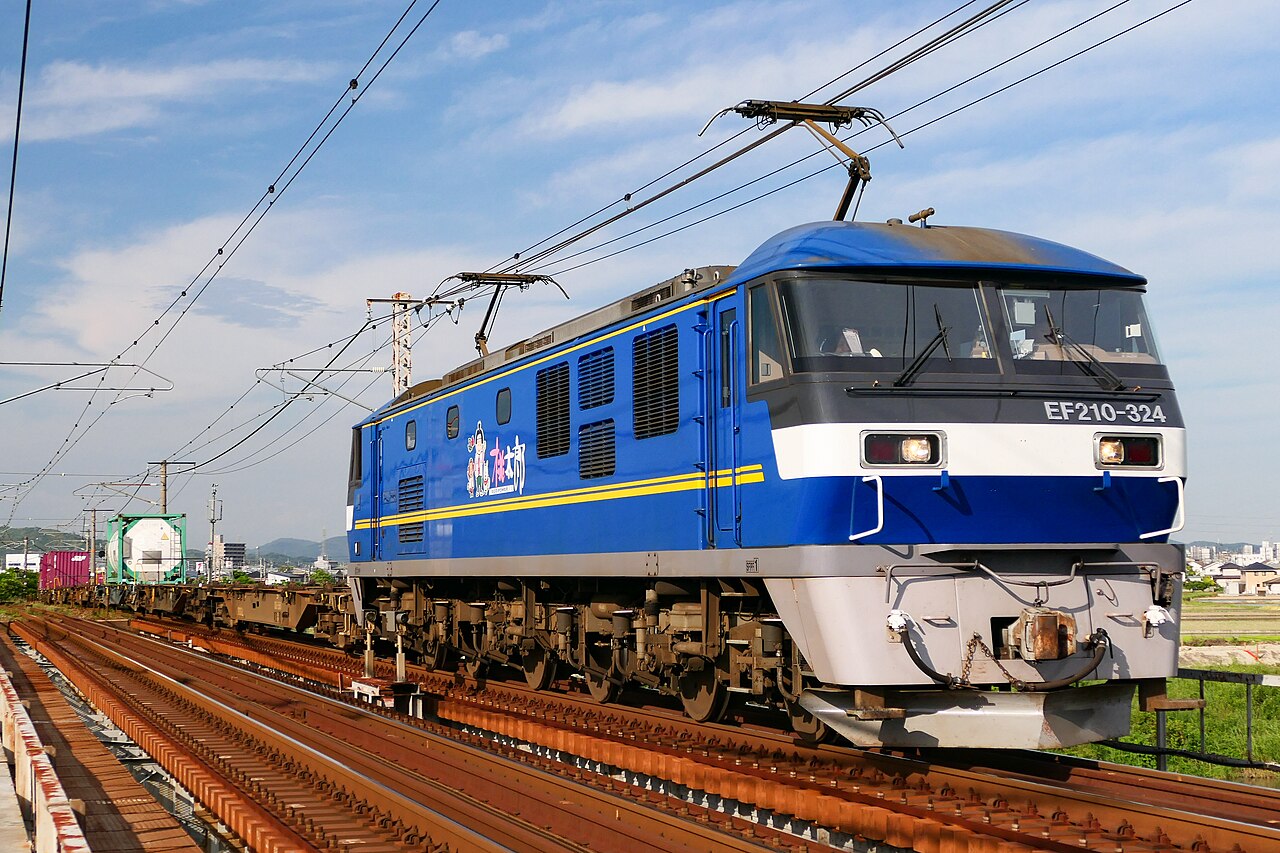
Today the San'yō Main Line is operated by two JR passenger companies and JR Freight. JR West runs the Kōbe–Shimonoseki portion (branding it the JR Kobe Line over the Kōbe–Himeji section and the San'yō Line beyond), JR Kyushu operates the Shimonoseki–Moji section, and Japan Freight Railway runs freight over the route from Kobe to the Kitakyushu Freight Terminal. Maximum line speeds are 130 km/h from Kōbe to Himeji, 120 km/h from Himeji to Shimonoseki (tilting trains run at 130 km/h on the Himeji–Okayama section), and 85 km/h on both the Shimonoseki–Moji and Hyōgo–Wadamisaki sections.
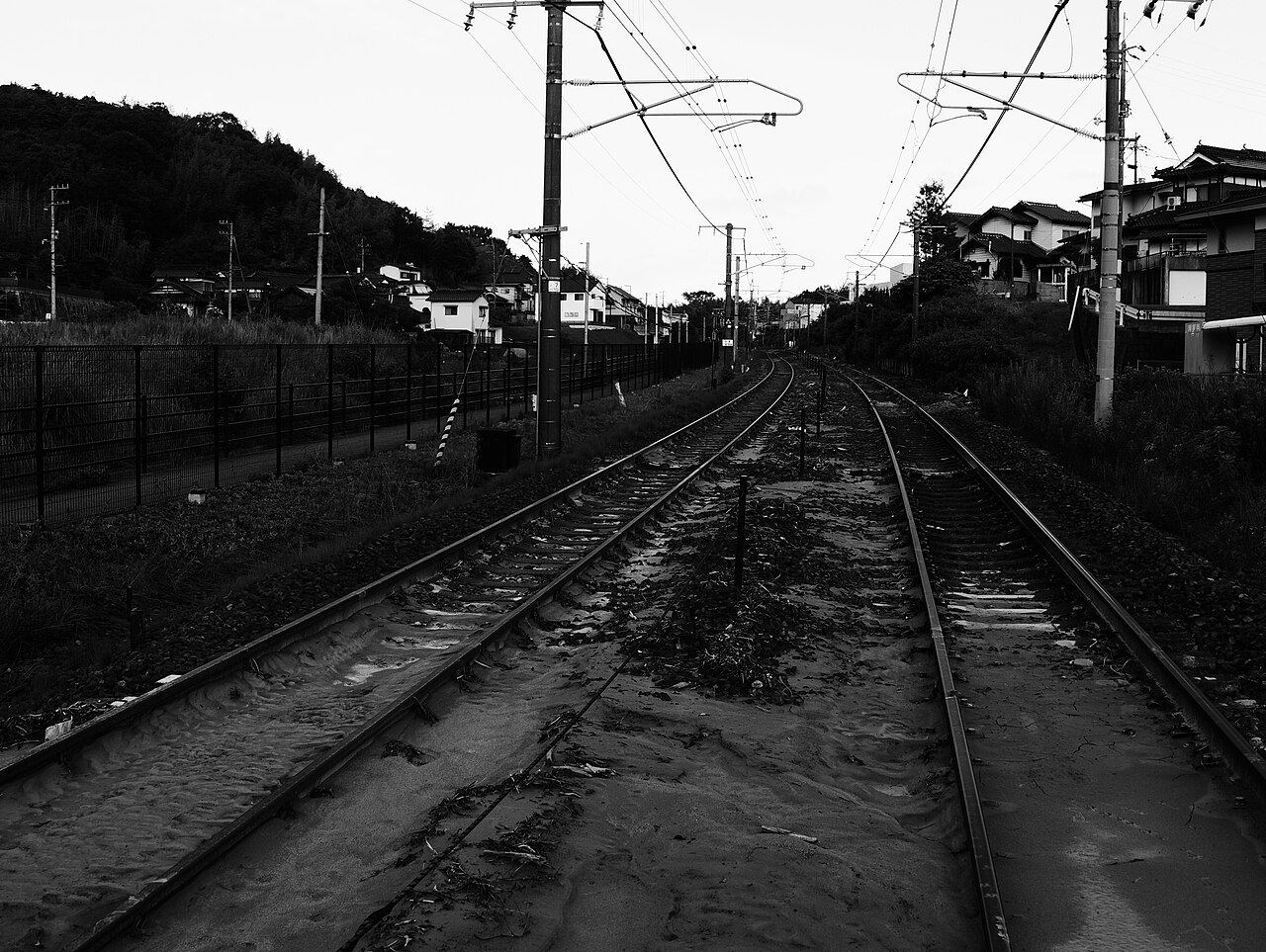
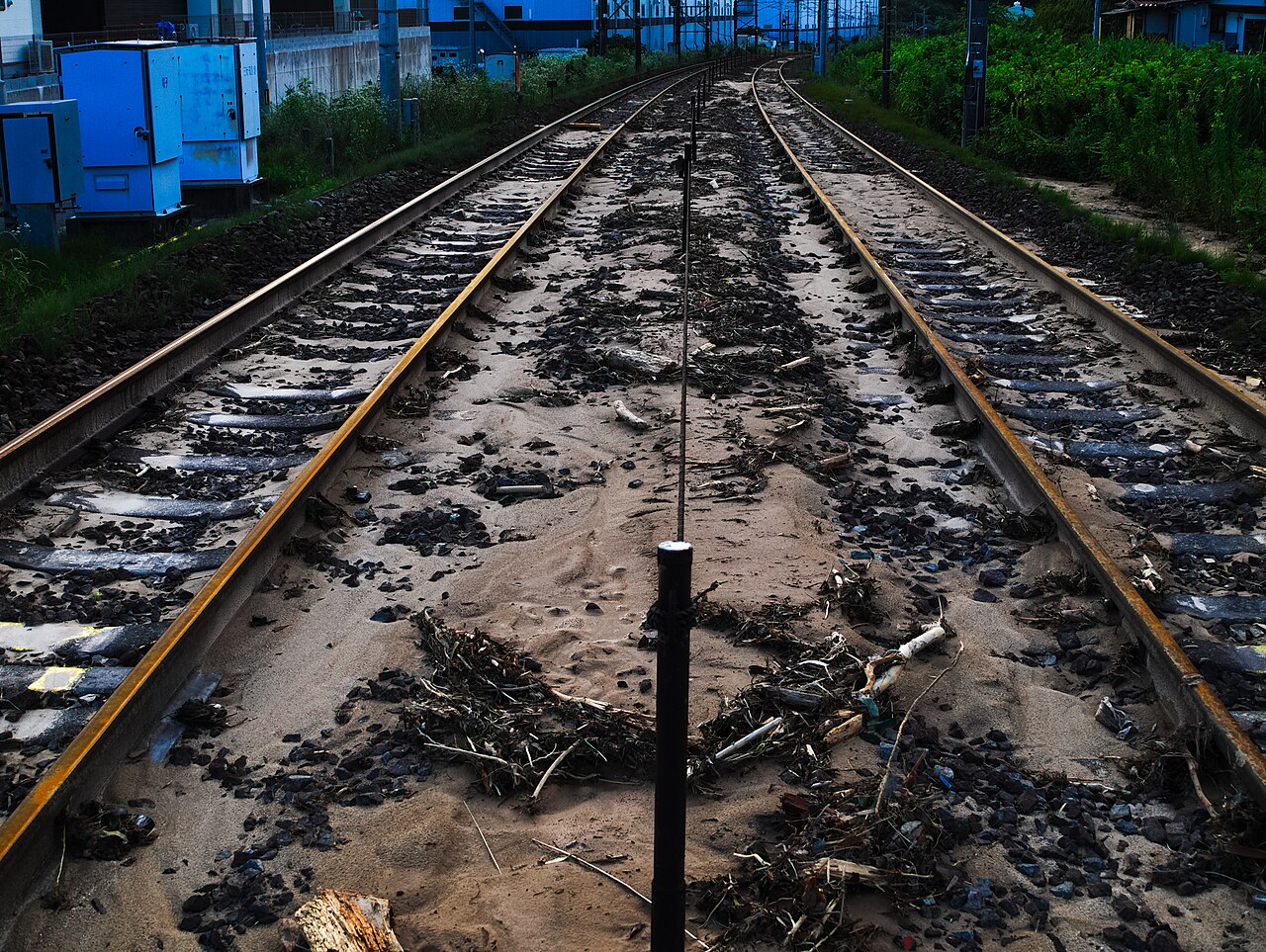
The line has seen two major disruptions in the modern era. The section between Kobe and Nishi-Akashi was severely damaged by the 1995 Great Hanshin earthquake and took ten weeks to repair. In 2018, heavy rain during the July floods forced the closure of the Okayama–Shimonoseki section from 6 July 2018; the majority of services were restored between 8 and 18 July, but the Yanai–Tokuyama section remained out of service until 9 September that year.
Timeline
- 1888The private Sanyō Railway opens the first section, Hyōgo–Akashi (1 November per the Japanese record).
- 1889The line is extended east to Kobe Station (double-track, connecting with the government railway) and west toward Tatsuno.
- 1891The Sanyō Railway reaches Okayama and Fukuyama.
- 1894The line reaches Hiroshima.
- 1899The Hyōgo–Himeji section is duplicated (double-tracked).
- 1901The line reaches Bakan (now Shimonoseki); the Japanese record dates the Kobe–Bakan through opening to 27 May.
- 1903The Hiroshima–Kaitaichi section is duplicated.
- 1906Under the Railway Nationalization Act, the Sanyō Railway is purchased by the government and renamed the Sanyō Main Line.
- 1909The formal line name 山陽本線 is designated in the government railway's line-naming list.
- 1930Duplication of the remainder of the line (begun 1921) is completed in stages, except the Iwakuni–Kushigahama section.
- 1934The Kobe–Akashi section is electrified. A new direct inland line (delayed by geological instability) opens as single track and becomes the Sanyō Main Line.
- 1942The Kanmon Tunnel under the Kanmon Strait is completed and the line is extended to Moji Station. The Japanese-language account describes it as the world's first undersea tunnel.
- 1944The original coastal alignment is double-tracked and returned to the Sanyō Main Line; the former bypass becomes the Gantoku Line. A second Kanmon tunnel opens.
- 1958Electrification is extended to Himeji.
- 1962Electrification is extended to Hiroshima.
- 1964The entire line (except the Wadamisaki branch) is electrified, to coincide with the opening of the Tōkaidō Shinkansen.
- 1972The San'yō Shinkansen is extended to Okayama; many express services are withdrawn and the line becomes mainly local and freight.
- 1975The San'yō Shinkansen is extended to Hakata; further express services on the conventional line are withdrawn.
- 1984CTC signalling is commissioned between Mihara and Shimonoseki.
- 1995The Kobe–Nishi-Akashi section is severely damaged by the Great Hanshin earthquake (17 January) and takes ten weeks to repair.
- 2001The Wadamisaki Line (Hyōgo–Wadamisaki branch) is electrified.
- 2018The July floods close the Okayama–Shimonoseki section from 6 July; most services resume 8–18 July, but Yanai–Tokuyama stays closed until 9 September.
Sources
Facts last verified 3 June 2026.
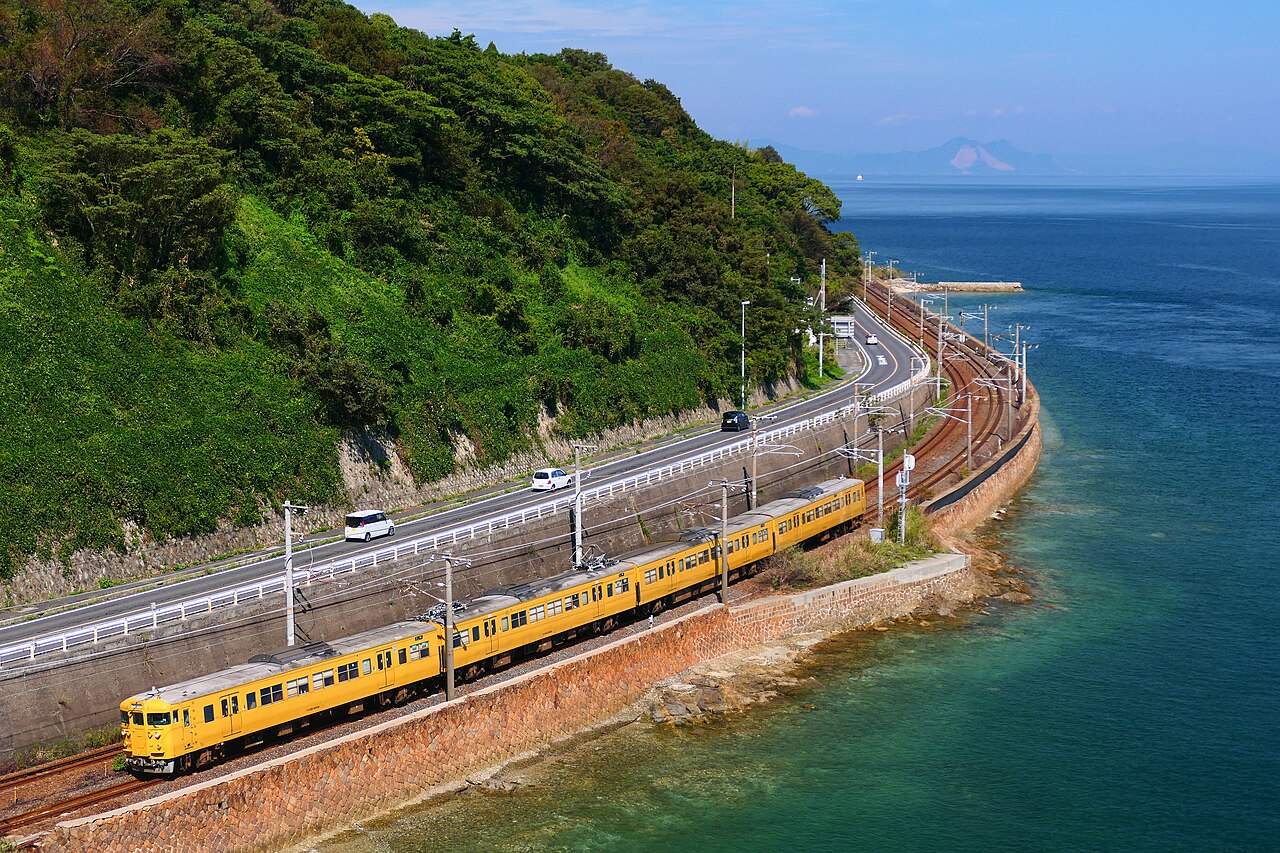
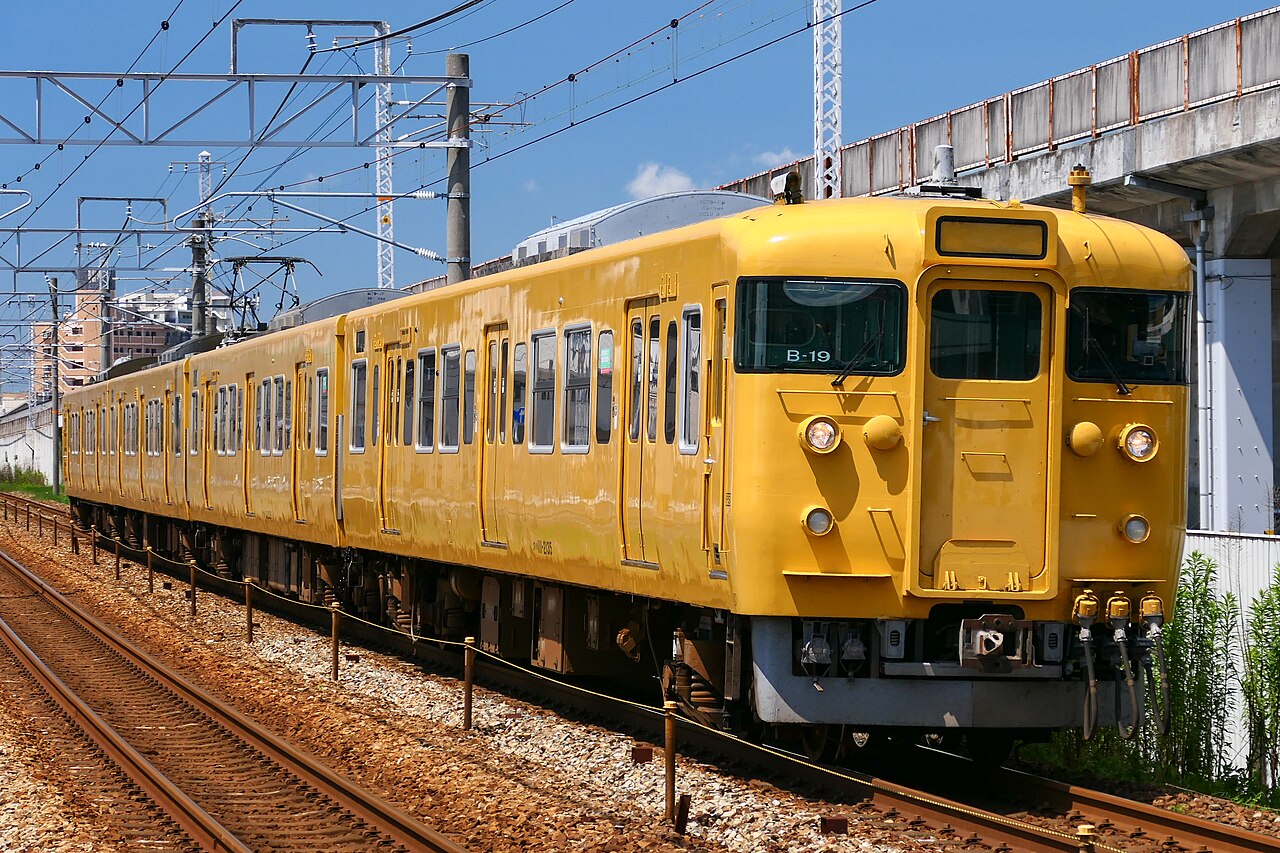
Gallery 4 photos
Every photo for this page — tap any image to view it full-size. All from Wikimedia Commons (credit under each).