History
Construction was begun by the Japanese Government Railways. The Takasaki–Yokokawa section opened on 15 October 1885; the Naoetsu–Sekiyama section followed in 1886, and the Sekiyama–Nagano–Karuizawa section in 1888. The Takasaki-to-Karuizawa portion was built as part of the planned "Nakasendō trunk line" intended to link Tokyo and Osaka, while the Karuizawa-to-Naoetsu portion was constructed largely to carry the materials for that scheme. The greatest obstacle was the Usui Pass between Yokokawa and Karuizawa: the two stations lie only about 10 km apart but differ in altitude by some 552 metres. To surmount it the railway built an Abt rack section through the pass, which opened in 1893 and completed the through line; for the five years before it opened a horse-drawn tramway carried traffic over the pass. The discontinued Usui Pass section became famous for its steep 66.7-per-mille (6.67 percent) gradient, cited as one of the most severe on the network (EN Wikipedia, quoting a JETRO source).
The coastal Naoetsu–Niigata stretch had a different origin: it was opened by the private Hokuetsu Railway, which built Naoetsu to Nagaoka in 1897 and extended the line to Niigata in 1904. That company was nationalised in 1907. In 1909 the route from Takasaki to Niigata was formally named the Shin'etsu Line under the government railway's line-naming rules, and in 1914 it took the name Shin'etsu Main Line. Electrification came first to the difficult mountain crossing: in 1912 the Usui Pass rack section was electrified at 600 V DC using a third rail — described by the English-language source as the first use of that method in Japan — which allowed faster, longer and cleaner trains over the pass.
Double-tracking and electrification of the rest of the line proceeded over many decades. The Karuizawa–Nagano section was doubled between 1917 and 1920, the Nagaoka–Miyauchi section in 1931 and the Niitsu–Kamo section in 1944, with the remaining Niigata-to-Naoetsu segments doubled in stages between 1958 and 1973. On the Takasaki side, double-tracking between 1963 and 1973 began with the replacement of the Abt rack mechanism by conventional adhesion-only working, electrified at 1,500 V DC, on the steep grade through the Usui Pass; the rack equipment was kept briefly as a contingency and removed once adhesion operation had proven reliable. Mainline electrification at 1,500 V DC reached the Miyauchi–Nagaoka section in 1947 (alongside electrification of the Jōetsu Line), the Nagaoka–Niigata section in 1962, the Takasaki–Yokokawa section in 1962, and the Nagano–Naoetsu section in 1966.
The line was inherited by JR East on 1 April 1987 at the privatisation of Japanese National Railways, with Japan Freight Railway (JR Freight) operating freight services. The defining change of the modern era was the arrival of the parallel Shinkansen. On 1 October 1997, with the opening of the Hokuriku (Nagano) Shinkansen between Takasaki and Nagano, the Yokokawa–Karuizawa section across the Usui Pass was closed and replaced by a JR Bus Kanto road service, while the Karuizawa–Shinonoi section was transferred to the third-sector Shinano Railway — the first line closure by JR East since its 1987 founding, excluding third-sector conversions of designated local lines. On 14 March 2015, when the Hokuriku Shinkansen was extended to Kanazawa, the Nagano–Naoetsu section was likewise spun off: Nagano–Myōkō-Kōgen (37.3 km) became the Shinano Railway Kita-Shinano Line, and Myōkō-Kōgen–Naoetsu (37.7 km) became the Echigo Tokimeki Railway Myōkō Haneuma Line. The Nagaoka–Niigata stretch, which parallels the Jōetsu Shinkansen (not a nationally-planned "seibi" Shinkansen), was not separated and remains part of JR East.
As a result, from 14 March 2015 the line consists of three operational sections: Takasaki–Yokokawa (29.7 km) in Gunma Prefecture; Shinonoi–Nagano (9.3 km) in Nagano Prefecture; and Naoetsu–Niigata (136.3 km) in Niigata Prefecture. The English-language infobox gives the combined length of these passenger sections as 175.3 km; the Japanese source gives a total of 181.5 km including freight branches. The whole route is 1,067 mm gauge and electrified at 1,500 V DC overhead, and the Japanese source counts 59 stations including freight stations. The termini run from Takasaki (Takasaki, Gunma) to Yokokawa (Annaka), from Shinonoi (Nagano City) to Nagano, and from Naoetsu (Jōetsu, Niigata) to Niigata (Chūō-ku, Niigata City), with intermediate cities including Kashiwazaki, Nagaoka, Sanjō and Niitsu (Akiha-ku) on the northern section.
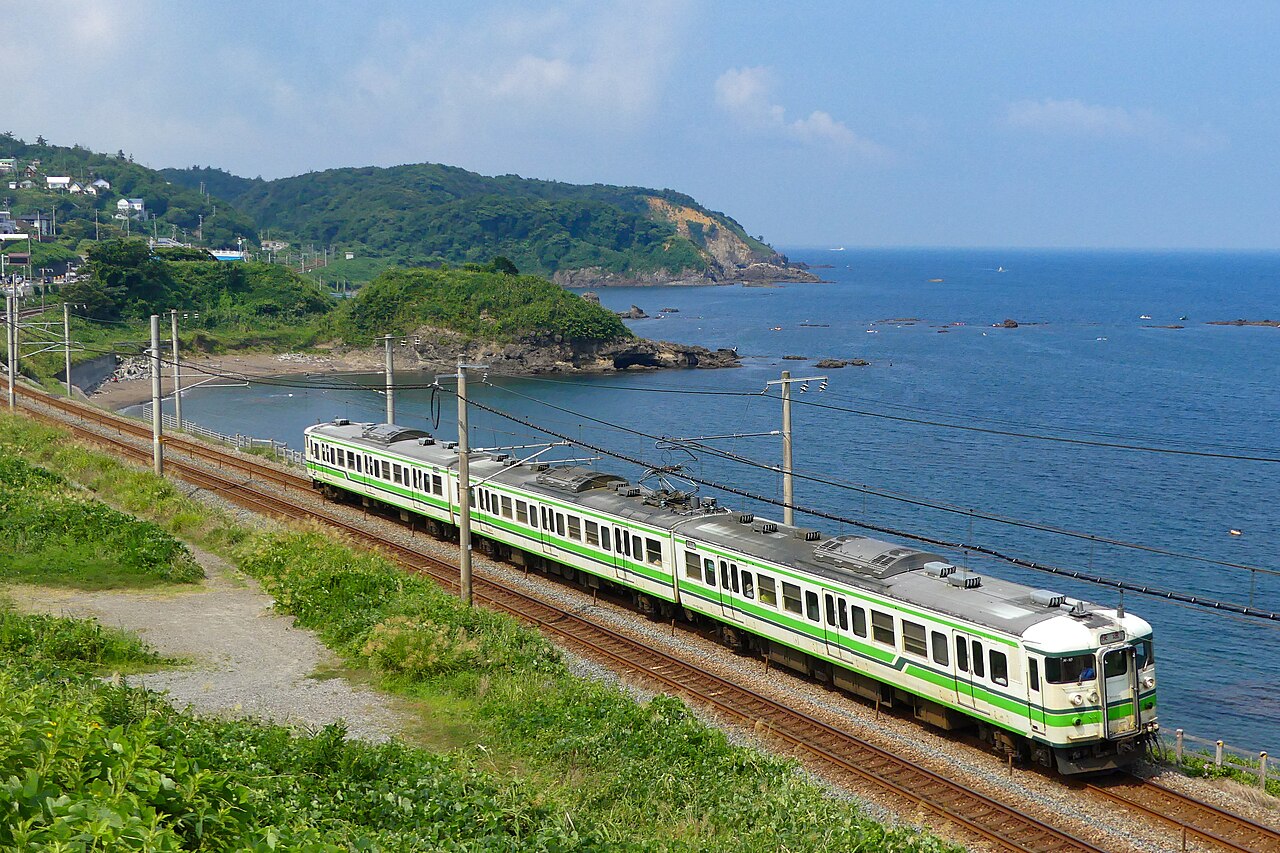
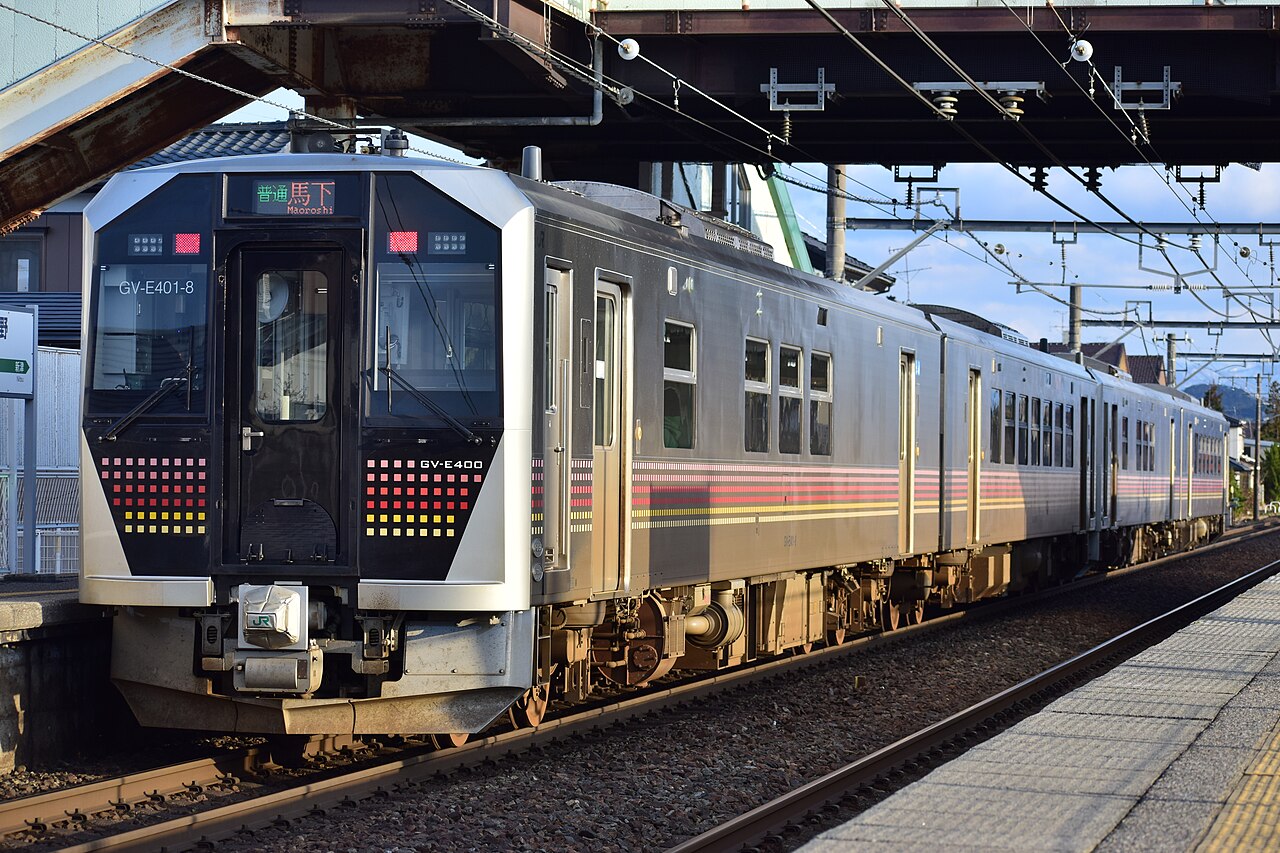
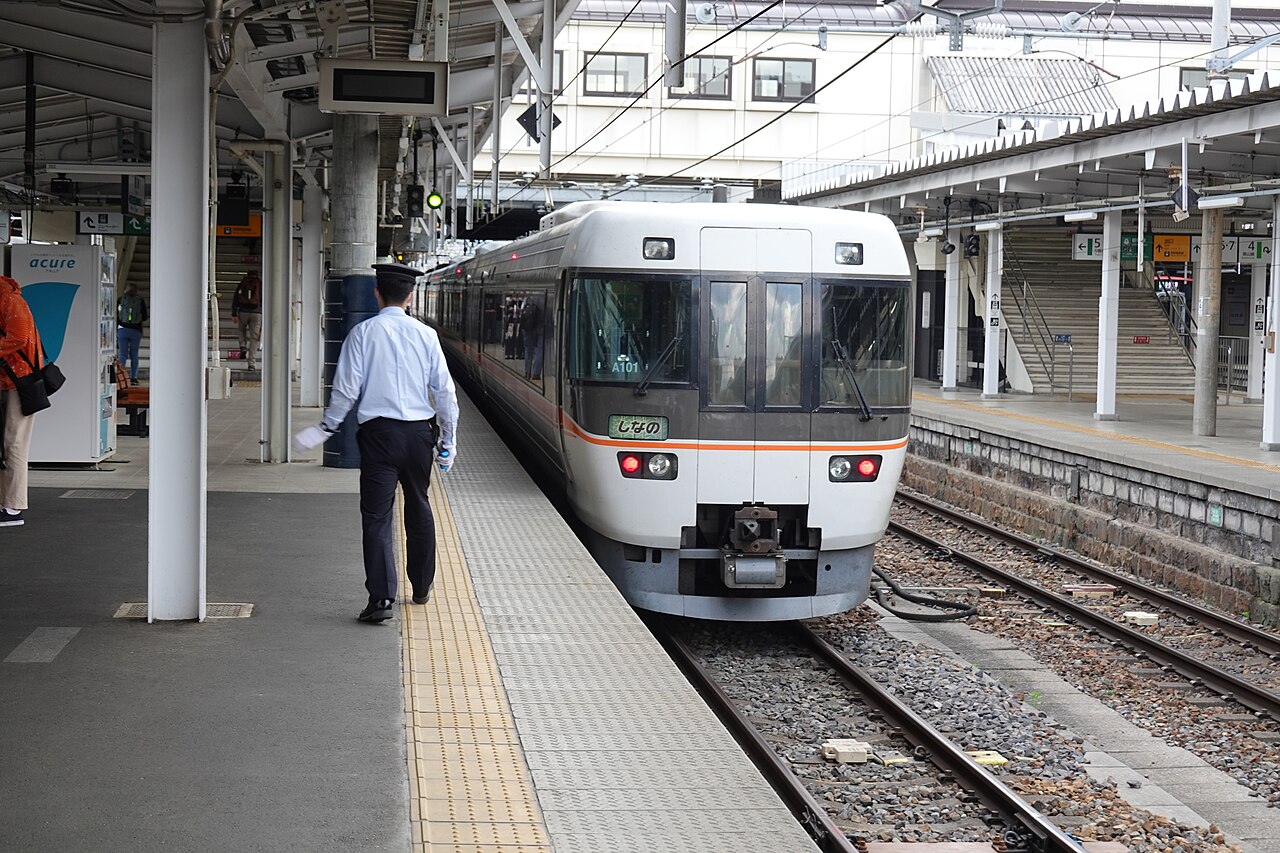
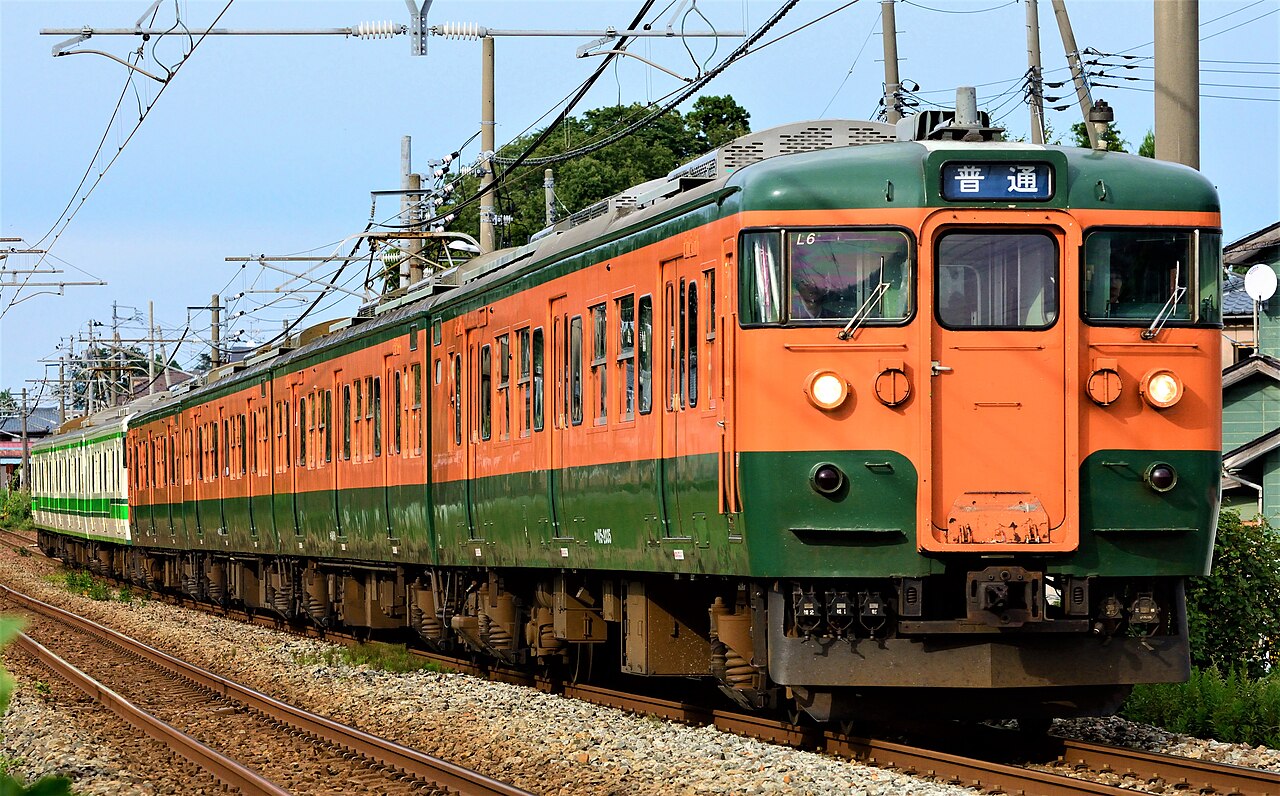
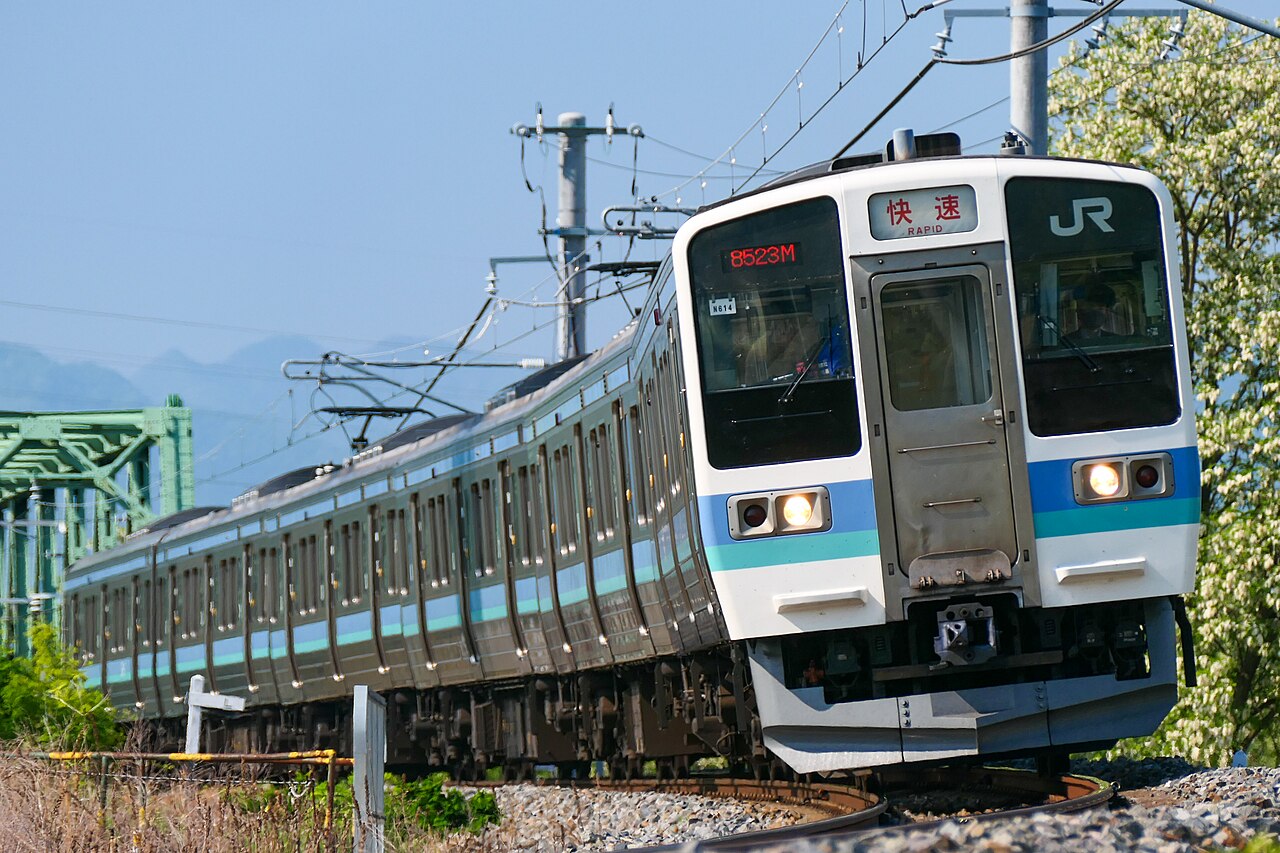
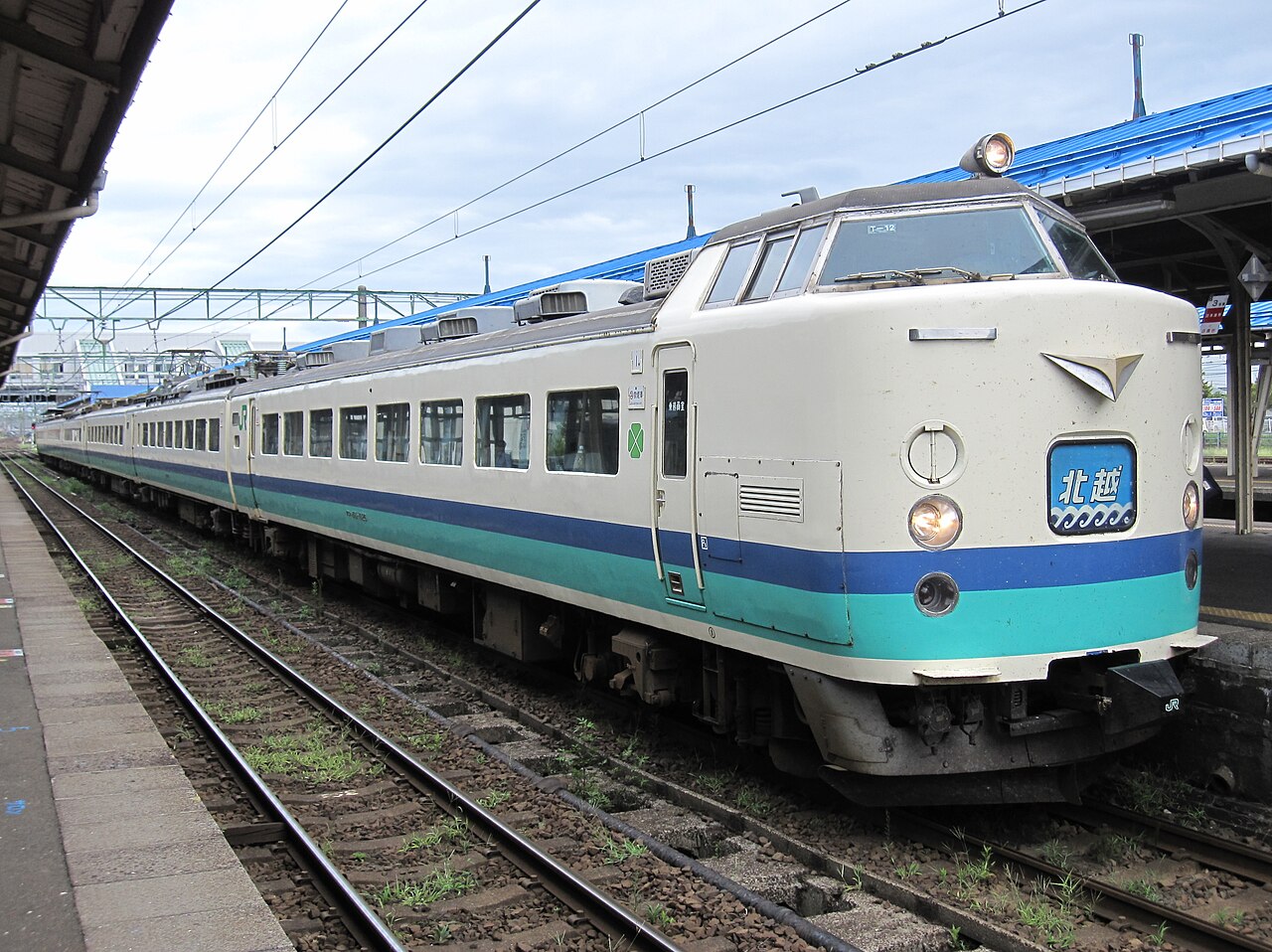
Today the three sections serve very different roles. Takasaki–Yokokawa carries local trains only (one or two an hour) plus the SL Gunma Yokokawa and SL YOGISHA Yokokawa excursion trains. On Shinonoi–Nagano all trains run through onto the Shinonoi Line or the Shinano Railway Line, and the section also hosts JR Central's Limited Express Shinano between Nagoya and Nagano; station numbering (Shinonoi SE09 to Nagano SE13) was introduced here in February 2025. The Naoetsu–Niigata section is the busiest and most varied: as of 3 May 2023 it carried the Limited Express Shirayuki (four round trips), several Rapid services, and frequent local trains, together with the Koshino Shu*Kura joyful train; it also forms part of the Nihonkai-Jūkan (Japan Sea trunk) corridor used by through limited expresses and freight. Present rolling stock includes 211 series sets on the Takasaki section and E129 series (introduced in December 2014), 115 series and E653-1100 series (Shirayuki) sets on the Niigata section. By JR East's published transport-density figures, average use of the whole line in fiscal year 2023 was about 8,039 passengers per day, with the short Shinonoi–Nagano section by far the busiest at about 24,506.
The line's history also records several serious incidents on the difficult northern and mountain sections. A train ran back down a gradient and derailed at Kumanotaira in 1918; a snow-clearing vehicle and an Aomori–Osaka train collided head-on near Naoetsu on 1 February 1929, killing four; a roadbed washout near Myōkō-Kōgen on 19 December 1946 derailed a night train, killing thirteen and injuring some eighty; and repeated landslides at Kumanotaira in June 1950 killed fifty. More recently the line was heavily damaged by the 2004 Chūetsu earthquake (Kashiwazaki–Nagaoka, fully restored 29 November 2004) and the 2007 Chūetsu-oki earthquake (full reopening 13 September 2007, less than two months after the quake).
Timeline
- 188515 October: the Japanese Government Railways open the Takasaki–Yokokawa section, the line's first stretch.
- 1886The Naoetsu–Sekiyama section opens.
- 1888The Sekiyama–Nagano–Karuizawa section opens.
- 1893The Abt rack section through the Usui Pass (Yokokawa–Karuizawa) opens, completing the through line; a horse tramway had bridged the gap for the previous five years.
- 1897The private Hokuetsu Railway opens its first section toward Nagaoka on the Naoetsu–Niigata route.
- 1904The Hokuetsu Railway extends the coastal line to Niigata (original station).
- 1907The Hokuetsu Railway is nationalised.
- 190912 October: the Takasaki–Niigata route is named the "Shin'etsu Line" under the government railway line-naming rules.
- 1912The Usui Pass section (Yokokawa–Karuizawa) is electrified at 600 V DC using a third rail — stated by the EN source to be the first use of the method in Japan.
- 1914The line is designated the "Shin'etsu Main Line" (信越本線).
- 1947The Miyauchi–Nagaoka section is electrified at 1,500 V DC, alongside electrification of the Jōetsu Line.
- 1962The Nagaoka–Niigata section and the Takasaki–Yokokawa section are electrified at 1,500 V DC.
- 1963On the Takasaki side, the Abt rack mechanism is replaced by adhesion-only working (1,500 V DC) on the steep Usui Pass grade; rack equipment is removed once adhesion operation proves reliable. (Abt system abolished 30 September 1963 per JA.)
- 1966The Nagano–Naoetsu section is electrified.
- 19871 April: at the privatisation of Japanese National Railways, the line passes to JR East, with JR Freight operating freight services.
- 19971 October: with the Hokuriku (Nagano) Shinkansen Takasaki–Nagano opening, Yokokawa–Karuizawa is closed (replaced by a JR Bus Kanto service) and Karuizawa–Shinonoi is transferred to the Shinano Railway — JR East's first line closure since 1987 excluding designated-local-line conversions.
- 200423 October: the Chūetsu earthquake heavily damages the Kashiwazaki–Nagaoka section; the line is fully restored on 29 November 2004.
- 200716 July: the Chūetsu-oki earthquake suspends the Saigata–Miyauchi stretch; the line is restored in stages, with the last segment (Kakizaki–Kashiwazaki) reopening on 13 September 2007, fully reopening the line less than two months after the quake.
- 201514 March: with the Hokuriku Shinkansen extension to Kanazawa, Nagano–Naoetsu is spun off — Nagano–Myōkō-Kōgen (37.3 km) to the Shinano Railway Kita-Shinano Line and Myōkō-Kōgen–Naoetsu (37.7 km) to the Echigo Tokimeki Railway Myōkō Haneuma Line. The line is now three separated sections.
- 2025February: station numbering (SE09 Shinonoi – SE13 Nagano) is introduced on the Shinonoi–Nagano section.
Sources
Facts last verified 3 June 2026.
Gallery 5 photos
Every photo for this page — tap any image to view it full-size. All from Wikimedia Commons (credit under each).