History
The core idea was to turn the radial commuter pattern of Greater Tokyo into a cross-city one. Mid-distance trains from the northern Kanto prefectures had historically terminated at Tokyo and Ueno; the new service instead routed them through the Ikebukuro, Shinjuku and Shibuya sub-centres (fukutoshin) on the west side of central Tokyo, linking the lines reaching north toward Utsunomiya and Takasaki with those reaching south toward the Yokosuka and Tokaido corridors. Two through-running systems were established: an Utsunomiya Line to Yokosuka Line system (Utsunomiya to Zushi) and a Takasaki Line to Tokaido Line system (Takasaki to Odawara), with some trains continuing beyond Takasaki via the Joetsu and Ryomo lines to Maebashi. Its core Omiya-Shinjuku-Ofuna axis passes through Omiya and Urawa in Saitama, the Toshima, Shinjuku, Shibuya and Shinagawa wards of Tokyo, and Kawasaki and Yokohama in Kanagawa; across its constituent lines the route touches six prefectures - Gunma, Tochigi, Ibaraki, Saitama, Tokyo and Kanagawa. Operating distances are measured from Shinjuku as the zero point, with Omiya 27.4 km to the north and Zushi 61.8 km to the south. The infrastructure is 1,067 mm narrow gauge, electrified at 1,500 V DC overhead, with a maximum operating speed of 120 km/h.
The service grew out of decades of incremental passenger use of freight tracks. The decisive first step came on 1 February 1984, when the Tohoku freight line between Omiya and Akabane was opened to passenger operation and some weekday morning rush-hour mid-distance Tohoku Main Line and Takasaki Line trains began running over it to Akabane. After the Saikyo Line reached Shinjuku on 3 March 1986 - bringing the Ikebukuro-Shinjuku stretch of the Yamanote freight line into passenger use - JR East began, from 13 March 1988, running roughly one mid-distance Tohoku or Takasaki Line train per hour through to Ikebukuro via the Tohoku and Yamanote freight lines; the Japanese-language history records that this arrangement "later developed into the Shonan-Shinjuku Line." Some Ikebukuro services were extended to Shinjuku from 1 December 1995, and the Saikyo Line's extension to Ebisu on 16 March 1996 added platforms on the Yamanote freight line at Shibuya and Ebisu. The new cross-Tokyo route and the "Shonan-Shinjuku Line" name were announced on 21 September 2001.
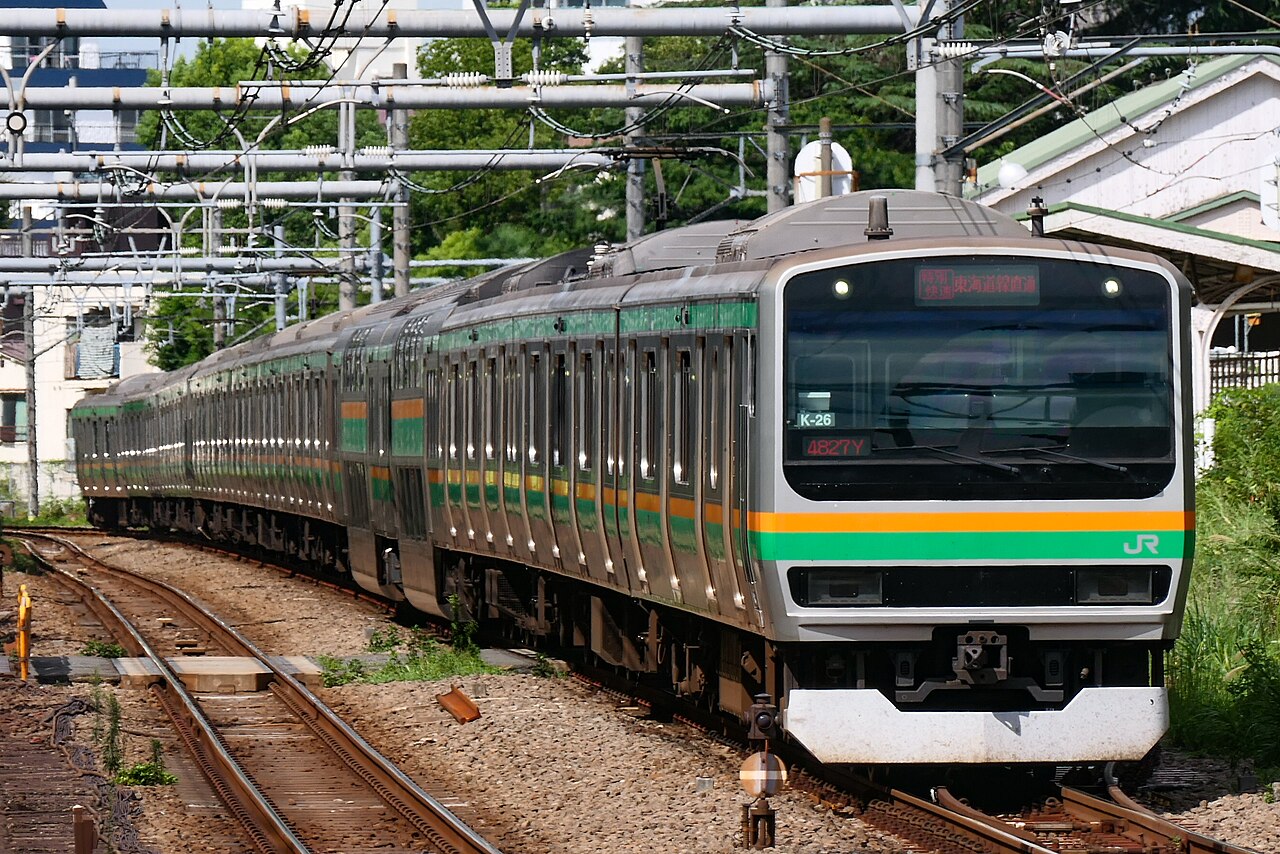
The line formally began with the timetable revision of 1 December 2001, at first running only about 25 round trips a day, all in the daytime, as an auxiliary to the established Tokyo and Ueno services. Expansion followed quickly: the Rinkai Line's full opening and new platforms at Osaki on 1 December 2002 brought all trains to a stop there and raised frequency from 25 to 38 round trips. The pivotal change came on 16 October 2004, once grade-separation work north of Ikebukuro - completed on 6 June 2004 - had removed the flat junction with the Saikyo Line that capped capacity: service grew from 38 to 64 round trips across the whole day, every train now running through north-to-south, two per hour in each system during the daytime. From the same revision all trains were standardised on E231 series sets (ten- and fifteen-car, each with two bilevel Green cars), the maximum speed was raised to 120 km/h on parts of the route, and a "Special Rapid" service appeared on the Takasaki-Tokaido system.
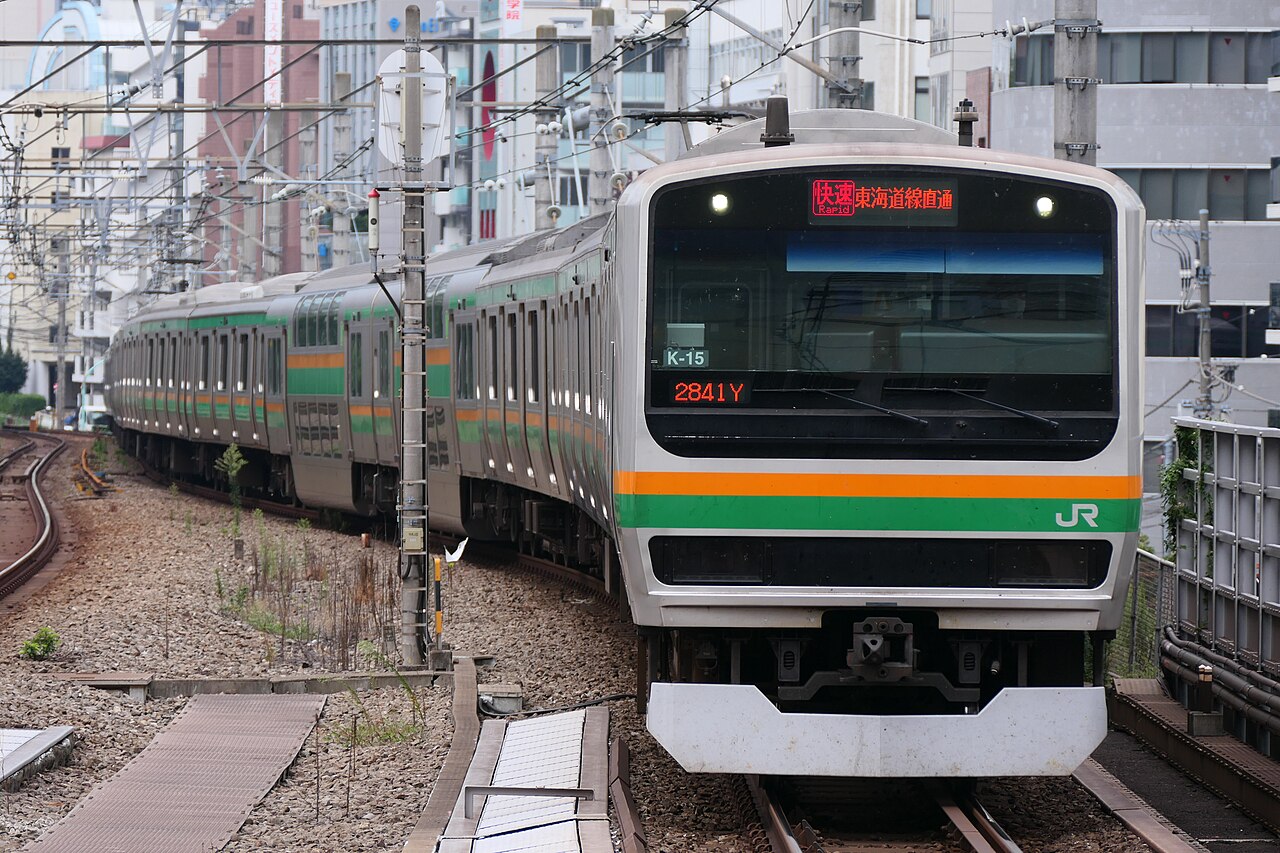
Later revisions added capacity and stops - an extra weekday-morning round trip from 15 March 2008 (64 to 65), another in the evening from 14 March 2009, and a further increase from 16 March 2013 when all trains began stopping at Urawa - while Musashi-Kosugi Station opened on 13 March 2010 between Nishi-Oi and Shin-Kawasaki, served by all Shonan-Shinjuku Line trains. The service ran no trains from 11 March 2011 after the Great East Japan Earthquake and the rolling blackouts that spring, resuming on 4 April 2011. From 14 March 2015, E233-3000 series trains joined the E231s, and the Takasaki-Tokaido trains south of Kagohara were standardised to fifteen cars. Station numbering (route code JS, Omiya to Zushi) was introduced in 2016, and the Sotetsu-JR Link Line, opened on 30 November 2019, brought Sotetsu through trains onto shared track with the line between Ikebukuro and Musashi-Kosugi. Ridership was recorded at 478,836 passengers daily in 2015.
Today the Shonan-Shinjuku Line is one of JR East's principal cross-Tokyo commuter arteries, running the Utsunomiya-to-Yokosuka and Takasaki-to-Tokaido systems in a roughly alternating pattern - four trains per hour through the Omiya-Ofuna core in the daytime (two per system), rising to two or three trains per hour in each system at the morning peak, every train carrying two double-decker Green cars. Since the parallel Ueno-Tokyo Line opened in 2015, offering a more direct route between Saitama and Kanagawa through the east side of central Tokyo, some of that demand has shifted there, but the Shonan-Shinjuku Line continues to provide the fast Shinjuku- and Shibuya-oriented through service for which it was created.
Timeline
- 19841 February: the Tohoku freight line between Omiya and Akabane is opened to passenger operation; some weekday morning rush-hour mid-distance Tohoku Main Line and Takasaki Line trains begin running over the freight line to Akabane - the origin of the service.
- 19863 March: the Saikyo Line is extended to Shinjuku, bringing the Ikebukuro-Shinjuku stretch of the Yamanote freight line into passenger use.
- 198813 March: mid-distance Tohoku and Takasaki Line trains begin running through to Ikebukuro via the Tohoku and Yamanote freight lines, about one train per hour all day; the JA source notes this 'later developed into the Shonan-Shinjuku Line'.
- 19951 December: some Utsunomiya and Takasaki Line trains that had terminated at Ikebukuro are extended to Shinjuku over the Yamanote freight line.
- 199616 March: the Saikyo Line is extended to Ebisu; platforms are added on the Yamanote freight line at Shibuya and Ebisu.
- 200121 September: the new cross-Tokyo route and the name 'Shonan-Shinjuku Line' are announced. 1 December: the Shonan-Shinjuku Line begins operation with the timetable revision - about 25 round trips a day, daytime only.
- 20021 December: with the full opening of the Rinkai Line and the new platforms at Osaki, all trains begin stopping at Osaki and frequency rises from 25 to 38 round trips.
- 20046 June: grade-separation work north of Ikebukuro is completed. 16 October: timetable revision raises service from 38 to 64 round trips with all-day north-south through operation; all trains standardised on E231 series (10/15-car, two Green cars), maximum speed raised to 120 km/h on parts of the route, and the 'Special Rapid' service introduced.
- 200815 March: one weekday-morning round trip is added (64 to 65 round trips).
- 200914 March: one evening round trip is added on the Takasaki-Tokaido system.
- 201013 March: Musashi-Kosugi Station opens between Nishi-Oi and Shin-Kawasaki; all Shonan-Shinjuku Line trains stop there.
- 201111 March to 3 April: the service is suspended all day following the Great East Japan Earthquake and the resulting rolling blackouts; operation resumes at first train on 4 April.
- 201316 March: all Shonan-Shinjuku Line trains begin stopping at Urawa; a further round trip is added.
- 201514 March: E233-3000 series trains enter Shonan-Shinjuku Line service alongside the E231s; Takasaki-Tokaido trains south of Kagohara are standardised to 15-car formations.
- 2016Station numbering (route code 'JS', between Omiya and Zushi) is introduced. (The EN source dates this to 20 August 2016; the JA source to 1 October 2016.)
- 201930 November: the Sotetsu-JR Link Line opens; Sotetsu through trains share track with the Shonan-Shinjuku Line between Ikebukuro and Musashi-Kosugi.
- 20201 June: the Shibuya Station platform is relocated.
Sources
Facts last verified 3 June 2026.
Gallery 4 photos
Every photo for this page — tap any image to view it full-size. All from Wikimedia Commons (credit under each).