History
The line opened on 12 May 1926 as the steam-operated Jinchū Railway (Jinchū Tetsudō), initially running between Futamata-gawa and Atsugi — the latter a station on what is today the JR Sagami Line. The surrounding district was at the time a farming area with little industry, and the railway was opened primarily to carry gravel dredged from the Sagami River. The promoters had originally applied to build a 762 mm-gauge tramway between the government line's Hodogaya Station and Ebina, but the plan was changed to a 1,067 mm-gauge light railway before construction. From the initial section the line was progressively extended toward Yokohama: it reached Yokohama in December 1933, and the segment from the former Sagami-Kokubu station (now closed) to Ebina opened in November 1941.
During the Second World War the railway was reorganised. On 1 April 1943 the Sagami Railway merged the Jinchū Railway, and the route became the Sagami Railway Jinchū Line. Because of the Sagami Railway's financial difficulties the line was then commissioned to Tōkyū, under which it was operated as the "Tōkyū Atsugi Line" until the commission ended in 1947. Electrification of the line had begun in June 1942, and the entire Yokohama-to-Ebina route was electrified by 20 September 1944; the wartime work used minimal materials, drawing power in part from substations on the Odakyu Odawara Line, which left the line split between 600 V and 1,500 V sections until the whole line was unified at 1,500 V DC in 1946. The line is electrified at 1,500 V DC using overhead catenary.
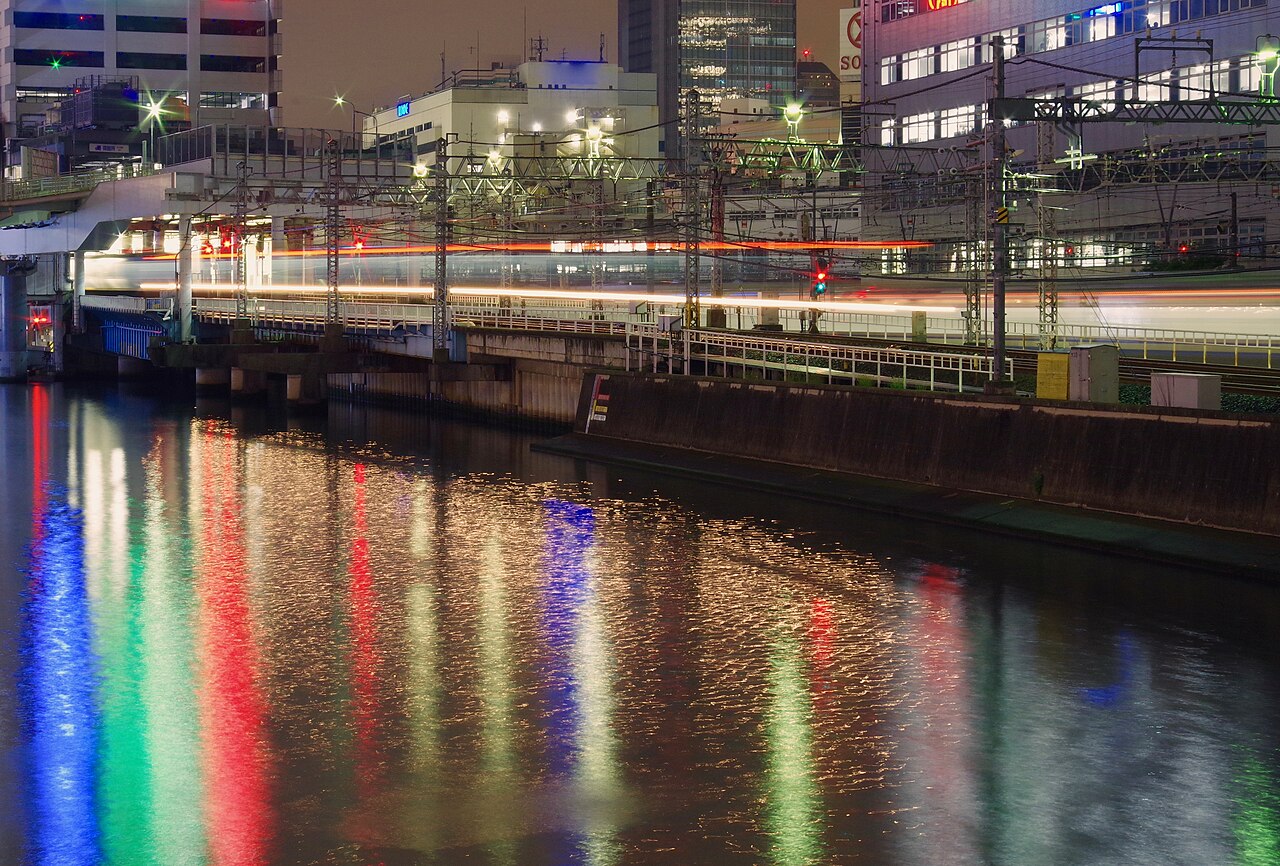
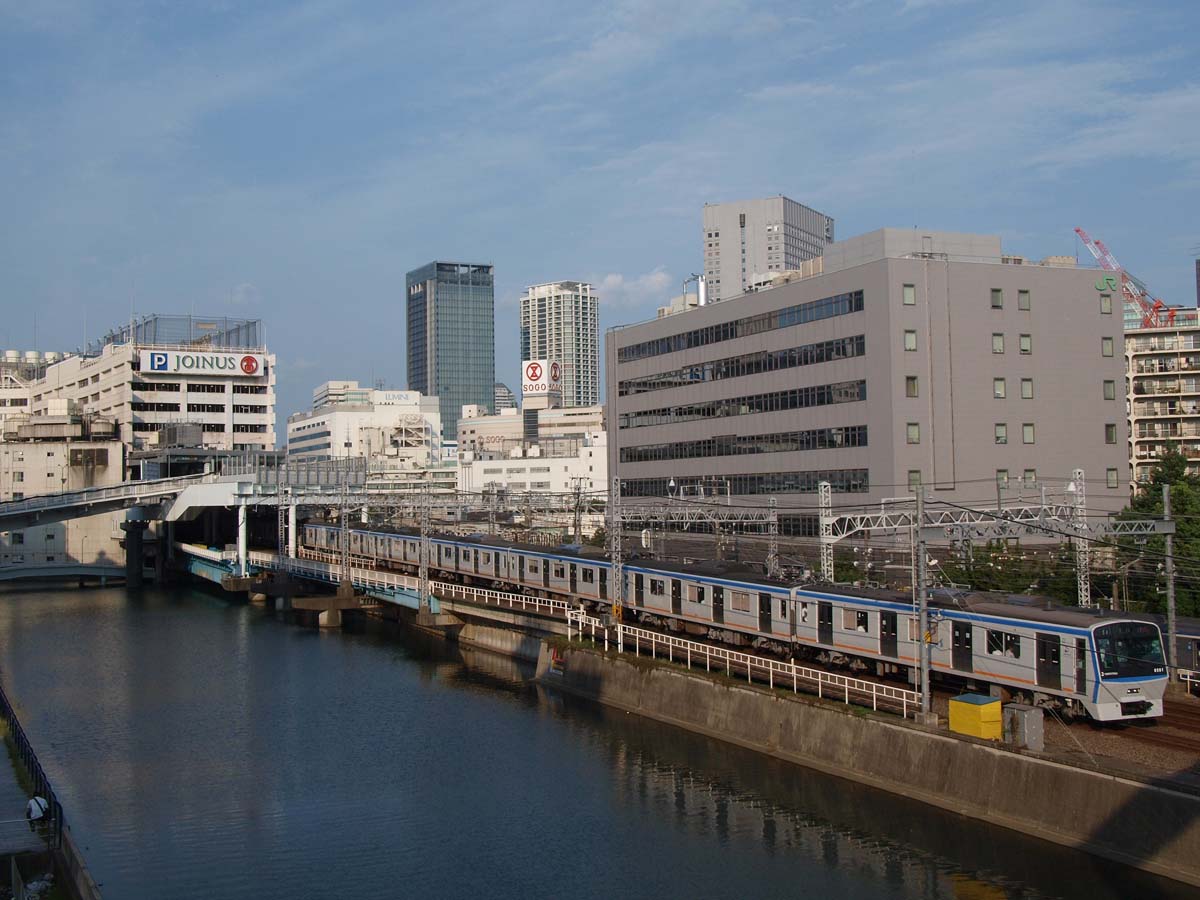
After the war the line's catchment urbanised rapidly and Sotetsu steadily expanded capacity. The line was progressively double-tracked section by section, with the Yokohama-to-Nishi-Yokohama section double-tracked in January 1957, and the entire line had been double-tracked by March 1974. Longer trains followed the higher-capacity infrastructure: the first air-conditioned trains — four-car 6000 series electric multiple units — entered service on the line on 3 July 1971, and ten-car operation began in 1981. Sotetsu also developed the area around its Yokohama terminus, which had previously been an unremarkable urban fringe, into a major commercial hub.
Freight, by contrast, declined from the 1960s. The gravel traffic that had justified the line's construction ended by 1964 following a ban on gravel extraction from the Sagami River, and freight operation on the line ceased entirely in 1998. A separate fact of the company's history is that the line known today as the JR Sagami Line was originally constructed and owned by Sotetsu, until it was acquired by the government during the Second World War in 1944; no agreement to return it was reached after the war, and it is now operated by JR East.
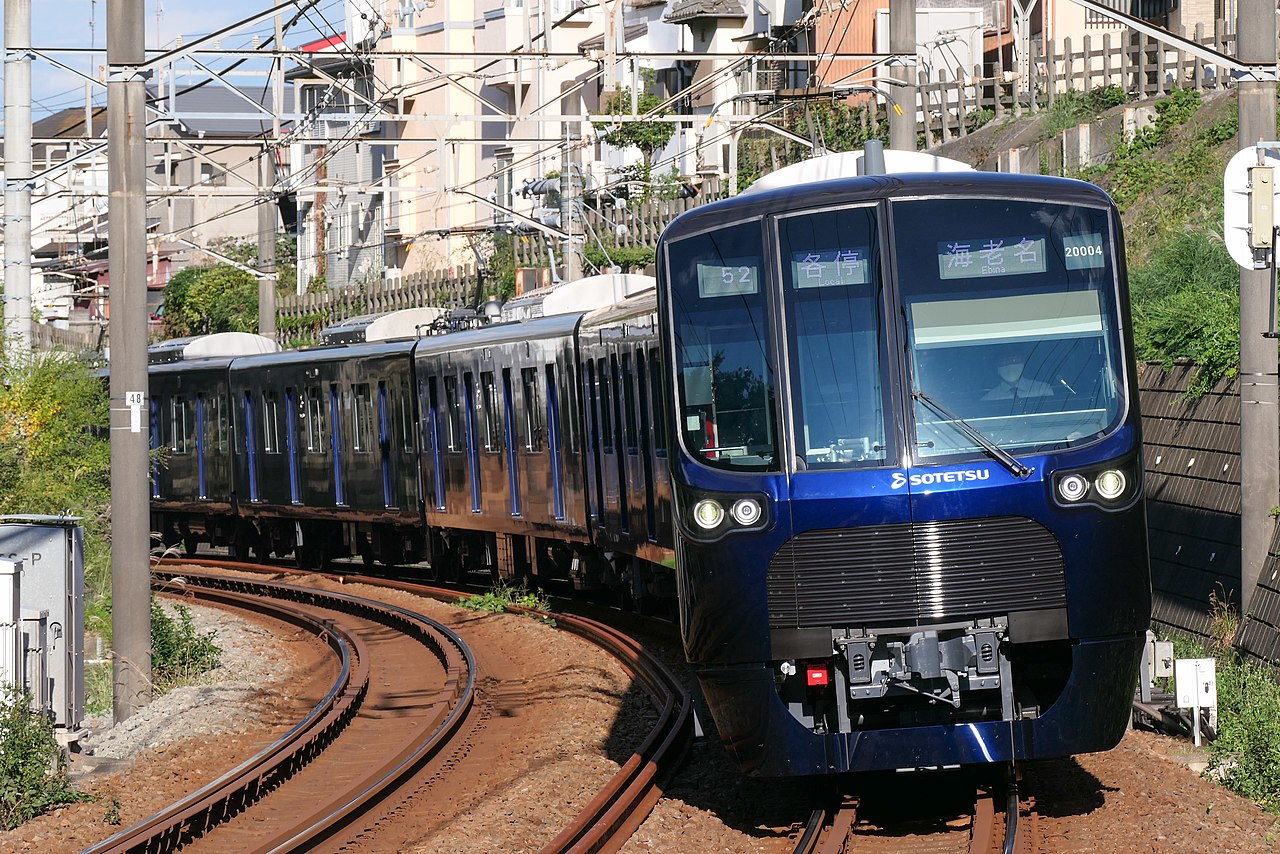
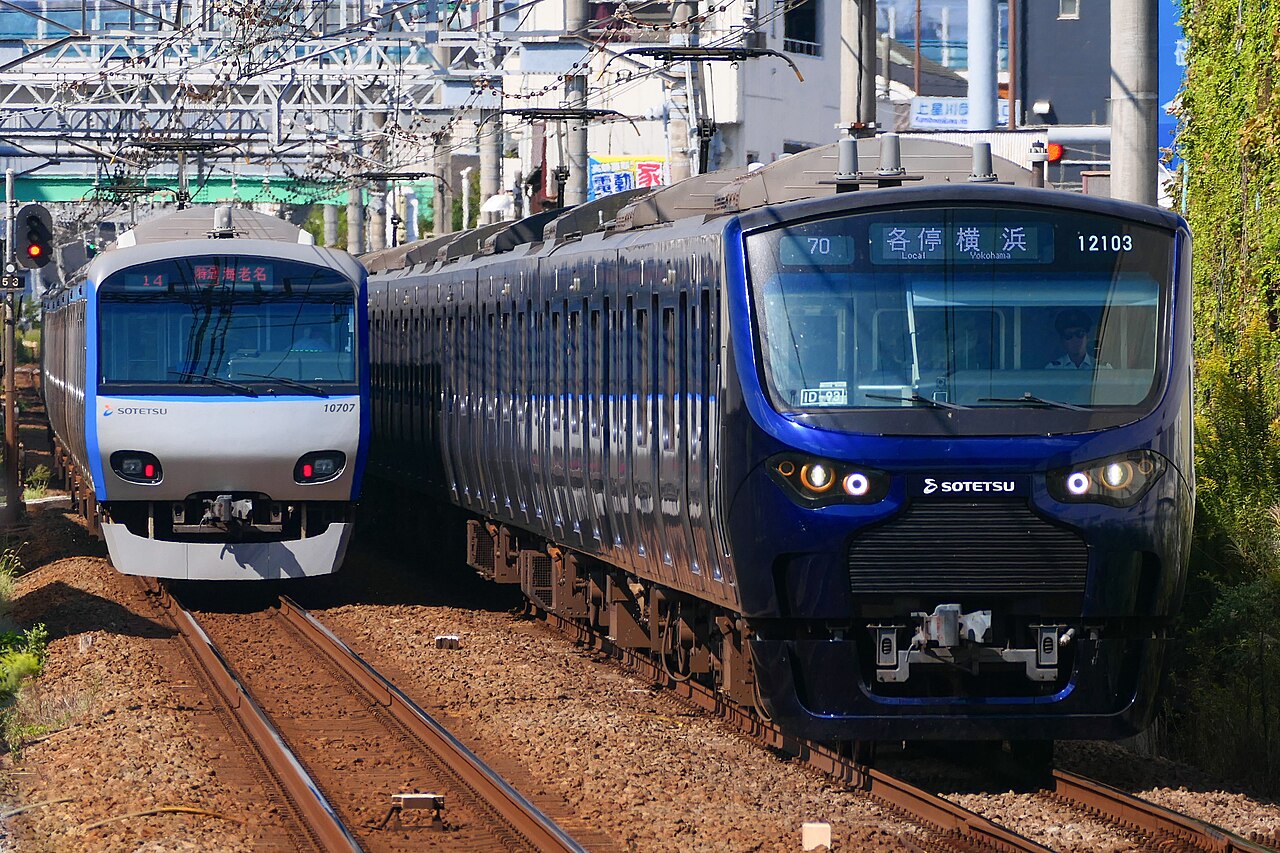
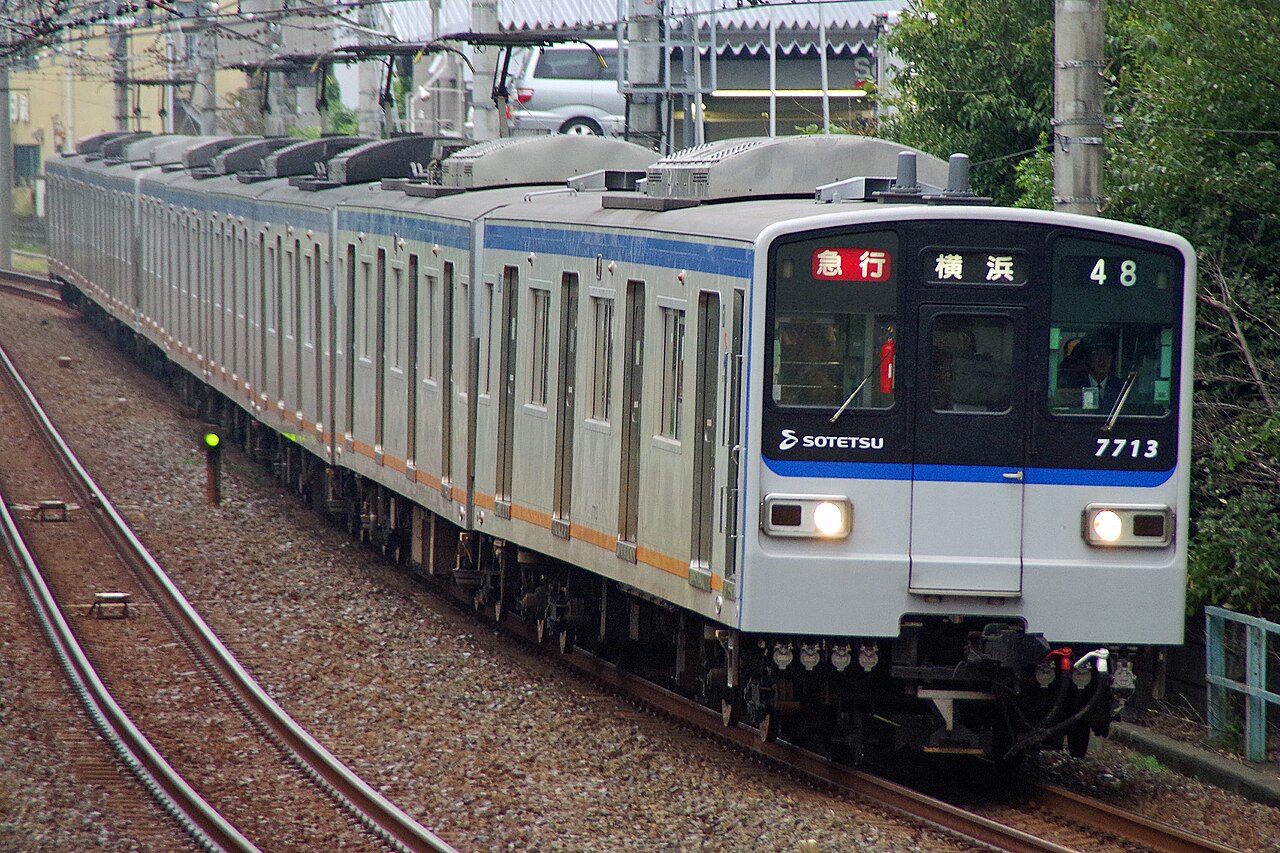
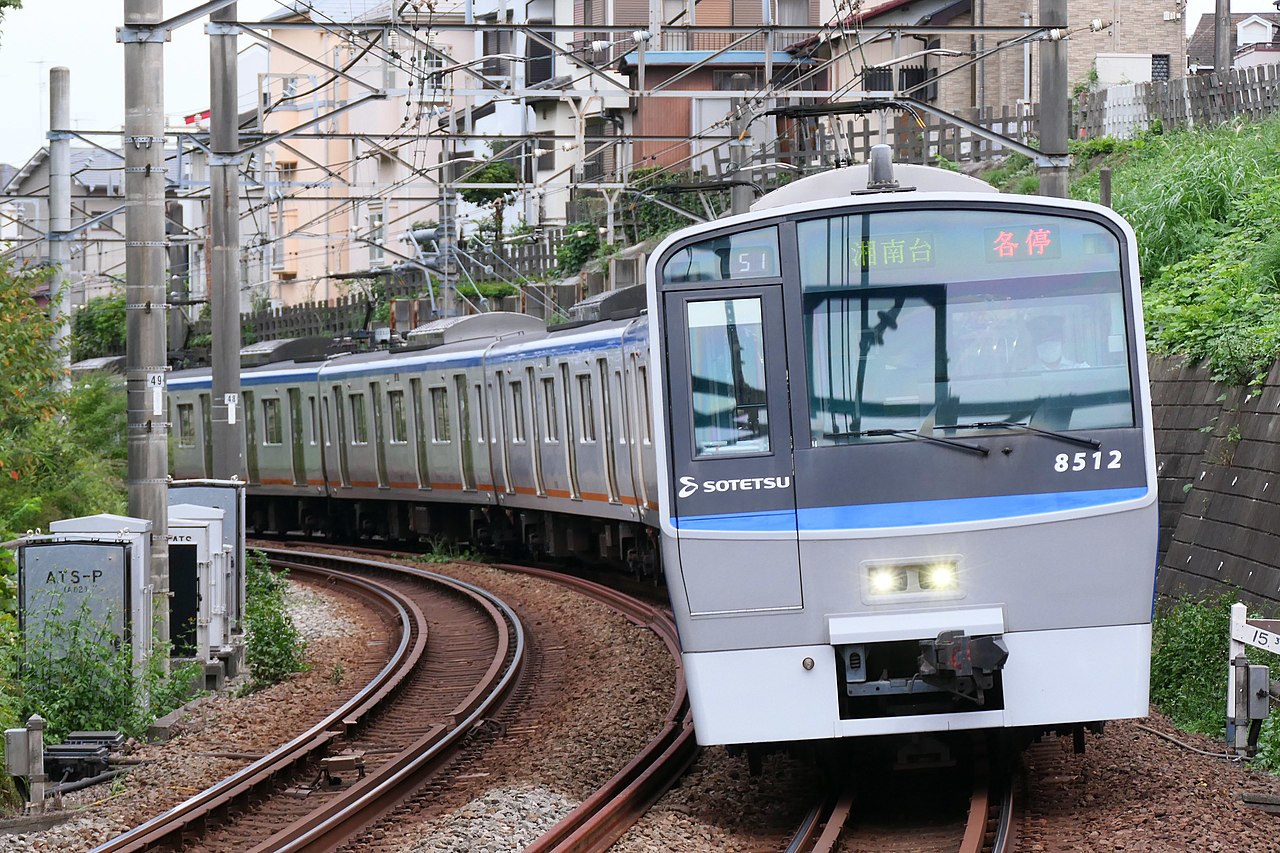
Today the Sōtetsu Main Line is operated by Sagami Railway with a maximum speed of 100 km/h, and its depot is at Kashiwadai Station. Services are divided into several categories — Local, Rapid, Commuter Express, Commuter Limited Express and Limited Express — with many trains continuing west of Futamata-gawa onto the Sōtetsu Izumino Line toward Shōnandai. The line was modernised with the magnetic Passnet farecard from 1 October 2000. In its most significant recent change, Sotetsu connected to the wider Tokyo network: through services to the JR network via the Sōtetsu–JR Direct Line began on 30 November 2019, and through services to the Tōkyū network via the Sōtetsu and Tōkyū Shin-yokohama lines began on 18 March 2023. It was also in 2023 that the line took its present name, "Sōtetsu Main Line," when the "Sōtetsu" prefix was added in the FY2023 national rail directory (Tetsudō Yōran); the line had previously been styled simply the "Main Line." Recorded daily ridership was 566,657 passengers in fiscal year 2010. To improve safety and efficiency, a 2.8 km section around Tsurugamine Station is being relocated underground, with the new underground track and station building expected to be completed in 2034.
Timeline
- 192612 May: the line opens as the steam-operated Jinchū Railway between Futamata-gawa and Atsugi (the latter on the present-day Sagami Line).
- 1933December: the line is extended to reach Yokohama Station, completing through running to the Yokohama terminus.
- 1941November: the section from the former Sagami-Kokubu station (now closed) to Ebina opens.
- 1942June: electrification work on the line commences.
- 19431 April: the Sagami Railway merges the Jinchū Railway and the route becomes the Sagami Railway Jinchū Line. Owing to the Sagami Railway's financial difficulties the line was later commissioned to Tōkyū and run as the "Tōkyū Atsugi Line" (operated under that name from 1945 until the commission ended in 1947).
- 194420 September: the entire Yokohama–Ebina line is electrified (initially with mixed 600 V / 1,500 V sections).
- 1946The whole line is unified at 1,500 V DC.
- 1947The Tōkyū operating commission ends and Sagami Railway resumes operation of the line.
- 1957January: the Yokohama–Nishi-Yokohama section is double-tracked (one of several sections double-tracked progressively from the early 1950s to 1974).
- 1964Gravel transport — the traffic the line was built to carry — ends following a ban on gravel extraction from the Sagami River.
- 19713 July: the first air-conditioned trains, four-car 6000 series EMUs, enter service on the line.
- 1974March: the entire line is double-tracked.
- 1981Ten-car trains begin operating on the line (EN gives 6 April; the JA timeline and its cited newspaper source give 5 April).
- 1998Freight operation on the line ceases entirely.
- 20001 October: station ticket barriers are modified to accept the Passnet magnetic farecard.
- 201930 November: through services to the JR network begin via the Sōtetsu–JR Direct Line.
- 202318 March: through services to the Tōkyū network begin via the Shin-yokohama lines. Separately, in 2023 the line is renamed to its present "Sōtetsu Main Line" (the "Sōtetsu" prefix added in the FY2023 national rail directory; previously styled simply "Main Line").
- 2034A 2.8 km section around Tsurugamine Station is to be relocated underground, with the new track and station building expected to be completed (planned).
Sources
Facts last verified 3 June 2026.
Gallery 5 photos
Every photo for this page — tap any image to view it full-size. All from Wikimedia Commons (credit under each).