History
The line's origins lie with the Nippon Railway Company, described in both Wikipedia sources as the first private railway company in Japan. The first section, Ueno to Kumagaya, opened on 28 July 1883 as Nippon Railway's inaugural operating segment, making it one of the oldest railway lines in the country — older, in fact, than the section of the Tōhoku Main Line north of Ōmiya. The line was conceived as part of the export-oriented industrialisation policy of the era: it was needed to carry raw silk and silk textiles from sericulture-rich Gunma Prefecture to the trade port of Yokohama, and it was also planned as the first section of the projected Nakasendō Railway, a trunk line intended to link Tokyo with the Keihanshin (Osaka–Kyoto–Kobe) region. The original opening-day stations were Ueno, Ōji, Urawa, Ageo, Kōnosu and Kumagaya; the present starting point, Ōmiya, did not yet exist. The British engineer Boyle's proposed Nakasendō Railway alignment via Ōji–Akabane–Ōmiya–Kōnosu–Kumagaya–Takasaki was adopted by railway bureau director Masaru Inoue, fixing the present route.
Construction pushed north rapidly. The line was extended from Kumagaya to Honjō on 21 October 1883 and from Honjō to Shinmachi on 27 December 1883. The following year it reached Takasaki on 1 May 1884 and was fully opened through to Maebashi on 20 August 1884. On 25 June 1884, an opening ceremony for the line to Takasaki was held at Ueno Station in the presence of Emperor Meiji, who rode the round trip between Ueno and Takasaki. In 1885, Ōmiya Station was opened (between Urawa and Ageo) to serve as the junction for Nippon Railway's second-phase line, which would later become the Tōhoku Main Line; that same year a line from Akabane to the government railway at Shinagawa (today part of the Yamanote and Saikyō lines) opened, realising the original plan of connecting Gunma with Yokohama.
The line passed through several names before its present one. Under Nippon Railway it was the "First District Line"; in government gazettes it was the "Ueno–Kumagaya steam railway," and in passenger guides it was sometimes called the "Nakasendō line." On 1 November 1906, Nippon Railway was bought out and nationalised under the Railway Nationalization Act, and the line was incorporated into the government railways. Three years later, on 12 October 1909, the Railway Line Naming notice (Railway Bureau Notice No. 54) officially designated the Ōmiya–Takasaki section as the "Takasaki Line," while the Ueno–Ōmiya stretch was assigned to the Tōhoku Main Line and the Takasaki–Maebashi stretch to the Ryōmō Line.
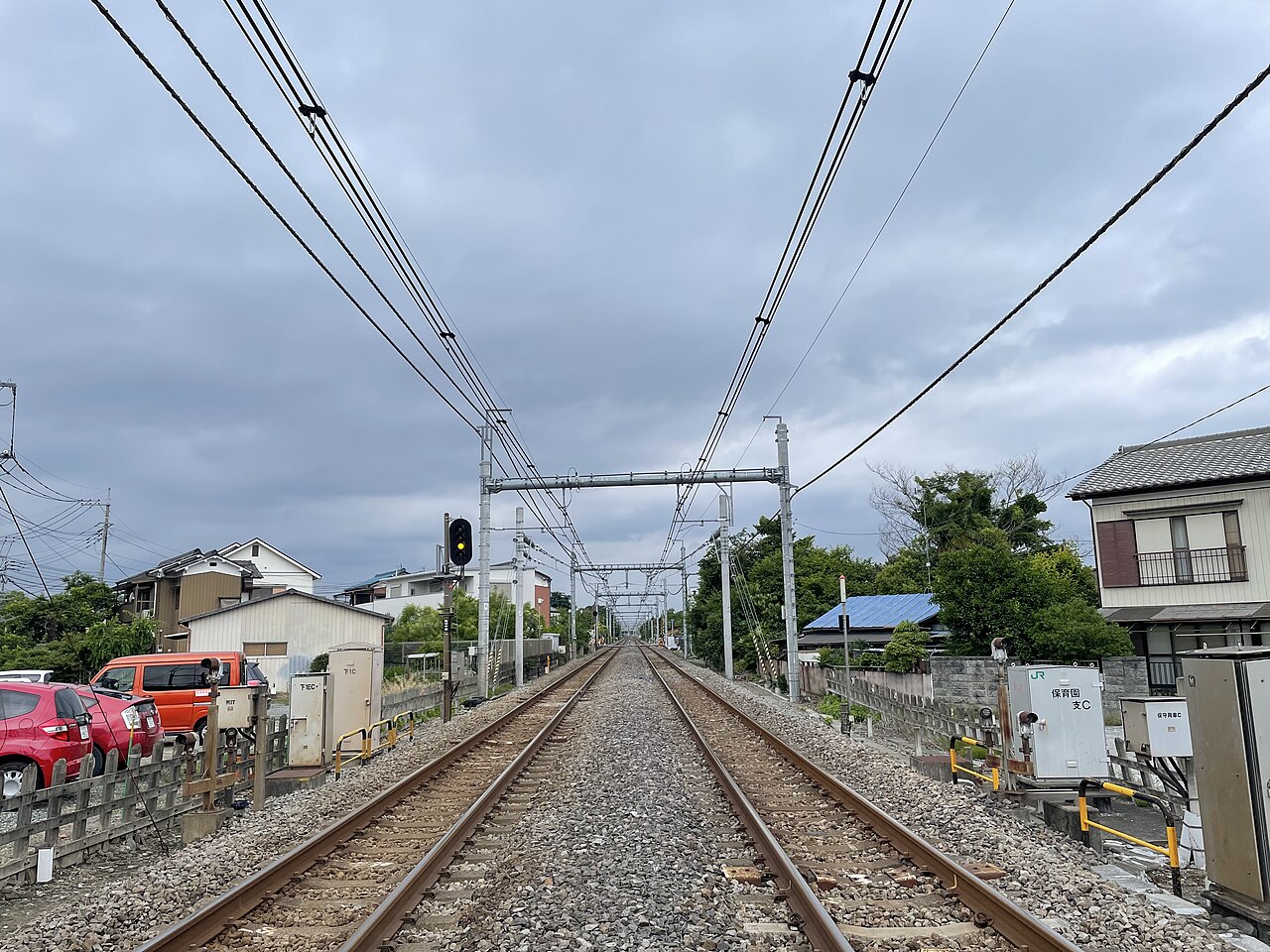
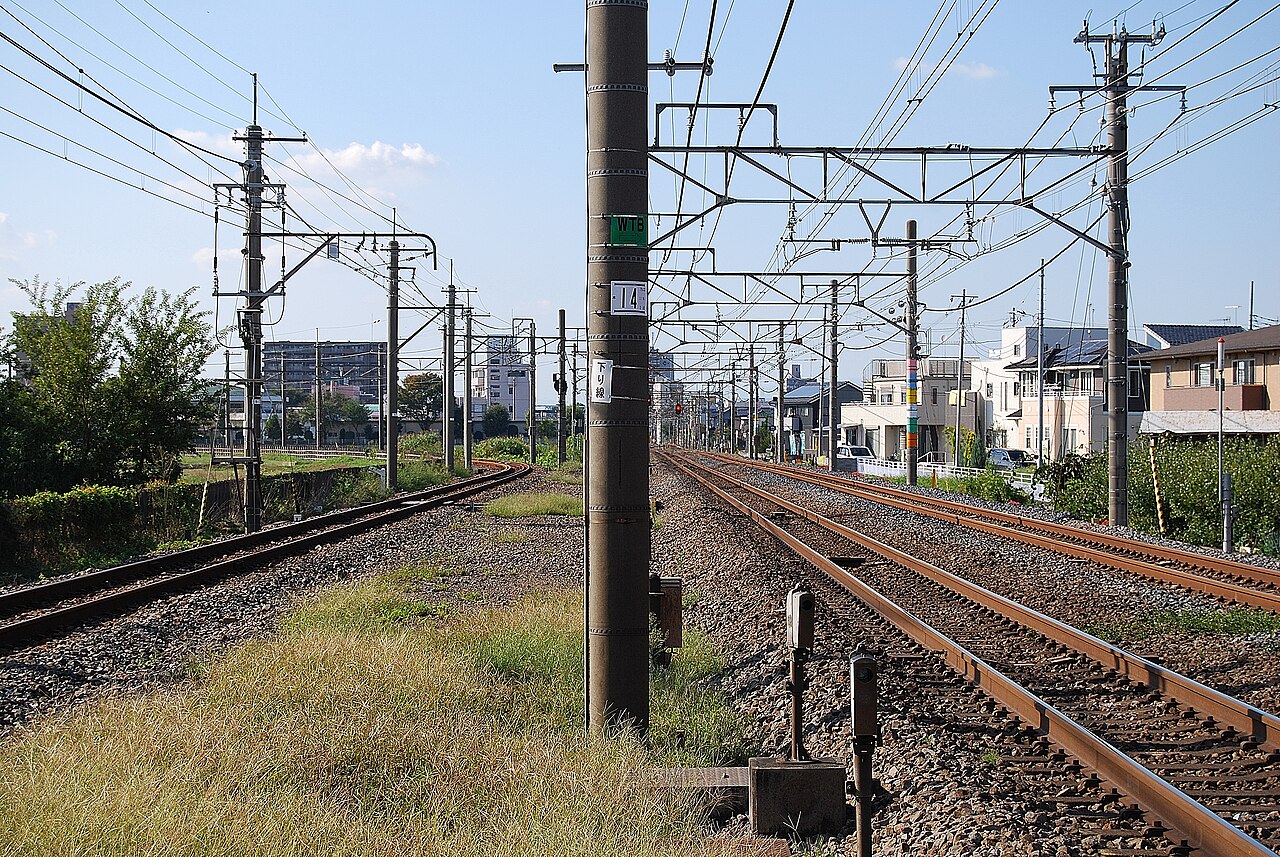
The line was progressively double-tracked between 1927 and 1930, with the Japanese-language chronology recording segment-by-segment completions from 9 August 1927 through 16 October 1930. Electrification followed in stages: the Takasaki yard–Takasaki section was electrified on 1 April 1947, and the main Ōmiya–Takasaki yard section on 1 April 1952. The line is electrified at 1,500 V DC using overhead catenary, runs on 1,067 mm gauge track, and has a maximum operating speed of 120 km/h.
As the national network expanded, the Takasaki Line grew into a major artery linking the capital region with Niigata Prefecture, the Japan Sea side of the Tōhoku region, Nagano Prefecture and the Hokuriku region. After World War II, electrification during the high-growth era brought electric limited-express services such as the Toki, Asama, Inaho, Hakusan and Hakutaka, which ran at up to 120 km/h on the Ueno–Niigata route. The opening of the Jōetsu Shinkansen on 15 November 1982 shifted the Jōetsu-line express traffic to the new high-speed line, and the partial opening of the Hokuriku Shinkansen between Takasaki and Nagano on 1 October 1997 transferred the Shin'etsu-line wide-area traffic likewise, abolishing the conventional Asama and Hakusan limited expresses. Among night trains, at the 13 March 2010 timetable revision the sleeper limited express Hokuriku was discontinued and the express Noto was reduced to seasonal operation, and the sleeper limited express Akebono retired from regular service in March 2014. A notable incident in the line's history was the Ageo Incident of 13 March 1973, when commuters, angered by severely disrupted schedules during a labour-union work-to-rule action, rioted and destroyed rolling stock and station equipment at stations including Ageo, Okegawa, Kitamoto, Kōnosu and Kumagaya.
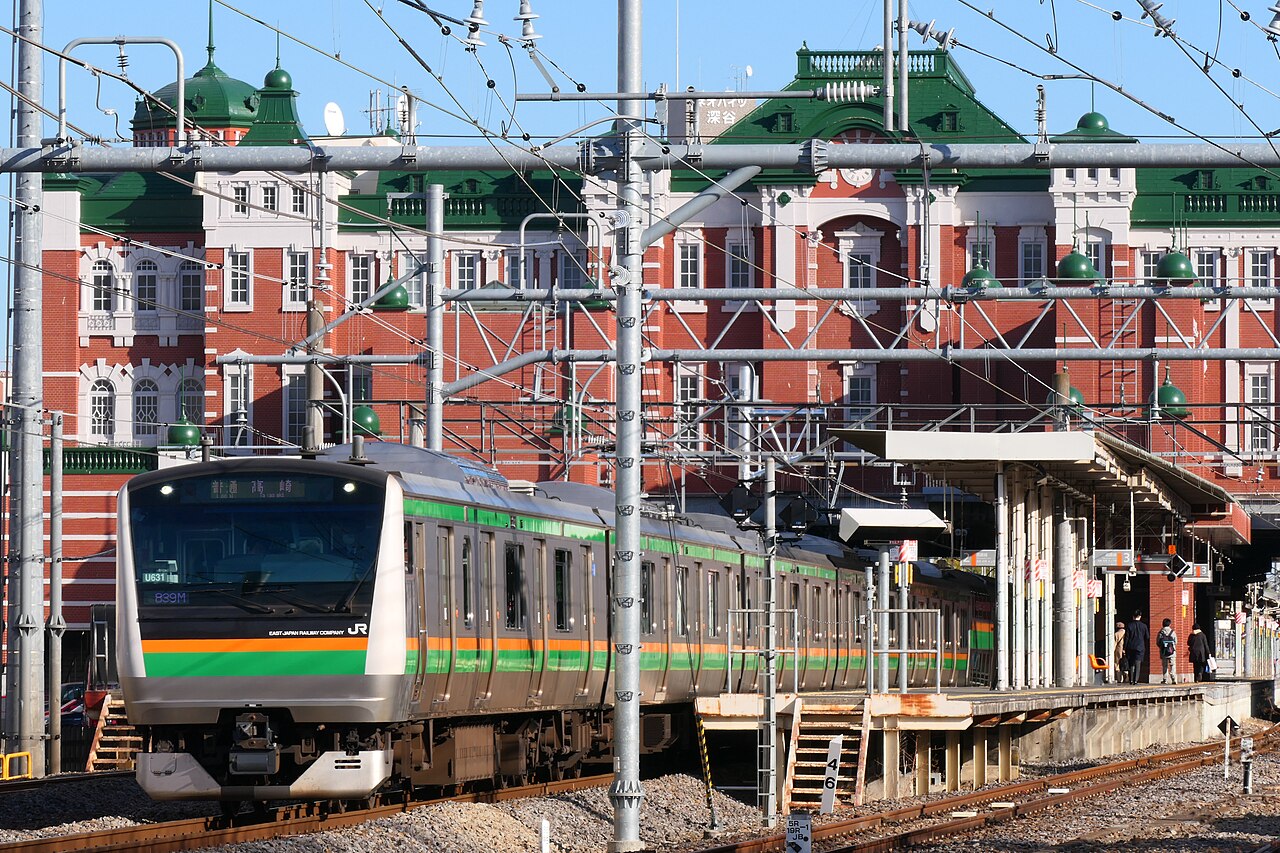
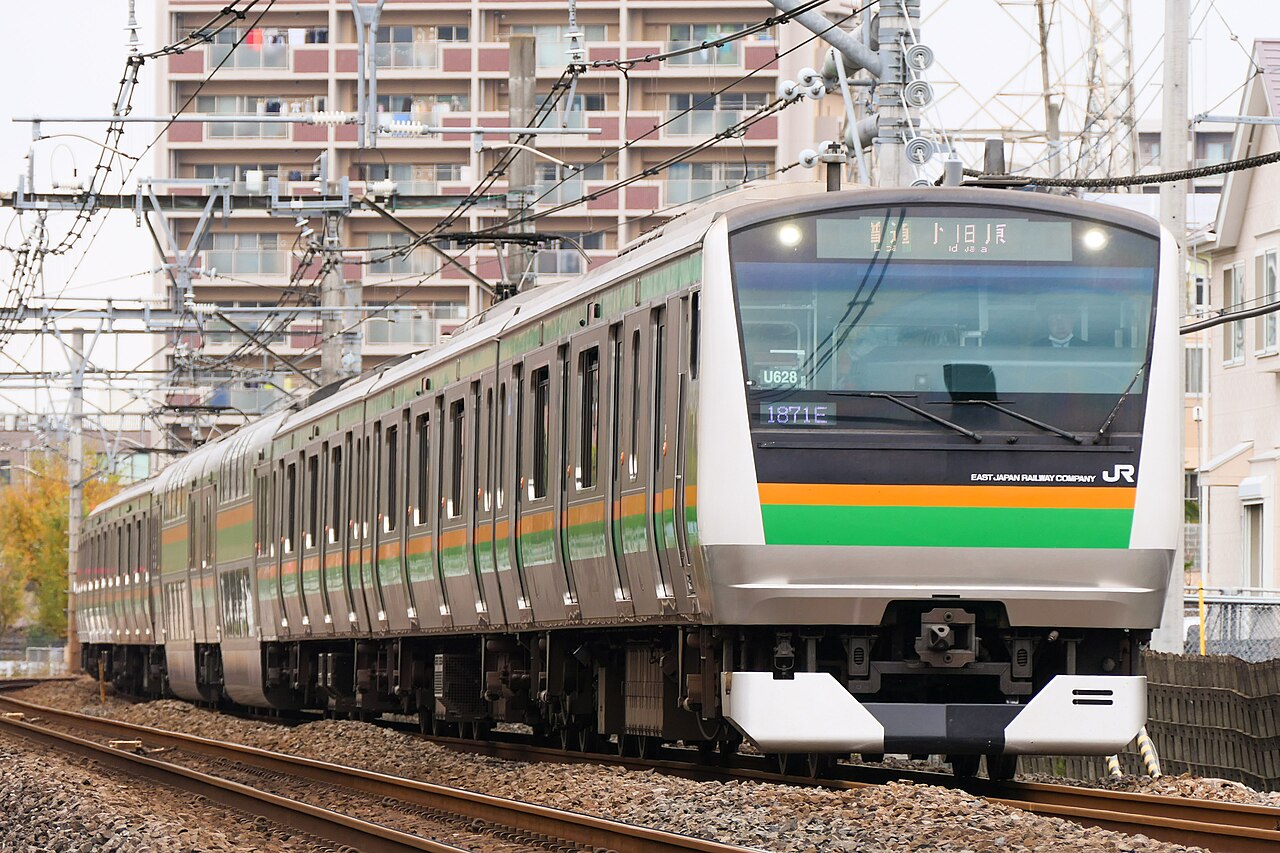
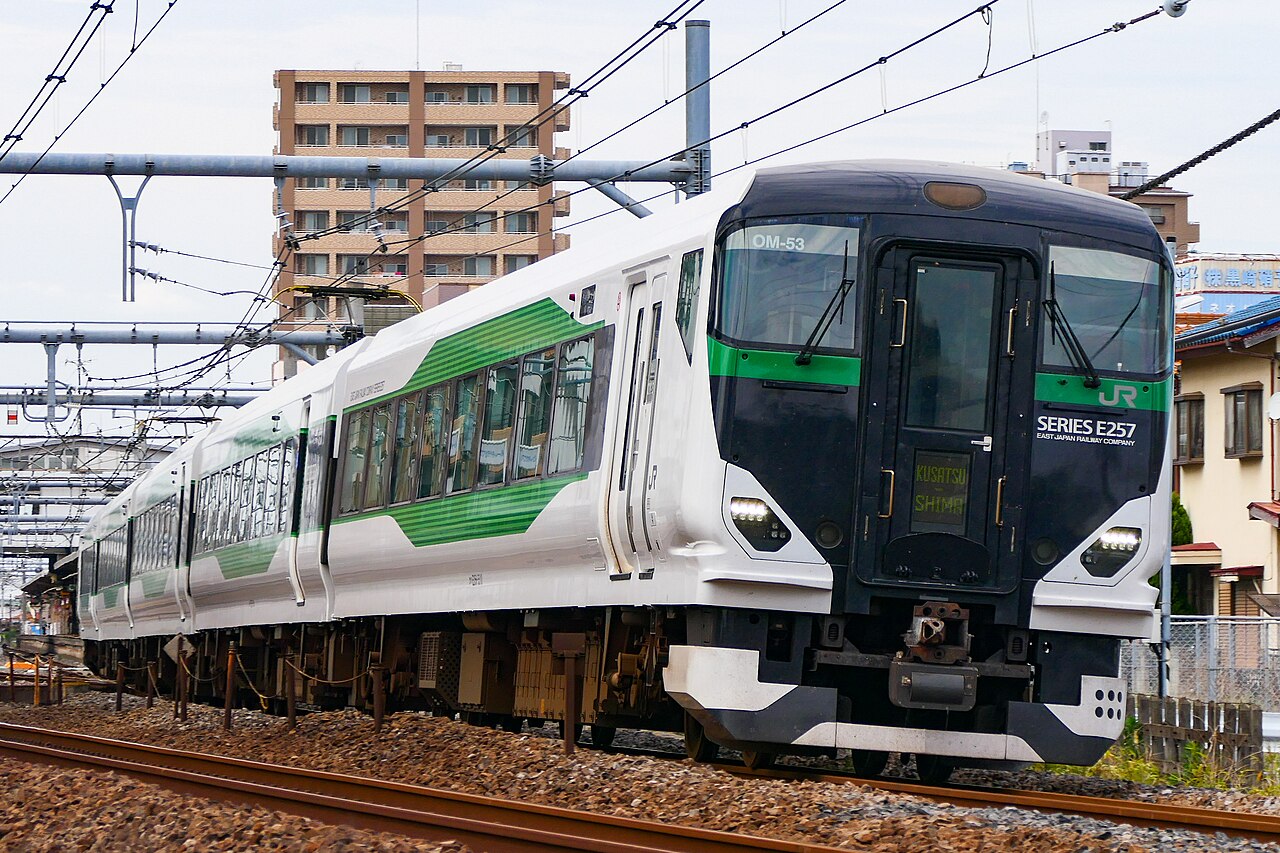
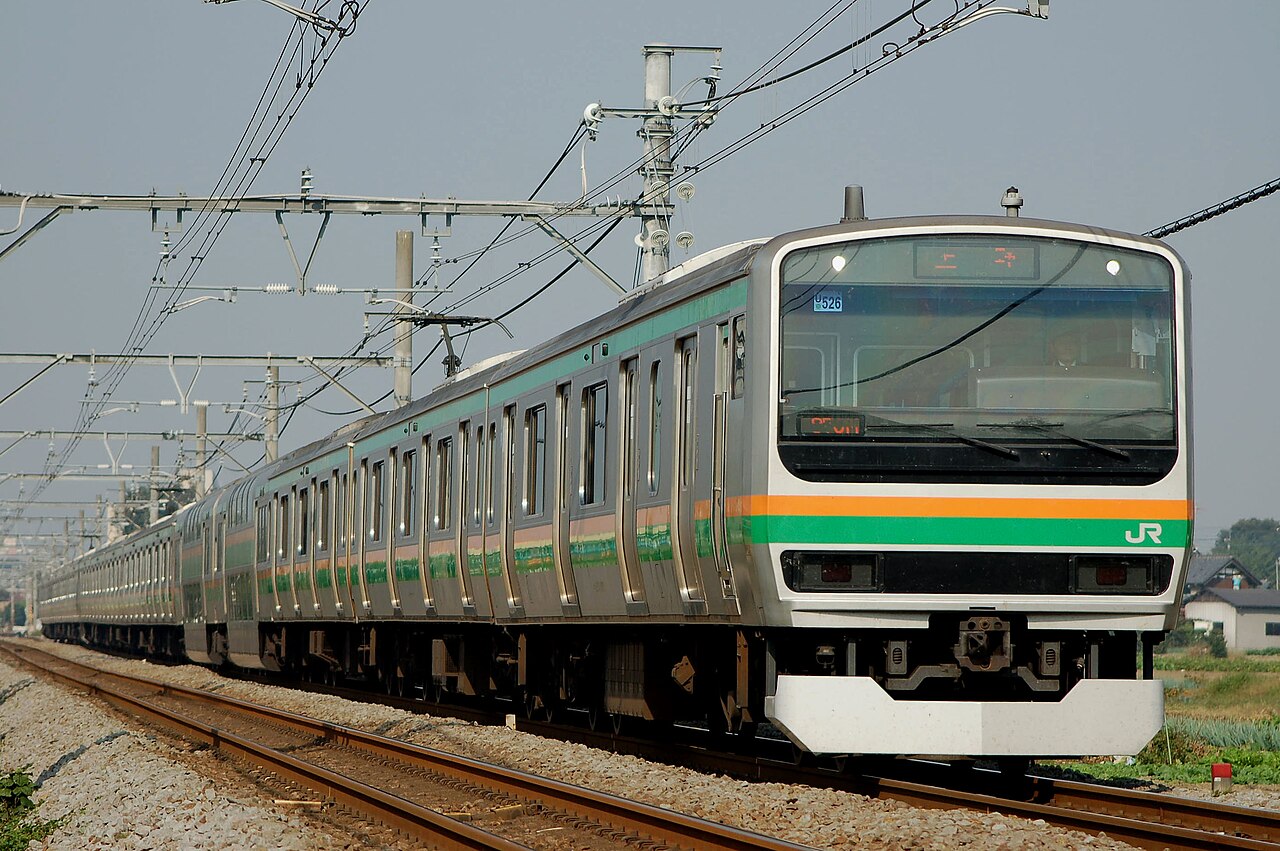
Under the 1987 privatisation of Japanese National Railways, the line was succeeded on 1 April 1987 by JR East (as the Type-1 operator) and JR Freight (as the Type-2 operator). Shōnan-Shinjuku Line through-services began on 1 December 2001, and Green cars were introduced on ordinary trains in 2004. On 14 March 2015 the Ueno-Tokyo Line opened, restoring the Tōhoku Main Line tracks between Ueno and Tokyo and extending many services through to Tokyo Station and onward to the Tōkaidō Line; the operational starting point of the Takasaki Line was changed from Ueno to Tokyo, though Ueno-terminating trains remain. Today the line is served by E231 series and E233-3000 series suburban commuter EMUs in 10- and 15-car formations, with limited-express services including the Akagi, Kusatsu and Minakami still operating.
Timeline
- 188328 July: the Nippon Railway Company opens the Ueno–Kumagaya section, its first operating segment and one of the oldest railway lines in Japan. Opening stations: Ueno, Ōji, Urawa, Ageo, Kōnosu, Kumagaya. Extended to Honjō (21 Oct) and Shinmachi (27 Dec).
- 18841 May: extended Shinmachi–Takasaki; 20 August: fully opened through to Maebashi. 25 June: opening ceremony at Ueno attended by Emperor Meiji, who rode round-trip Ueno–Takasaki.
- 1885Ōmiya Station opens (16 March) as the junction for the future Tōhoku Main Line.
- 19061 November: Nippon Railway is bought out and nationalised under the Railway Nationalization Act.
- 190912 October: the Railway Line Naming notice (No. 54) officially designates Ōmiya–Takasaki as the 'Takasaki Line'; Ueno–Ōmiya goes to the Tōhoku Main Line and Takasaki–Maebashi to the Ryōmō Line.
- 1927Double-tracking of the line begins, proceeding segment-by-segment from 9 August 1927.
- 193016 October: double-tracking of the line is completed (the final Shinmachi–Kuragano segment), having proceeded in stages since 1927.
- 19471 April: the Takasaki yard–Takasaki section is electrified.
- 19521 April: the Ōmiya–Takasaki yard section is electrified at 1,500 V DC.
- 197313 March: the Ageo Incident — commuters riot over disrupted schedules during a labour-union work-to-rule action, damaging rolling stock and station equipment at Ageo, Okegawa, Kitamoto, Kōnosu and Kumagaya.
- 198215 November: the Jōetsu Shinkansen opens; Jōetsu-line express services shift to the Shinkansen.
- 19871 April: JNR is privatised; the line is succeeded by JR East (Type-1 operator) and JR Freight (Type-2 operator).
- 19971 October: the Hokuriku Shinkansen (Takasaki–Nagano) opens; conventional limited expresses Asama and Hakusan are abolished.
- 20011 December: Shōnan-Shinjuku Line through-services begin, running some trains to the Tōkaidō Line via Shinjuku. E231 series enters service (1 September).
- 200416 October: Green cars begin revenue service on ordinary trains.
- 2014March: the sleeper limited express Akebono retires from regular timetabled service.
- 201514 March: the Ueno-Tokyo Line opens; many services extend through to Tokyo Station and the Tōkaidō Line, and the operational starting point changes from Ueno to Tokyo.
Sources
Facts last verified 3 June 2026.
Gallery 6 photos
Every photo for this page — tap any image to view it full-size. All from Wikimedia Commons (credit under each).