History
The line is one of the oldest in Japan. When the route of the Tokyo-Osaka trunk railway through central Japan was still undecided between the coastal Tokaido and the inland Nakasendo, the Imperial Japanese Army opposed the Tokaido option as vulnerable to naval bombardment, and the government chose the inland Nakasendo route. The Taketoyo Line was planned to bring construction materials -- landed at the port of Taketoyo -- for that trunk line, and was originally intended to be dismantled once the main line was complete. Before opening, a local worker proposed that the otherwise-empty return trains to Taketoyo also carry passengers; the idea was quickly accepted, with trains running twice a day.
The entire line from Atsuta to Taketoyo opened on 1 March 1886 after a seven-month construction, initially under the name Handa Line; according to the English-language account it was renamed the Taketoyo Line on 1 May 1886 and began carrying passengers. It was the first railway built in Aichi Prefecture. The planned trunk route was then changed to follow the Tokaido on 19 July of the same year because of the difficulty of construction through the mountains. The Obu-Taketoyo portion subsequently became a branch line when the rest of the route was absorbed into the Tokaido Main Line: the English-language account dates this to the opening of the Obu-Nagahama section the following year (1887), while the Japanese-language chronology dates it to the opening of the Hamamatsu-Obu section on 1 September 1888. In 1892 Taketoyo Station was relocated about 950 metres closer to Obu, and the former station and section reopened as the freight-only Taketoyo-Minato (Taketoyo Port). The Japanese-language chronology records the branch as becoming part of the Tokaido Line in 1895 and being formally designated the Taketoyo Line on 12 October 1909.
For most of its early life the line was state-operated, run by the Ministry of Railways until 1949, when operation of government-owned lines passed to Japanese National Railways (JNR). Ridership fell after the parallel Meitetsu Kowa Line opened in 1932, as the Meitetsu service ran more frequently and reached Nagoya more quickly. Steam locomotives gave way to diesel railcars ("gasoline cars") in 1933, but during the Second World War, in 1944, railcar services were again replaced by locomotives owing to a shortage of resources, and the stations of Fujie and Owari-Ikuji were merged into the new Higashiura Station between them. On 25 September 1953 a typhoon washed out the section between Taketoyo and Higashi-Narawa, killing a JNR worker. Locomotive (steam) operation ended in 1970, the freight branch to Taketoyo-Minato was abolished in 1965, and one-person operation began in 1992. With the privatisation of JNR on 1 April 1987 the line passed to JR Central, while Japan Freight Railway (JR Freight) became a Type-II operator over the Obu-Higashi-Narawa section.
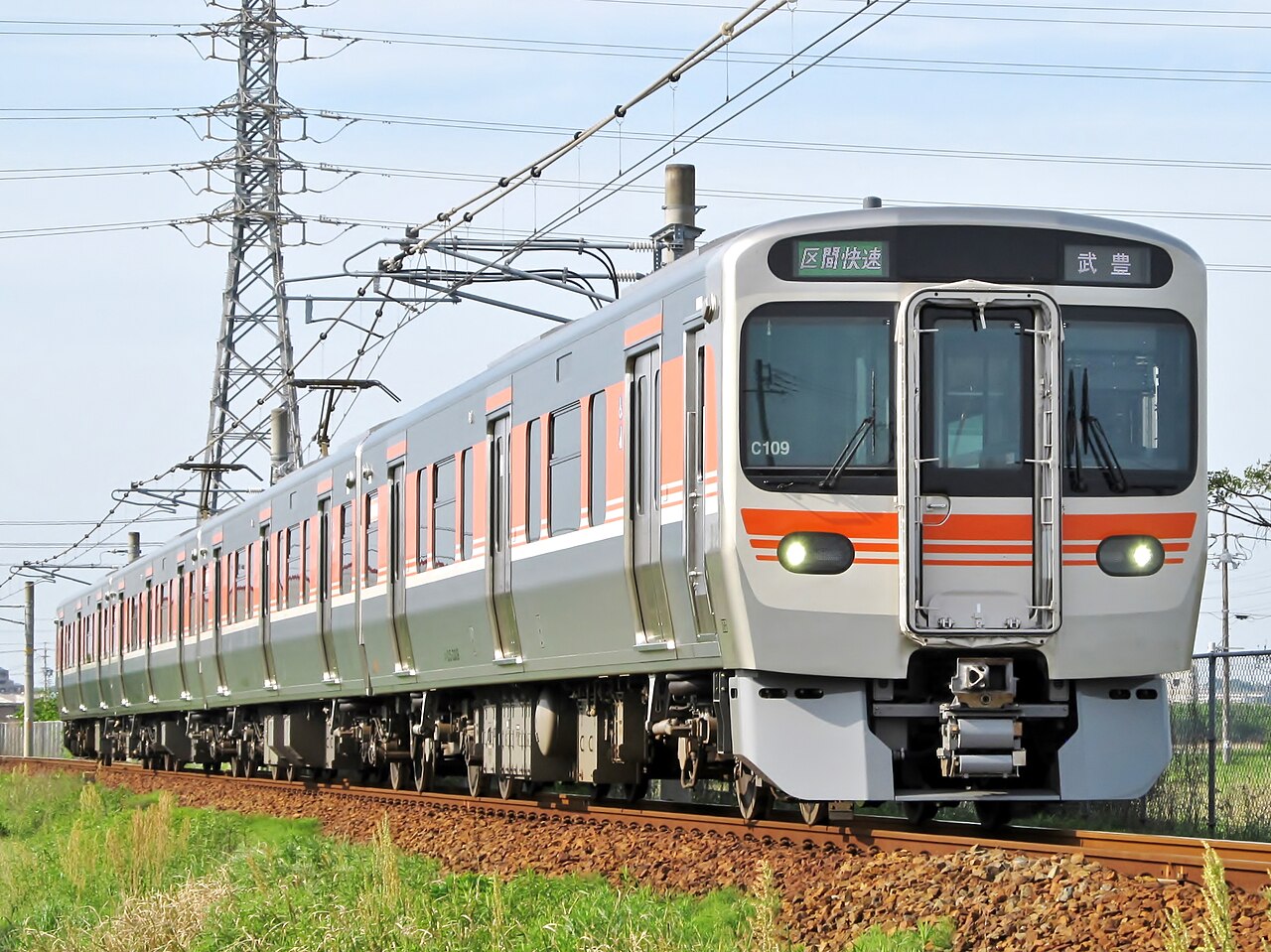
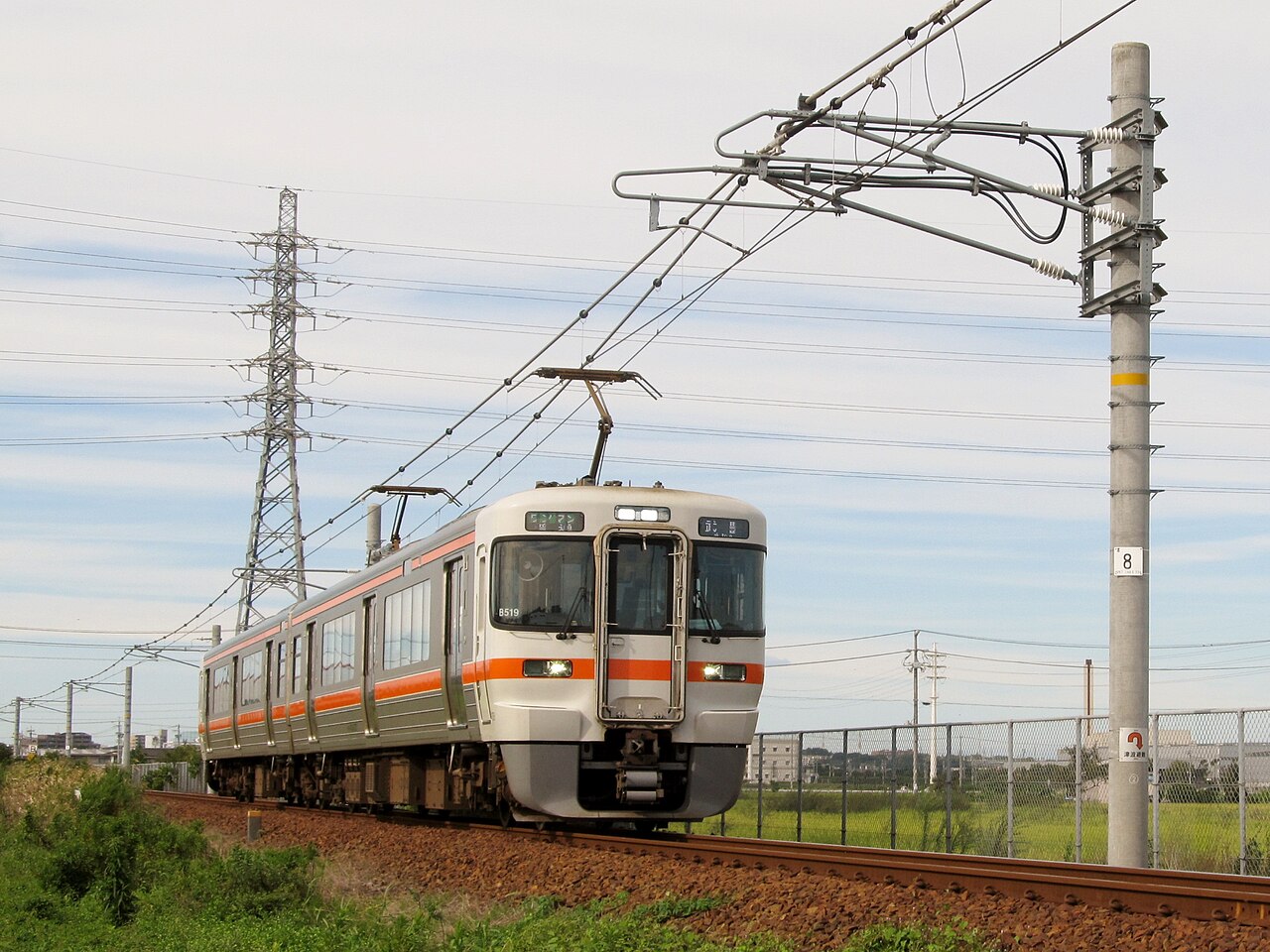
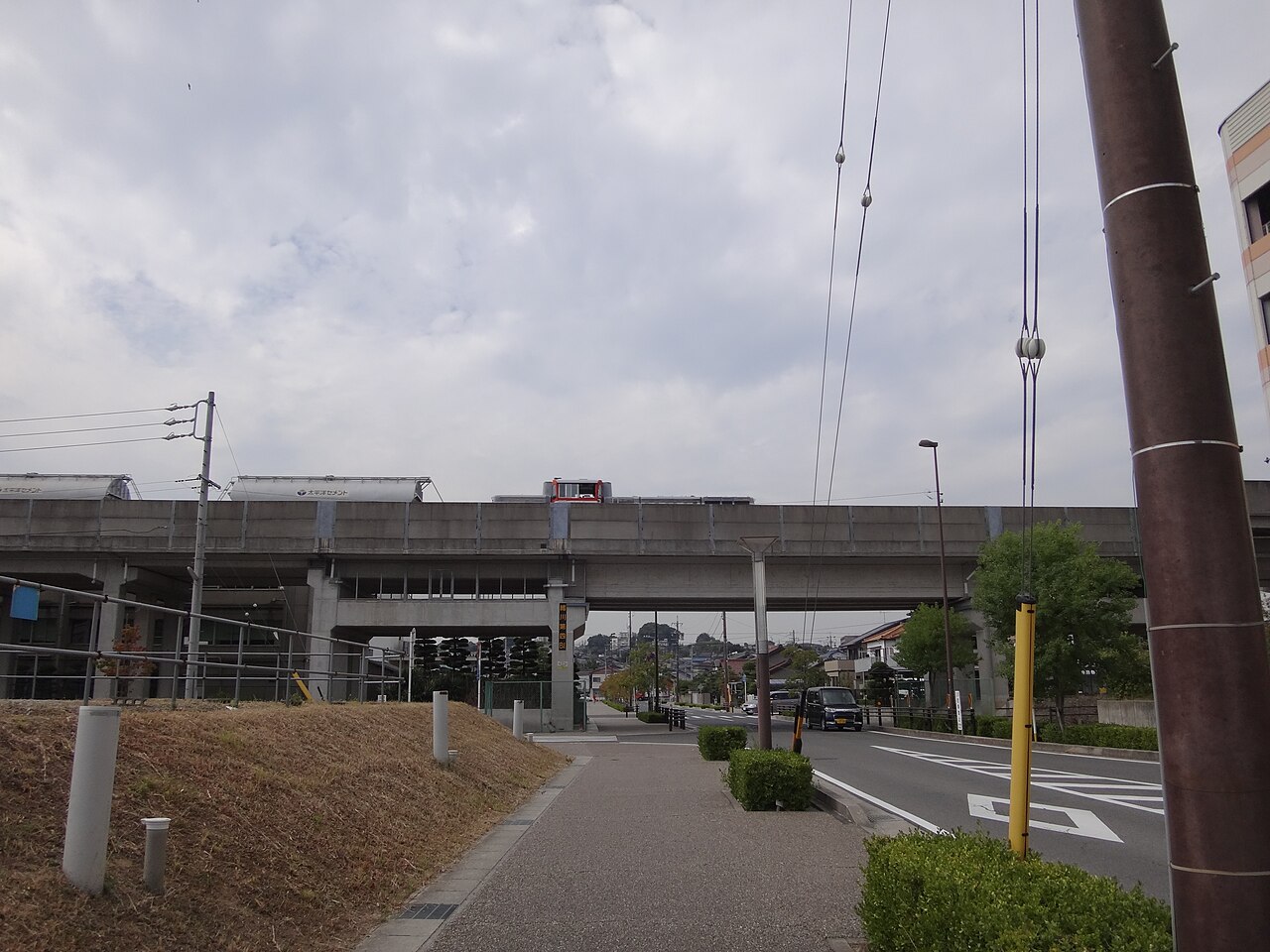
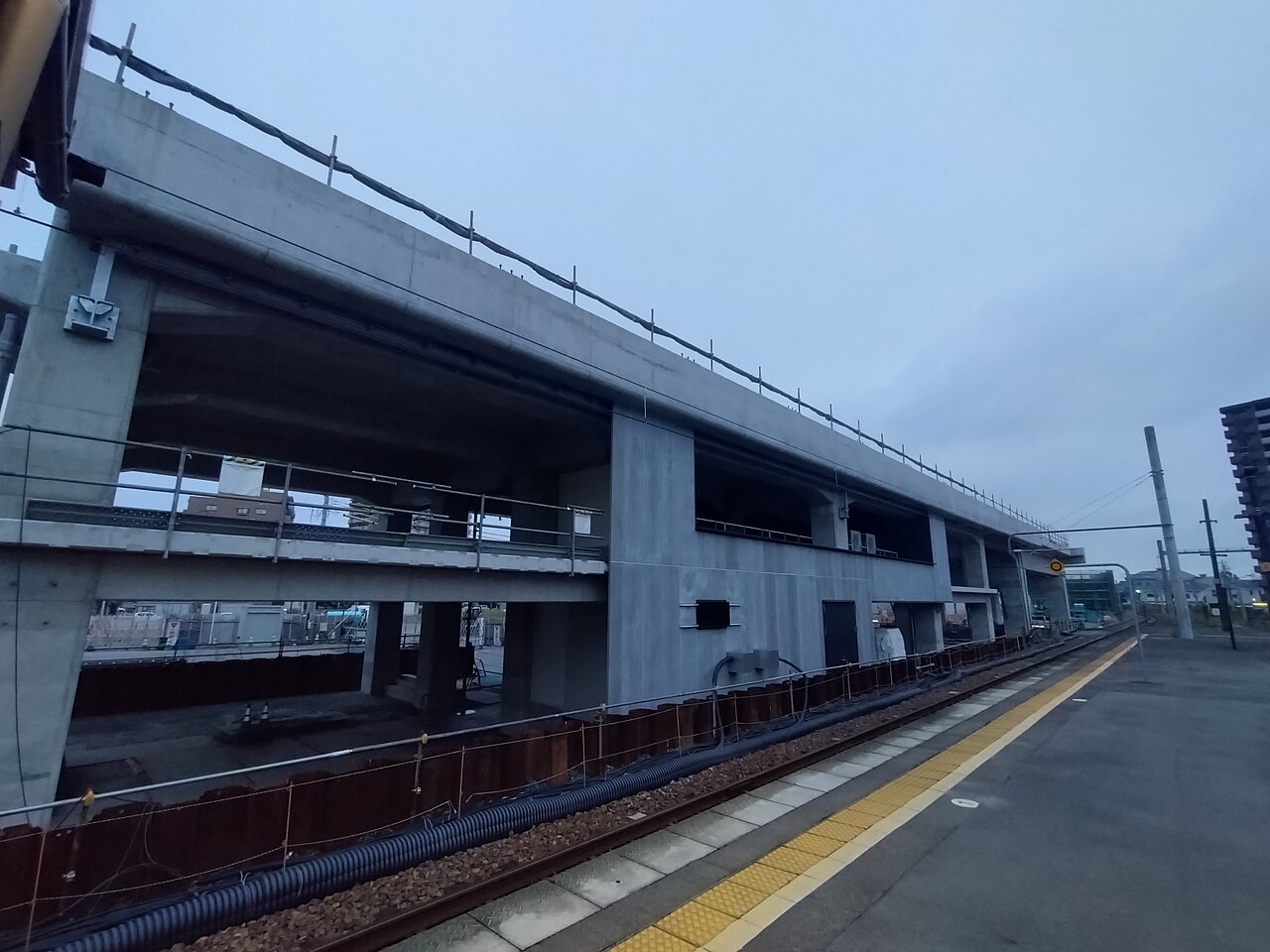
Because the line remained entirely single-tracked and unelectrified despite being the closest JR-owned line to Chubu Centrair International Airport, local residents and municipalities pressed for its modernisation. JR Central began electrification work in March 2010, and on 1 March 2015 the line was fully electrified and through services to and from Nagoya commenced. JR Central introduced station numbering and line colouring in March 2018, assigning the line the colour brown and the line code CE. A centralised traffic control system had been installed in 2001 and an automatic train stop (ATS) system in 2011. The 315 series EMUs entered service on the line on 15 March 2024; construction to elevate the line around Handa Station began in 2020.
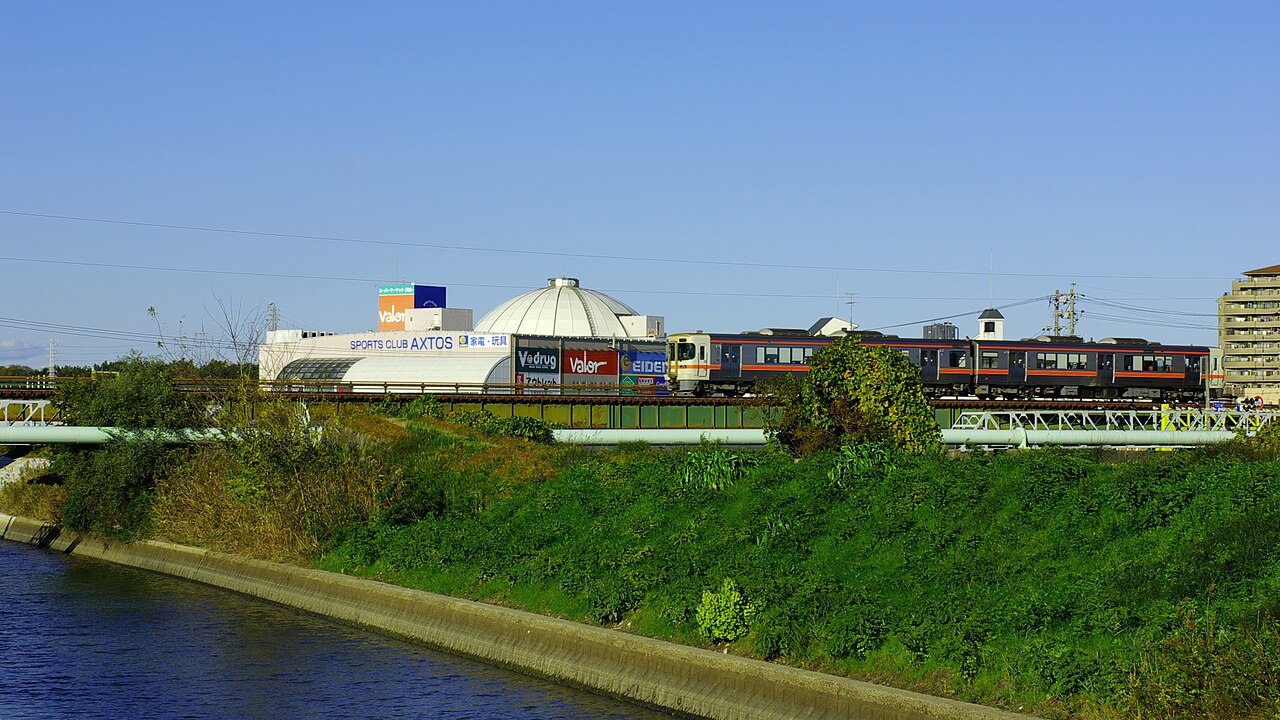
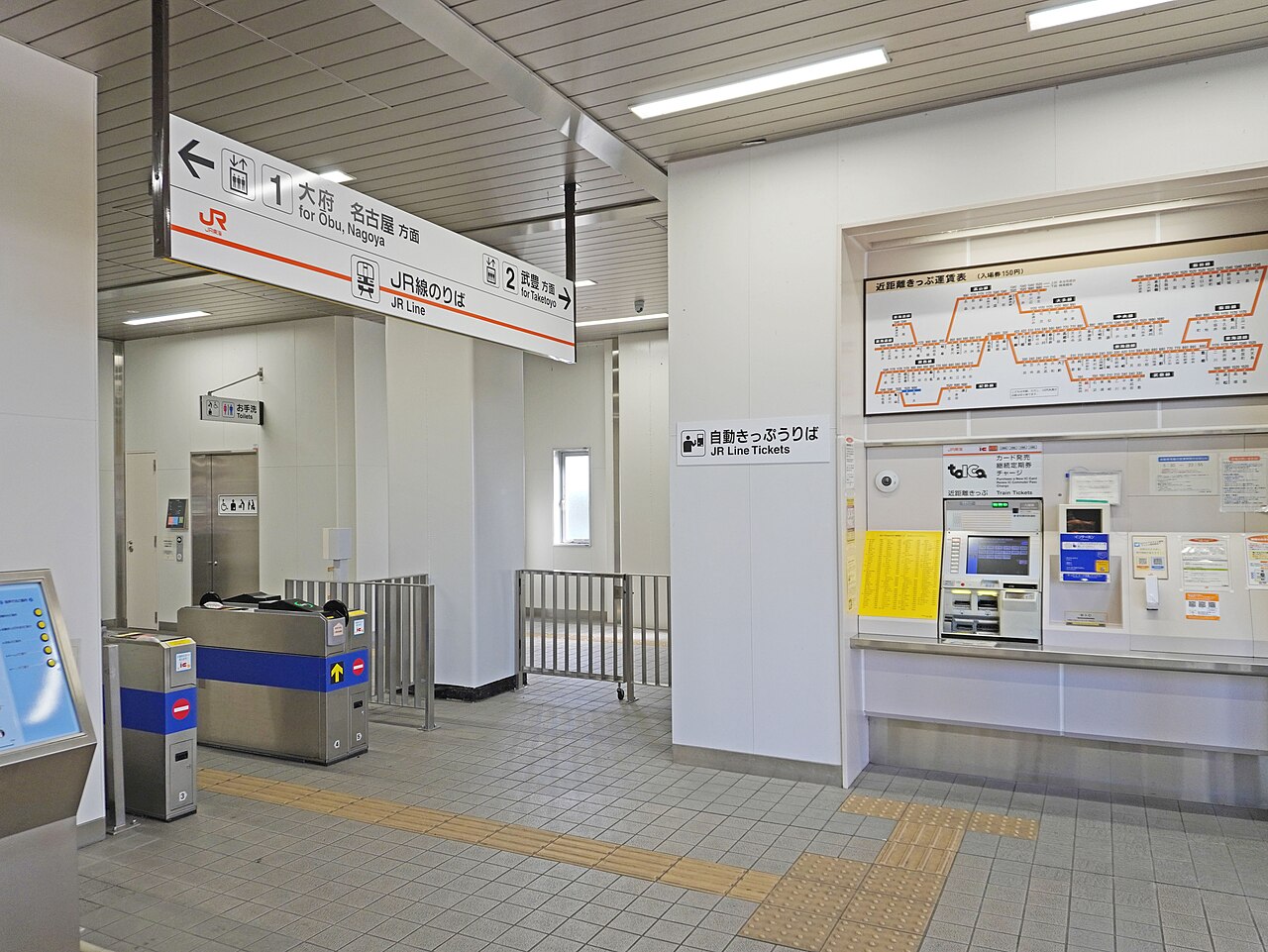
Today all trains stop at every station on the line, with through semi-rapid services to Nagoya during rush hours and most services one-person operated. Although no station on the line itself handles freight, five freight trains operated by the Kinuura Rinkai Railway pass through to connect with that company's Hekinan and Handa lines. The line carries two notable heritage superlatives, both stated by the cited sources: it features the oldest actively used station building in Japan, at Kamezaki Station, and it formerly had the oldest railway overpass in the country, near Handa Station, until that structure was demolished and relocated in 2021 to make way for the elevation works. The Japanese-language source additionally records that the line's transport density in fiscal year 2008 was about 9,156 passengers, which it states was the second-highest among Japan's local lines (chiho kotsusen), after the Kabe Line of JR West at about 18,635.
Timeline
- 18861 March: the line opens from Atsuta to Taketoyo as the Handa Line, built to carry materials for the Tokyo-Osaka trunk railway; it is the first railway in Aichi Prefecture. (EN adds it was renamed the Taketoyo Line on 1 May 1886.) On 19 July the trunk route is changed to follow the Tokaido.
- 18881 September: the Tokaido Main Line section Hamamatsu-Obu opens, and the Obu-Taketoyo section becomes a branch line.
- 1892Taketoyo Station is relocated about 950 m closer to Obu; the former station and section later reopen as the freight-only Taketoyo-Minato (Taketoyo Port).
- 190912 October: the Obu-Taketoyo section is formally designated the Taketoyo Line under the national railway line-naming ordinance.
- 1932The parallel Meitetsu Kowa Line opens; ridership on the line falls as the Meitetsu service runs more frequently and reaches Nagoya faster.
- 1933Steam locomotives are replaced by diesel railcars (gasoline cars); railcar operation begins on 1 July (JA).
- 1944Owing to wartime resource shortages, railcar services are replaced again by locomotives; Fujie and Owari-Ikuji stations are merged into the new Higashiura Station.
- 195325 September: a typhoon washes out the section between Taketoyo and Higashi-Narawa, killing a JNR worker.
- 196520 August: the freight branch from Taketoyo to Taketoyo-Minato (1.0 km) is abolished.
- 1970Steam-locomotive operation on the line ends (30 June, JA).
- 19871 April: with the privatisation of JNR, the line transfers to JR Central; JR Freight becomes a Type-II operator over the Obu-Higashi-Narawa section.
- 1992One-person (one-man) operation begins on the line (12 October, JA).
- 2001A centralised traffic control (CTC) system is installed.
- 2010March: JR Central begins work to electrify the line.
- 2011An automatic train stop (ATS) system is installed on the line.
- 20151 March: the line is fully electrified and through services to and from Nagoya via the Tokaido Main Line commence.
- 2018March: station numbering and line colouring are introduced; the line is assigned the colour brown and the line code CE.
- 2020Construction to elevate the line around Handa Station begins.
- 2021The country's oldest railway overpass, near Handa Station, is demolished and relocated to make way for the elevation works.
- 202415 March: 315 series EMUs enter service on the line.
Sources
Facts last verified 3 June 2026.
Gallery 5 photos
Every photo for this page — tap any image to view it full-size. All from Wikimedia Commons (credit under each).