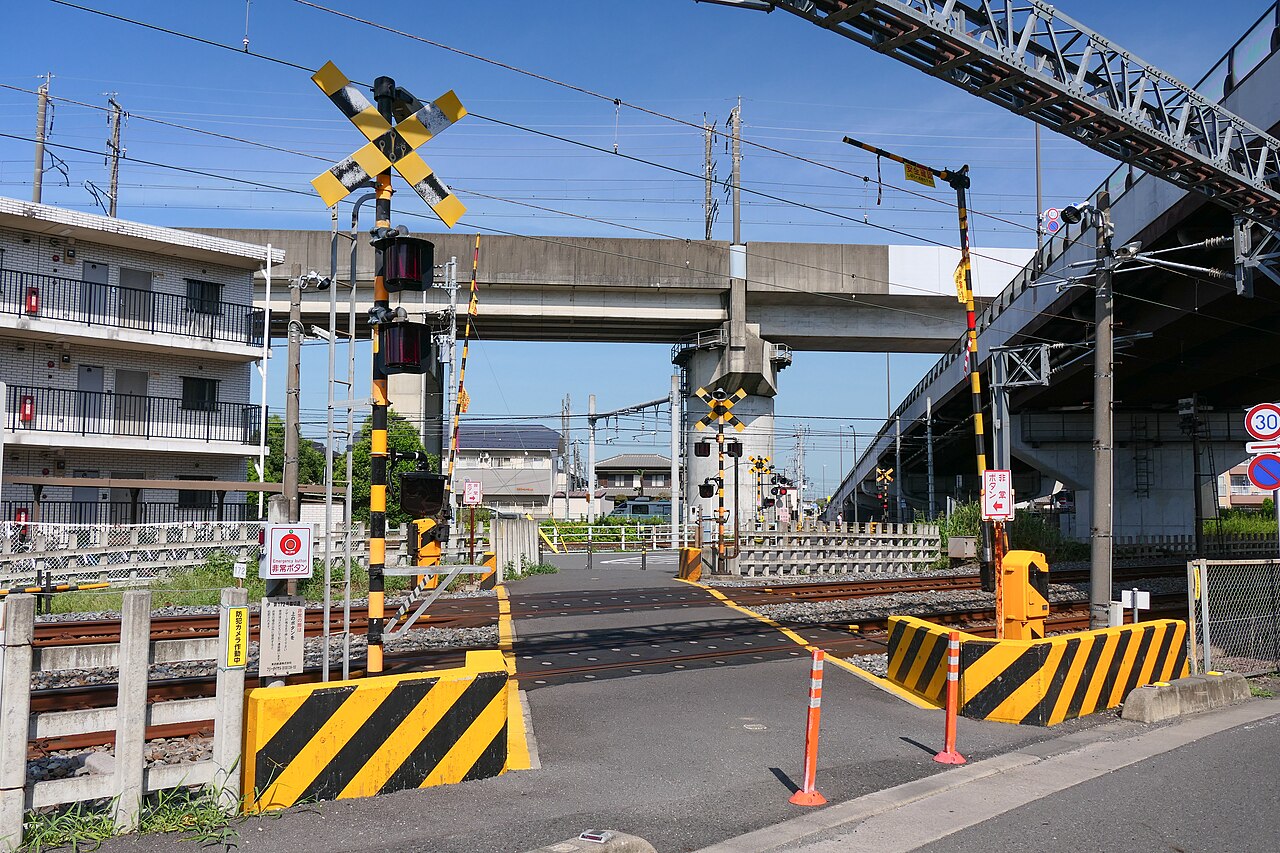
History
The first section opened on 27 August 1899 between Kita-Senju and Kuki, worked by steam, with seven mixed passenger-and-freight round trips a day at two-hour intervals. The line was extended northward to Kazo in 1902 and to Kawamata in 1903 (then on the right bank of the Tone River). After Kaichirō Nezu became president of Tobu Railway in 1905, the company bridged the Tone River and reached Ashikaga-machi (present-day Ashikaga-shi) in 1907; freight traffic across this section helped the railway out of an earlier financial crisis. In 1910 it reached Isesaki, completing the through route. The Tokyo-side terminus took longer to settle: the line was extended south from Kita-Senju to Azumabashi (present-day Tokyo Skytree Station) in 1902, and in 1931 a Sumida River bridge was built and the present Asakusa Station (then Asakusa-Kaminarimon) opened as part of a department-store building, completing the line in its modern form. The 1910 renaming of Azumabashi to Asakusa was the first station renaming on the line.
Traffic growth in the Taishō era drove double-tracking and electrification on the Tokyo side. The Asakusa–Nishiarai section was double-tracked in 1912 and the rest of the line between 1920 and 1927, except Hanyū–Kawamata, which waited until a second Tone River bridge was completed in 1992. Electrification began in 1924 on Asakusa–Nishiarai and reached Isesaki in 1927; the resulting electrified run of more than 100 km was then among Japan's longest, with the present-day Kintetsu Osaka and Yamada Lines.
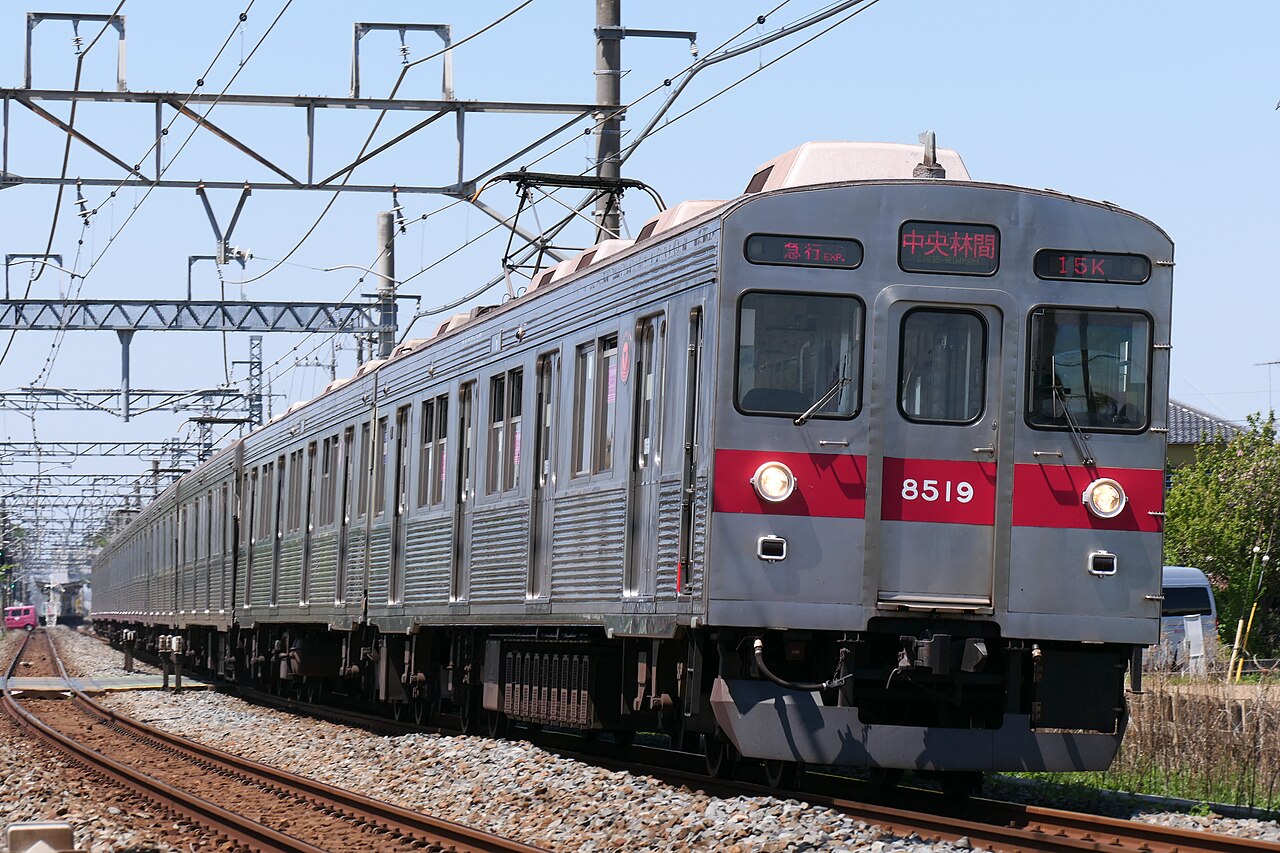
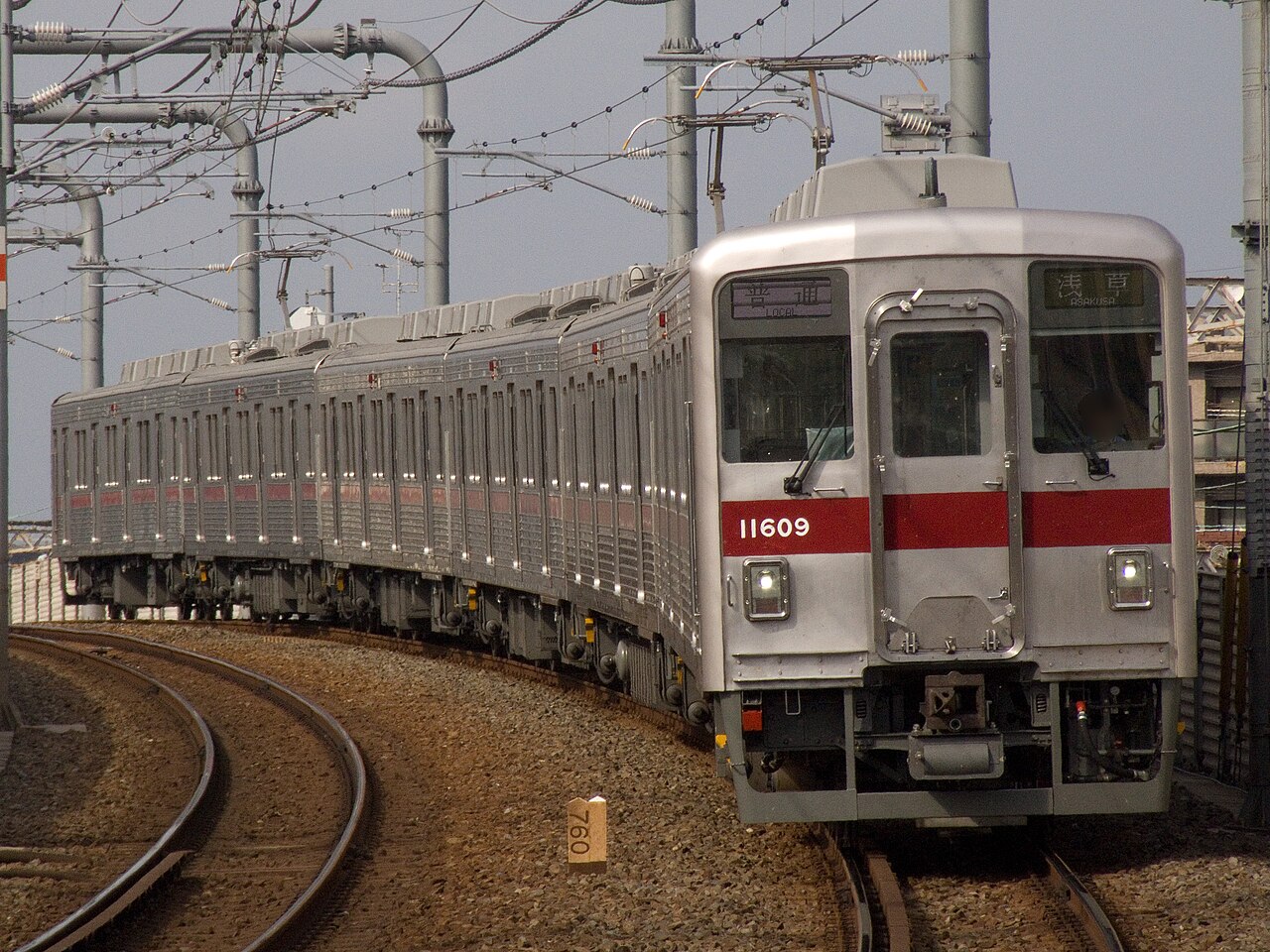
After World War II the Tobu lines had no connection to the Yamanote Line or other major lines of the then Japanese National Railways (JNR), the sole link being the Jōban Line at Kita-Senju, which gave poor access to the centre. To relieve that transfer and the narrow Asakusa terminus, through-running with the Hibiya Line of the then Teito Rapid Transit Authority (TRTA, present-day Tokyo Metro) began in 1962 — only the second through-service between a Tokyo subway and a suburban railway, after the Keisei Oshiage and Toei Asakusa Lines. Suburban development accelerated and ridership rose rapidly; congestion became severe, and in the autumn 1969 survey the morning-peak Kosuge–Kita-Senju section recorded a 248% congestion rate, the highest among the major private railways' lines that fiscal year. To raise capacity, Tobu carried out the first quadruple-tracking by a Kanto private railway, completing Kita-Senju–Takenotsuka in 1974 and extending it to Sōka in 1988. Ten-car operation began in 1986, about a decade later than on Tobu's other trunk line, the Tōjō Line.
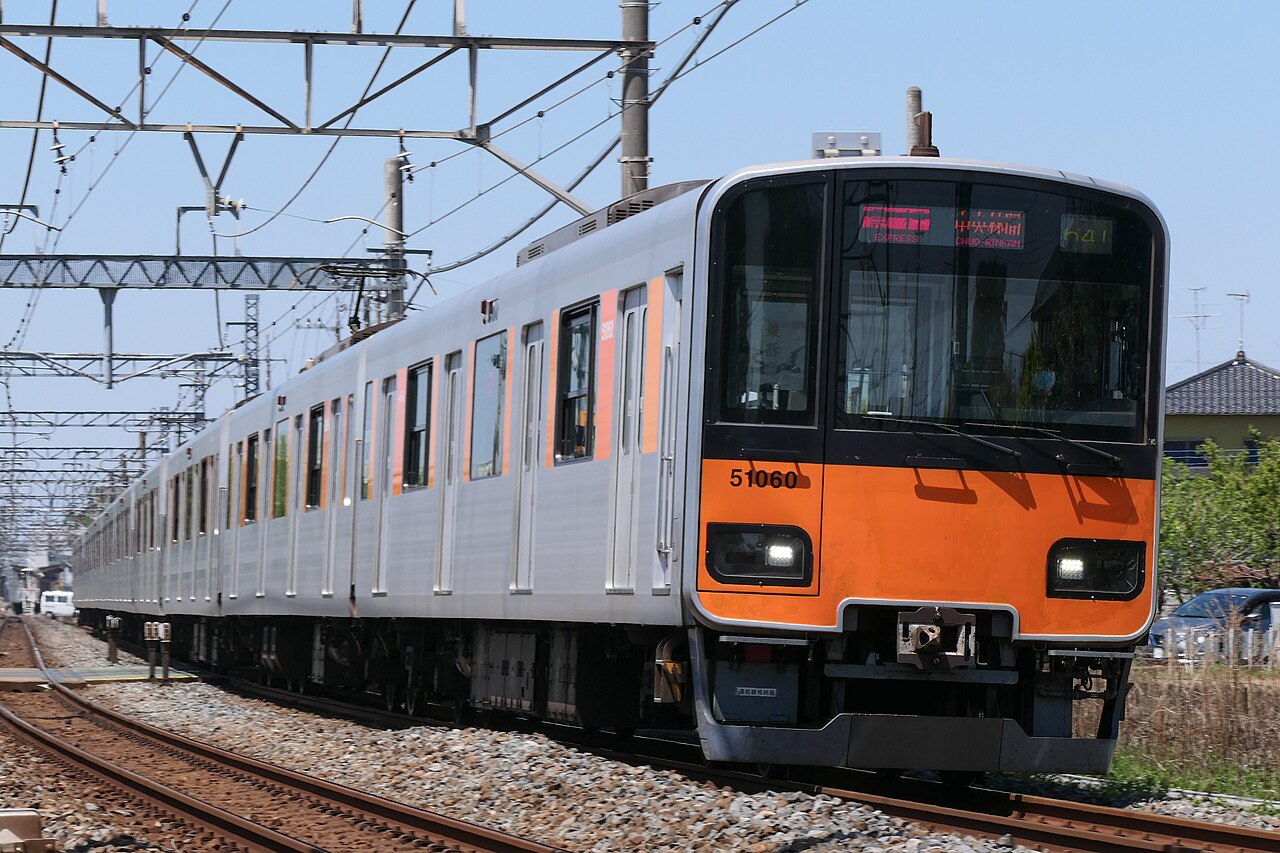
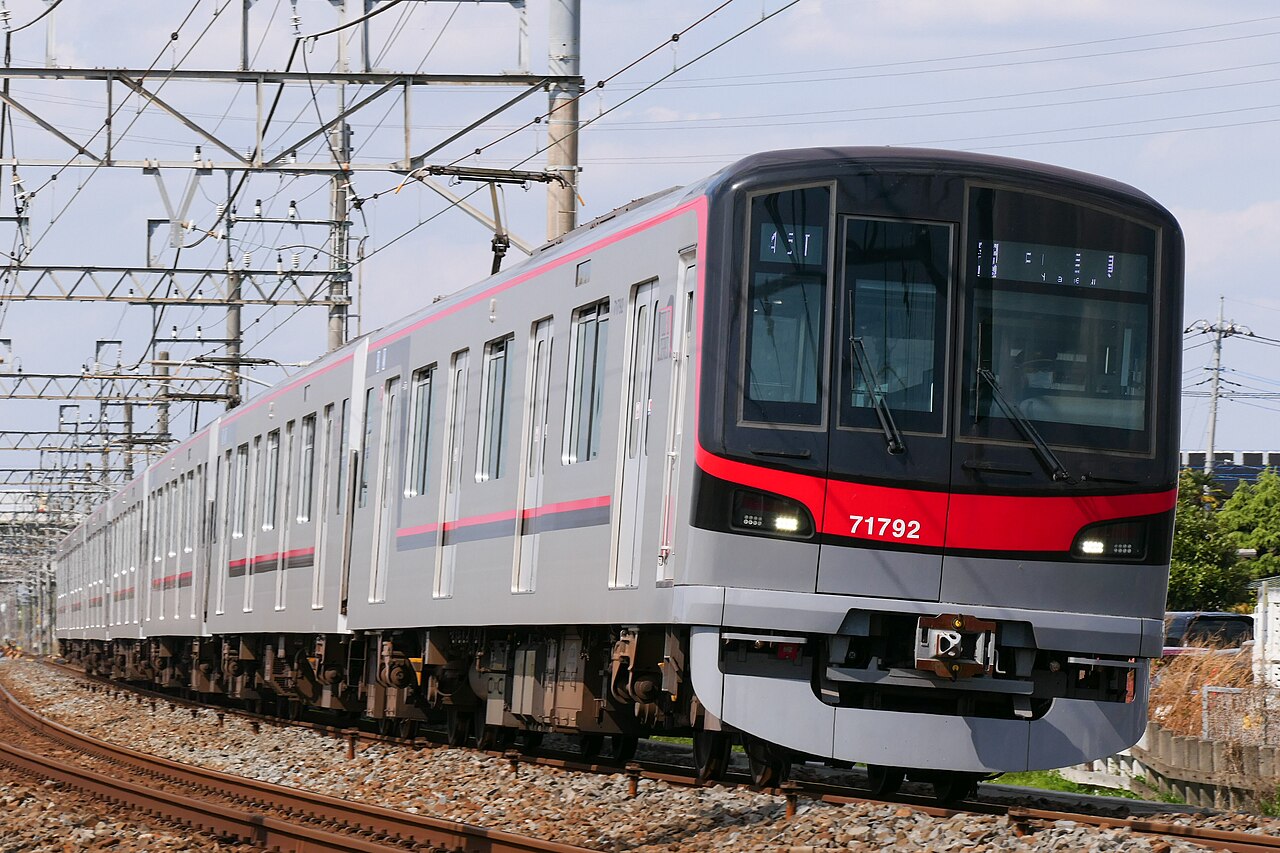
Capacity work continued into the Heisei era. Grade separation of Kita-Senju and quadruple-tracking as far as Koshigaya were completed in 1997, and the quadruple track reached Kita-Koshigaya in 2001, giving a continuous 18.9 km Kita-Senju–Kita-Koshigaya quadruple-track section — the longest on any private railway in Japan. In 2003 through-service began via Oshiage with the Tokyo Metro Hanzōmon Line and the Tokyu Den-en-toshi Line, bringing ten-car limited-stop trains into central Tokyo for the first time. From the 18 March 2006 timetable revision the service pattern was rebuilt around Hanzōmon-Line express trains; general services were split at Kuki and Ōta, the Ōta–Isesaki locals became one-man three-car trains, and — apart from a single daily round trip of the Ryōmō limited express — through trains over the whole Asakusa–Isesaki route were discontinued.
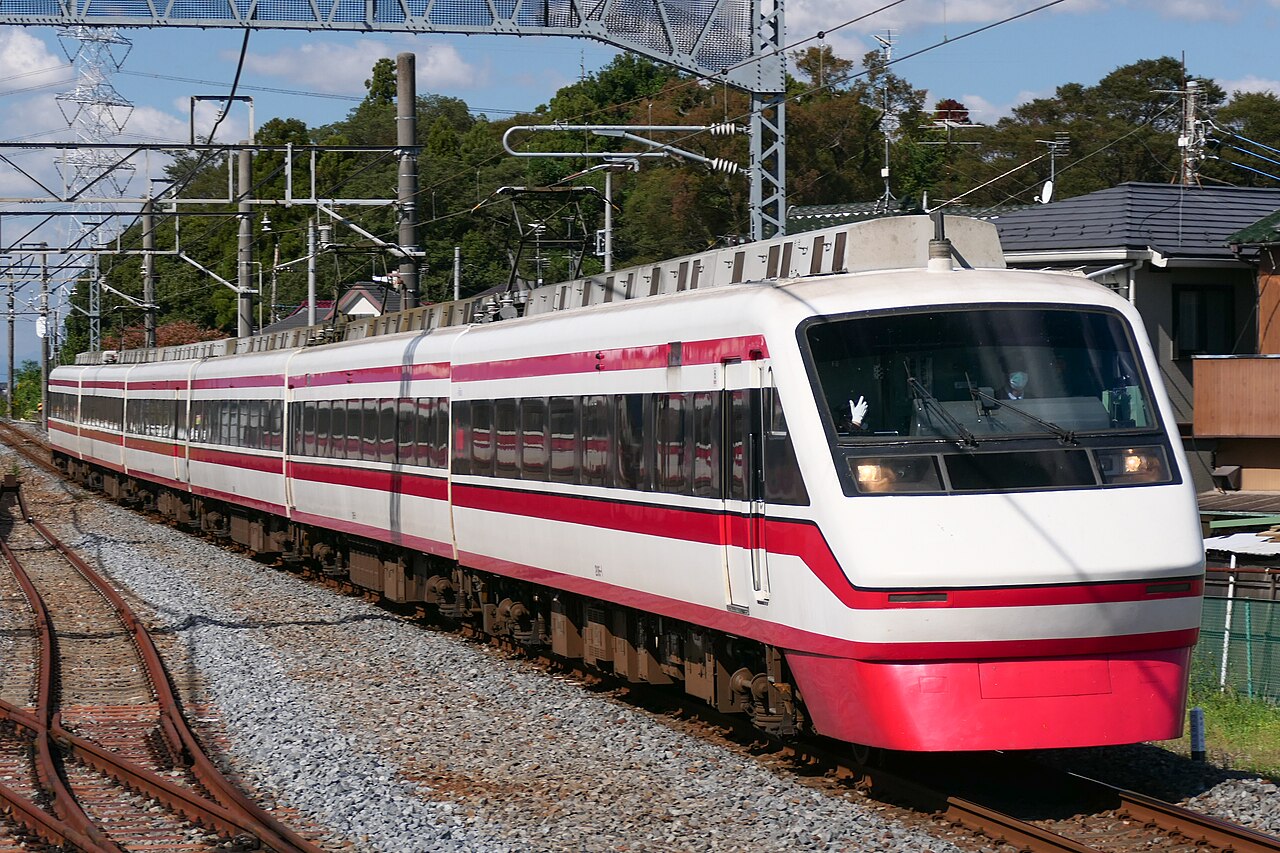
On 17 March 2012, with the opening of the Tokyo Skytree tower, the 41.0 km section south of Tōbu-Dōbutsu-Kōen was given the nickname 'Tobu Skytree Line', Narihirabashi Station was renamed Tokyo Skytree Station, and station numbering was introduced (the southern branded section uses the symbol TS, the northern section TI). The line is today operated entirely by Tobu Railway. Its Asakusa terminus is structurally limited to trains of six cars or fewer and, uniquely among the trunk lines of the major Kanto private railways originating in Tokyo, the line has no transfer with the JR East Yamanote Line; capacity and central-Tokyo access are instead provided by the Hibiya-Line and Hanzōmon-/Den-en-toshi-Line through-services, with Kita-Senju functioning as the effective hub. Limited expresses from Asakusa serve the Nikkō and Kinugawa-Onsen areas (Kegon, Kinu) via the Nikkō Line, while the Ryōmō limited express — introduced with the Tobu 200 series in 1991 — serves the Ryōmō region. Beyond the commuter belt the lightly used Ryōmō section has unstaffed stations and operates as a local railway; all general trains except the limited expresses are split at Tatebayashi, with one-man operation north of there. As a documented safety incident, a fatal level-crossing accident occurred within Takenotsuka Station in 2005.
Timeline
- 189927 August: the founding section, Kita-Senju–Kuki, opens (worked by steam); seven mixed passenger-and-freight round trips a day at two-hour intervals.
- 1902The line is extended south from Kita-Senju to Azumabashi (present-day Tokyo Skytree Station) and north to Kazo.
- 1903The line reaches Kawamata, then on the right bank of the Tone River.
- 1907After Kaichirō Nezu became president in 1905, the Tone River is bridged and the line opens to Ashikaga-machi (present-day Ashikaga-shi).
- 1910The line reaches Isesaki, completing the through route. Azumabashi Station is renamed Asakusa — the first station renaming on the line.
- 1912The Asakusa–Nishiarai section is double-tracked.
- 1924Electrification begins on the Asakusa–Nishiarai section; Tobu's first electric car, the Deha 1, enters service.
- 1927Electrification is completed to Isesaki (whole Asakusa–Isesaki line electrified). The over-100 km electrified run was then among Japan's longest, with the present Kintetsu Osaka and Yamada Lines.
- 193125 May: a Sumida River bridge is built and the present Asakusa Station (then Asakusa-Kaminarimon) opens as part of a department-store building, completing the line in its modern form.
- 1962Through-service with the TRTA (present Tokyo Metro) Hibiya Line begins at Kita-Senju — the second subway/suburban through-service in Tokyo after the Keisei Oshiage and Toei Asakusa Lines.
- 1969The autumn traffic survey records a 248% congestion rate on the Kosuge→Kita-Senju morning-peak section, the highest among the major private railways' lines that fiscal year.
- 1974The Kita-Senju–Takenotsuka section is quadruple-tracked — the first quadruple track on a Kanto private railway.
- 1986Ten-car operation begins, about a decade later than on Tobu's Tōjō Line.
- 1988Quadruple track is extended to Sōka; the daytime semi-express frequency rises from four to six trains per hour.
- 19911 February: the Tobu 200 series enters service on the Ryōmō (initially as an express; upgraded to limited express in 1999).
- 199221 September: the Hanyū–Kawamata section is double-tracked when a second Tone River bridge is completed, making the entire Asakusa–Tatebayashi section double-track.
- 1997Grade separation of Kita-Senju and quadruple-tracking as far as Koshigaya are completed.
- 2001The quadruple track reaches Kita-Koshigaya, giving an 18.9 km Kita-Senju–Kita-Koshigaya quadruple-track section — the longest on any private railway in Japan.
- 200319 March: through-service via Oshiage with the Hanzōmon and Tokyu Den-en-toshi Lines begins, bringing ten-car trains into central Tokyo for the first time.
- 200618 March: a major timetable rebuild around Hanzōmon-Line express trains; general services split at Kuki and Ōta, Ōta–Isesaki locals become one-man three-car trains, and through Asakusa–Isesaki trains are cut to a single daily Ryōmō round trip.
- 201217 March: the 41.0 km section south of Tōbu-Dōbutsu-Kōen is branded the Tobu Skytree Line (with the Tokyo Skytree opening); Narihirabashi is renamed Tokyo Skytree Station and station numbering is introduced.
- 20206 June: the TH Liner, the first premium (reserved-seat) service on the Hibiya-Line through-route, is introduced; one-man operation extends to all Tatebayashi–Isesaki trains except limited expresses.
Sources
Facts last verified 3 June 2026.
Gallery 5 photos
Every photo for this page — tap any image to view it full-size. All from Wikimedia Commons (credit under each).