History
The line was begun not by Tobu but by the separate Tojo Railway (東上鉄道, Tōjō Tetsudō), whose founding general meeting was held on 11 November 1911 with Kaichirō Nezu as company president and a capital of 4.5 million yen. The promoters' ambitions reached far beyond the present route: at the provisional-licence stage the plan ran from Tokyo through Shibukawa in Gunma and on toward Nagaoka in Niigata Prefecture. On 1 May 1914 the Tojo Railway opened its first 33.5 km, between Ikebukuro and Tanomosawa (a since-abolished station located between the present Kawagoeshi and Kasumigaseki). The Tokyo terminus had originally been planned at Shimo-Itabashi, and the line's '0 km' post still stands there, with Ikebukuro marked by a '-1.9' kilometre post. For the opening the company bought three steam locomotives from the Railway Ministry and two locomotives, thirteen passenger cars and thirty-five freight wagons from the Kōya-tozan Railway.
The line was then extended in stages. In 1916 it was pushed 9.2 km from Kawagoemachi (now Kawagoeshi) to Sakadomachi (now Sakado), and the short Kawagoemachi–Tanomosawa stub was abandoned at the same time. In 1920 the Tojo Railway was absorbed into Tobu Railway: the two companies merged on equal 5:5 terms, registered on 27 July 1920, after which the Tojo Railway was dissolved and its line became the Tobu Railway Tojo Main Line — the only equal merger Tobu ever carried out. Under Tobu the line was extended 13.4 km from Sakadomachi to Ogawamachi in 1923, and finally 10.9 km from Ogawamachi to Yorii, which opened on 10 July 1925 and completed the present-day Ikebukuro–Yorii route. The original intention to push on into Gunma was dropped after the government decided to build the Hachikō Line as a state project; the Yorii–Takasaki licence lapsed in 1924 and the line was fixed as Ikebukuro–Yorii. The connection at Yorii did, however, allow through operations onto the Chichibu Railway.
Electrification (1,500 V DC, overhead catenary, on the network's standard 1,067 mm narrow gauge) came in 1929: the Ikebukuro–Kawagoeshi section was energised on 1 October 1929 and the Kawagoeshi–Yorii section on 29 December 1929, completing electrification of the whole line. As the population along the corridor grew, trains were lengthened to today's maximum of ten cars and the original single track was progressively doubled — and in places quadrupled. The Ikebukuro-to-Shiki section was double-tracked between 1935 and 1937, extended to Kawagoe in 1954, to Higashi-Matsuyama between 1965 and 1968, to Shinrin-kōen in 1977, and to Musashi-Ranzan between 2002 and 2005; the Wakōshi–Shiki section was quadruple-tracked on 25 August 1987. Today the line is double-track from Ikebukuro to Wakōshi, quadruple-track from Wakōshi to Shiki, double-track again as far as the Ranzan signal point, and single-track from there to Yorii.
In 1949 the line gained a flagship service: 'Flying Tojo' limited express trains began running between Ikebukuro and Nagatoro on the Chichibu Railway, using 5310 series cars with transverse seating and taking about two hours; the name was inspired by Britain's Flying Scotsman. The Flying Tojo ran until December 1967. Steam haulage on the line was withdrawn on 1 April 1959, and freight operations ceased entirely on 21 October 1986. Suburban growth drove a long sequence of infrastructure and service upgrades: Shinrin-kōen Station opened on 1 March 1971 (its depot, the line's main maintenance base, having opened the same month), and Fujimino Station opened on 15 November 1993, when the maximum line speed was raised from 95 to 100 km/h.
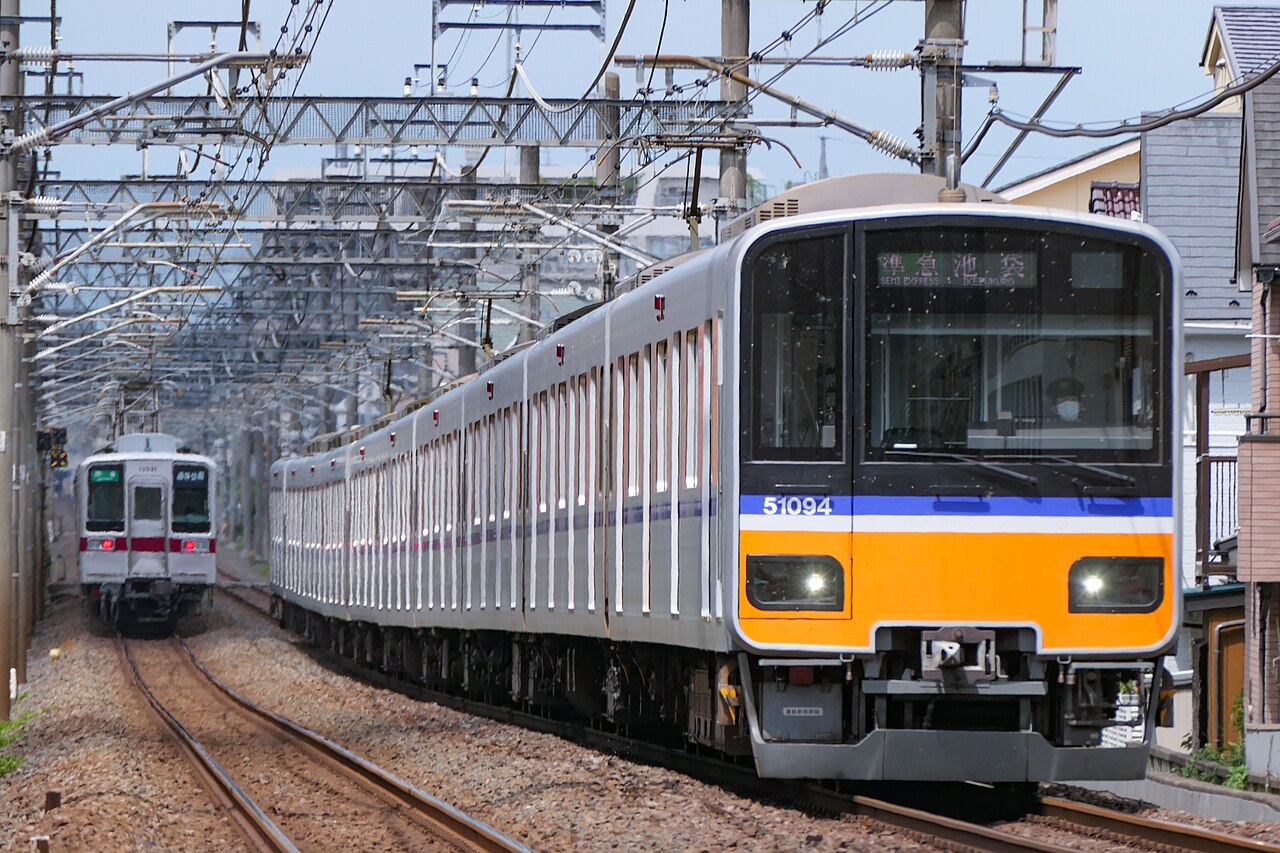
The line's character was transformed by through-running into central Tokyo. When the Yurakuchō Line reached Wakōshi on 25 August 1987, reciprocal through services began, eventually reaching Shinkiba. On 14 June 2008, with the opening of the Tokyo Metro Fukutoshin Line, through operation onto that line began and the new seat-reservation 'TJ Liner' commuter service was introduced using 50090 series stock; from the same date the maximum line speed was raised from 100 to 105 km/h, which remains the line's top speed. Station numbering with the prefix 'TJ' was introduced across Tobu's lines on 17 March 2012. From 16 March 2013 Fukutoshin Line through services were extended beyond Shibuya over the Tokyu Toyoko Line and Minatomirai Line to Motomachi-Chūkagai in Yokohama. The March 2019 revision (16 March 2019) added a new 'Kawagoe Limited Express' service aimed at sightseeing traffic to Kawagoe, and the March 2023 revision (18 March 2023), coinciding with the opening of the Tōkyū and Sōtetsu Shin-Yokohama Lines, abolished the 'rapid' services that had been introduced in 2013.
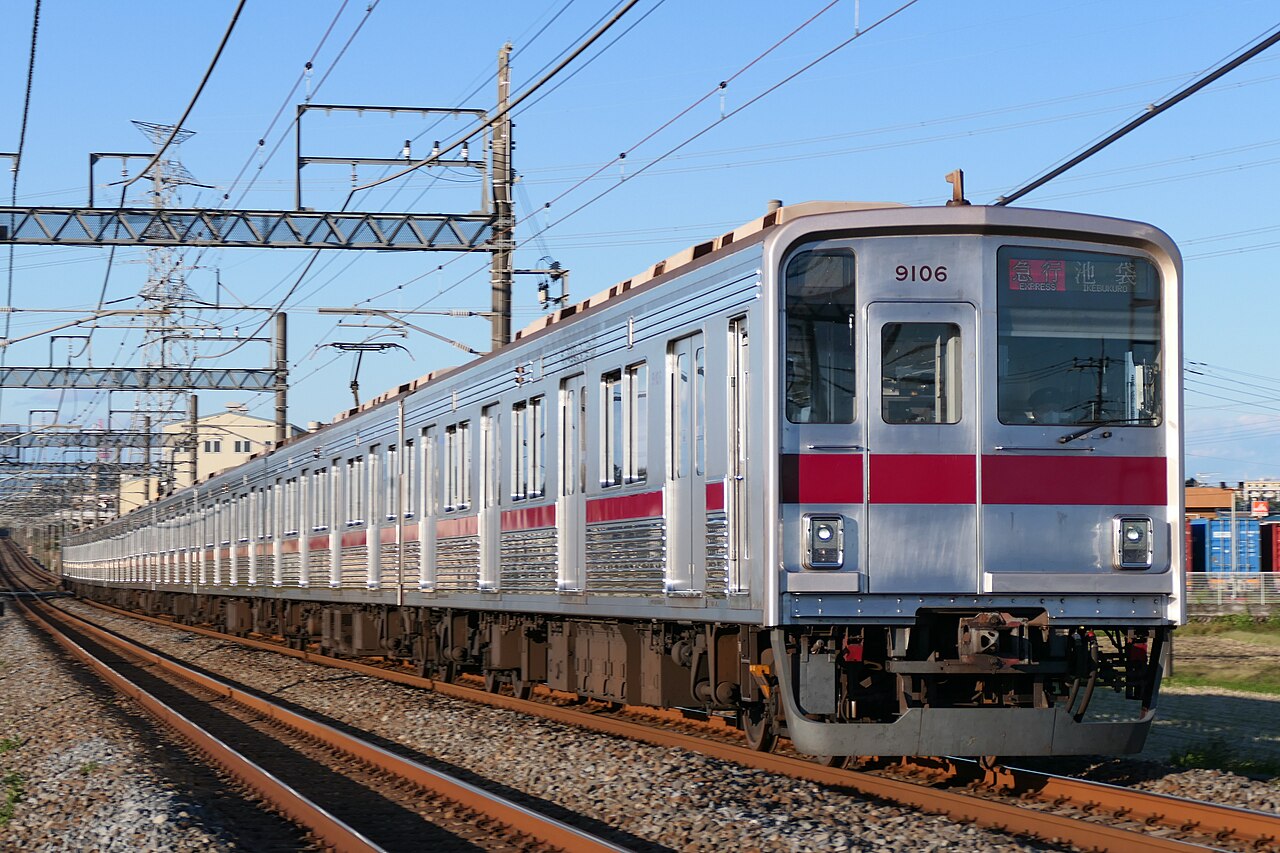
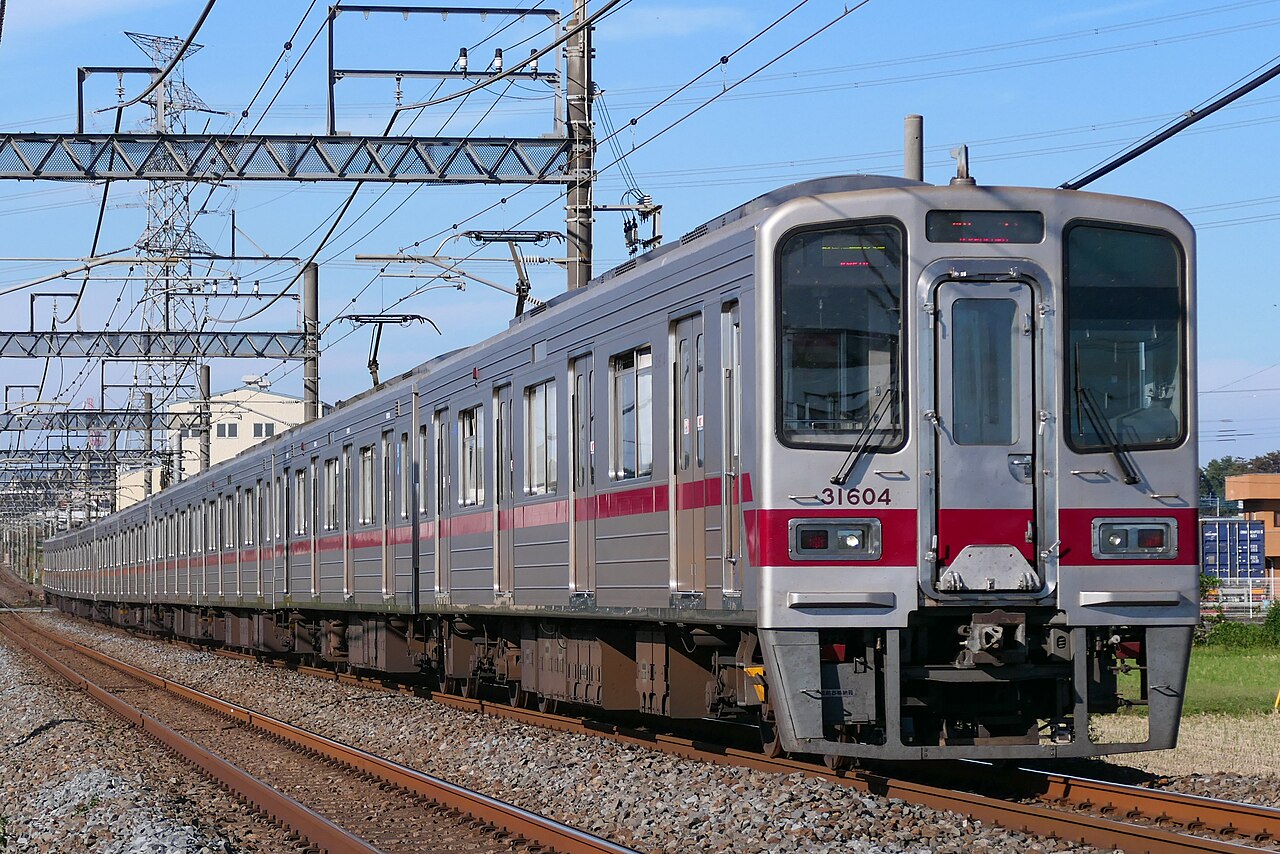
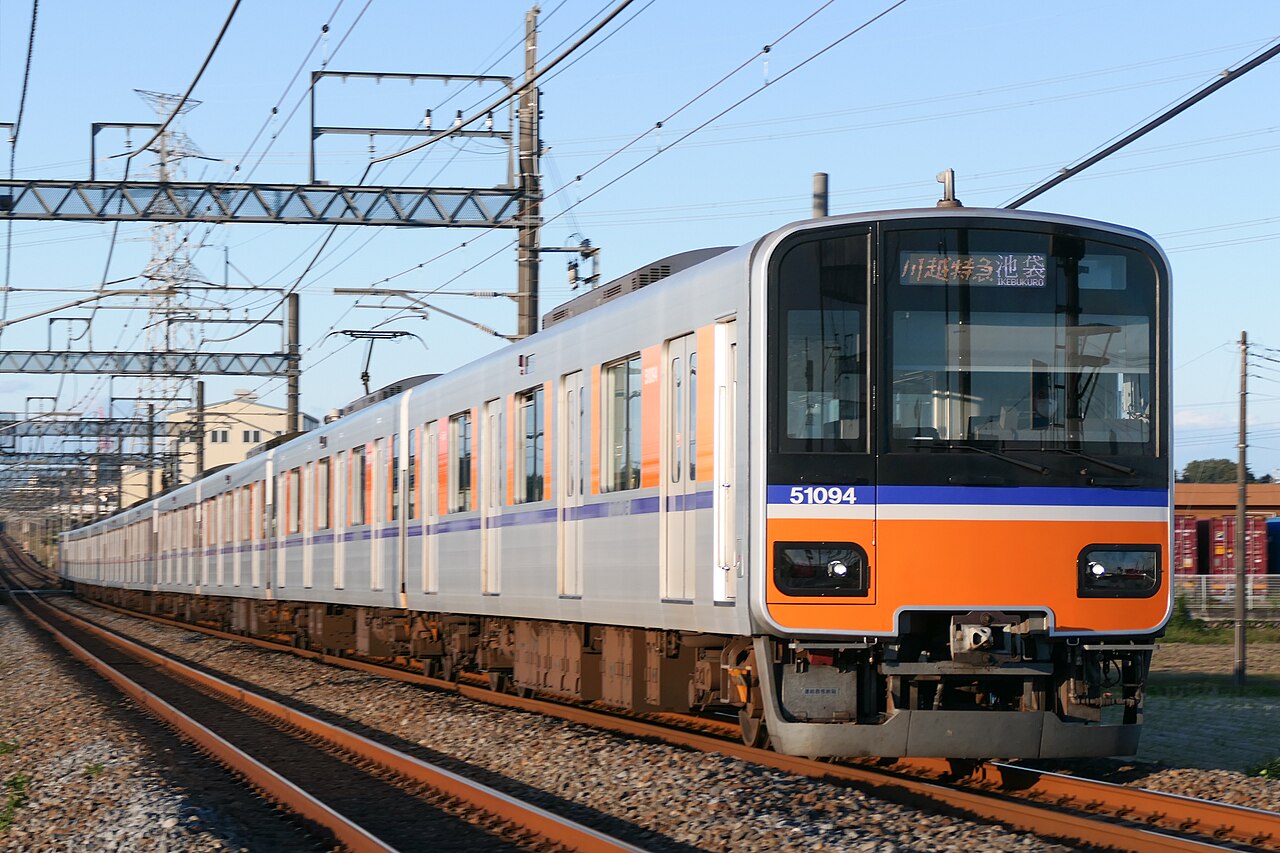
Today the Tobu Tojo Line is operated as two sections — Ikebukuro–Ogawamachi and Ogawamachi–Yorii — with no through services between them; the northern Ogawamachi–Yorii section has been one-person operated since 2005. Services range from all-stations locals (some continuing onto the Tokyo Metro Fukutoshin and Yūrakuchō Lines) through Semi Express, Express, Rapid Express, the Kawagoe Limited Express, the F Liner and the limited-stop TJ Liner. The line recorded a daily ridership of 954,715 in 2010.
Timeline
- 191111 November: the Tojo Railway holds its founding general meeting, with Kaichirō Nezu as president and a capital of 4.5 million yen.
- 19141 May: the Tojo Railway opens the first 33.5 km, Ikebukuro to Tanomosawa (a since-abolished station near present Kawagoeshi/Kasumigaseki).
- 1916Extended 9.2 km from Kawagoemachi (now Kawagoeshi) to Sakadomachi (now Sakado); the Kawagoemachi–Tanomosawa stub is abandoned.
- 192027 July: the Tojo Railway is merged into Tobu Railway on equal 5:5 terms and dissolved; the line becomes the Tobu Railway Tojo Main Line.
- 1923Extended 13.4 km from Sakadomachi to Ogawamachi (Sakadomachi–Bushū-Matsuyama on 1 October, Bushū-Matsuyama–Ogawamachi on 5 November).
- 192510 July: the 10.9 km Ogawamachi–Yorii section opens, completing the present-day Ikebukuro–Yorii line.
- 1929Electrified at 1,500 V DC: Ikebukuro–Kawagoeshi on 1 October and Kawagoeshi–Yorii on 29 December, completing electrification of the whole line.
- 1935Double-tracking of the Ikebukuro–Shiki section is carried out between 1935 and 1937.
- 19493 April: through running onto the Chichibu Railway begins; 'Flying Tojo' limited express services start between Ikebukuro and Nagatoro using 5310 series stock.
- 19591 April: steam locomotive operation on the line ends.
- 1967December: the 'Flying Tojo' limited express service is discontinued.
- 19711 March: Shinrin-kōen Station opens; the Shinrin-kōen depot, the line's main maintenance base, opens the same month.
- 198621 October: freight operations on the line are fully abolished.
- 198725 August: Wakōshi–Shiki is quadruple-tracked and through running with the Tokyo Metro (then Eidan) Yurakuchō Line begins at Wakōshi.
- 199315 November: Fujimino Station opens and the maximum line speed is raised from 95 to 100 km/h.
- 200517 March: Musashi-Ranzan–Ranzan-signal double-tracking completed; one-person operation begins on the Ogawamachi–Yorii section.
- 200814 June: through running with the Tokyo Metro Fukutoshin Line begins; the seat-reservation TJ Liner is introduced (50090 series); maximum line speed raised from 100 to 105 km/h.
- 201217 March: station numbering with the 'TJ' prefix is introduced.
- 201316 March: Fukutoshin Line through services are extended beyond Shibuya over the Tokyu Toyoko and Minatomirai Lines to Motomachi-Chūkagai in Yokohama.
- 201916 March: a new 'Kawagoe Limited Express' service is introduced.
- 202318 March: 'rapid' services (introduced in 2013) are abolished, coinciding with the opening of the Tōkyū and Sōtetsu Shin-Yokohama Lines.
Sources
Facts last verified 3 June 2026.
Gallery 4 photos
Every photo for this page — tap any image to view it full-size. All from Wikimedia Commons (credit under each).