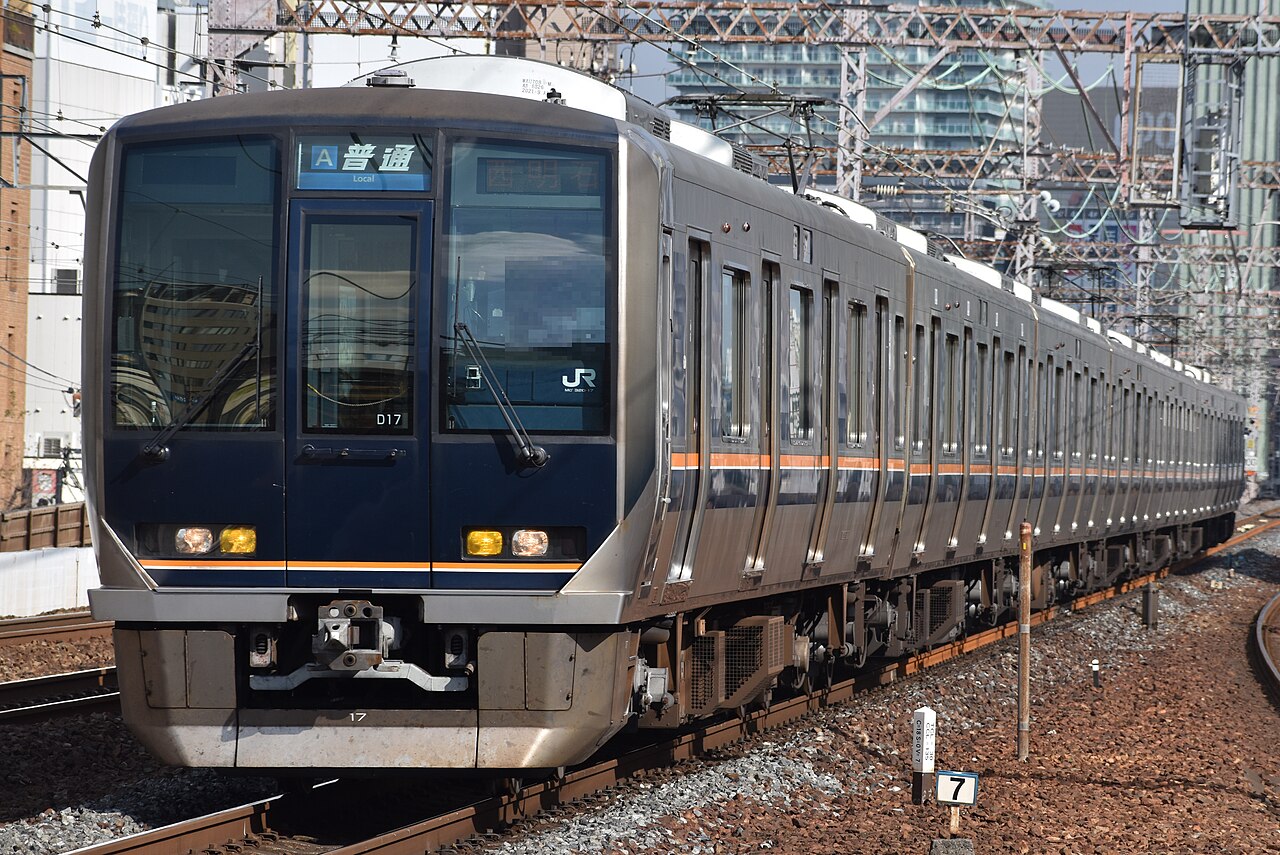
History
The corridor carries the first railway ever built in Japan. The line from Shimbashi to Sakuragichō in Yokohama opened in 1872; a separate early segment of today's route, between Kyoto and Kobe, opened in 1877. Railway planners initially debated whether to link Tokyo and the Kansai region along the coastal Tōkaidō route or the inland Nakasendō route. In 1883 the government chose the Nakasendō and began building several segments, opening lines between Ōgaki and Nagahama (1884) and between Nagoya and Kisogawa (1886). By 1886, however, it was clear that the Tōkaidō route would be more practical, and the Nakasendō plan was abandoned. Construction then advanced quickly: the first through line from Tokyo to Kobe was completed in 1889, when Kōzu and Hamamatsu were connected via the present-day Gotemba Line corridor. At first there was one Tokyo–Kobe train in each direction per day, taking over 20 hours each way. The "Tōkaidō Line" name was formally adopted in 1895, and in October that year, following the Sino-Japanese War, through service to the Sanyo Railway (now the San'yō Main Line) began.
The line was steadily upgraded. Express service between Tokyo and Kobe began in 1896, sleeper service in 1900 and dining-car service in 1901. In 1906 all privately run main lines were nationalised under the newly created Japanese Government Railways, whose network then spanned just over 7,000 km of track. On 20 December 1914 Tokyo Station opened and replaced Shimbashi as the Tokyo-side terminus; on the same day an electrified commuter line opened between Tokyo Station and today's Yokohama Station, now part of the Keihin–Tōhoku Line. In 1930 the first Tsubame ("swallow") express cut the Tokyo–Kobe time to nine hours, down from the twenty hours needed in 1889 and fifteen in 1903. Two major route changes eased the line's toughest gradients: the steep Osakayama section between Ōtsu and Kyoto was replaced by a new route with two long tunnels, completed on 25 September 1919, and the mountainous Gotemba stretch was bypassed by the Tanna Tunnel, finished in 1934 after fifteen years of construction. The new route through the tunnel is 11.2 km long, against the 60.2 km detour the old Gotemba route took around the Tanna Basin; with the tunnel's opening, the Tokyo–Numazu section was fully electrified, because steam locomotives could not safely work the long bore.
On 19 November 1956 the line was fully electrified end to end, and the Tokyo–Osaka Tsubame and Hato expresses, now EF58-hauled over the whole route, were cut from eight hours to seven hours thirty minutes. On 1 October 1958 the Kodama — the first limited express formed of electric multiple units rather than locomotive-hauled carriages — entered service, further reducing the Tokyo–Osaka time to six hours fifty minutes; from that point essentially all of Japan's non-sleeper express stock, including the later Shinkansen, was designed as EMUs.
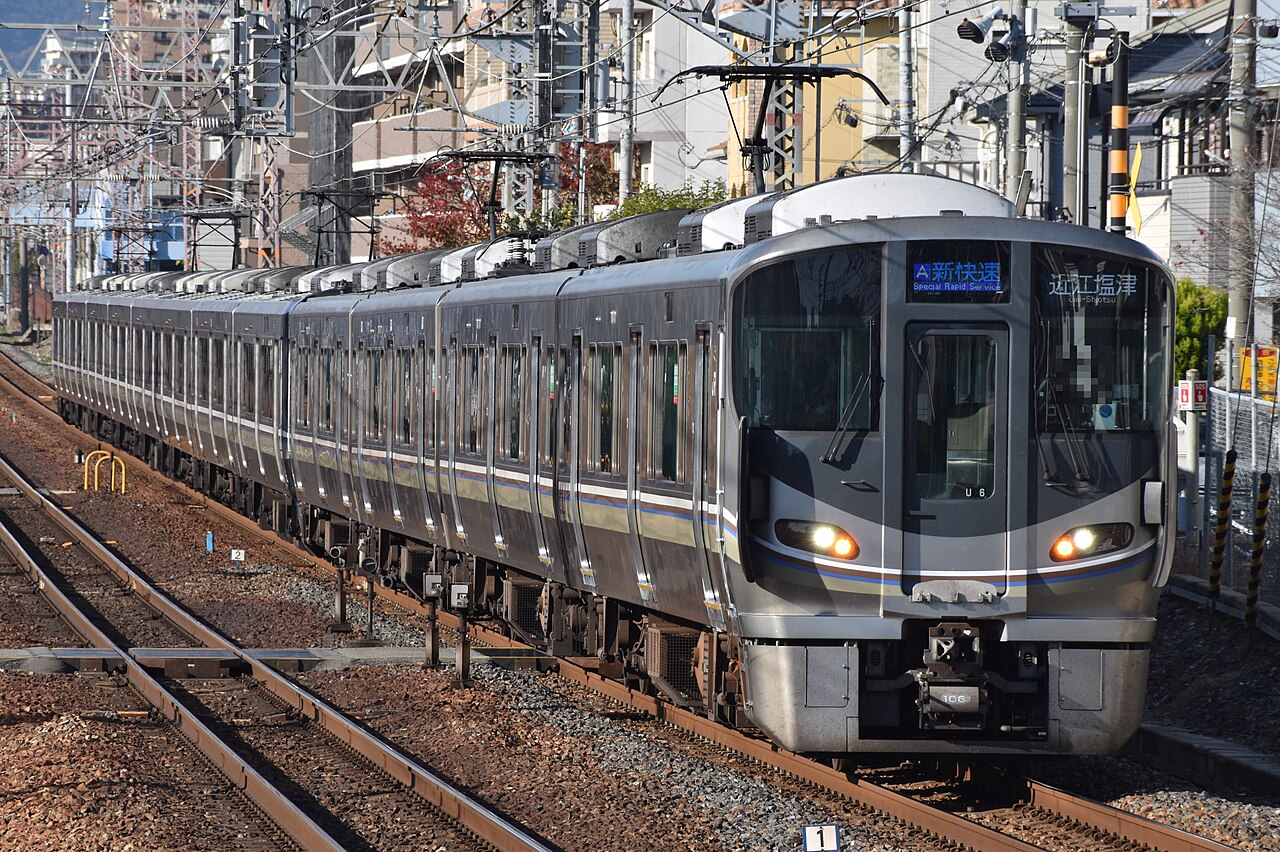
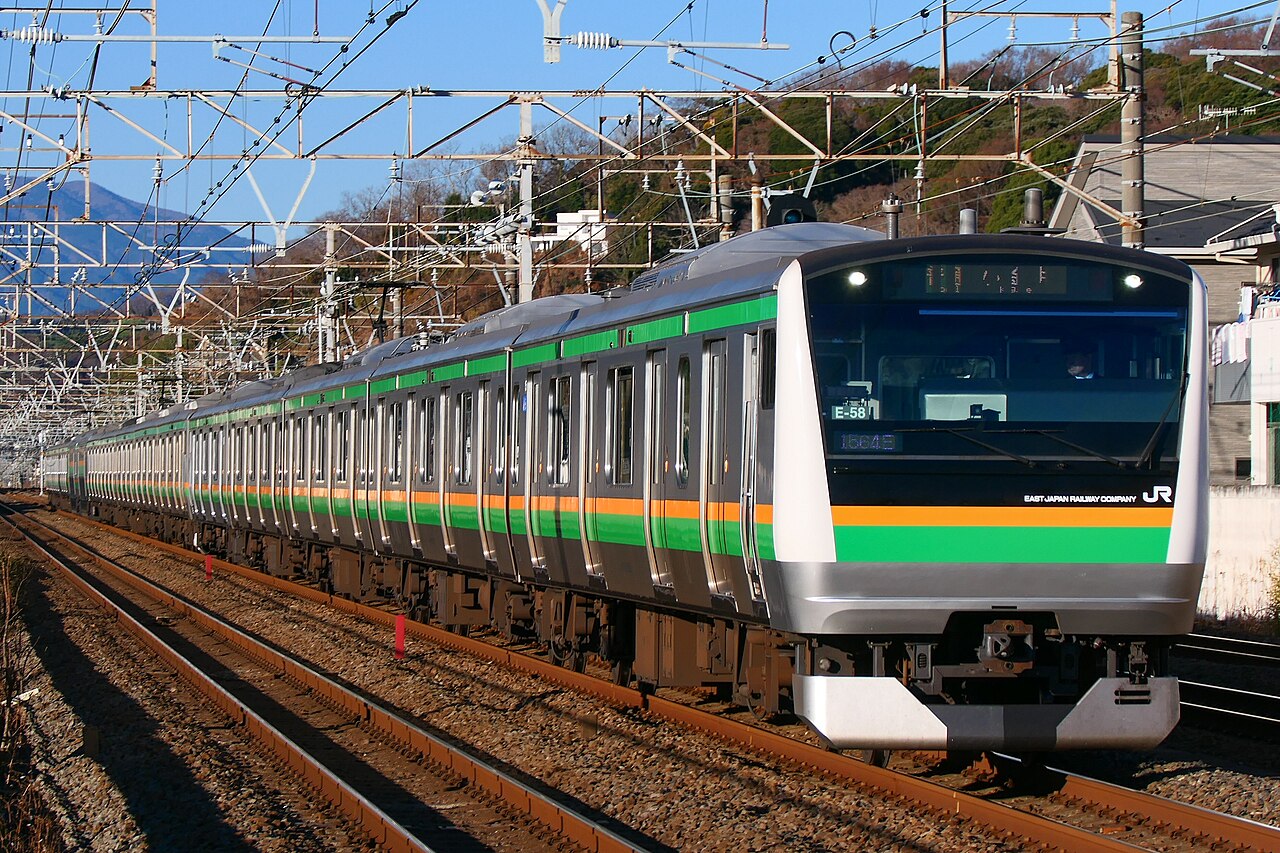
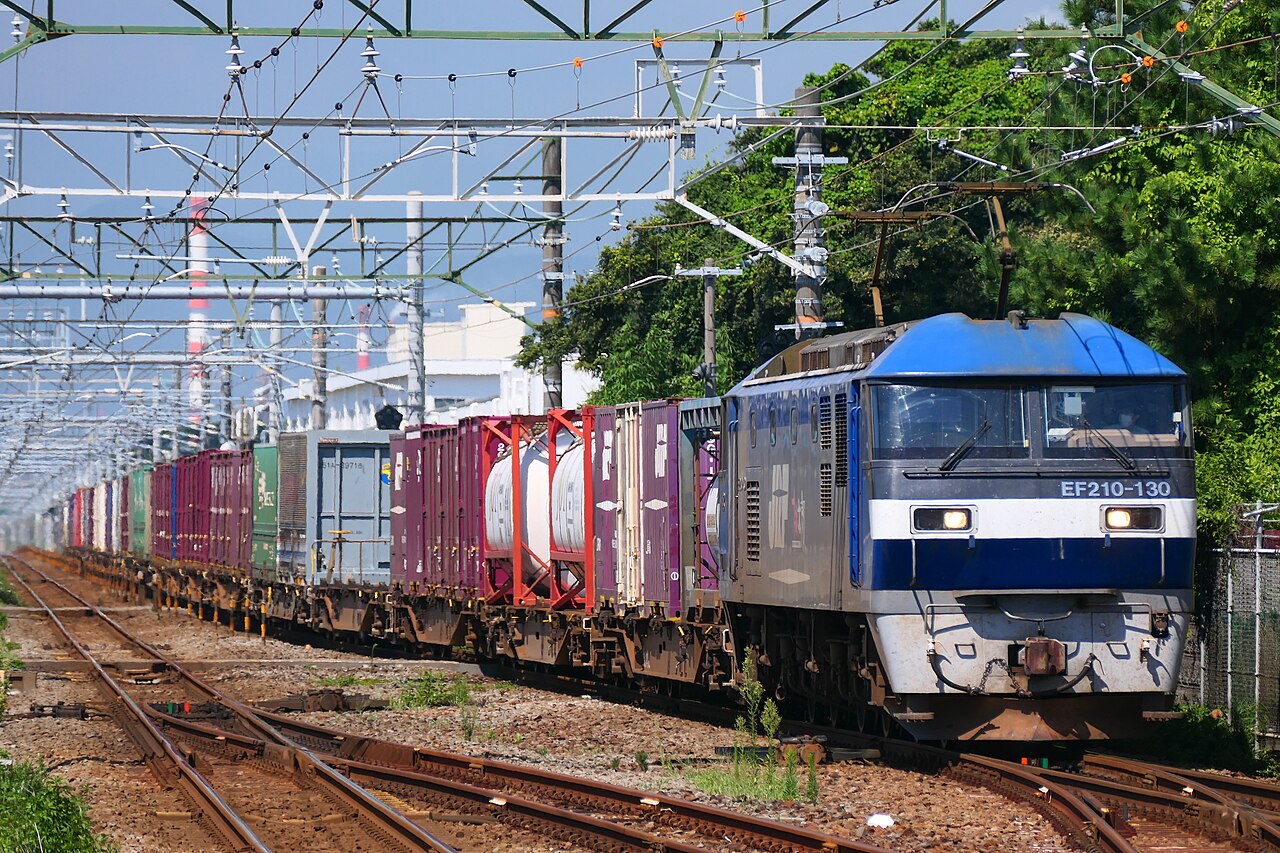
The capacity constraints on the Tōkaidō Main Line had been evident even before World War II, and in 1959 work began on a separate 1,435 mm standard-gauge "bullet train" line. After the Tōkaidō Shinkansen opened in 1964, most intercity passenger traffic between Tokyo, Nagoya and Osaka transferred to it, and the conventional line — now described as a zairaisen (conventional line) — shifted to commuter and freight roles, retaining only a small number of long-distance trains, mainly overnight and sleeper services. From the 1970s, fast Special Rapid (Shin-Kaisoku) services were introduced in the Keihanshin area to compete with parallel private railways. On 1 April 1987 the privatisation of Japanese National Railways divided the line among three passenger companies and one freight company: today it is owned and operated by JR East (Tokyo–Atami), JR Central (Atami–Maibara) and JR West (Maibara–Kobe), with JR Freight operating over much of it. "Tōkaidō Main Line" is now largely a holdover from pre-Shinkansen days, and the constituent sections carry separate operating names — for example the Biwako Line, JR Kyōto Line and JR Kōbe Line on the JR West portion.
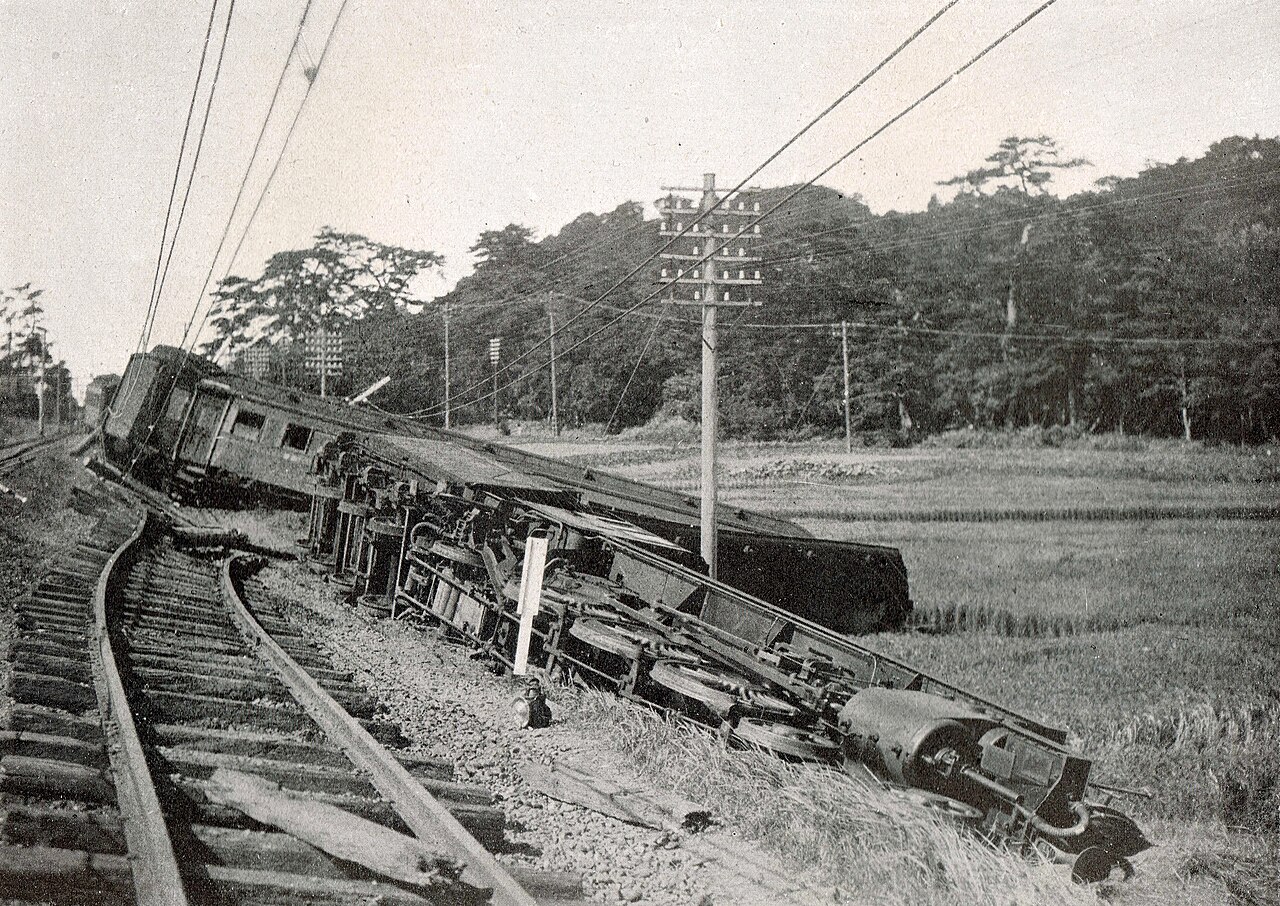
Following the Great Hanshin earthquake of 17 January 1995 the line was shut down between Takatsuki and Kobe, with certain segments impassable until 1 April that year. Station numbering was introduced on 20 August 2016, with stations between Tokyo and Ōfuna assigned numbers JT01 to JT07. Today the only daily passenger train running the entire length of the line is the combined overnight Sunrise Izumo / Sunrise Seto service; daytime intercity journeys over the corridor require several transfers along the way.
Timeline
- 1872The first railway in Japan opens: Shimbashi–Sakuragichō (Yokohama). Per JA chronology, Shinagawa–Yokohama opened provisionally on 12 June and Shimbashi–Yokohama formally on 14 October; the original Yokohama Station is present-day Sakuragichō.
- 1877The Kyoto–Kobe segment of today's line opens.
- 1883The government decides on the Nakasendō route; construction of several segments begins.
- 1886The Nakasendō plan is abandoned in favour of the Tōkaidō route as more practical.
- 18891 July: the first through Tokyo–Kobe line is completed (Shimbashi–Kobe). One train each way per day, taking over 20 hours.
- 1895The 'Tōkaidō Line' name is formally adopted. In October, after the Sino-Japanese War, through service to the Sanyo Railway (now San'yō Main Line) begins.
- 1896Express service between Tokyo and Kobe begins (sleeper service from 1900, dining cars from 1901).
- 1906Private main lines are nationalised under the Japanese Government Railways (network then just over 7,000 km).
- 191420 December: Tokyo Station opens and becomes the Tokyo-side terminus; an electrified commuter line (now the Keihin–Tōhoku Line) opens between Tokyo and today's Yokohama Station.
- 191925 September: the new, less-steep route with two long tunnels replaces the Osakayama section between Ōtsu and Kyoto.
- 1930The first Tsubame express cuts the Tokyo–Kobe time to nine hours (from twenty in 1889 and fifteen in 1903).
- 1934The Tanna Tunnel is completed after 15 years, bypassing the Gotemba stretch (new route 11.2 km vs the old 60.2 km detour); Tokyo–Numazu is fully electrified.
- 195619 November: the line is fully electrified end to end; the Tsubame and Hato expresses (now EF58-hauled throughout) are cut from 8h to 7h30m.
- 19581 October: the Kodama, the first EMU limited express, enters service, cutting Tokyo–Osaka to 6h50m. The Asakaze sleeper express debuts the same day with new Series 20 carriages.
- 1959Work begins on a separate 1,435 mm standard-gauge 'bullet train' line (the future Tōkaidō Shinkansen).
- 1964The Tōkaidō Shinkansen opens; most Tokyo–Nagoya–Osaka intercity traffic transfers to it and the conventional line shifts to commuter and freight roles.
- 19871 April: JNR is privatised; the line is divided among JR East, JR Central, JR West and JR Freight.
- 1995After the Great Hanshin earthquake (17 January), the line is shut between Takatsuki and Kobe, with some segments impassable until 1 April (EN). The JA revision gives the closed section as Osaka–Kobe and notes partial resumption the next day with gradual reopening.
- 201620 August: station numbering is introduced, with Tokyo–Ōfuna stations assigned JT01 to JT07.
Sources
Facts last verified 3 June 2026.
Gallery 5 photos
Every photo for this page — tap any image to view it full-size. All from Wikimedia Commons (credit under each).