History
The name derives from "Tama Den-en-toshi" (Tama Garden City), a large new-town development that Tokyu built using the garden-city concept advanced by Ebenezer Howard; the section west of Mizonokuchi was constructed as the core transport artery of that development. The line as it exists today is a composite of segments built and renamed over many decades. Its oldest part is the Futako-tamagawa–Mizonokuchi section, which opened on 15 July 1927 as the Mizonokuchi Line of the Tamagawa Electric Railway, built as a tramway. (A separate predecessor, the Tamagawa Electric Railway's interurban Tamagawa Line, had opened its first section between Shibuya and present-day Futako-tamagawa on 6 March 1907 at 1,372 mm gauge.) In 1943 the Mizonokuchi section was re-gauged from 1,372 mm to 1,067 mm and absorbed into the Ōimachi Line, and in 1945 it was converted from a tramway to a railway.
In 1953 Tokyu Group president Keita Gotō unveiled a "South-Western Area Development Plan", envisioning a new railway line and a freeway serving large, clean houses for Tokyo commuters; the railway would become the Den-en-toshi Line and the expressway the Tōmei Expressway. On 11 October 1963 the Ōimachi Line was renamed the Den-en-toshi Line — so at that moment the "Den-en-toshi Line" ran from Ōimachi via Futako-tamagawa to Mizonokuchi — and construction of the extension toward Nagatsuta began. The new line was then extended westward in stages as an access route into Tama Garden City: Mizonokuchi–Nagatsuta opened on 1 April 1966, Nagatsuta–Tsukushino in 1968, Tsukushino–Suzukakedai in 1972, and Suzukakedai–Tsukimino in 1976.
Meanwhile, the underground Shin-Tamagawa ("New Tamagawa") Line between Shibuya and Futako-tamagawa opened on 7 April 1977, replacing the street-running Tamagawa Line tram that had been abolished in 1969 and running beneath the old interurban alignment; the Shibuya–Futako-tamagawa underground section was built by the Japan Railway Construction Public Corporation (today the Japan Railway Construction, Transport and Technology Agency). The Shin-Tamagawa Line began through-service with the Eidan (now Tokyo Metro) Hanzomon Line in 1978, and on 12 August 1979 full through-operation began from the Den-en-toshi Line via the Shin-Tamagawa Line into the Hanzomon Line, while the Ōimachi–Futako-tamagawa segment was split off to form the present Ōimachi Line. The western extension reached its terminus when Tsukimino–Chūō-Rinkan opened on 9 April 1984, completing the full line. Express operation between Shibuya and Nagatsuta and ten-car trains had begun the previous year, in 1983, and in 1996 the maximum speed on the Nagatsuta–Chūō-Rinkan section was raised to 110 km/h.
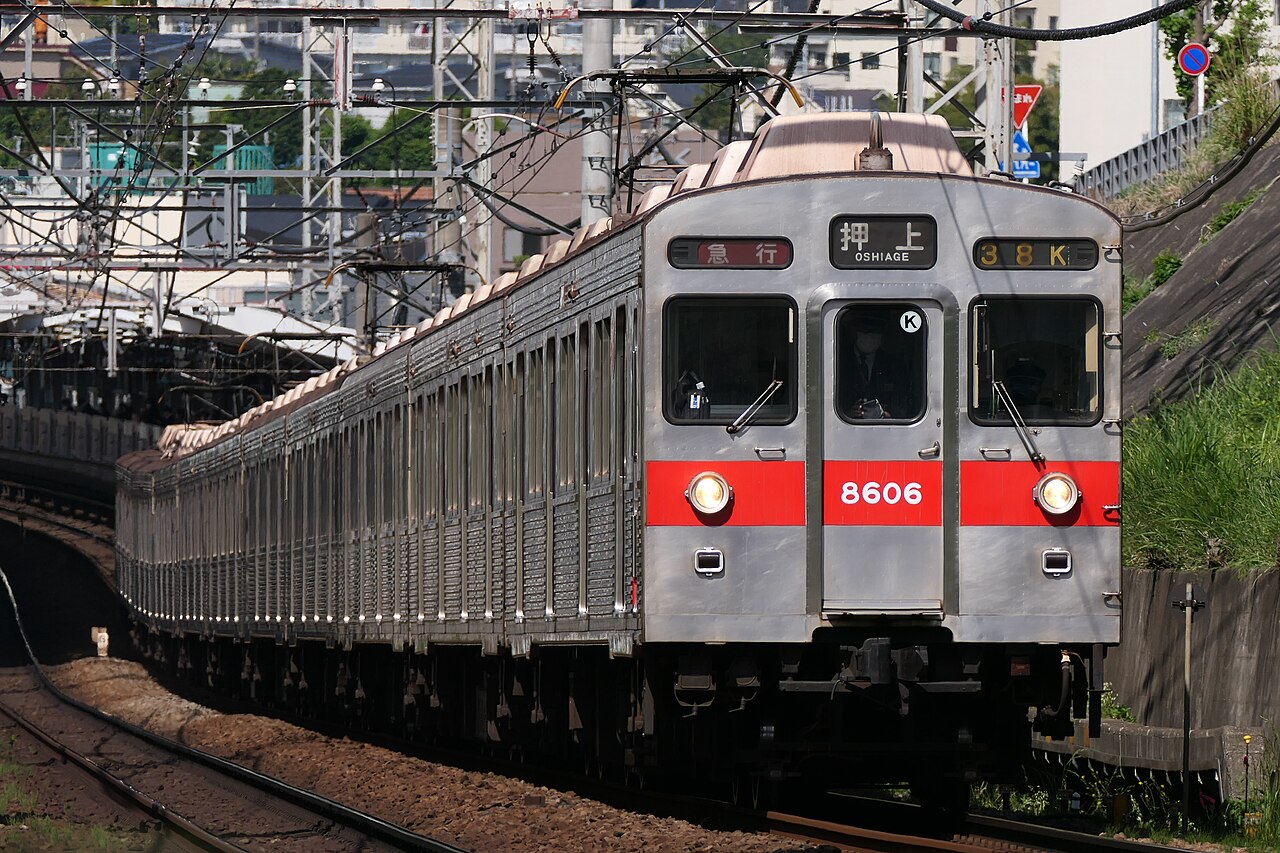
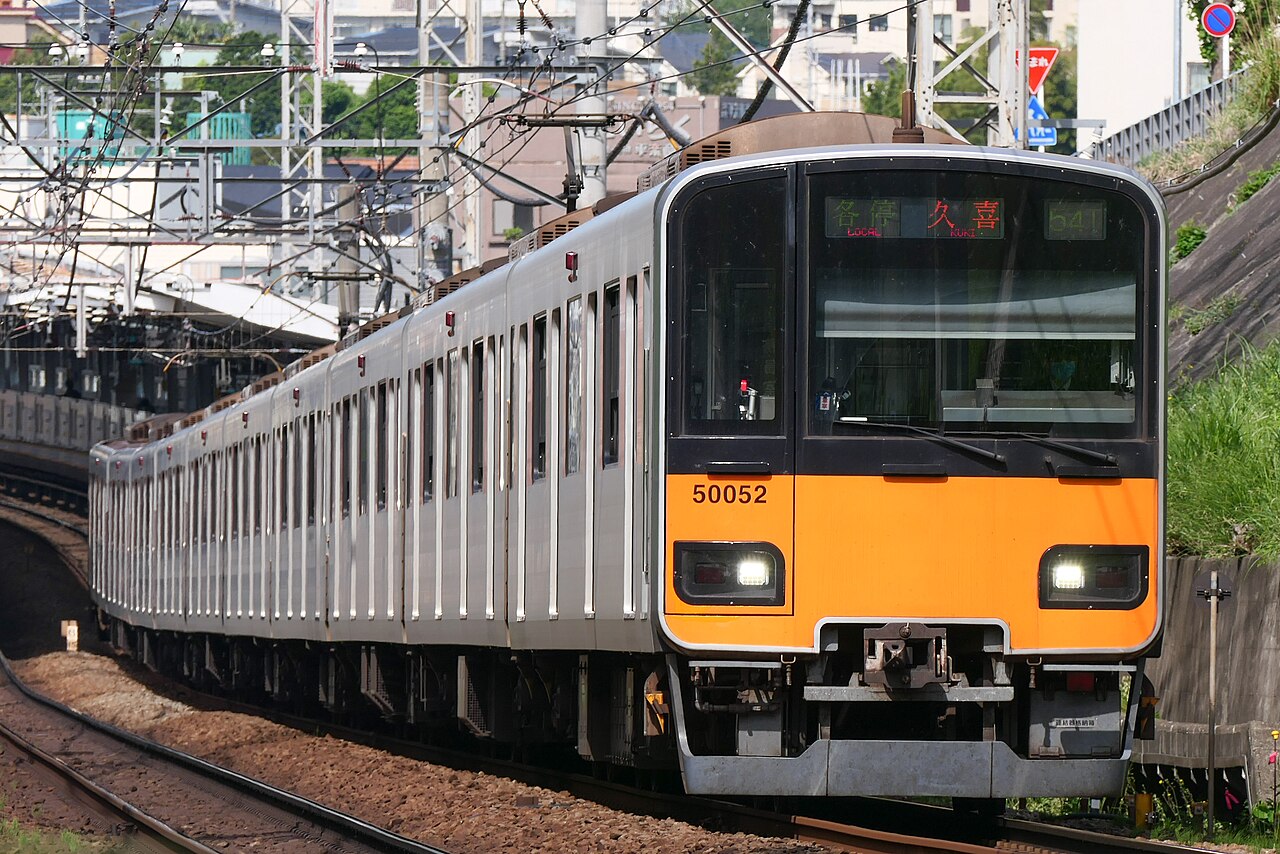
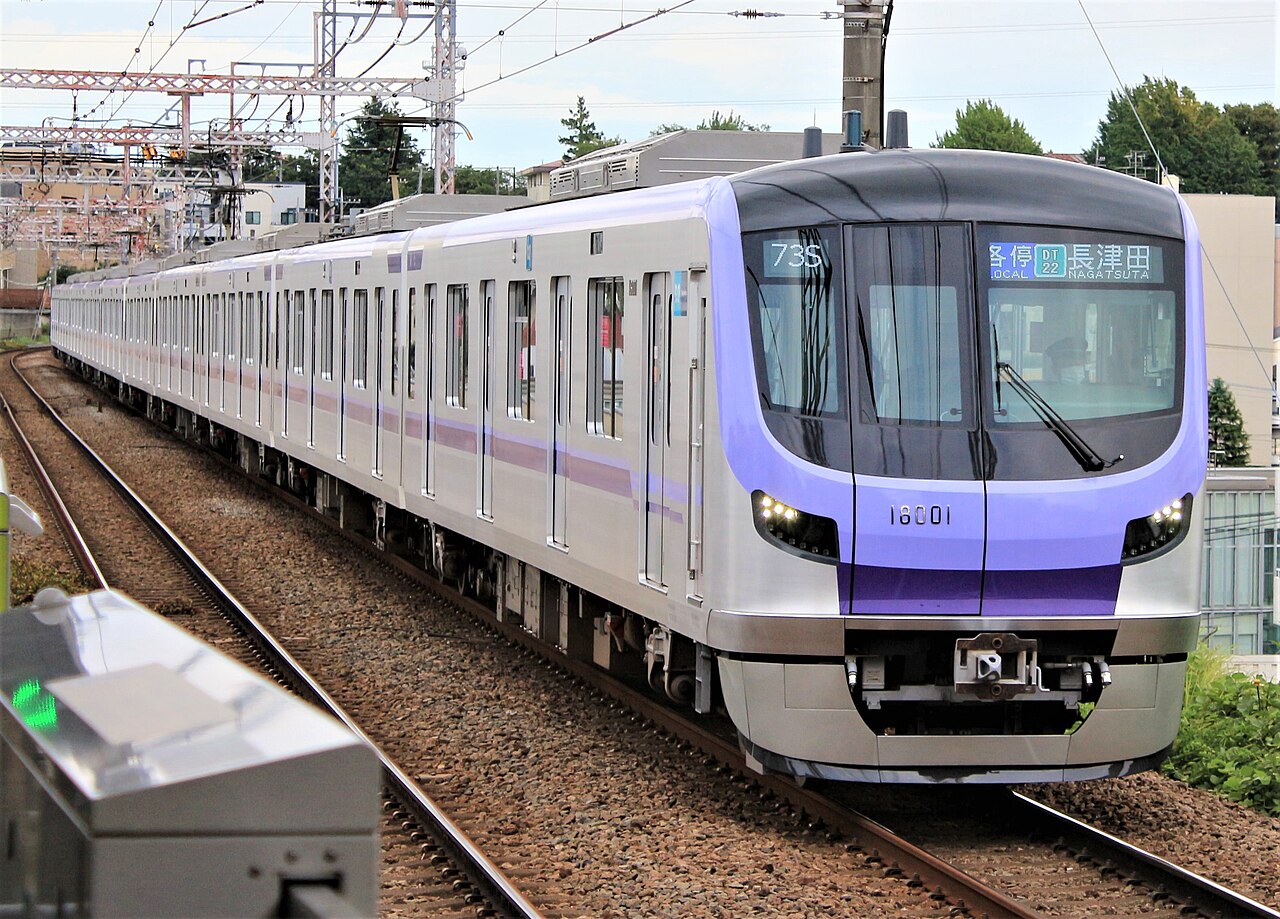
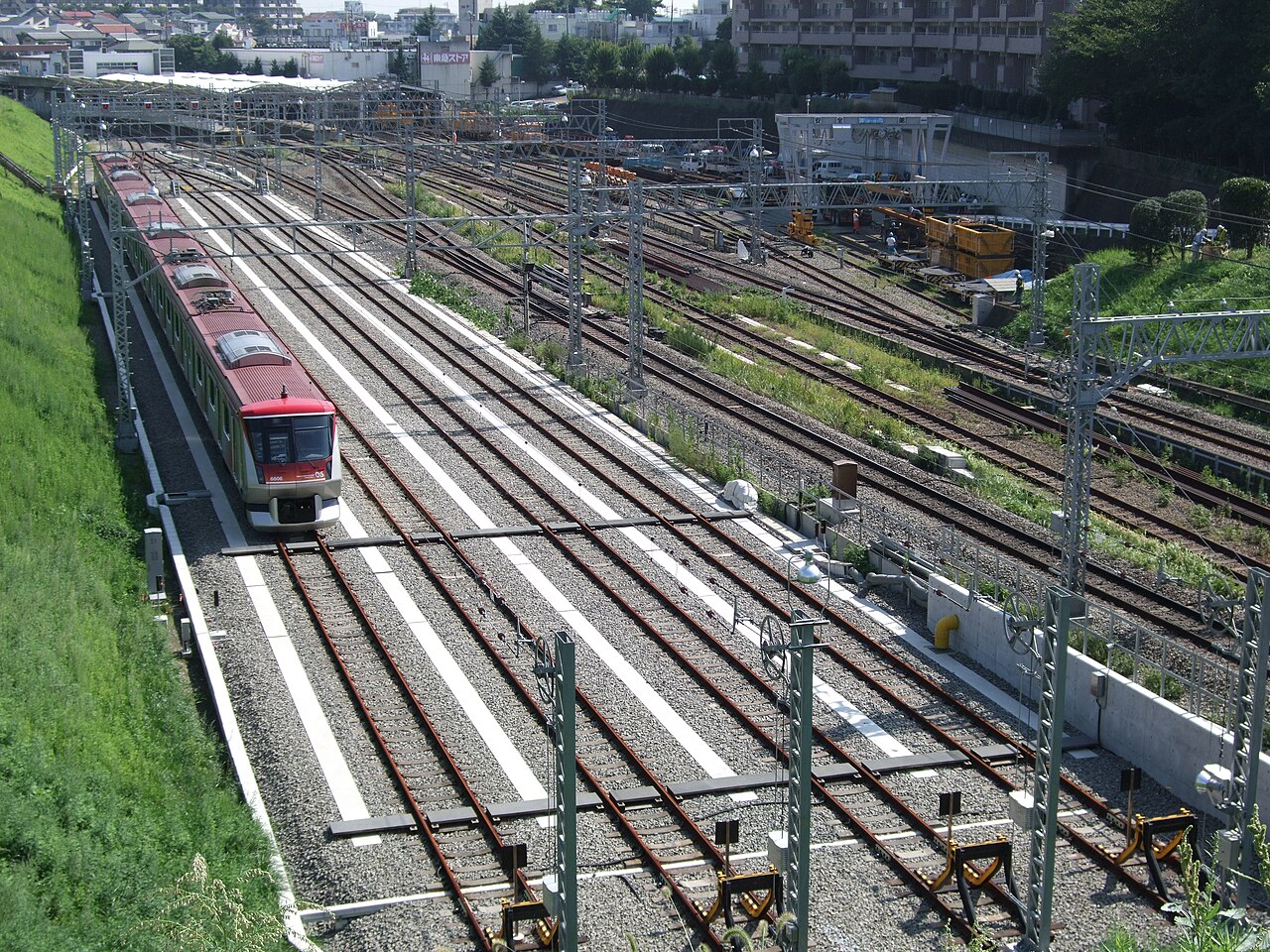
On 6 August 2000 the Shin-Tamagawa Line was merged into the Den-en-toshi Line, so that the whole Shibuya–Chūō-Rinkan route became the "Den-en-toshi Line", and Futako-tamagawa-en Station was renamed Futako-tamagawa. On 19 March 2003, when the Hanzomon Line was extended to Oshiage, through-service was extended onto the Tobu Isesaki Line and Tobu Nikkō Line, establishing today's operating pattern; nearly all trains run through to and from the Hanzomon Line as ten-car sets, and around forty percent continue beyond Oshiage onto the Tobu lines. To relieve heavy commuter crowding, Tokyu introduced women-only cars on a Tokyu line for the first time in 2005, and the Futako-tamagawa–Mizonokuchi section was quadruple-tracked, entering service on 11 July 2009 with Ōimachi Line trains running through to Mizonokuchi. Three service types operate today: Express, Semi-Express and Local. Station numbering with the "DT" prefix was introduced in 2012.
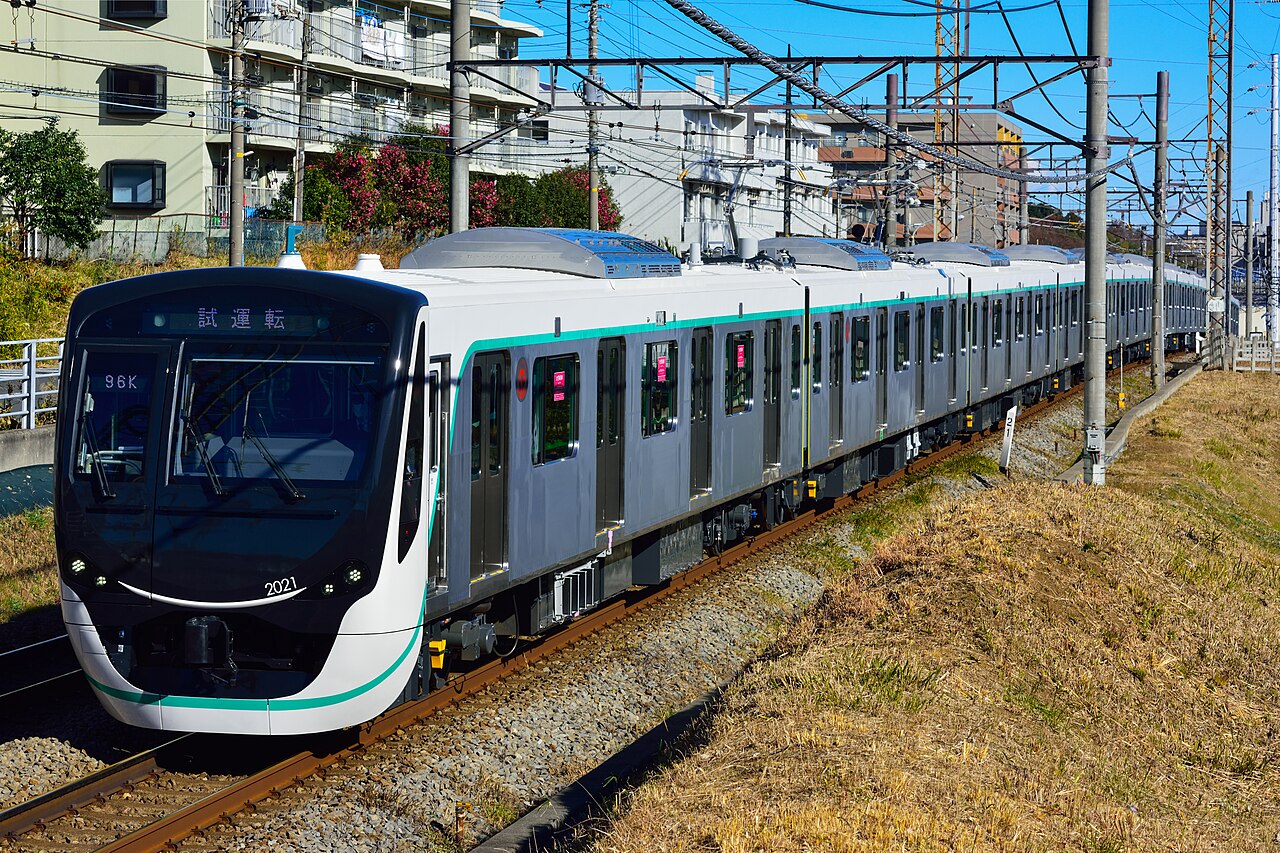
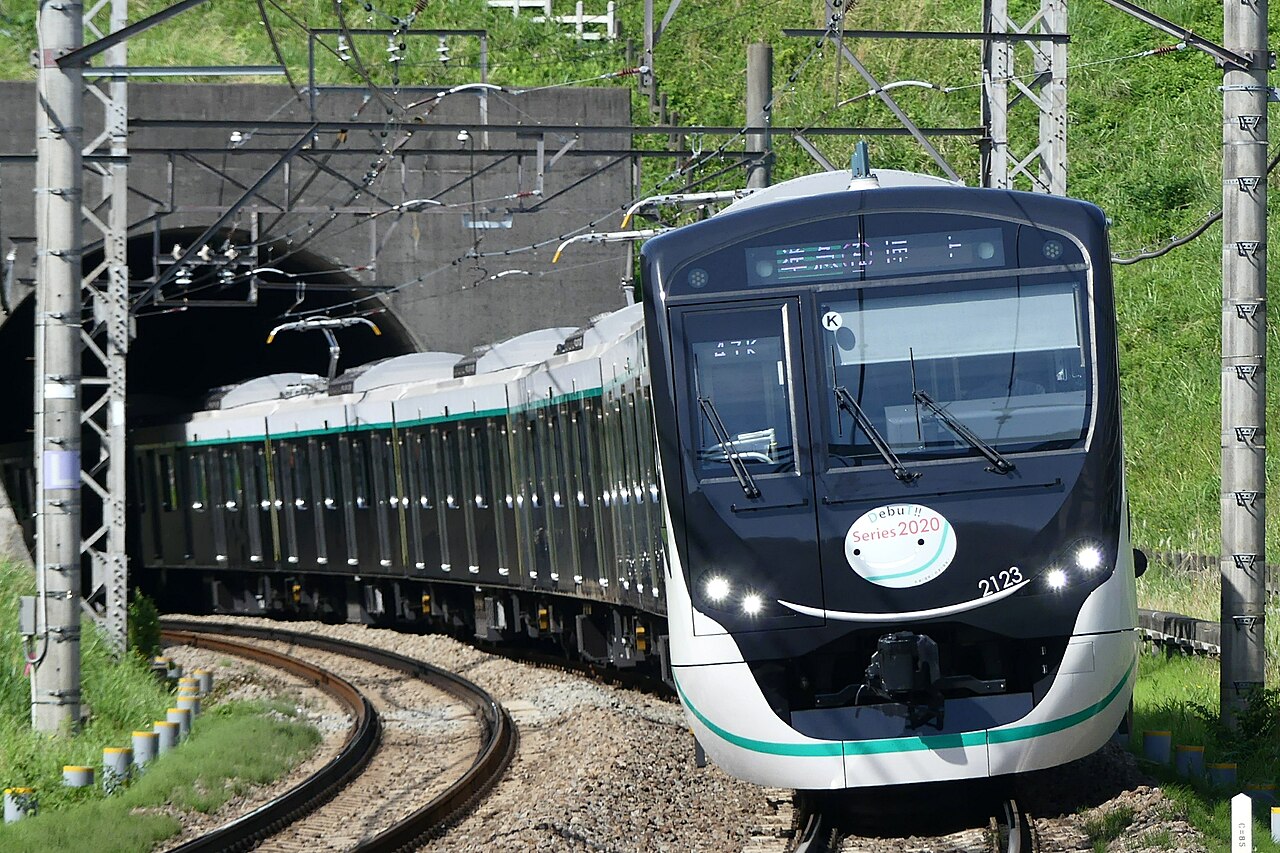
The line serves dense commuter demand and ranks among the most crowded in the Tokyo area. In fiscal 2019 the peak congestion rate on the busiest section (Ikejiri-ōhashi to Shibuya) was 183 percent, the second-highest among major private-railway lines in the greater Tokyo area after the Tokyo Metro Tozai Line; by fiscal 2024 the peak-hour congestion rate on the same section had eased to 133 percent. Daily ridership was recorded at 1,274,503 passengers in 2017. On 5 October 2025 an out-of-service ten-car train (a Tokyu 5000 series set) was struck within Kajigaya Station by an inbound ten-car Shibuya-bound Tokyu 2020 series local as the out-of-service train was entering a layover track, derailing the stationary train; no serious injuries were reported among the 149 passengers on the moving train, though one conductor on the stationary train was lightly injured. Tokyu subsequently disclosed a signal-setting error that had persisted since maintenance work in 2015, inspected other stations with similar track layouts, and from the timetable revision of 14 March 2026 implemented some service reductions and partial seven-car operation owing to the resulting shortage of cars.
Timeline
- 19076 March: the Tamagawa Electric Railway opens the first section of its interurban Tamagawa Line between Shibuya and present-day Futako-tamagawa, at 1,372 mm gauge.
- 192715 July: the Futako-tamagawa–Mizonokuchi section — the oldest part of today's line — opens as the Mizonokuchi Line of the Tamagawa Electric Railway, built as a tramway.
- 19431 July: the Mizonokuchi section is re-gauged from 1,372 mm to 1,067 mm and incorporated into the Ōimachi Line.
- 1945The Futako-tamagawa–Mizonokuchi section is converted from a tramway to a railway.
- 1953Tokyu Group president Keita Gotō unveils the "South-Western Area Development Plan"; the planned railway becomes the Den-en-toshi Line and the planned expressway the Tōmei Expressway.
- 196311 October: the Ōimachi Line is renamed the Den-en-toshi Line (then running Ōimachi–Futako-tamagawa–Mizonokuchi); construction of the Mizonokuchi–Nagatsuta extension begins.
- 19661 April: Mizonokuchi–Nagatsuta opens as the first stage of the new Den-en-toshi Line into Tama Garden City.
- 19681 April: Nagatsuta–Tsukushino opens.
- 19721 April: Tsukushino–Suzukakedai opens.
- 197615 October: Suzukakedai–Tsukimino opens; the line becomes fully double-tracked except within Tsukimino yard.
- 19777 April: the underground Shin-Tamagawa Line (Shibuya–Futako-tamagawa) opens, replacing the Tamagawa Line tram (abolished 1969); the Shibuya–Futako-tamagawa section was built by the Japan Railway Construction Public Corporation.
- 19781 August: the Shin-Tamagawa Line begins through-service with the Eidan (now Tokyo Metro) Hanzomon Line.
- 197912 August: full through-operation begins from the Den-en-toshi Line via the Shin-Tamagawa Line into the Hanzomon Line; the Ōimachi–Futako-tamagawa segment is split off as the Ōimachi Line. Maximum speed at the time was 100 km/h.
- 198322 January: express operation begins between Shibuya and Nagatsuta, and ten-car operation begins.
- 19849 April: Tsukimino–Chūō-Rinkan opens, completing the full line.
- 19894 December: the last level crossing (Tana No. 1) is abolished, making the line crossing-free.
- 199626 April: maximum speed on Nagatsuta–Chūō-Rinkan is raised to 110 km/h; all Rapid services are merged into Express.
- 20006 August: the Shin-Tamagawa Line is merged into the Den-en-toshi Line, so the whole Shibuya–Chūō-Rinkan route becomes the Den-en-toshi Line; Futako-tamagawa-en Station is renamed Futako-tamagawa.
- 200319 March: with the Hanzomon Line extended to Oshiage, through-service begins onto the Tobu Isesaki Line and Tobu Nikkō Line.
- 20059 May: women-only cars are introduced — the first on any Tokyu line.
- 200911 July: the Futako-tamagawa–Mizonokuchi section is quadruple-tracked and Ōimachi Line trains begin running through to Mizonokuchi.
- 2012February: station numbering with the "DT" prefix is introduced.
- 20255 October: at Kajigaya Station, an out-of-service ten-car train (a Tokyu 5000 series set) entering a layover track is struck by an inbound ten-car Tokyu 2020 series local and derails; one conductor is lightly injured, with no serious injuries among the 149 passengers on the moving train. A signal-setting error dating to 2015 is later disclosed.
- 202614 March: timetable revision implements some service reductions and partial seven-car operation owing to the car shortage from the 2025 accident.
Sources
Facts last verified 3 June 2026.
Gallery 5 photos
Every photo for this page — tap any image to view it full-size. All from Wikimedia Commons (credit under each).