History
The line is the cradle of the Tokyu group. The original Meguro–Kamata corridor (the former Mekama Line, part of which is today the Tōkyū Tamagawa Line) was the first line opened by Meguro-Kamata Electric Railway, the founding company of what became Tokyu. Construction history begins on 11 March 1923, when the line opened as the Meguro Line between Meguro and Maruko (the present-day Numabe). In October 1923 Meguro-Fudōmae Station was renamed Fudōmae, and on 1 November 1923 the line was extended from Maruko to Kamata and renamed the Mekama Line. A series of station renamings followed across the interwar years: Koyama became Musashi-Koyama on 1 June 1924; Chōfu and Tamagawa were renamed Den-en-Chōfu and Maruko-Tamagawa on 1 January 1926; Nishi-Koyama opened on 1 August 1928; and the station now called Tamagawa cycled through Maruko-Tamagawa, Tamagawa-en-mae (1 January 1931) and Tamagawa-en (16 December 1977) before settling on its present name in 2000.
Built to the 1,067 mm narrow gauge that characterises most Japanese private railways, the line is today electrified at 1,500 V DC using overhead catenary. According to the Japanese edition, the catenary voltage was raised from 600 V to 1,500 V on 5 November 1955. From the 1960s onward much of the alignment was placed below grade or elevated as part of successive grade-separation projects: Senzoku was put underground in 1965 for a crossing with Loop Route 7, Den-en-Chōfu went underground on 27 November 1994, Ōokayama on 27 June 1997 and Meguro on 27 July 1997, Fudōmae was elevated on 10 October 1999, and Musashi-Koyama and Nishi-Koyama were placed underground on 2 July 2006. As a result the Japanese edition records that only six level crossings remain on the whole line, all between Ōokayama and Den-en-chōfu.
The modern Meguro Line dates to 6 August 2000, when the Mekama Line was split: the Meguro–Den-en-chōfu section was separated and renamed the Meguro Line, Tamagawa-en Station was renamed Tamagawa, and one-man (driver-only) operation began. Through service transformed the line into a trunk route of the wider Tokyo subway network. On 26 September 2000 reciprocal through services began with the Teito Rapid Transit Authority (now Tokyo Metro) Namboku Line and the Toei Mita Line; on 28 March 2001 through running was extended via the Namboku Line onto the Saitama Rapid Railway Line. Express service launched across the whole line on 25 September 2006. The line itself was extended on 22 June 2008, when the Musashi-Kosugi–Hiyoshi section opened to through traffic, giving the present Meguro–Hiyoshi operating pattern.
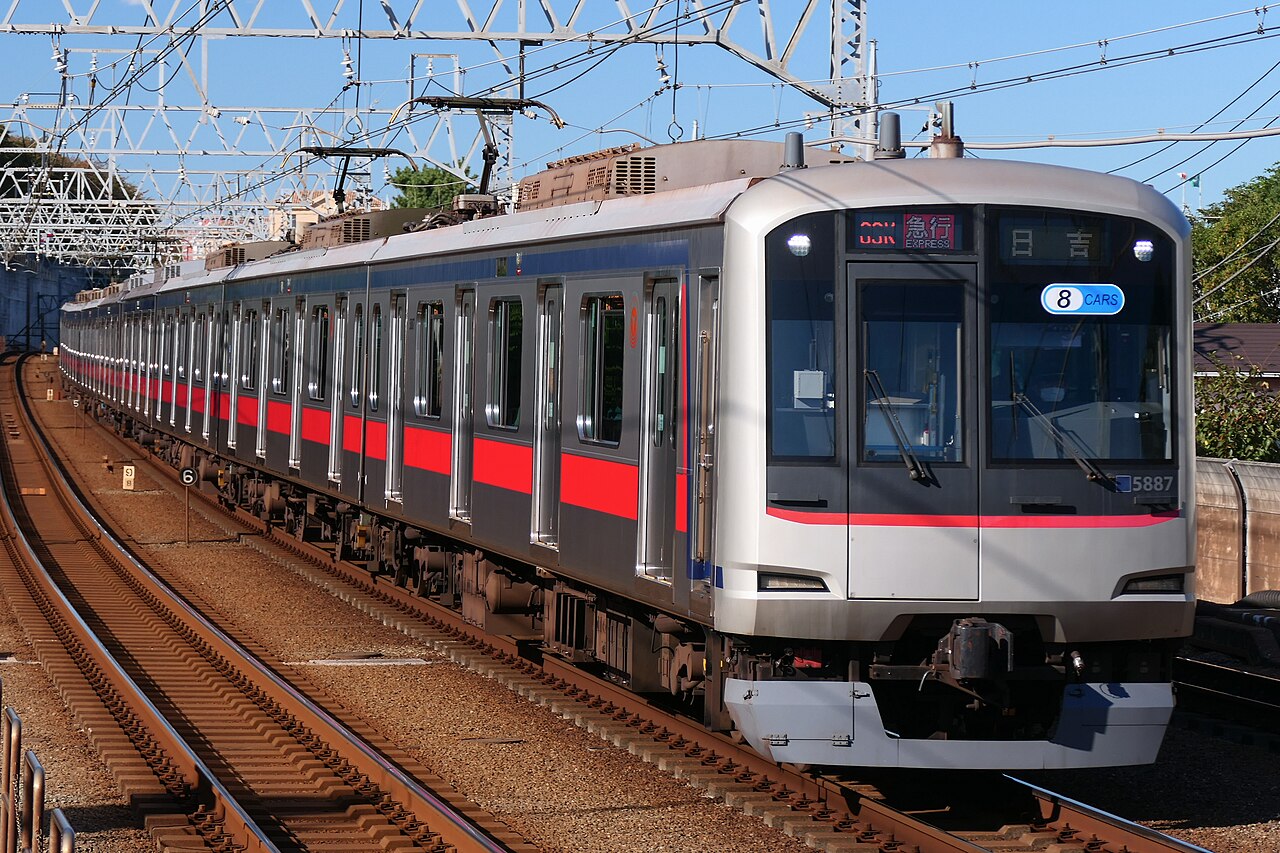
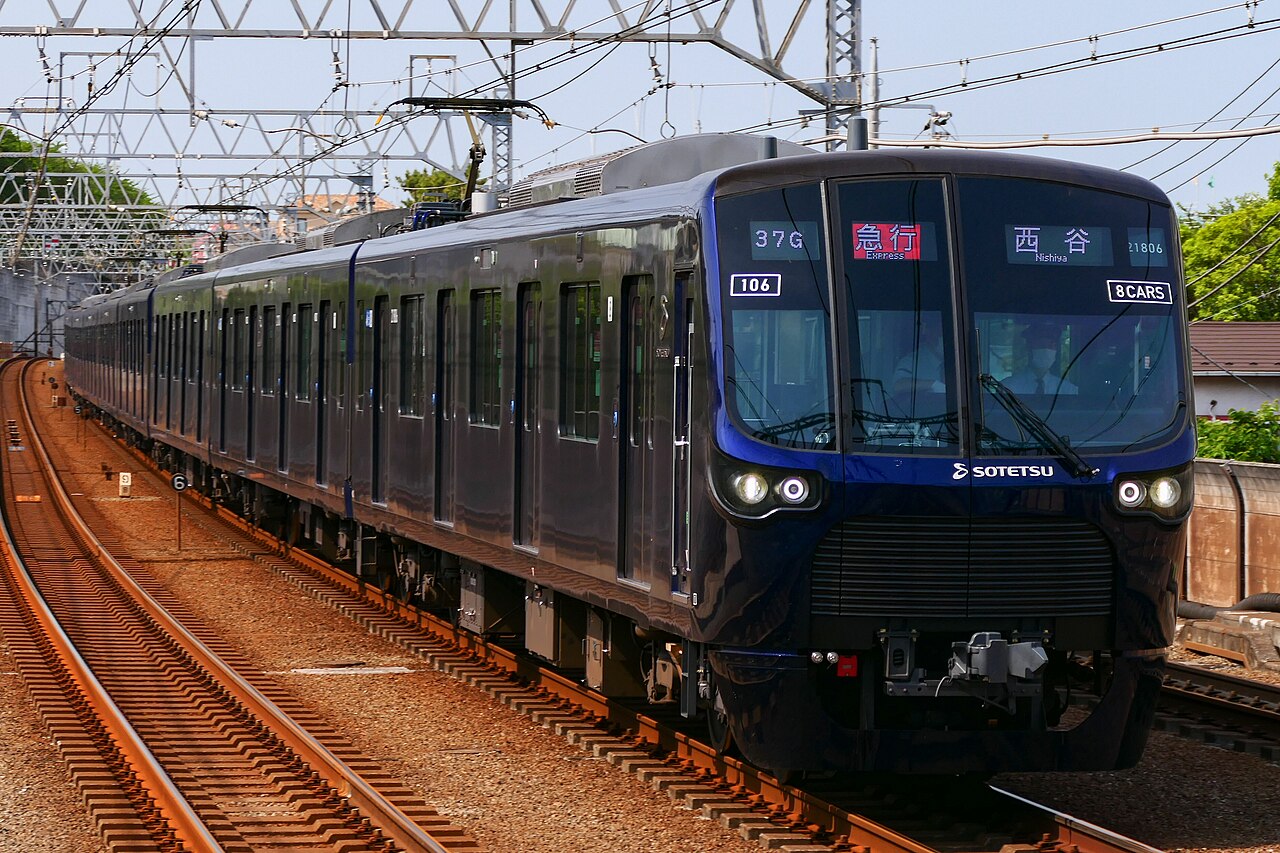
The most recent expansion turned the southern end into a gateway to the high-speed network. To prepare for eight-car operation and through running with the Sōtetsu network, platforms were lengthened and eight-car trains entered service from April 2022. On 18 March 2023 reciprocal through service began via the newly opened Tōkyū Shin-Yokohama Line onto the Sōtetsu Shin-Yokohama Line, Sōtetsu Main Line and Sōtetsu Izumino Line, connecting the Meguro Line to Shin-Yokohama Station and the Tōkaidō Shinkansen. Since then most express trains no longer terminate at Hiyoshi, instead continuing to Shin-Yokohama or onto the Sōtetsu network (Nishiya, Shōnandai, Yamato or Ebina), while the majority of local trains still terminate at Hiyoshi.
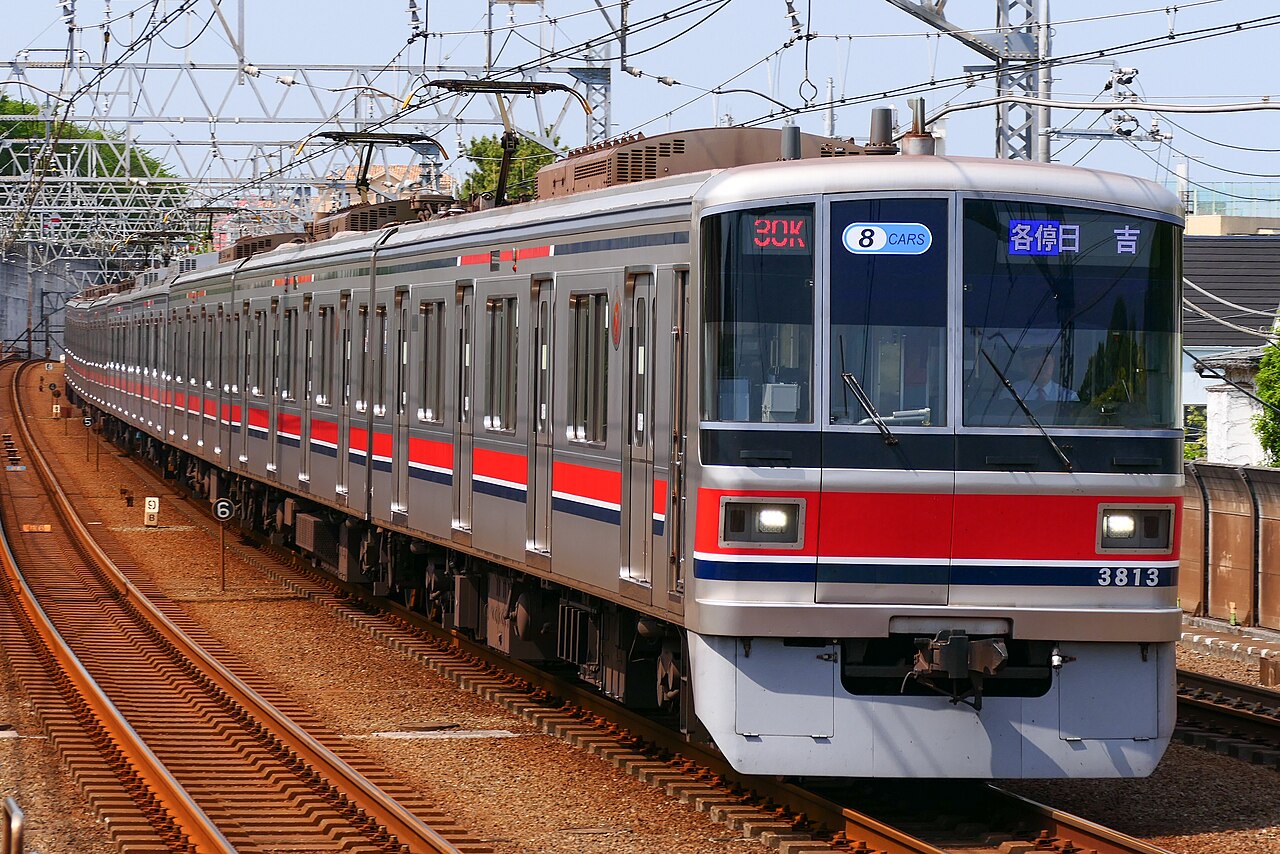
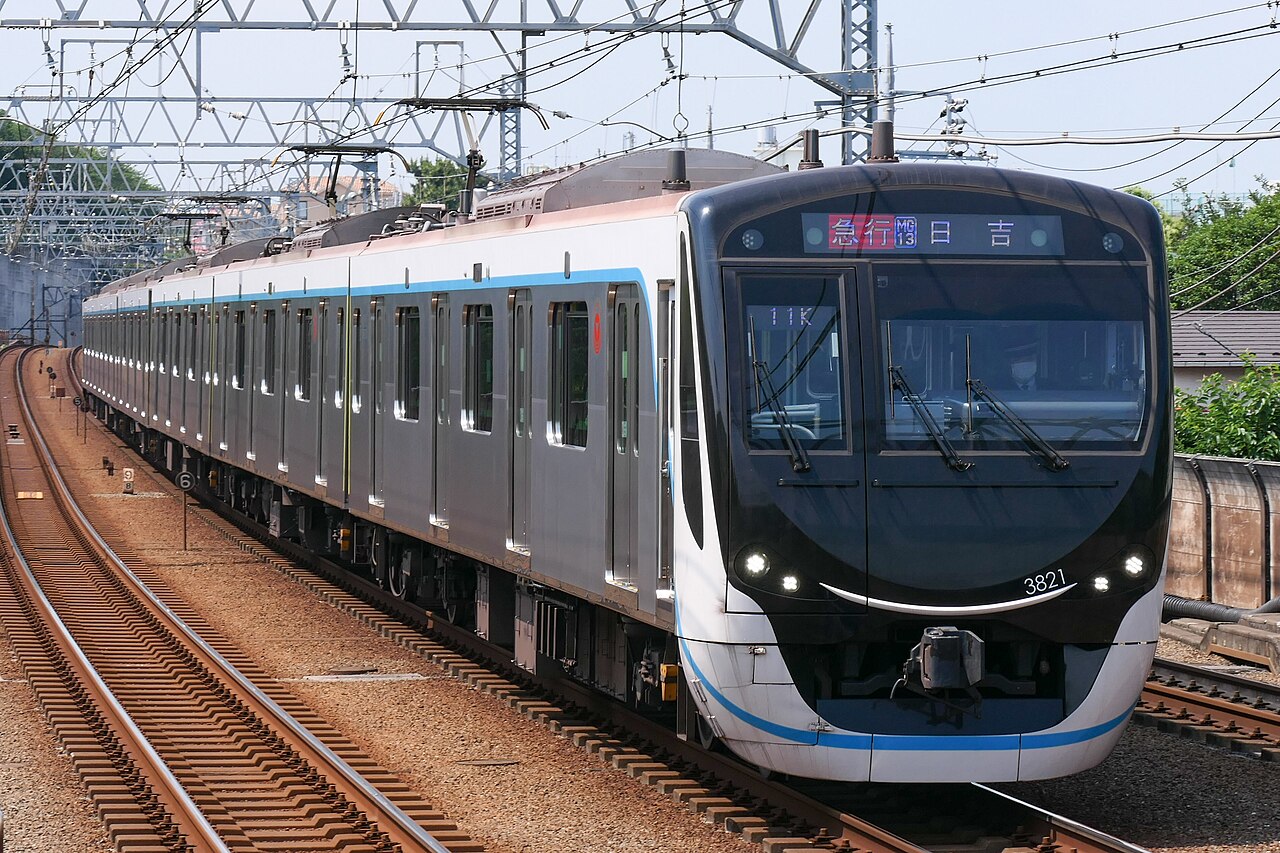
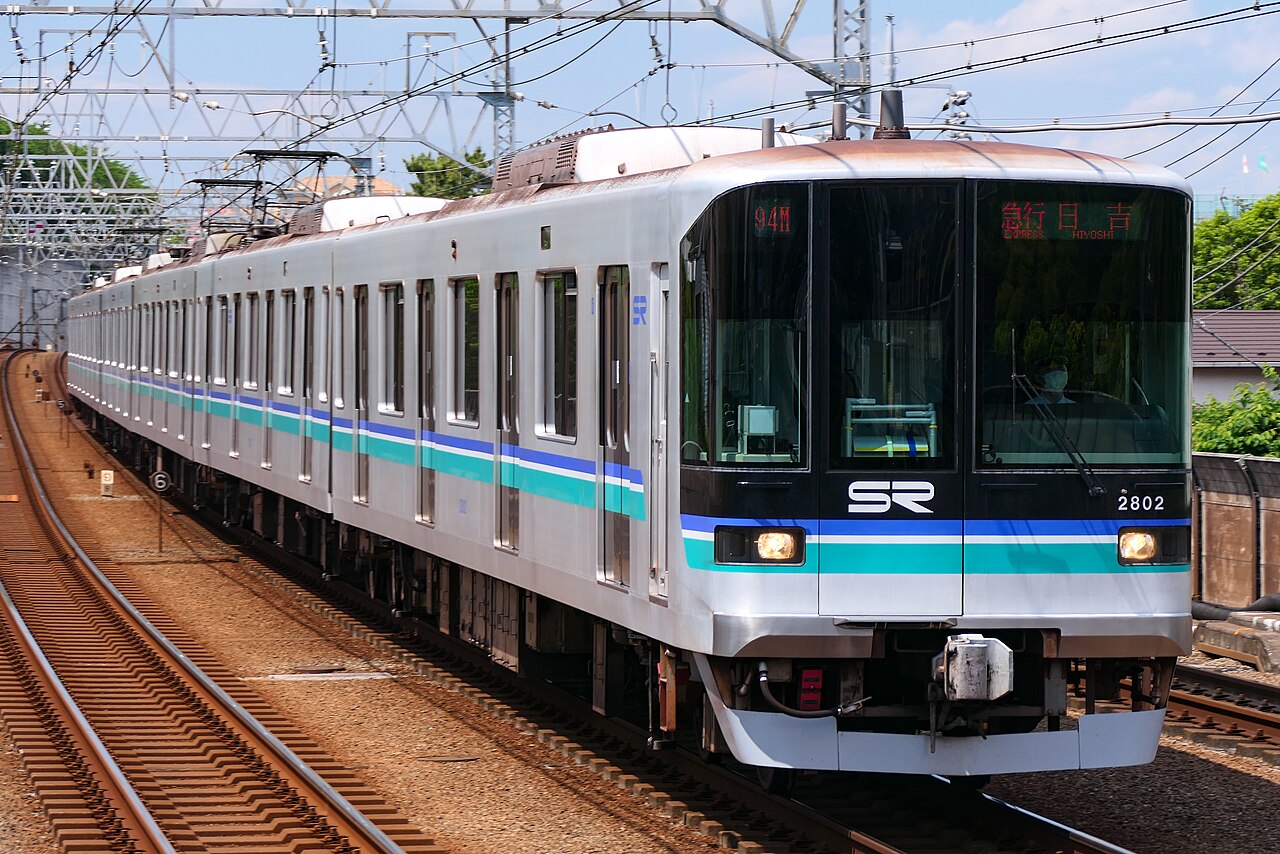
Today Tokyu operates 20-metre trains in six- and eight-car formations, drawn from its own 3000, 3020 and 5080 series alongside the through-running fleets of Toei (6300 and 6500 series), Tokyo Metro (9000 series), Saitama Rapid Railway (2000 series) and Sōtetsu (21000 series). Every station is fitted with platform-edge doors, and trains run under one-man operation with a Train Automatic Stopping Controller (TASC) to align precisely with those doors. The Japanese edition gives an operating maximum speed of 110 km/h. A notable distinction, per the Japanese edition, is that among the major private railways of the Kantō region the Meguro Line is the only one that runs directly onto the lines of two separate subway operators — Tokyo Metro and Toei. The English edition lists daily ridership of 388,982 (fiscal year 2018); the Japanese edition reports that in fiscal year 2024 the most congested segment was Fudōmae → Meguro, with a peak-hour (07:50–08:50) congestion rate of 129 percent.
Timeline
- 192311 March: the line opens as the Meguro Line between Meguro and Maruko (now Numabe). 1 November: extended from Maruko to Kamata and renamed the Mekama Line.
- 19241 June: Koyama Station renamed Musashi-Koyama.
- 19281 August: Nishi-Koyama Station opens.
- 19555 November: catenary voltage raised from 600 V to 1,500 V.
- 1965Senzoku Station moved underground for grade separation with Loop Route 7.
- 199427 November: Den-en-Chōfu Station moved underground.
- 199727 June: Ōokayama Station moved underground. 27 July: Meguro Station moved underground.
- 199910 October: Fudōmae Station elevated.
- 20006 August: the Mekama Line is split; the Meguro–Den-en-chōfu section is separated and renamed the Meguro Line, Tamagawa-en is renamed Tamagawa, and one-man operation begins. 26 September: through service begins with the Namboku Line (Teito Rapid Transit Authority) and Toei Mita Line.
- 200128 March: through service begins with the Saitama Rapid Railway Line via the Namboku Line.
- 200313 March: 5080 series enters revenue service.
- 20062 July: Musashi-Koyama and Nishi-Koyama Stations moved underground. 25 September: express service commences across the line.
- 200822 June: the Musashi-Kosugi–Hiyoshi section opens, giving the Meguro–Hiyoshi operating pattern.
- 2022April: eight-car trains begin operation on the line.
- 202318 March: reciprocal through service begins via the new Tōkyū Shin-Yokohama Line onto the Sōtetsu Shin-Yokohama Line, Sōtetsu Main Line and Sōtetsu Izumino Line, connecting to Shin-Yokohama and the Tōkaidō Shinkansen.
Sources
Facts last verified 3 June 2026.
Gallery 4 photos
Every photo for this page — tap any image to view it full-size. All from Wikimedia Commons (credit under each).