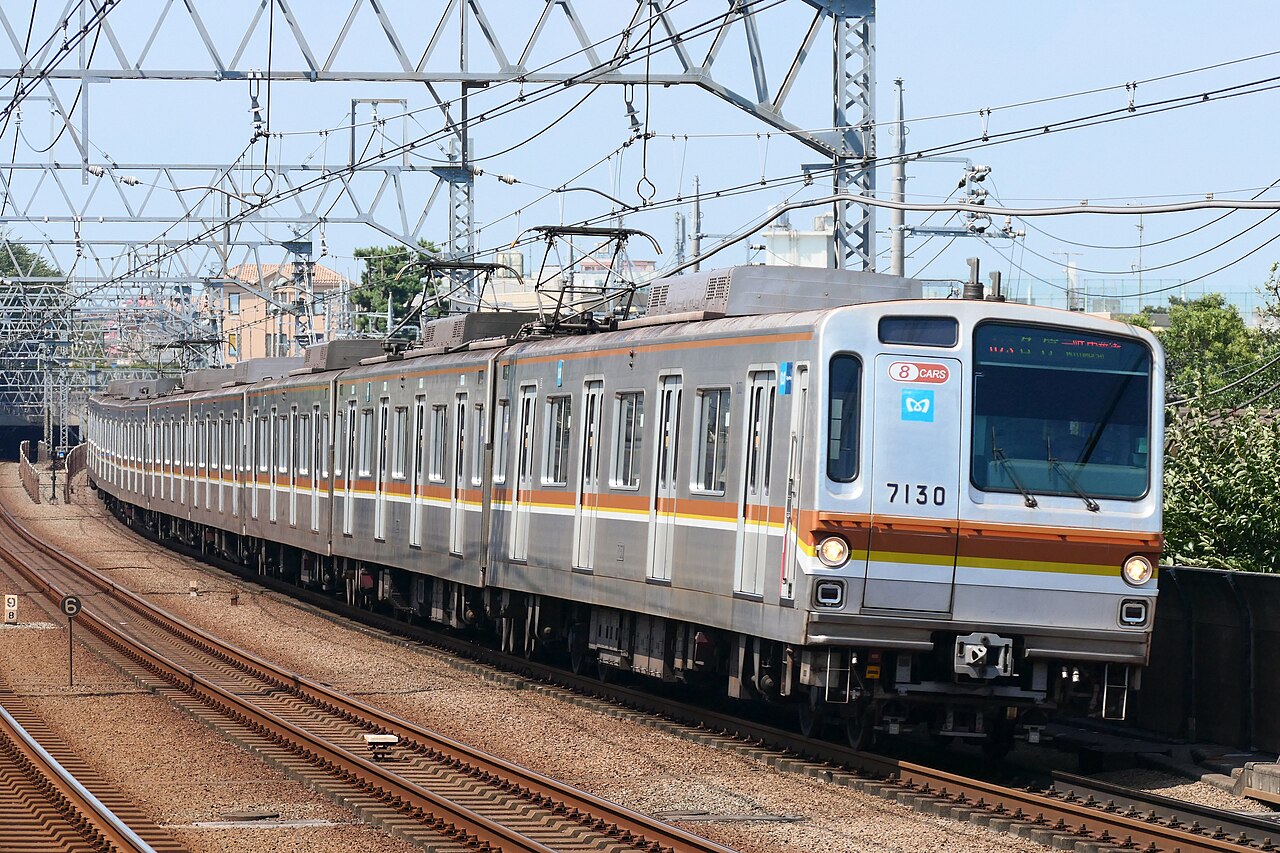
History
The line was built by the Tokyo-Yokohama Electric Railway, one of the predecessor companies of today's Tokyu. The first section, from Marukotamagawa (now Tamagawa Station) to Kanagawa, opened on 14 February 1926, with through service to Meguro via the Meguro-Kamata Electric Railway. The Shibuya-Marukotamagawa section opened on 28 August 1927, when through running Shibuya-Kanagawa began and the line took the name "Tōyoko Line." It was extended from Kanagawa to Takashima on 18 May 1928, and the final segment from Takashimachō to Sakuragichō opened on 31 March 1932, completing the original Shibuya-Sakuragichō route. Express operation began on 1 February 1935. The operator was reorganised through mergers: it merged with the Meguro-Kamata Electric Railway on 1 October 1939, and on 1 May 1942 the company absorbed Odakyu and Keihin and was renamed Tokyo Kyuko Dentetsu (Tokyu Corporation).
Postwar growth drove progressive upgrades. The overhead voltage was raised from 600 V to 1,500 V on 1 October 1952, and the Yokohama-Sakuragichō section was double-tracked on 10 September 1956. As the name implies, the line is not only a commuter route but an interurban linking the two cities of Tokyo and Yokohama. On 29 August 1964, through service with the Teito Rapid Transit Authority (now Tokyo Metro) Hibiya Line began via a connection at Naka-Meguro (Kita-Senju-Naka-Meguro-Hiyoshi). After ATC-P signalling was introduced Shibuya-Kikuna in March 1997, a timetable revision on 25 March 1997 raised the maximum operating speed to 110 km/h. Quadruple-tracking of the Den-en-chōfu-Hiyoshi corridor, shared with the Meguro Line, was carried out in stages around the turn of the century (the Tamagawaen-Musashi-Kosugi section was completed on 15 May 1999).
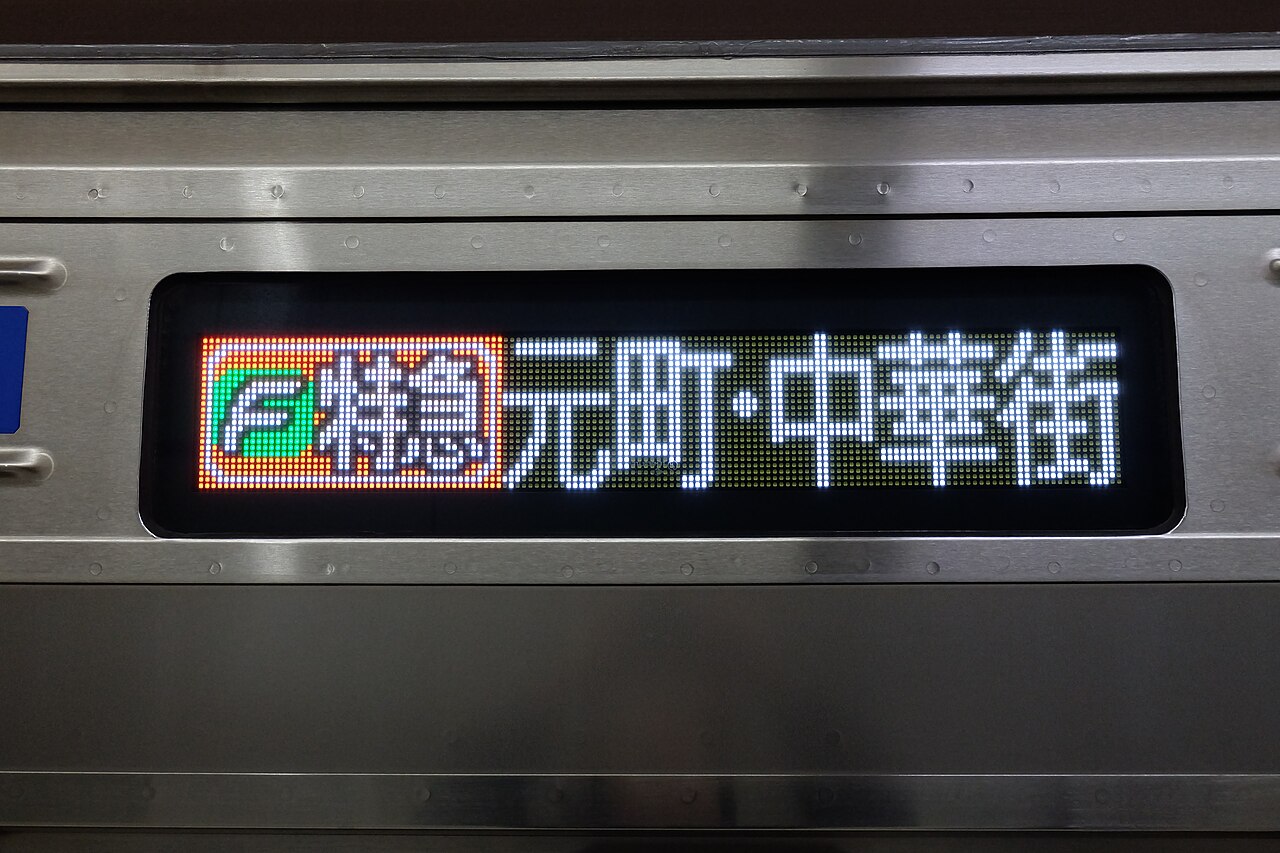
To compete with the JR East Shōnan-Shinjuku Line, which opened in December 2001 on a parallel Shibuya-Musashi-Kosugi-Yokohama corridor, Tokyu introduced a no-extra-charge Limited Express (the "Tōyoko Express") on 28 March 2001. The line was then reconfigured for through running at its Yokohama end: the Yokohama-Takashimachō-Sakuragichō section (2.1 km) closed after the last train on 30 January 2004, the Higashi-hakuraku-Yokohama section was moved underground, and on 1 February 2004 through service with the Yokohama Minatomirai Railway Minatomirai Line (to Motomachi-Chūkagai) began, cutting the Shibuya-Yokohama journey to as little as 26 minutes. The old Sakuragichō alignment was demolished and partly converted into a rail trail.
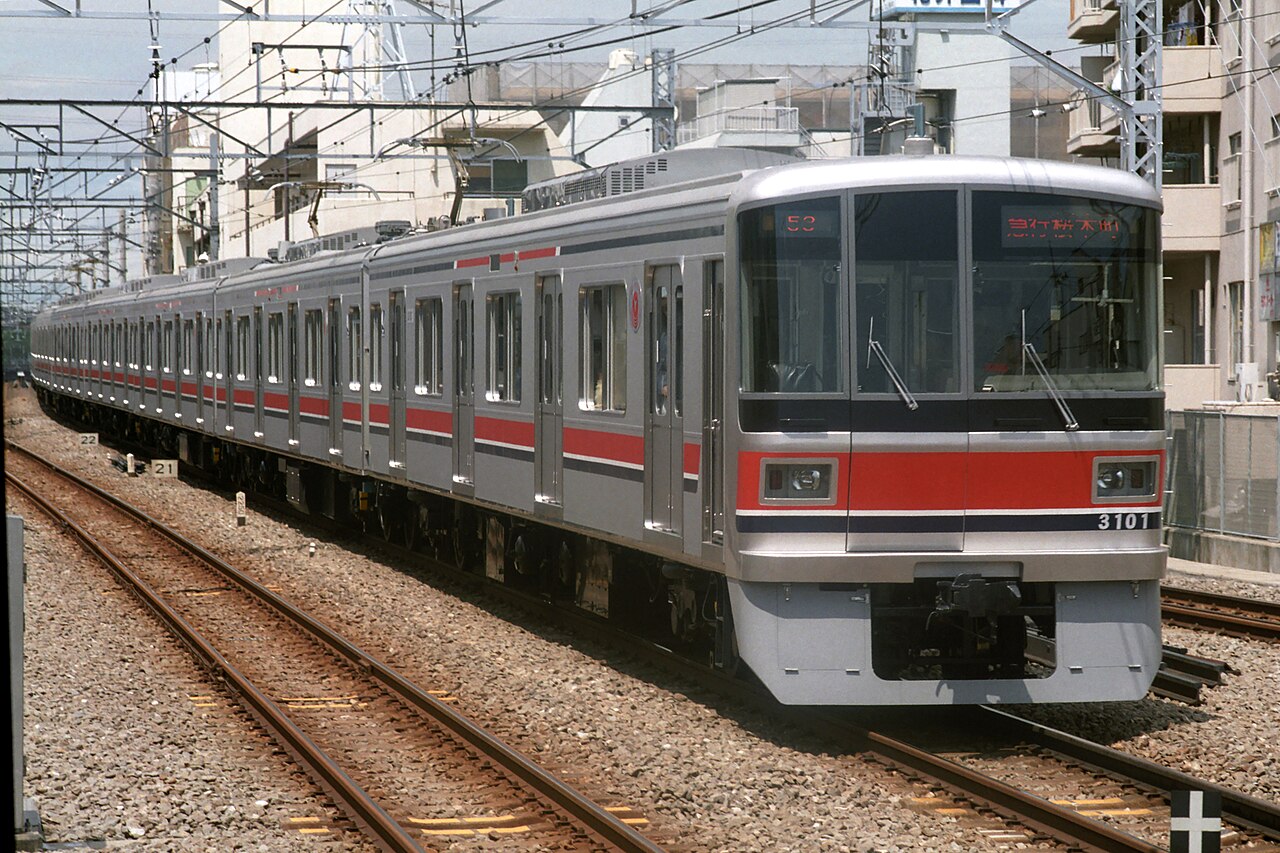
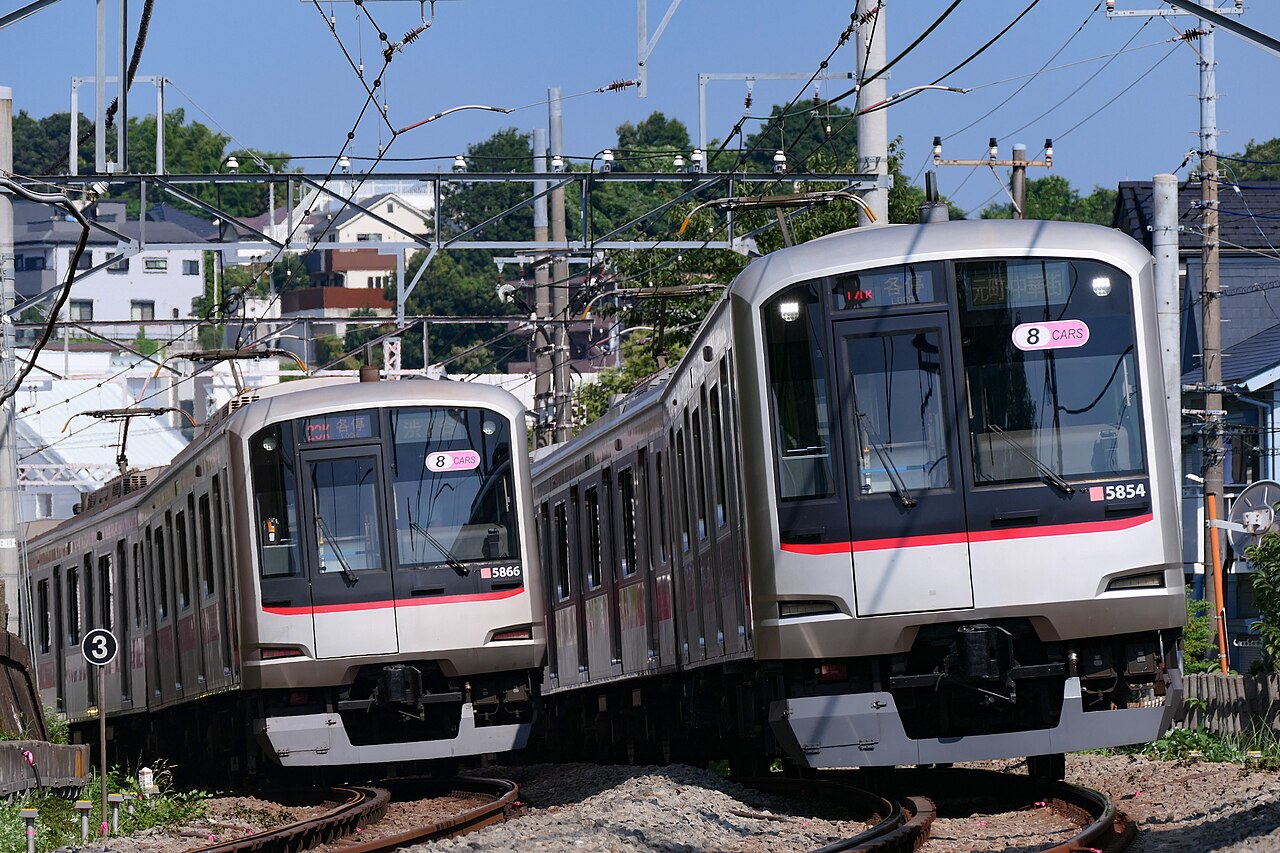
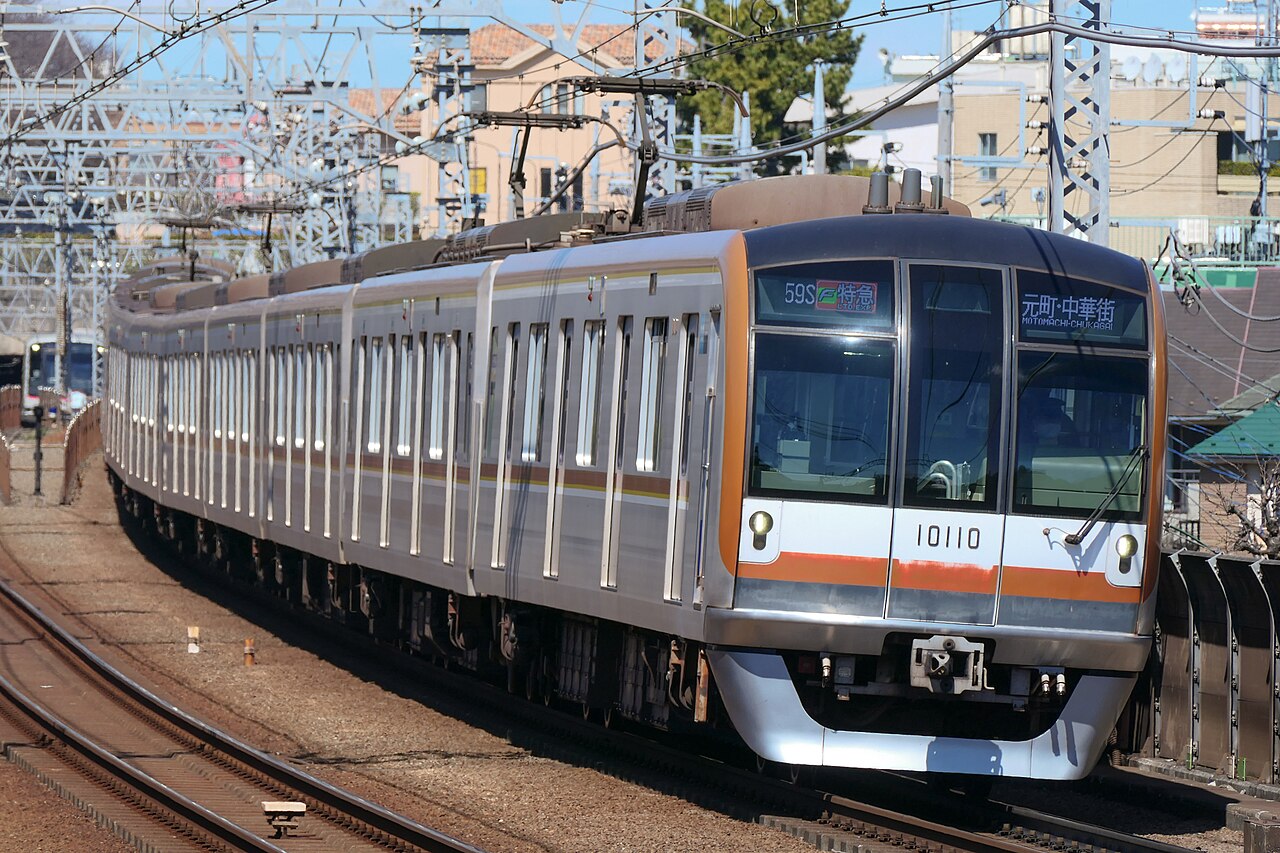
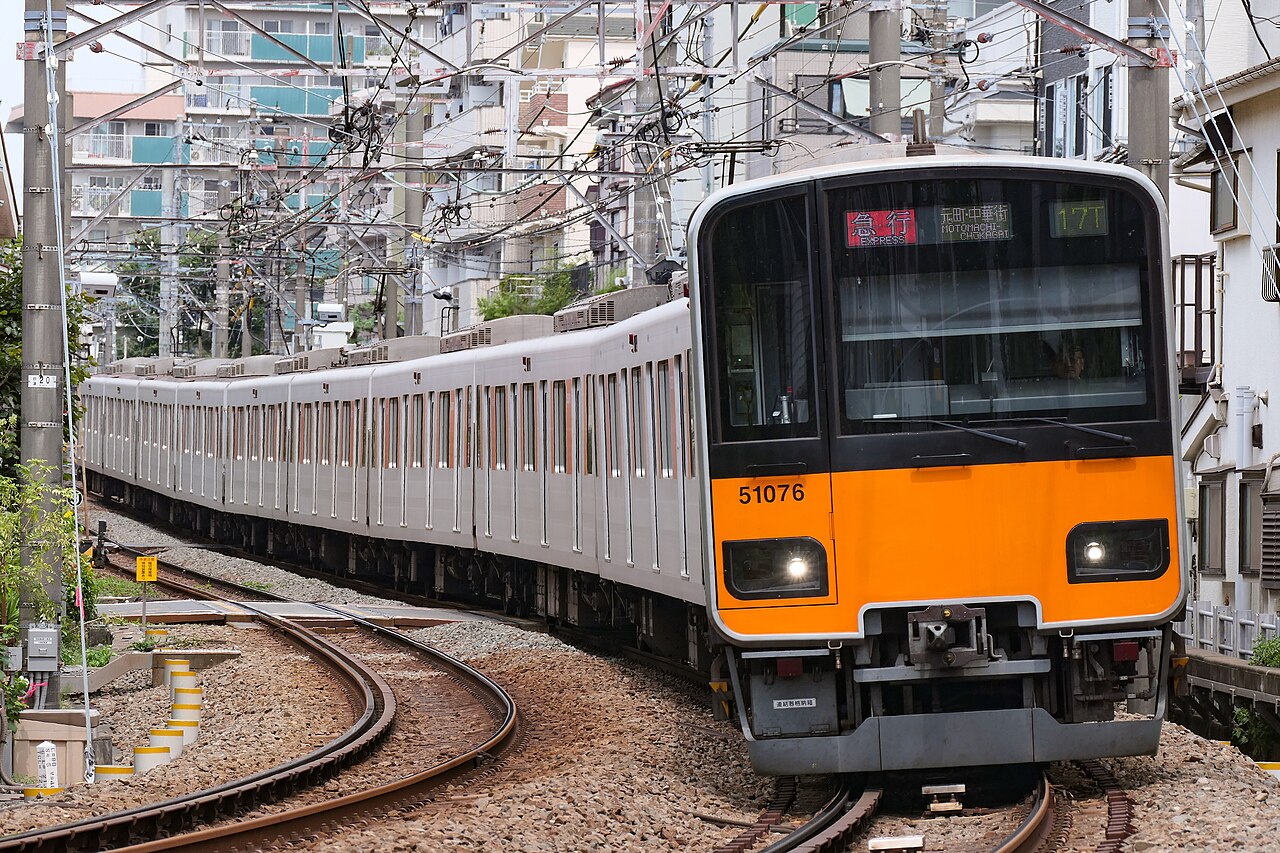
The Shibuya end was transformed in 2013. On 16 March 2013 the 1.4 km Shibuya-Daikan-yama section was replaced with an underground connection to the Tokyo Metro Fukutoshin Line; the elevated Shibuya terminal closed after its last service, and in a single overnight operation about 1,200 workers shifted the track at Daikan-yama along a pre-built incline so that trains called at new underground platforms only hours later. From that day Tokyu and Yokohama Minatomirai Railway trains began through running onto the Fukutoshin Line and beyond it to the Tobu Tojo and Seibu Ikebukuro lines, while Tokyo Metro, Tobu and Seibu trains began operating onto the Tōyoko and Minatomirai Lines; ten-car operation also began. Through service with the Hibiya Line ended on 15 March 2013.
Today the line carries a daily ridership of 1,239,968 (fiscal 2018), and almost all services through-run at one or both ends. The fastest service is the no-extra-charge Limited Express, which can run Shibuya-Motomachi-Chūkagai in 35 minutes; daytime through services that run as express on every participating railway (Tobu/Seibu, Tokyo Metro, Tokyu and Yokohama Minatomirai) are branded "F-Liner." On 18 March 2023 the Tōkyū Shin-Yokohama Line opened, branching at Hiyoshi and enabling through service via the Sagami Railway (Sotetsu) network to Shōnandai with a connection to the Tōkaidō Shinkansen at Shin-Yokohama; driver-only (one-man) operation began the same day. Platform edge doors, installed progressively from 2012, were completed at every station by early 2020.
The most serious recent accident occurred on 15 February 2014, when a train collided with and derailed against a stopped train at Motosumiyoshi Station during heavy snow, operation at normal speed in the snow seen as the likely cause; the EN source records nineteen injuries, while the JA source gives a final figure of 72 injured (initially reported as 18). On 13 March 2026, an overhead-line outage between Ōkurayama and Minatomirai stations suspended Tōyoko and Minatomirai Line services for about 9.5 hours, cancelling 297 trains and affecting roughly 123,000 people.
Timeline
- 192614 February: the Tokyo-Yokohama Electric Railway opens the first section, Marukotamagawa (now Tamagawa) to Kanagawa, with through service to Meguro via the Meguro-Kamata Electric Railway.
- 192728 August: the Shibuya to Marukotamagawa section opens; through running Shibuya-Kanagawa begins and the line is named the “Tōyoko Line.”
- 192818 May: the line is extended from Kanagawa to Takashima (later Takashimachō).
- 193231 March: the Takashimachō to Sakuragichō section opens, completing the original Shibuya-Sakuragichō route.
- 19351 February: express (kyūkō) operation begins.
- 19391 October: the original Tokyo-Yokohama Electric Railway merges with the Meguro-Kamata Electric Railway.
- 19421 May: the company absorbs Odakyu and Keihin and is renamed Tokyo Kyuko Dentetsu (Tokyu Corporation).
- 19521 October: overhead line voltage is raised from 600 V to 1,500 V.
- 195610 September: the Yokohama-Sakuragichō section is double-tracked.
- 196429 August: through service with the Teito Rapid Transit Authority (now Tokyo Metro) Hibiya Line begins, via a connection at Naka-Meguro (Kita-Senju-Naka-Meguro-Hiyoshi).
- 199725 March: following the introduction of ATC-P signalling Shibuya-Kikuna, a timetable revision raises the maximum operating speed to 110 km/h.
- 199915 May: quadruple-tracking of the Tamagawaen-Musashi-Kosugi section is completed.
- 200128 March: a no-extra-charge Limited Express (“Tōyoko Express”) is introduced to compete with the JR East Shōnan-Shinjuku Line (opened December 2001).
- 200430 January: the Yokohama-Takashimachō-Sakuragichō section (2.1 km) closes after its last train. 1 February: through service with the Yokohama Minatomirai Railway Minatomirai Line begins (Shibuya-Yokohama cut to as little as 26 minutes).
- 201316 March: the 1.4 km Shibuya-Daikan-yama section is replaced with an underground connection to the Tokyo Metro Fukutoshin Line; through service with the Fukutoshin/Tobu/Seibu network and 10-car operation begin. 15 March: through service with the Hibiya Line ends.
- 201415 February: two trains collide and derail at Motosumiyoshi Station during heavy snow (EN source: 19 injuries; JA source: final 72 injured, initially 18).
- 2020Platform edge doors, installed progressively from 2012, are completed at every station on the line by early 2020.
- 202318 March: the Tōkyū Shin-Yokohama Line opens, branching at Hiyoshi and enabling through service via the Sōtetsu network (connection to the Tōkaidō Shinkansen at Shin-Yokohama); driver-only (one-man) operation begins.
- 202613 March: an overhead-line outage Ōkurayama-Minatomirai (Minatomirai Line) suspends Tōyoko and Minatomirai Line services for about 9.5 hours; 297 trains cancelled, ~123,000 people affected.
Sources
Facts last verified 3 June 2026.
Gallery 6 photos
Every photo for this page — tap any image to view it full-size. All from Wikimedia Commons (credit under each).