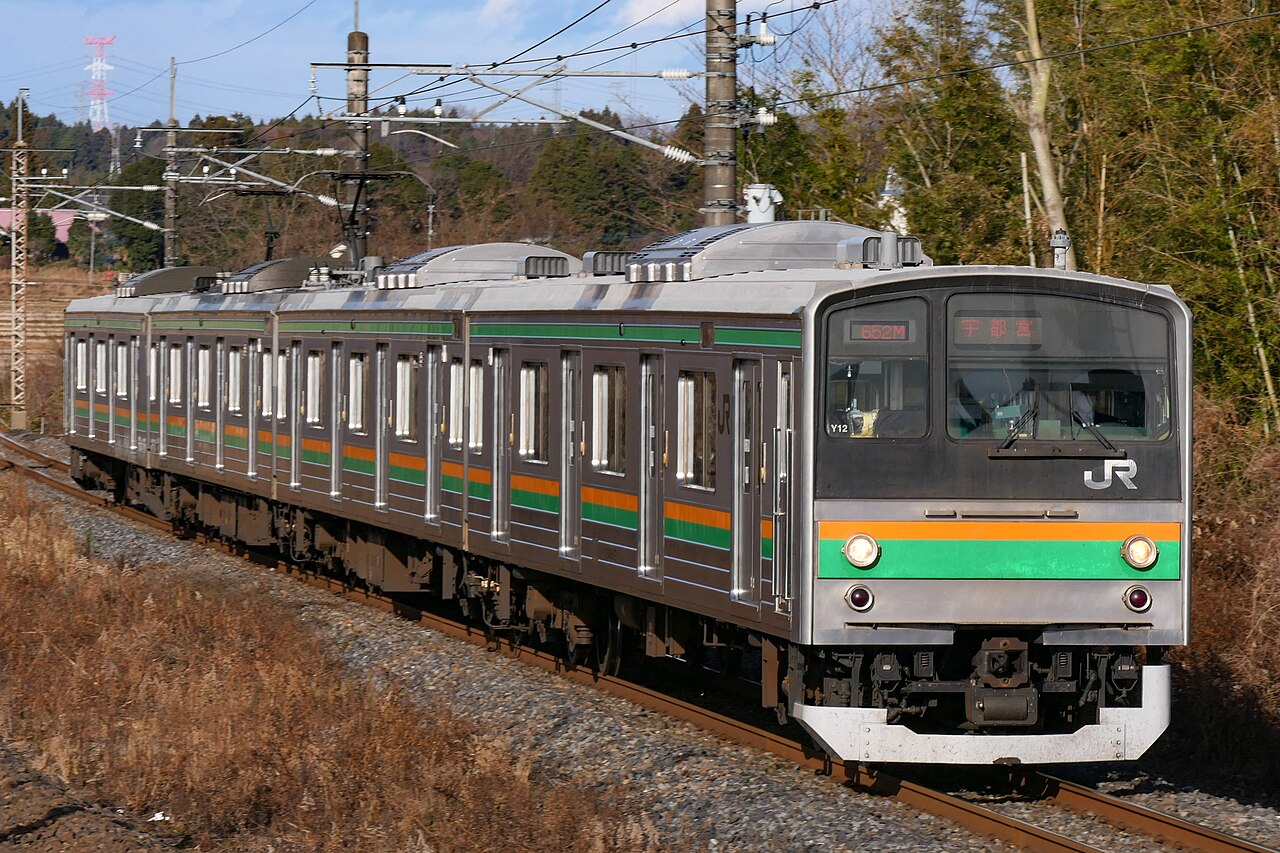
History
The corridor's origins lie in the earliest years of Japanese railway expansion. On 28 July 1883 Japan's first privately owned railway, the Nippon Railway, opened its first section between Ueno and Kumagaya (today part of the Takasaki Line), with stations including Ueno and Urawa. Construction of the next stretch toward the north was pressed forward quickly: on 16 July 1885 the segment from Ōmiya as far as Utsunomiya opened, though the Tone River bridge was not yet finished and a rail ferry initially bridged the gap; the river bridge was completed on 17 June 1886, giving a continuous line from Ueno to Utsunomiya. The railway was extended to Kuroiso by December 1886 (Utsunomiya–Nasu, today Nishi-Nasuno, on 1 October and Nasu–Kuroiso on 1 December). On 25 February 1897 the Utsunomiya–Yaita stretch was re-aligned onto its present route to avoid the recurring cost and difficulty of maintaining bridges and embankments against summer flooding of the Kinugawa.
The double-tracking of the busy Ueno–Ōmiya end was completed on 1 April 1896. When the national railway line-naming scheme was established on 12 October 1909, this corridor formally became the Tōhoku Main Line. Direct-current electrification spread outward from Tokyo over the following decades — Ueno–Tabata was electrified on 16 December 1909 and Akabane–Ōmiya on 1 September 1932, the latter accompanied by the Keihin–Tōhoku Line's extension over the parallel electric-car tracks. DC electrification of the section north of Ōmiya followed in the postwar years, reaching Utsunomiya on 14 April 1958 and being completed all the way to Kuroiso on 22 May 1959, the southern limit of the line's DC electrification. With the line fully electrified and double-tracked, the nationwide "Yonsantō" timetable revision of October 1968 reorganised services across the Tōhoku Main Line.
The opening of the Tōhoku Shinkansen progressively redefined the line's role. After the Shinkansen's Ōmiya–Morioka section opened on 23 June 1982, the long-distance daytime limited-express and express trains that had run between Tokyo and the Tōhoku region were transferred to the Shinkansen, and the freed-up capacity was used to greatly increase medium-distance commuter services; the Shinkansen reached Ueno on 14 March 1985. On 1 April 1987 the breakup and privatisation of Japanese National Railways transferred operation to JR East. Through services to Shinjuku and Ikebukuro began on 13 March 1988, and on the same date the rapid "Rabbit" entered service. Reflecting how the corridor had become dedicated to commuter traffic between Tokyo and southern/north-eastern Saitama and Tochigi, the then governor of Tochigi, Fumio Watanabe, proposed naming the Ueno–Kuroiso section the "Utsunomiya Line" after the prefectural capital; with the agreement of the governors of Tokyo, Saitama and Ibaraki, the nickname came into official use on 10 March 1990.
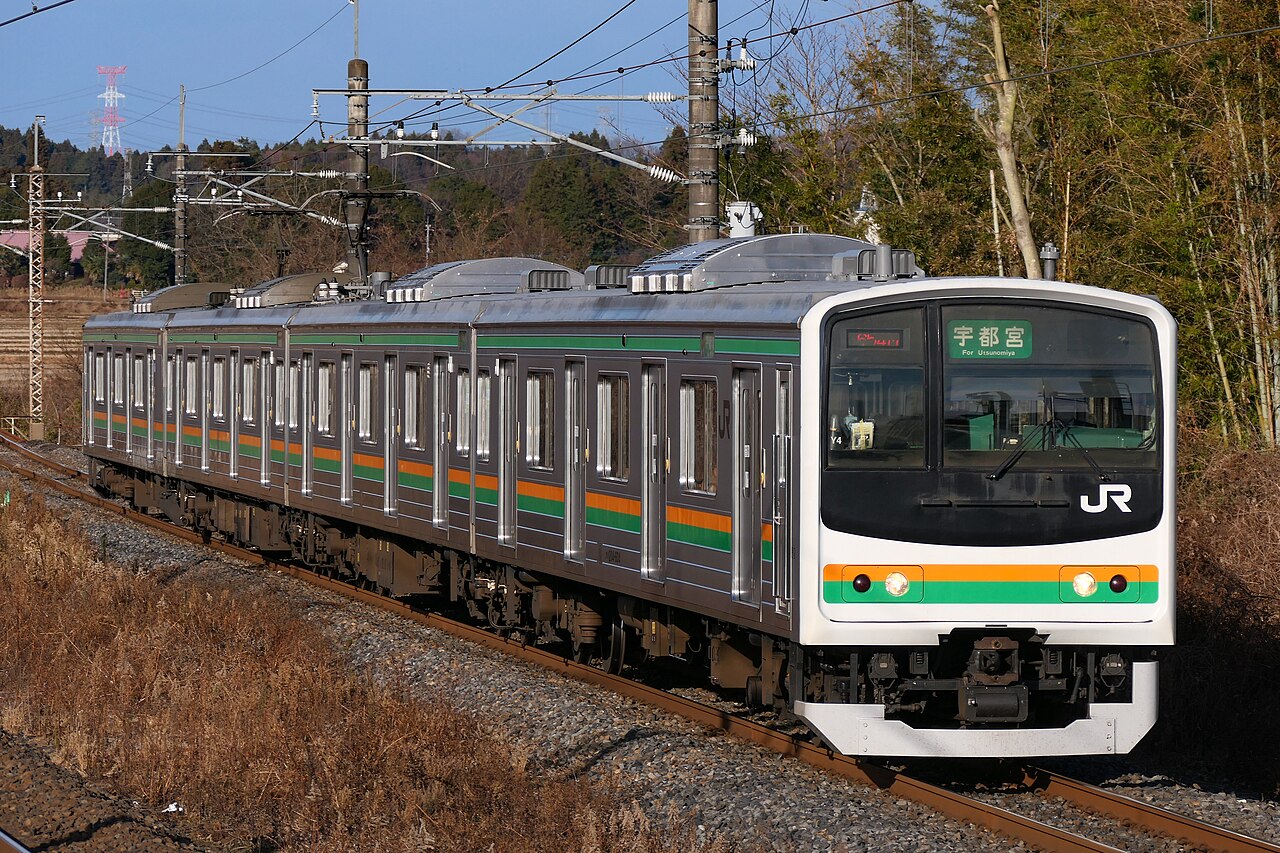
Network integration deepened in the 2000s and 2010s. Suica IC-card service began between Tokyo and Utsunomiya on 18 November 2001, and on 1 December 2001 the Shōnan–Shinjuku Line began through operation between the Utsunomiya Line and the Yokosuka Line via Shinjuku. A major timetable revision on 16 October 2004 separated the operating system at Utsunomiya and added Green cars to ordinary trains south of Utsunomiya. Tōbu Railway through limited-express services (Nikkō, Kinugawa and Spacia Kinugawa) began on 18 March 2006. On 14 March 2015 the Tokyo–Ueno segment was added to the Utsunomiya Line and the Ueno–Tokyo Line opened, allowing through operation onto the Tōkaidō Line; station numbering with the route letter "JU" was introduced between Tokyo and Ōmiya on 1 October 2016.
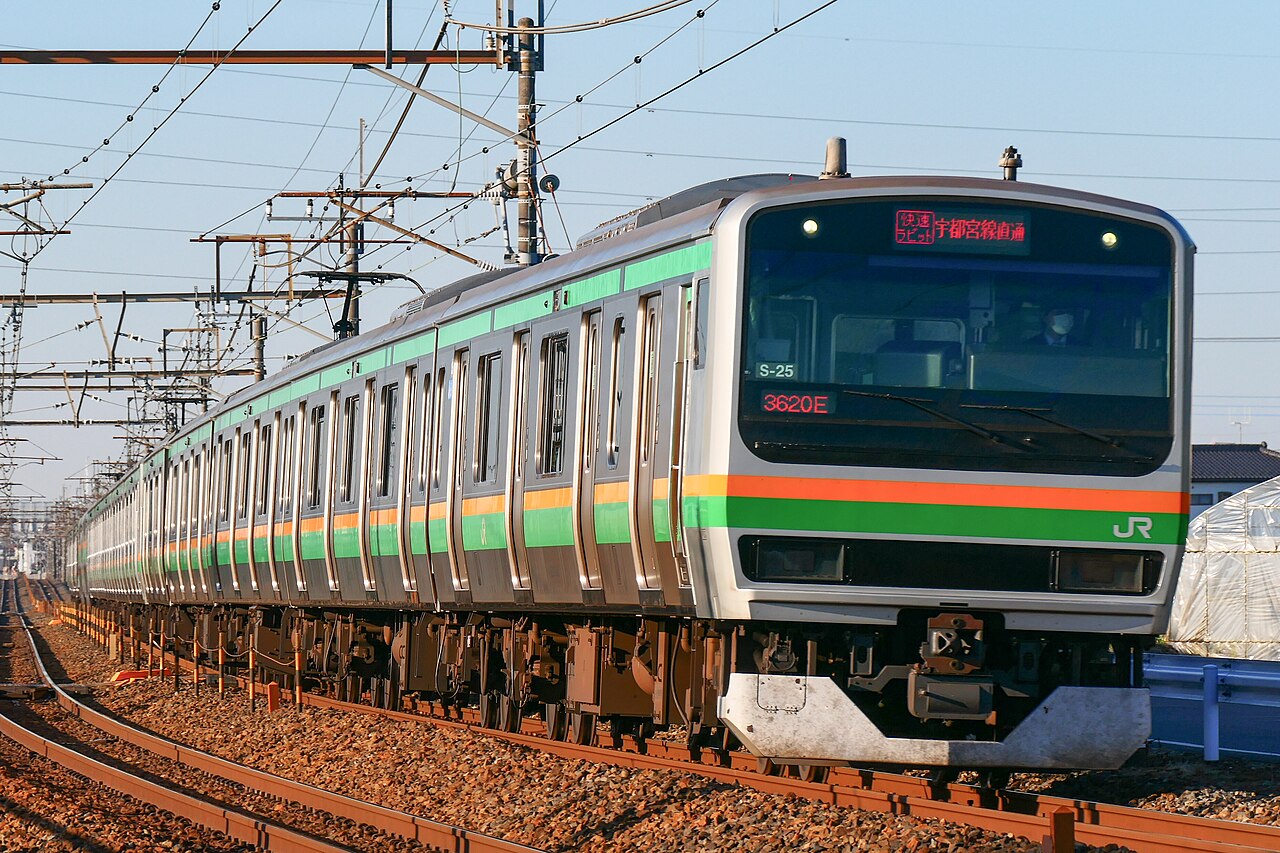
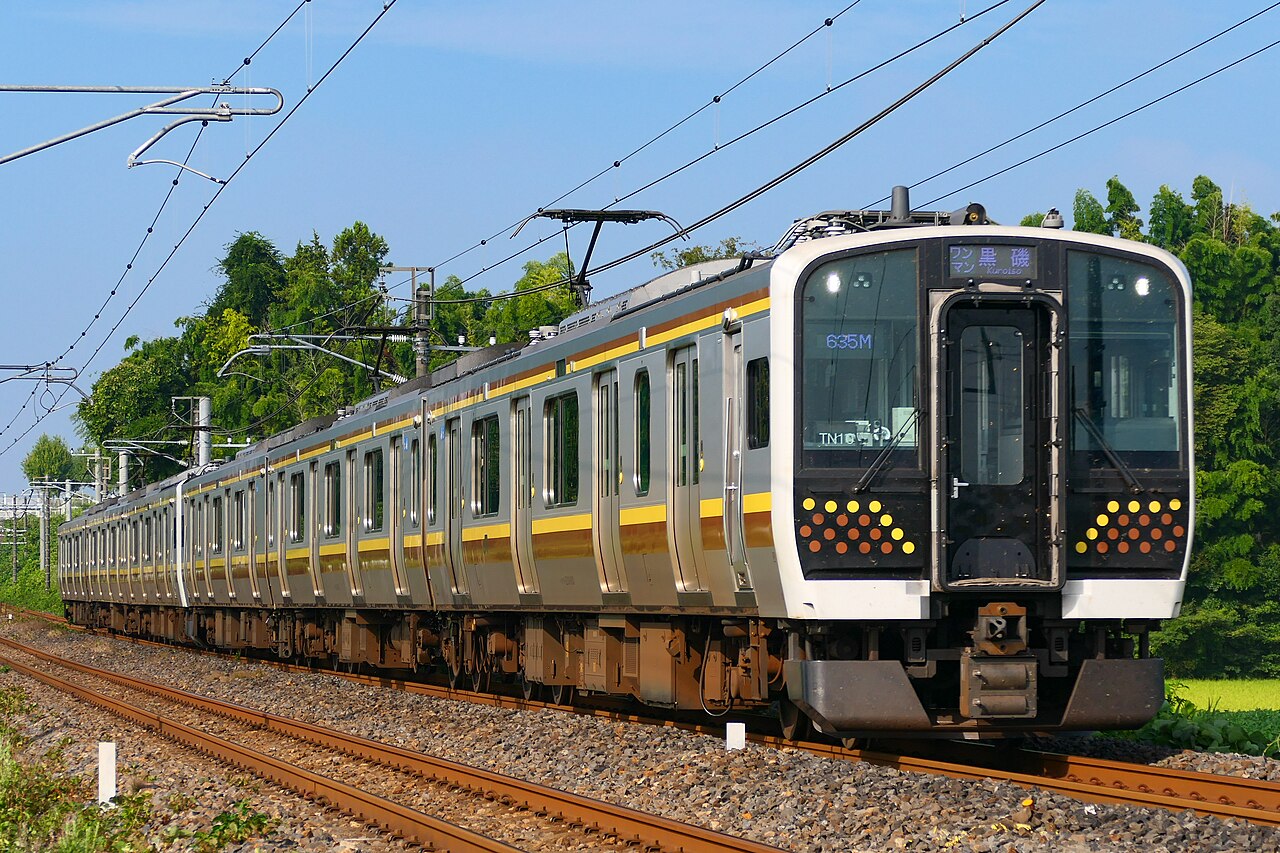
Today the line's services are typically grouped into three categories — trains to and from Ueno, Shōnan–Shinjuku Line services, and Ueno–Tokyo Line services — and between Ueno and Ōmiya they share the tracks with the Takasaki Line, both functioning as de facto express services compared with the parallel Keihin–Tōhoku Line. The fastest service on the line, the rapid "Rabbit," covers Ueno to Utsunomiya in one hour and 26 minutes. From 12 March 2022 all services north of Utsunomiya to Kuroiso use E131-600/-680 series EMUs and the previous through services using long suburban trains ceased, the operation being divided at Utsunomiya. Among historical incidents on the corridor, the Hōkigawa railway-bridge train derailment occurred between Yaita and Nozaki on 7 October 1899.
Timeline
- 188328 July: the Nippon Railway, Japan's first private railway, opens its first section between Ueno and Kumagaya (today part of the Takasaki Line); Ueno and Urawa stations open.
- 188516 July: the Ōmiya–Utsunomiya stretch opens, the Tone River initially crossed by rail ferry pending completion of the bridge.
- 188617 June: the Tone River bridge is completed, giving a continuous Ueno–Utsunomiya line; the line is extended to Kuroiso by December (Utsunomiya–Nasu 1 Oct, Nasu–Kuroiso 1 Dec).
- 18961 April: double-tracking of the Ueno–Ōmiya section is completed.
- 189725 February: the Utsunomiya–Yaita section is re-aligned onto its present route to avoid recurring flood-maintenance costs on the Kinugawa.
- 18997 October: the Hōkigawa railway-bridge train derailment occurs between Yaita and Nozaki.
- 190912 October: the national line-naming scheme is established and the corridor becomes the Tōhoku Main Line. 16 December: Ueno–Tabata is electrified at DC.
- 19321 September: Akabane–Ōmiya is electrified at DC; the Keihin–Tōhoku Line is extended over the parallel electric-car tracks.
- 195814 April: DC electrification reaches Utsunomiya (Ōmiya–Utsunomiya).
- 195922 May: DC electrification is completed to Kuroiso (Hōshakuji–Kuroiso), the southern limit of the line's DC section.
- 1968October: the nationwide 'Yonsantō' timetable revision reorganises services after full electrification and double-tracking.
- 198223 June: the Tōhoku Shinkansen (Ōmiya–Morioka) opens; long-distance daytime trains transfer to the Shinkansen and commuter services are greatly increased.
- 198514 March: the Tōhoku Shinkansen is extended Ueno–Ōmiya.
- 19871 April: JNR is privatised; operation transfers to JR East.
- 198813 March: through services to Shinjuku and Ikebukuro begin; the rapid 'Rabbit' enters service.
- 199010 March: the 'Utsunomiya Line' nickname comes into official use for the Ueno–Kuroiso section, proposed by Tochigi governor Fumio Watanabe.
- 200118 November: Suica IC-card service begins Tokyo–Utsunomiya. 1 December: Shōnan–Shinjuku Line through operation to the Yokosuka Line begins via Shinjuku.
- 200416 October: the operating system is separated at Utsunomiya and Green cars are added to ordinary trains south of Utsunomiya.
- 200618 March: Tōbu Railway through limited-express services (Nikkō, Kinugawa, Spacia Kinugawa) begin.
- 201514 March: the Tokyo–Ueno segment is added; the Ueno–Tokyo Line opens, enabling through operation onto the Tōkaidō Line.
- 20161 October: station numbering with route letter 'JU' is introduced Tokyo–Ōmiya.
- 202212 March: E131-600/-680 series EMUs take over north of Utsunomiya to Kuroiso; long suburban through services cease and the operation is divided at Utsunomiya.
Sources
Facts last verified 3 June 2026.
Gallery 5 photos
Every photo for this page — tap any image to view it full-size. All from Wikimedia Commons (credit under each).