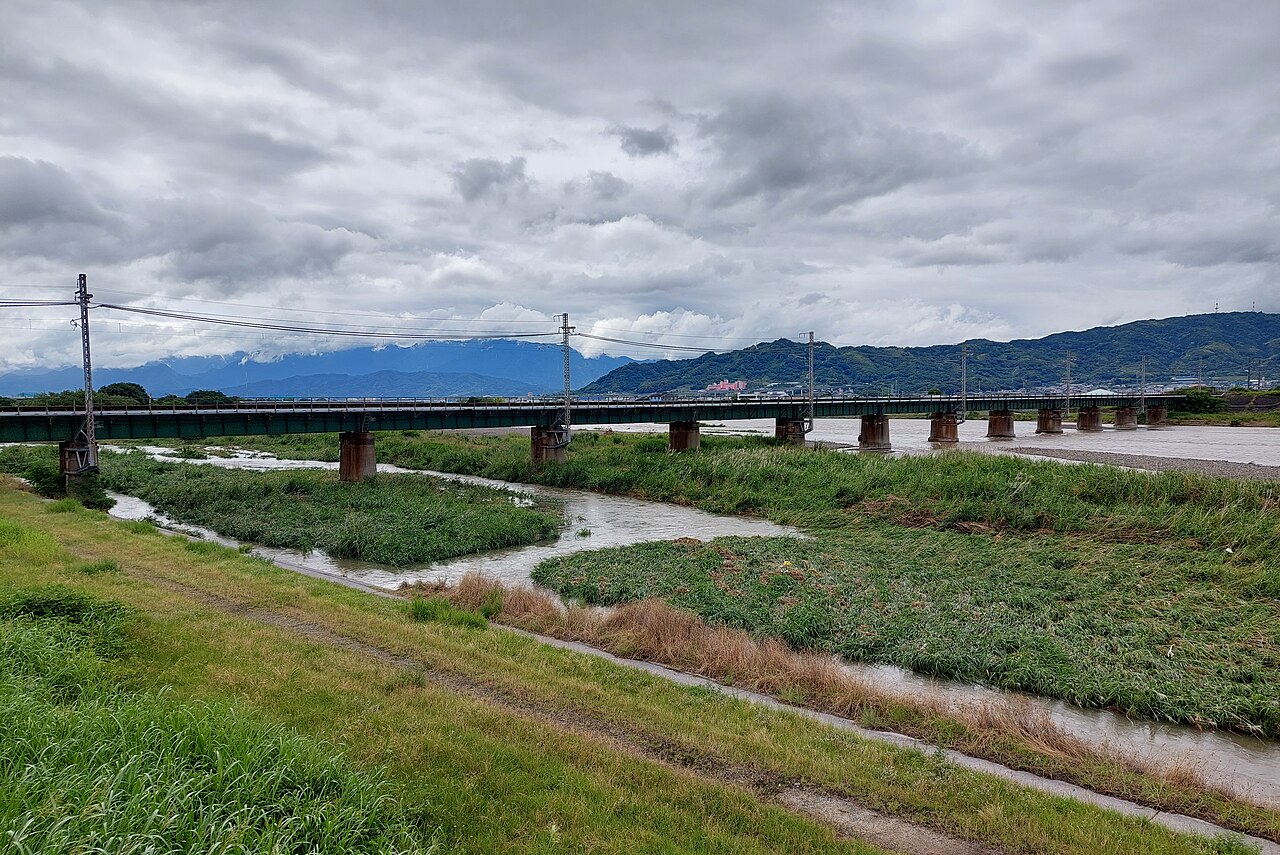
History
The line came together by gradually extending and nationalising several earlier railways. The first segment, between Marugame and Tadotsu (continuing to Kotohira), was opened by the Sanuki Railway Company on 23 May 1889; the Takamatsu–Marugame section followed on 21 February 1897. The Sanuki Railway was bought by the Sanyo Railway in 1904 and then nationalised in 1906; under the national railway line-naming ordinance of 1909 the Takamatsu–Tadotsu–Kotohira route was designated the Sanuki Line. From 1913 the line was progressively extended westward from Tadotsu — reaching Kawanoe and Iyo-Saijō, and arriving at Matsuyama on 3 April 1927. As it advanced it was renamed: to the San'yo (讃予) Line in 1923 (the kanji combining Sanuki and Iyo, not to be confused with the Sanyo Railway), and to the Yosan Line (予讃線) in 1930. On 1 August 1933 the line was redesignated the Yosan Main Line (予讃本線).
Two private railways were absorbed to complete the western reaches. Between Iyo-Nagahama and Iyo-Ōzu, the 762 mm narrow-gauge Ehime Railway (opened from 1918) was nationalised on 1 October 1933 as the Ehime Line, then regauged to 1,067 mm and incorporated into the Yosan Main Line in 1935. Further south, the Uwajima Railway became the nationalised Uwajima Line in 1933. Western extensions opened between 1936 and 1945, and on 20 June 1945 the final segment between Yawatahama and Unomachi opened, joining the former Uwajima Line and completing the through route from Takamatsu to Uwajima; Shinji Sogō, later president of Japanese National Railways, attended the opening ceremony. The branch from Tadotsu to Kotohira was later extended to Awa-Ikeda and split off as the Dosan Line.
As the most important trunk line of Shikoku, the Takamatsu–Matsuyama section was singled out early for speeding up. The Takamatsu–Tadotsu section was double-tracked in stages between 1965 and 1970, and centralised traffic control (CTC) was commissioned on the Takamatsu–Matsuyama section in 1985. In 1986 a new "direct line" opened between Mukaibara and Iyo-Ōzu, running inland through the mountains via Uchiko — incorporating part of the former Uchiko branch as the Uchiko Line — and including the 6,012 m Inuyose Tunnel. This bypass of the lengthy coastal route via Iyo-Nagahama shortened the line by 6.3 km, and all limited-express trains (the Uwakai services) were switched onto it. The original coastal alignment via Iyo-Nagahama remains in service and was later branded the "Ai-aru Iyonada Line" in 2014.
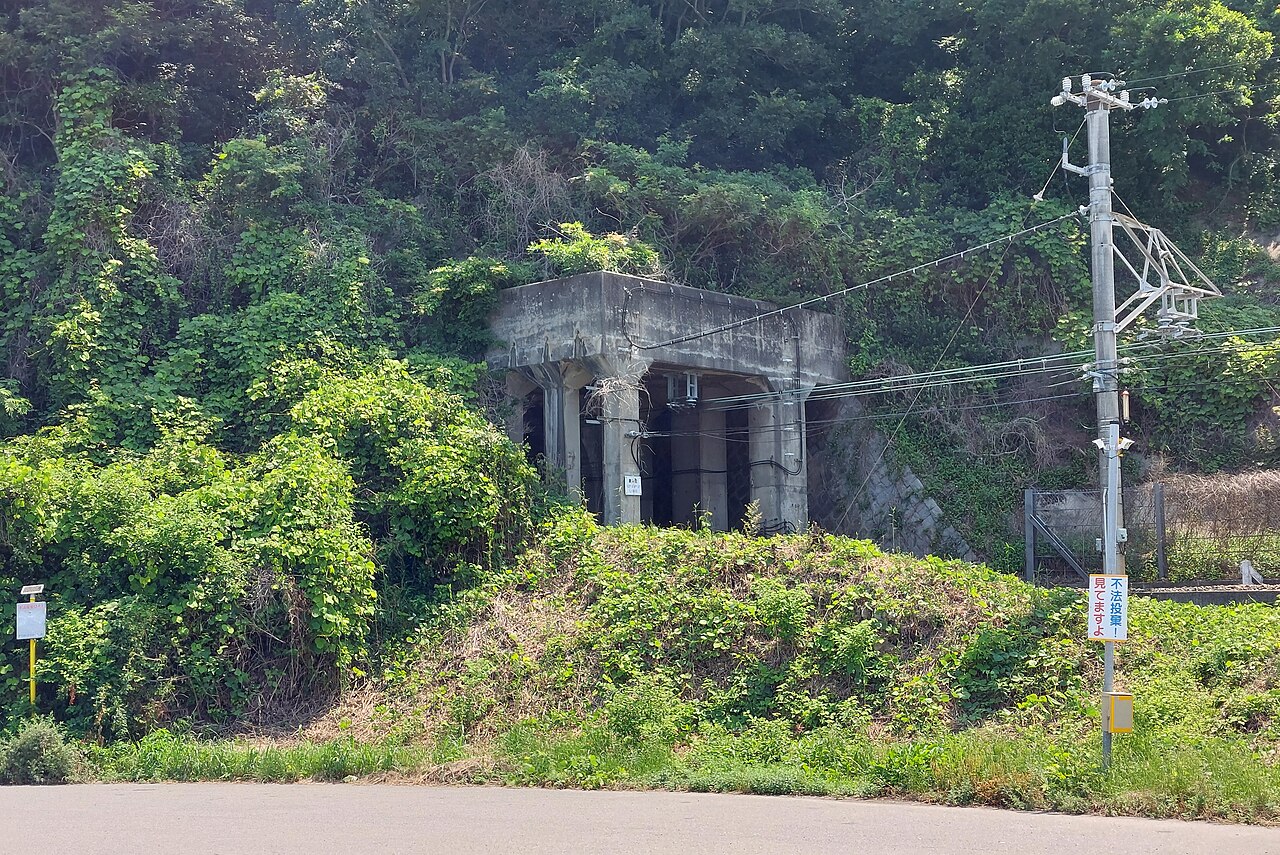
Electrification followed the same priority order, working westward from the Honshu connection. The Takamatsu–Tadotsu section was electrified at 1,500 V DC in 1987, enabling the direct Takamatsu–Okayama services that began when the Seto-Ōhashi Bridge system opened the following year, in 1988; until then the Yosan Line, with the Dosan Line, had connected at Takamatsu Station with the train ferry from Uno. Electrification was extended to the Iyo-Hōjō–Matsuyama–Iyoshi section in 1990 and onward in stages in 1992 and 1993, completing the electrified network as far as Iyoshi and allowing direct electric Matsuyama–Okayama services; with that 1993 work the maximum speed on the Takamatsu–Matsuyama section was raised to 130 km/h. On the single-track portions of this corridor the scheduled (average) operating speed is, by the Japanese account, among the highest of any trunk line in Japan.
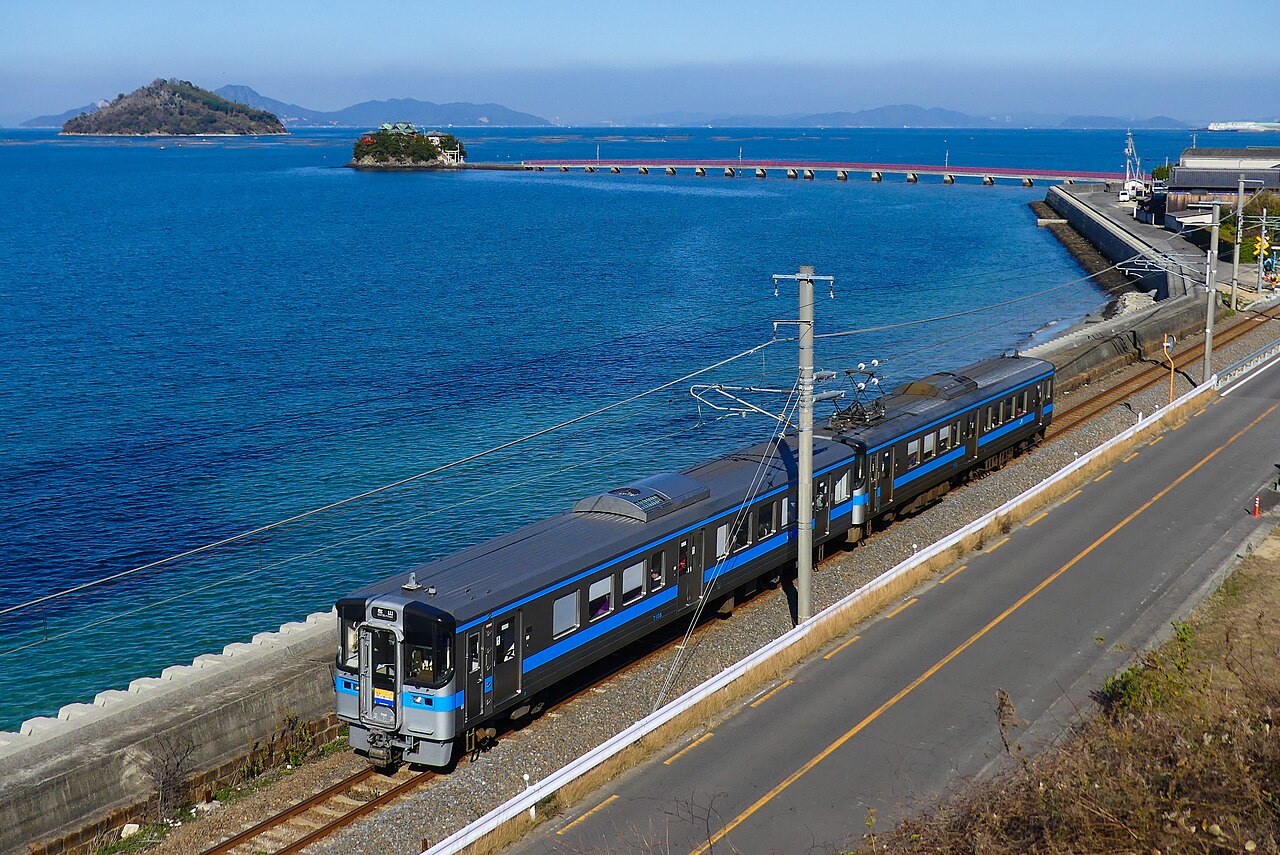
Today JR Shikoku operates a dense limited-express network over the line, including the Shiokaze, Ishizuchi, Uwakai, Shimanto and the overnight Sunrise Seto, alongside the Marine Liner rapid service that connects Takamatsu with Okayama via the Seto-Ōhashi Line; Japan Freight Railway (JR Freight) also operates over part of the route. The maximum line speed is 130 km/h between Takamatsu and Matsuyama, 120 km/h on certain central sections, and 110 km/h elsewhere. South of Matsuyama the line keeps much of its older character, with many passing stations still using double-ended points and lower platforms. The inland direct line in particular was valued for keeping services running when the exposed coastal route was closed by typhoons; the July 2018 heavy-rain disaster suspended part of the line before full restoration on 13 September 2018. Following the 2011 Tōhoku earthquake and tsunami, JR Shikoku's popular Anpanman Torokko train was sent, in cooperation with JR East and JR Freight, to tour areas devastated by the disaster.
Timeline
- 188923 May: the Sanuki Railway Company opens the first segment, Marugame–Tadotsu (continuing to Kotohira).
- 189721 February: the Takamatsu–Marugame section opens.
- 19041 December: the Sanyo Railway buys the Sanuki Railway.
- 19061 December: the (former Sanuki Railway) line is nationalised. The Takamatsu–Tadotsu–Kotohira route is formally designated the Sanuki Line under the national railway line-naming ordinance of 12 October 1909.
- 1923The line, extended to Nyūgawa, is renamed the Sanyo (Sanyo/讃予) Line.
- 19273 April: the line reaches Matsuyama (Iyo-Hōjō–Matsuyama opens).
- 19301 April: the Takamatsu–Minami-Gunchū and Tadotsu–Awa-Ikeda sections are renamed the Yosan Line.
- 19331 August: the line is redesignated the Yosan Main Line; the same day the Uwajima Railway is nationalised as the Uwajima Line. On 1 October the 762 mm Ehime Railway is nationalised as the Ehime Line.
- 1935The former Ehime Railway (Iyo-Nagahama–Iyo-Ōzu) is regauged from 762 mm to 1,067 mm and incorporated into the Yosan Main Line.
- 194520 June: the Yawatahama–Unomachi section opens, joining the former Uwajima Line and completing the through route Takamatsu–Uwajima. Shinji Sogō (later JNR president) attends the ceremony.
- 1970The Takamatsu–Tadotsu section is double-tracked in stages over 1965–70 (final Kinashi–Hashioka section, 27 March 1970).
- 197215 March: Shikoku's first limited express, the Shiokaze, begins operation.
- 198514 March: CTC (centralised traffic control) commissioned on the Takamatsu–Matsuyama section.
- 19863 March: the inland 'direct line' Mukaibara–Iyo-Ōzu opens (with the Uchiko Line section and the 6,012 m Inuyose Tunnel), shortening the route by 6.3 km; limited expresses divert via Uchiko.
- 1987Takamatsu–Tadotsu electrified at 1,500 V DC (Takamatsu–Sakaide and Tadotsu–Kan'onji on 23 March; Sakaide–Tadotsu on 2 October). 1 April: on JNR privatisation the line passes to JR Shikoku.
- 1988The Seto-Ōhashi Bridge system opens, enabling direct Takamatsu–Okayama services. 1 June: the line is renamed from Yosan Main Line to Yosan Line.
- 199021 November: the Iyo-Hōjō–Iyoshi section is electrified.
- 199223 July: the Kan'onji–Niihama and Imabari–Iyo-Hōjō sections are electrified.
- 199318 March: the Niihama–Imabari section is electrified, completing Takamatsu–Iyoshi electrification; maximum speed on Takamatsu–Matsuyama raised to 130 km/h.
- 201415 March: the coastal Iyoshi–Iyo-Ōzu route is branded the 'Ai-aru Iyonada Line'. 26 July: the 'Iyonada Monogatari' sightseeing train begins.
- 2018July: the July 2018 heavy-rain disaster suspends part of the line; full restoration on 13 September.
- 202014 March: Minami-Iyo Station and Matsuyama Freight Station open.
Sources
Facts last verified 3 June 2026.
Gallery 5 photos
Every photo for this page — tap any image to view it full-size. All from Wikimedia Commons (credit under each).