History
It pioneered a number of technologies new to Japanese locomotive practice: it used GTO-thyristor VVVF inverter control in a 1C1M configuration, in which a single inverter drove a single three-phase induction traction motor. It was equipped with six 1,000 kW FMT2 traction motors, giving a total power output of 6,000 kW — the highest output of any JNR or JR locomotive — and ran on 1,500 V DC overhead supply at a maximum speed of 110 km/h, against a design maximum speed of 120 km/h. For current collection it carried FPS2 single-arm pantographs, the first single-arm pantographs fitted to any JNR or JR locomotive (and only the second such application in Japan, after the Osaka Municipal Transportation Bureau 70 series). It was also the first JNR or JR locomotive to adopt electro-pneumatic (electric-command) braking.
The class was developed and prototyped at the same time as the AC/DC dual-system Class EF500, the two designs adopting deliberately different mechanisms and control arrangements so they could be compared in testing. Originally designed to haul 1,600 t freight trains, problems of insufficient power supply capacity to the overhead lines meant that the class was initially limited to hauling 1,200 t trains. Ultimately the class was deemed to be over-specified and unnecessarily expensive, and the order was terminated after the delivery of 20 full-production locomotives; the subsequent Class EF210 was instead chosen as the standard design for hauling freight on the Tokaido and Sanyo Main Lines.
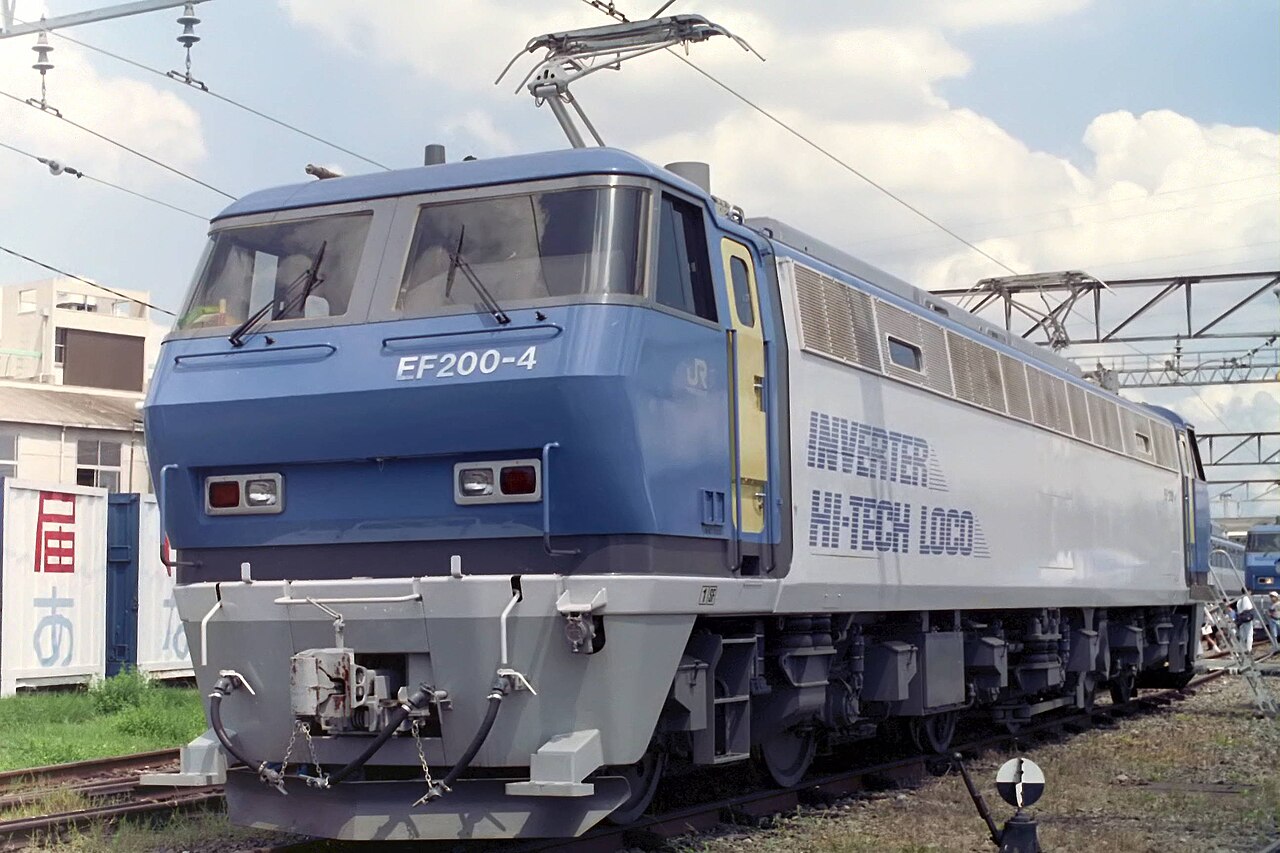
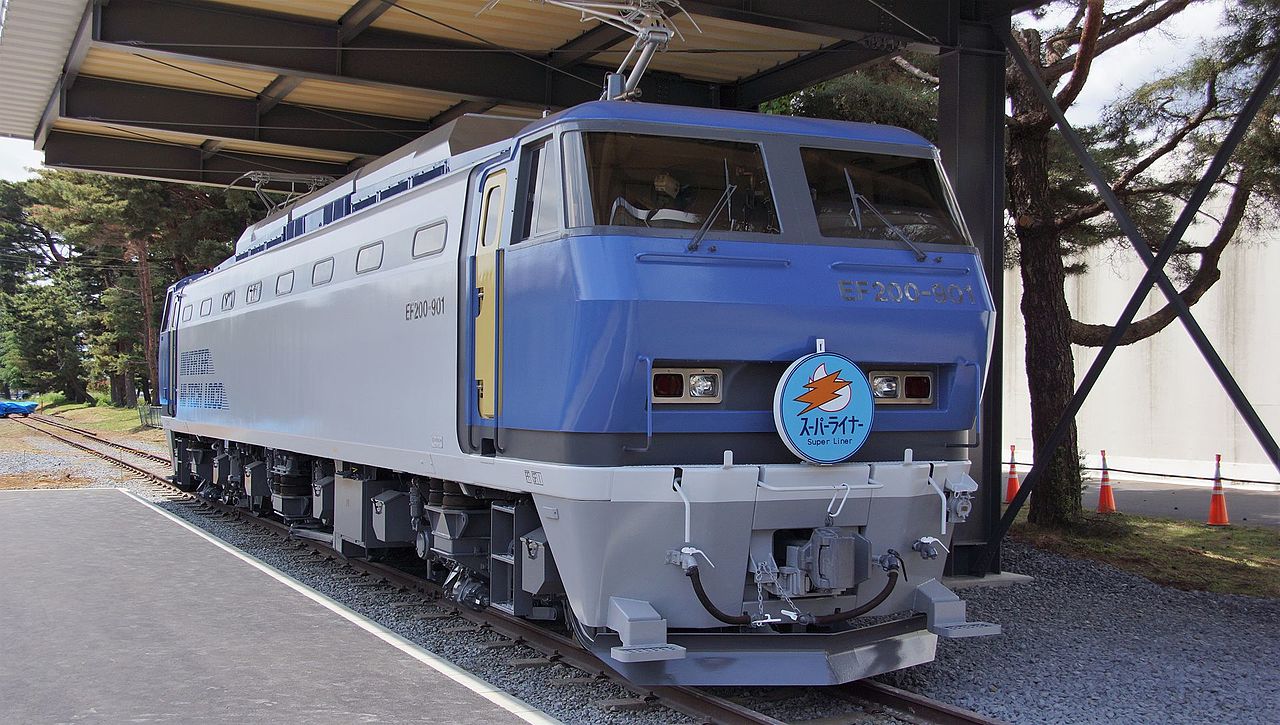
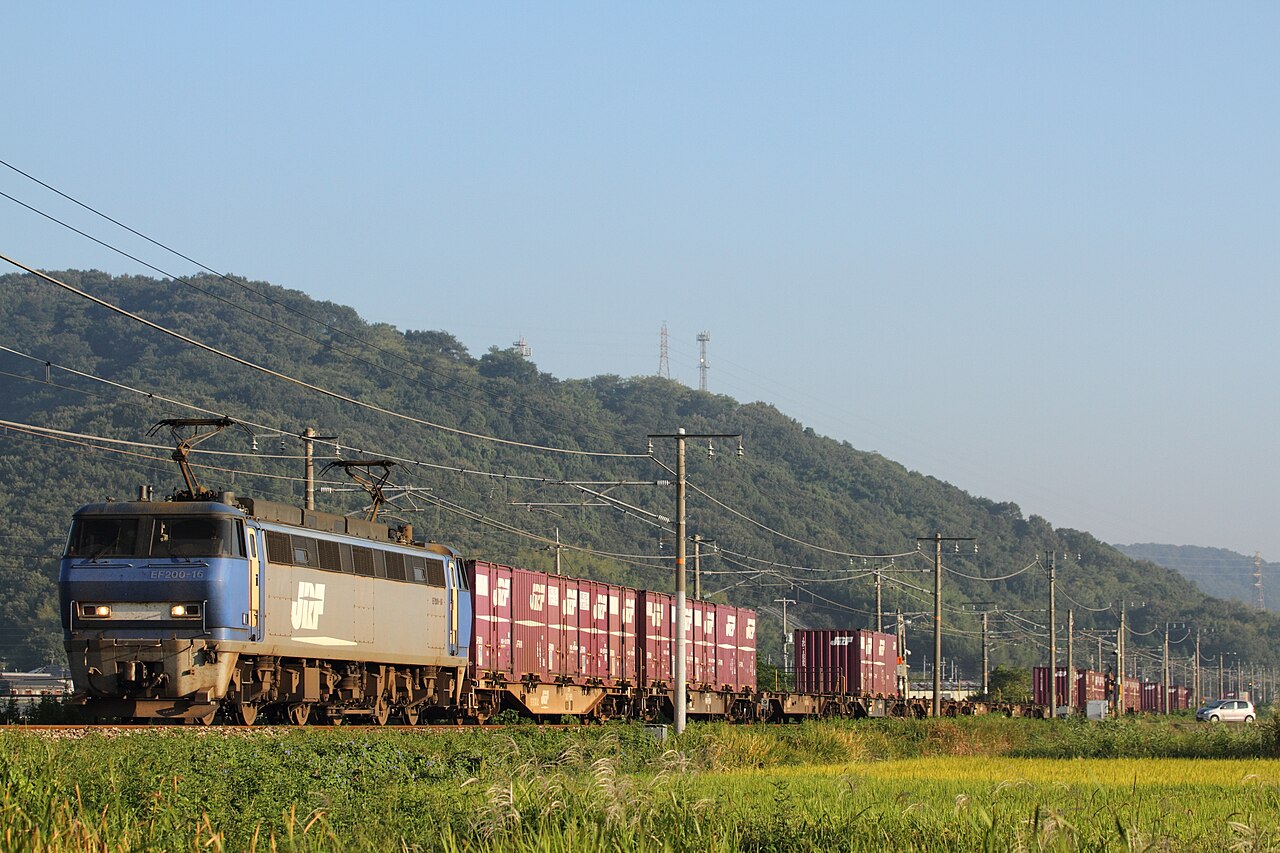
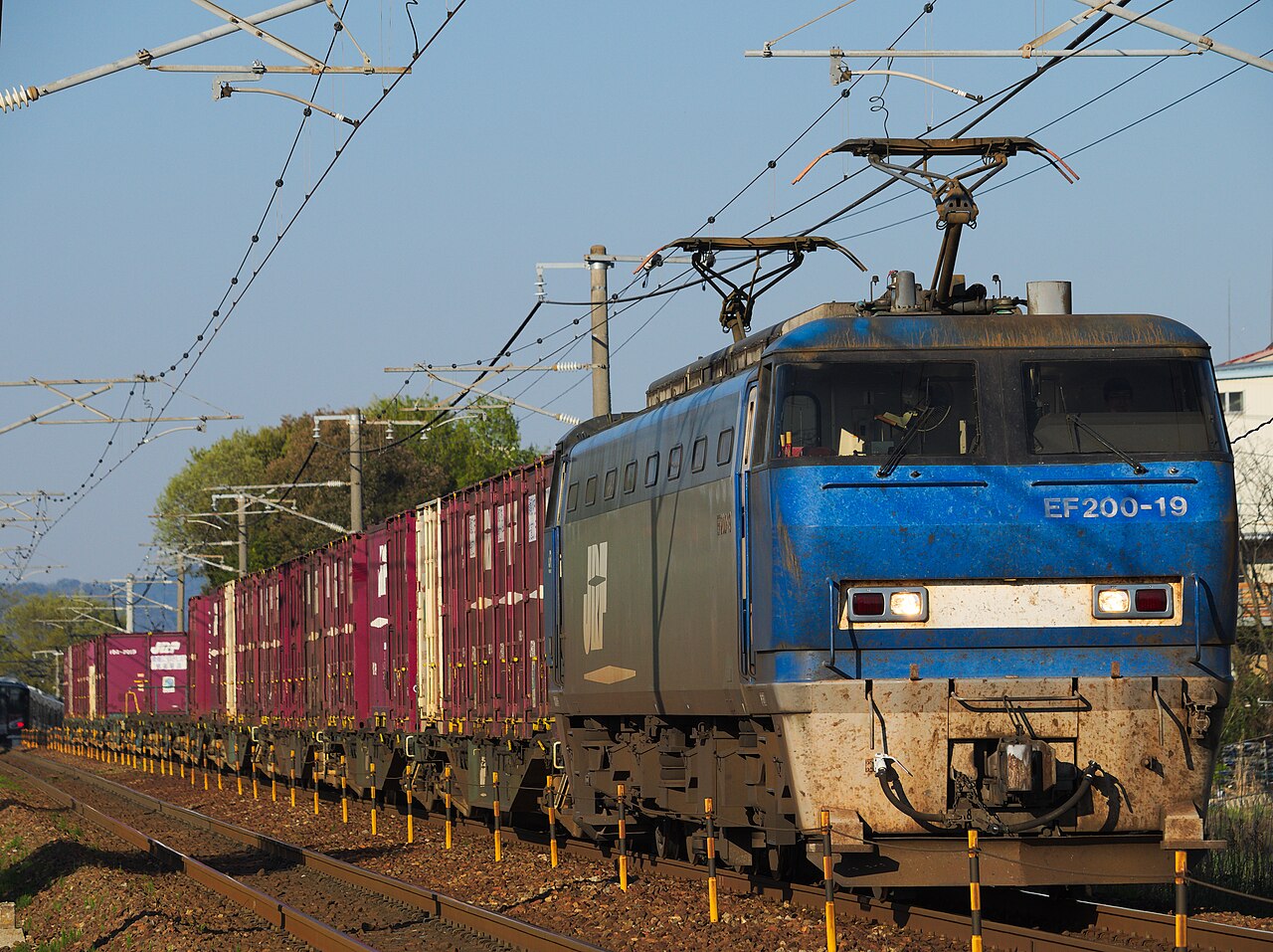
The prototype locomotive, EF200-901, was delivered in March 1990 for extensive testing. The first full-production locomotives were delivered to Shin-Tsurumi Depot in Tokyo in 1992, entering revenue service on the Tokaido and Sanyo Main Lines from the summer of that year. In livery, the locomotives carried an "INVERTER HI-TECH LOCO" logo on the bodyside, and their colour scheme was said to have been modelled on European locomotives. In 1992 the Class EF200 was awarded the Laurel Prize, presented annually by the Japan Railfan Club.
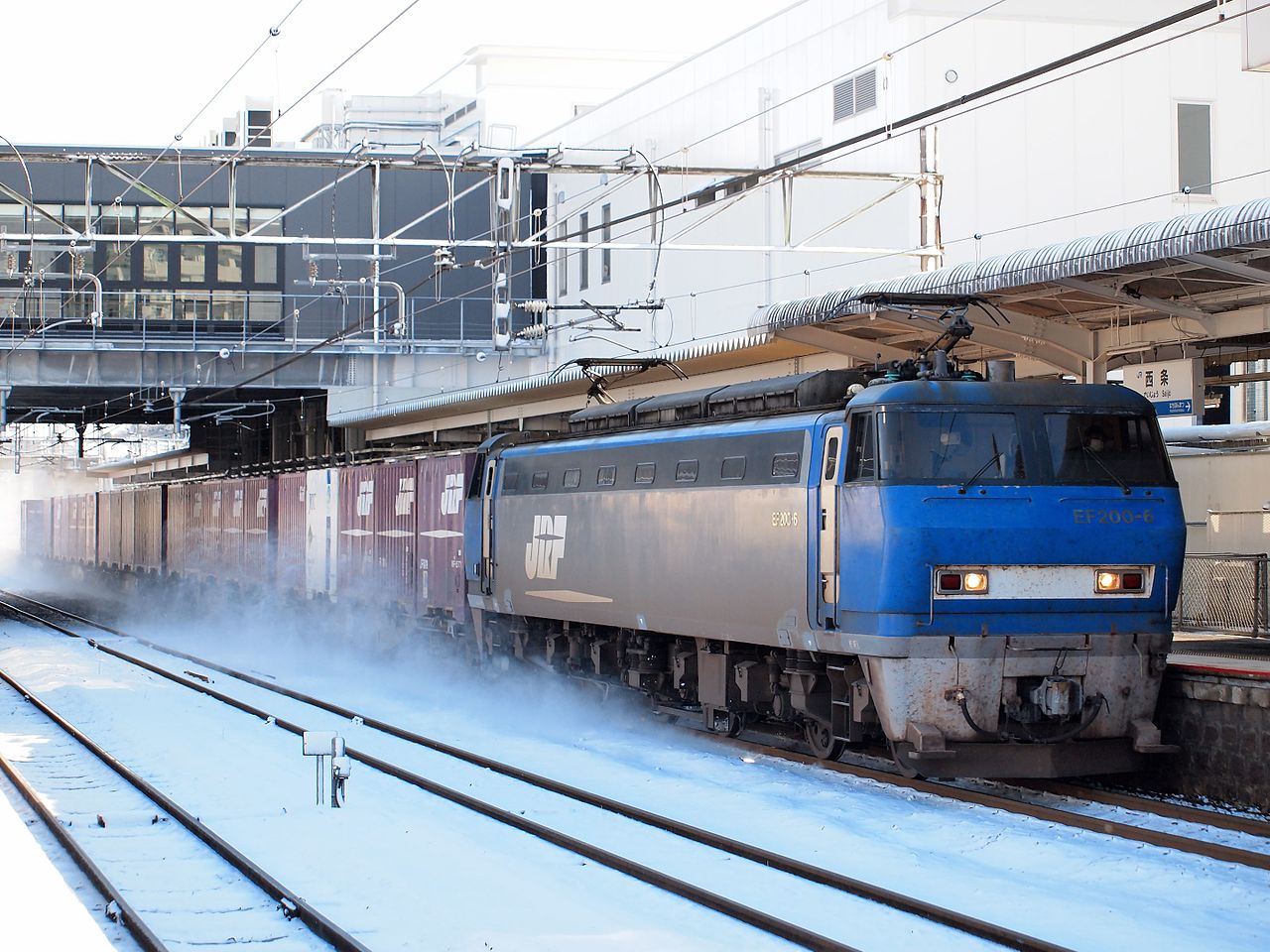
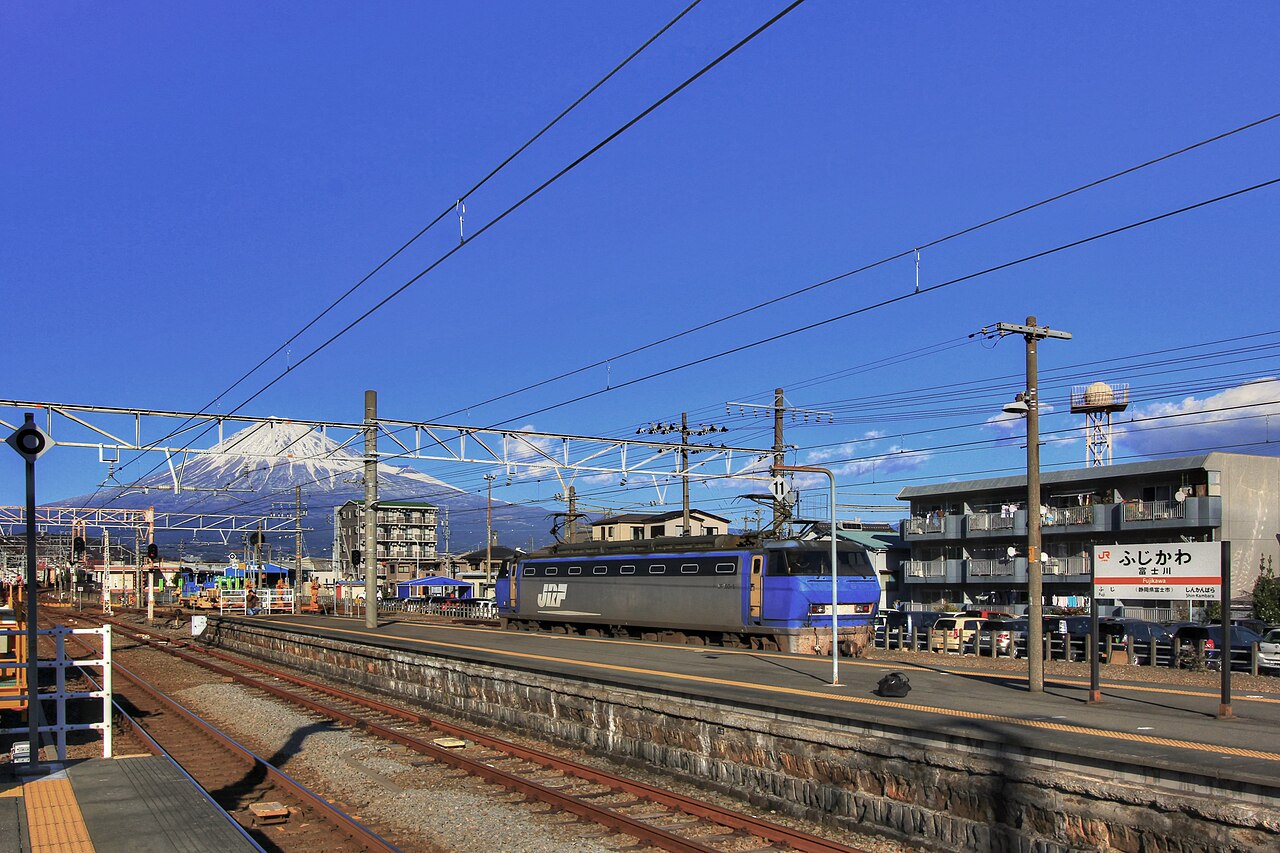
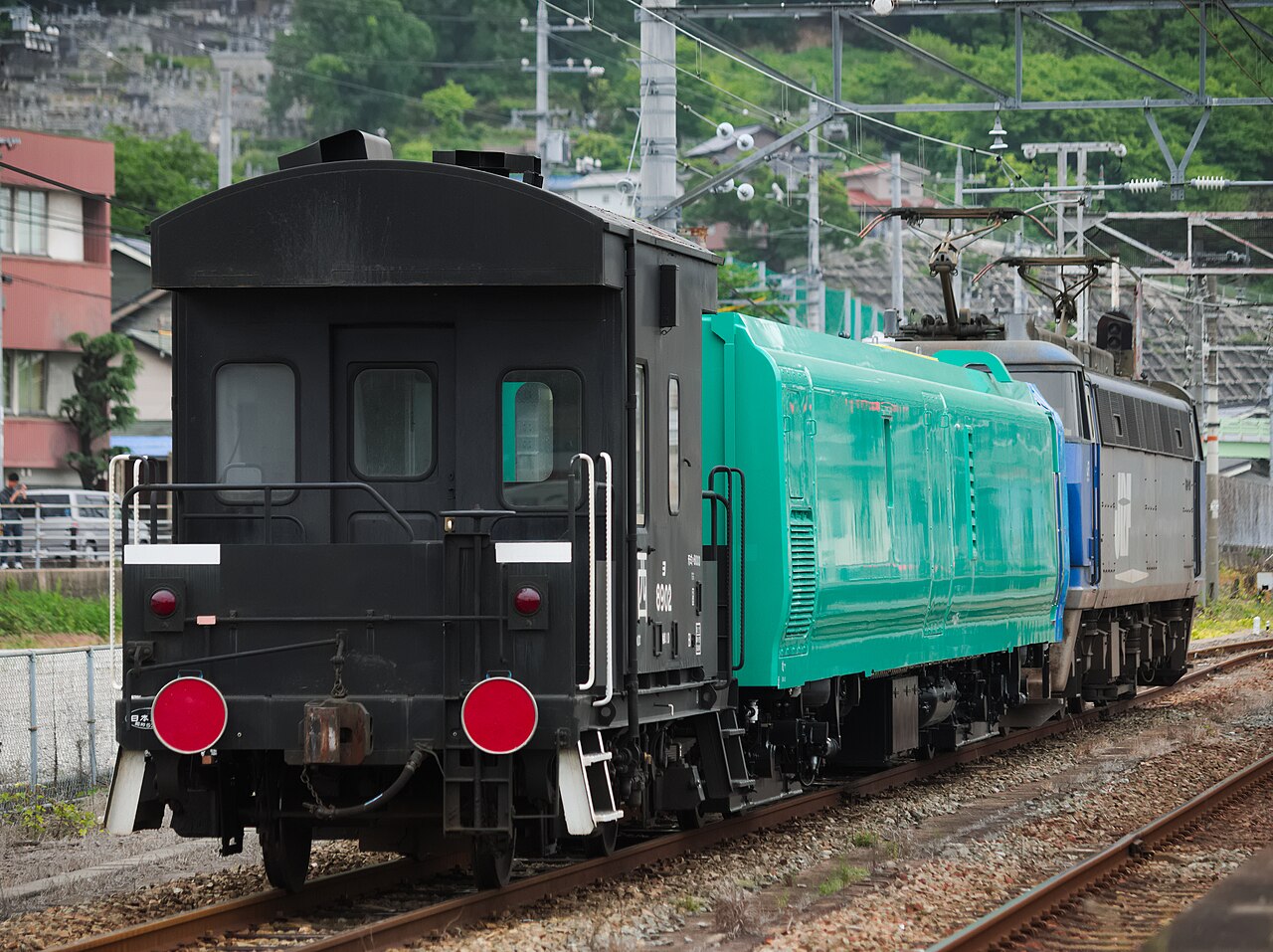
From 1 April 1999 the entire class was transferred from Shin-Tsurumi in Tokyo to Suita Depot in Osaka. In January 2001, EF200-1 ran for about a year as a "wrapped" locomotive as part of the Kobe reconstruction commemorative events following the Great Hanshin earthquake, its body carrying artwork by the Romanian painter Alexandra Nechita — a sunflower motif depicting the Port Tower and a girl who had died in the earthquake, together with the message "Thank you from Kobe". Between 2006 and 2009 the entire fleet was repainted into a new livery similar to that used for the later Class EF210, and EF200-901 was similarly repainted in 2007.
From 2007 the class was power-derated to match the power output of the older Class EF66 locomotives, and in 2011 one class member, EF200-1, was withdrawn. During fiscal 2015 eight members were removed from regular duties, leaving 12 in service. The final service of the Class EF200 took place on 28 March 2019, as EF200-18 hauled its last freight train from the Hatabu yard in Shimonoseki to the Suita freight terminal in Osaka. The prototype, EF200-901, had been withdrawn in March 2016 and moved to the Hitachi Mito factory in Hitachinaka, Ibaraki, in October 2016, where it was restored to its original livery and preserved.
Timeline
- 1990Prototype locomotive EF200-901 is built by Hitachi in 1990 and allocated to Shin-Tsurumi Depot in Tokyo for extensive testing.
- 1992Full-production locomotives are delivered to Shin-Tsurumi Depot in Tokyo and enter revenue service on the Tokaido and Sanyo Main Lines from the summer; the class is awarded the Laurel Prize by the Japan Railfan Club.
- 1999From 1 April the entire class of 21 locomotives is transferred from Shin-Tsurumi Depot in Tokyo to Suita Depot in Osaka.
- 2011Class member EF200-1, the production fleet’s number-one locomotive, is withdrawn and later scrapped in January 2013 as the class is progressively retired; from 2007 the class had been power-derated to match the output of the older Class EF66.
- 2019The final service of the Class EF200 runs on 28 March, with EF200-18 hauling its last freight train from the Hatabu yard in Shimonoseki to the Suita freight terminal in Osaka, ending the type's operation; one locomotive (prototype EF200-901) is preserved at the Hitachi Mito factory.
Sources
Facts last verified 6 June 2026.
Gallery 6 photos
Every photo for this page — tap any image to view it full-size. All from Wikimedia Commons (credit under each).