History
Of the design options the railway studied, the type was developed from the DC-section workhorse Class EF65: rather than the transformer tap-changer control standard on contemporary AC locomotives, it retained the resistance (rheostatic) control of the EF65 with AC-handling equipment added, stepping the 20 kV AC supply down to 1,500 V DC through a main transformer and rectifier before regulating speed through the resistors. Because the route ran along the Sea of Japan coast, the high-voltage switchgear that AC locomotives normally carried on the roof — the disconnector, circuit breaker and main fuse — was instead housed inside the body so that nothing but the pantograph is exposed to the elements, a measure to protect the electrical equipment against salt damage and snow and ice. The base type was designed for haulage by a single locomotive, so it carried neither the multiple-unit (total) control equipment for running in pairs nor a front gangway door.
Its service weight was held to 100.8 t (16.8 t axle load), about 5 percent heavier than the EF65. Locomotives were built by Hitachi and by Mitsubishi (Mitsubishi Electric and Mitsubishi Heavy Industries) between 1968 and 1992. Production totals are reported as either 161 or 164 units; the higher figure comprises 156 built from development through 1979 plus a further 8 built by JR Freight between 1989 and 1992.
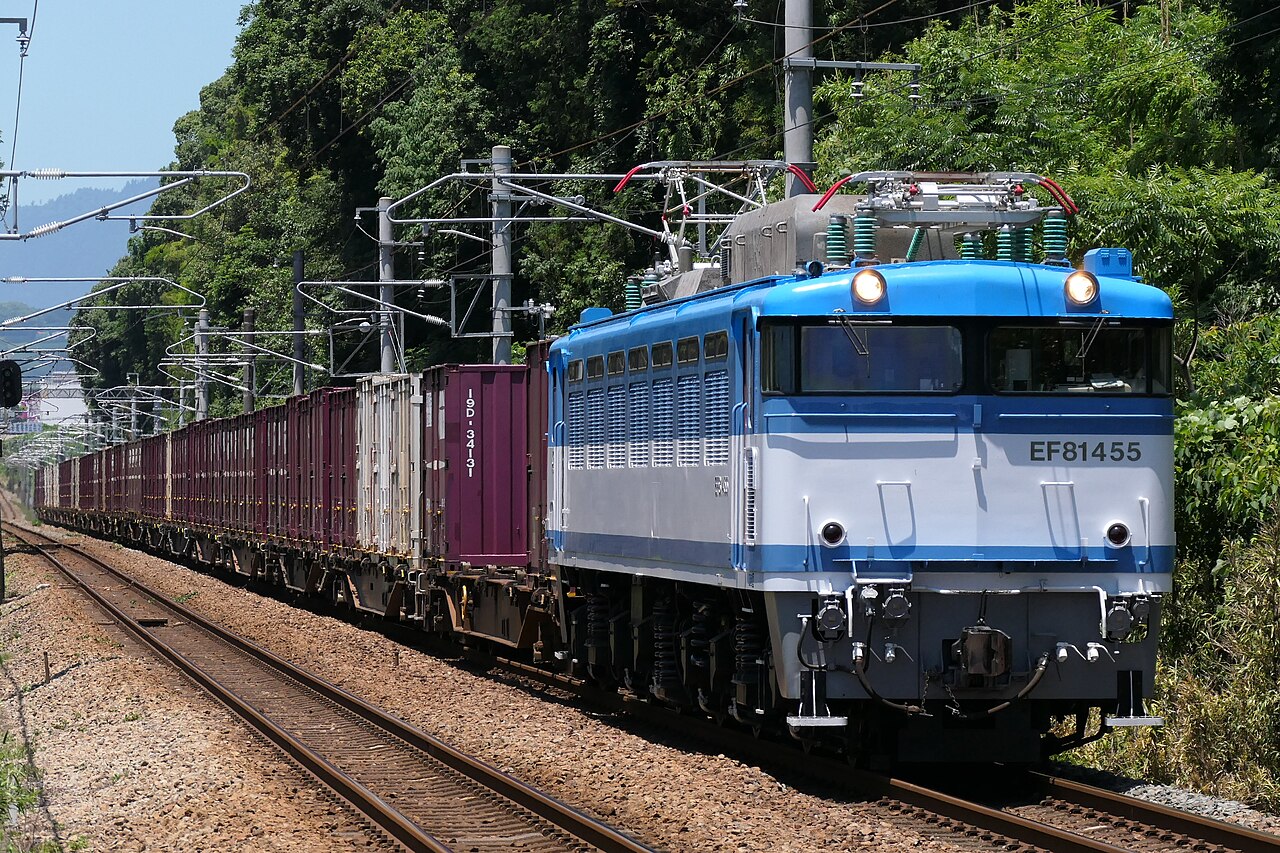
The type has a maximum operating speed of 110 km/h (with a design maximum of 115 km/h), six MT52-family traction motors, and a continuous rated output of 2,550 kW on DC and 2,370 kW on AC. That rated output matched the EF65's, and was reckoned sufficient to haul a 1,200 t train on a 10-per-mil gradient, although in practice no working exceeded 1,000 t. The class was divided into several sub-classes: the original EF81-0 (EF81 1 to 152, built 1968-1979); EF81-300 (EF81 301 to 304, built 1973-1975); EF81-400 (EF81 401 to 414); EF81-450 (EF81 451 to 455, built 1991-1992); EF81-500 (EF81 501 to 503, built 1989); and EF81-600, former EF81-0 locomotives renumbered by JR Freight from May 2012 to distinguish them from sub-class members fitted with driving recording units mandated for operation above 100 km/h.
The prototype, EF81 1, was built by Hitachi and delivered in 1968, and was withdrawn on 31 March 2004. The four EF81-300 locomotives were built by Hitachi with unpainted corrugated stainless-steel bodies for use through the undersea Kanmon Tunnel to Kyushu; in 1978 EF81 301 and 302 were transferred to the Joban Line and repainted in the standard JNR AC/DC pale-red livery. The EF81-400 sub-class of 14 locomotives was built in 1986 and 1987 to replace ageing Class EF30 machines on Kanmon Tunnel services.
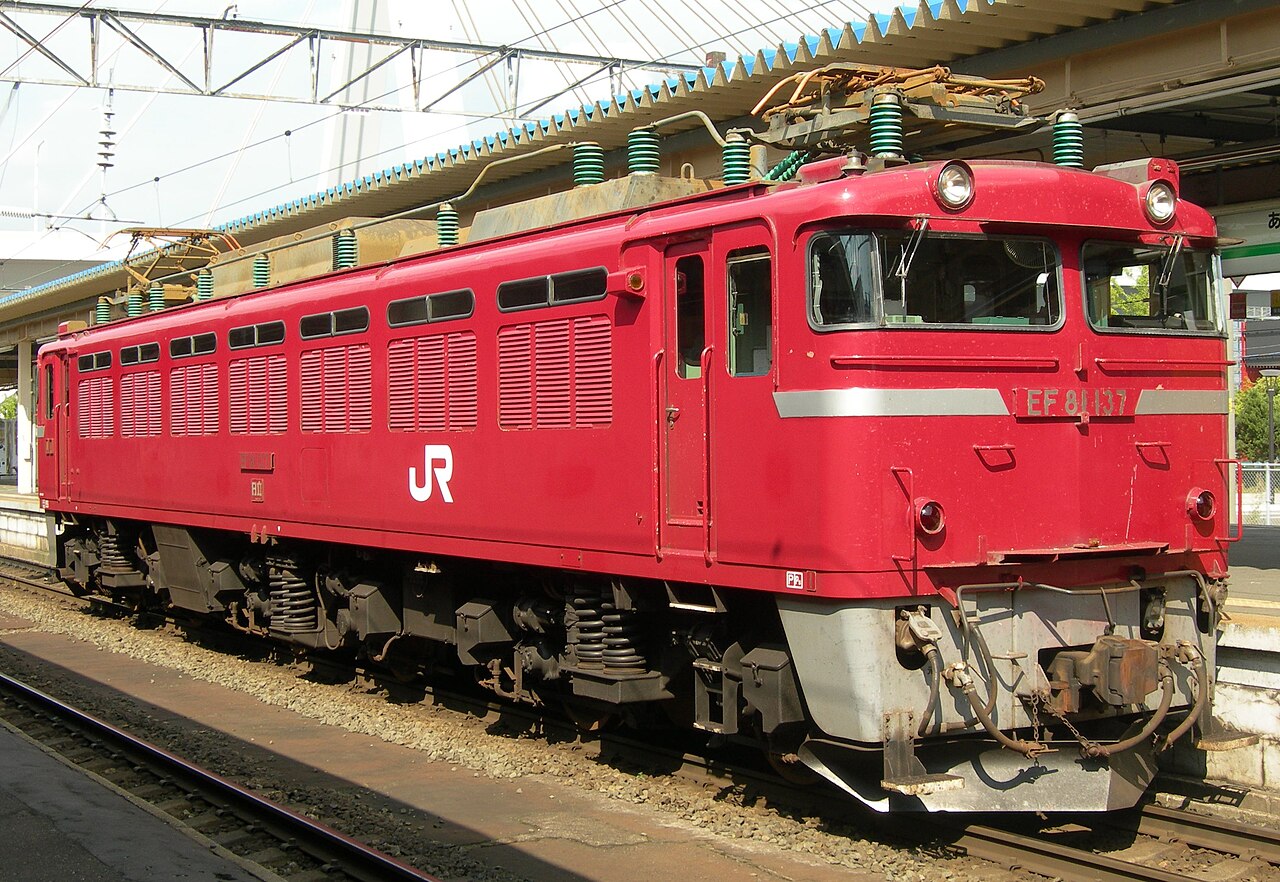
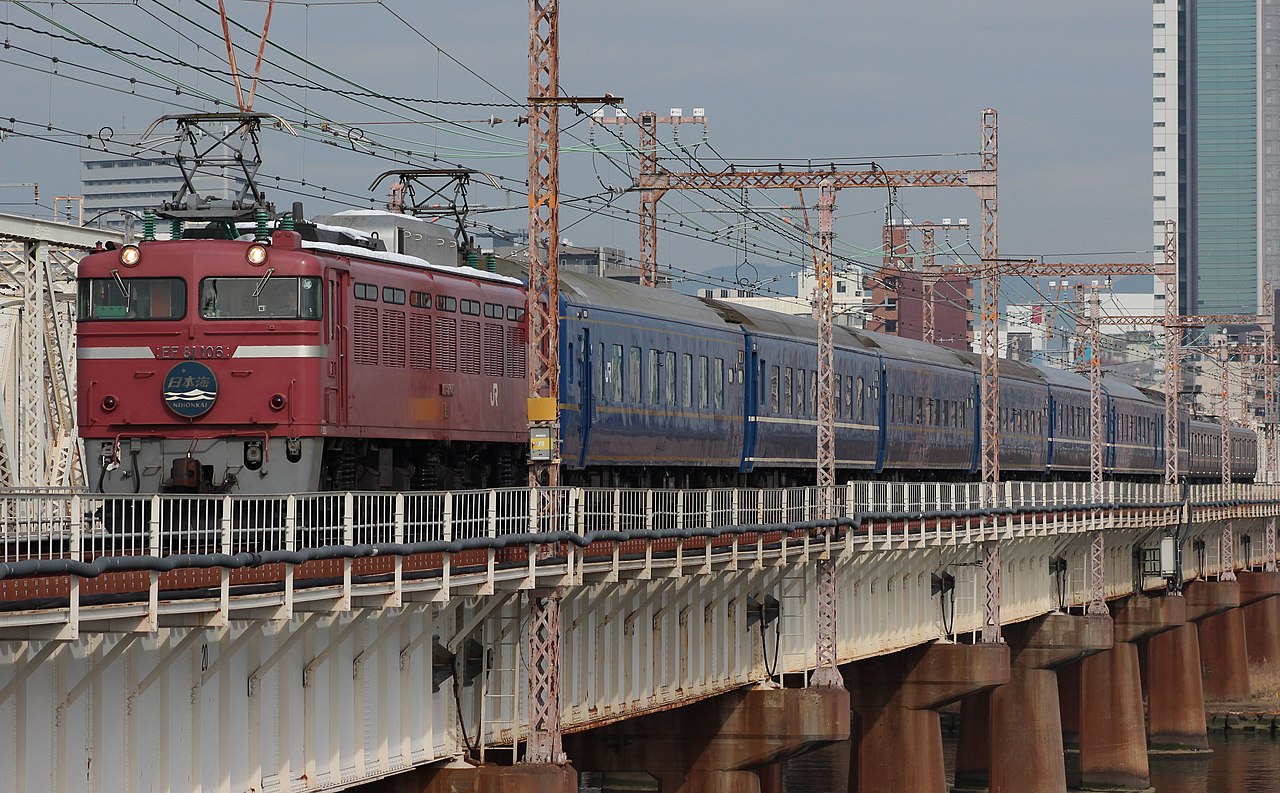
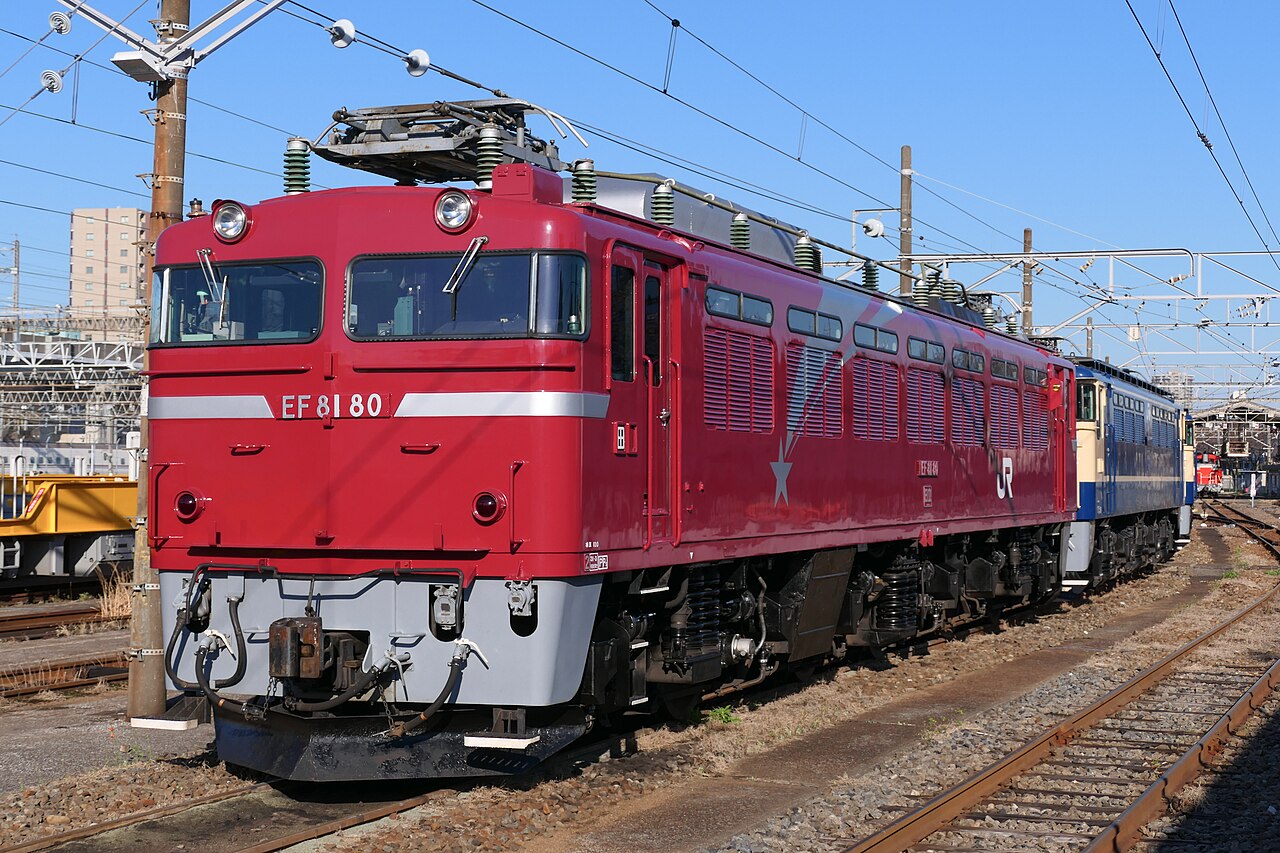
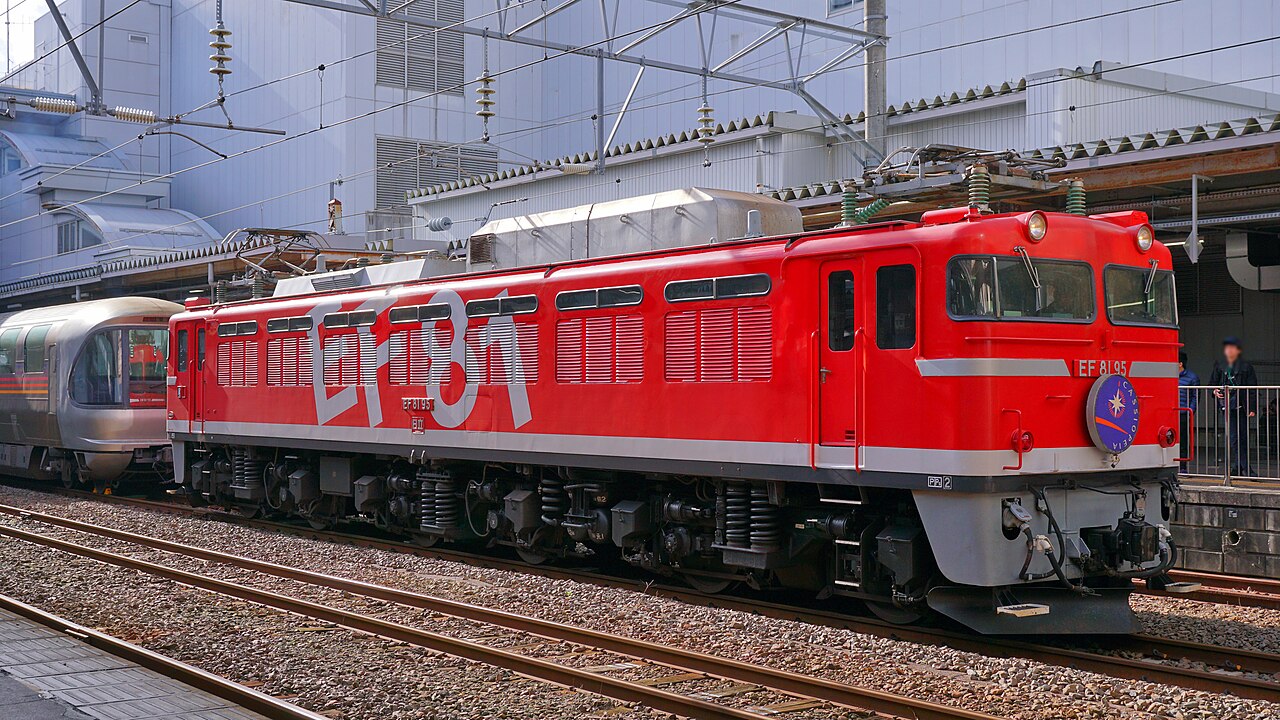
At the April 1987 break-up and privatisation of Japanese National Railways the class passed to JR East, JR West, JR Kyushu and JR Freight. As of 1 April 2016, 44 locomotives remained in service, operated by JR Freight, JR East and JR West. From 2009 to 2010 JR East introduced fifteen Class EF510-500 locomotives to replace EF81s on Cassiopeia and Hokutosei sleeper duties, and EF81 operation of those trains from Tabata ended; on the EF81-95 'Super Express Rainbow' machine and the EF81-81 imperial-train locomotive, distinctive liveries were retained. In August 2014 JR East's Tabata-based EF81 81 was repainted into a JNR-period imperial-train livery of 'rose pink' (Red No. 13) with a silver bodyside stripe.
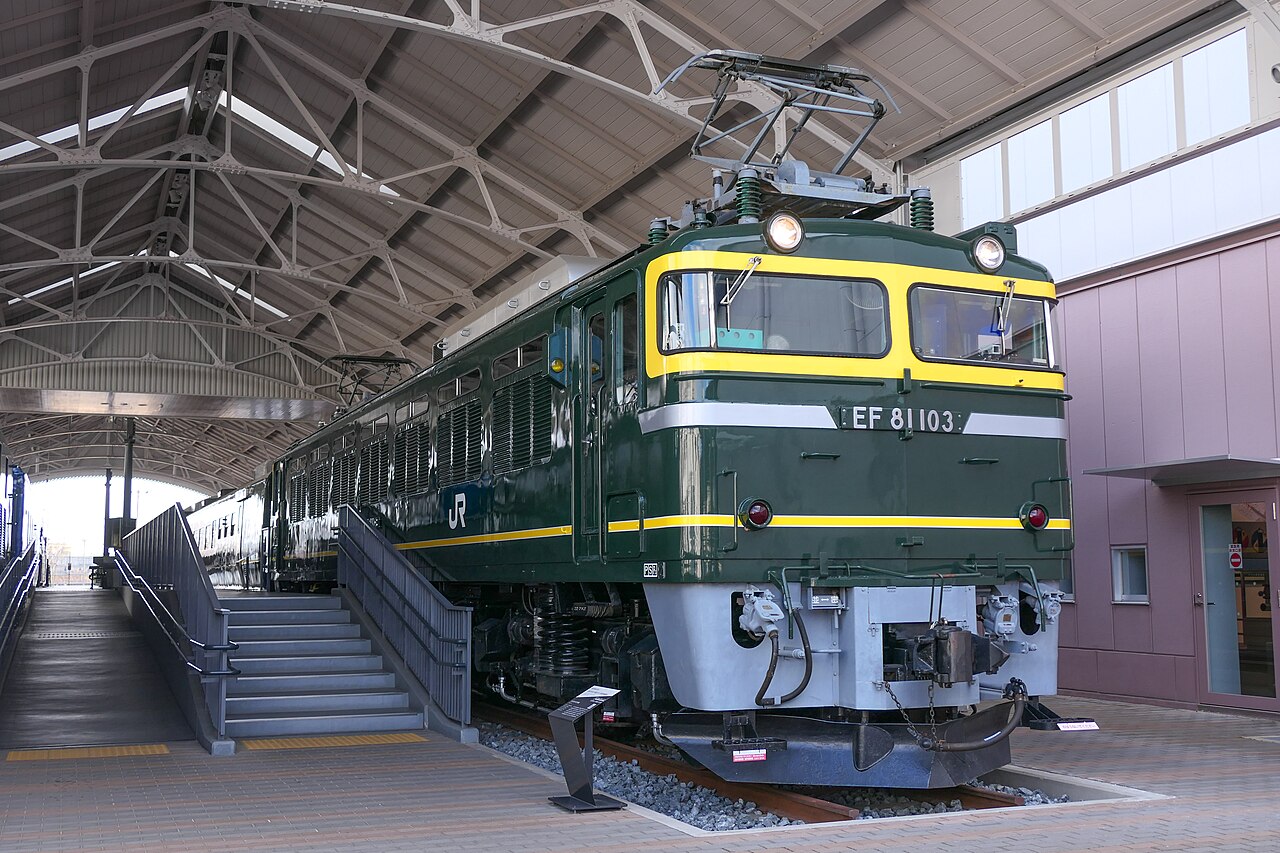
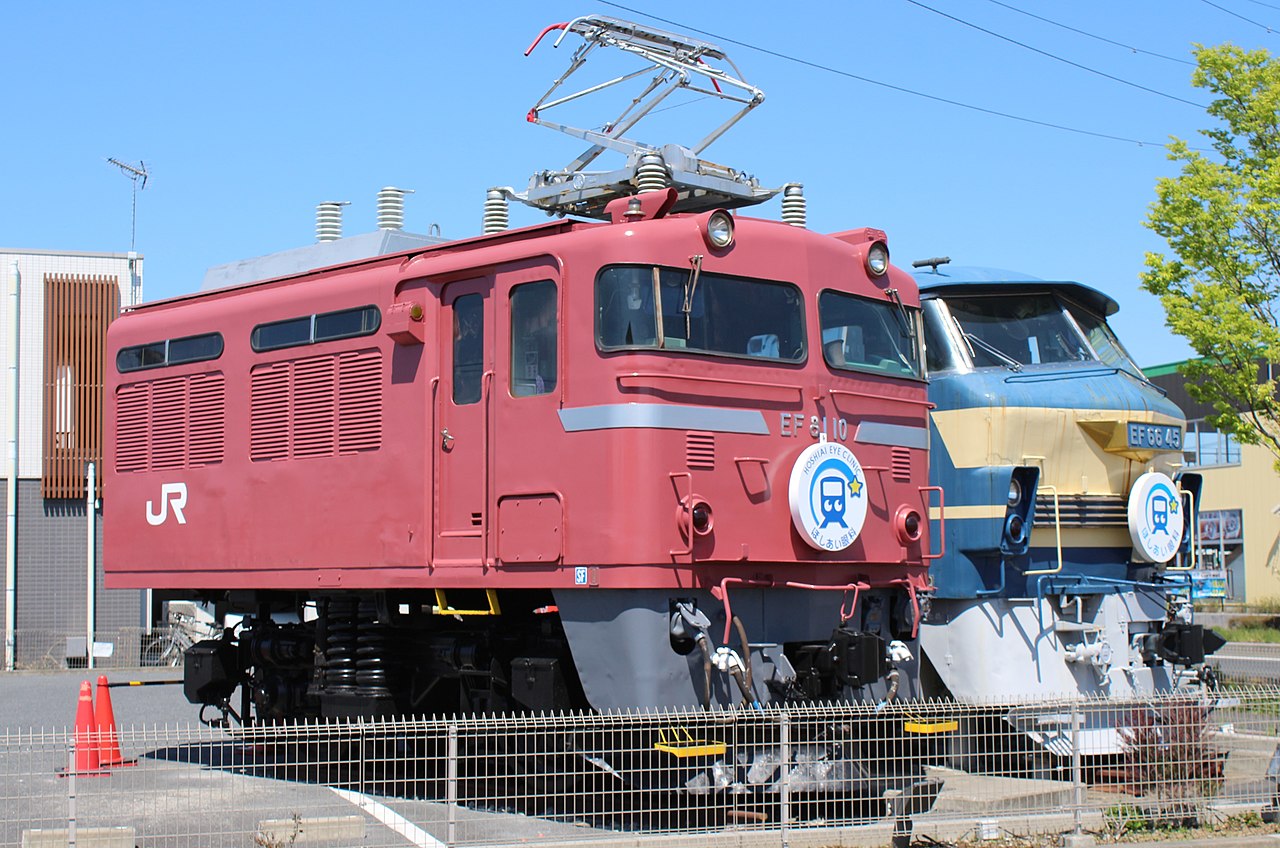
Withdrawals accelerated thereafter, and by 2025 the whole class had left service; JR Freight's last regular workings ended with the 15 March 2025 timetable revision, and the remaining locomotives were struck from the register by the March 2026 timetable revision. As of 2016 four members of the class were preserved: EF81 10 (front section, at the Hakuba Mini Train Park, later relocated), EF81 63 (JR Freight training centre in Shinagawa, not on public display), EF81 103 (Kyoto Railway Museum, in Twilight Express green livery) and EF81 138 (preserved privately in Chikusei, Ibaraki, from December 2015).
Timeline
- 1968The prototype (pre-production) locomotive EF81 1 is built by Hitachi and delivered in 1968; the type enters service the following year for the DC electrification of the Itoigawa-Naoetsu section of the Hokuriku Main Line.
- 1973The EF81-300 sub-class (EF81 301-304, built 1973-1975) is introduced for services through the undersea Kanmon Tunnel to Kyushu, built by Hitachi with unpainted corrugated stainless-steel bodies and nicknamed 'gingama' (silver kettle).
- 1987At the April break-up and privatisation of Japanese National Railways the class is inherited by JR East (78 locomotives), JR West (16), JR Kyushu (6) and JR Freight (56).
- 2012From May, JR Freight renumbers its EF81-0 locomotives not fitted with driving recording units (required for operation above 100 km/h) by adding 600 to the running number, creating the EF81-600 sub-class.
- 2016As of 1 April, 44 locomotives remain in service, operated by JR Freight, JR East and JR West; four members of the class are preserved (EF81 10, 63, 103 and 138).
- 2025Regular JR Freight operation of the class ends with the 15 March timetable revision; by 2025 all units have left service and the remaining locomotives are struck from the register by the March 2026 timetable revision, ending all regular EF81 operation.
Sources
Facts last verified 6 June 2026.
Gallery 6 photos
Every photo for this page — tap any image to view it full-size. All from Wikimedia Commons (credit under each).