History
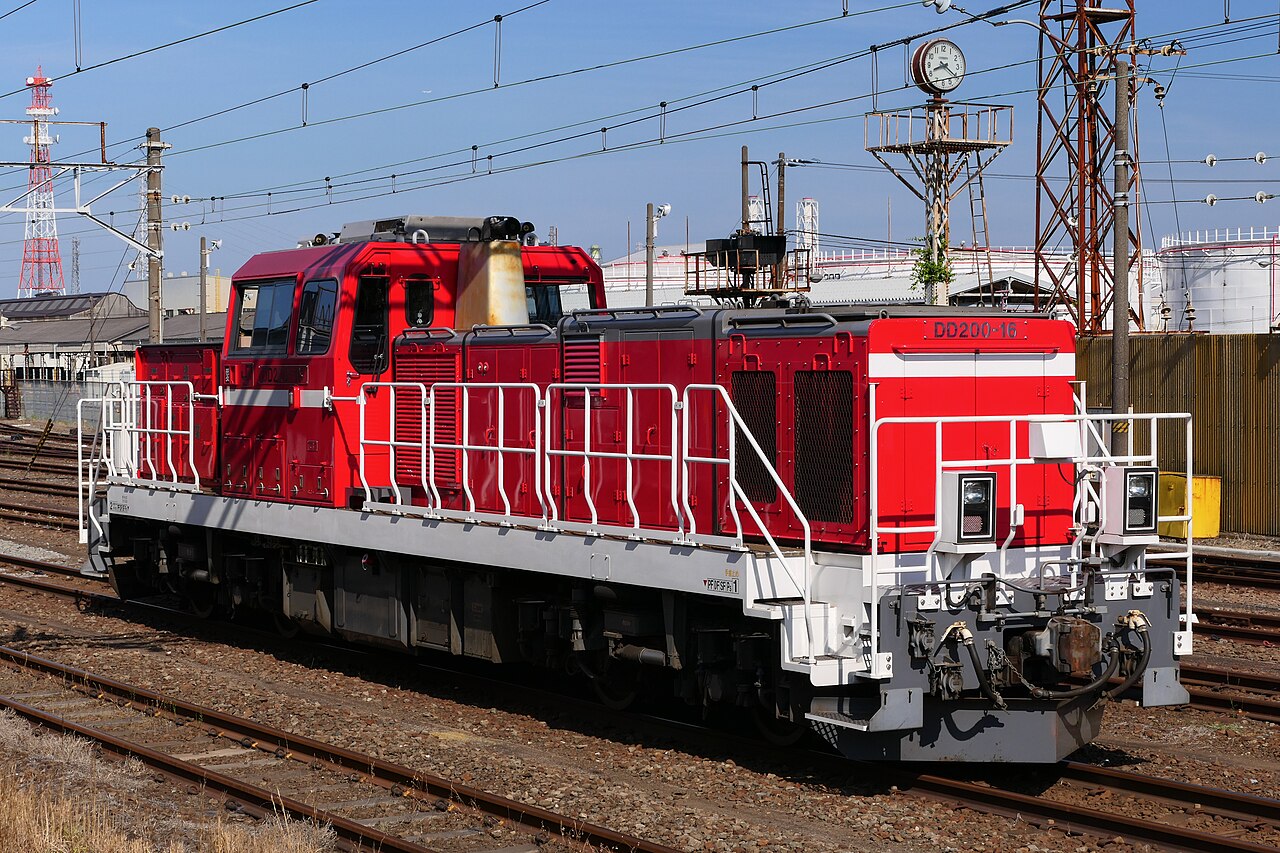
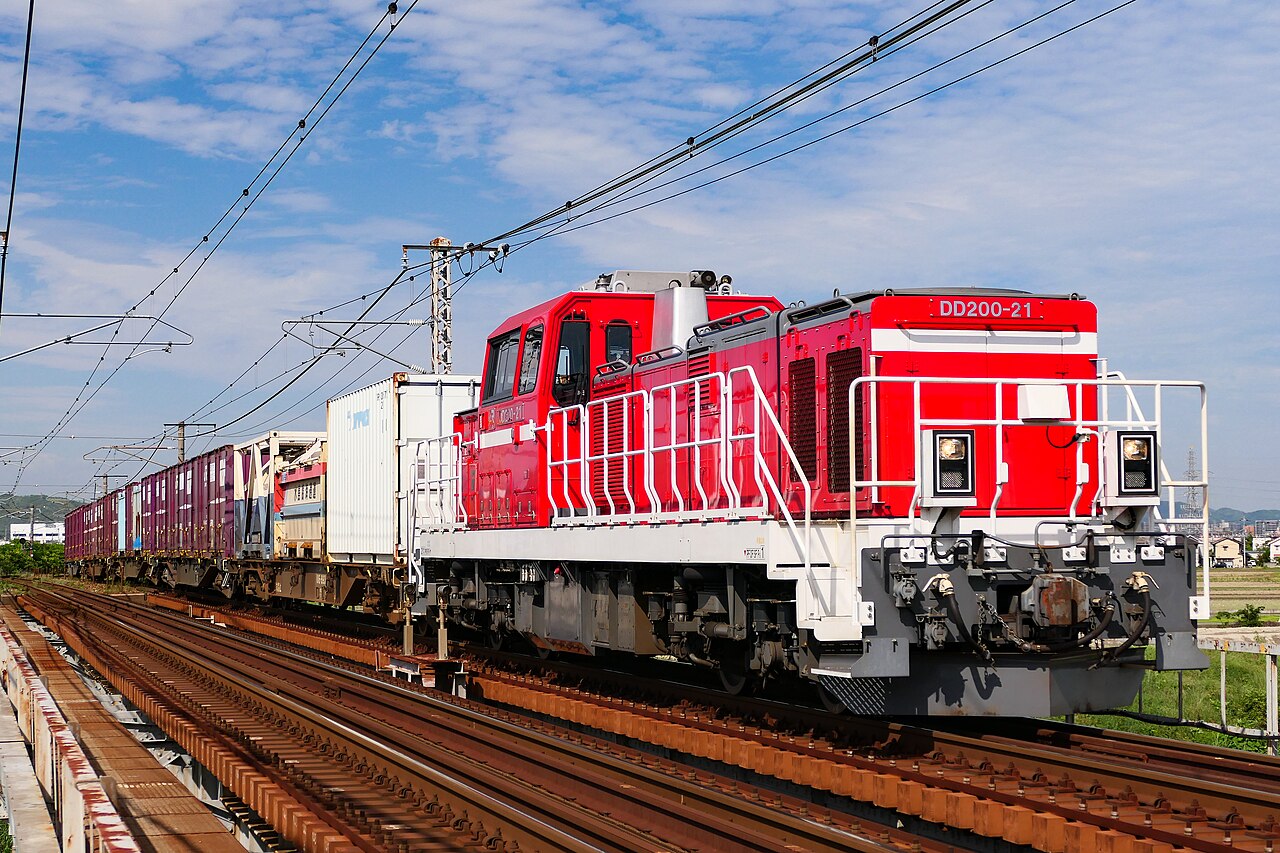
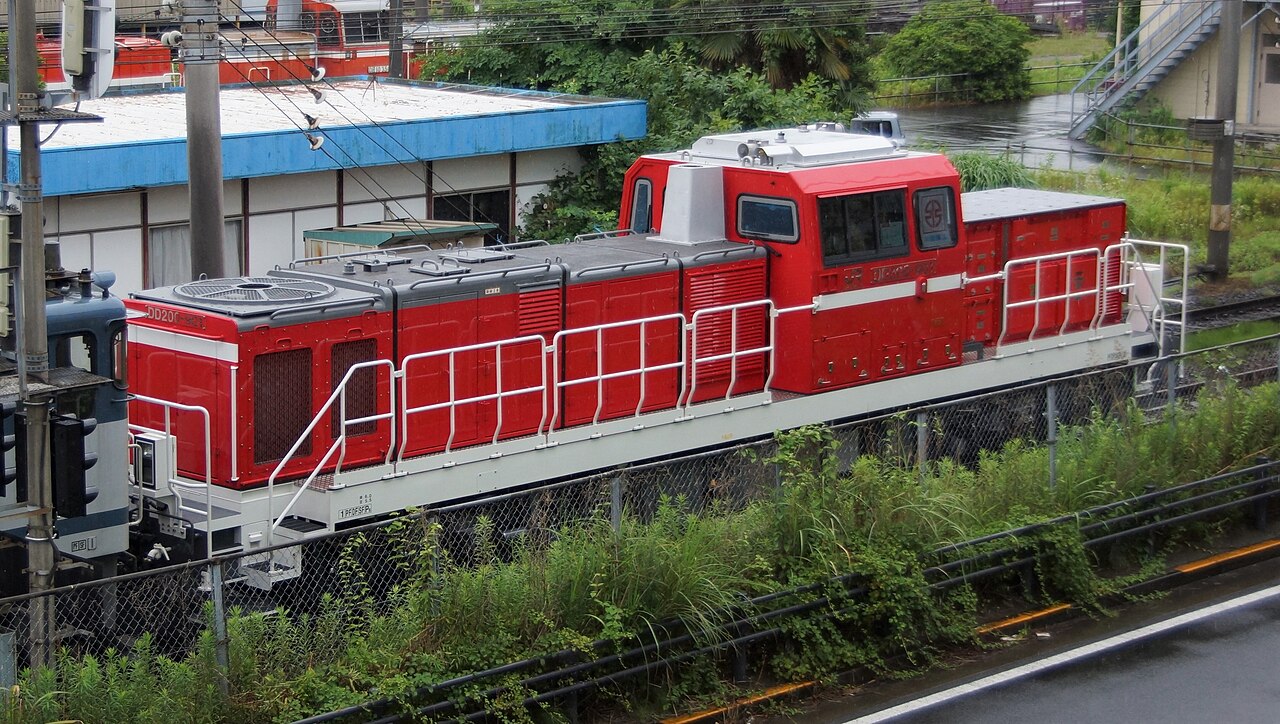
The carbody is a front-to-rear asymmetric bonnet (hood) type like the DE10, but the maintenance-troublesome three-axle bogies of that older design were dropped in favour of conventional two-axle bogies in a B-B arrangement; even with fewer axles, the axle load was kept at 14.7 t — close to the DE10's 13 t and the DE11's 14 t — so the type could still work the local lines the DE10 had served. The locomotive has a single water-cooled four-cycle V12-cylinder diesel engine — the FDML30Z prime mover, rated 895 kW at 1,900 rpm — driving four traction motors, with a power output given in the infobox as 600 kW and a tractive effort of 20,000 kgf. The FDML30Z is a Komatsu SAA12V140E-3 unit of 30.48 litres displacement and is unrelated to the JNR-era DML30 engine family despite the similar designation; it is directly coupled to an FDM303 main generator rated at 1,112 kVA.
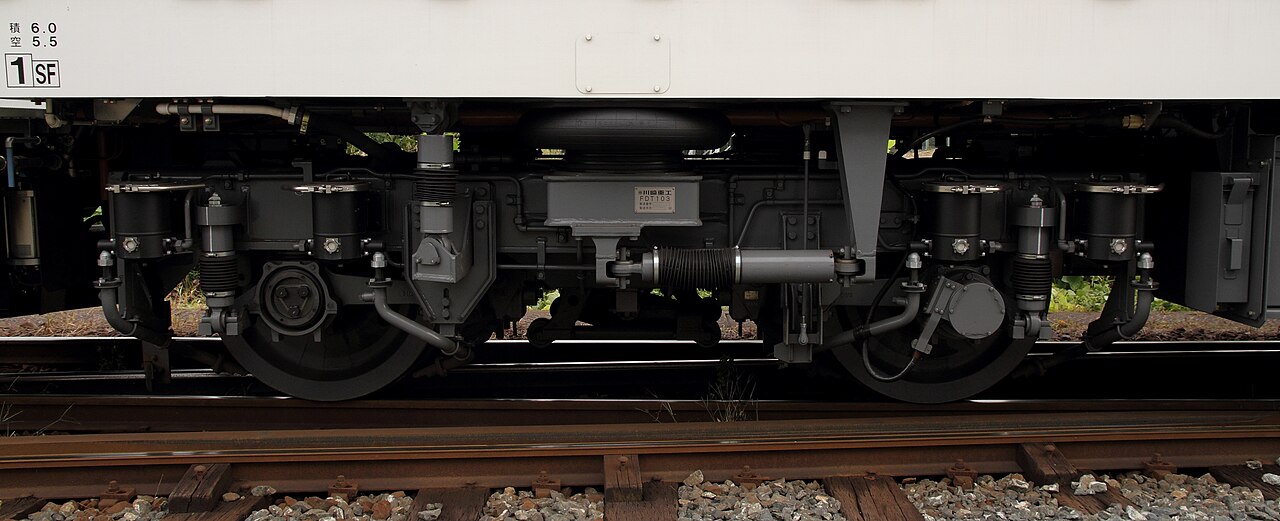
The control-system electrical equipment is supplied by Mitsubishi Electric, and the inverter uses high-efficiency hybrid silicon-carbide (SiC) devices. Through the adoption of such high-efficiency equipment, the DD200 improves on earlier locomotives environmentally, cutting fuel consumption by 20.3%, nitrogen-oxide (NOx) emissions by 18.6% and noise by 11 dB. The type rides on FDT103 (No. 1 end) and FDT103A (No. 2 end) bogies — Kawasaki bolsterless axle-beam air-spring bogies — on 1,067 mm gauge track, measures 15,900 mm long, 2,974 mm wide and 4,079 mm high, and has a maximum operating speed of 110 km/h, an axle load of 14.7 t and a locomotive weight of 58.8 t; it uses an oil-free (lubricant-free) reciprocating air compressor made by Knorr-Bremse of Germany.
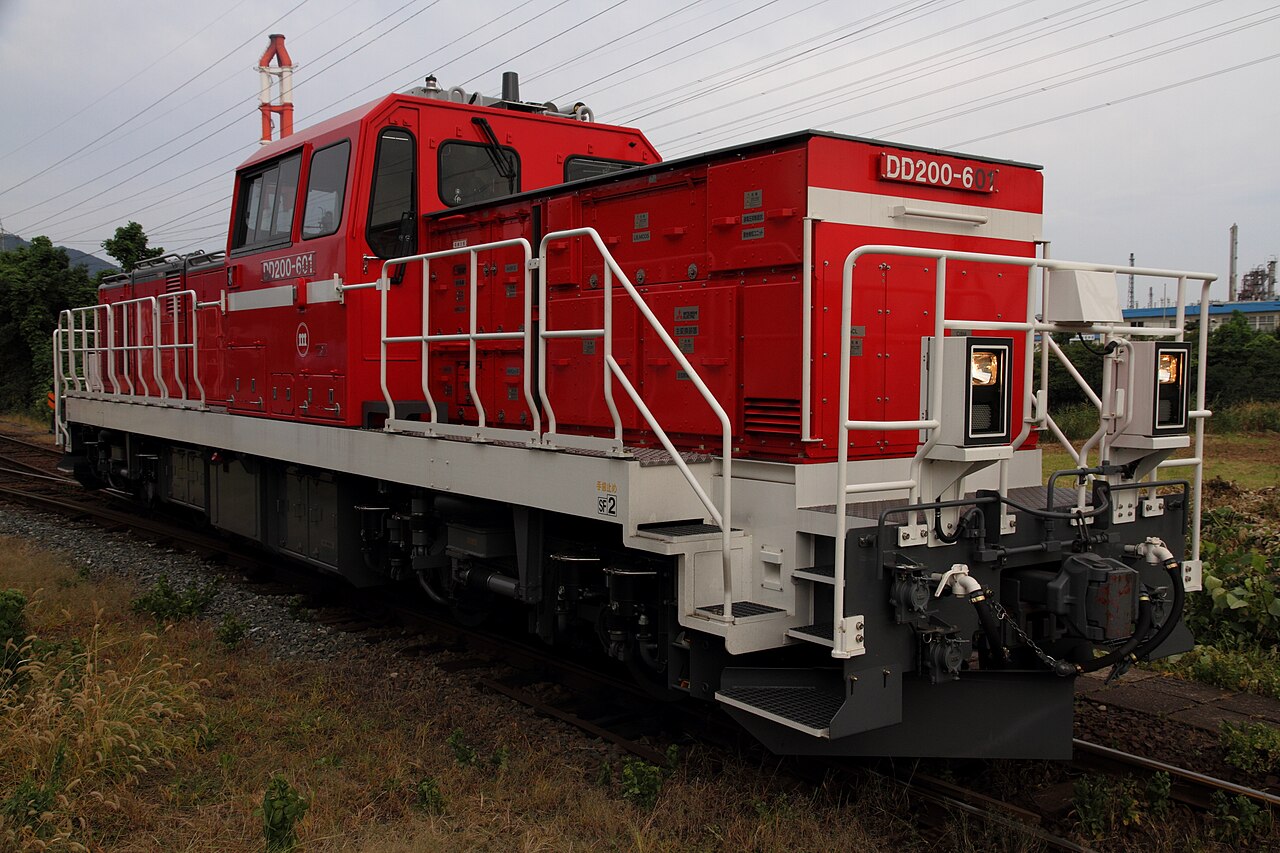
Details of the Class DD200 were officially announced by JR Freight on 15 June 2017. A prototype locomotive, DD200-901, was delivered to JR Freight's Shin-Tsurumi Depot from the Kawasaki Heavy Industries factory in Kobe in late June 2017. It was scheduled to undergo testing and evaluation in shunting operations at Tokyo Freight Terminal and in main line operations in the Tokyo area, to obtain data to be used in the design of the full-production locomotives. The first full-production locomotive, DD200-1, was delivered in August 2019. In the type's DD200 classification, the first D denotes a diesel locomotive, the second D denotes four driving axles, and the 200 denotes a diesel–electric locomotive with AC motors. As of 1 April 2022, 24 locomotives — DD200-901 and DD200-1 to -23 — were allocated to Aichi Locomotive Depot.
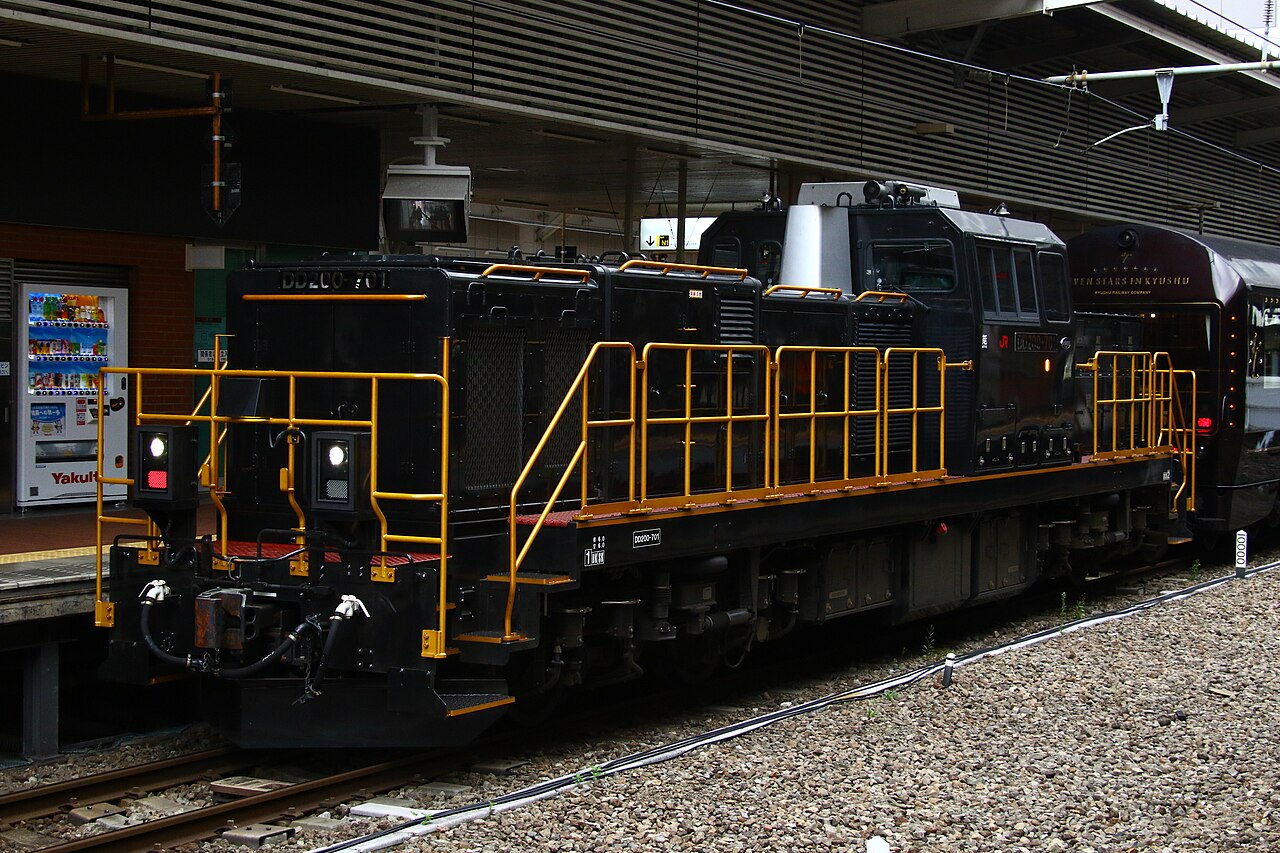
Beyond JR Freight's own fleet, the type has been adopted more widely: citing carbon-neutrality goals, JR Freight has promoted its introduction among its rinkai (port and industrial) railway group companies, and it has also been taken up by JR Kyushu. Mizushima Rinkai Railway operates 600-series units, which entered service on 2 July 2021; JR Kyushu took delivery of a 700-series unit — newly allocated on 13 July 2021 and finished in a black livery matching its depot's DE10s; and Keiyo Rinkai Railway introduced an 800-series unit named "RED MARINE". A sister type for Kinuura Rinkai Railway, the KD58, was delivered on 19 November 2024 and entered service on 15 March 2025. At the time the English-language article was written, the number in class was given as two — the prototype DD200-901 and DD200-1 onwards (the production fleet) — a figure the article flagged as dating from 2017 and pending update.
Timeline
- 2017JR Freight officially announced details of the Class DD200 on 15 June; the prototype, DD200-901, was delivered to JR Freight's Shin-Tsurumi Depot from the Kawasaki Heavy Industries factory in Kobe in late June (delivered 29 June per the Japanese source) for testing and evaluation in shunting at Tokyo Freight Terminal and main-line operation in the Tokyo area.
- 2019The first full-production locomotive, DD200-1, was delivered in August (transported from Hyogo to Inazawa on 27 August per the Japanese source) and began entering service progressively replacing Class DE10 locomotives.
- 2021Variants entered service with JR Freight group and affiliated companies: Mizushima Rinkai Railway (600 series) began operating its unit from 2 July; Keiyo Rinkai Railway introduced an 800-series unit named "RED MARINE"; and JR Kyushu (700 series) had a unit newly allocated on 13 July. (Japanese source.)
- 2022As of 1 April, 24 locomotives (DD200-901 and DD200-1 to -23) were allocated to Aichi Locomotive Depot; the Japanese infobox records 20 units built as of September 2022. (Japanese source.)
Sources
Facts last verified 6 June 2026.
Gallery 6 photos
Every photo for this page — tap any image to view it full-size. All from Wikimedia Commons (credit under each).