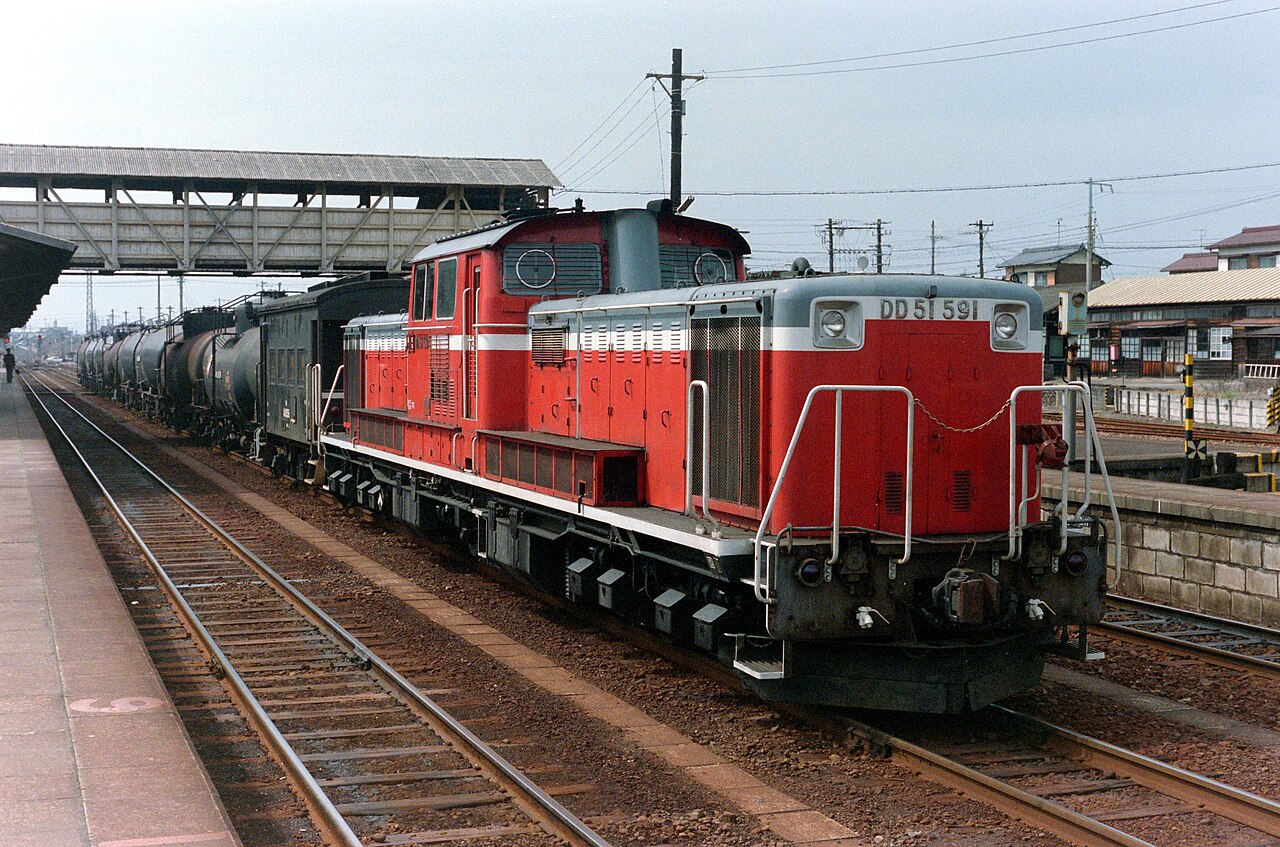
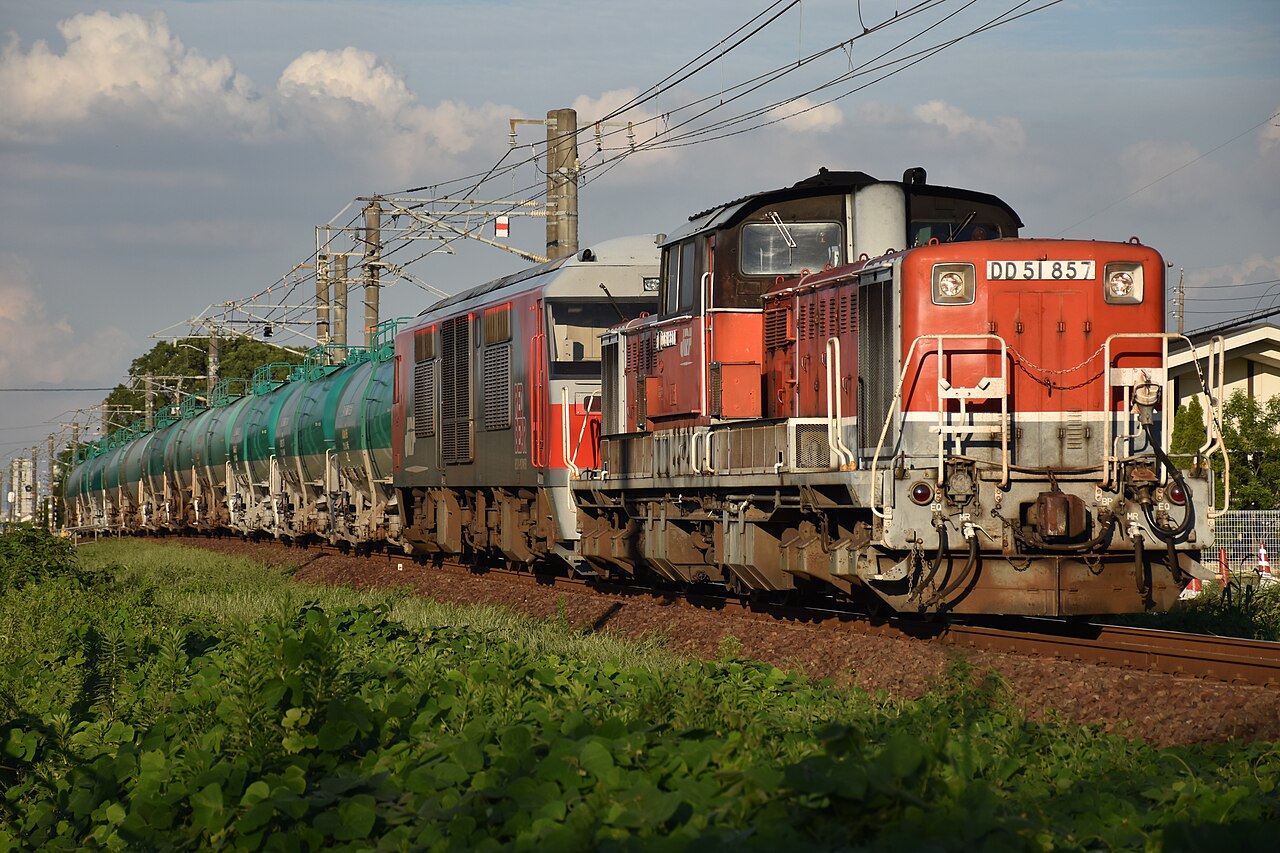
History
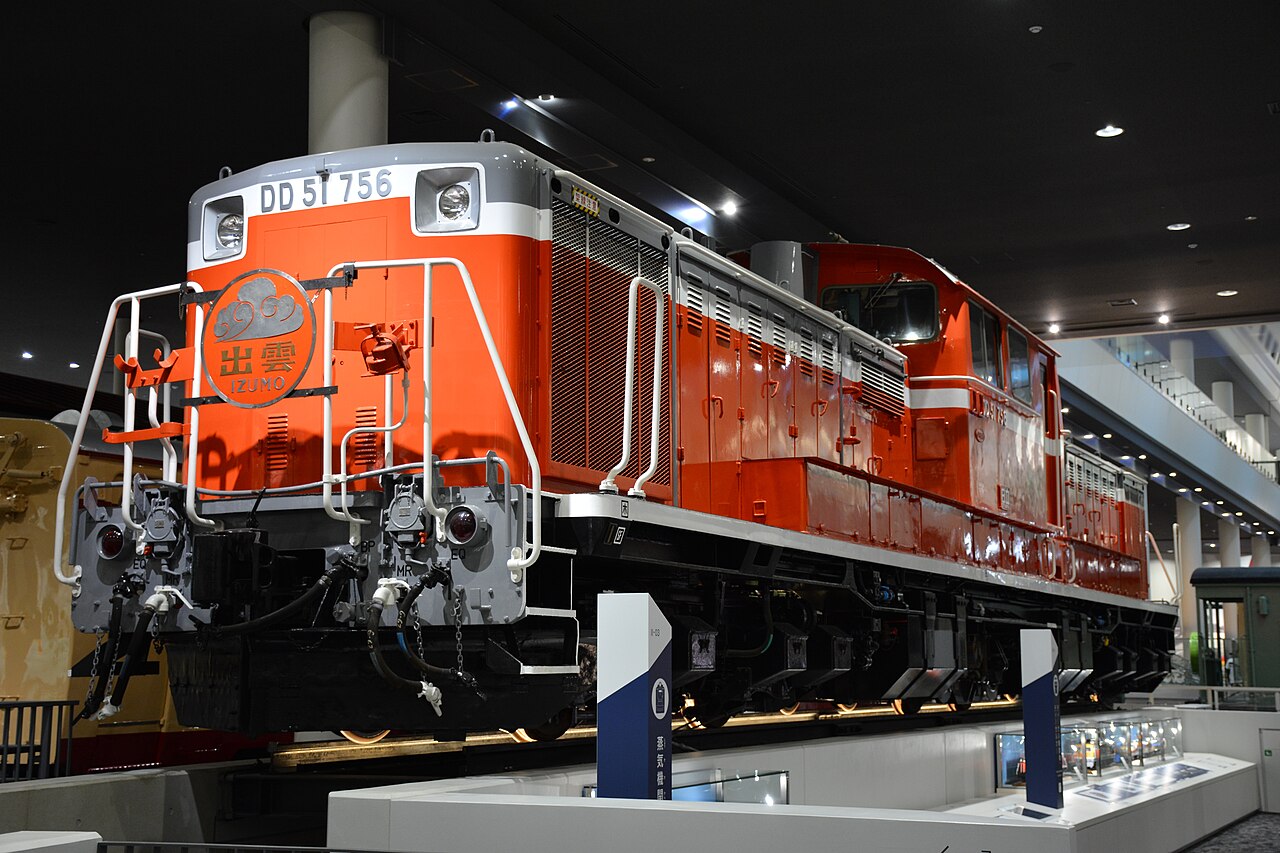
This was achieved by installing two 1,100 hp engines in an 18-metre-long centre-cab design, which was unusual for mainline operation; the centre-cab body was adopted because it was cheaper to build than a box body, allowed parts to be shared with the contemporary Class DD20, and gave easier access for engine maintenance. The V12 DML61 engines were developed from the 6-cylinder inline DMF31 engines used in the Class DD13 locomotives, fitted with an exhaust turbocharger and an intercooler, giving a total power output of 2,200 hp and a maximum speed of 95 km/h. The locomotive was the first mass-produced large diesel in Japan to use a hydraulic (liquid) transmission rather than the electric transmission then standard on large locomotives abroad, a choice made to save weight and so cope with the load limits of the track.
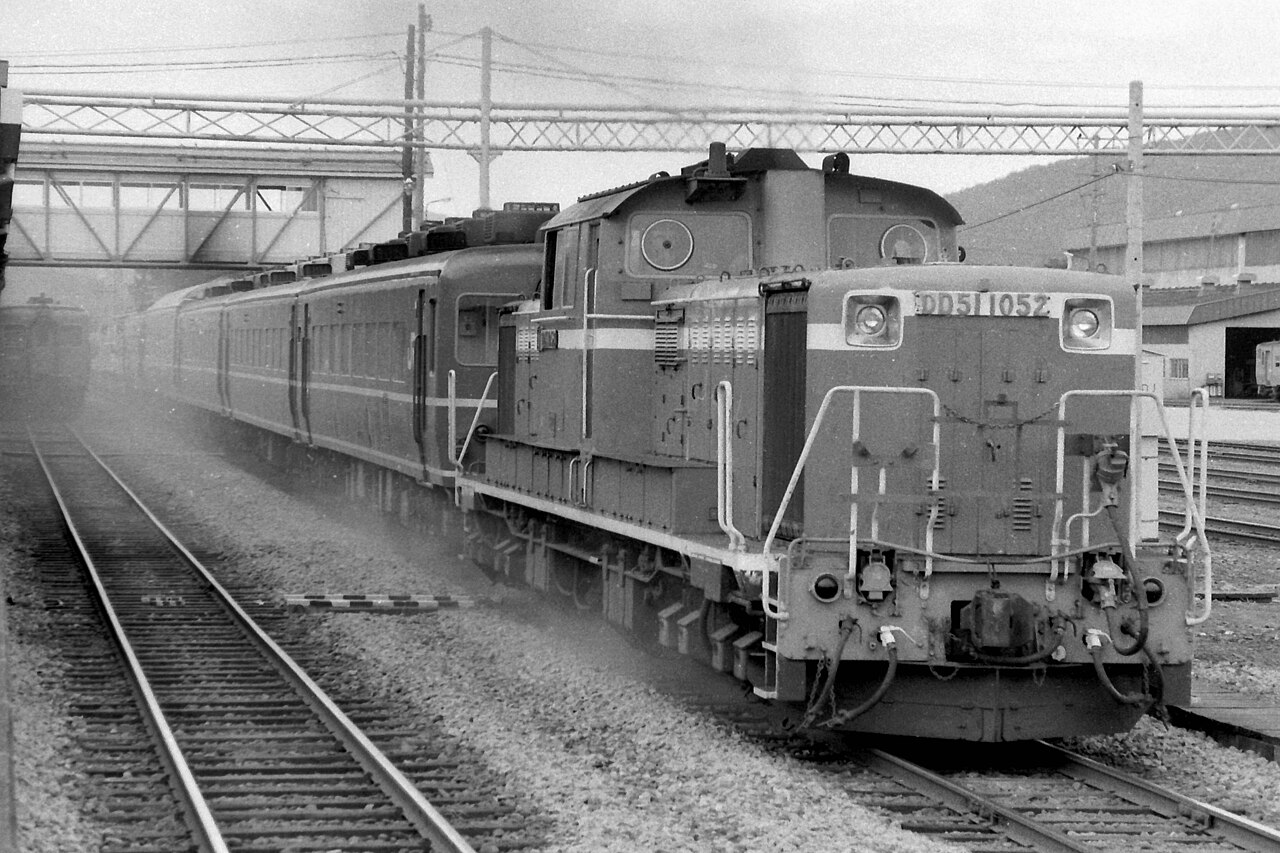
Its three-bogie B-2-B layout — two powered end bogies and an unpowered centre bogie — was adopted in place of the conventional six-axle C-C or A1A-A1A arrangements to reduce lateral forces through curves, and air springs in the centre bogie allowed the powered bogies’ axle load to be switched between 14 and 15 tonnes, suiting both lighter secondary lines and heavier trunk routes. Locomotives numbered DD51 501 to 799 and 1001 to 1186 were equipped to operate in multiple, while those numbered DD51 800 to 899 and 1801 to 1805 were built without steam generators for train heating. The 800 series was originally planned as a separate freight type to be designated “DD52,” but was instead built as a DD51 variant because introducing a new type would have required difficult negotiations with the labour unions.
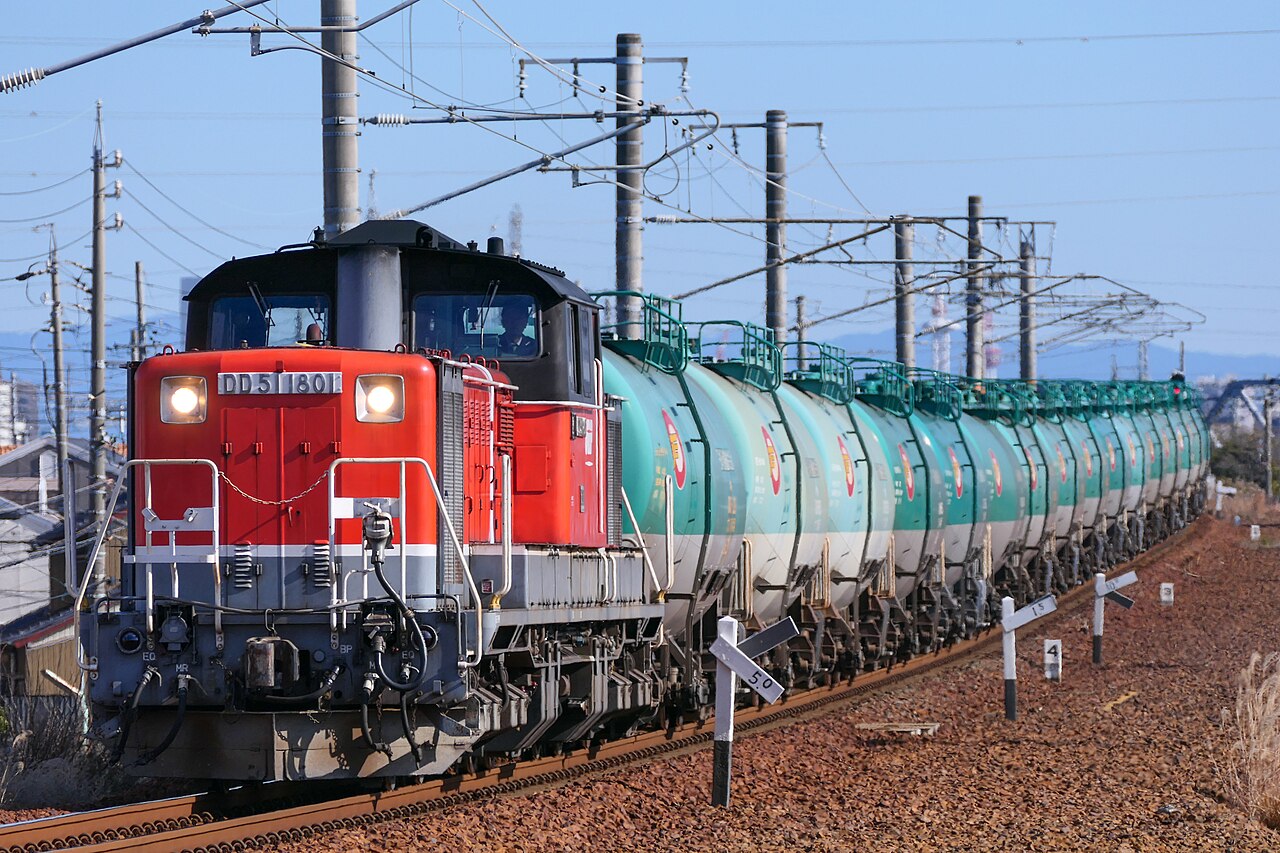
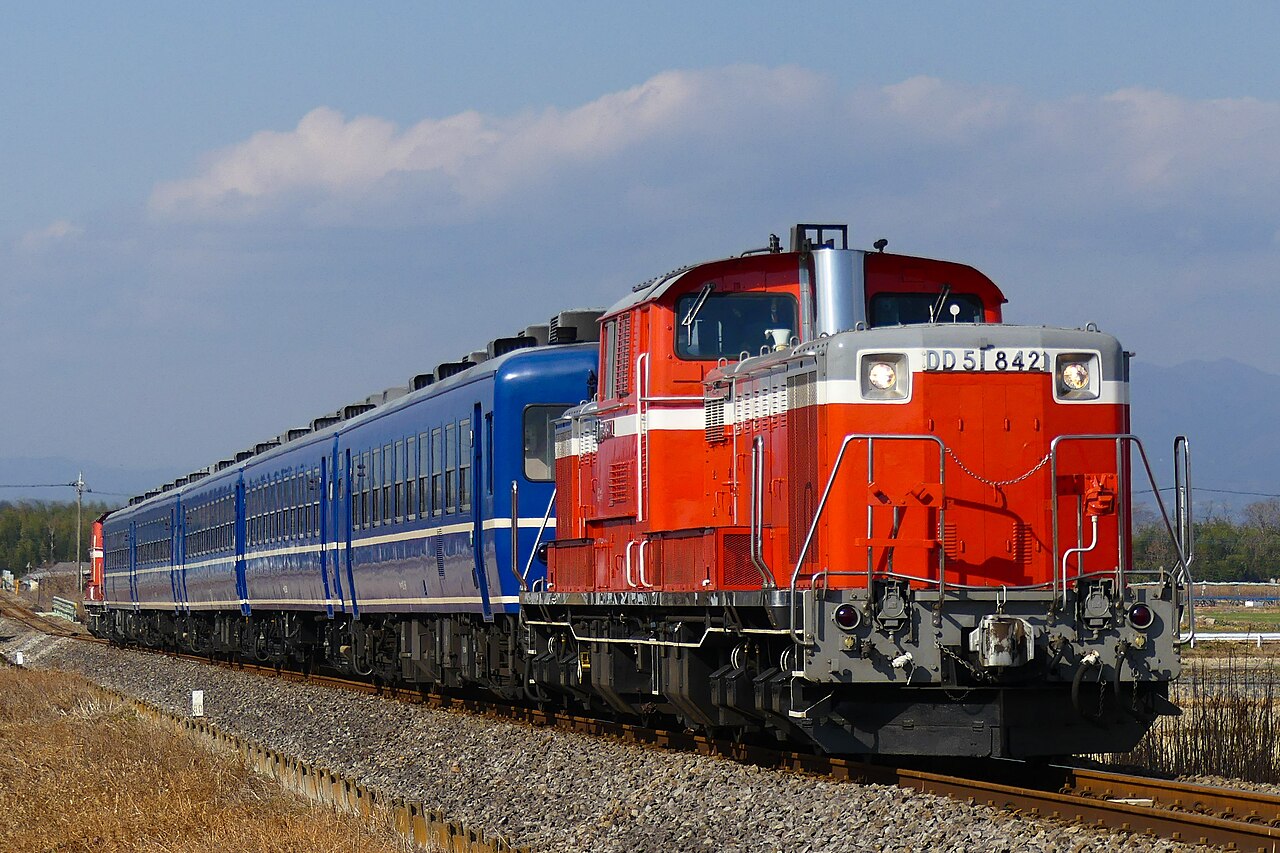
All locomotives from DD51 2 onwards carried the standard diesel livery of orange/red with grey upper surfaces separated by a white stripe; this orange-based scheme became the JNR standard for diesel locomotives. Several distinctive liveries followed: JR Hokkaido sets were finished in the “Hokutosei” livery of blue with a gold stripe and shooting-star logo and were used in pairs to haul the sleeper trains Hokutosei, Cassiopeia, and Twilight Express between Hakodate and Sapporo; DD51 791 wore JR Central’s pale-blue “Euroliner” scheme; and DD51 842, the Imperial Train locomotive based at Takasaki Depot, has polished stainless-steel handrails, running-board edges, and exhaust shrouds. Many JR Freight units underwent life-extension refurbishment, including removal of steam-generator equipment, and were distinguished by a blue livery with grey upper surfaces, a white stripe, and cream end panels.
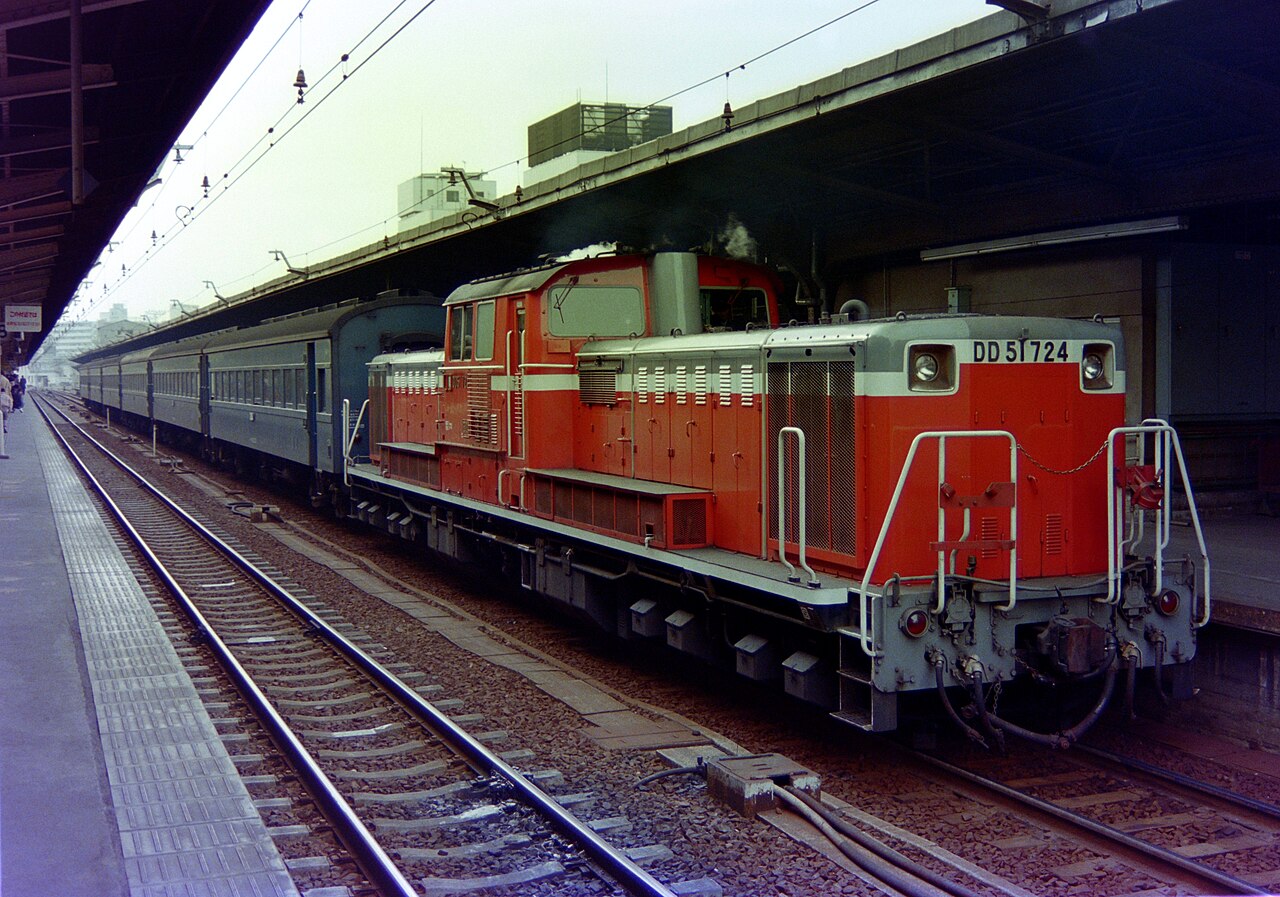
The DD51 also formed the basis for the DD17, DD18, and DD19 self-propelled snow-plough units. As electrification spread and the number of locomotive-hauled passenger and freight trains fell, about 60 percent of the fleet had been withdrawn as surplus by the time of privatisation; the JNR-era roster had in any case peaked at 642 rather than 649, seven units having been written off after a 1976 fire at Oiwake Depot. Following the privatisation of Japanese National Railways on 1 April 1987, JR Hokkaido received 25 locomotives, JR East 29, JR Central 4, JR West 63, JR Kyushu one, and JR Freight 137.
As of 1 April 2016, 29 locomotives remained in operation, including 17 operated by JR Freight, four by JR East, and eight by JR West. A number of Class DD51 locomotives were later shipped overseas: several went to Myanmar Railways from 2004 (re-gauged from 1,067 mm to 1,000 mm with a lowered cab roof), and two former Hokutosei units, DD51 1137 and 1142, were sent to Thailand for use during double-tracking work. The DD51 classification breaks down as D (diesel locomotive), D (four driving axles), and 51 (a locomotive with a maximum speed exceeding 85 km/h).
Timeline
- 1962The first Class DD51 locomotive enters service; the type is built between 1962 and 1978 to replace steam on Japan's non-electrified main lines, with two 1,100 hp V12 engines giving 2,200 hp total — more power than the D51 and a higher top speed than the C62 steam classes.
- 1987On the 1 April privatisation of Japanese National Railways, 259 of the multiple-working units pass to the JR group: 25 to JR Hokkaido, 29 to JR East, 4 to JR Central, 63 to JR West, 1 to JR Kyushu, and 137 to JR Freight.
- 2016As of 1 April, 29 locomotives remain in operation (17 with JR Freight, 4 with JR East, 8 with JR West); JR Hokkaido's DD51 operation ends the same year when the Hokkaido Shinkansen opens to Shin-Hakodate-Hokuto and the Hamanasu express is withdrawn.
- 2021JR Freight ends all DD51 operation on 12 March, the type's last freight duties having been worked from Aichi Depot before replacement by the DF200; the remaining Aichi units are all scrapped by March 2023.
- 2024JR East ends DD51 passenger operation on 24 November; two units (DD51 842 and 895) are retained at Gunma for Imperial Train and special workings, and the EN infobox lists 15 locomotives still in the class as of 1 December 2024.
Sources
Facts last verified 6 June 2026.
Gallery 6 photos
Every photo for this page — tap any image to view it full-size. All from Wikimedia Commons (credit under each).