History
By the early 1990s the early units of the standard DC-section Class EF65 were around 30 years old, and although the 6,000 kW (one-hour rated) Class EF200 had appeared in March 1990 intended to haul 1,600-tonne trains, that 1,600-tonne haulage could not be realised because of capacity limits in the substation power supply; the EF210 was therefore developed as the successor to the EF65 and EF66 and to expand 1,300-tonne container freight on the Tokaido and Sanyo Main Line system. The locomotives are built at the Kawasaki Heavy Industries factory in Kobe, with Mitsubishi Electric also credited as a builder, run on 1,500 V DC overhead supply, and have a one-hour rated power output of 3,390 kW, a tractive effort of 199 kN, a service weight of 100.8 t and a maximum speed of 110 km/h.
Its GTO-thyristor VVVF inverter control of cage three-phase induction motors is the same system as the EF200, but to reduce manufacturing and operating cost the EF210 became the first Japanese domestic locomotive to adopt a 1C2M arrangement, with one inverter controlling two motors. The EF210 was also the first Japanese electric locomotive to adopt the concept of a "30-minute rating", being designed with a 3,540 kW (30-minute) rating in addition to its 3,390 kW one-hour rating, which allows it to work the continuous 10-per-mil grade near Sekigahara on the Tokaido Main Line and to share duties with the Class EF66. The bodywork incorporates measures to pass the extremely narrow tunnels west of the Torigoe Tunnel on the Yosan Line, enabling the type to run through onto the electrified section of Shikoku.
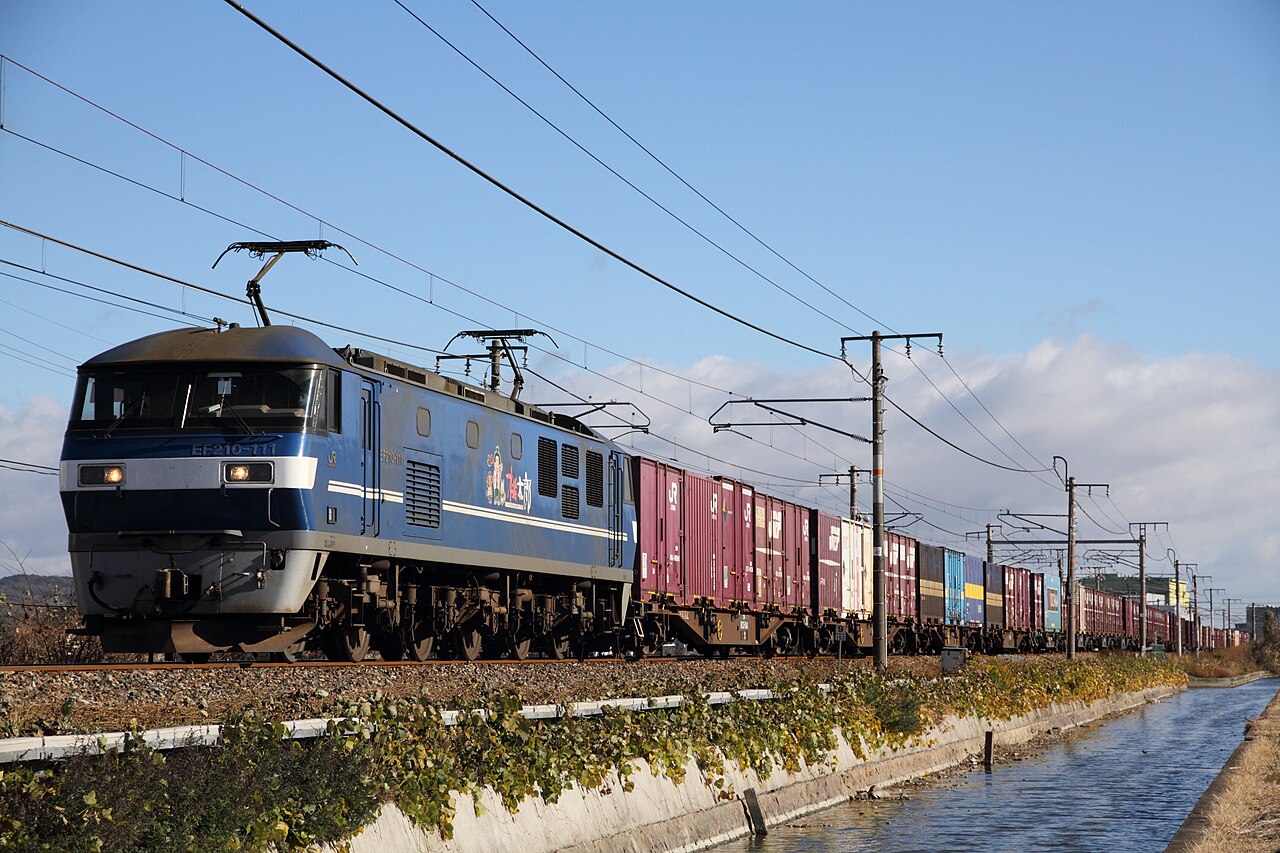
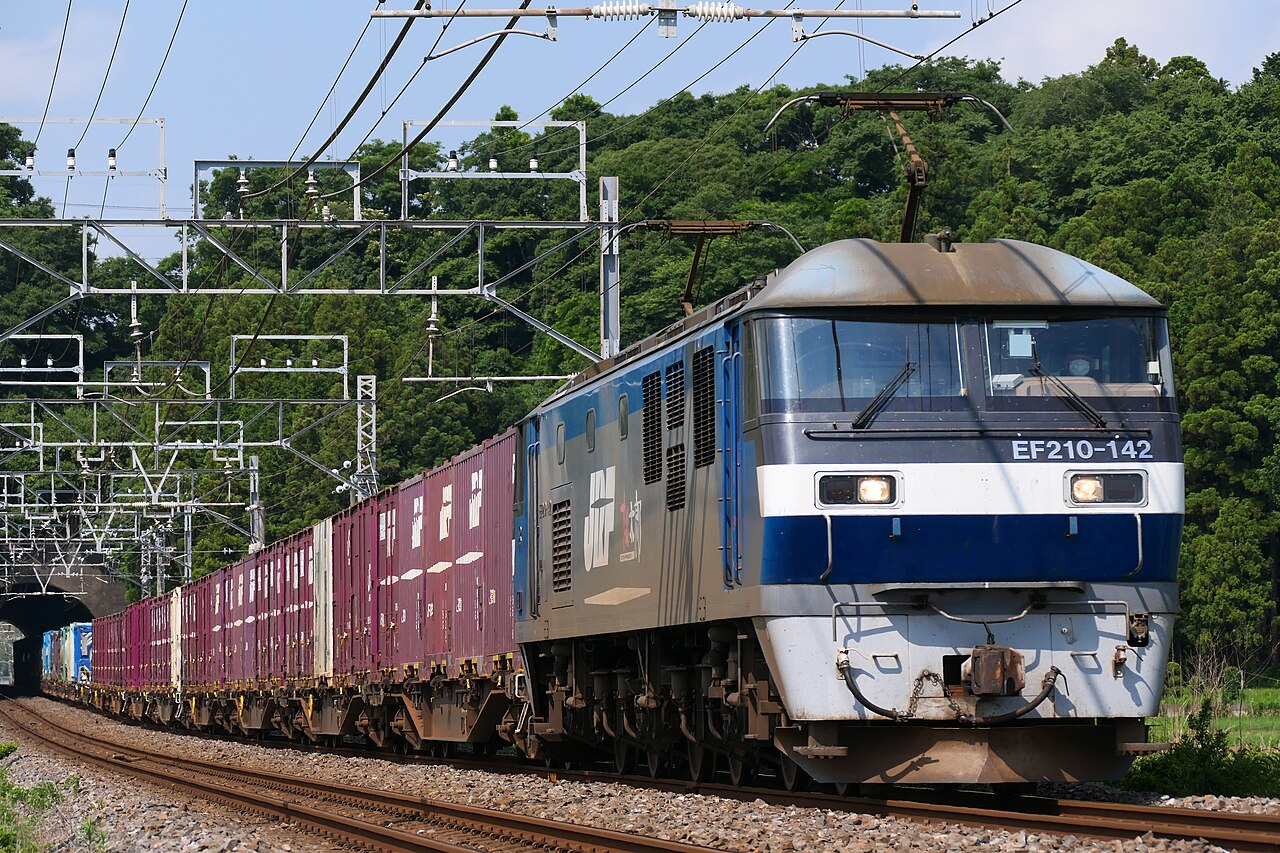
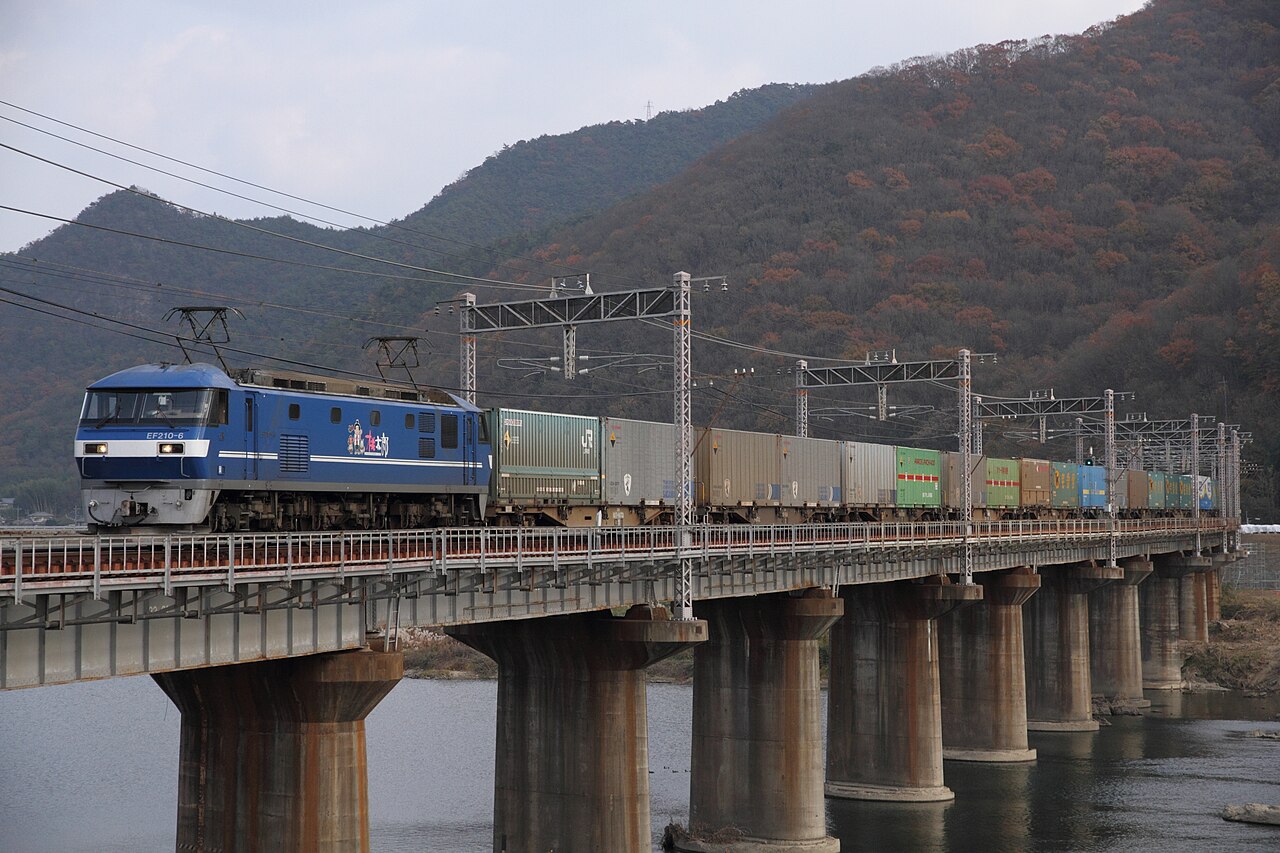
Based at Okayama, Shin-Tsurumi and Suita (Osaka) depots, they are primarily used on freight on the Tokaido Main Line and Sanyo Main Line, replacing Class EF66 locomotives. As of 1 April 2016, 101 EF210s were operated by JR Freight, based at the Shin-Tsurumi (Kawasaki), Suita (Osaka) and Okayama depots. The type comprises four variants: the Class EF210-901 prototype, the Class EF210-0 full-production version, the Class EF210-100, and the Class EF210-300.
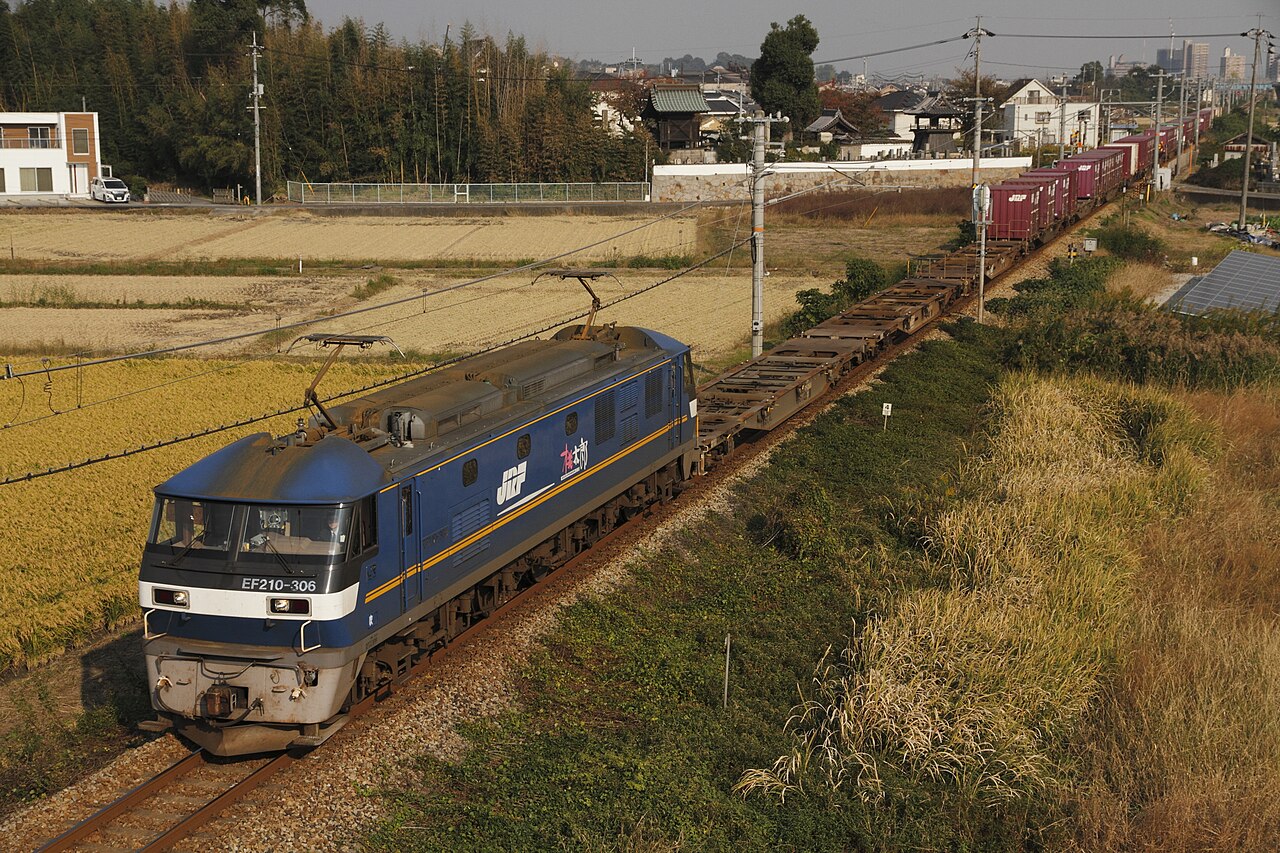
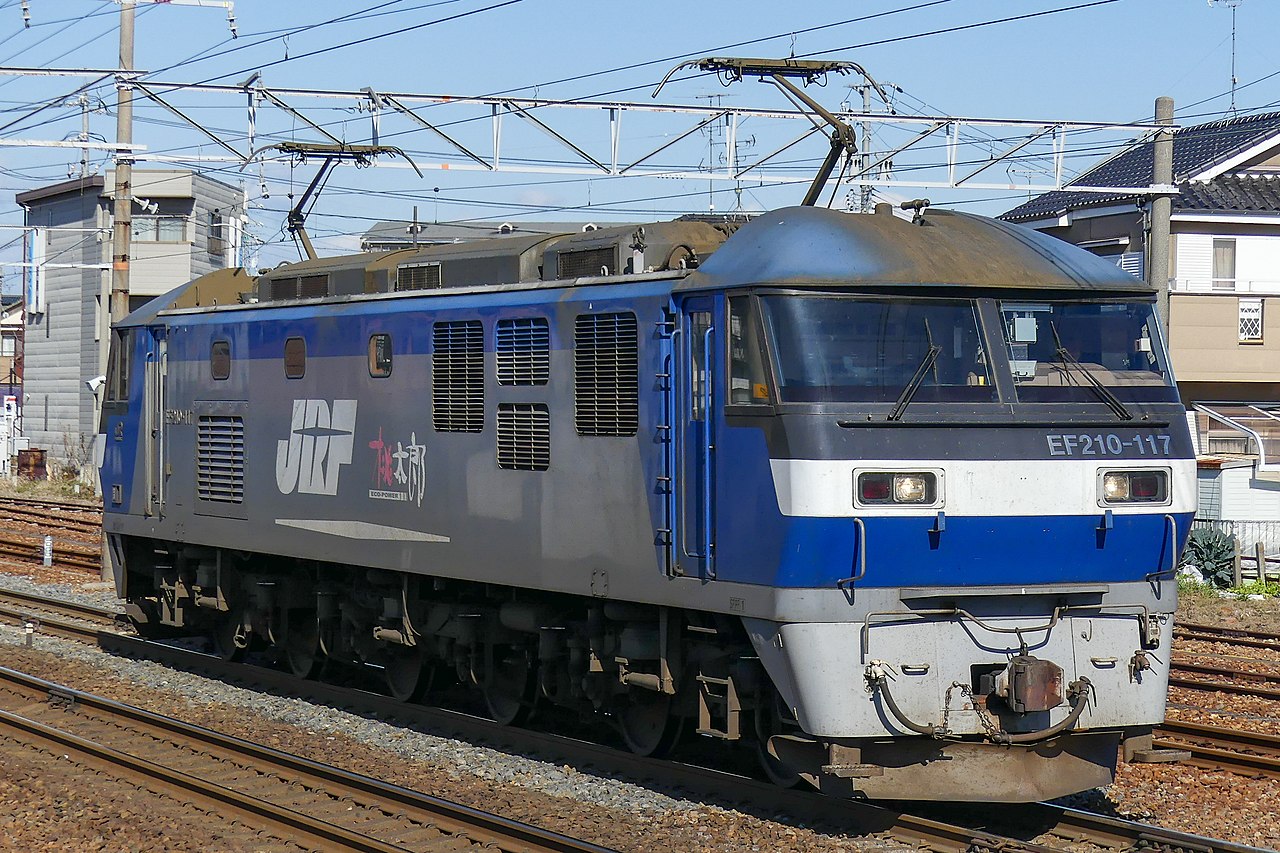
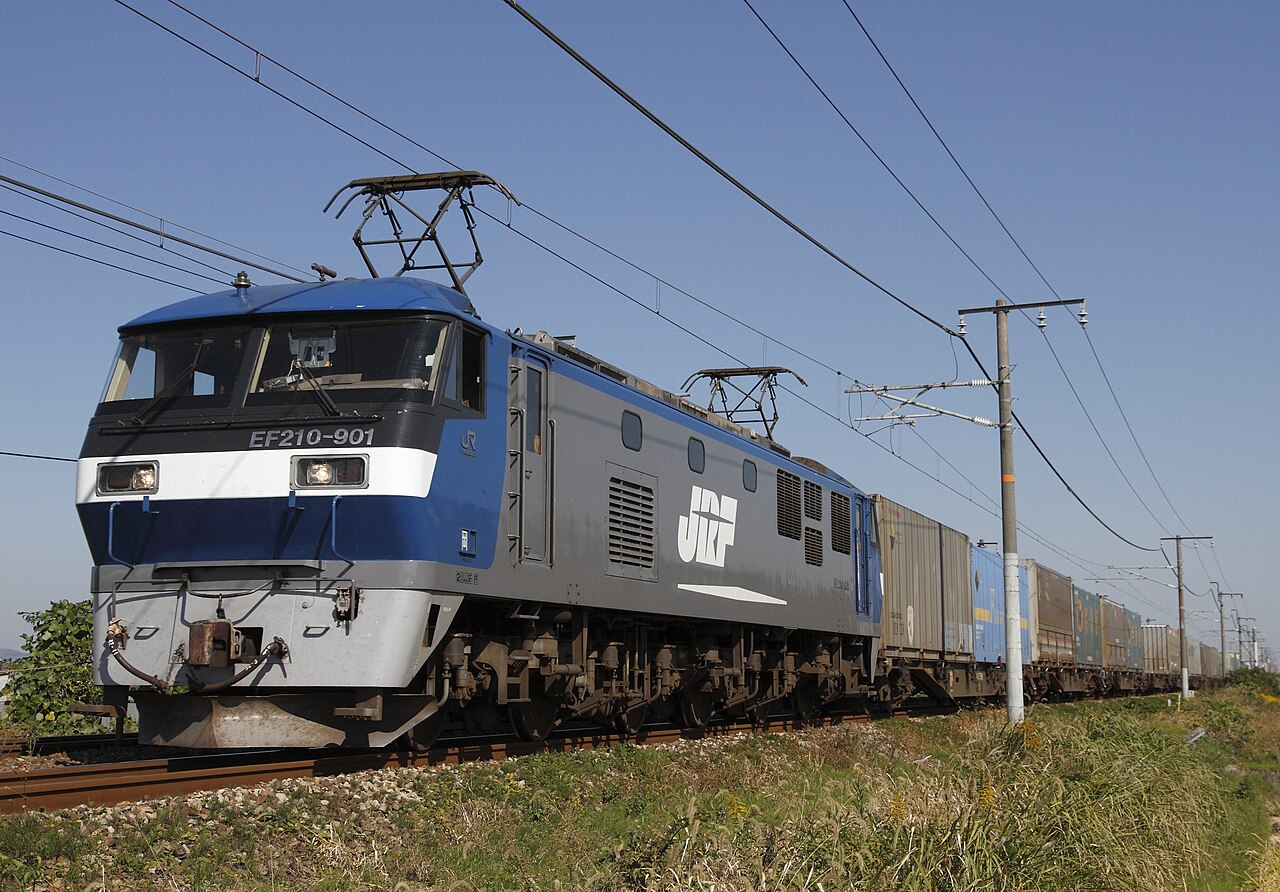
The pre-production prototype, EF210-901, was delivered to Shin-Tsurumi depot in 1996. It was new-allocated to Shin-Tsurumi for various trials, transferred to Okayama Depot in August 1997, and entered revenue service on 5 December 1997; in March 2005 it was reworked to production standard, receiving the production FMT4 traction motors and the production gear ratio. Following evaluation of the prototype, the first full-production locomotive, EF210-1, was delivered to Okayama in July 1998; minor improvements included a change of traction motors from FMT3 (565 kW) to FMT4 type (565 kW), an "ECO-POWER Momo Taro" logo on the bodyside, and a reduction in bogie size from 2,600 mm to 2,500 mm. All 18 of the EF210-0s are allocated to Okayama Depot.
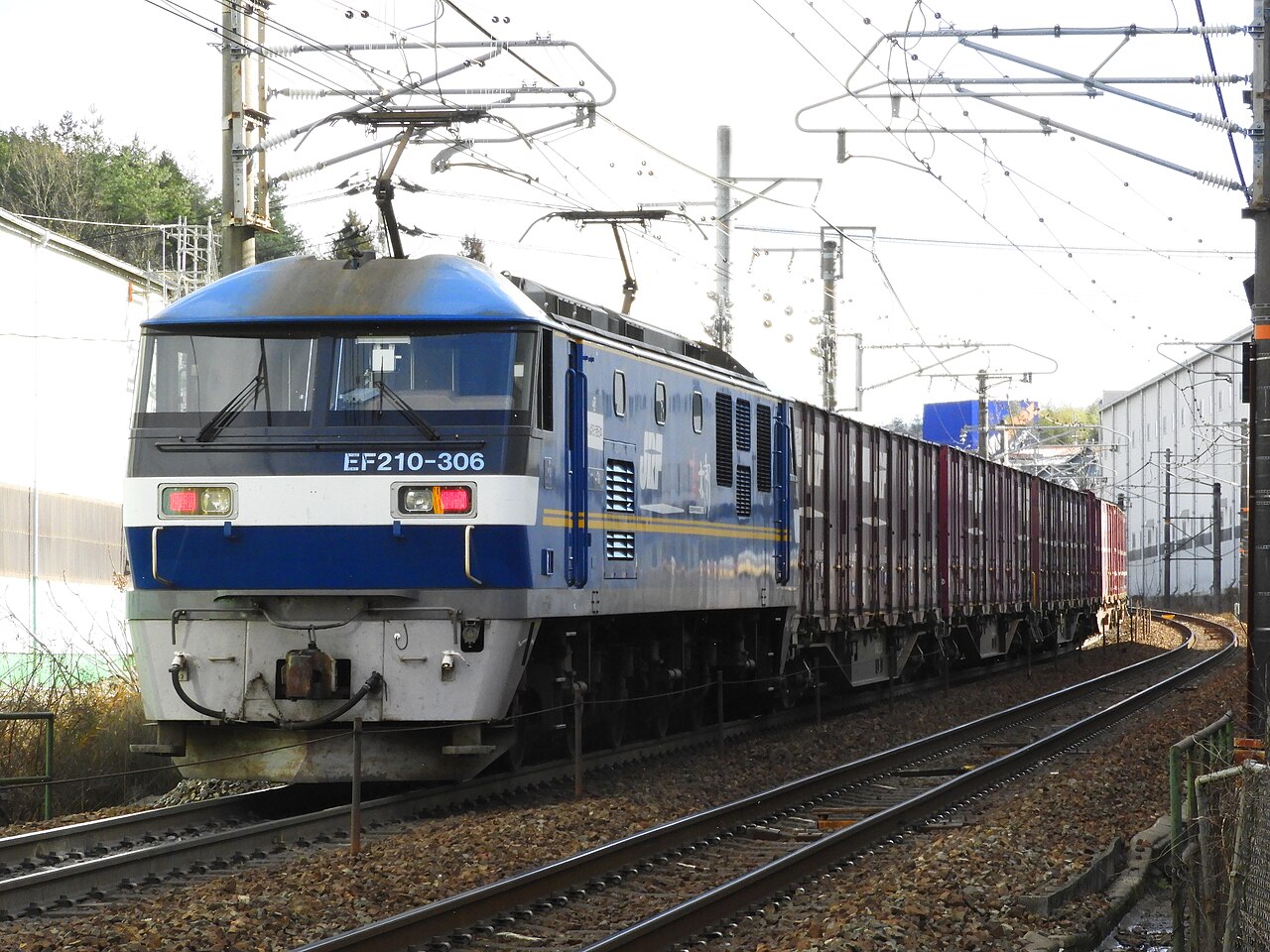
The EF210-100 sub-class incorporates minor improvements including the use of single-arm pantographs and IGBT replacing GTO; 73 locomotives were in operation as of 1 April 2016, based at Okayama, Shin-Tsurumi and Suita (Osaka) depots. The EF210-300 subclass was introduced from March 2013 to replace the dedicated Class EF67 banking locomotives that assist freight trains on the steeply-graded "Senohachi" section of the Sanyo Main Line between Seno and Hachihonmatsu. The first locomotive, EF210-301, was delivered from Kawasaki Heavy Industries in Hyogo on 3 September 2012 and entered service from the start of the revised timetable on 16 March 2013; the second locomotive entered service from 28 April 2013.
The EF210-300s are painted in an overall-blue livery with yellow lining. From fiscal 2015 the EF210-300 began to be allocated to Suita Depot, replacing the markedly ageing Class EF66 base series and the Class EF200; from the March 2020 timetable revision regular workings were also set east of Suita on the Tokaido Main Line, and the type now operates over a range extending from Yamaguchi and Shikoku to northern Kanto and Chiba, handling the majority of freight trains on DC-electrified sections. In the EF210 classification, "E" denotes an electric locomotive, "F" six driving axles, and "210" a DC locomotive with AC motors.
Timeline
- 1996The pre-production prototype, EF210-901, is delivered to Shin-Tsurumi depot, having been built by Mitsubishi Electric and Kawasaki Heavy Industries in March 1996, and used for evaluation; the EF210 type is the first JR locomotive given a nickname, named "ECO-POWER Momotaro" by public competition.
- 1998The first full-production locomotive, EF210-1, is delivered to Okayama in July 1998 as the EF210-0 variant, with FMT4 traction motors, the "ECO-POWER Momo Taro" bodyside logo and a 2,500 mm bogie; full-production revenue service begins on 2 August 1998.
- 2000The EF210-100 sub-class enters production from March 2000, with revenue service beginning on 10 April 2000, adopting single-arm pantographs and IGBT devices in place of GTO with 1C1M control.
- 2013The EF210-300 subclass enters service from the 16 March 2013 timetable revision to replace Class EF67 banking locomotives on the steeply-graded "Senohachi" section of the Sanyo Main Line between Seno and Hachihonmatsu; first unit EF210-301 had been delivered from Kawasaki Heavy Industries in Hyogo on 3 September 2012, and the second locomotive entered service from 28 April 2013.
Sources
Facts last verified 6 June 2026.
Gallery 6 photos
Every photo for this page — tap any image to view it full-size. All from Wikimedia Commons (credit under each).