History
JNR had developed "10000 series" freight wagons capable of 100 km/h and introduced express freight on the Tōkaidō and Sanyō Main Lines from October 1966 using Class EF65-500 locomotives; because pairs of EF65-500s drew excessive current and 1,000-tonne trains had to be split on the Sanyo Main Line, a new locomotive able to haul 1,000-tonne trains singly was required. An eight-axle "H-class" arrangement was initially considered, but once high-output traction motors looked practical the design proceeded as a six-axle "F-class" machine.
A prototype, initially classified EF90 and numbered EF90 1, was built by Kawasaki Sharyo in 1966; with a total power output of 3.9 MW it was the world's most powerful narrow-gauge locomotive at the time. From November 1966 it entered service hauling the "Tobiuo" and "Ginrin" express fresh-fish freight trains formed of Resa 10000-series refrigerated wagons, and the results of that service informed the production design. It was later incorporated into the class and renumbered EF66 901.
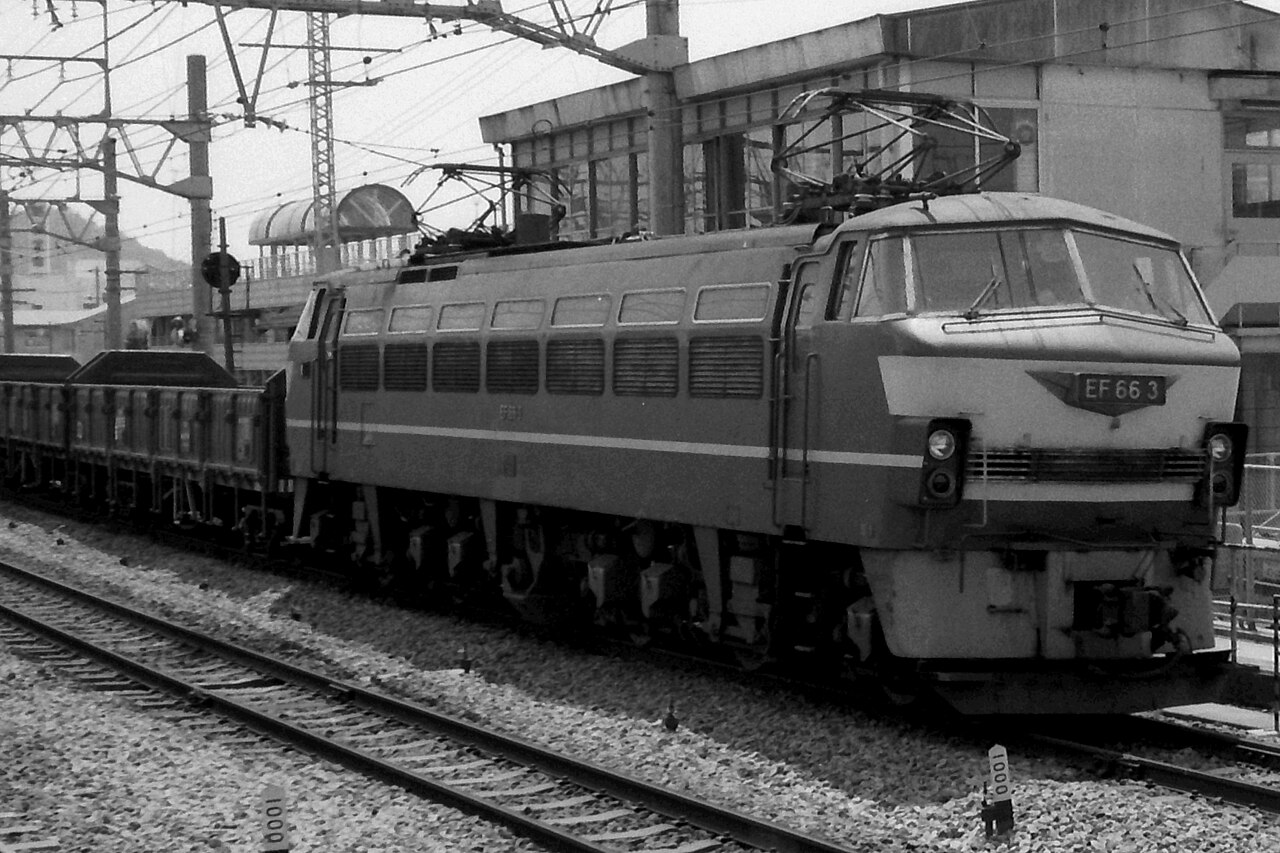
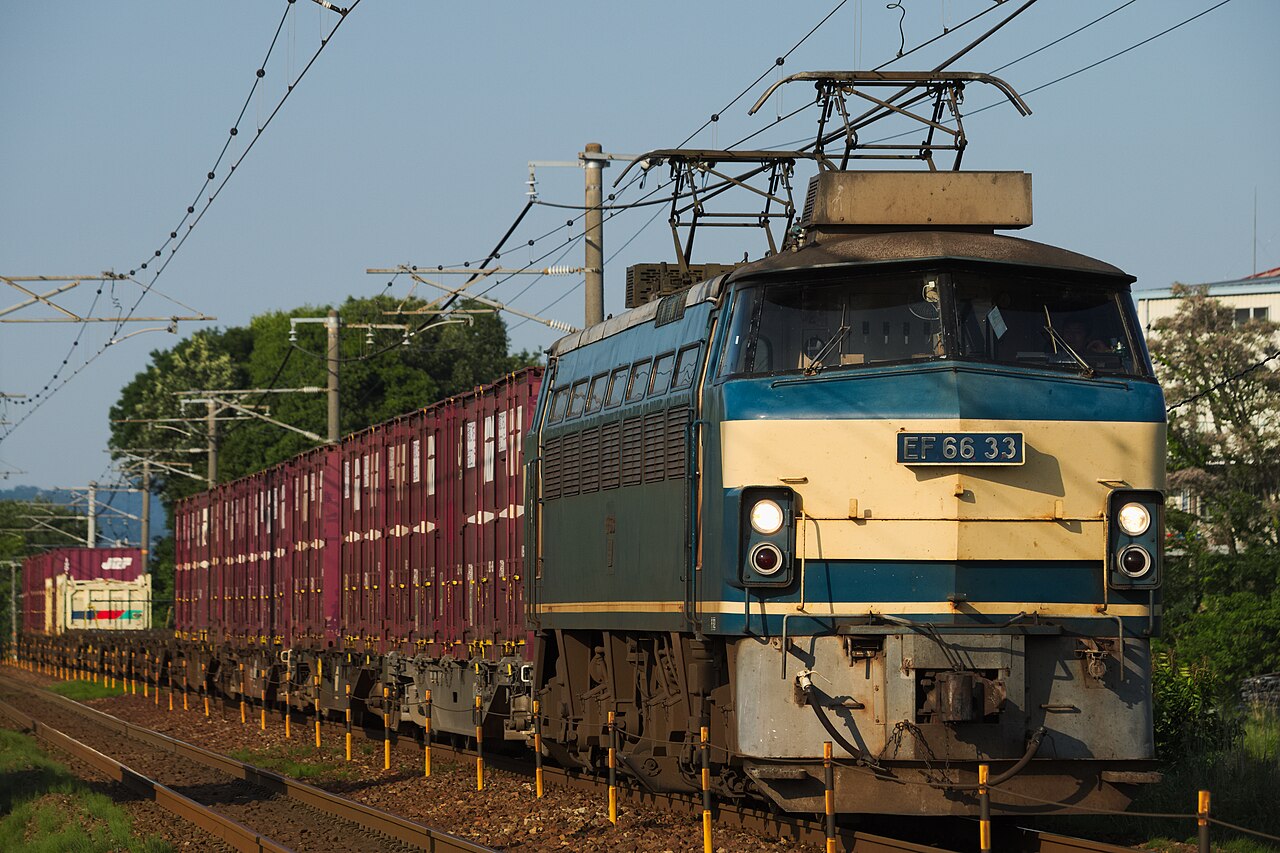
The production series followed from 1968, with 55 EF66-0 locomotives (EF66 1–55) built in two batches between 1968 and 1975; the second batch (EF66 21–55, 1973–1975) added "sun visor" cab roofs extended over the windscreens to reduce abrasion dust from the pantographs, a feature later retrofitted to some first-batch units. Each traction motor produced 650 kW, about 50% more powerful than the Class EF65, and the locomotives were designed to haul 1,000-tonne trains at 100 km/h; the dedicated MT56 traction motor was originally designed by Mitsubishi Electric to meet that goal.
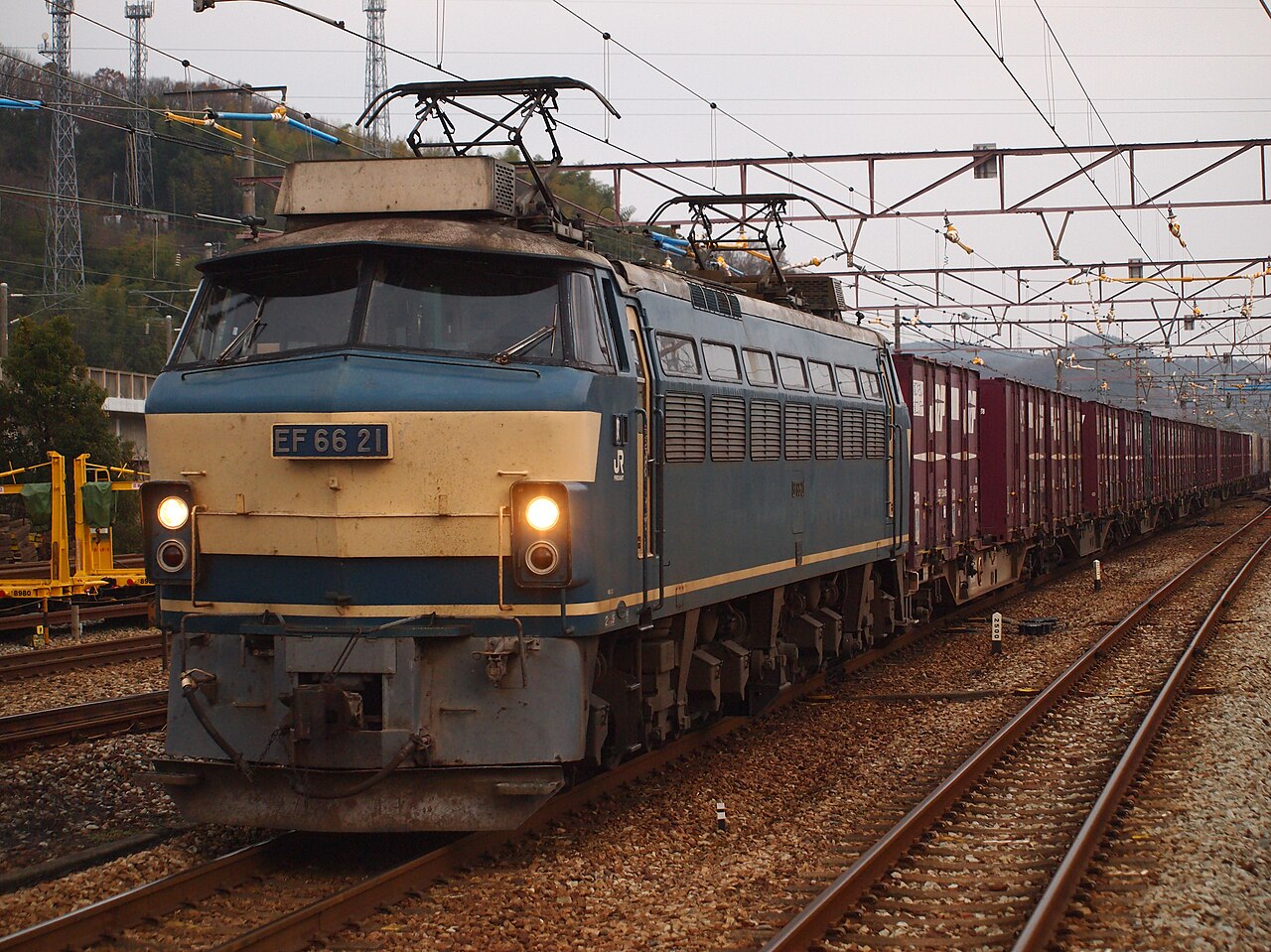
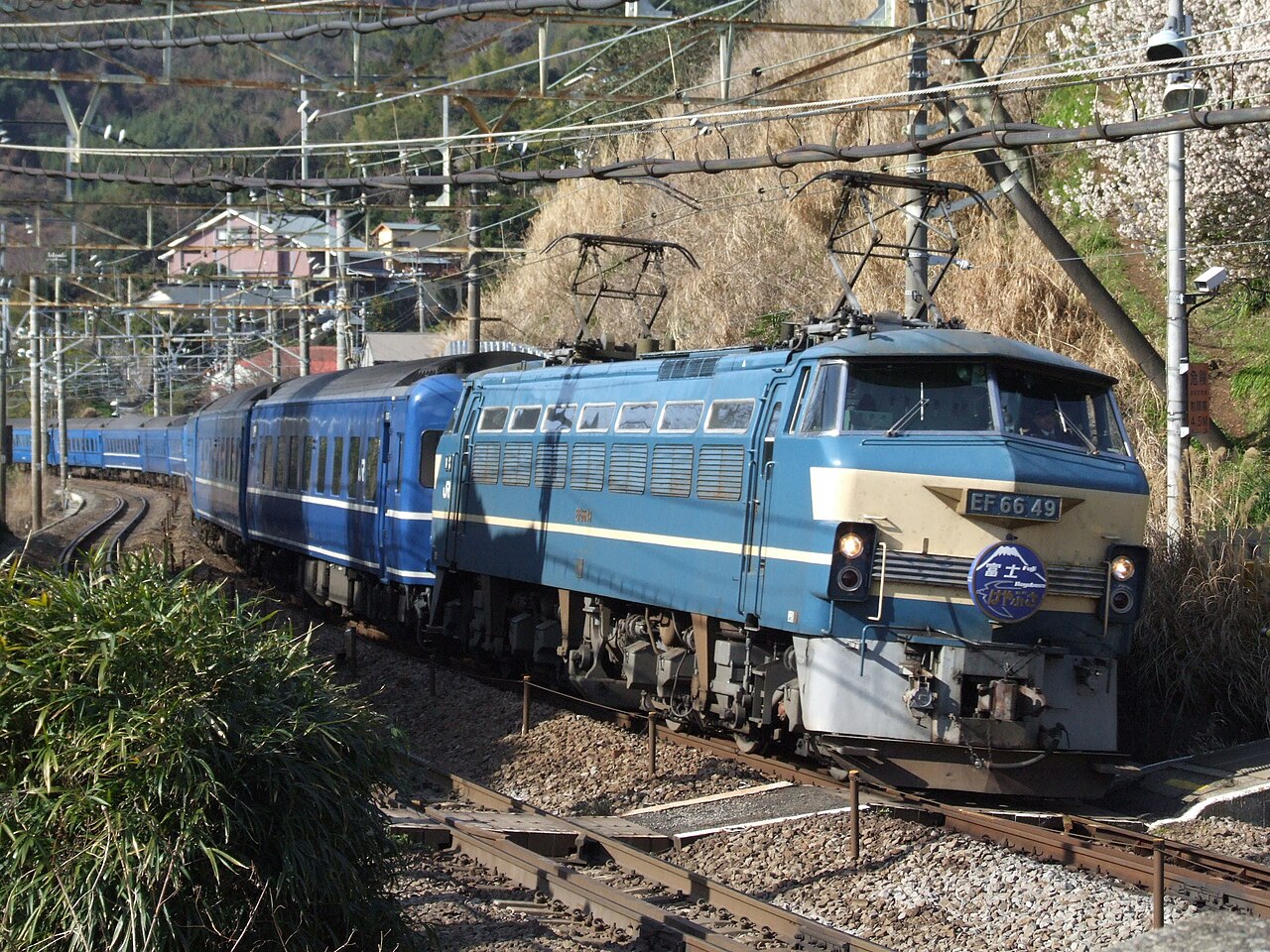
To keep unsprung weight down with such a high-speed motor, the type used a newly developed QD10 hollow-shaft flexible quill drive—similar to that of the West German DB Class 103 of the era and the first and only such installation on a JNR electric locomotive. It was also the first Japanese electric locomotive to use an armature-voltage-comparison method for wheelslip detection. During the JNR era the class worked freight and also passenger trains, primarily hauling night sleeping-car limited expresses such as the Hayabusa.
Following the privatisation of JNR on 1 April 1987, JR Freight received the prototype (EF66 901) and 39 of the original series (EF66 1–39), while JR West obtained the remainder (EF66 40–55), a total of 16. Due to increased container demand, JR Freight built a further 33 locomotives from 1989, classified EF66-100 (EF66 101–133), fundamentally the same design but with more modern, air-conditioned cabs. These were a stopgap measure to cover the tightening freight situation until a new locomotive type then under development could be introduced. Locomotive number 101, completed in February 1989, was the first newly built locomotive for JNR or its JR successors in six years and four months. The angular lights and blue-and-white livery of the EF66-100 earned it the fan nickname "Same" (shark).
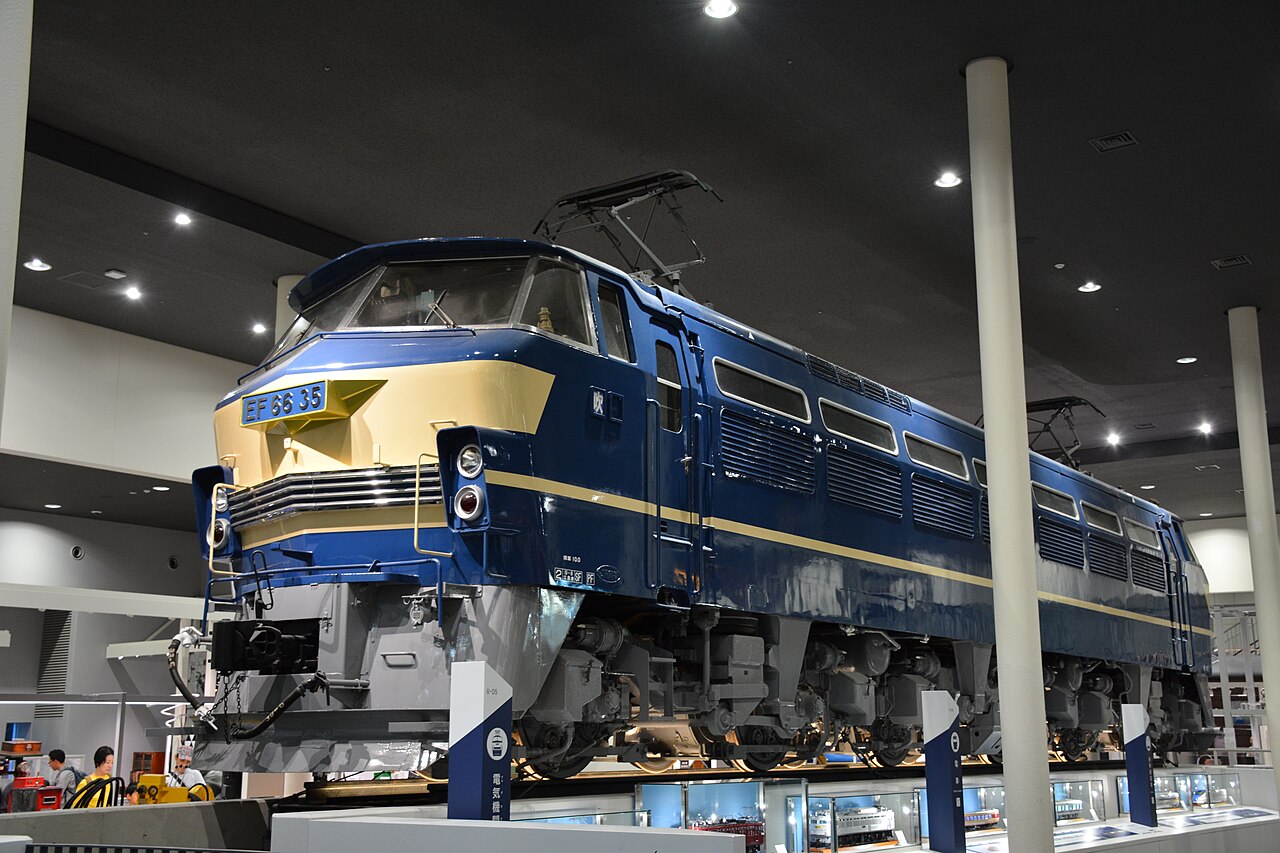
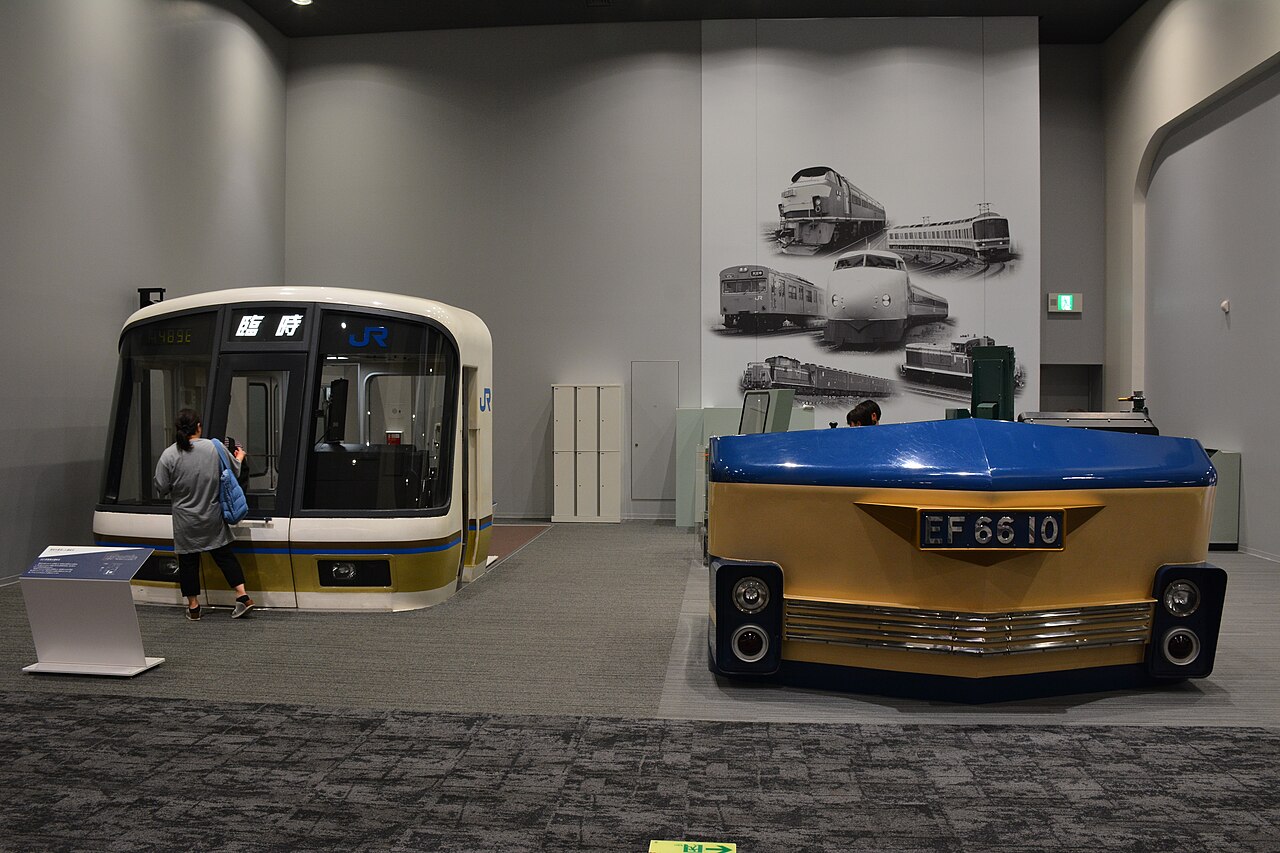
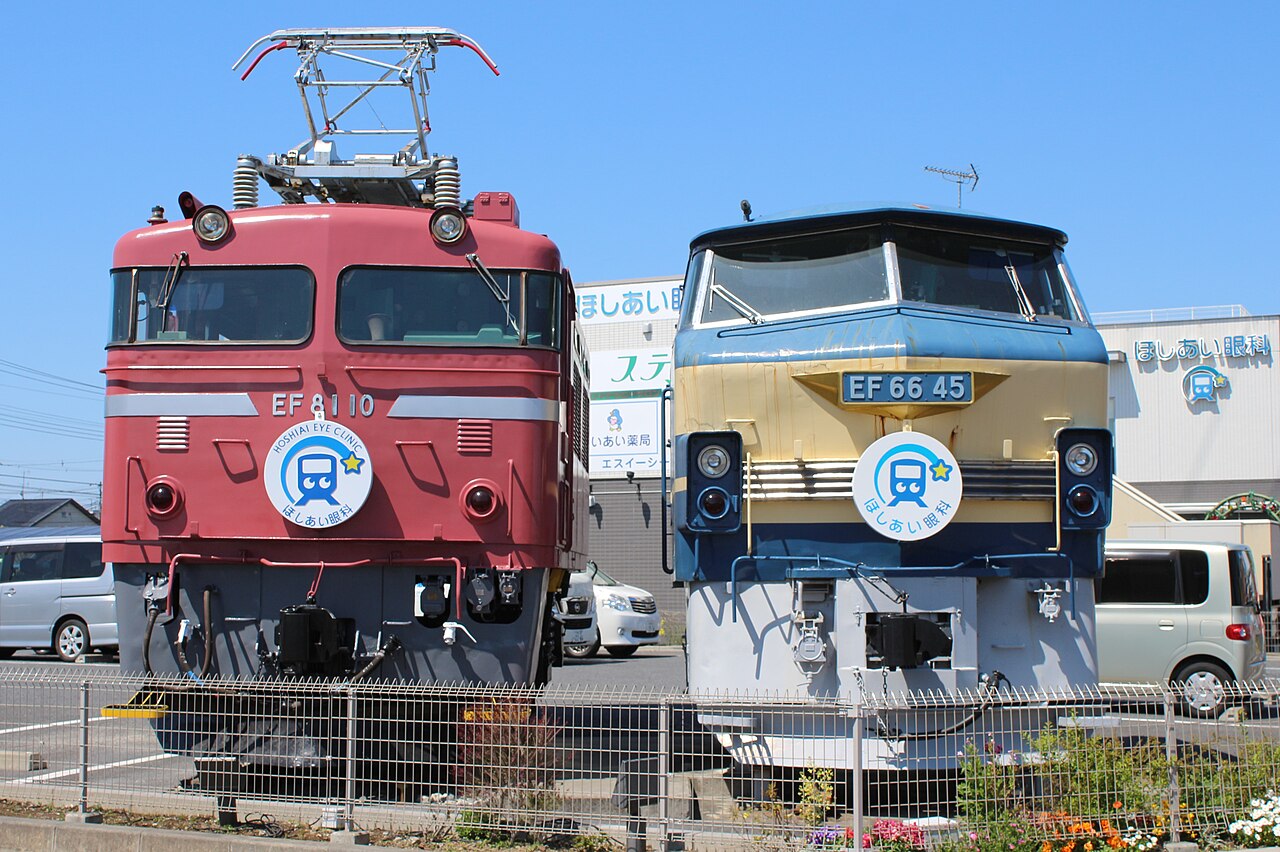
From 1993 JR Freight refurbished much of its EF66-0 fleet, rewinding traction-motor coils and repainting into a two-tone blue livery. By 1 April 2009, 73 EF66s (including all 33 EF66-100s) were in service, 63 owned by JR Freight and 10 by JR West. The Class EF66 won the 12th Blue Ribbon Award in 1969. The RENFE Class 251, operated in Spain, was based on the EF66. Preserved examples include EF66 11 at The Railway Museum in Saitama and EF66 35 at the Kyoto Railway Museum.
Timeline
- 1966A prototype locomotive, initially classified EF90 and numbered EF90 1, is built by Kawasaki Sharyo in September; with a total power output of 3.9 MW it is the world's most powerful narrow-gauge locomotive at the time. It is later renumbered EF66 901.
- 1968Production of the EF66-0 series begins; 55 locomotives (EF66 1–55) are built in two batches through 1975, each traction motor producing 650 kW (about 50% more powerful than the Class EF65).
- 1985From the March timetable revision the class begins hauling sleeping-car limited expresses (Blue Trains) such as the "Hayabusa" and "Fuji" between Tokyo and Shimonoseki, in addition to its freight duties.
- 1987On the privatisation of JNR (1 April), JR Freight receives the prototype (EF66 901) and EF66 1–39 (40 locomotives) and JR West receives EF66 40–55 (16 locomotives).
- 1989JR Freight begins building the EF66-100 sub-class (EF66 101–133), 33 locomotives delivered through 1991 with more modern, air-conditioned cabs, to meet rising container demand.
- 2010JR West's last EF66s are withdrawn (struck off on 20 September), ending operation of the class by that company.
- 2022The last operational EF66-0, EF66 27 (nicknamed "Niina"), leaves scheduled service with the March timetable revision; its registration remained as of 2025.
- 2026Scheduled operation of the EF66-100 sub-class ends with the March timetable revision, as the class is displaced by the Class EF210.
Sources
Facts last verified 6 June 2026.
Gallery 6 photos
Every photo for this page — tap any image to view it full-size. All from Wikimedia Commons (credit under each).