History
None were newly built: all eight units were converted at JR Freight's Hiroshima Depot (formerly Hiroshima Works) from existing locomotives, and the class was subdivided into three EF67-0 units converted from former Class EF60 locomotives and five EF67-100 units converted from former Class EF65 locomotives. The conversion of each unit cost approximately ¥100 million. The locomotives had a UIC wheel arrangement of Bo′Bo′Bo′ (Bo-Bo-Bo), ran on 1,067 mm gauge track collecting 1,500 V DC from overhead line via pantograph, weighed 99.6 t, and had a maximum speed of 100 km/h and a continuous output of 2.85 MW.
So that a single EF67 could perform banking duty on 1,200-tonne trains that had previously required two EF59 working in multiple, the class used armature-chopper control (supplied by Toyo Denki) with a one-controller-per-motor (1C1M) arrangement, adopted to secure adhesion. It retained the six MT52 traction motors of the donor locomotives, but under chopper control the motors were connected in permanent parallel, raising each motor's output by 50 kW to 475 kW. The locomotives were also fitted with regenerative braking to avoid the tyre loosening caused by sustained air-brake use, regeneration being used only on the return light-engine run.
The three EF67-0 units were built from former 4th-batch Class EF60 locomotives from 1982 to bank freight trains of over 1,000 tonnes, a task for which the earlier EF61-200 banking locomotives were unsuitable; the No. 1 end was modified with a gangway door and access platform, and the units were painted in an all-over orange livery (officially “Red No. 11”) with yellow strips below the cab windows. Red No. 11 was the colour used on KiHa 58-series express diesel cars and evoked the Japanese maple (momiji), the prefectural flower of Hiroshima; it was a non-standard choice for a DC locomotive, adopted because the class was confined to the Seno–Hachihonmatsu section (with no transfer elsewhere) and at the local railway division’s request. They were fitted with an automatic uncoupling mechanism at the No. 1 end so the bankers could be uncoupled on the fly, but uncoupling while in motion was discontinued from the start of the 22 March 2002 timetable revision.
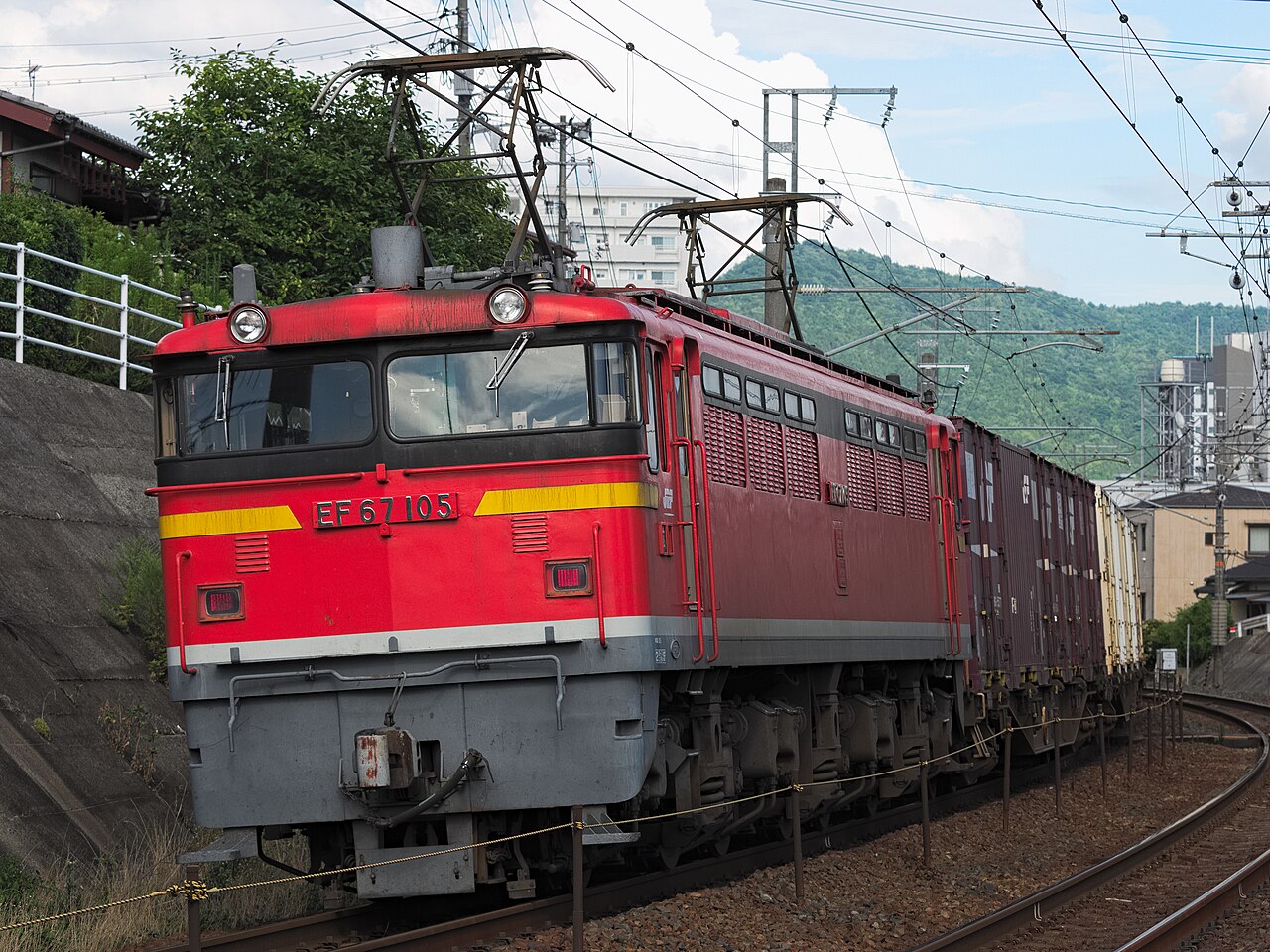
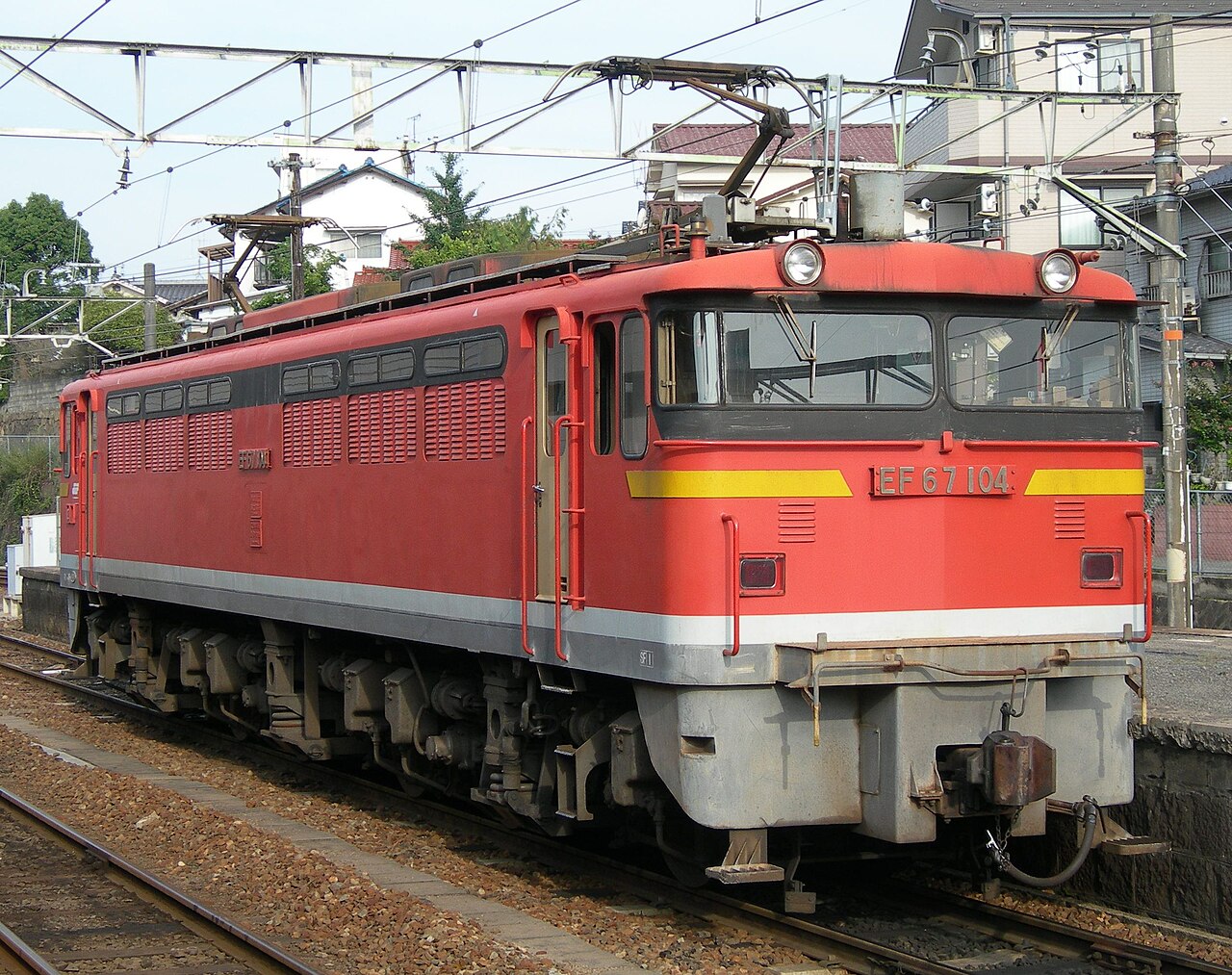
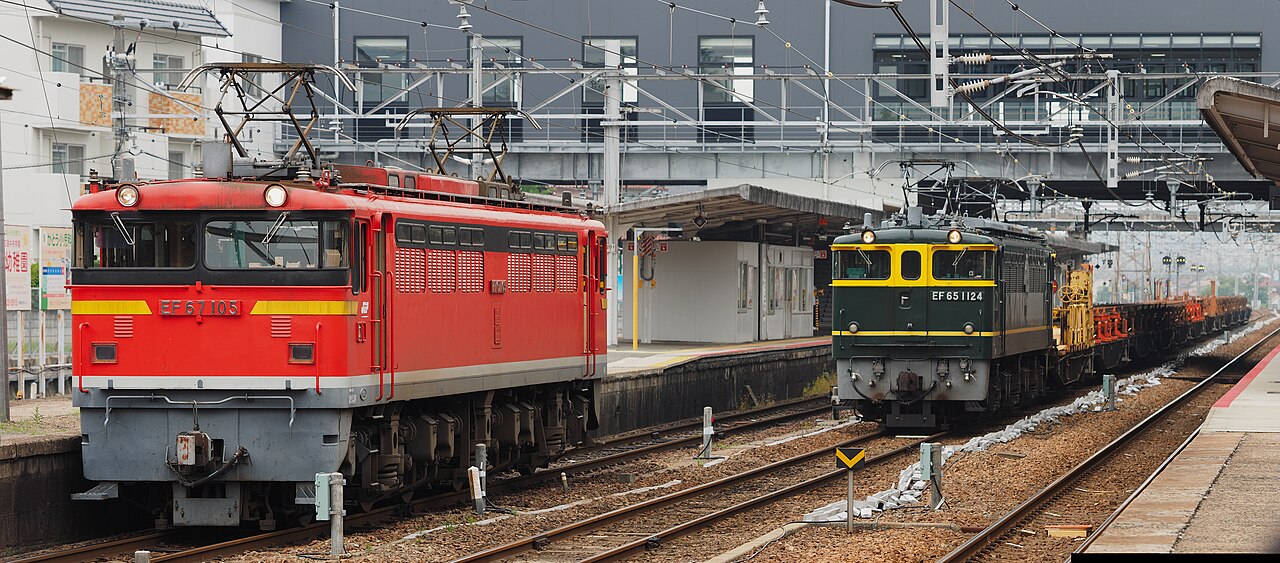
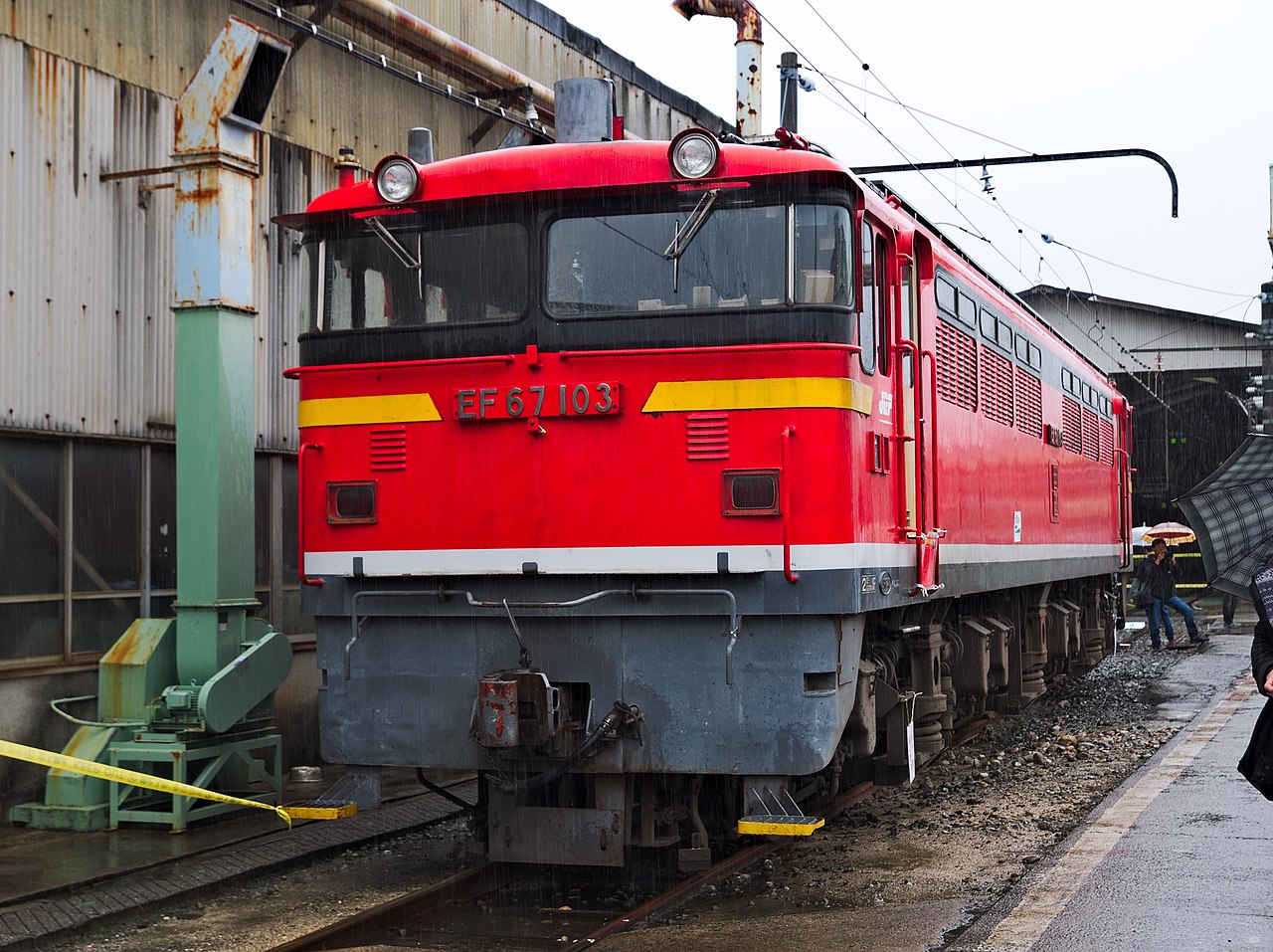
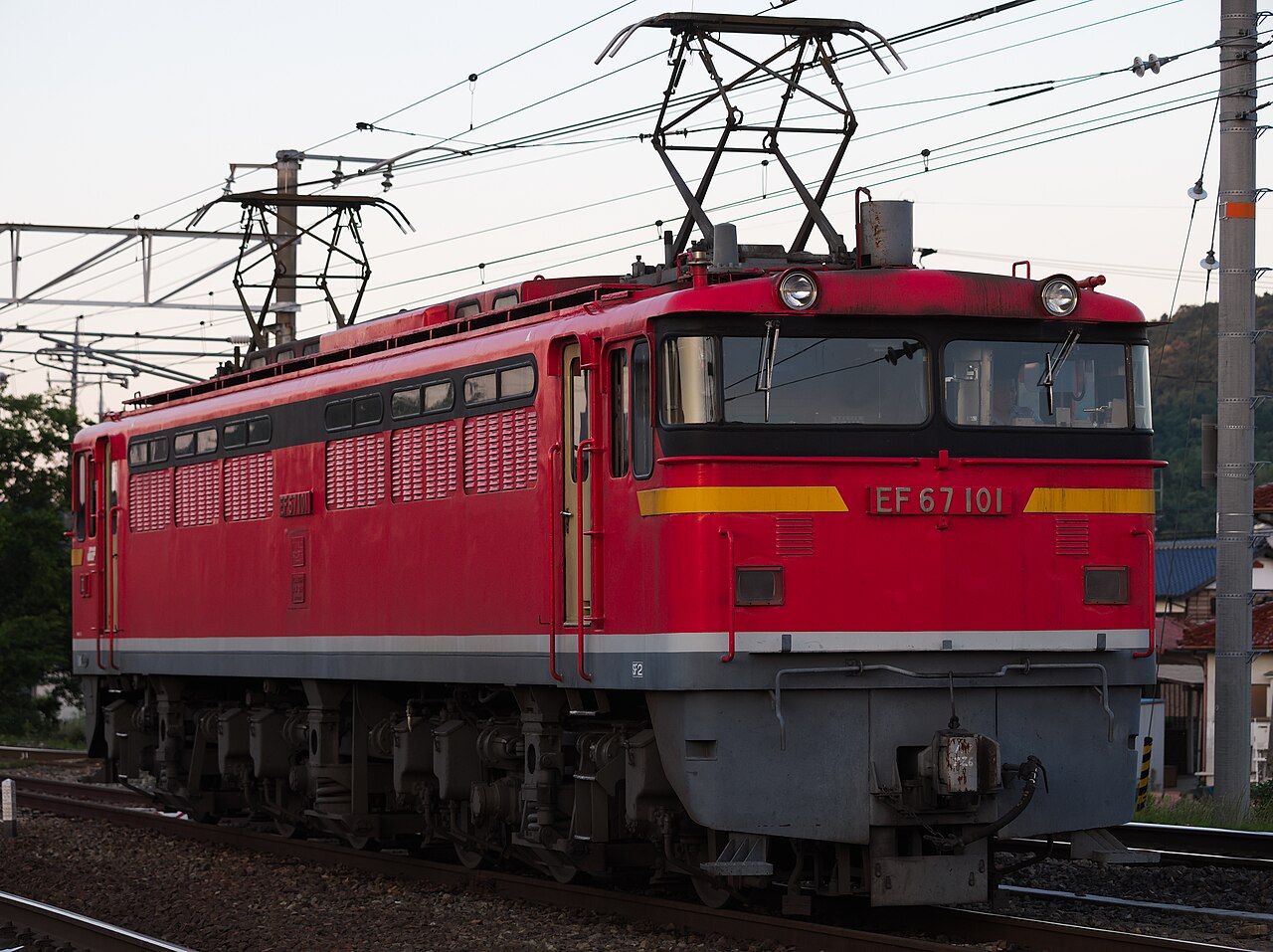
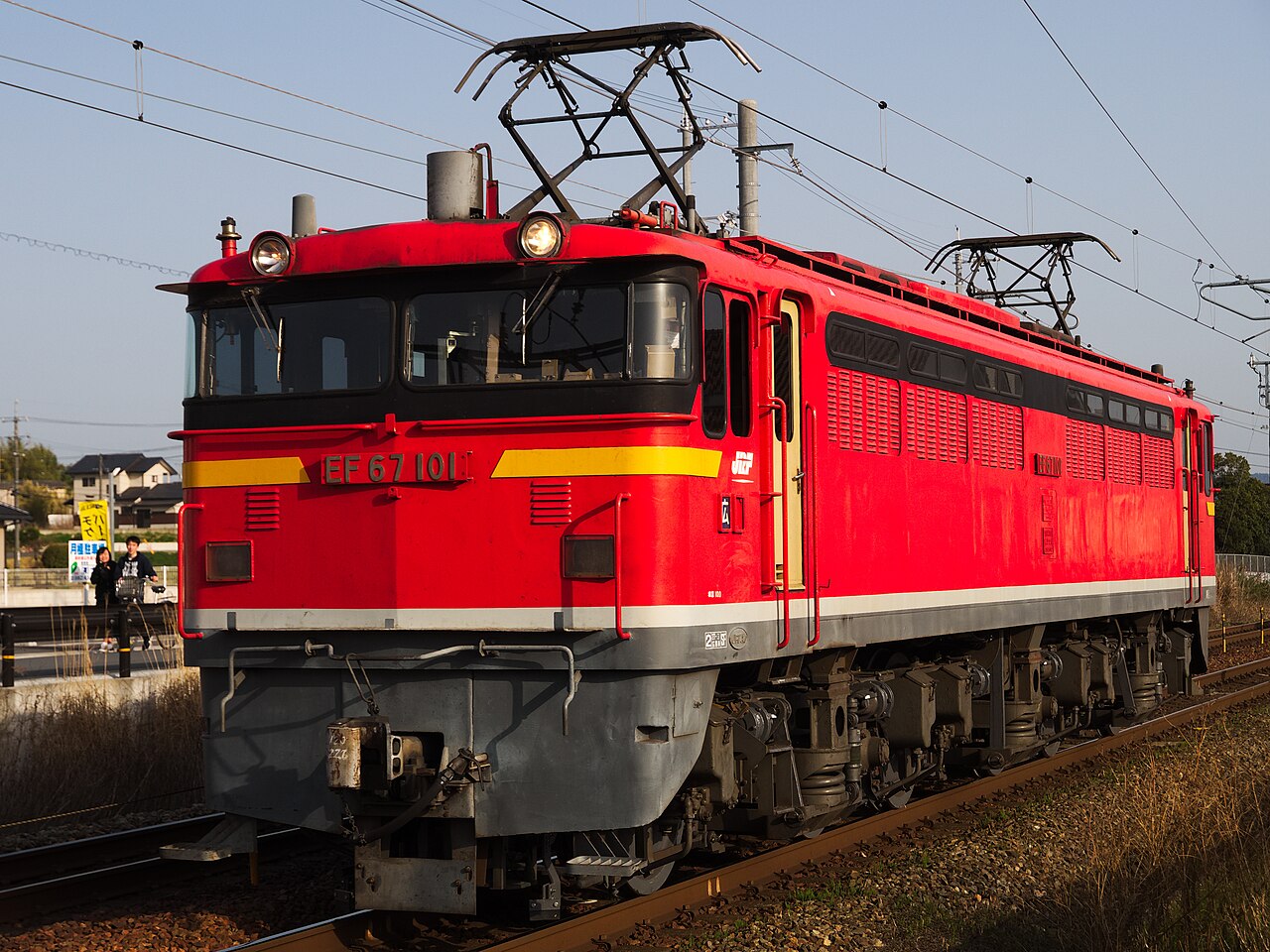
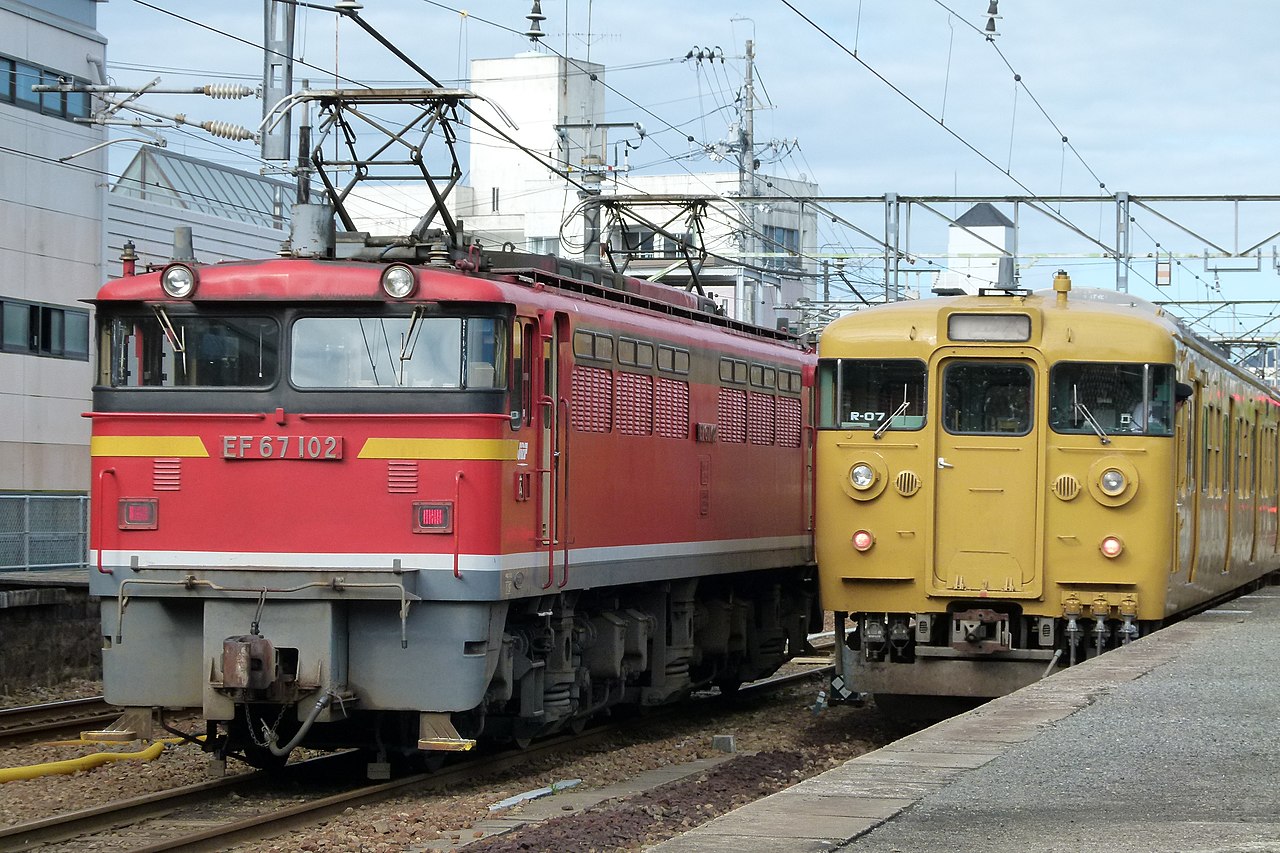
The five EF67-100 units were built from former 6th-batch (final production) Class EF65-0 locomotives from 1990 to replace the ageing EF61-200 bankers; the EF65 was chosen because JR Freight had no EF60 donor available and the EF65 was mechanically similar, although the conversion was larger in scope (including a change of gear ratio) to match the performance of the EF67-0. The EF67-100 omitted the running-uncoupling mechanism and used a plain automatic coupler. Within this sub-class, units 101 and 102 used reverse-conducting thyristor choppers like the EF67-0, but because those thyristor elements were discontinued, units 103–105 instead used GTO-based choppers. This fleet was refurbished between 2003 and 2004 and repainted into a revised livery with grey and white lines along the lower body side.
Following the introduction of the Class EF210-300 from 2013, the EF67 fleet was gradually withdrawn: among the EF67-0s, units 2 and 3 were withdrawn first and EF67 1 followed in 2014, while among the EF67-100s, EF67 103 and 104 were scrapped in 2016 and EF67 101 and 102 in 2020. The last unit, EF67 105, was withdrawn from regular service in February 2022 and operated a commemorative final-run service on 29 March 2022. As of 2022, two units are preserved at Hiroshima Depot: EF67 1 (the class’s lowest-numbered unit) and EF67 105 (the last EF67 in service, which was also the last of the former Class EF65-0 locomotives).
Timeline
- 1982First EF67-0 unit (EF67 1) completed at Hiroshima Works on 26 March, converted from a former Class EF60 locomotive; the EF67-0 sub-class entered revenue banking service on the Senohachi section of the Sanyō Main Line from 1 November 1982.
- 1990The five EF67-100 units (EF67 101–105), converted from former 6th-batch Class EF65-0 locomotives to replace the ageing EF61-200 bankers, entered revenue service from 1 March 1990.
- 2002Uncoupling banking locomotives while in motion (“running release” at Hachihonmatsu) was discontinued from the 22 March timetable revision.
- 2003The EF67-100 fleet began refurbishment (2003–2004): single-arm pantographs and LED tail lights were fitted and the units were repainted into a revised livery with grey and white lines along the lower body side.
- 2013With the 16 March timetable revision, Class EF210-300 locomotives began replacing the EF67; EF67 2 was withdrawn on 27 March as the class's first withdrawal, with EF67 3 following in 2014.
- 2022The last unit, EF67 105, left regular service on 13 February and made a commemorative final run on 29 March, ending JR's use of dedicated banking electric locomotives; EF67 105 was then preserved at Hiroshima Depot alongside the earlier-retired EF67 1.
Sources
Facts last verified 6 June 2026.
Gallery 6 photos
Every photo for this page — tap any image to view it full-size. All from Wikimedia Commons (credit under each).