History
The type was developed to eliminate the time lost when 1,000-tonne container trains between the Tokyo area and Hakodate/Goryokaku had to change locomotives between DC machines (a single Class EF65), AC machines (Class ED75, single or double-headed) and the AC machines used through the Seikan Tunnel (double-headed Class ED79), and at the same time to reduce JR Freight's locomotive fleet and replace ageing Class ED75s in the Tohoku region and Class ED79s on the Tsugaru-Kaikyo Line. In the contest to develop a new generation of AC/DC locomotive, Kawasaki Heavy Industries and Mitsubishi Electric proposed the Class EF500 in 1990 and Hitachi proposed the Class ED500 in 1992; both were tested but did not meet JR Freight's requirements, and Toshiba won the order with this type. Toshiba went on to develop the DC Class EH200 and the AC Class EH800 from the EH500 design.
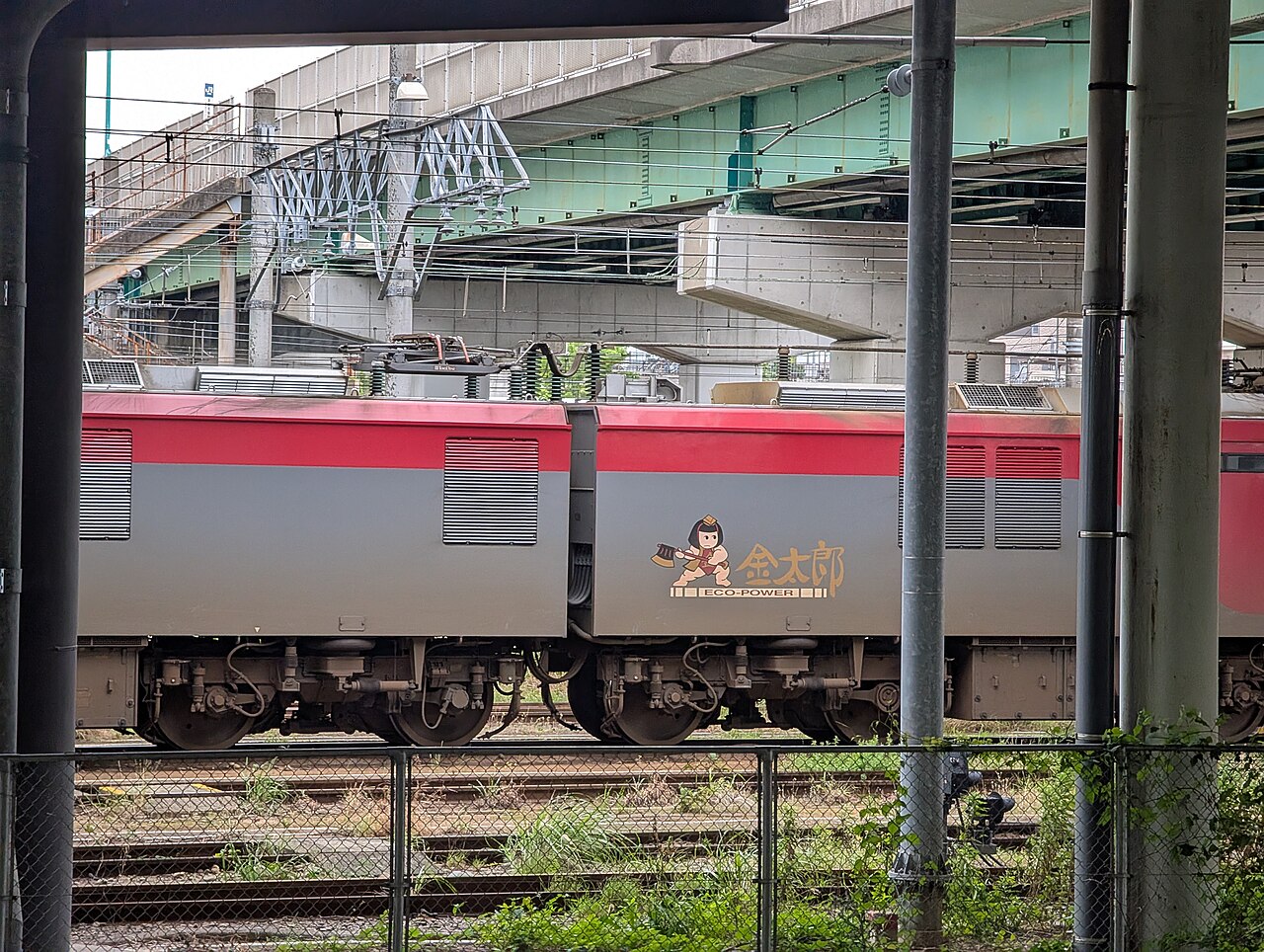
The locomotives are built at the Toshiba factory in Fuchu, Tokyo. Each unit is powered by FMT4 squirrel-cage three-phase induction motors with a one-hour rating of 565 kW; traction is controlled by a three-level PWM converter feeding a three-level VVVF (IGBT) inverter. The combined one-hour power rating is 4,000 kW, and a 4,520 kW thirty-minute short-time rating was specified expressly to do away with the double-heading of Class ED75s and ED79s. The type's official nickname is "ECO-POWER Kintaro," forming a pair with the EF210's "ECO-POWER Momotaro," and the name and logo were chosen through a public competition.
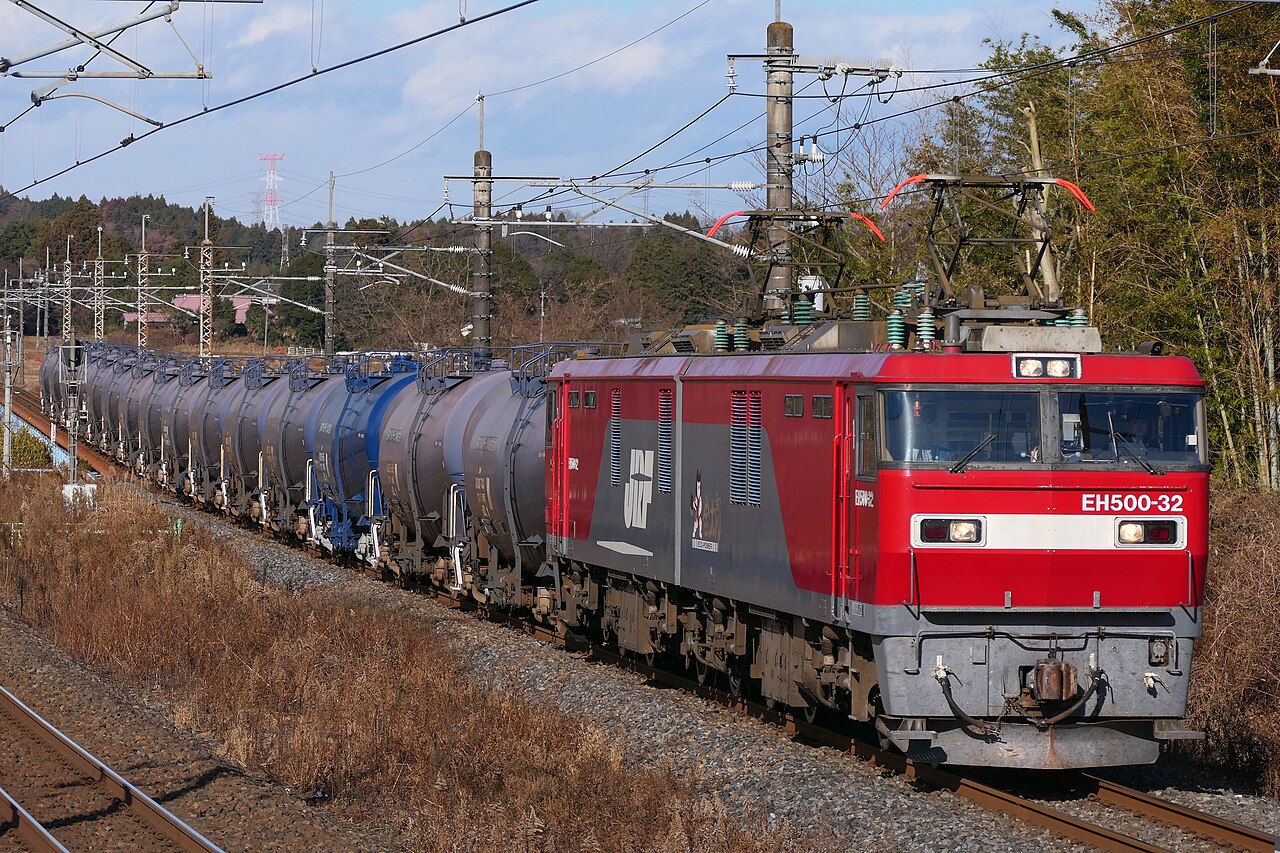
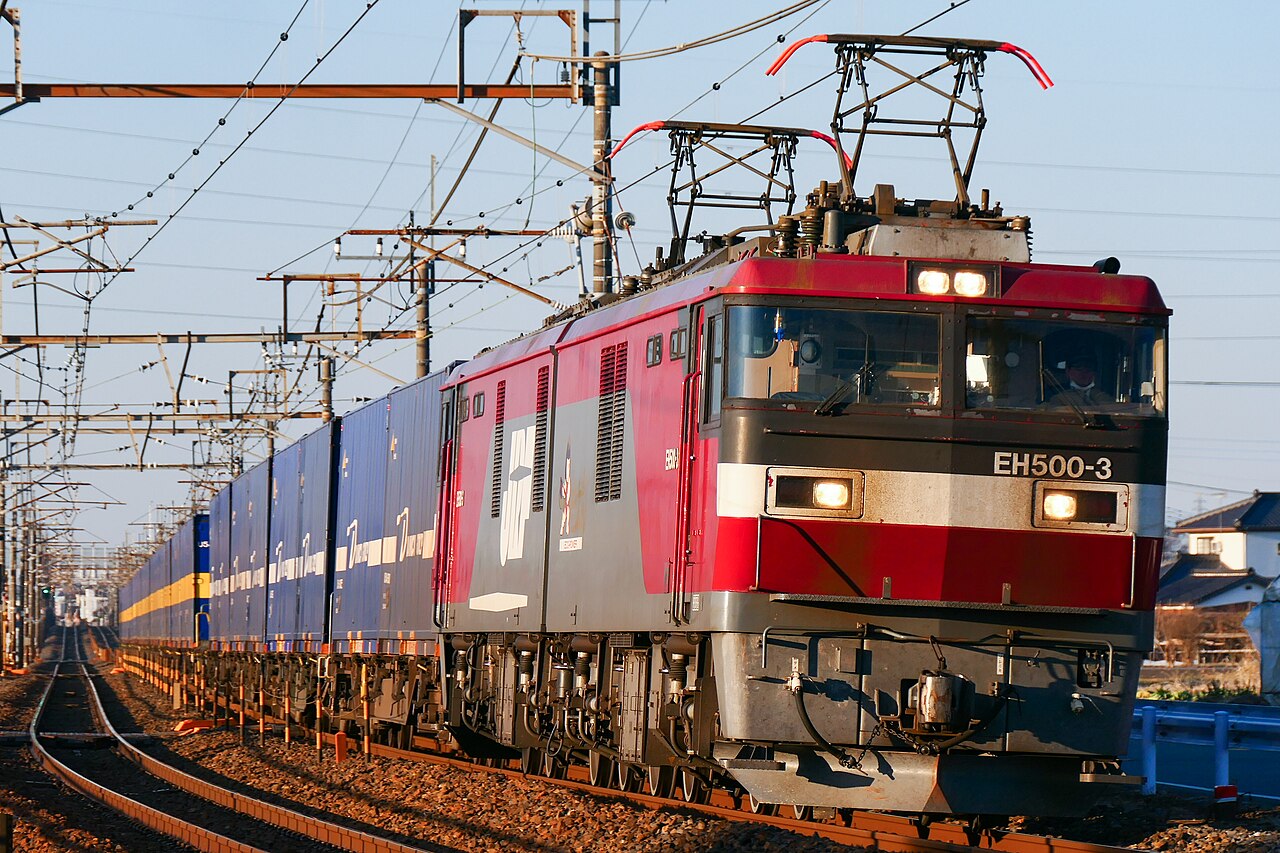
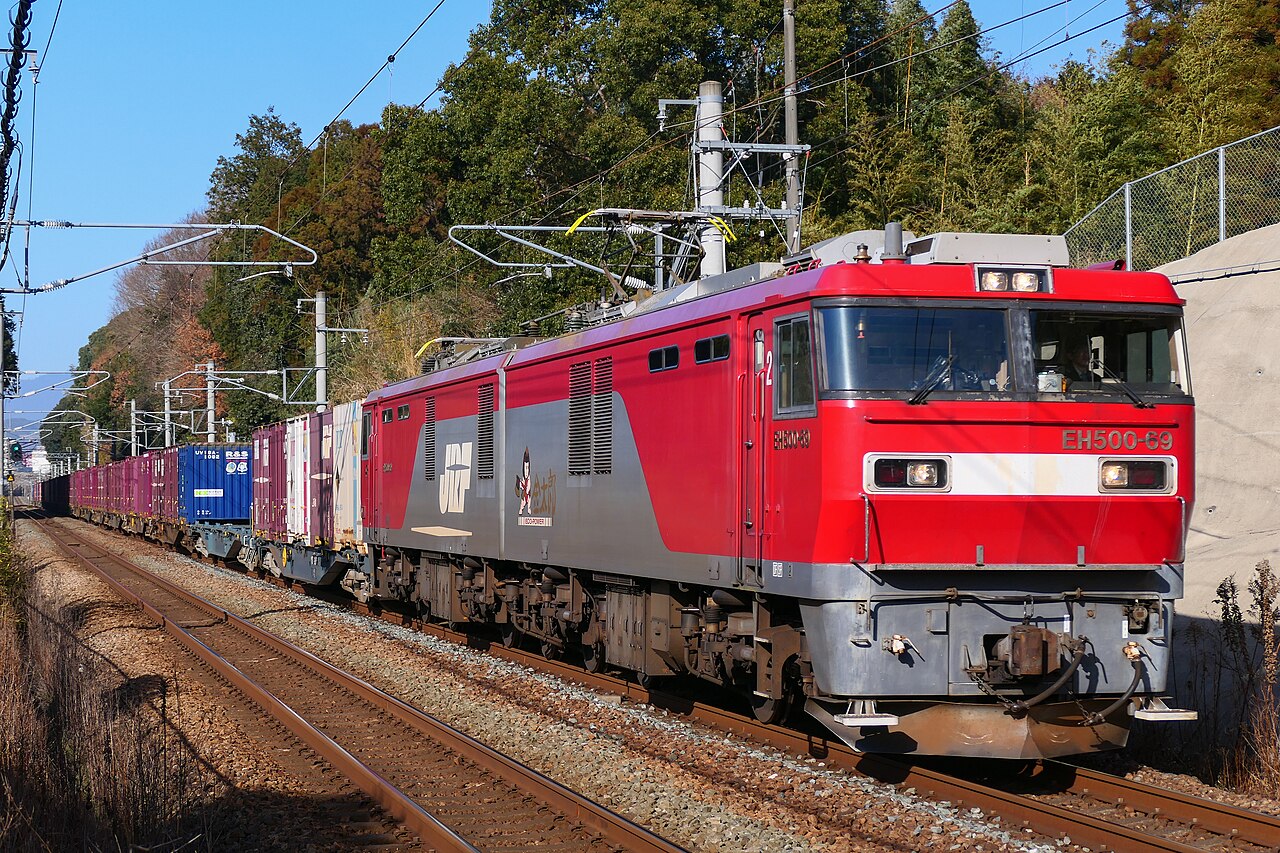
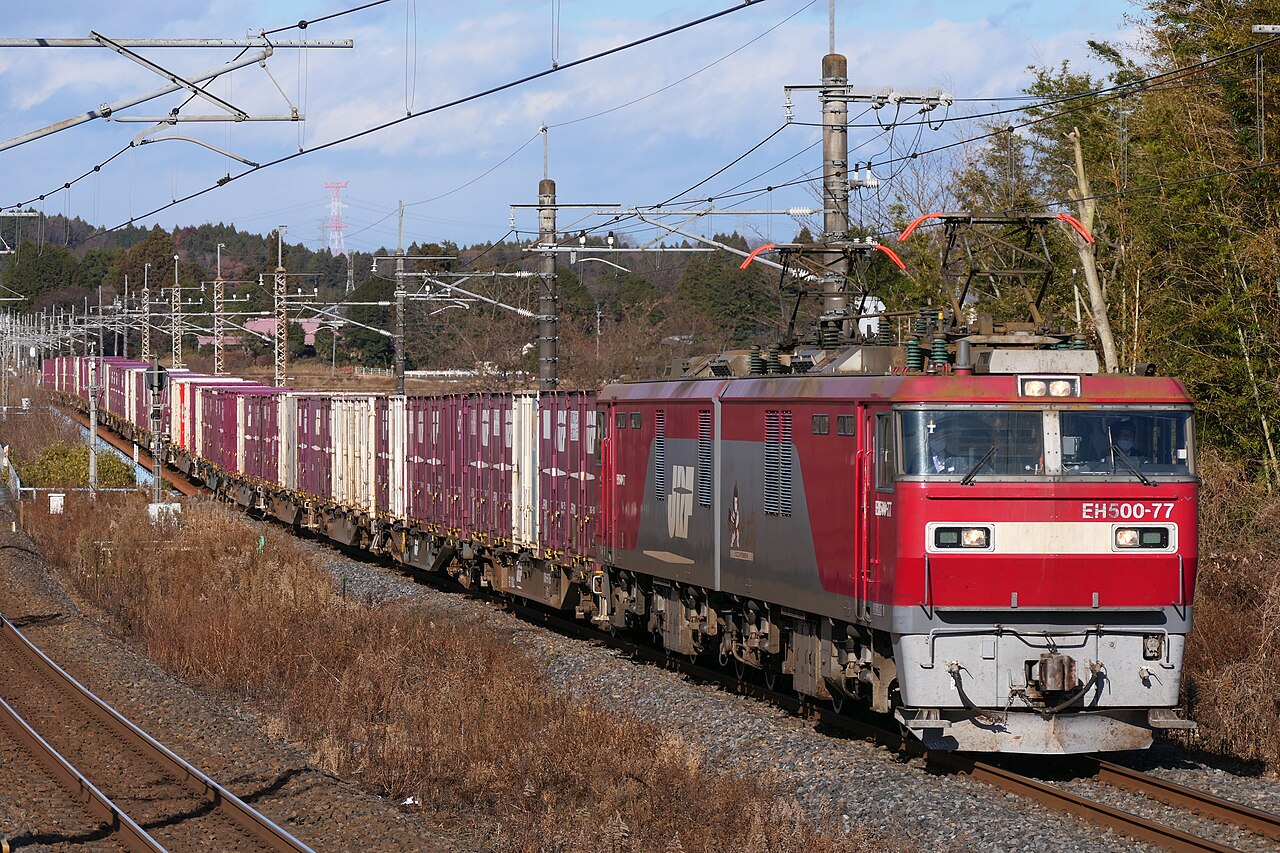
The prototype, EH500-901, was delivered to Sendai depot in September 1997 for extensive testing on the Tohoku Main Line and Kaikyo Line until March 1999; it joined the rest of the Class EH500 fleet for use on revenue services from the start of the March 2000 timetable revision, and "Kintaro Eco-Power" logos were added to its sides from December 2002. Two pre-series locomotives, EH500-1 and EH500-2, were delivered in March 2000 in a livery of maroon and grey with black cab surrounds. The second batch, EH500-3 to EH500-9, was built from March 2000 to January 2001, with the headlamps moved to a higher position to reduce blockage by snow and new "Kintaro Eco-Power" logos applied. Locomotives from EH500-10 (delivered August 2001) onward were painted in a revised scheme using bright red instead of the earlier maroon, and the black colour around the cab windows was discontinued; from EH500-15 onward the front-end headlight boxes have narrower surrounds and a correspondingly thinner front white band.
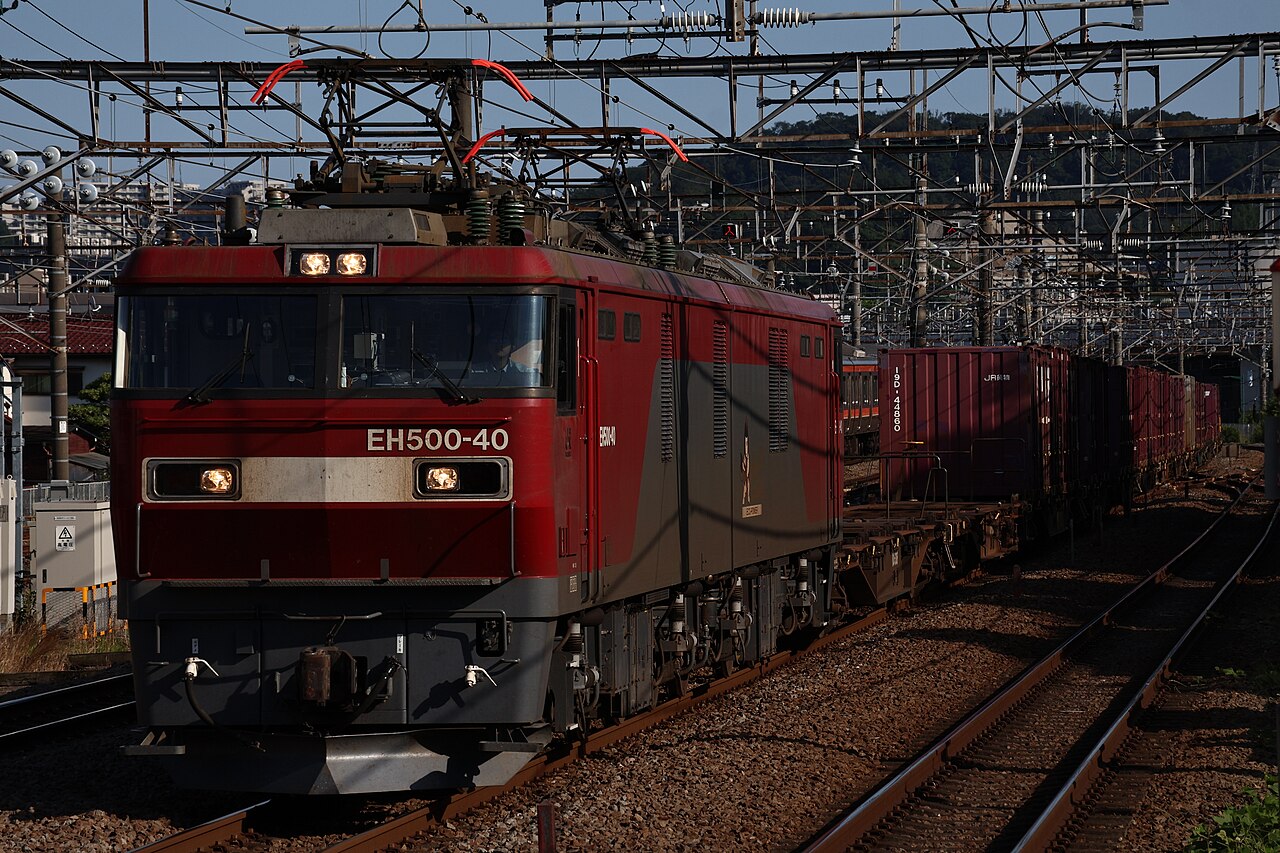
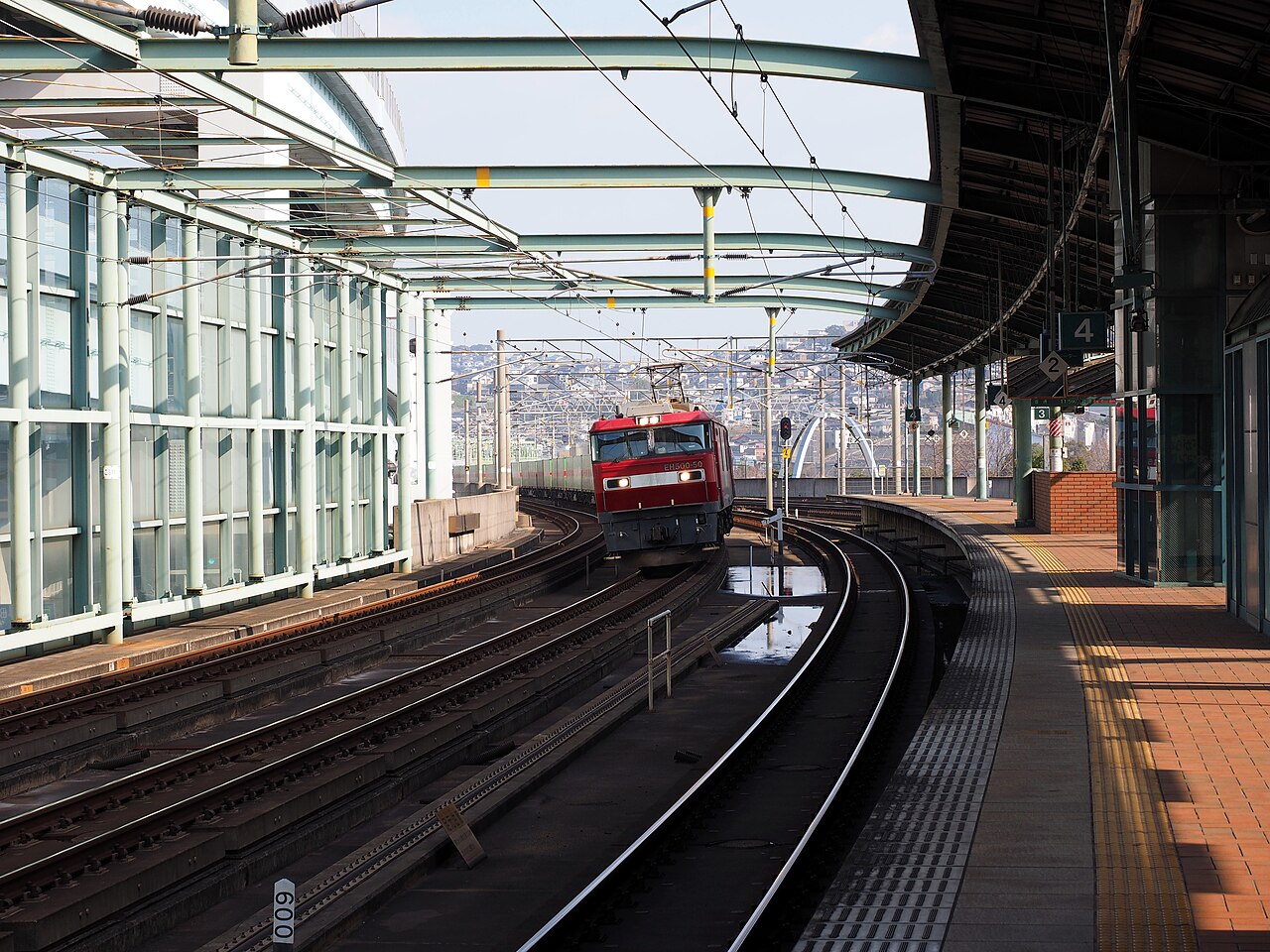
Initially the whole fleet was based at Sendai depot for long-distance container trains from the Tokyo area to Hokkaido via the Tohoku Main Line, replacing DC Class EF65s south of Kuroiso, pairs of AC Class ED75s north of Kuroiso, and pairs of AC Class ED79s through the Seikan Tunnel. In 2004, locomotives EH500-25 and EH500-27 were loaned in turn to Moji depot in Kitakyushu for trials, and from 2007 a number of EH500s were transferred to Moji depot for use on 1,300-tonne freight trains between Honshu and Kyushu through the Kanmon Tunnel, replacing ageing AC Class ED76s and dual-voltage EF81-300s and EF81-400s; the Moji-based machines were the first EH500s to be put into regular service outside the Tohoku-Hokkaido corridor. Although the type is a tri-voltage design, on the Japan Sea trunk route it works only north of Akita.
As of 1 April 2013 the fleet totalled 82 locomotives (EH500-901 and EH500-1 to EH500-81): 12 locomotives, EH500-45 to EH500-50 and EH500-67 to EH500-72, were based at Moji Depot, and the other 70 members of the class were based at Sendai. In the EH500 classification, "E" denotes an electric locomotive, "H" eight driving axles, and "500" an AC/DC locomotive with AC motors. The type remains operational, with the fleet numbering 82 as of 1 March 2017.
Timeline
- 1997Prototype EH500-901 is completed at the Toshiba Fuchu factory in September and delivered to Sendai for extensive testing on the Tohoku Main Line and Kaikyo Line (testing continued until March 1999).
- 2000Revenue service begins: the prototype joins the fleet from the March 2000 timetable revision (production-type service start 11 March 2000) and pre-series locomotives EH500-1 and EH500-2 are delivered in March; the type works long-distance container trains from the Tokyo area to Hokkaido via the Tohoku Main Line.
- 2007Following loan trials of EH500-25 and EH500-27 at Moji depot in 2004, EH500s are transferred to Moji depot from 2007 for 1,300-tonne freight trains between Honshu and Kyushu through the Kanmon Tunnel, replacing ageing Class ED76s and EF81-300s/400s.
- 2016With the March 2016 extension of the Hokkaido Shinkansen, the Seikan Tunnel section is raised to Shinkansen-standard 25 kV AC; EH500 working of that section passes to the Class EH800 and the type's northern limit is shortened to Aomori.
Sources
Facts last verified 6 June 2026.
Gallery 6 photos
Every photo for this page — tap any image to view it full-size. All from Wikimedia Commons (credit under each).