History
The type was developed because, to allow Hokkaido Shinkansen services to operate through the dual-gauge Seikan Tunnel (which commenced on 26 March 2016), the overhead line voltage was raised from the narrow-gauge standard of 20 kV AC to the standard shinkansen supply of 25 kV AC. A fleet of approximately 20 new dual-voltage locomotives capable of operating under either 20 kV or 25 kV was therefore required to replace the Class ED79 and Class EH500 locomotives previously used to haul freight and overnight sleeping-car services through the tunnel. The locomotives are also compatible with digital ATC and feature digital train wireless communications. The total cost of manufacturing the fleet together with construction of new maintenance depot facilities was approximately 19 billion yen.
The design is modelled on the EH500, also built by Toshiba, and so has a similar appearance and structure. To haul 1,000 t of freight — equivalent to twenty container wagons — up the continuous 12-per-mil grade inside the Seikan Tunnel, the EH800 was given the same starting tractive effort as the EH500, 411.9 kN; its one-hour rating is 4,000 kW under the 25 kV shared section, falling to about 76 per cent of that, 3,040 kW, under the 20 kV conventional-line supply, where maximum tractive effort is unchanged but high-speed performance is reduced. Because the locomotive works only in AC sections — avoiding the risk of regeneration failure that arises under light loads in lightly-trafficked DC sections — it uses regenerative braking rather than the rheostatic braking adopted on earlier JR locomotive designs.
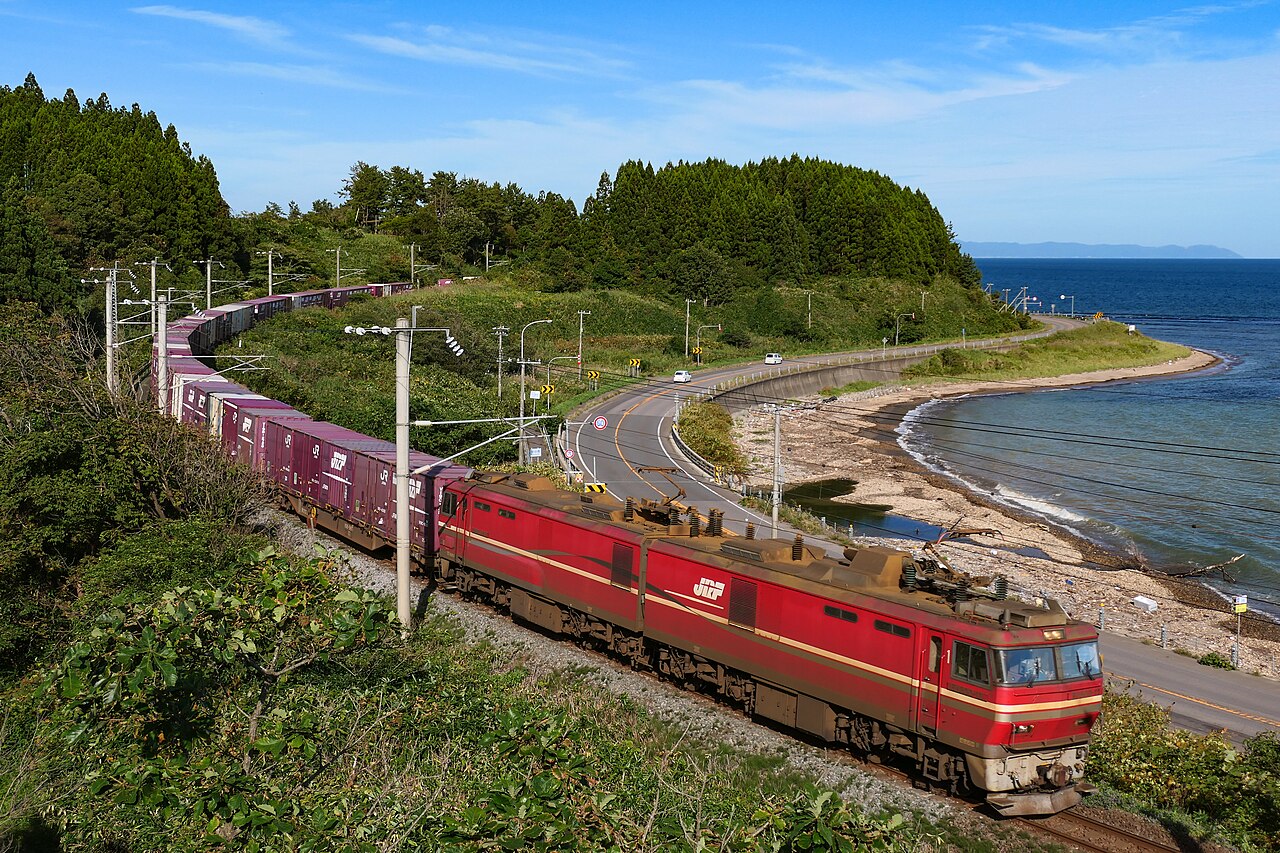
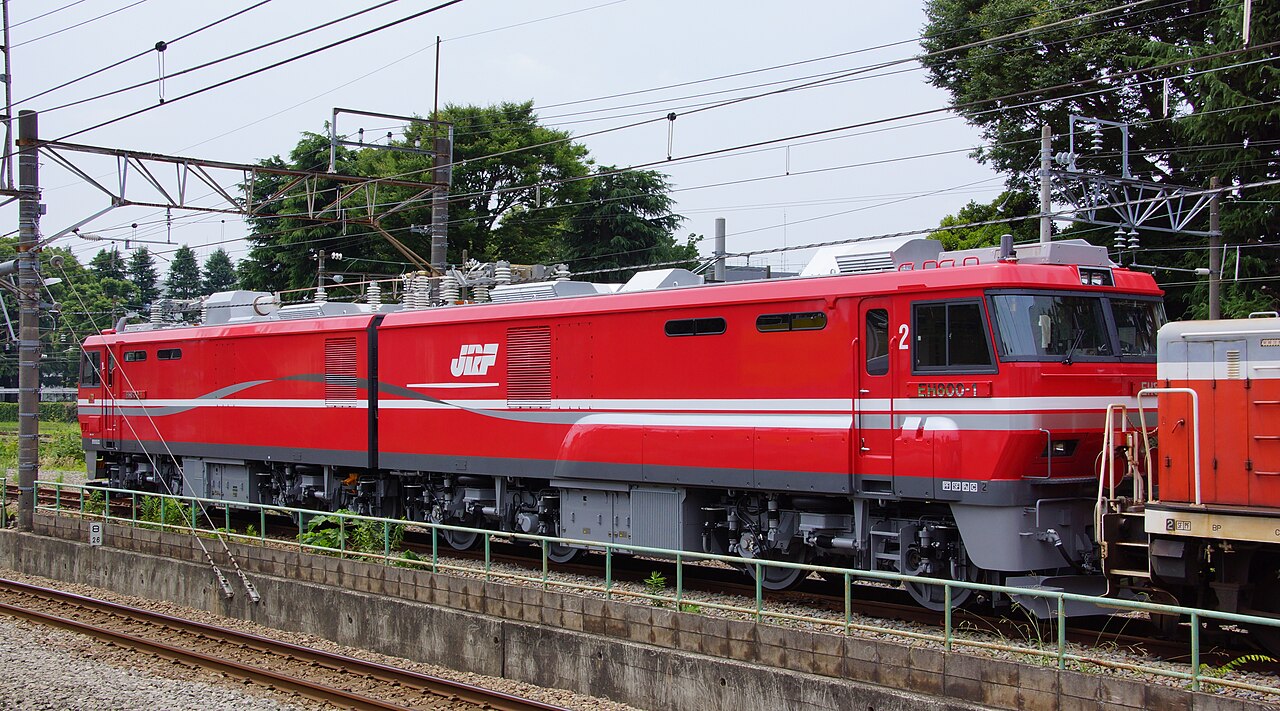
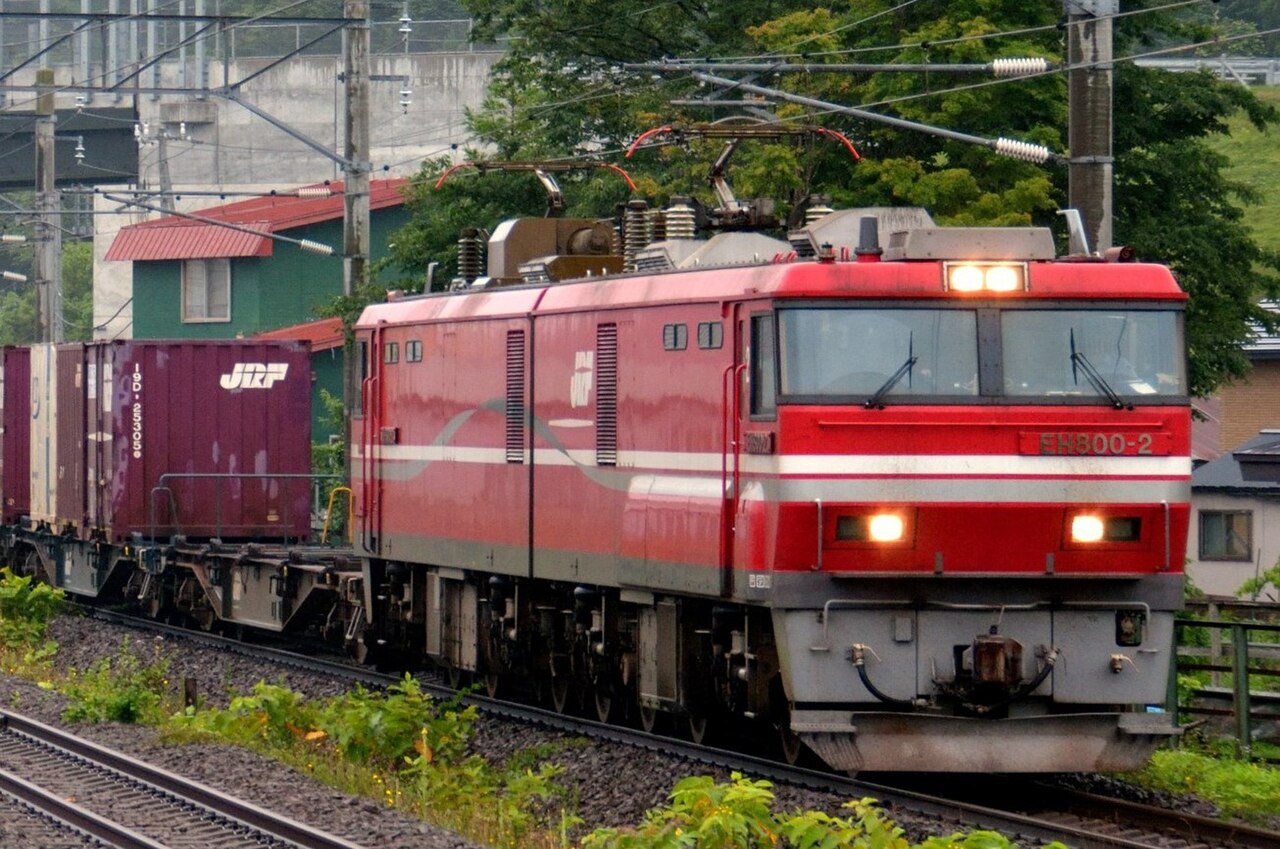
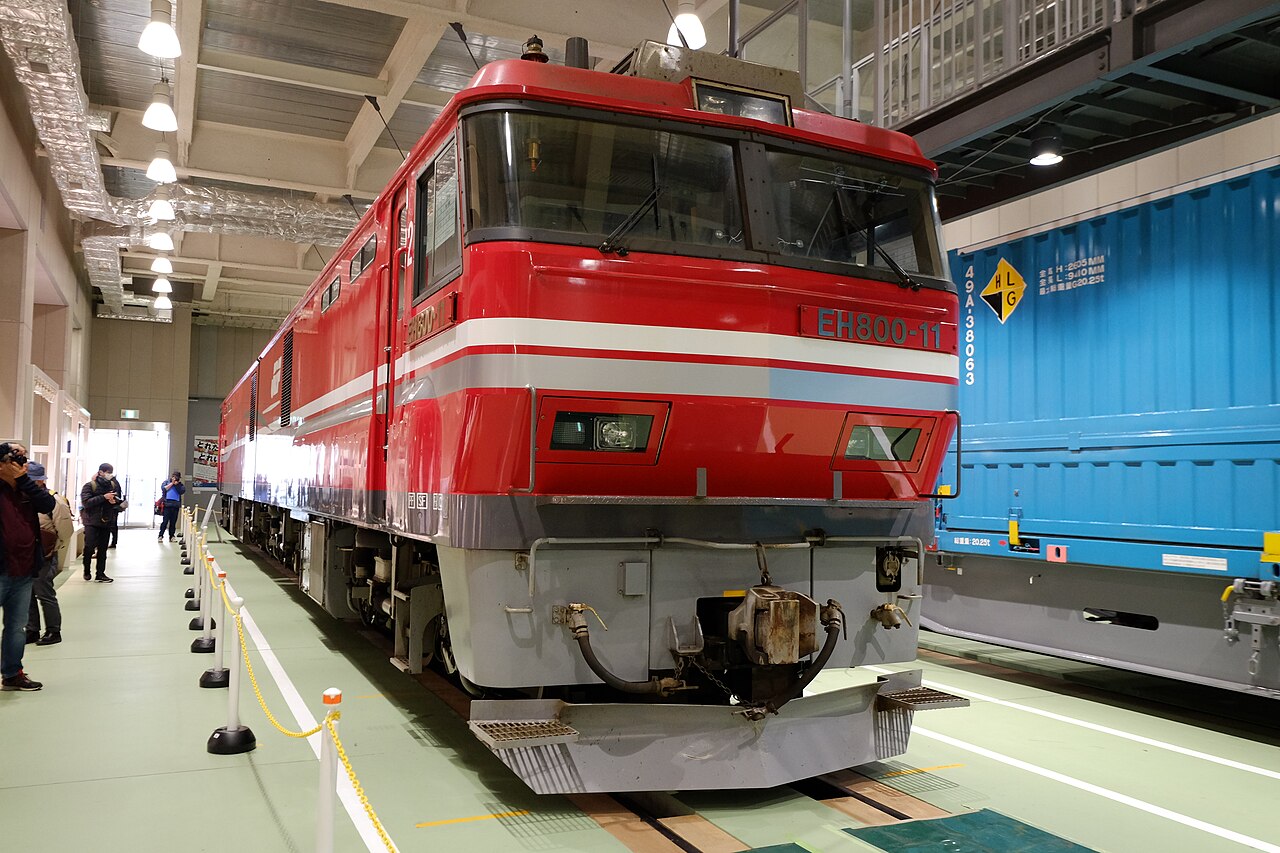
Unlike the EH500, EH200, EF510 and DF200, which all carry “ECO-POWER” nicknames, the EH800 was given no such nickname and no public name-selection campaign was held for it. The Bo′Bo′+Bo′Bo′ locomotives are painted in an all-over red livery with a white bodyside line and a silver wavy line. They operate between Higashi-Aomori Freight Terminal and Goryōkaku Freight Terminal via the Kaikyō Line and Seikan Tunnel.
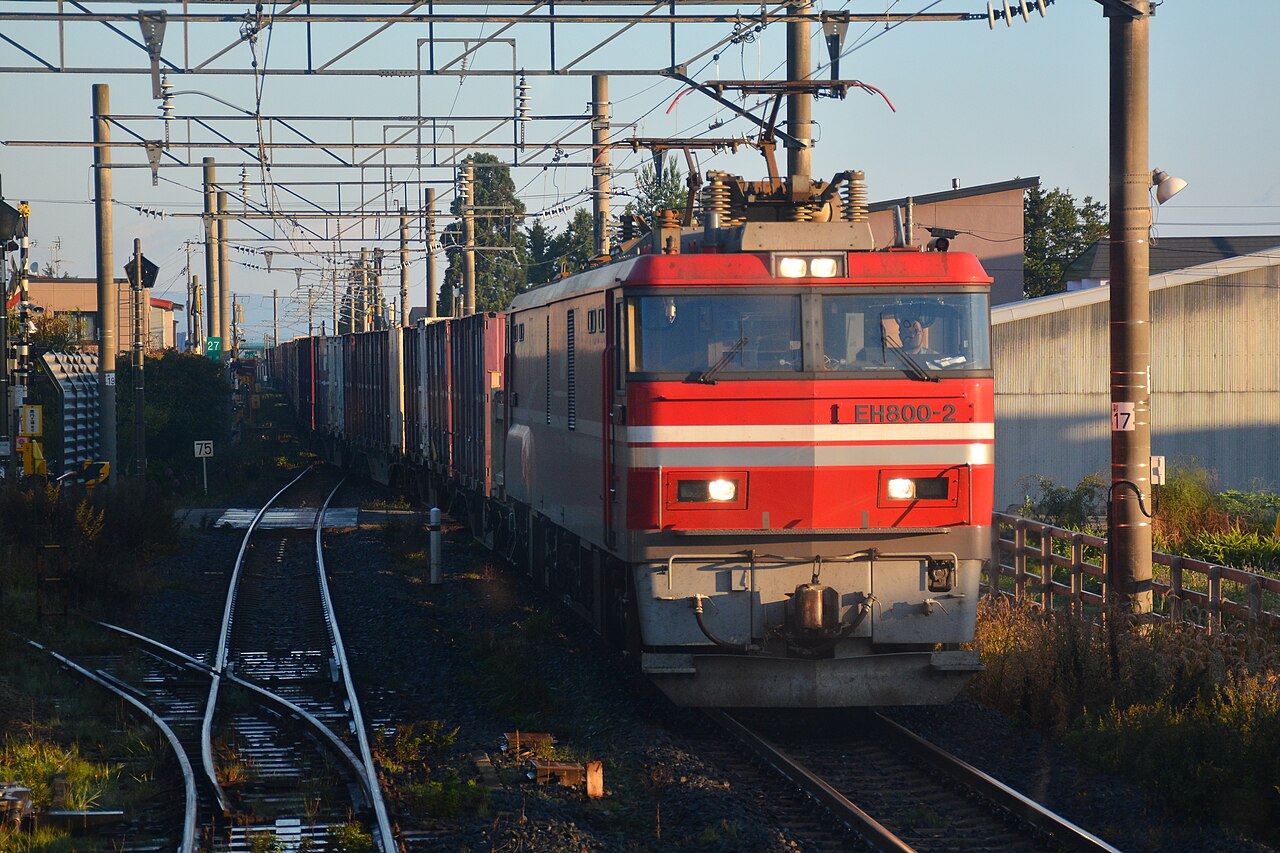
Design of the prototype locomotive, EH800-901, began in fiscal 2010, and the completed locomotive was unveiled to the press at the Toshiba factory in Fuchū, Tokyo, on 27 November 2012. It was delivered to JR Freight in Sendai in January 2013. Following delivery, the prototype was tested within the confines of Higashi-Fukushima Station before being moved to Goryōkaku Depot in Hokkaido for testing in winter conditions. The first full-production locomotive was delivered in June 2014 and entered revenue service on 16 July 2014.
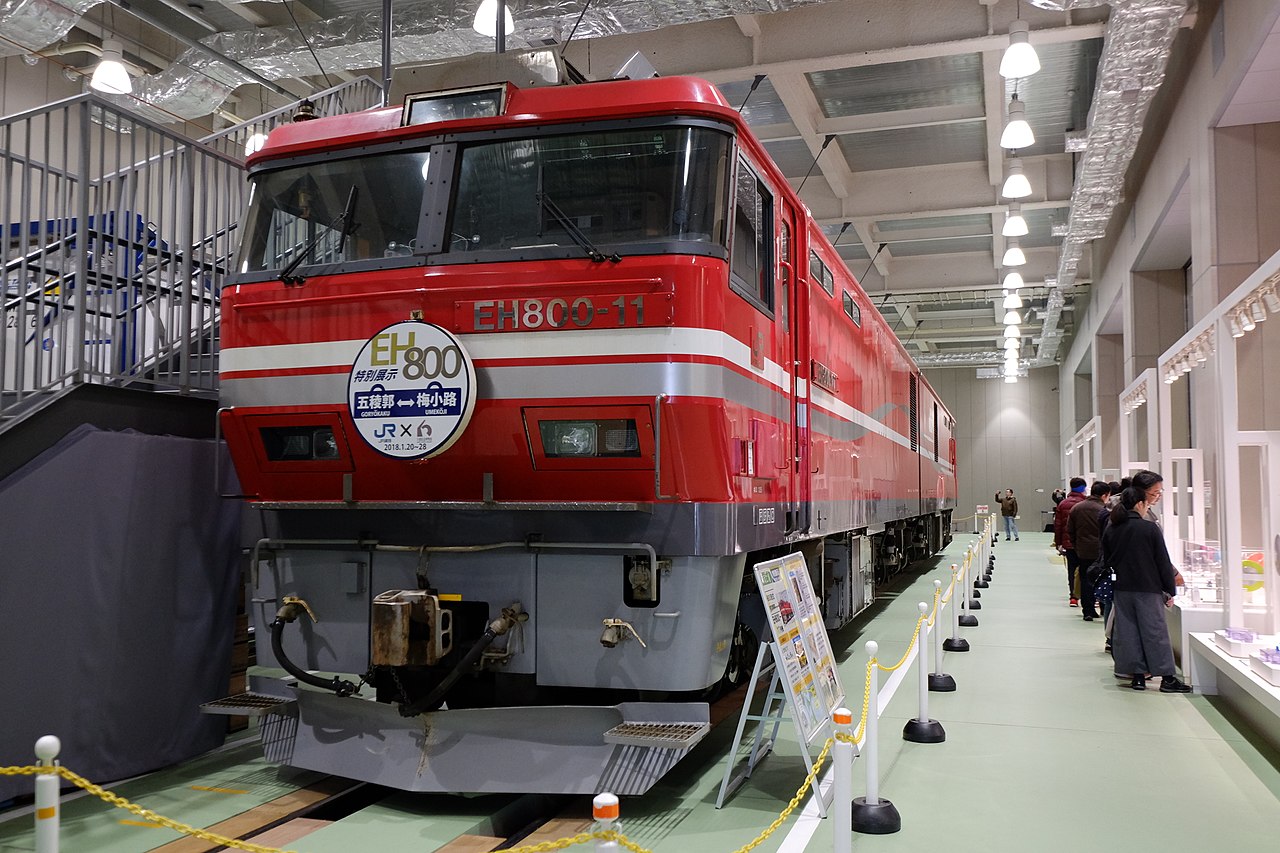
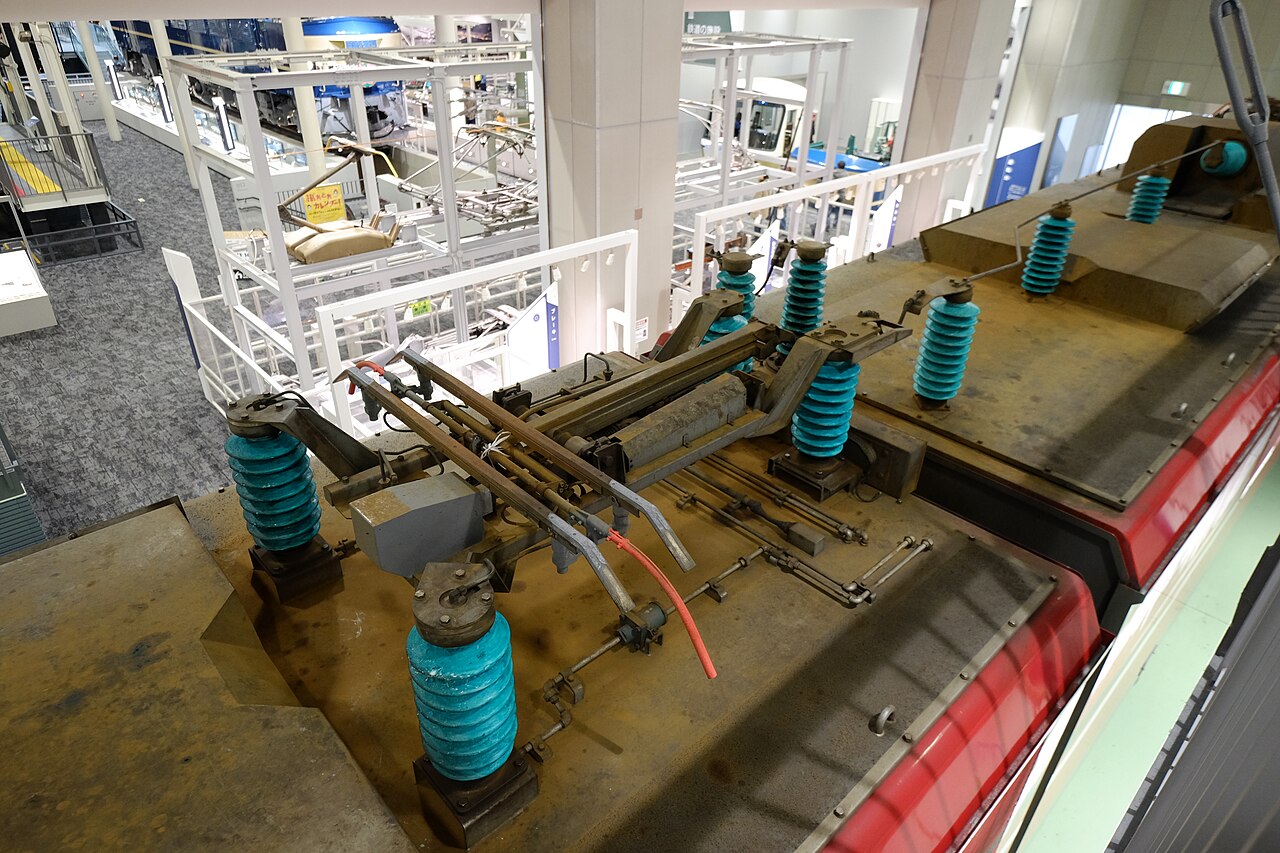
From 2019 the type was fitted with a remote-monitoring service — a system developed by Toshiba Infrastructure Systems that continuously monitors locomotive condition remotely and accumulates and analyses the data — and the EH800, used on the shinkansen shared section, was the first locomotive type on which this system was fully deployed. From 20 to 28 January 2018 an EH800 was put on special display at the Kyoto Railway Museum, the first time the type had entered or been exhibited in the Kansai region. Major overhauls are carried out by the Omiya Comprehensive Vehicle Centre, and traction duties in the DC line area are usually carried out by Class EF210 or Class EF65.
As of 1 March 2017, 20 Class EH800 locomotives are in service. In the EH800 classification, "E" denotes an electric locomotive, "H" denotes eight driving axles, and "800" denotes an AC locomotive with AC motors. As with previous designs, the prototype is numbered EH800-901, with subsequent production locomotives numbered from EH800-1 onward.
Timeline
- 2010Design of the prototype locomotive, EH800-901, begins in fiscal 2010.
- 2012The prototype EH800-901 is completed and unveiled to the press at the Toshiba factory in Fuchū, Tokyo, on 27 November; performance-confirmation testing begins in December.
- 2013The prototype EH800-901 is delivered to JR Freight in Sendai in January and tested at Higashi-Fukushima Station before being moved to Goryōkaku Depot in Hokkaido for winter-condition testing.
- 2014The first full-production locomotive, EH800-1, is delivered in June and enters revenue service on 16 July, initially substituting for Class ED79 duties; series production begins in fiscal 2014 with all units based at Goryōkaku Depot.
- 2016Dual-gauge shared shinkansen/conventional operation through the Seikan Tunnel begins with the opening of the Hokkaido Shinkansen on 26 March; from June the EH800 also hauls the "Cassiopeia Cruise" and "Cassiopeia Kikō" charter trains in place of the withdrawn ED79.
- 2017As of 1 March, 20 Class EH800 locomotives are in service; Hokkaido operation of the Cassiopeia charters effectively ends in February, leaving the type with only a brief period of passenger-train haulage.
Sources
Facts last verified 6 June 2026.
Gallery 6 photos
Every photo for this page — tap any image to view it full-size. All from Wikimedia Commons (credit under each).