History
Built by Toshiba from 2010, it uses lithium ion batteries — a GS Yuasa lithium-ion battery on the production units — and was designed to reduce exhaust emissions by at least 30% to 40% and noise levels by at least 10 dB compared with the existing Class DE10 diesel locomotives it was intended to replace; development of the hybrid system received a subsidy from the Ministry of Land, Infrastructure, Transport and Tourism under its railway-technology development funding. The diesel engine is a Cummins FDMF9Z, a proven industrial water-cooled four-stroke in-line six-cylinder unit rated at 325 PS that is run derated at 270 PS in this application.
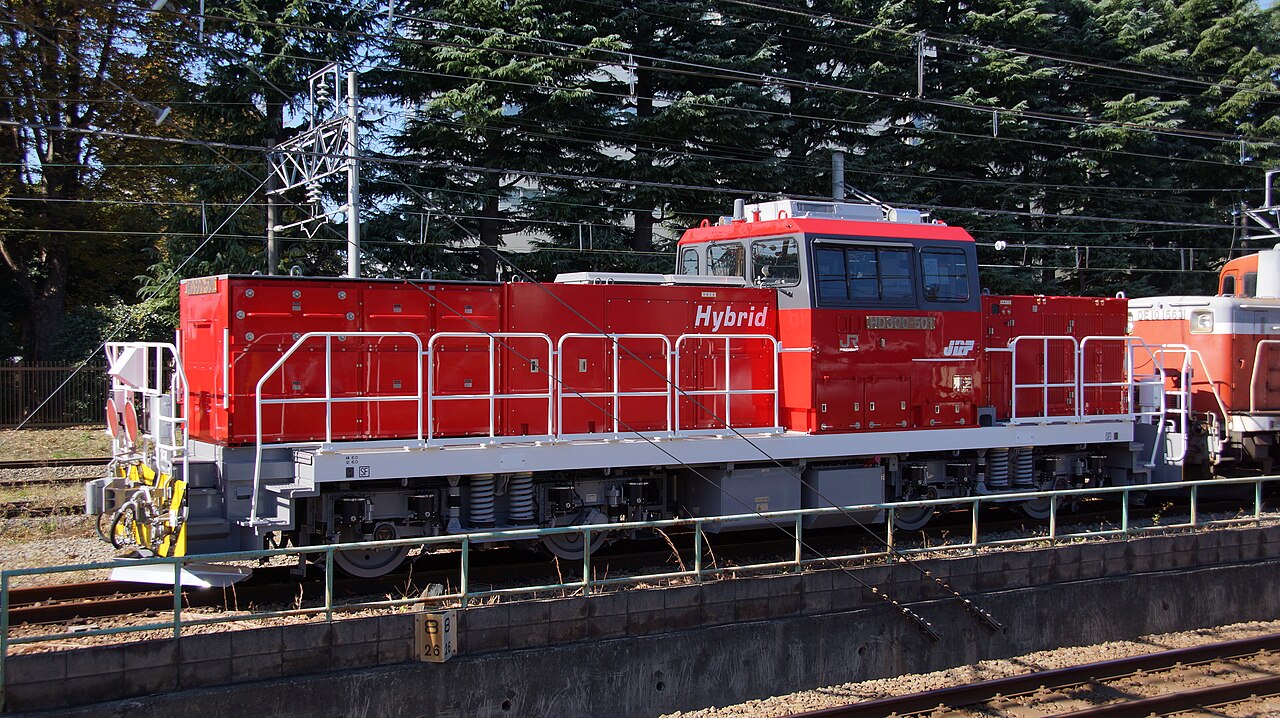
Power is delivered by four FMT101 permanent-magnet synchronous traction motors — the first adoption of permanent-magnet synchronous motors in a locomotive, chosen over the induction motors usual in VVVF-driven rail vehicles because they are more efficient and allow a more compact, lighter design; the locomotive has a one-hour rating of 320 kW, a maximum wheel-rim output of 500 kW, and a maximum tractive effort of about 196 kN (roughly 20 tonnes-force). The semi-center-cab body is divided into four functional modules — main-converter, battery, cab, and generator — to simplify maintenance and to allow each module to be upgraded independently. If the engine fails, the locomotive can continue to run under its own power on battery supply alone.
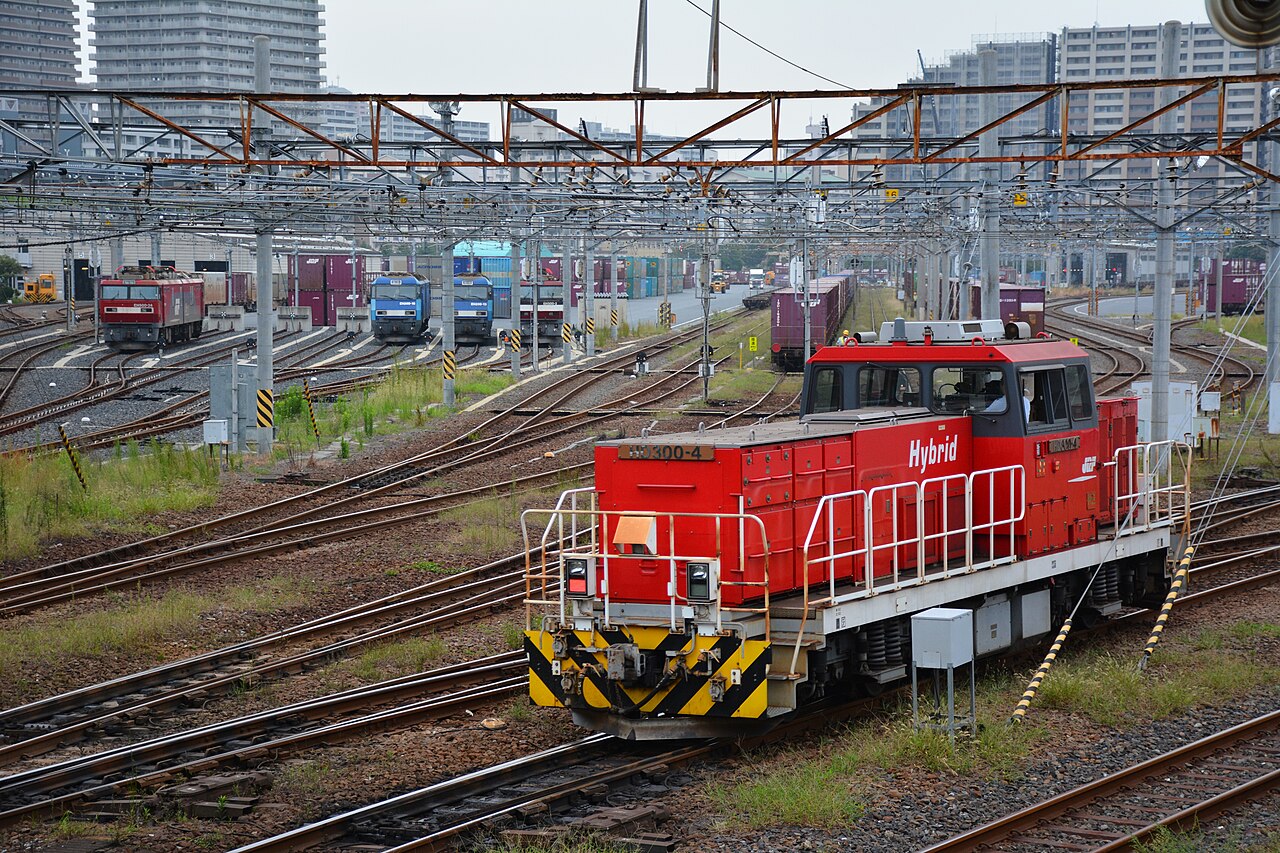
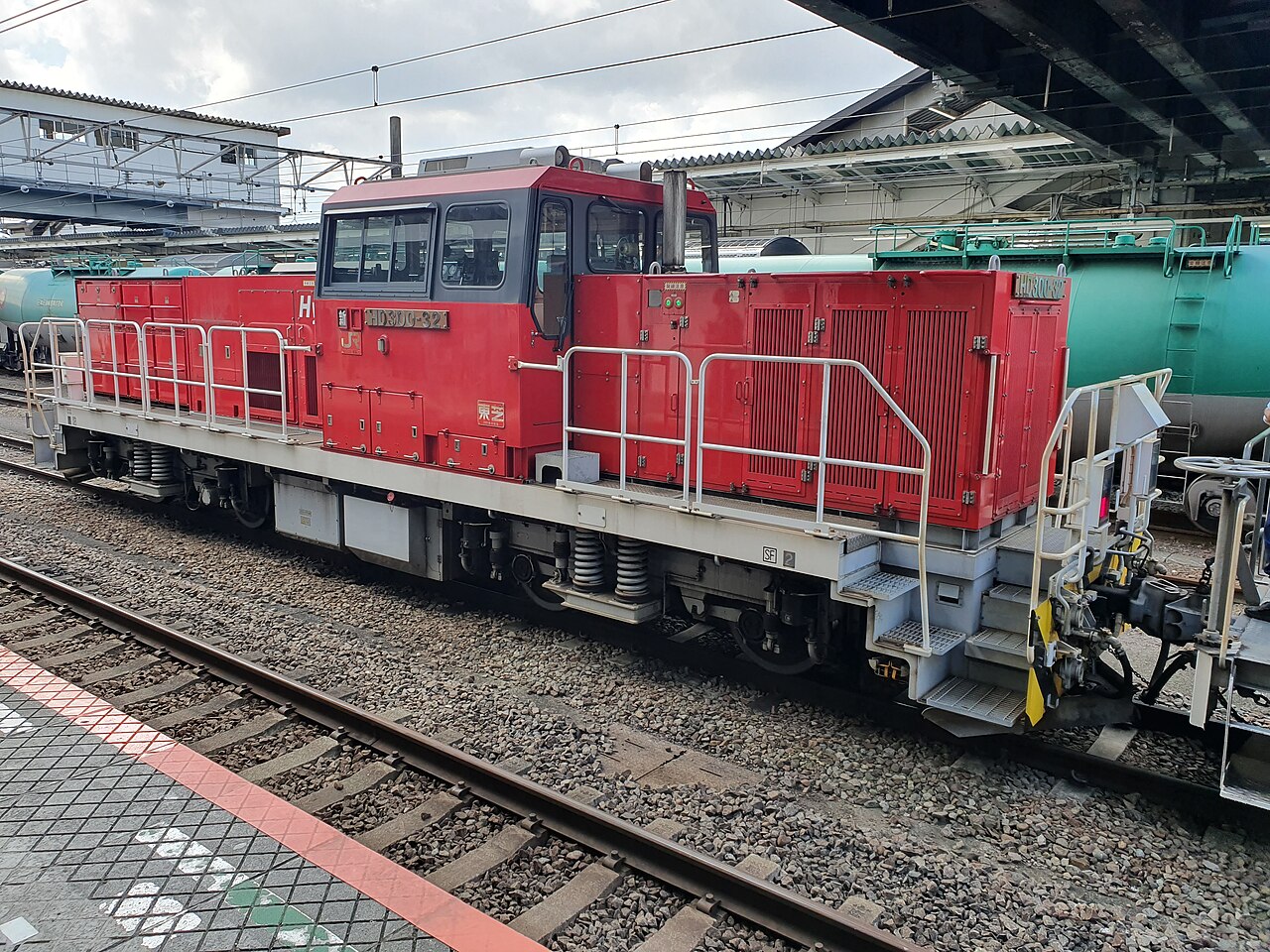
The type carries a bright red livery to aid visibility, with yellow and black diagonal warning stripes at the ends. Although its service weight of 60 t is lighter than the DE10’s 65 t, having one fewer driven axle raises its axle load to 15 t, 2 t heavier than the DE10. Tests conducted at Tokyo Freight Terminal in June 2010 demonstrated fuel savings of 36%, NOx emission reductions of 62%, and noise level reductions of 22 dB compared with a Class DE10 locomotive.
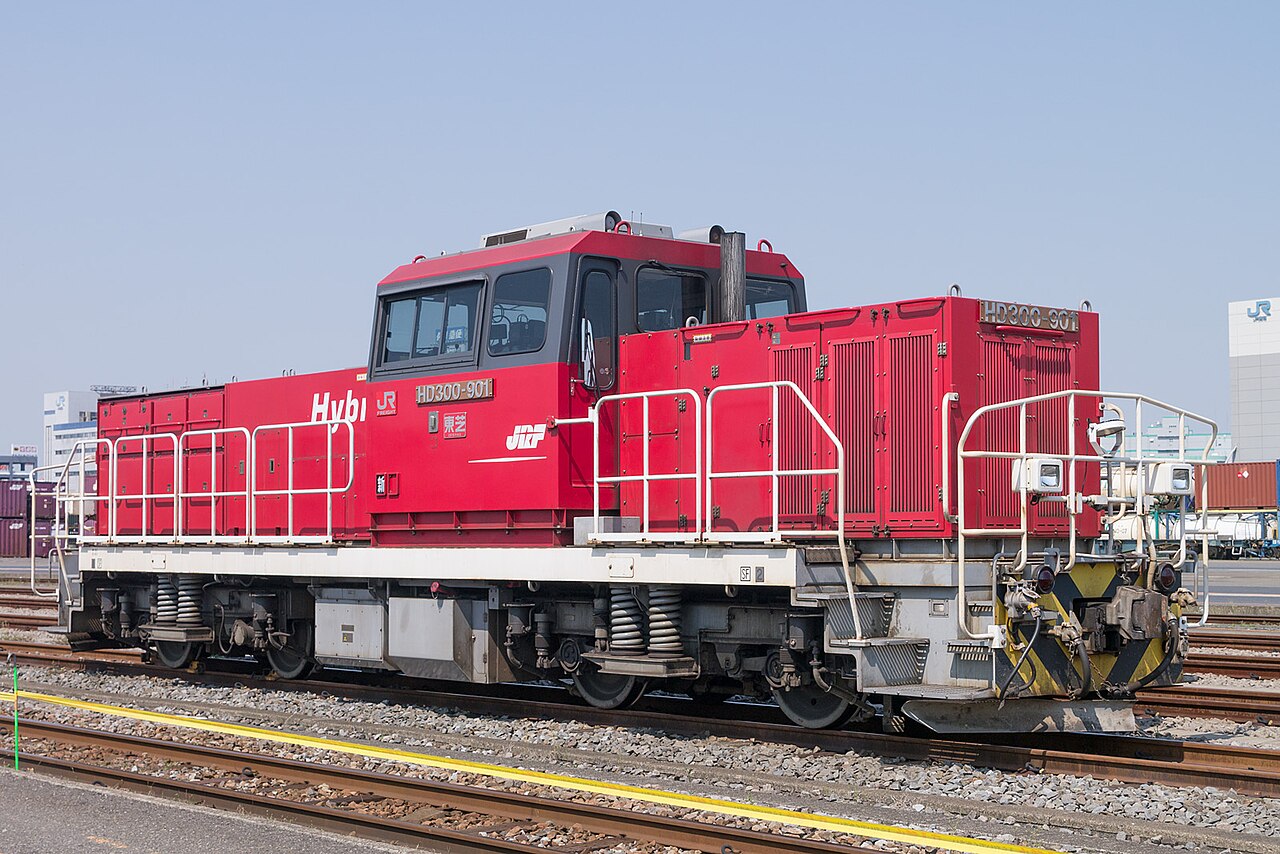
The prototype locomotive, HD300-901, was delivered from the Toshiba factory in Fuchū, Tokyo, to Tokyo Freight Terminal on 30 March 2010 for approximately six months of trials, before being moved to Matsumoto in Nagano Prefecture later in the year to assess performance at higher altitudes. The locomotive was moved to Sapporo Freight Terminal in Hokkaido in January 2011 to assess battery performance and adhesion in cold winter conditions. The prototype entered revenue service from 11 July 2011, on shunting operations at Tokyo Freight Terminal.
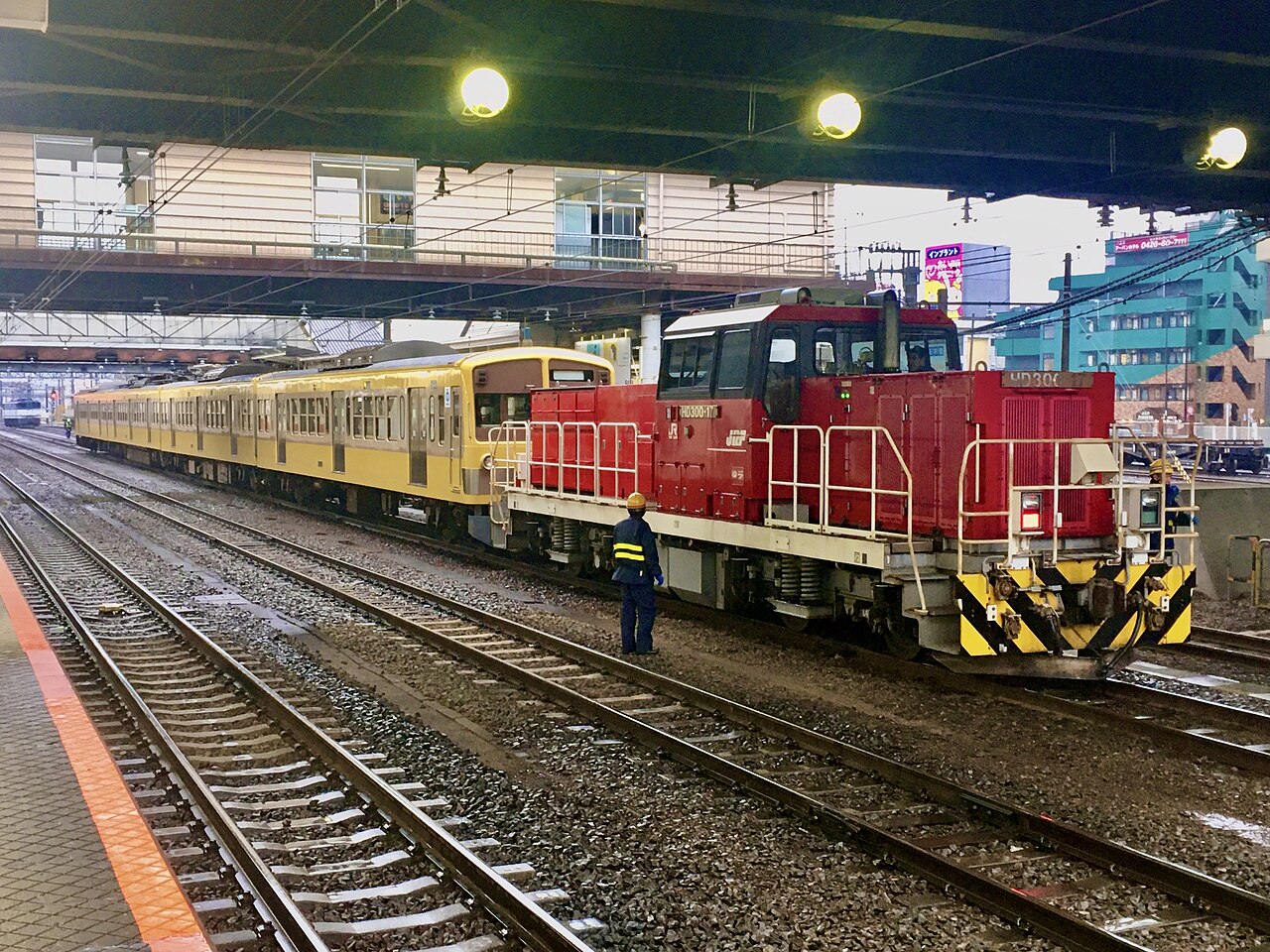
The first full-production locomotive (numbered HD300-1) was delivered from the Toshiba factory in Fuchū, Tokyo, in January 2012, and entered service at Tokyo Freight Terminal from 8 February 2012. While broadly identical to the prototype, the production locomotive incorporates a few minor improvements, including changes to the headlamps, a wider front-end warning panel to reduce snow build-up on the steps, and larger windows in the driving cab doors to improve visibility. In May 2012, the Class HD300-900 prototype was awarded the 2012 Laurel Prize, presented annually by the Japan Railfan Club, with a formal presentation ceremony held at Tokyo Freight Terminal on 18 November 2012.
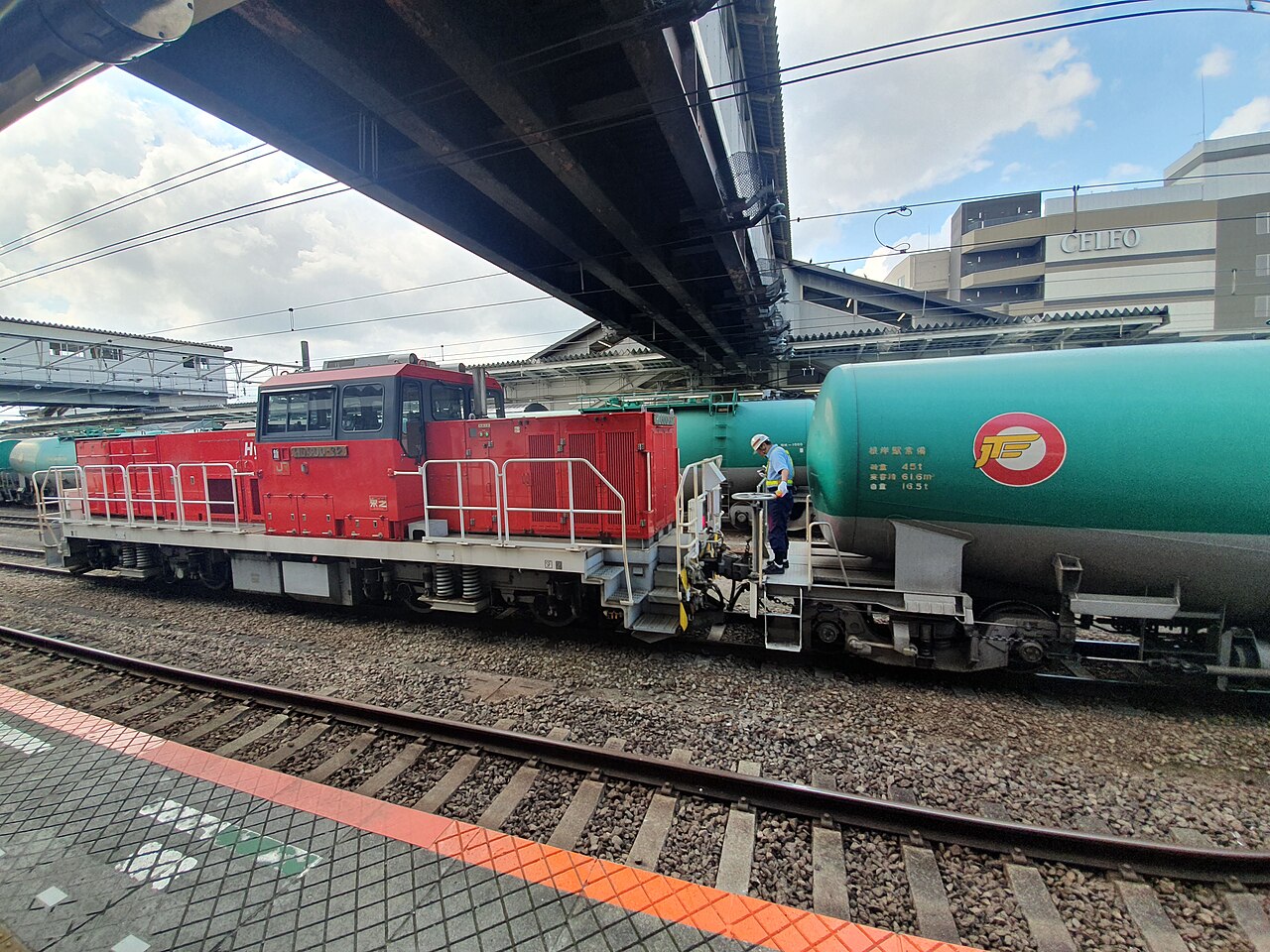
In November 2014, the first Class HD300-500 locomotive, HD300-501, a sub-class designed for operation in cold-climate areas, was delivered to Naebo Depot in Hokkaido; on the cold-climate 500 sub-class the number of ceramic sanding nozzles fitted to the bogies to maintain braking and adhesion in snow is doubled, from eight on the warm-climate 0 sub-class to sixteen. As of 1 March 2017, 29 Class HD300 locomotives were in service, and the infobox records 32 in the class as of February 2018. Because each locomotive is as expensive to build as a mainline electric locomotive and the initial investment is large, the type is concentrated at high-density freight yards rather than deployed across all yards. The HD300 classification denotes the type: H for hybrid locomotive, D for four driving axles, and 300 for synchronous motors; the prototype is numbered HD300-901, with subsequent production locomotives numbered from HD300-1 onward. The type remains in service.
Timeline
- 2010Prototype locomotive HD300-901 is delivered from the Toshiba factory in Fuchū, Tokyo, to Tokyo Freight Terminal on 30 March for about six months of trials; it is unveiled to the media on 25 March. June 2010 tests at Tokyo Freight Terminal show 36% fuel savings, 62% NOx reduction and 22 dB noise reduction versus a Class DE10.
- 2011After cold-weather testing at Sapporo Freight Terminal from late January, the prototype HD300-901 enters revenue service from 11 July on shunting operations at Tokyo Freight Terminal.
- 2012The first full-production locomotive, HD300-1, delivered from the Toshiba Fuchū factory in January, enters service at Tokyo Freight Terminal from 8 February. In May the HD300-900 prototype is awarded the 2012 Laurel Prize by the Japan Railfan Club, with a presentation ceremony at Tokyo Freight Terminal on 18 November.
- 2014The first Class HD300-500 cold-climate sub-class locomotive, HD300-501, is delivered to Naebo Depot in Hokkaido in November for use at Sapporo Freight Terminal.
Sources
Facts last verified 6 June 2026.
Gallery 6 photos
Every photo for this page — tap any image to view it full-size. All from Wikimedia Commons (credit under each).