History
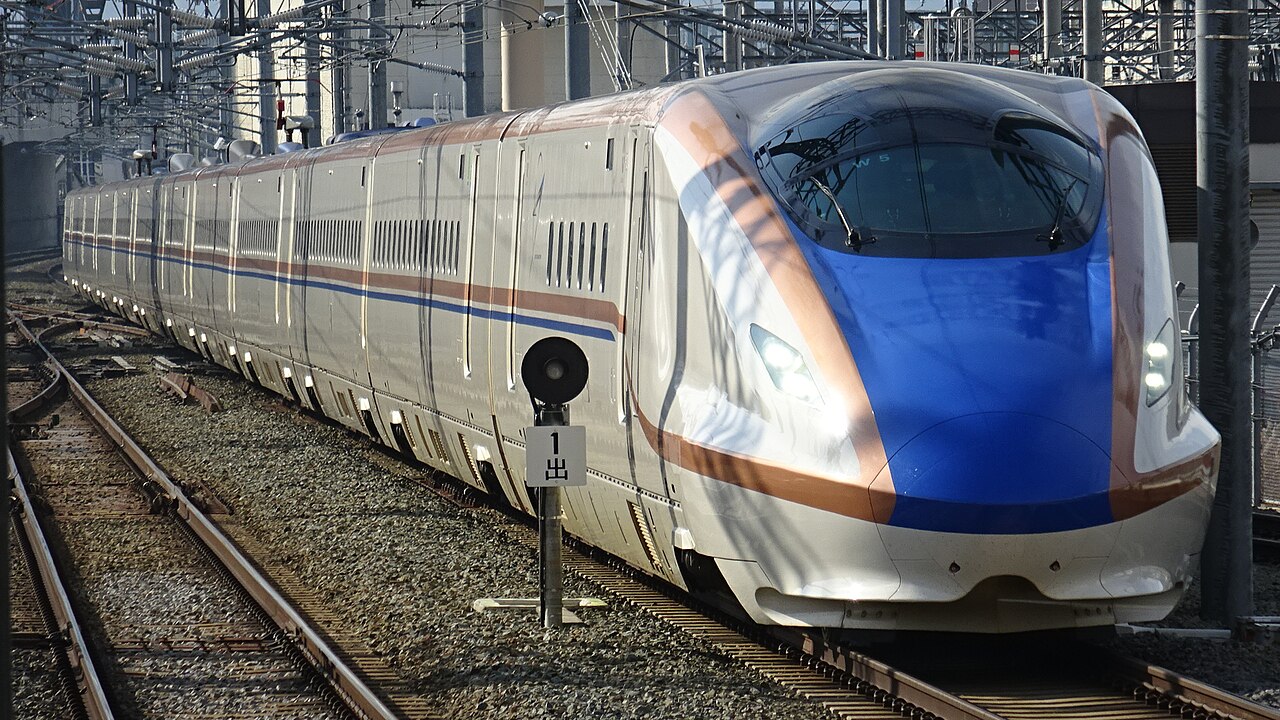
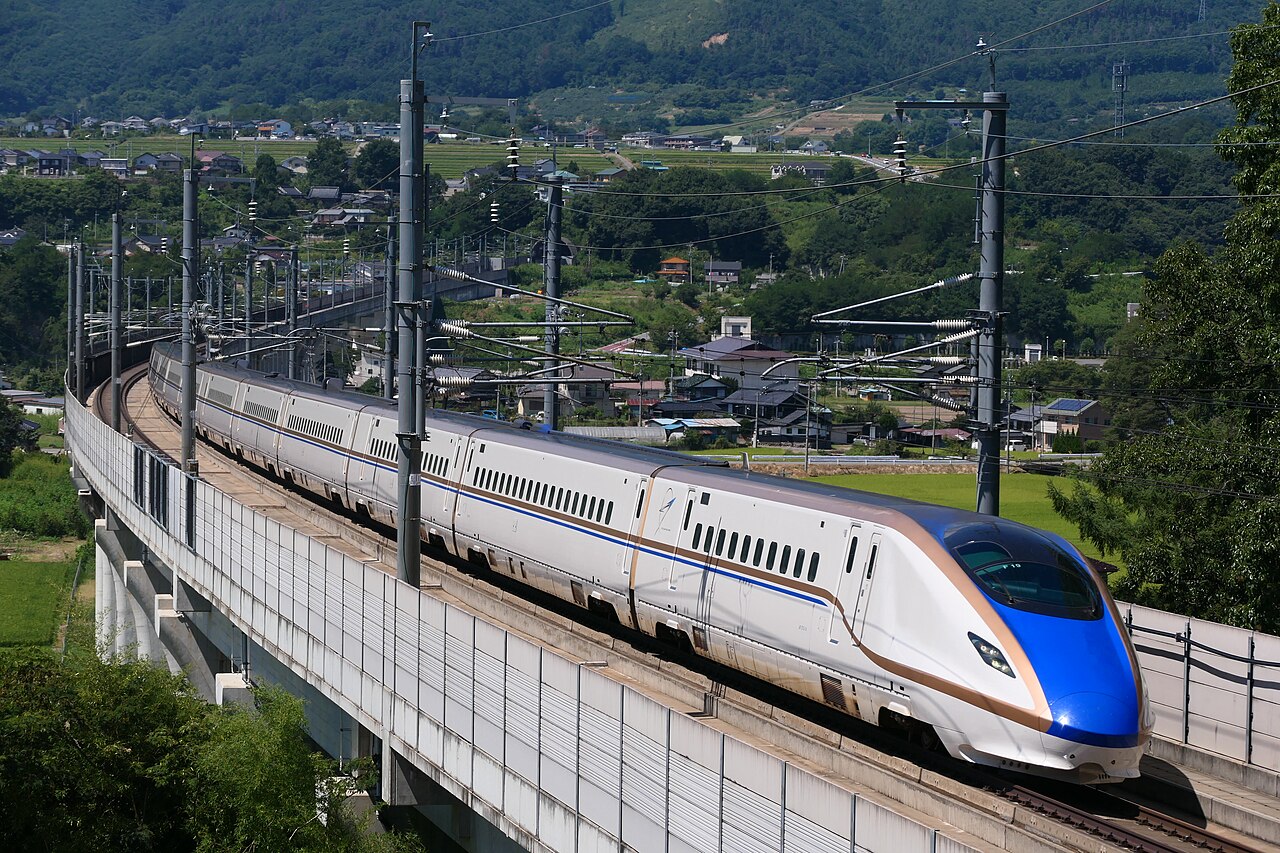
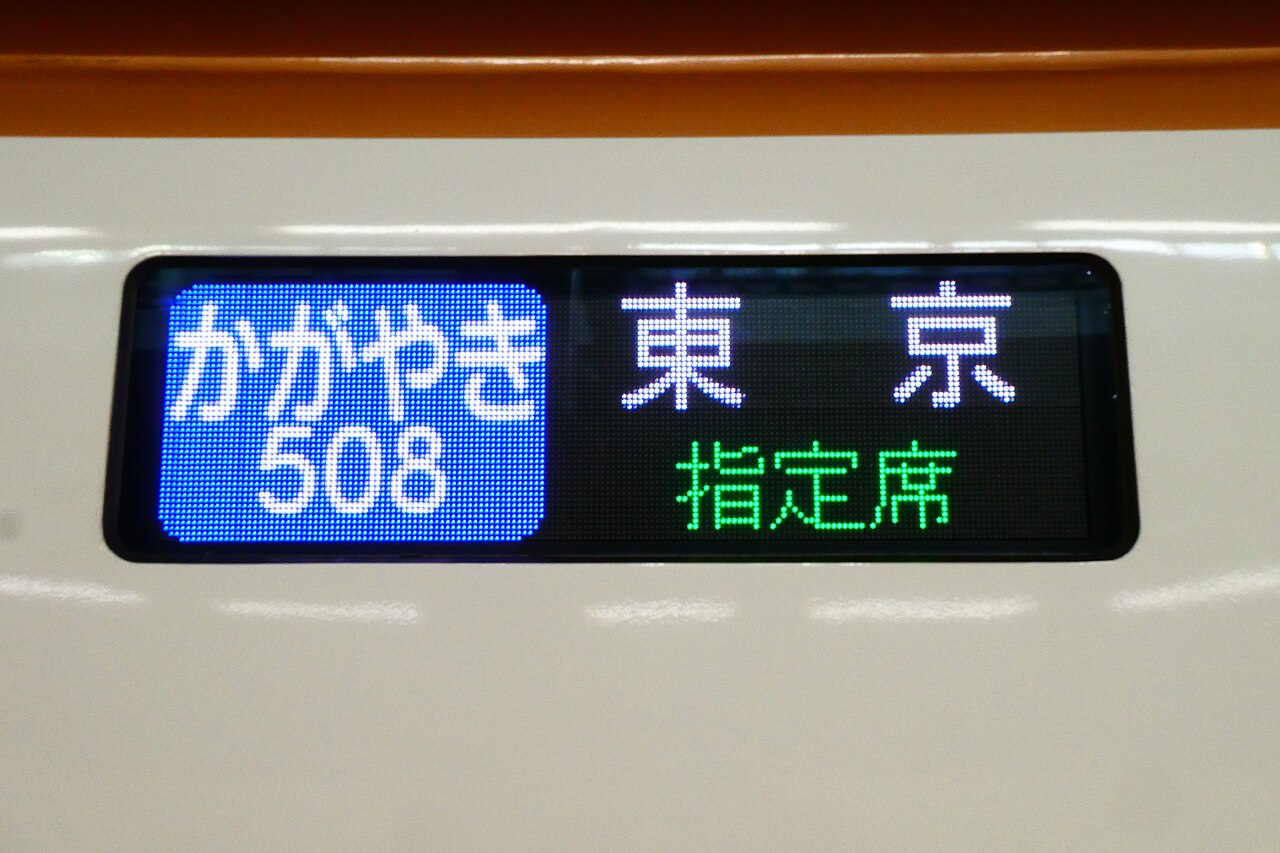
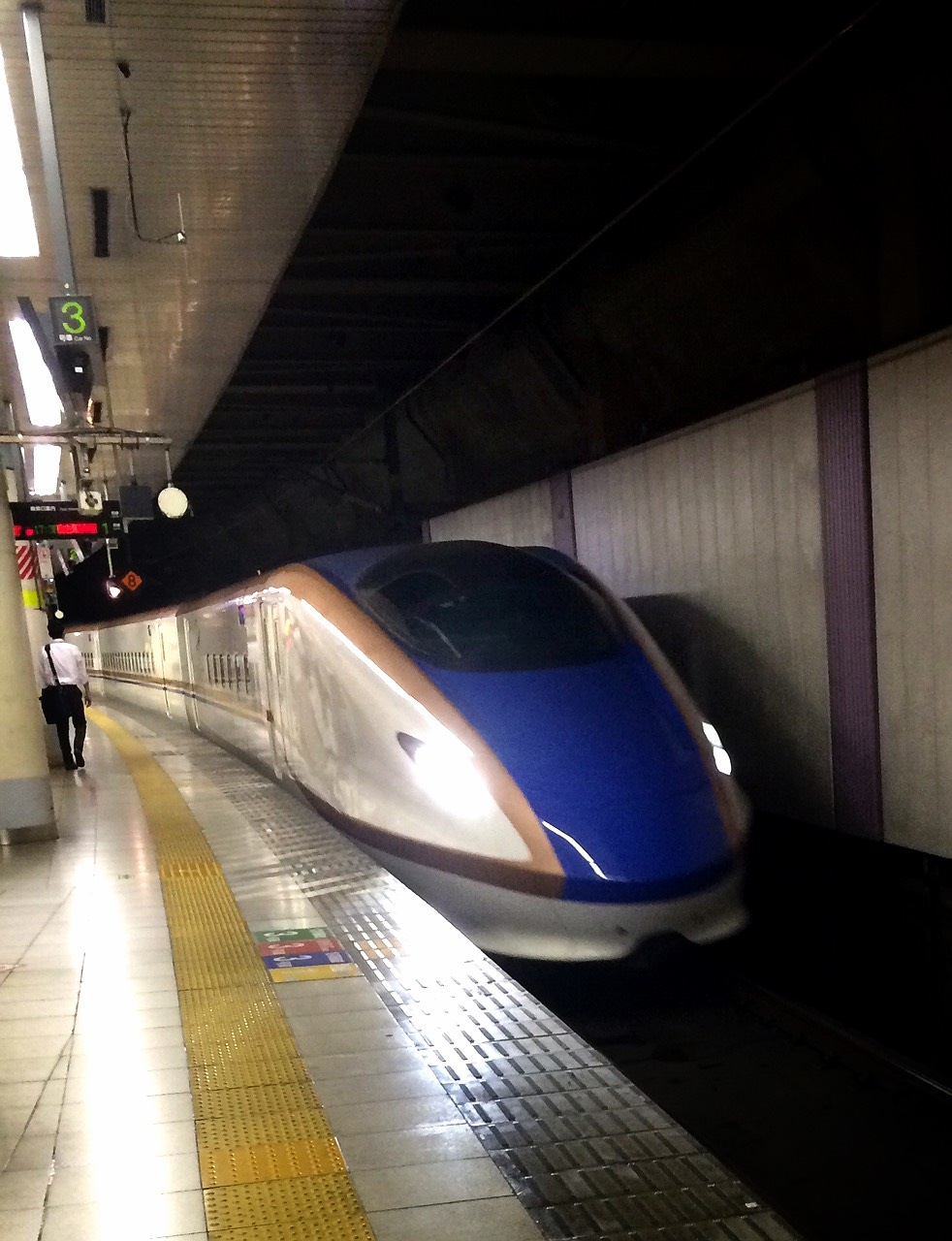
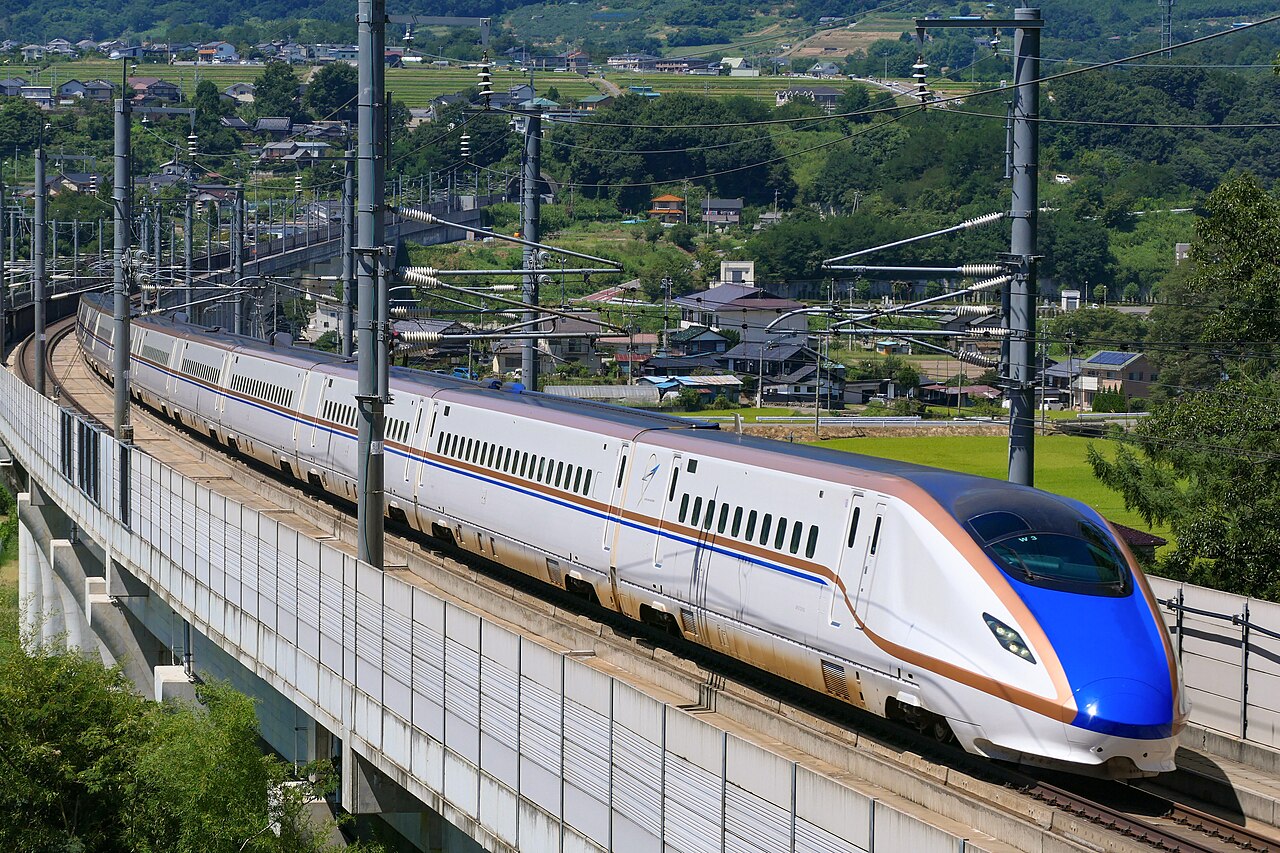
Capable of a maximum speed of 275 km/h, every working uses twelve-car E7 series sets from JR East and W7 series sets from JR West, both used on the route since 14 March 2015. Cars 1 to 10 are ordinary-class (2+3 seating), car 11 is a Green car (2+2) and car 12 is a Gran Class car (2+1); all seats are reserved and non-smoking. The name was chosen by public vote, placing fifth (Hakutaka was first).
The name Kagayaki long predates the Shinkansen. It was first introduced on 13 March 1988 as a limited express between Kanazawa and Nagaoka, connecting to Tokyo via the Joetsu Shinkansen; those trains ran at up to 120 km/h using 485 series electric multiple units. That service was discontinued from 23 March 1997 with the opening of the Hokuhoku Line and new Hakutaka services. The name was then reinstated on 14 March 2015 for limited-stop Shinkansen services between Tokyo and Kanazawa, following the line's opening beyond Nagano. From the revised timetable of 16 March 2024, with the extension to Tsuruga, nine of the ten daily return workings began running through to Tsuruga while one continued to begin and end at Kanazawa.
Timeline
- 1988The Kagayaki name debuts on 13 March 1988 as a JR West 485 series limited express between Kanazawa and Nagaoka, connecting to Tokyo via the Joetsu Shinkansen and running at up to 120 km/h.
- 1997The Kagayaki limited express is discontinued from 23 March 1997 with the opening of the Hokuhoku Line and the launch of new Hakutaka services connecting with the Joetsu Shinkansen at Echigo-Yuzawa.
- 2013On 10 October 2013, JR East and JR West announce the train names for the Hokuriku Shinkansen's Nagano–Kanazawa extension, with Kagayaki adopted as the fast service.
- 2015On 14 March 2015, the Kagayaki name is reinstated as the fastest Hokuriku Shinkansen service, running Tokyo to Kanazawa with twelve-car E7 and W7 sets following the line's opening beyond Nagano; tickets for the inaugural trains had sold out in 25 seconds on 14 February.
- 2019On 12 October 2019, Typhoon Hagibis breaches the Chikuma River levee and floods the Nagano Shinkansen rolling-stock depot, submerging ten E7/W7 trainsets — about one third of the Hokuriku Shinkansen fleet.
- 2021From the 13 March 2021 timetable revision, the maximum speed on the Ueno–Omiya section (within Saitama only) is raised from 110 km/h to 130 km/h, shortening journey times.
- 2024From the revised timetable on 16 March 2024, the Hokuriku Shinkansen extension to Tsuruga opens and nine of the ten daily return Kagayaki workings begin running through to Tsuruga, with one still terminating at Kanazawa.
Gallery 5 photos
Every photo for this page — tap any image to view it full-size. All from Wikimedia Commons (credit under each).