History
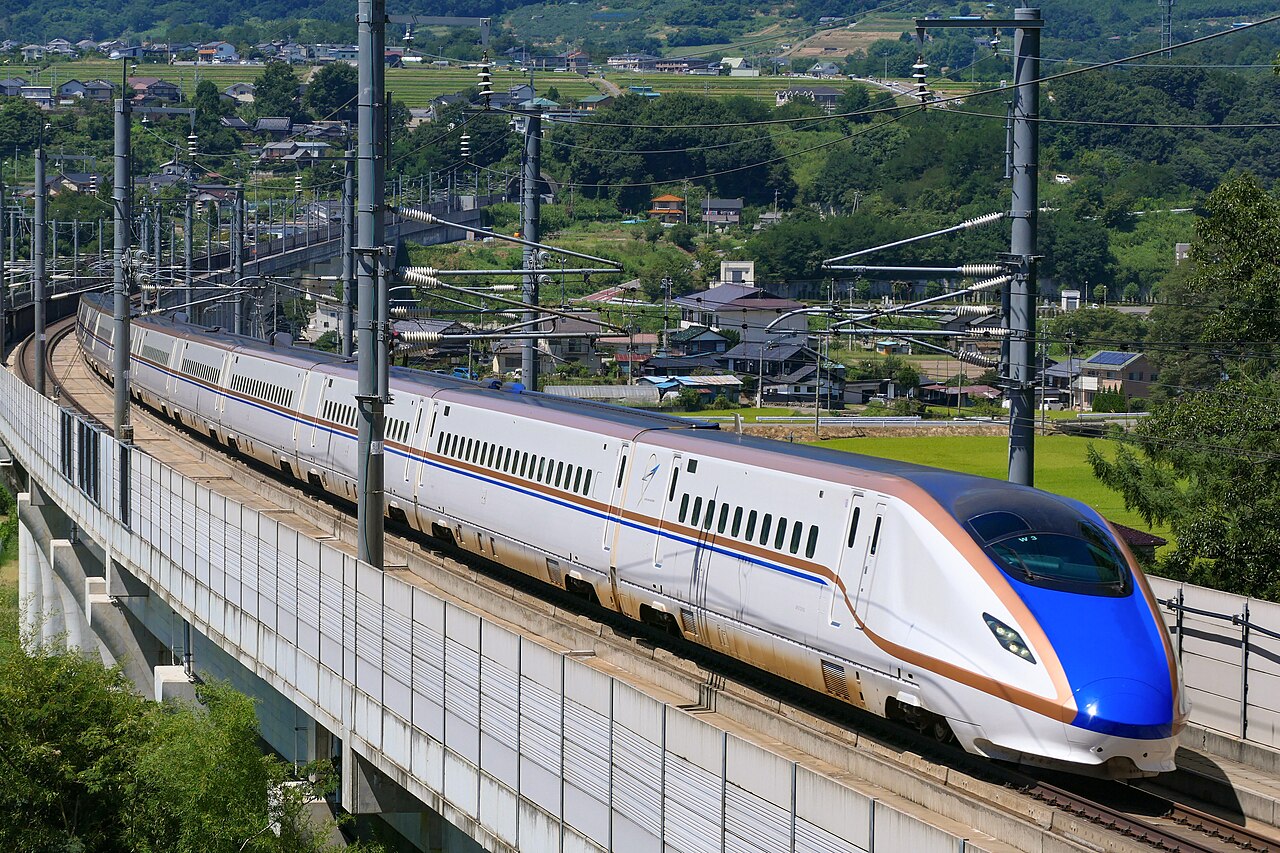
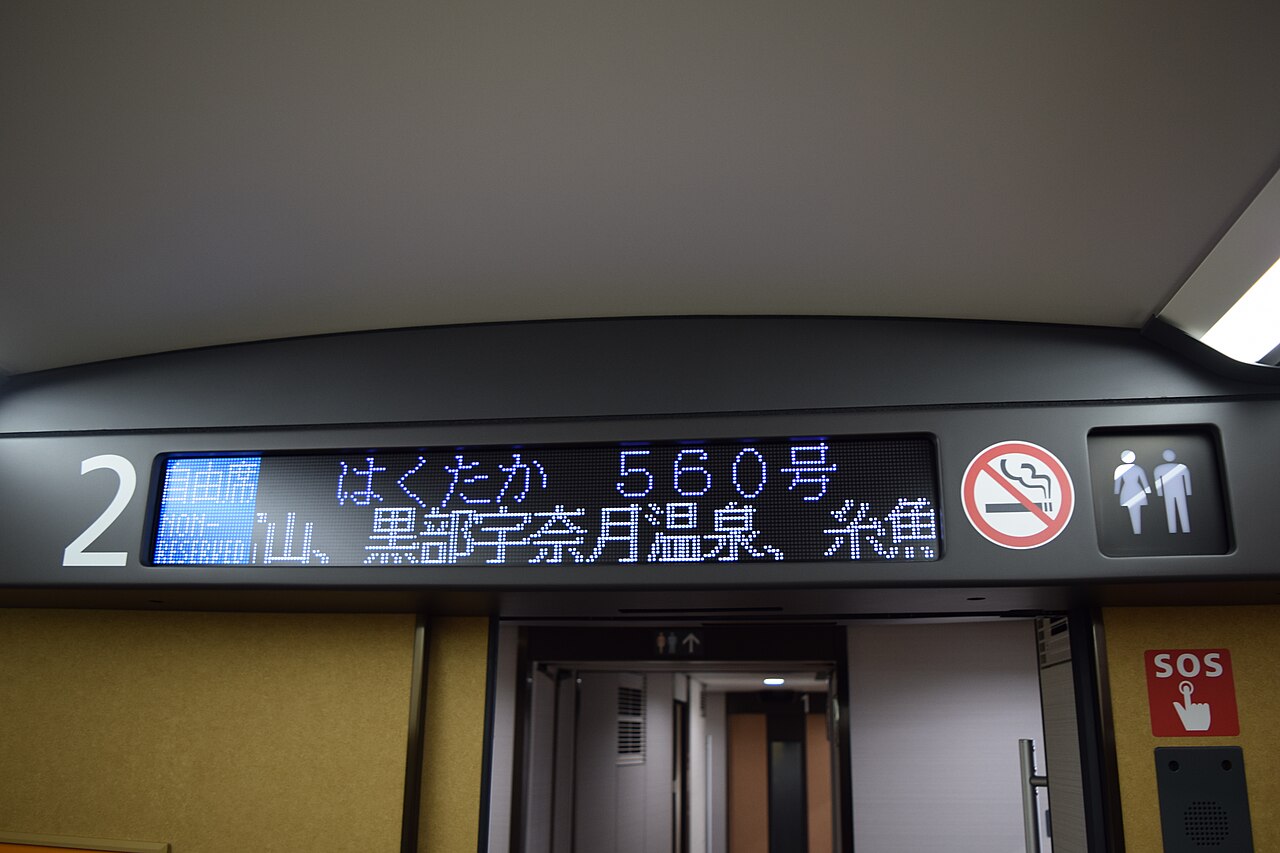
The W7 series entered revenue service on 14 March 2015, when the Hokuriku Shinkansen was extended from Nagano to Kanazawa, taking up the new Kagayaki, Hakutaka, and Tsurugi services as well as Asama duties; the first set, W1, had been delivered in April 2014. In May 2015 the W7 and E7 jointly won the Japan Railfan Club's 2015 Blue Ribbon Award. The type's maximum design speed of 275 km/h is reached on the Omiya-Takasaki section, while it runs at up to 260 km/h on the rest of the Hokuriku Shinkansen.
On 12 October 2019, two W7 sets (with eight E7 sets) were damaged by floodwater from Typhoon Hagibis while stabled at the Nagano Shinkansen Vehicle Center, where the Chikuma River breached its banks; all ten flooded sets, about one-third of the Hokuriku Shinkansen fleet, were announced for scrapping on 6 November 2019, the first withdrawals of E7/W7 stock. With the 16 March 2024 extension of the Hokuriku Shinkansen from Kanazawa to Tsuruga, the W7 series came to operate across all five prefectures of the Hokushin'etsu region. As of March 2024, 24 W7 sets had been built, of which 22 were in service.
Timeline
- 2015W7 series enters revenue service on 14 March with the Hokuriku Shinkansen extension from Nagano to Kanazawa, taking up Kagayaki, Hakutaka, Tsurugi, and Asama services; W7 and E7 jointly win the 2015 Blue Ribbon Award in May.
- 2019On 12 October, two W7 series sets (with eight E7 sets) are damaged by Typhoon Hagibis floodwater at the Nagano Shinkansen Vehicle Center; all ten flooded sets are announced for scrapping on 6 November and withdrawn.
- 2024With the 16 March extension of the Hokuriku Shinkansen from Kanazawa to Tsuruga, the W7 series comes to operate across all five prefectures of the Hokushin'etsu region.
Sources
Facts last verified 3 June 2026.
Gallery 6 photos
Every photo for this page — tap any image to view it full-size. All from Wikimedia Commons (credit under each).