History
The line's name has long puzzled travellers, because it serves neither the city of Jōetsu nor the historical Jōetsu region of western Niigata Prefecture, both of which are reached instead by the Hokuriku Shinkansen. The name is inherited from the parallel conventional Jōetsu Line, which in turn fuses the old provinces it joins: Jōshū, an alternate name for Kōzuke Province (today's Gunma Prefecture), and Echigo Province (modern Niigata Prefecture). The Shinkansen runs roughly parallel to the Takasaki Line between Ōmiya and Takasaki, and to the Jōetsu and Shin'etsu Main Lines onward to Niigata.
The origins of the project lie in the early 1970s. A construction concept for a Shinkansen running from Tokyo via Takasaki to the Sea of Japan coast had already appeared in the New Comprehensive National Development Plan that the Japanese cabinet adopted on 30 May 1969. The Nationwide Shinkansen Railway Development Act, promulgated in May 1970, then provided a legal framework for building Shinkansen aimed at economic growth and regional promotion rather than at relieving existing congestion. In January 1971 the Basic Plan designating Shinkansen lines whose construction should begin was published, naming three routes: the Tōhoku Shinkansen, the Jōetsu Shinkansen from Tokyo to Niigata, and the Narita Shinkansen. The corresponding construction plan was decided on 1 April 1971, fixing a maximum design speed of 260 km/h and assigning construction to the Japan Railway Construction Public Corporation. The line is closely associated with the Niigata-born prime minister Tanaka Kakuei, who championed its construction; a popular anecdote holds that he sketched the routing himself on a map with a red pencil.
Approval of the first construction-implementation plan for the Ōmiya–Niigata section came in October 1971, and work on the line began that December. From the outset the design anticipated a future Tokyo end built separately. The Tōhoku Shinkansen was to terminate at Tokyo Station while the Jōetsu Shinkansen was originally planned to terminate at Shinjuku, with each route reaching Ōmiya from its own city terminal; the Tokyo(Shinjuku)–Ōmiya segments were deferred to a separate plan. Economic pressures ultimately pushed Japanese National Railways (JNR) to merge the Jōetsu line into the Tōhoku Shinkansen at Ōmiya rather than build the costly Shinjuku approach, and although some land along what became the Saikyō Line was acquired, the additional 30 km of Shinkansen track from Ōmiya to Shinjuku that the Basic Plan still nominally specifies was never started. The line was engineered with margins for the future: although it opened to a plan of 210 km/h running with twelve-car trains, its construction standards allowed for 260 km/h and sixteen-car formations without major rework.
Construction proved exceptionally difficult because the route crosses the Mikuni Mountains, the central watershed of the Japanese archipelago, between Gunma and Niigata. Tunnels dominate the mountainous middle of the line; by structural breakdown the line is roughly 39 percent tunnel, 49 percent viaduct, 11 percent bridge and 1 percent roadbed. The signature bore is the Daishimizu Tunnel, at about 22.2 km one of the longest on the line, which carries the railway beneath the range; the Japanese-language sources reckon the Daishimizu Tunnel was holed through on 25 January 1979. The works were dangerous: on 20 March 1979 a fire in the Hotonosawa work section of the Daishimizu Tunnel, on the Gunma side near the prefectural boundary, killed sixteen workers, and a memorial to the dead stands beside the inspection adit there. The nearby Nakayama Tunnel was even more troublesome, suffering two serious water-inrush incidents during construction; the alignment had to be diverted from the original plan, leaving a 1,500 m-radius curve inside the tunnel that imposes a 160 km/h speed restriction to this day. Difficult tunnelling, combined with the post-oil-shock downturn and JNR's deteriorating finances, repeatedly slipped the completion target, which moved from fiscal 1976 to fiscal 1980 and then to fiscal 1986. Trial running over the line began in November 1980, starting with the Nagaoka–Niigata depot section, and the Nakayama Tunnel was finally holed through in December 1981.
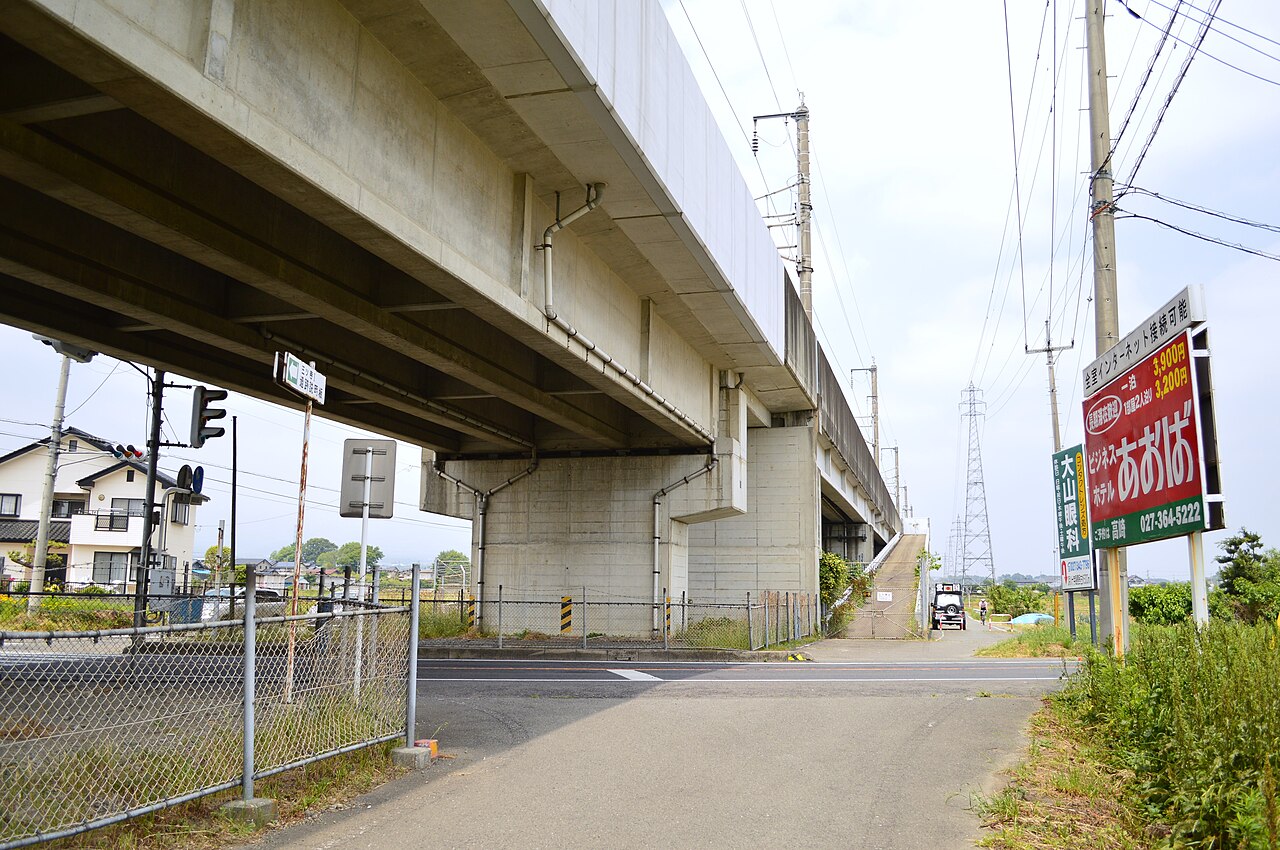
Because the new line ran through some of Japan's heaviest snow country, snow defences were central to its design. The Tōkaidō Shinkansen had lost punctuality to snow within four months of opening, so for the cold, snowy Tōhoku and Jōetsu lines a dedicated snow-countermeasures committee was set up, and more than a decade of meteorological survey and technical development on the Jōetsu corridor produced defences tuned to local conditions. Where the Tōkaidō relied largely on embankment and ballasted track, the Jōetsu line used viaduct and slab track over most of its length, and because snowfall along the route is heavy and wet, the stored-snow approach used elsewhere was judged unworkable. Instead the line adopted water-spray melting: a test viaduct was built in present-day Minamiuonuma and trialled over six winters, and spray equipment was installed along a large share of the open-air sections between Jōmō-Kōgen and the Niigata depot. River water and tunnel seepage are warmed to roughly 10 °C and sprayed by sprinklers, the meltwater draining off the viaducts to be recovered and reused. Short open stretches between tunnels were shielded with snow shelters, and stations from Jōmō-Kōgen northward have fully roofed platforms; at the heaviest-snow stations of Echigo-Yuzawa, Urasa and Nagaoka the roofs themselves are sprayed to clear snow. These measures keep snow-related disruption rare.
The Jōetsu Shinkansen opened on 15 November 1982, about five months after the Tōhoku Shinkansen's own Ōmiya–Morioka opening earlier that year. Service began with two named trains: the faster Asahi and the all-stations Toki, running provisionally from a temporary terminus at Ōmiya because the line into central Tokyo did not yet exist. From Ōmiya, passengers transferred to a dedicated 'Shinkansen Relay' connecting service to reach Ueno and Tokyo. The 200 series, the snow-and-cold-hardened cousin of the Tōkaidō's 0 series, provided the trains. The Tokyo end was then completed in two stages shared with the Tōhoku Shinkansen: the Ueno–Ōmiya section opened on 14 March 1985, at which point the maximum speed was raised to 240 km/h and Jōetsu trains began running through to Ueno; the final Tokyo–Ueno section opened on 20 June 1991, giving Jōetsu trains direct access to Tokyo Station and removing the need to change at Ueno.
The line passed out of state hands with the privatisation of JNR on 1 April 1987, when its railway facilities were transferred to the Shinkansen Holding Corporation and leased to the newly formed JR East; in October 1991 JR East purchased the Tōhoku and Jōetsu facilities outright from that body. The 1980s and 1990s brought steady acceleration and a series of speed experiments conducted on the Jōetsu line's long, straight tunnel grades. In September 1991 a 400 series set recorded a Japanese rail speed record of 345 km/h on the line, and in December 1993 the experimental STAR21 train reached 425 km/h. From March 1990, specially modified 200 series F90-series sets began running selected down Asahi services at 275 km/h on the falling grade inside the Daishimizu Tunnel between Jōmō-Kōgen and Urasa; this made the Asahi, for a time, the fastest scheduled train in Japan in terms of operating speed, ahead of the Tōkaidō Nozomi introduced in 1992. That 275 km/h running by the F90 sets continued until December 1999, after which the line settled back to a 240 km/h ceiling for ordinary services.
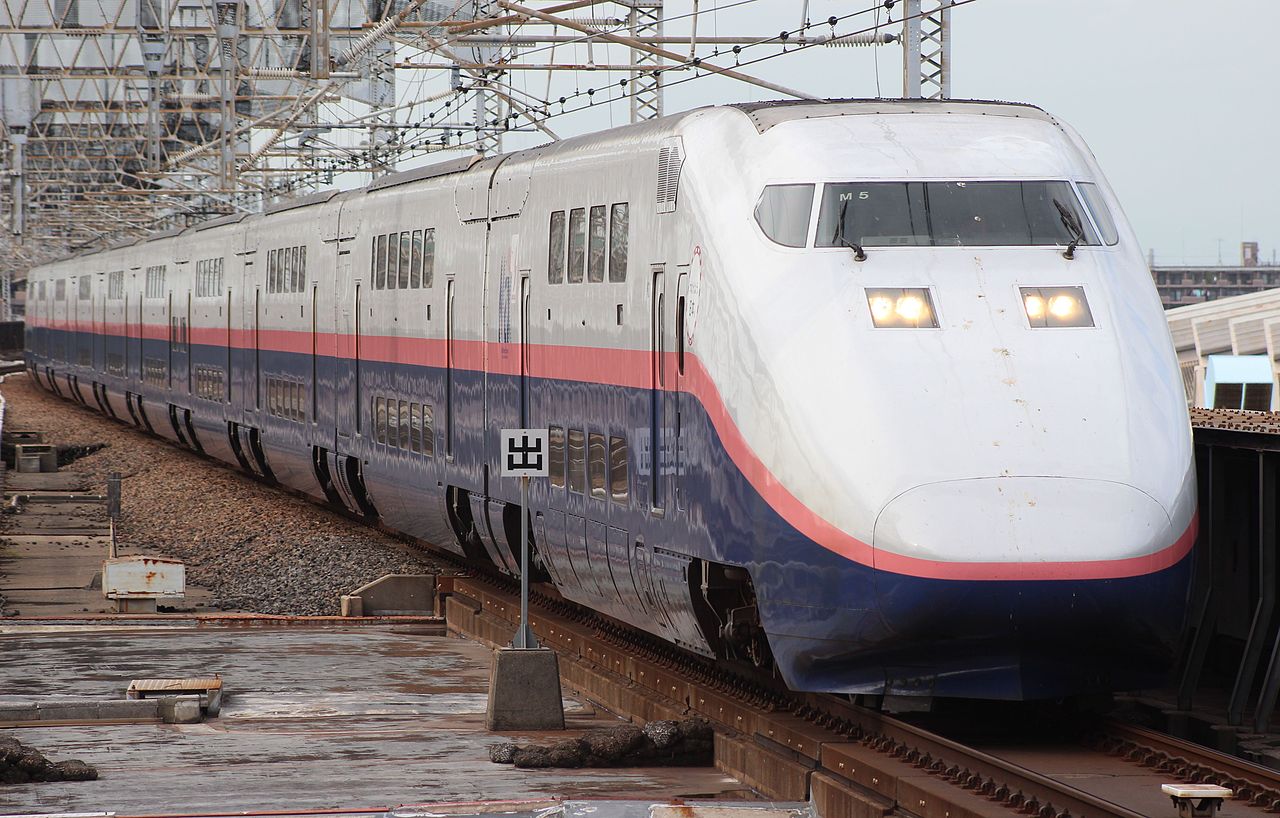
The naming of the services shifted with the wider network. When the Hokuriku (then Nagano) Shinkansen opened between Takasaki and Nagano on 1 October 1997, JR East reorganised Jōetsu services by route: the short-distance all-stations runs to Takasaki and Echigo-Yuzawa were increased and renamed Tanigawa, while the long-distance Tokyo–Niigata trains were unified under the Asahi name and the Toki name was retired. Because Asahi was easily confused with the Nagano line's Asama, the fast service was renamed Toki again in the December 2002 timetable, reviving a historic name. Double-deck 'Max' equipment served the line for many years: the E1 series entered service in July 1994 as the Max Asahi and Max Toki, and the E4 series followed in May 2001; the E1 ended regular operation in September 2012 and the E4 in October 2021, the last double-deck Shinkansen in Japan. Other stations and rolling stock came and went, including the opening of Honjō-Waseda Station in March 2004 and the E3-based Genbi Shinkansen art-gallery excursion set that ran from 2016 to 2020.
The Jōetsu Shinkansen holds a sombre place in railway history as the site of the first derailment of a Shinkansen in passenger service. At about 17:56 Japan Standard Time on 23 October 2004 the Niigata Chūetsu earthquake struck; seven trains in Niigata and Gunma were caught up in it. The down Toki 325 from Tokyo to Niigata, a ten-car 200 series K25 set running at roughly 200 km/h, derailed at a point about 5 km short of Nagaoka, just beyond the Takiya Tunnel, with eight of its ten cars leaving the rails. No one was injured. It was the first in-service derailment in the history of the Japanese Shinkansen since the Tōkaidō line opened on 1 October 1964 — a system that until then had carried passengers for four decades without such an event — and its significance lay precisely in that record being broken by an earthquake rather than by any operational fault. The quake damaged viaducts and tunnels between Urasa and Nagaoka and closed the line between Echigo-Yuzawa and Niigata. Recovery was rapid: replacement buses ran from 31 October, emergency reinforcement of five tunnels and the viaducts proceeded, and the whole line reopened on 28 December 2004 in time for the New Year travel period, with temporary speed restrictions north of Echigo-Yuzawa easing into early 2005. The derailed K25 set was scrapped on 25 March 2005. In direct response, JR East developed an 'L-shaped vehicle-deviation-prevention guide' to stop derailed cars from straying far from the rails, completing its installation across all Shinkansen rolling stock by the first half of fiscal 2008. The line had also been equipped from opening with a seismometer-based detection system spaced at roughly 20 km intervals, later augmented with the UrEDAS early-earthquake warning system from 1998.
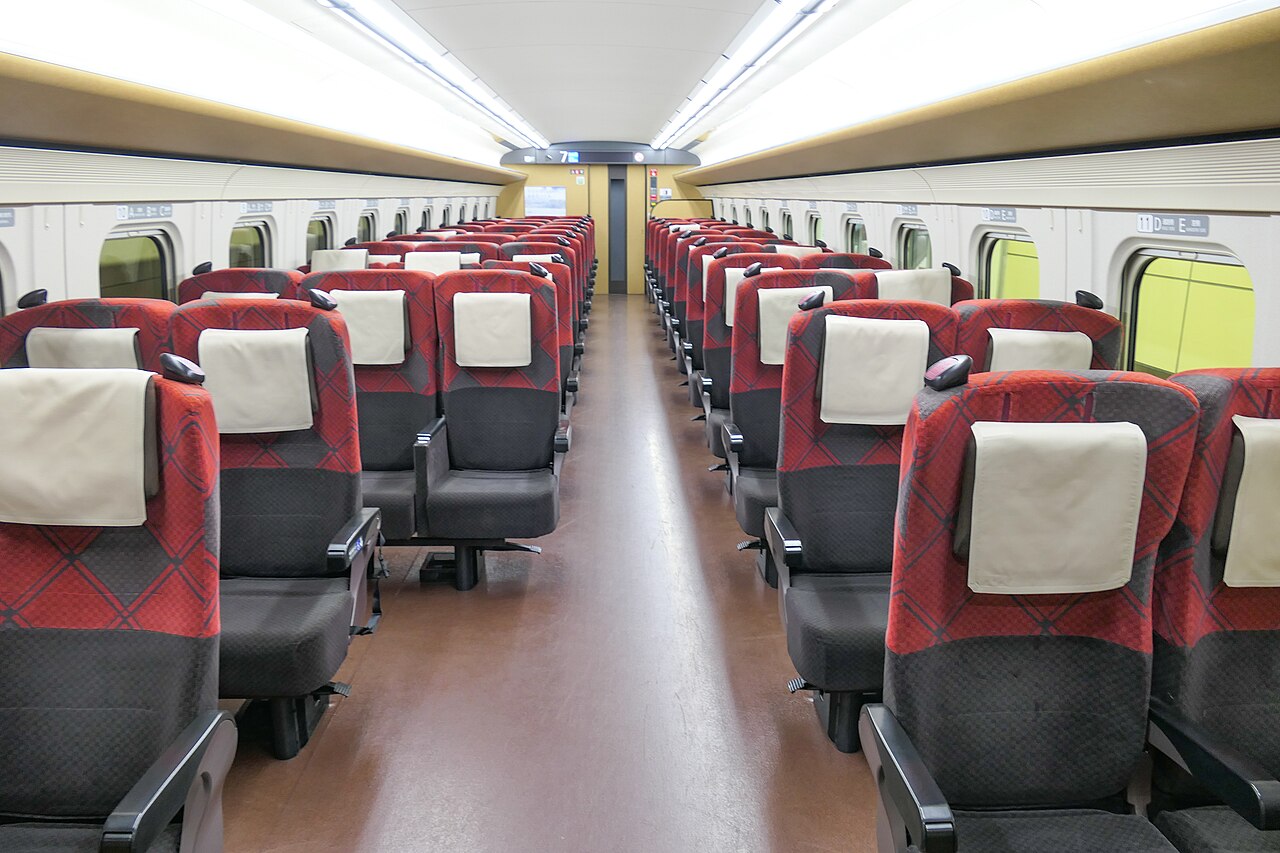
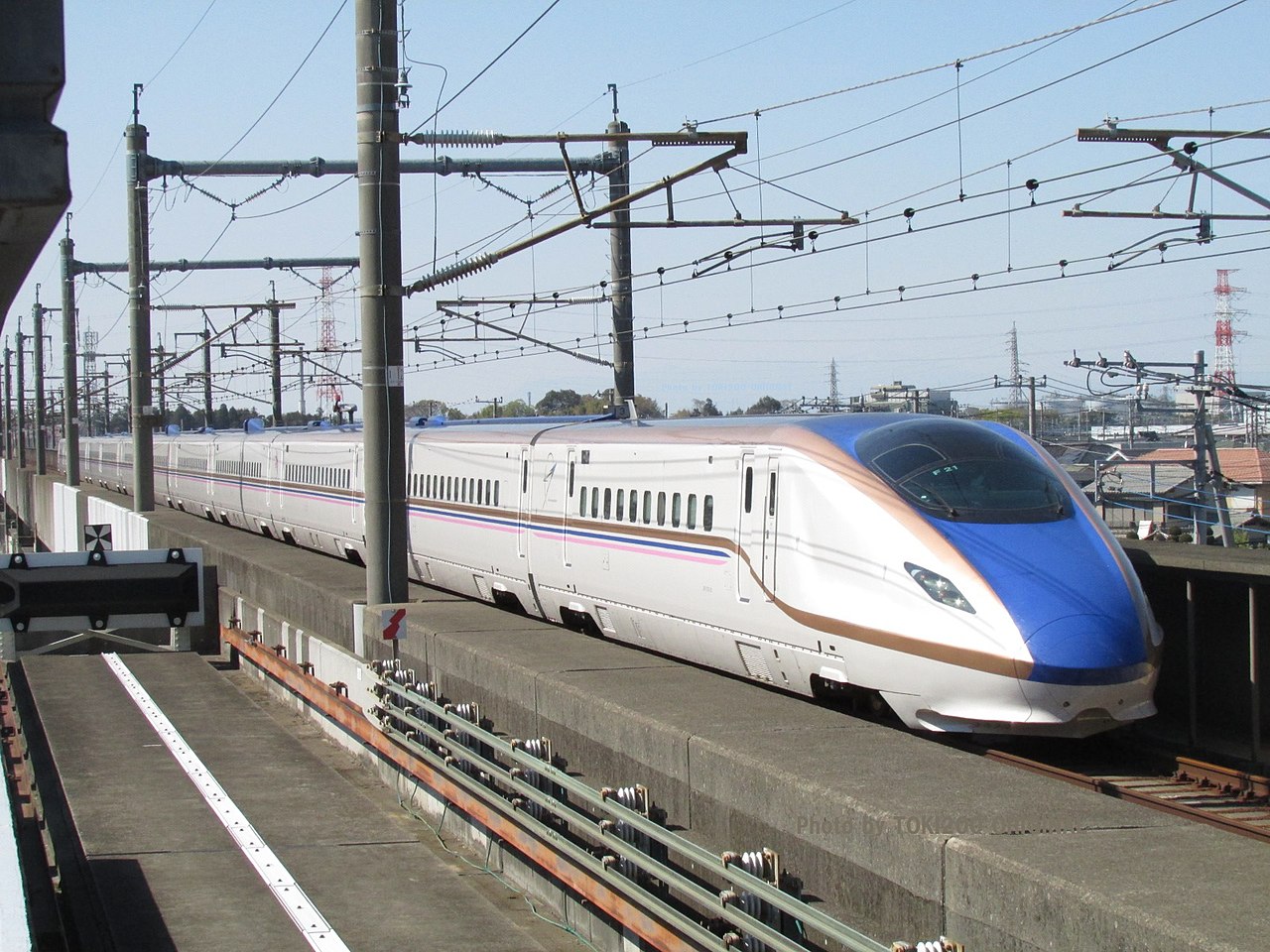
The most recent transformation was the long-planned speed increase. After decades capped at 240 km/h for regular services, JR East announced in 2019 that the maximum speed between Ōmiya and Niigata would be raised to 275 km/h. From mid-2019 through the end of fiscal 2022 the railway carried out noise-mitigation works — sound-absorbing panels and raised noise barriers — and standardised the line's fleet on the E7 series, which had begun appearing on Jōetsu services in March 2019. The last E2 series runs took place on 17 March 2023, and from the 18 March 2023 timetable revision the line ran exclusively with E7 series trains at a maximum of 275 km/h. The change cut the fastest Tokyo–Niigata time by about seven minutes, to 1 hour 29 minutes for the fastest down service and 1 hour 31 minutes for the fastest up service. It also marked the first time an E7 series train had operated commercially above 260 km/h, the ceiling on the only other line the type serves, the Hokuriku Shinkansen.
In its role the Jōetsu Shinkansen has been, for much of its life, more than a Niigata line: until the Hokuriku Shinkansen reached Kanazawa in March 2015, transfers at Echigo-Yuzawa and Nagaoka made it a principal route between Tokyo and the Hokuriku region of Toyama and Ishikawa, a role it then largely handed to the Hokuriku line. JR East has signalled the line's future direction by proposing driverless automatic operation on the Tokyo–Niigata route by around the mid-2030s. Looking further back, the line's heavy construction cost became a subject of public debate; in one recollection Tanaka Kakuei himself acknowledged the expense, suggesting that a lower design speed would have cost a fraction as much, a point recounted in a secondary source rather than the railway record. Today, with 10 stations on the main line, slab-track snow defences that keep it running through Japan's deepest winters, and a through-running pattern that ties the Sea of Japan coast into Tokyo in about an hour and a half, the Jōetsu Shinkansen remains the original trans-Honshū high-speed railway.
Timeline
- 196930 May: the New Comprehensive National Development Plan, adopted by the cabinet, includes a concept for a Shinkansen from Tokyo via Takasaki to the Sea of Japan coast.
- 1970May: the Nationwide Shinkansen Railway Development Act is promulgated, framing Shinkansen built for economic and regional development rather than for relieving congestion.
- 1971January: the Basic Plan names three lines to begin construction — Tōhoku, Jōetsu (Tokyo–Niigata) and Narita. 1 April: the construction plan is decided, fixing 260 km/h design speed and the Japan Railway Construction Public Corporation as builder. October: the Ōmiya–Niigata construction-implementation plan is approved; work begins in December. Project championed by PM Tanaka Kakuei.
- 197925 January: the Daishimizu Tunnel (~22.2 km) is holed through (per JA sources). 20 March: a fire in the tunnel's Hotonosawa work section kills 16 workers. The Nakayama Tunnel also suffers serious water inrushes during construction.
- 1980November: trial running begins, starting with the Nagaoka–Niigata depot section, including snow-countermeasure tests.
- 1981December: the difficult Nakayama Tunnel is holed through; the diverted alignment leaves a 1,500 m-radius curve imposing a permanent 160 km/h restriction.
- 198215 November: the Jōetsu Shinkansen opens, Ōmiya–Niigata, about 5 months after the Tōhoku Shinkansen's Ōmiya–Morioka opening. Services are the limited-stop Asahi and all-stations Toki, running from a temporary Ōmiya terminus with a Shinkansen Relay connection. 200 series enters service.
- 198514 March: the Ueno–Ōmiya section opens; maximum speed raised to 240 km/h; Jōetsu trains begin through service to Ueno.
- 19871 April: JNR is privatised; Jōetsu Shinkansen facilities pass to the Shinkansen Holding Corporation and are leased to JR East, which operates the line.
- 1990March: modified 200 series F90 sets begin running selected down Asahi services at 275 km/h on the falling grade inside the Daishimizu Tunnel (Jōmō-Kōgen–Urasa), making the Asahi briefly Japan's fastest scheduled train by operating speed.
- 1991September: a 400 series set records a Japanese rail speed record of 345 km/h on the line. 20 June: the Tokyo–Ueno section opens, giving Jōetsu trains direct access to Tokyo Station. October: JR East purchases the Tōhoku/Jōetsu facilities outright from the Shinkansen Holding Corporation.
- 1993December: the experimental STAR21 train records 425 km/h on the Jōetsu Shinkansen.
- 199415 July: the double-deck E1 series enters service as the Max Asahi and Max Toki.
- 19971 October: with the Nagano (Hokuriku) Shinkansen opening Takasaki–Nagano, Jōetsu services are reorganised by route — all-stations runs renamed Tanigawa, long-distance trains unified as Asahi, and the Toki name retired.
- 1999December: the 200 series F90 sets' 275 km/h running ends; ordinary services return to a 240 km/h ceiling.
- 20017 May: the double-deck E4 series enters service as the Max Asahi / Max Toki / Max Tanigawa.
- 2002December: the fast service is renamed Toki again (from Asahi) to avoid confusion with the Nagano line's Asama. Asahi service discontinued 30 November 2002 per EN.
- 200413 March: Honjō-Waseda Station opens; all Toki begin 240 km/h running; E2 series withdrawn from regular duty. 23 October ~17:56 JST: the Niigata Chūetsu earthquake derails Toki 325 (200 series K25, 10-car) at ~200 km/h about 5 km before Nagaoka past the Takiya Tunnel — 8 of 10 cars derail, no injuries. First in-service derailment in Shinkansen history since 1 Oct 1964. 28 December: the line fully reopens.
- 200525 March: the derailed 200 series K25 set is scrapped.
- 2008By the first half of fiscal 2008, JR East completes installation of the 'L-shaped vehicle-deviation-prevention guide', developed after the 2004 derailment, on all Shinkansen rolling stock.
- 201228 September: the E1 series 'Max' ends regular operation on the line.
- 201314 April: the 200 series ends revenue operation with a farewell run, after first entering service on the line in 1982.
- 201514 March: with the Hokuriku Shinkansen extended to Kanazawa, Jōetsu services are cut back and the line cedes its Tokyo–Hokuriku transfer role; all scheduled trains now stop at Ōmiya.
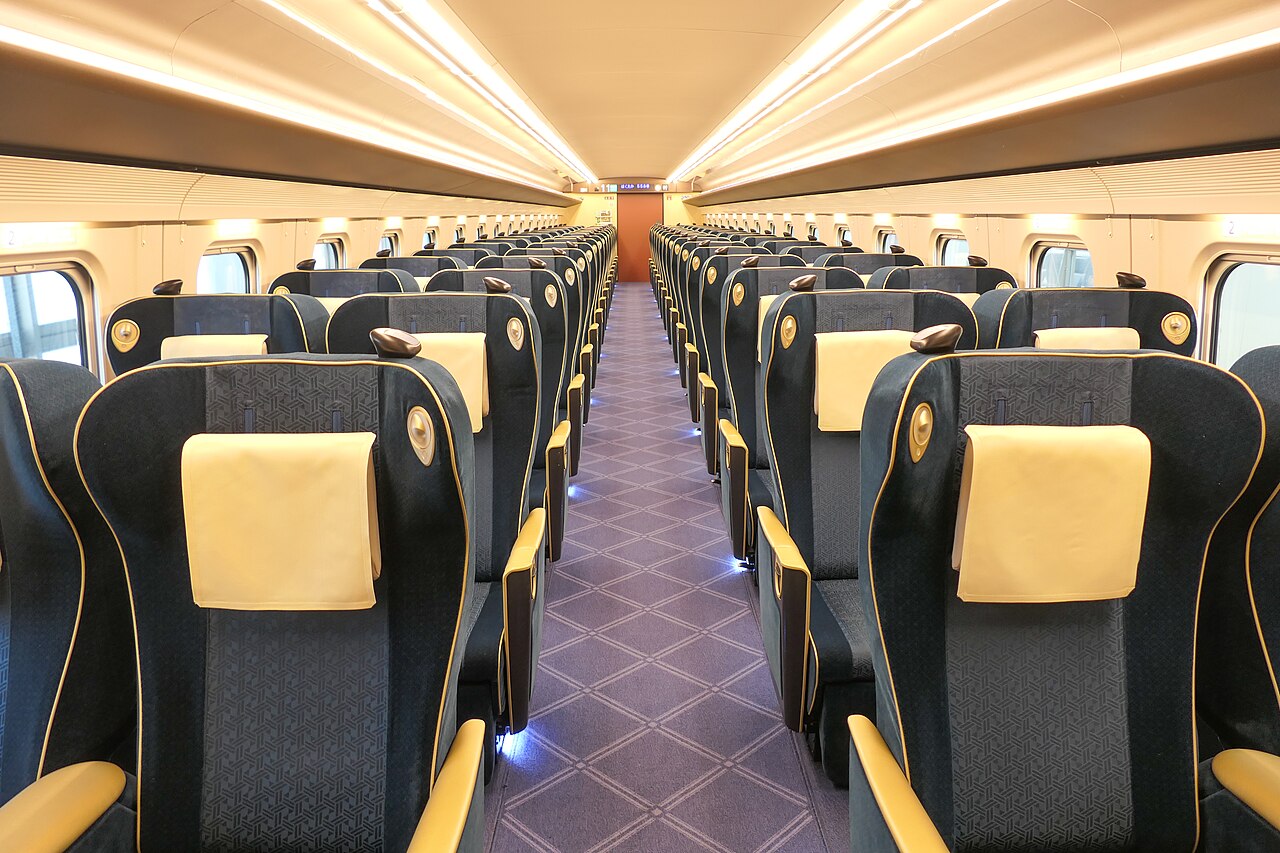
- 201916 March: the E7 series begins operating Jōetsu services (Toki and Tanigawa), with Gran Class. May: JR East announces the Ōmiya–Niigata speed-up to 275 km/h and starts ground-equipment / noise works.
- 20211 October: the E4 series 'Max' ends regular operation — the last double-deck Shinkansen in Japan.
- 202317 March: the last E2 series runs. 18 March: the line standardises on the E7 series and raises the maximum speed to 275 km/h, cutting the fastest Tokyo–Niigata time by ~7 minutes to 1h29m (down) / 1h31m (up); first E7 commercial operation above 260 km/h.
Sources
Facts last verified 3 June 2026.
Gallery 3 photos
Every photo for this page — tap any image to view it full-size. All from Wikimedia Commons (credit under each).