History
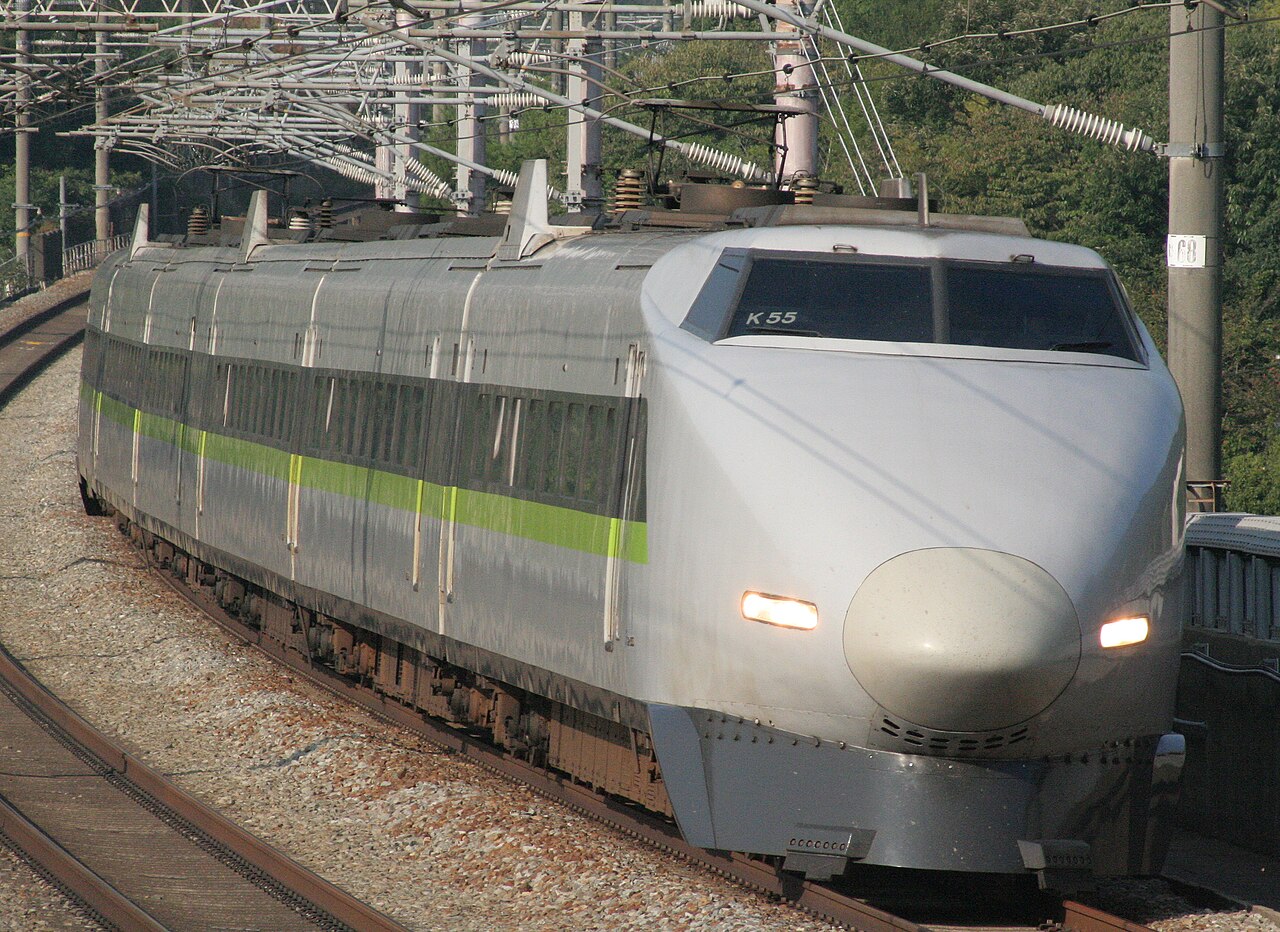
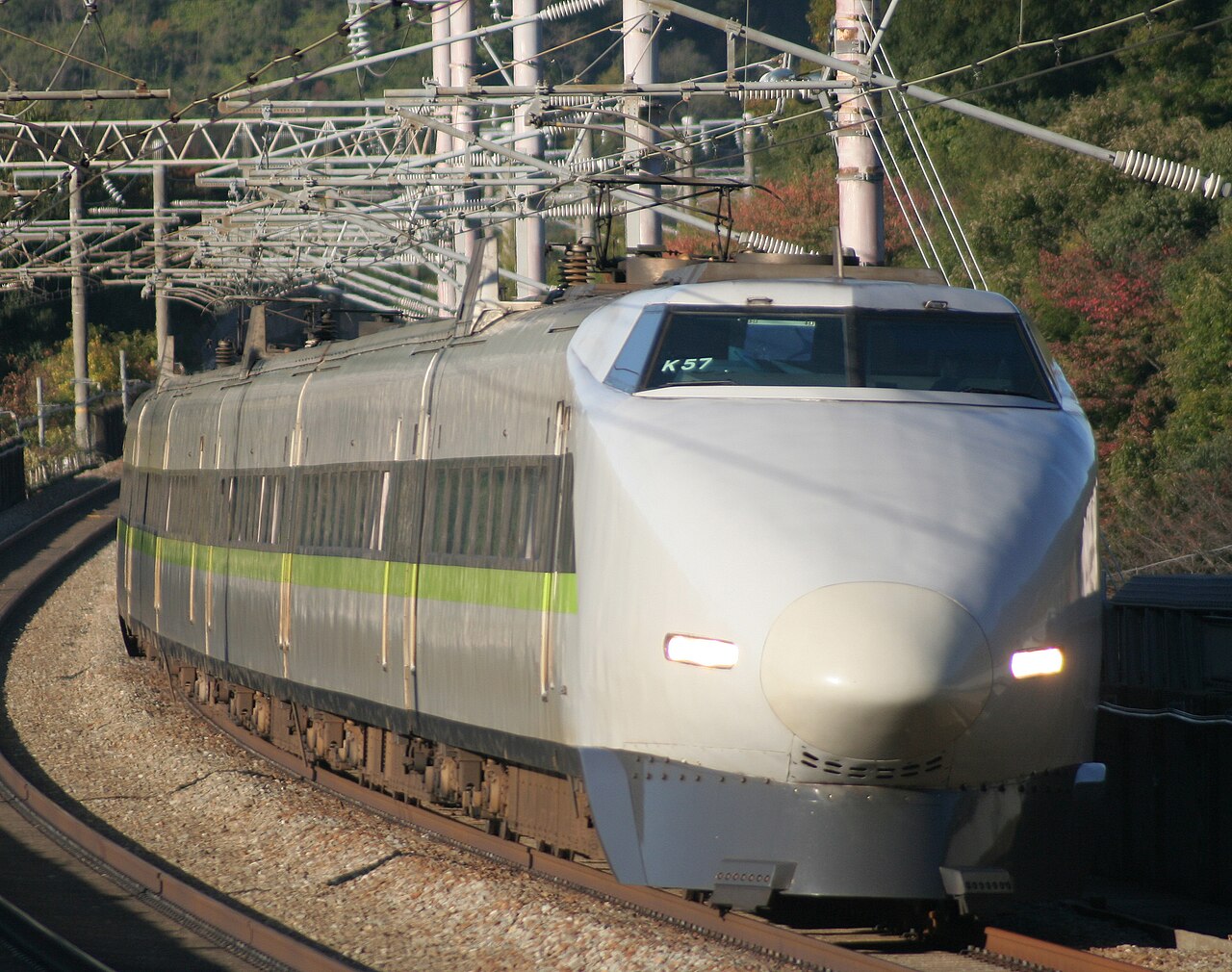
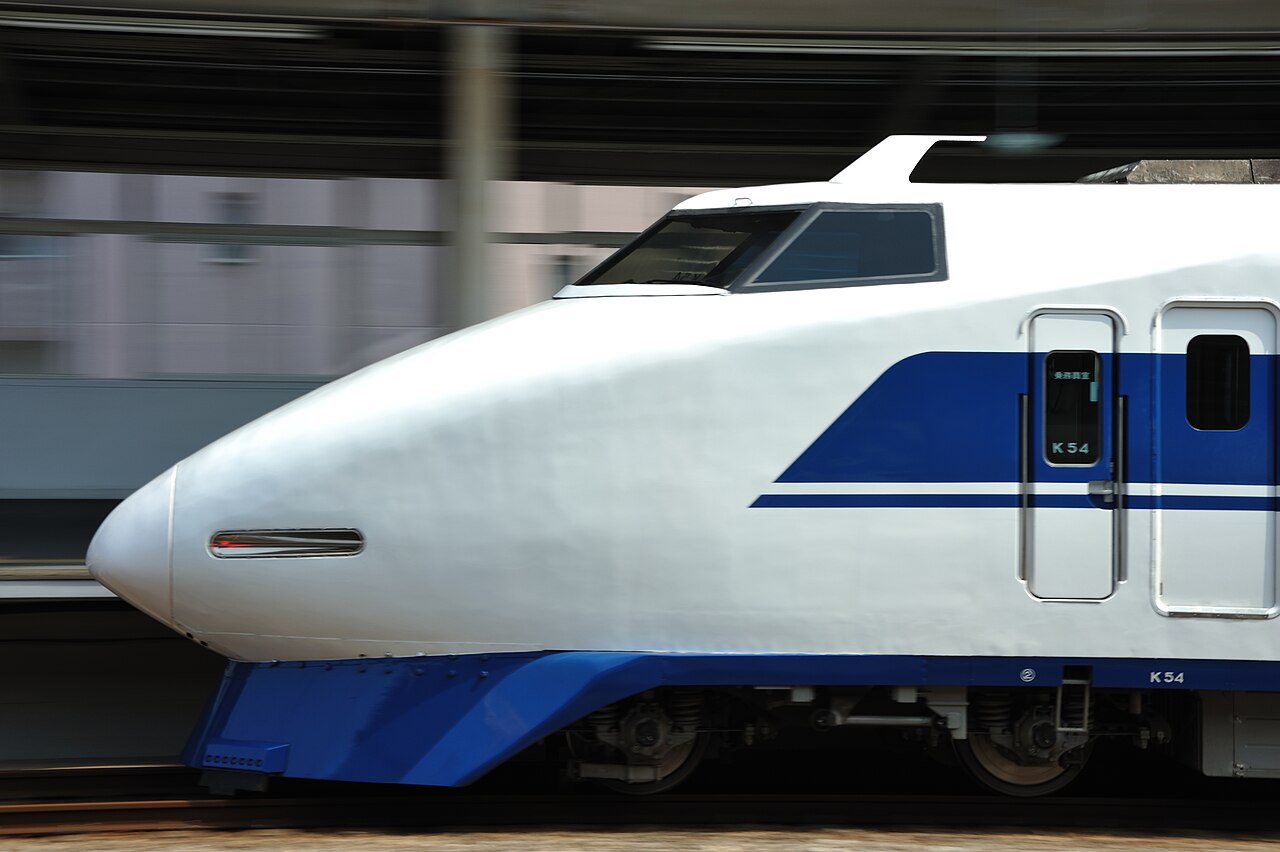
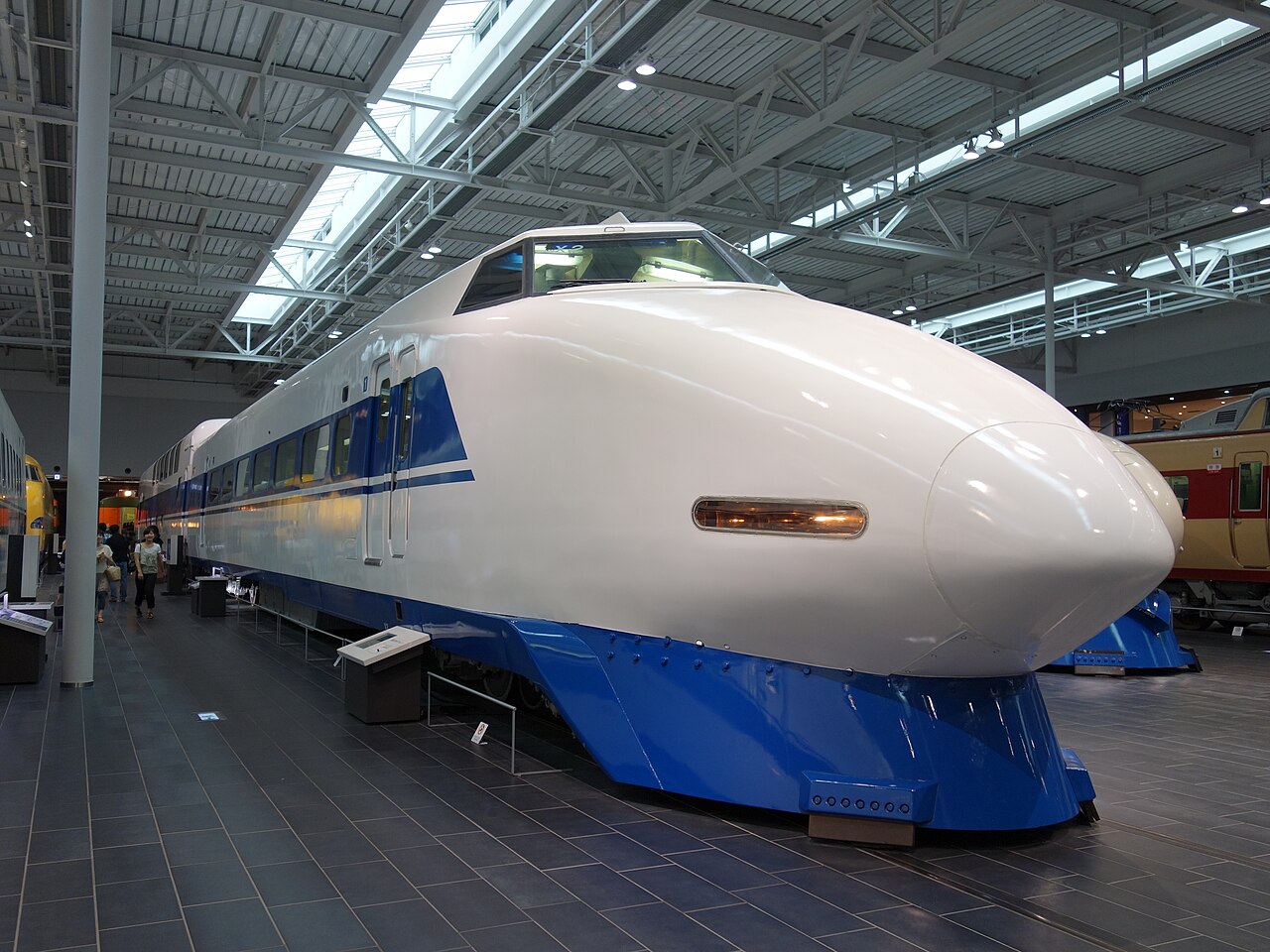
Two features set it apart from the 0 series: a sharper, more pointed nose nicknamed the "shark nose," and the inclusion of bi-level double-decker cars — the first on a JNR or Shinkansen train, following Kintetsu's Vista Car and railways in Europe and the United States. Their central double-decker cars carried a dining room on the upper deck (a cafeteria on the later G sets) with Green-class accommodation and private compartments; dining-car service ran until 10 March 2000. Most sets ran at a maximum service speed of 220 km/h, while JR West's "Grand Hikari" V sets (the separately type-approved 100N series) ran at 230 km/h on the San'yo Shinkansen; those V sets alone were given running gear designed with a view to future 270 km/h operation, though they were never run at that speed in revenue service.
The type was the mainstay of the Tokaido and San'yo lines from the late JNR era into the JR period, but as the faster 300, 500 and 700 series raised line speeds it could no longer keep up with the high-speed timetable. It was withdrawn from the Tokaido Shinkansen on 16 September 2003 and made its final San'yo runs on 16 March 2012; the last cars were scrapped by 2015.
Timeline
- 1985Revenue service begins on 1 October with a single Tokyo-to-Hakata Hikari working by the pre-series set; the pre-series X1 set had begun test running from 27 March that year.
- 1986First production sets enter service from 13 June (initially as 12-car Kodama sets); from the November timetable revision the X sets run as full sixteen-car formations including the dining car, on Hikari services.
- 1988From 13 March, G sets (carrying a cafeteria in place of the dining car) enter Hikari service on the Tokyo-Shin-Osaka route; the 50 G sets were built from 1988.
- 1989From 11 March, JR West's V sets (100N "Grand Hikari," with four double-decker cars) enter Hikari service between Tokyo and Hakata.
- 1992By the 14 March timetable revision all sixty-six sixteen-car sets are in service; construction of the type runs 1985-1992.
- 2000Dining-car service ends on 10 March; reformed four-car P sets enter San'yo Shinkansen Kodama service from October.
- 2002The V sets end operation on 23 November (after "Sayonara Grand Hikari" runs) and are reformed into shorter K and P sets for Kodama duties; the first six-car K set was formed in January for San'yo Kodama service from February.
- 2003Last regular Hikari runs on 22 August; the 100 series is withdrawn from the Tokaido Shinkansen on 16 September.
- 2011The last four-car P sets are withdrawn from revenue service (by 11 March / the 12 March timetable revision).
- 2012The six-car K sets leave regular operation on 14 March; the final run is the "Hikari 445" farewell working on 16 March, ending the type's revenue service on the San'yo Shinkansen.
Sources
Facts last verified 3 June 2026.
Gallery 4 photos
Every photo for this page — tap any image to view it full-size. All from Wikimedia Commons (credit under each).