History
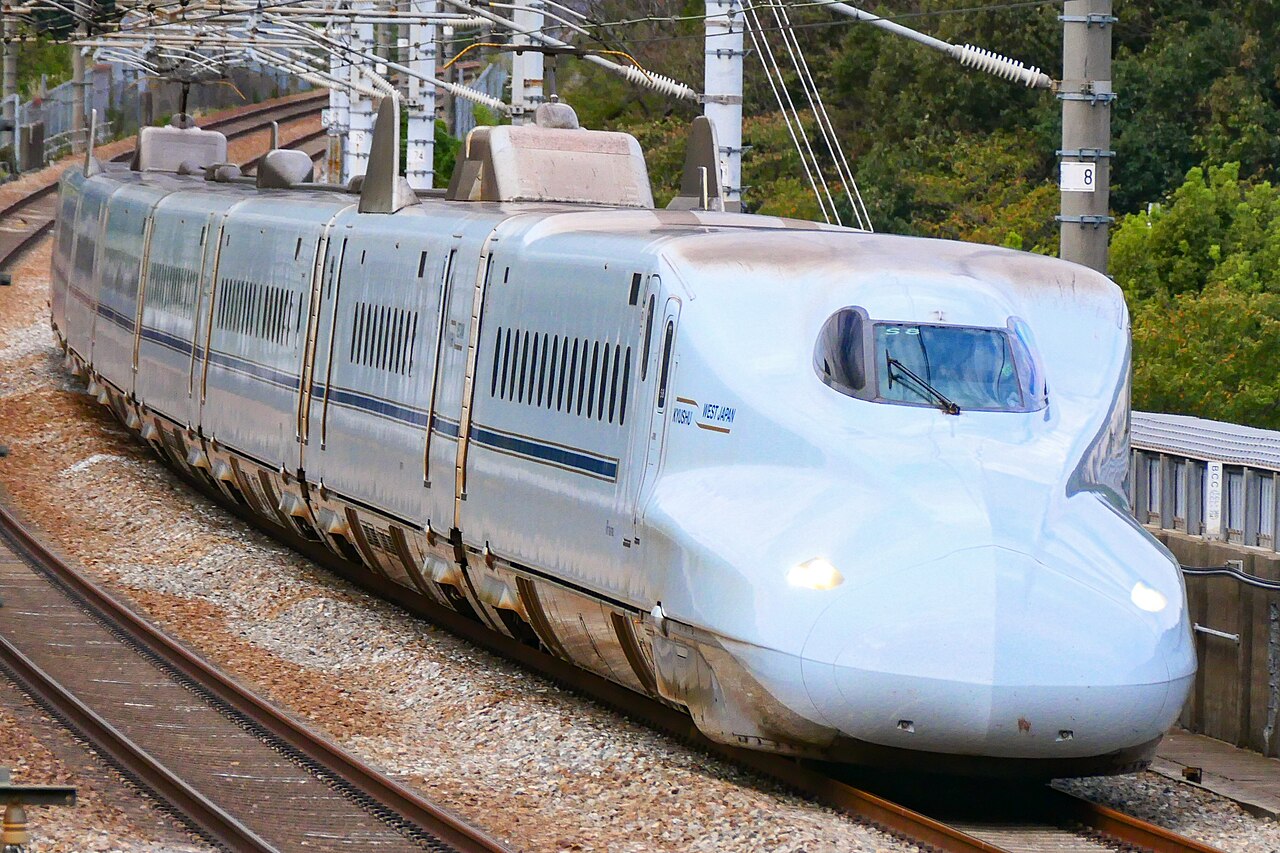
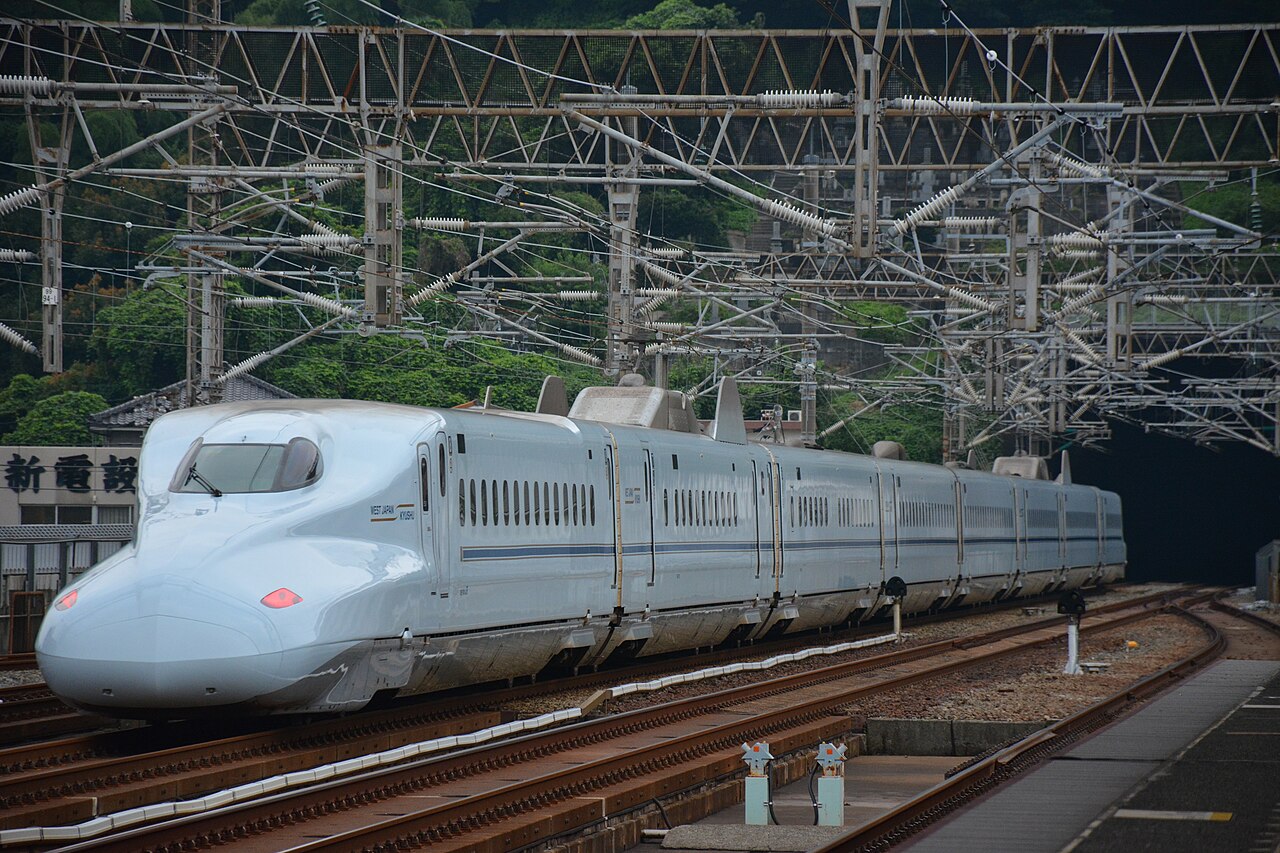
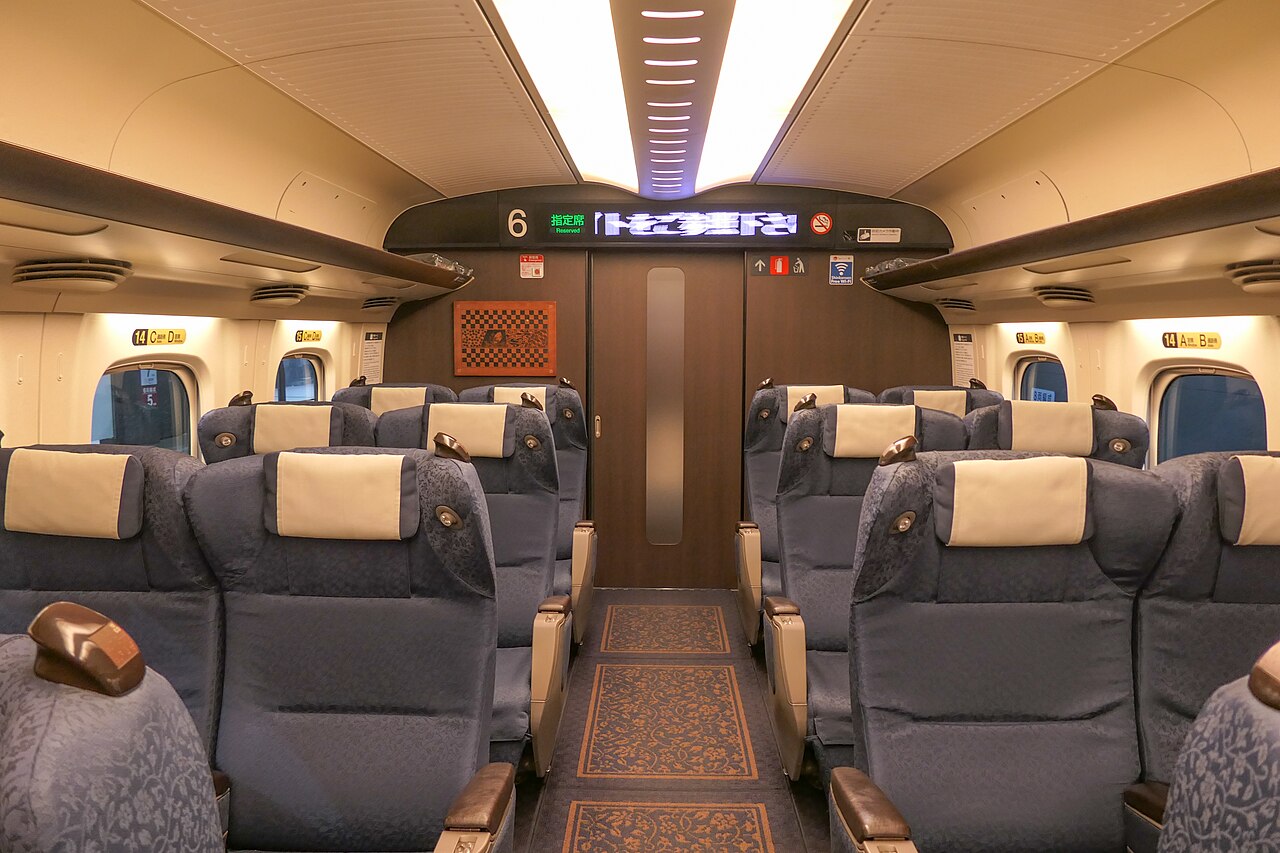
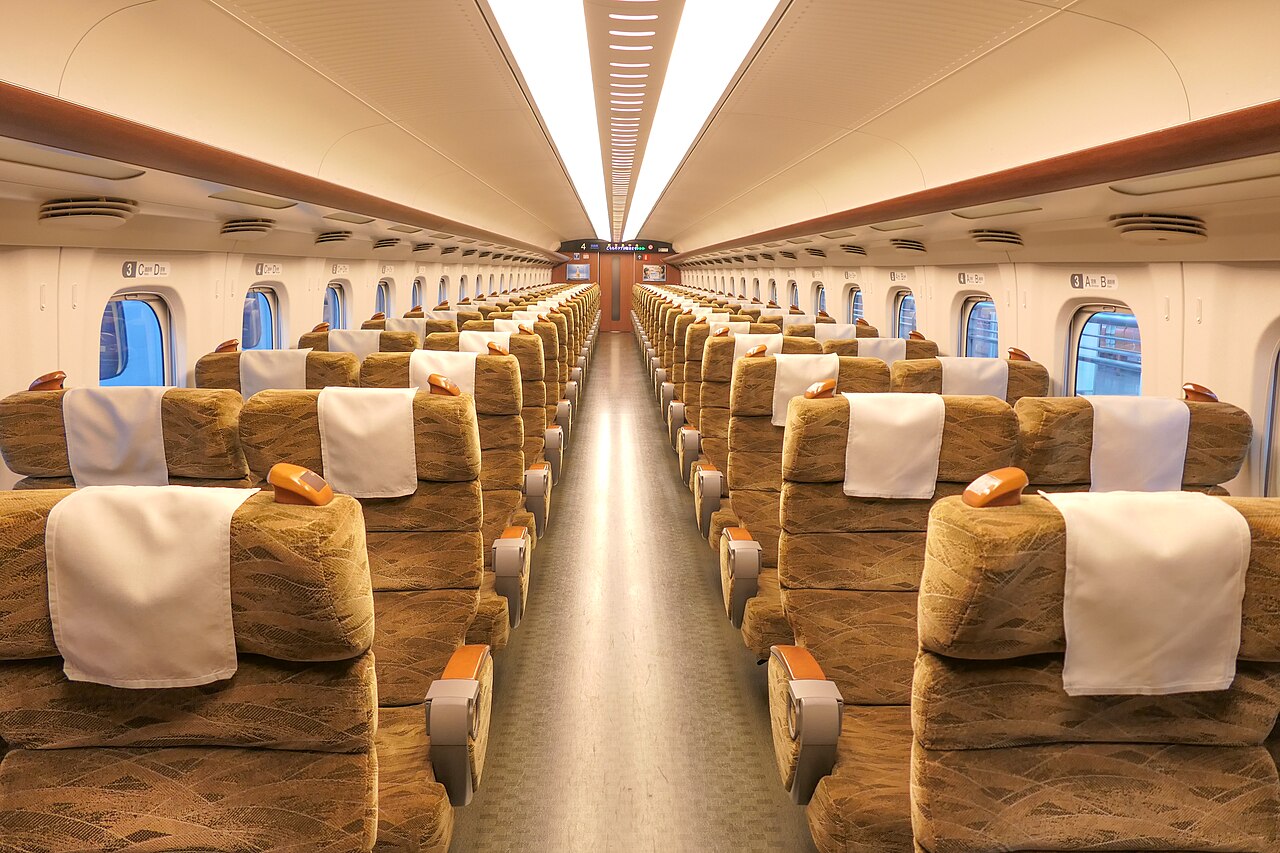
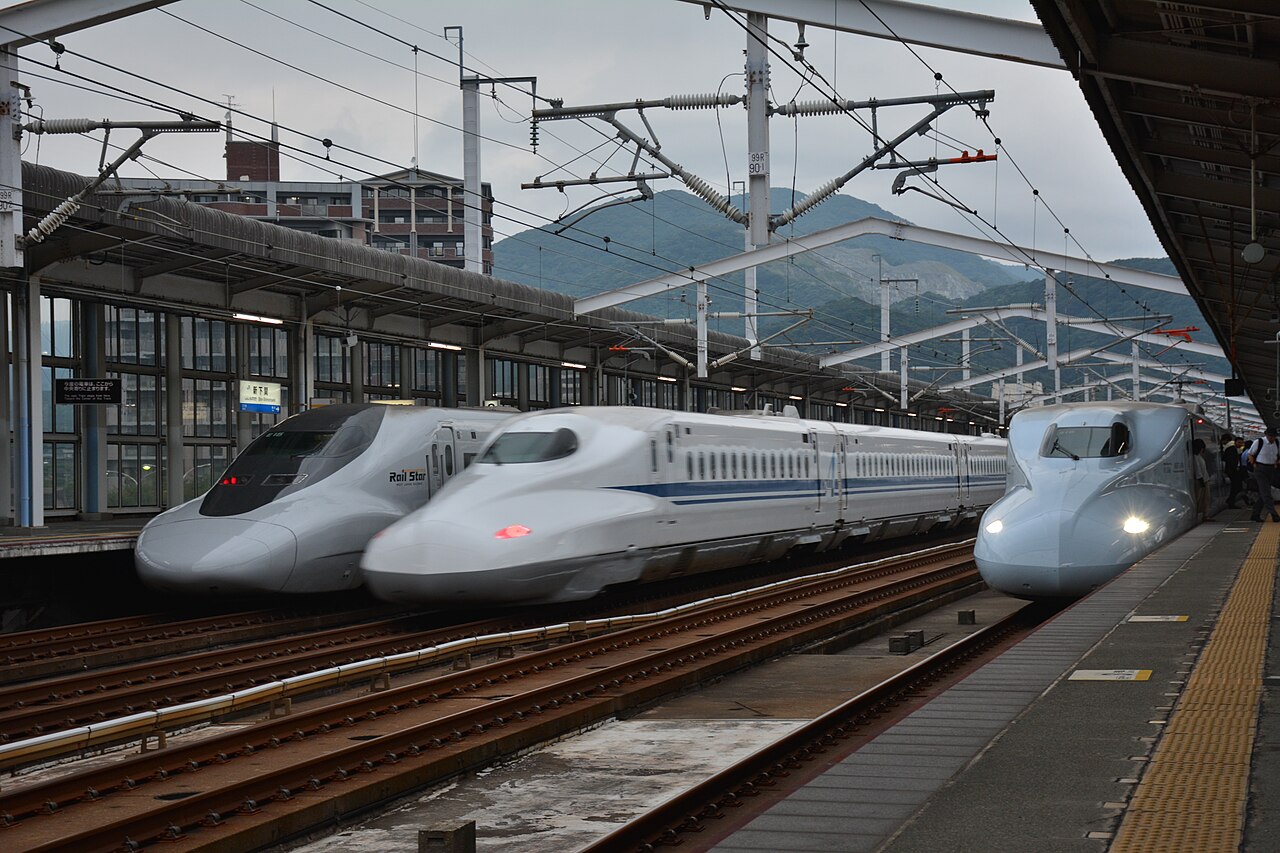
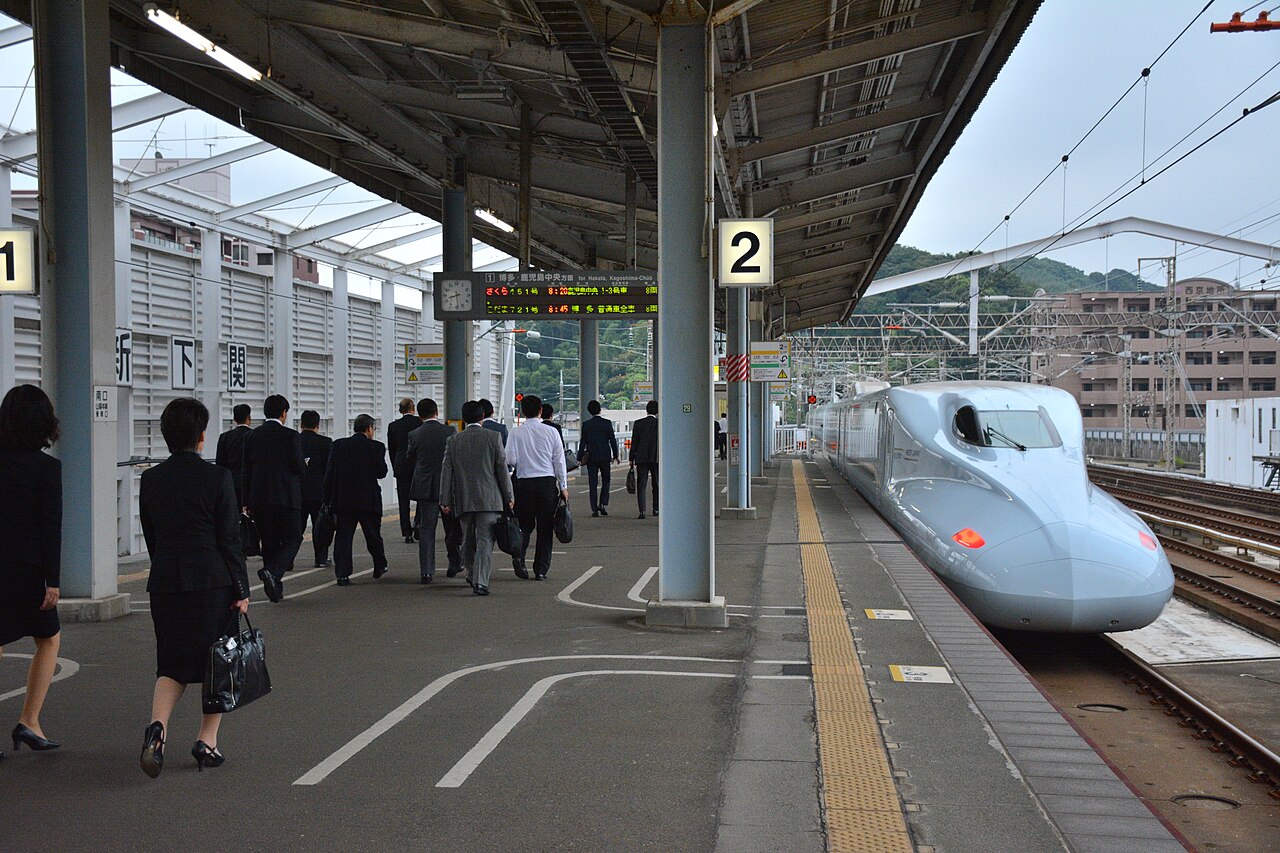
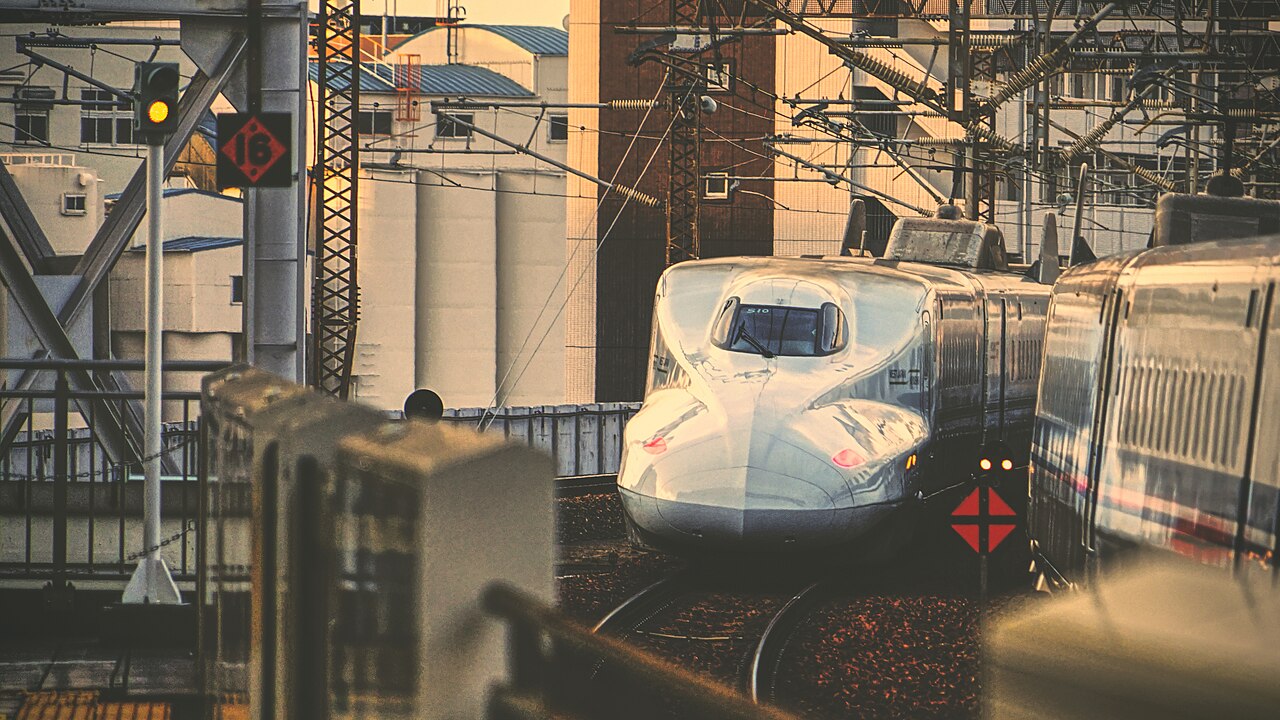
On the San'yo Shinkansen the Sakura runs at up to 300 km/h, and on the Kyushu Shinkansen at up to 260 km/h. Trains run roughly once an hour between Shin-Osaka and Kagoshima-Chuo throughout the day, with additional services that turn back within the Kyushu Shinkansen. Through services between the two lines are formed exclusively of eight-car N700-7000 (JR West) and N700-8000 (JR Kyushu) series sets. Jointly developed by JR West and JR Kyushu and based on the N700-0/3000 series, these are all-motored to handle the Kyushu Shinkansen's steepest gradient of 35 per mille and were shortened to eight cars to right-size capacity. Their interiors follow those of the Hikari Rail Star (700-7000 series), with non-reserved seating in cars 1–3 and reserved seating in cars 4–8, plus a Green car in car 6. Some Sakura runs between Hakata and Kagoshima-Chuo are worked by six-car 800 series trains, which do not run onto the San'yo Shinkansen. The fastest journey over the Shin-Osaka–Kagoshima-Chuo route was four hours and ten minutes when service began in 2011 and was shortened over successive timetable revisions, reaching exactly four hours in the March 2017 revision when new ATC entered service on the San'yo Shinkansen — the sub-four-hour target that had originally been set, achieved after the Mizuho.
The Sakura also carries a famous earlier name. It was formerly a limited-express sleeper run by JR Kyushu from Tokyo to Nagasaki and Sasebo in Kyushu, a service discontinued in 2005 under revised timetables. That lineage reaches back further still: the Sakura name was first used on 1 April 1951 for a daytime limited express between Tokyo and Osaka, while the sleeping-car service began on 20 July 1959 with 20 series cars and ran for the last time on the evening of 28 February 2005.
Timeline
- 1951The Sakura name is first introduced on 1 April 1951 as a daytime limited-express service between Tokyo and Osaka (discontinued October 1958).
- 1959The Sakura sleeping-car service commences on 20 July 1959 using 20 series sleeping cars; from March 1972 it is upgraded with 14 series sleeping cars.
- 2005The Sakura limited-express sleeper from Tokyo to Nagasaki and Sasebo runs for the last time on the evening of 28 February 2005 and is discontinued under revised timetables.
- 2009On 26 February 2009 JR Kyushu and JR West announce that the through San'yo-Kyushu Shinkansen service will be named Sakura, the public-contest winner (contest 1 Oct-30 Nov 2008) with 7,927 of 168,951 entries.
- 2011On 12 March 2011 the Sakura begins as a shinkansen service when the Kyushu Shinkansen opens end to end and through-running starts; 11 Sakura and 4 Mizuho round trips run Shin-Osaka-Kagoshima-Chuo, fastest journey four hours ten minutes.
- 2014From the 15 March 2014 timetable revision every Sakura stops at Shin-Tosu and Kurume, lengthening the fastest journey by one minute to four hours two minutes.
- 2017In the 4 March 2017 revision, new ATC on the San'yo Shinkansen cuts the fastest Shin-Osaka-Kagoshima-Chuo time to exactly four hours, meeting the original sub-four-hour target after the Mizuho.
- 2024From 16 March 2024 all cars become non-smoking, the onboard smoking compartments being discontinued under the smoking ban on the Tokaido, San'yo and Kyushu Shinkansen.
Gallery 7 photos
Every photo for this page — tap any image to view it full-size. All from Wikimedia Commons (credit under each).