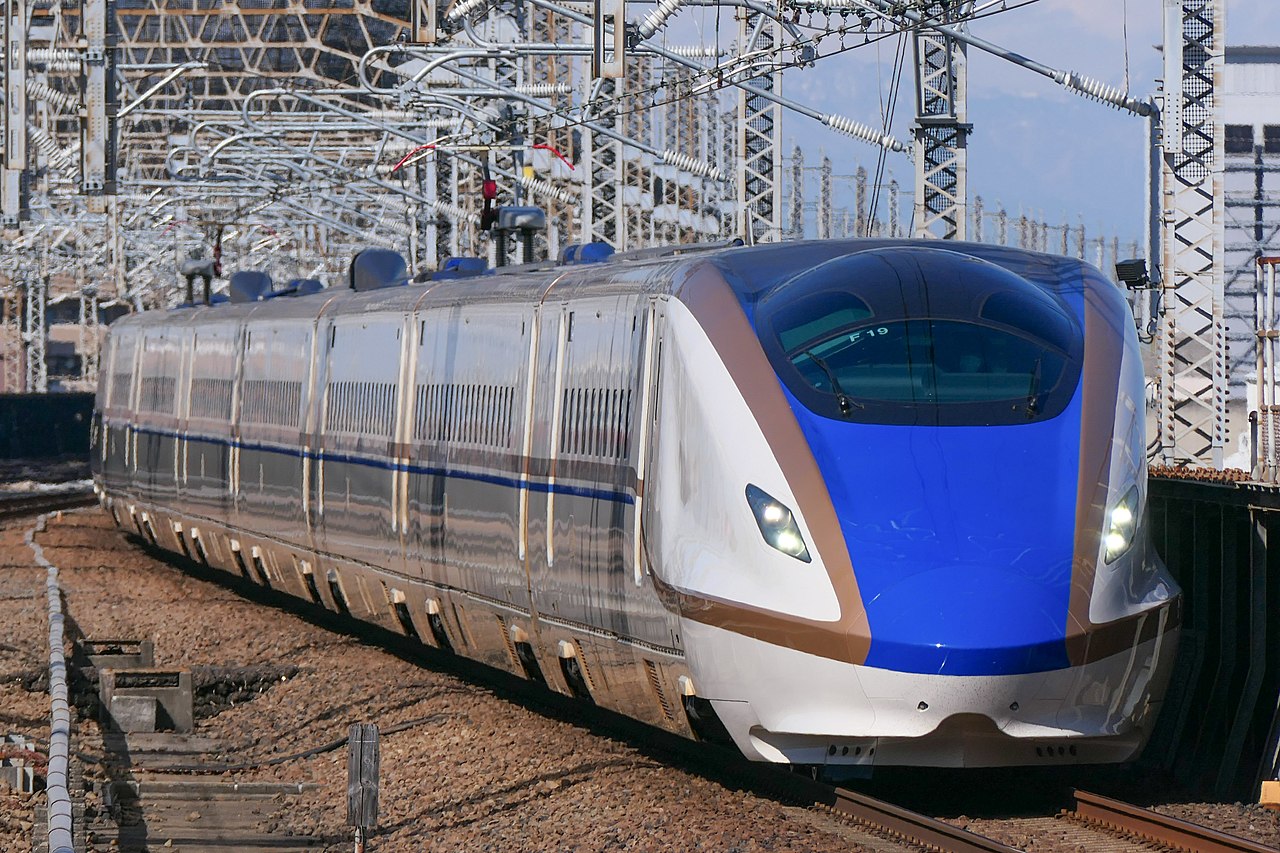
An E7 series set F19 on "Asama" No. 614 bound for Tokyo, entering Ōmiya Station on the Hokuriku Shinkansen. — MaedaAkihiko · CC BY-SA 4.0 · Wikimedia Commons
年表
2014Revenue service begins on 15 March; the first three E7 sets (F1-F3) enter Asama service between Tokyo and Nagano on the Hokuriku (then Nagano) Shinkansen.
2015From 14 March, with the Hokuriku Shinkansen extension from Nagano to Kanazawa, E7 sets work Kagayaki, Hakutaka, and Tsurugi services alongside the JR West W7 series, which enters service the same day.
2019Eight E7 and two W7 sets (10 sets / 120 cars, one-third of the Hokuriku fleet) are damaged by Typhoon Hagibis floodwaters at the Nagano Shinkansen Vehicle Center; all are scrapped (scrapping announced 6 November 2019). Separately, the E7 enters Jōetsu Shinkansen service (Toki, Tanigawa) from the 16 March 2019 revision.
2024Following the Hokuriku Shinkansen extension from Kanazawa to Tsuruga on 16 March, the Nagano-depot E7 sets and the W7 come to operate across all five prefectures of the Hokushin'etsu region.
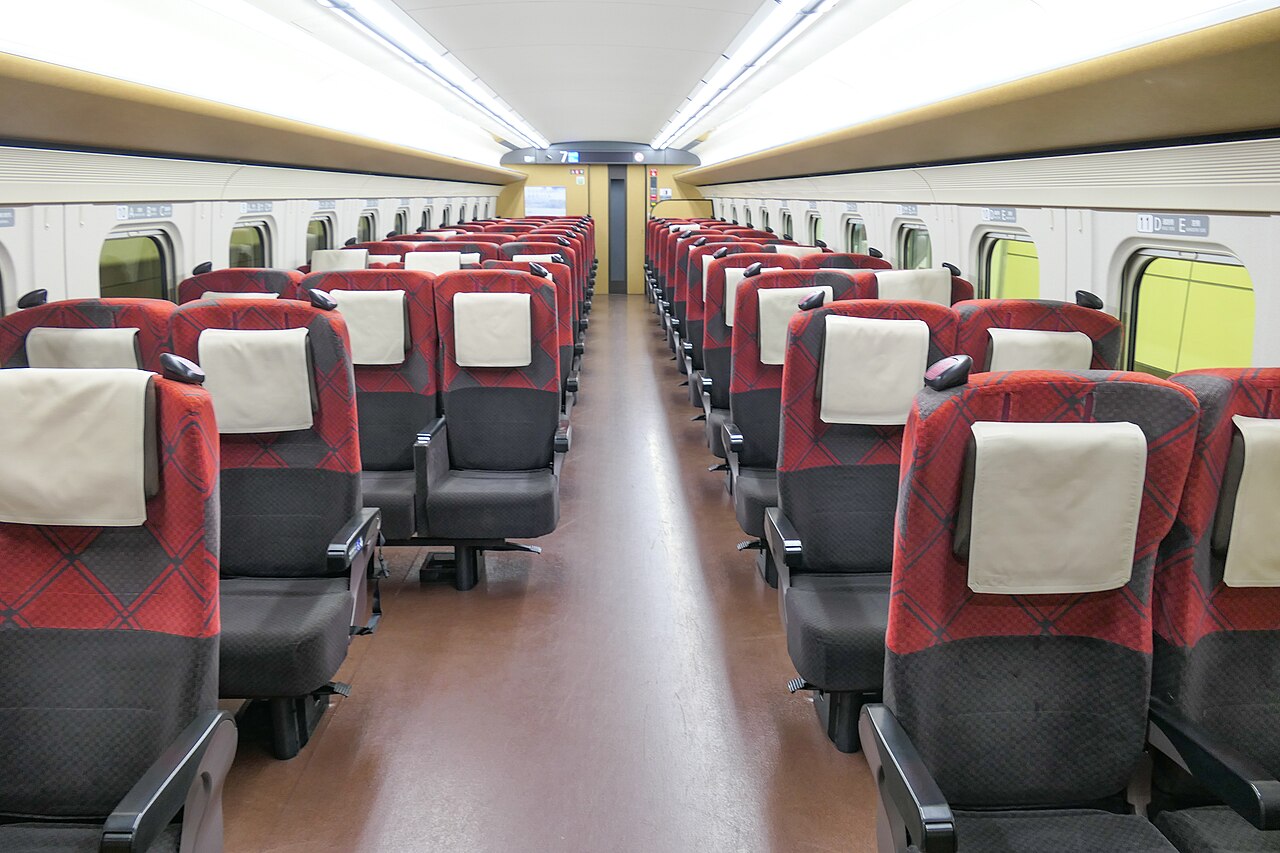
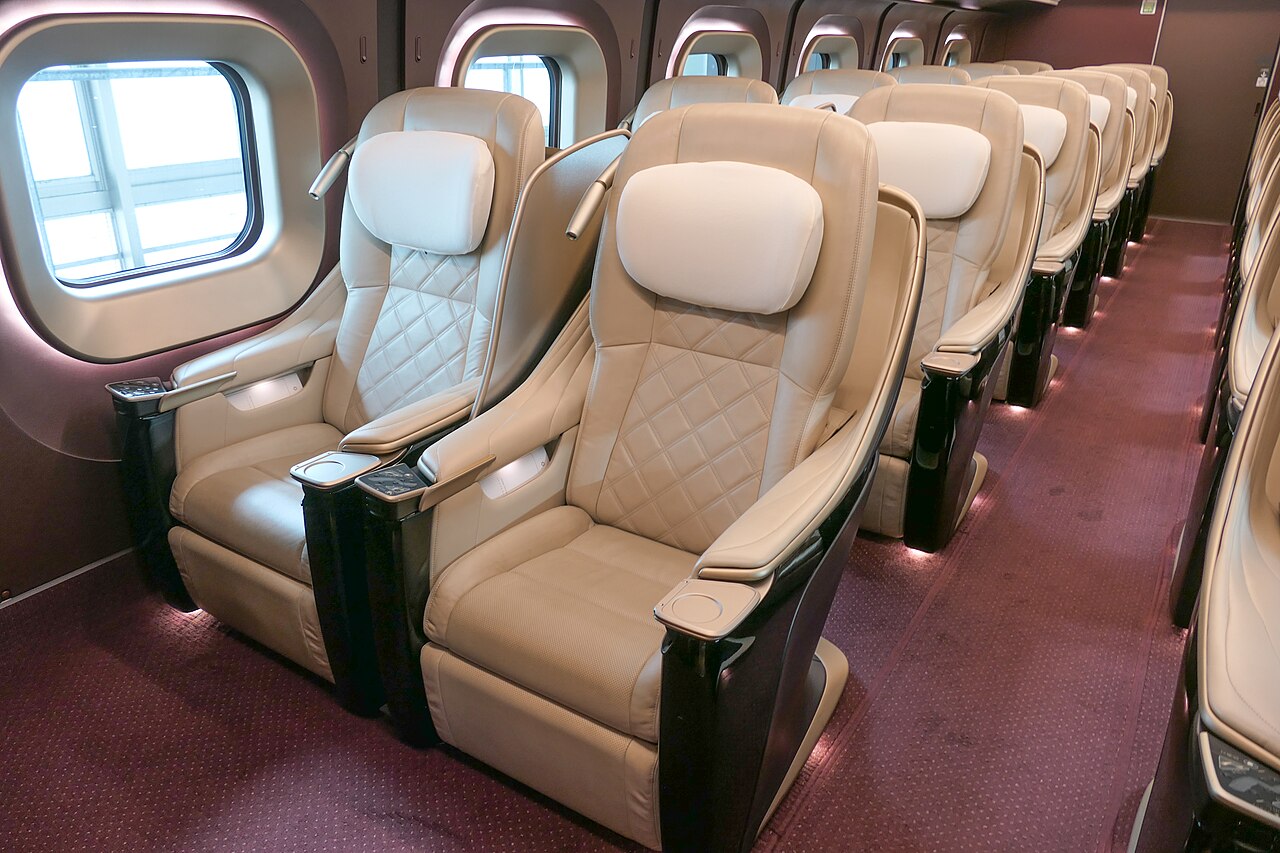
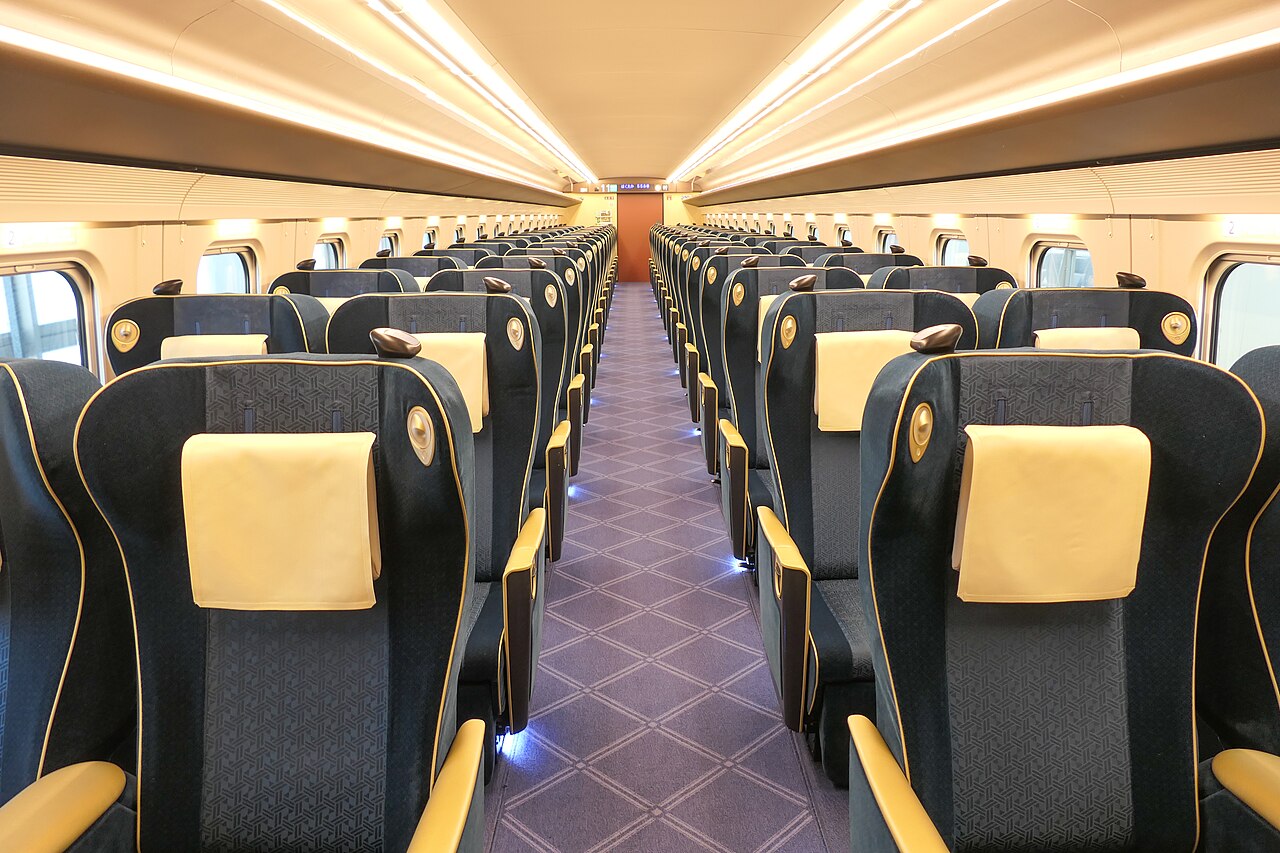
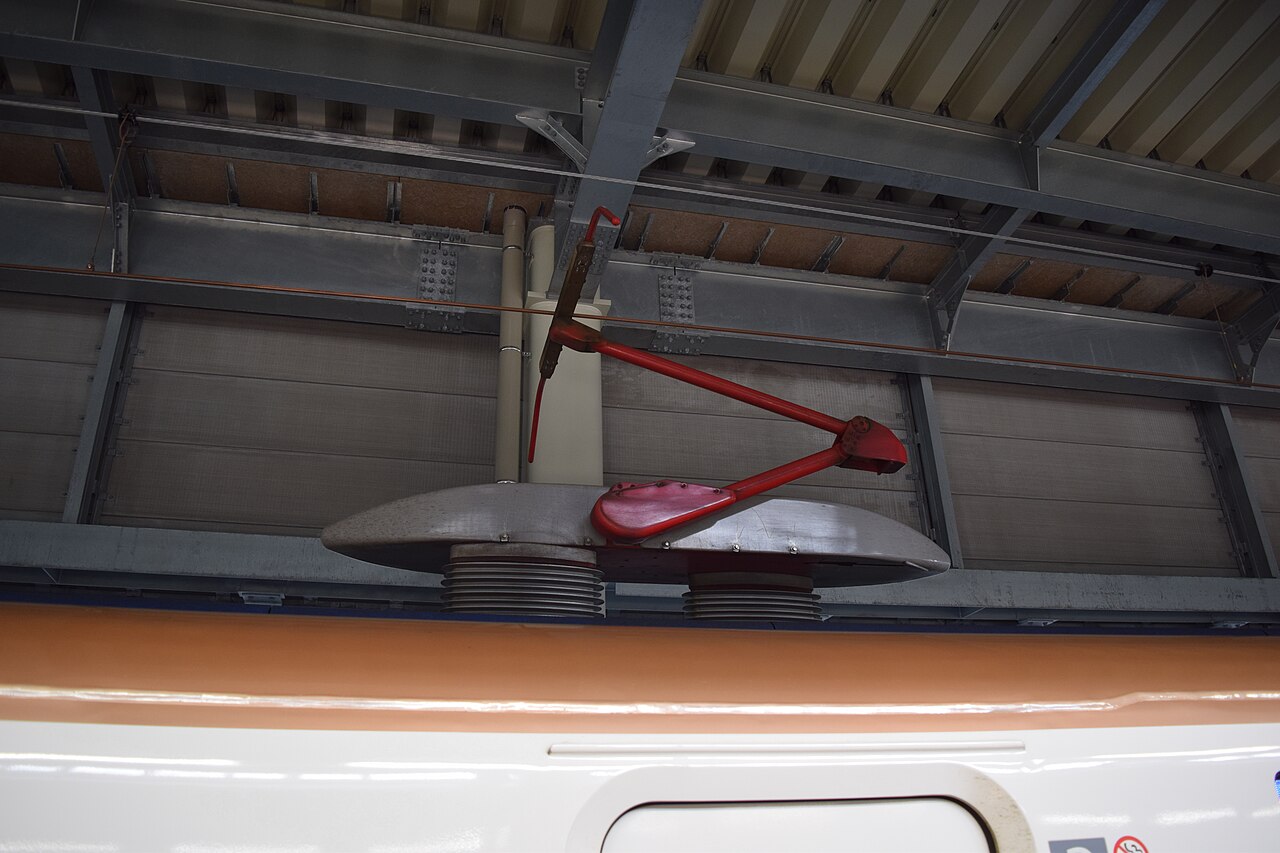
An E7 series set F19 on "Asama" No. 614 bound for Tokyo, entering Ōmiya Station on the Hokuriku Shinkansen.MaedaAkihiko · CC BY-SA 4.0 · Wikimedia CommonsInside an ordinary car of the JR East E7 series Shinkansen (car E725-409).MaedaAkihiko · CC BY-SA 4.0 · Wikimedia CommonsSeats in the Gran Class car of the JR East E7 series.MaedaAkihiko · CC BY-SA 4.0 · Wikimedia CommonsInside the Green car of the JR East E7 series Shinkansen (car E715-5).MaedaAkihiko · CC BY-SA 4.0 · Wikimedia CommonsPS208A pantograph mounted on an E7 series train, at Kanazawaタンジェント · CC BY-SA 4.0 · Wikimedia Commons