History
The 500 series grew directly out of an experimental programme. In 1992 JR West built a six-car test train, the 500-900 series, branded "WIN350" — a name standing for "West Japan's Innovation for operation at 350 km/h" and originally carrying the working designation "500X." Its purpose was to trial the technology for a next generation of Shinkansen expected to run at 350 km/h, and the lessons it produced were folded into the production 500 series, whose main converter system was carried over from the 500-900 prototype.
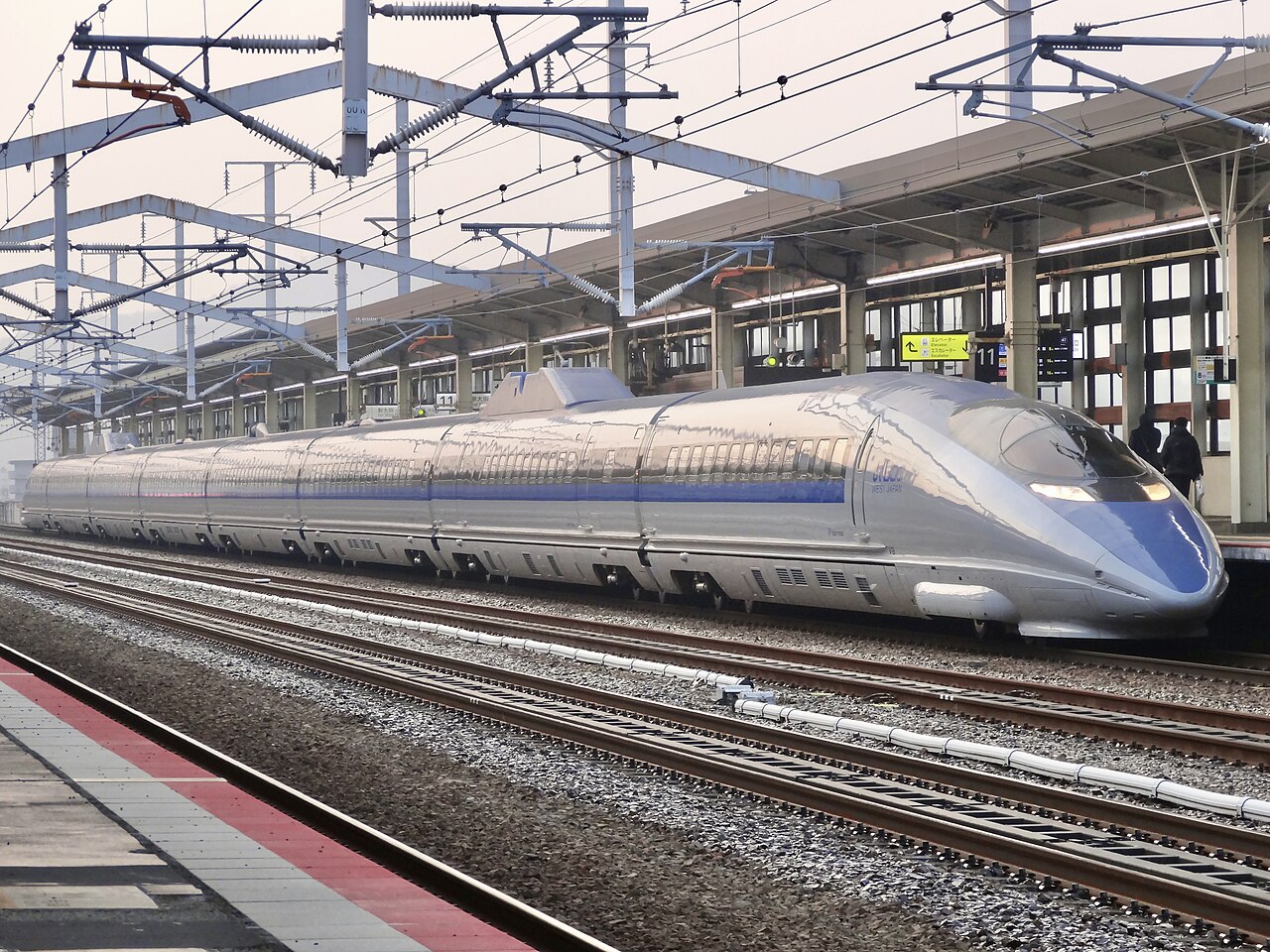
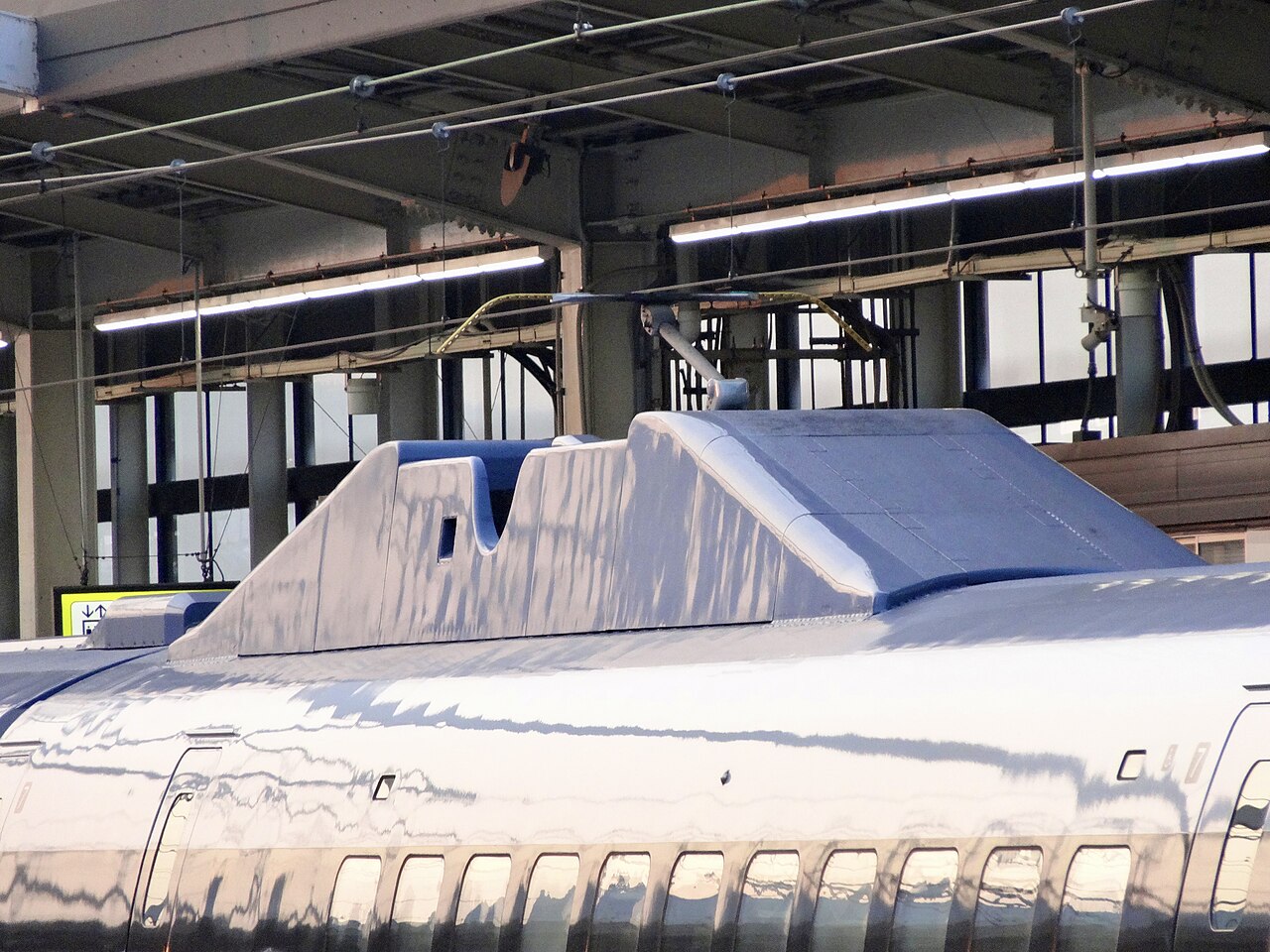
The production design was overseen by the German industrial designer Alexander Neumeister, and its silhouette is the train's defining feature. To suppress the tunnel micro-pressure ("boom") effect at very high speed, each end car tapers gradually over more than half of its 27-metre length — about 15 metres — giving a nose far sharper than an airliner's and frequently likened to a jet fighter; the taper length was derived through computational fluid-dynamics analysis on the assumption of 320 km/h operation. To hold down the cross-sectional area while preserving interior height, the body was given an almost circular cross-section rather than the flatter profile of other Shinkansen, trimming the section to roughly ten per cent less than the preceding 300 series. The rounded form drew on biomimicry — most often described in terms of a kingfisher's beak — and JR West also reduced running resistance and noise relative to the 300 series; the pantographs used a special low-noise "T"-shaped design informed by motorsport aerodynamics and by the silent wing feathers of owls. The distinctive shape and livery made the 500 series an unusually popular train with the public, including children.
Mechanically the 500 series was uncompromising. Every car in the original sixteen-car formation was powered, an all-motored layout not seen since the first-generation 0 series, giving a maximum output of 18.24 MW (set W1; 17.60 MW from set W2 onward) — around one and a half times that of the 300 series — and an exceptionally favourable power-to-weight ratio for a wheeled rail vehicle. The carbody was built from aluminium alloy in a brazed honeycomb-panel structure, which kept the train light and improved sound insulation but proved costly to manufacture; the succeeding 700 series adopted a cheaper aluminium double-skin construction instead, leaving the honeycomb design unique to the 500 series. Computer-controlled active and semi-active suspension and inter-car yaw dampers were fitted to steady the ride at speed, and each end car rode on bogies designed around the tapered nose. Holding the cab so far back cost the leading cars seating, and JR Central required at the design stage that total capacity not fall below that of the 300 series; the 500 series answered by deleting the cab-end passenger door, tightening seat pitch and reducing the number of washrooms, ending with 1,324 seats in a sixteen-car set — one more than the 300 series, though distributed differently car by car. The fleet was small and expensive: only nine sets were built, and the EN source gives an estimated cost of about five billion yen per trainset (the Japanese article instead states roughly 4.6 billion yen per set, or about 300 million yen per car).
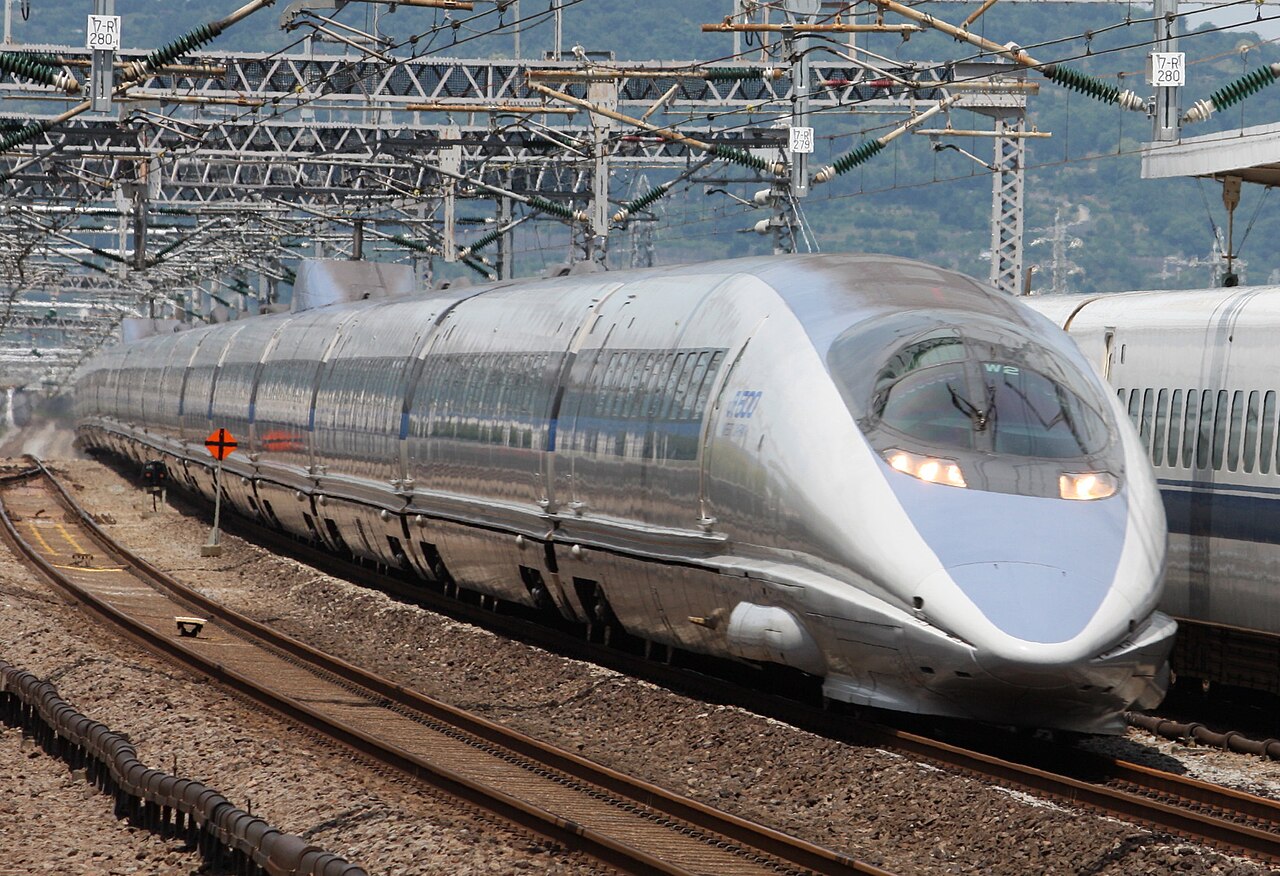
First announced by JR West in September 1994, the first set was delivered for testing in 1995 and entered passenger service in March 1997, with all nine sixteen-car "W" sets (numbered W1–W9) delivered by 1998. The 500 series became the first Shinkansen in Japan to run at a maximum of 300 km/h in regular revenue service — a milestone later cited by JR West as Japan's first 300 km/h commercial operation. The trains had in fact been engineered throughout for 320 km/h and could meet the relevant environmental limits at that speed, but a stricter emergency-braking-distance requirement adopted after the 1995 Great Hanshin earthquake, together with a cost-effectiveness review, led JR West to settle on a 300 km/h maximum in service. On the San'yō Shinkansen the W sets ran at that 300 km/h ceiling on Nozomi workings; on the curvier Tōkaidō Shinkansen they were held to 270 km/h, the same limit as the 300 series. As successive batches were delivered the 500 series expanded its reach: the second-batch W2–W4 sets allowed through-running onto the Tōkaidō Shinkansen as far as Tokyo Station, and at its peak the fleet worked seven Tokyo–Hakata Nozomi round trips a day, with the fastest schedules covering the Tokyo–Hakata run in 4 hours 49 minutes (as of 2009). Besides Nozomi, sixteen-car 500 series sets occasionally appeared on Hikari Rail Star workings during busy holiday periods. The trains' rounded body forced the driving cab well back, leaving only a single passenger door at each end car and a per-car seating layout that differed from other types — complications that told against the design once non-reserved seating was added to Nozomi in 2003 and whenever the timetable was disrupted.
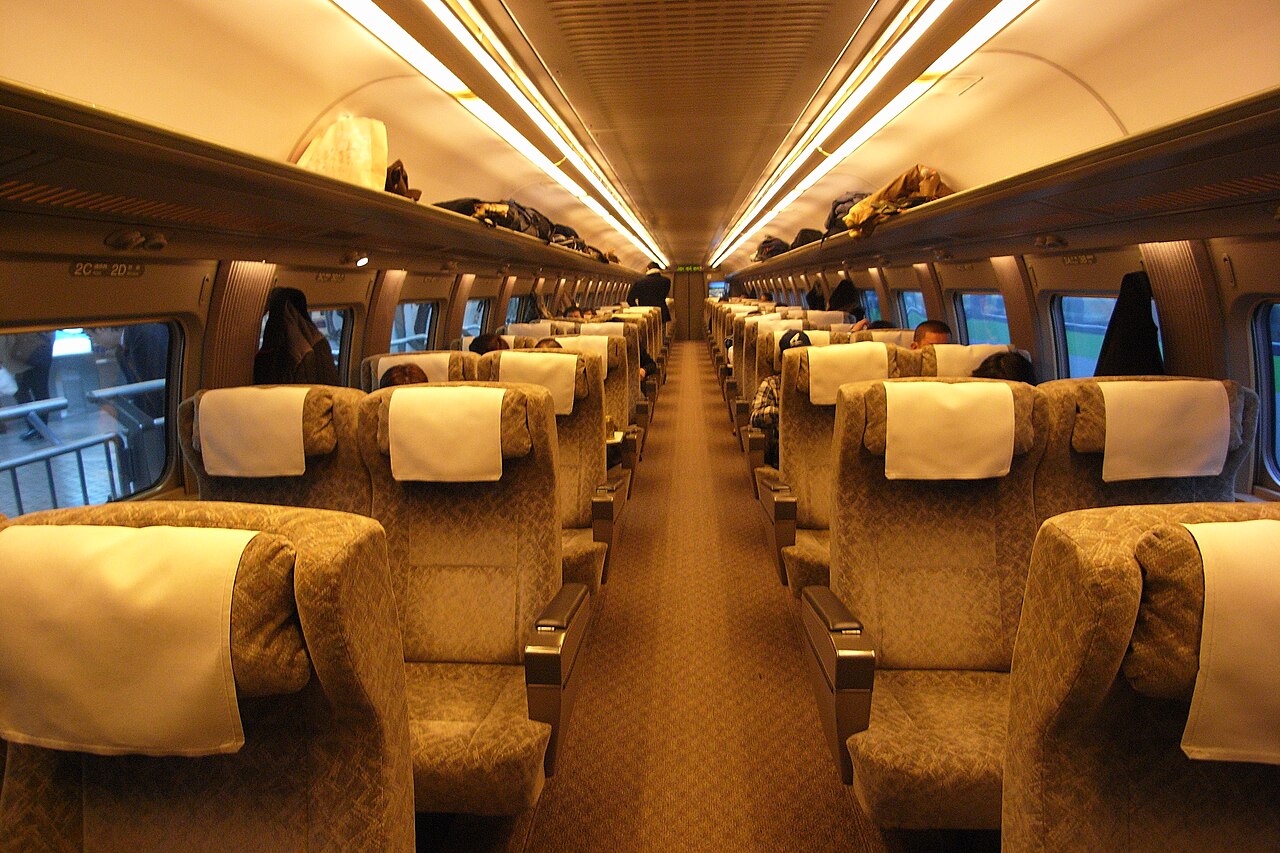
As the N700 series — which paired 300 km/h running with better passenger comfort — entered service in growing numbers from 2007, the 500 series was progressively displaced from Nozomi. The last regular 500 series Nozomi run took place on 28 February 2010. Rather than retire the sets, JR West rebuilt and shortened eight of the original nine into eight-car formations between 2008 and 2010 and cascaded them to San'yō Shinkansen Kodama all-stations services between Shin-Ōsaka and Hakata, replacing the older 0 series there; the rebuilt sets were renumbered into the 500-7000 subseries and given fleet numbers V2–V9. The first reformed eight-car set was shown to the press on 28 March 2008 and the type began Kodama service on twelve daily runs from 1 December 2008, with the maximum operating speed reduced to 285 km/h. From the March 2009 timetable the higher-capacity V sets were concentrated on busy morning and evening commuter periods. The rebuild changed details throughout: where the sixteen-car W sets had drawn current through two distinctive "T"-style collectors (on cars 5 and 13), the eight-car V sets use single-arm pantographs on cars 2 and 7. Interiors were reworked toward Kodama use — three-and-two abreast seating in most cars, with the former Green car (car 6) kept at the more generous two-and-two abreast, and from late 2013 cars 4 and 5 were also refitted with two-and-two seating of the same type used in the Hikari Rail Star 700 series. The passenger saloons were made no-smoking, with dedicated smoking compartments added in cars 3 and 7. As of 27 March 2023 the surviving Kodama fleet stood at six eight-car sets (V2–V4 and V7–V9).
One V set became a rolling showpiece. Set V2 carried the special "500 Type Eva" livery from 7 November 2015, a tie-up with the "Shinkansen: Evangelion Project" marking the 40th anniversary of the San'yō Shinkansen and the 20th anniversary of the animated series Neon Genesis Evangelion; the full repaint (rather than a wrap, because of the high running speeds) included an Evangelion-themed display car. Originally planned to end in March 2017, the Eva livery was extended until 13 May 2018. The same set V2 was then transformed into the "Hello Kitty" Shinkansen, a tie-up with Sanrio announced in March 2018 and entering service on 30 June 2018 on San'yō Kodama workings. JR West announced that the Hello Kitty service would make its final run on 17 May 2026.
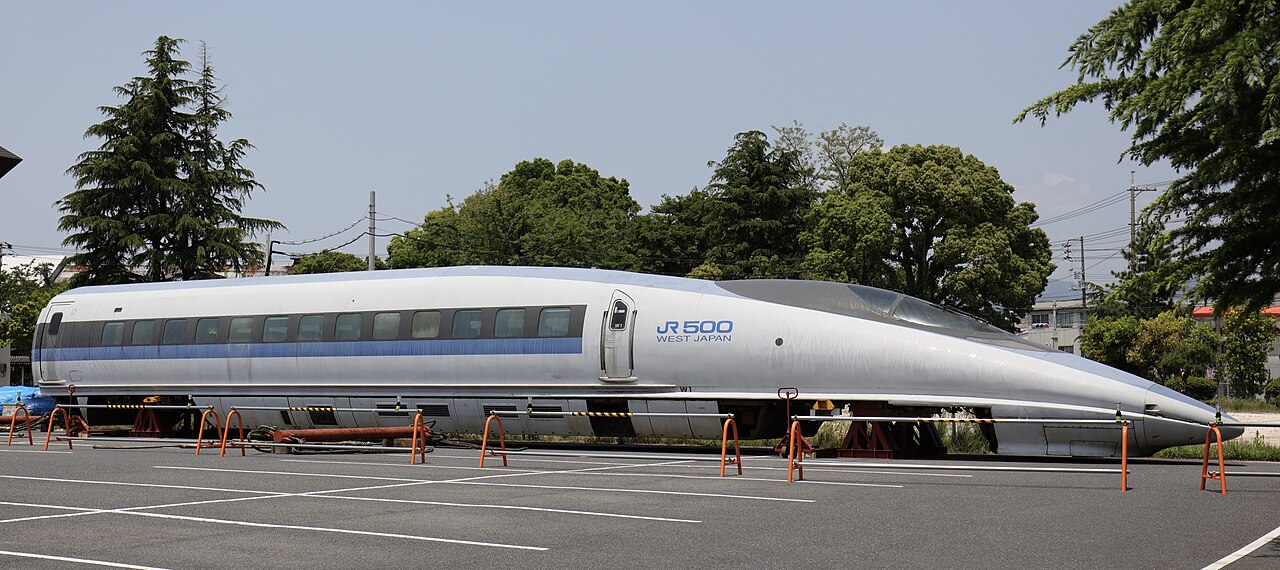
The 500 series is now in its final years. On 14 February 2024 JR West announced plans to retire four of the six remaining sets by the end of 2026 — shortening four existing sixteen-car N700 series sets into eight-car formations to replace them — and on 24 July 2024 it announced that the last two sets would be retired by 2027. Two cars from the very first set, W1, have been preserved: car 521-1, the former leading car, at the Kyoto Railway Museum (opened April 2016), where it was briefly displayed in the "500 Type Eva" livery in early 2018; and car 522-1, the former end car, at Hitachi Rail's Kasado factory in Kudamatsu, Yamaguchi Prefecture. The 500 series received the 41st Blue Ribbon Award (1998) from the Japan Railfan Club and a Good Design selection from Japan's Ministry of International Trade and Industry in 1996. Its striking profile also gave it a long afterlife in popular culture: it was the basis for Liner Gao in the mecha anime The King of Braves GaoGaiGar, it features as one of the titular robots in the Shinkansen Henkei Robo Shinkalion franchise — where the Evangelion and Hello Kitty liveries appeared alongside the standard one in both toys and anime — and it is the alternate mode of the Autobot Railspike in Transformers: Robots in Disguise.
Timeline
- 1992JR West builds the six-car 500-900 series "WIN350" experimental train to test technology for next-generation Shinkansen aimed at 350 km/h.
- 1994The production 500 series is first announced by JR West in September.
- 1997Revenue service begins with the 22 March timetable revision; the 500 series becomes the first Shinkansen in Japan to run at 300 km/h in regular service (on the San'yō Shinkansen).
- 1998All nine sixteen-car W sets (W1–W9) have been delivered; the type receives the 41st Blue Ribbon Award.
- 2008First rebuilt eight-car set unveiled to the press on 28 March; eight-car 500 series enters San'yō Kodama service on twelve daily runs from 1 December, at a reduced 285 km/h maximum.
- 2010The last regular 500 series Nozomi run takes place on 28 February; the type is withdrawn from Tōkaidō Nozomi service.
- 2015Set V2 begins operating in the special "500 Type Eva" livery from 7 November (40th anniversary of the San'yō Shinkansen / 20th of Neon Genesis Evangelion).
- 2018The "500 Type Eva" livery ends on 13 May; set V2 re-enters service as the "Hello Kitty" Shinkansen on 30 June.
- 2024JR West announces (14 February) plans to retire four of six remaining sets by end of 2026, and (24 July) to retire the last two sets by 2027.
- 2026The "Hello Kitty" Shinkansen makes its final run on 17 May.
Sources
Facts last verified 3 June 2026.
Gallery 3 photos
Every photo for this page — tap any image to view it full-size. All from Wikimedia Commons (credit under each).