History
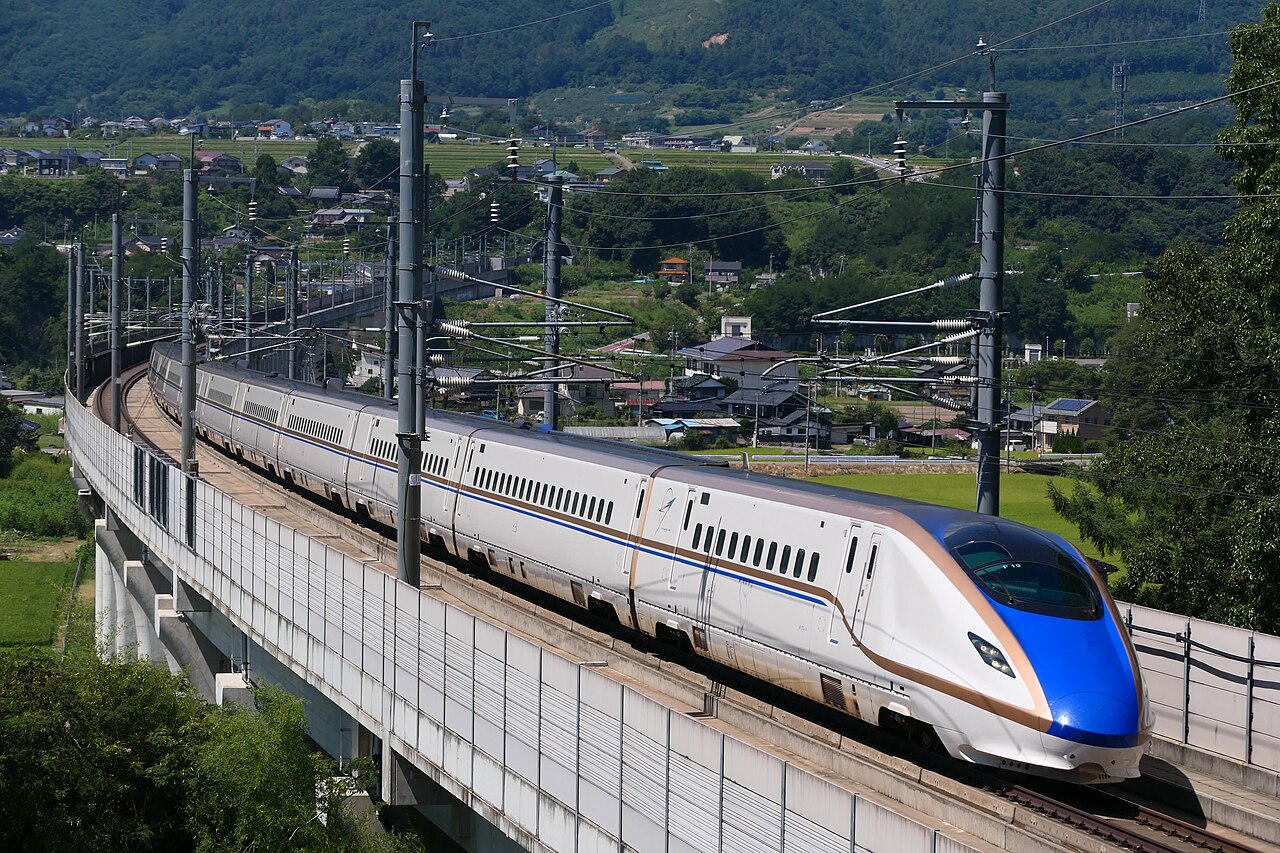
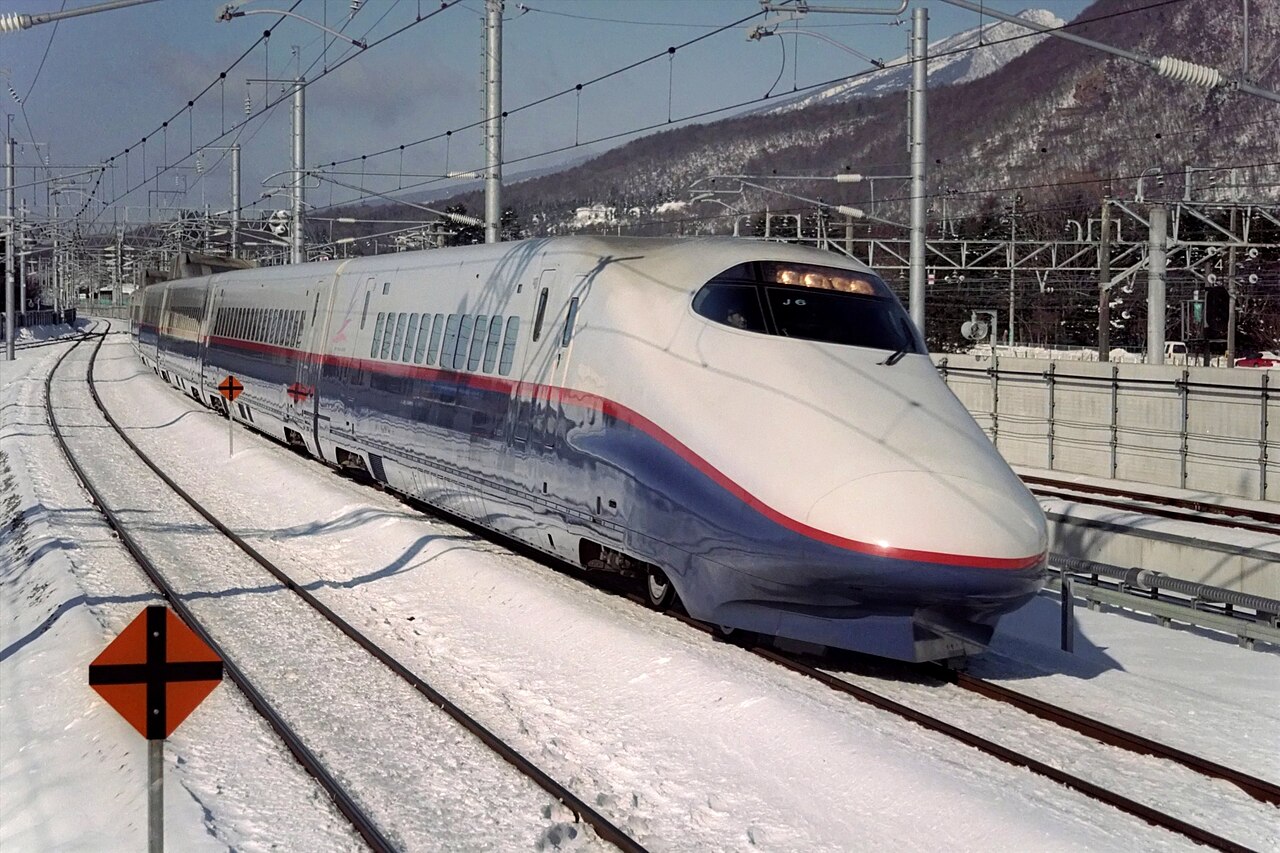
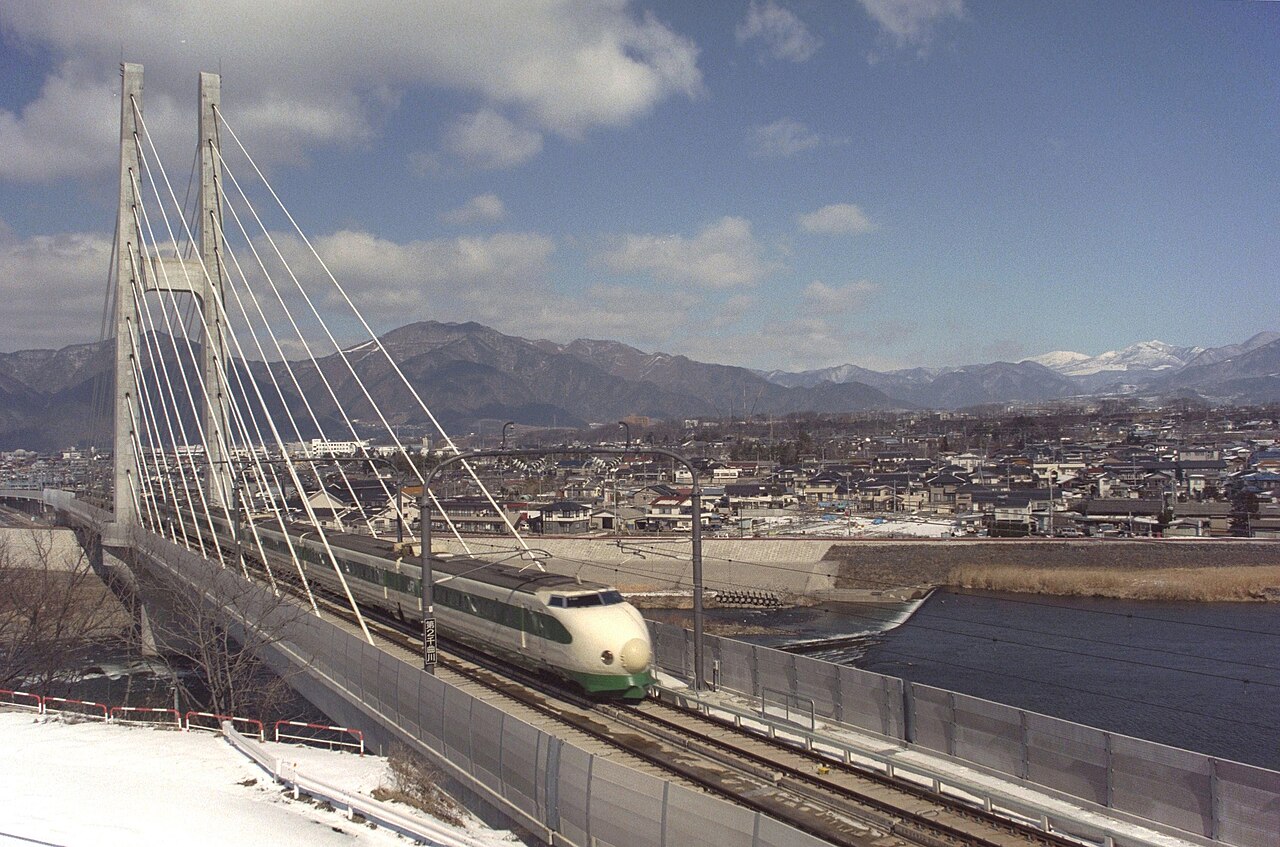
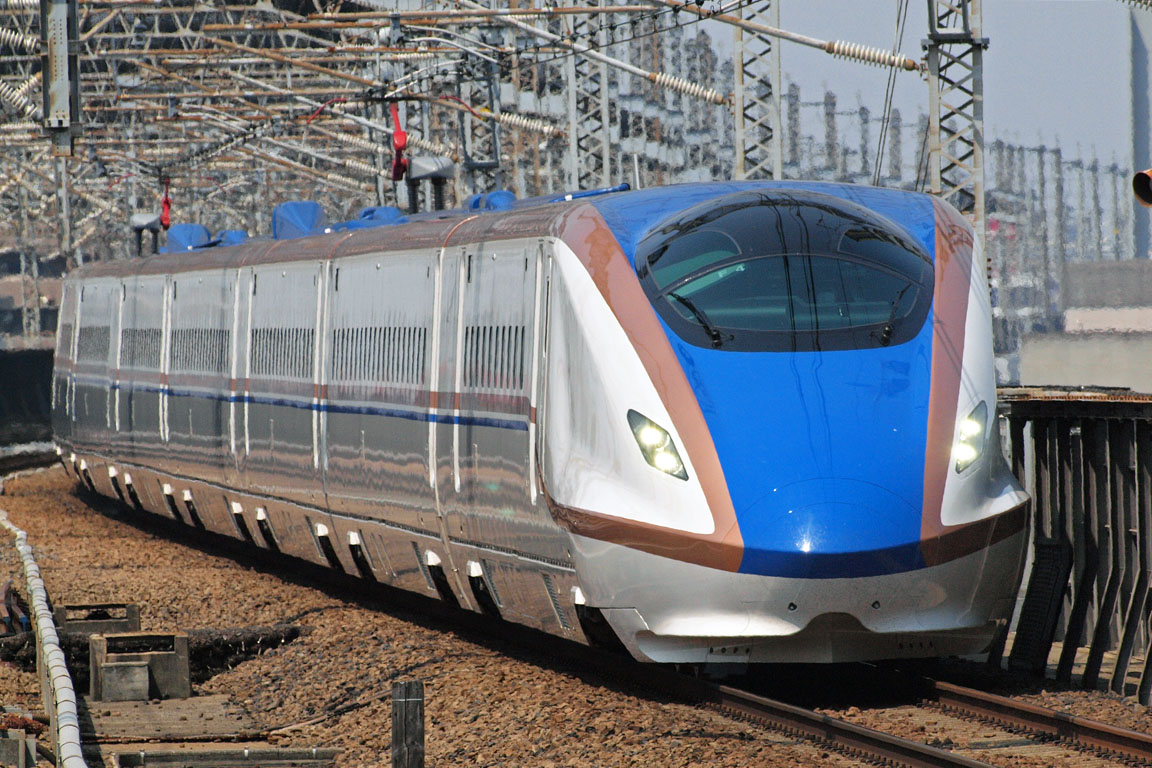
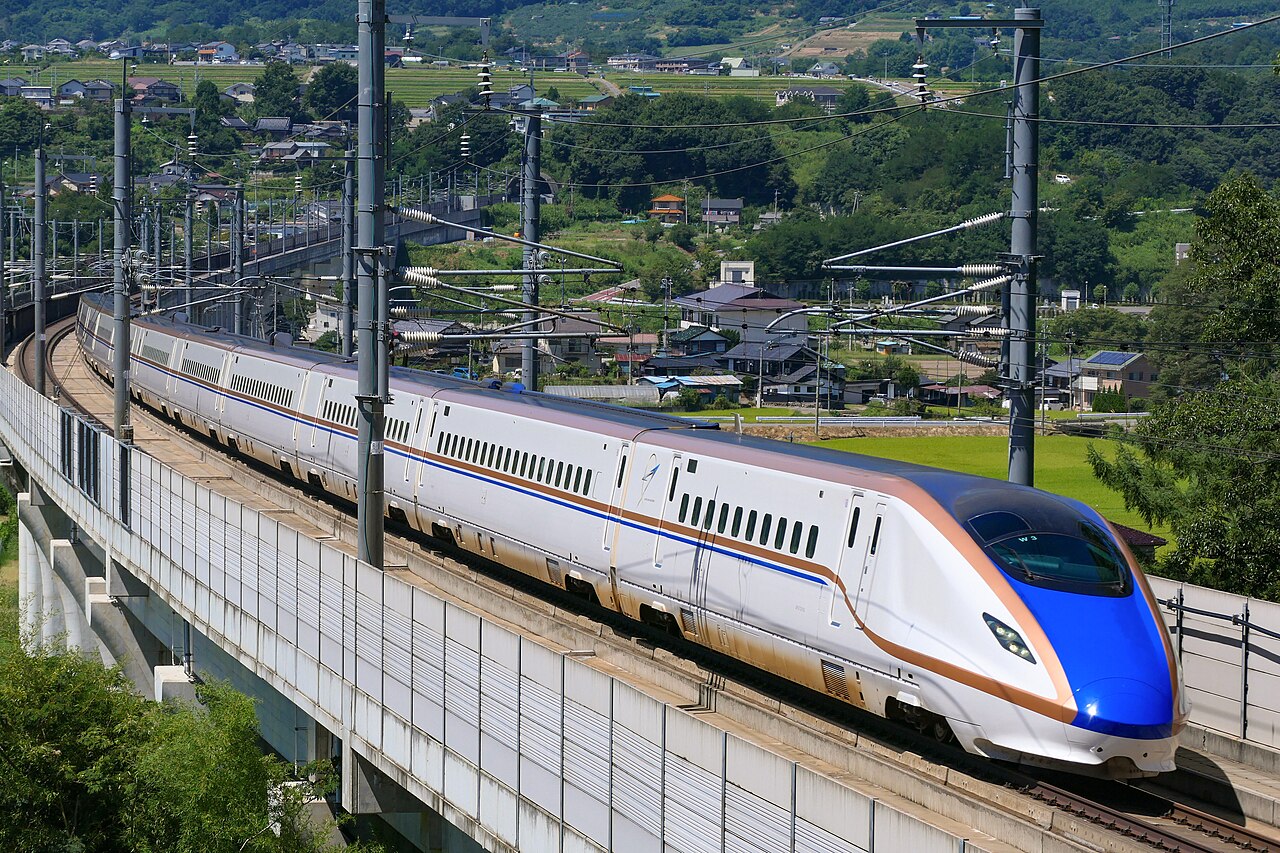
When the Nagano Shinkansen opened between Takasaki and Nagano on 1 October 1997, services used a dedicated fleet of fourteen 8-car E2 series "N" sets based at the Nagano depot; the trains are designed to hold 260 km/h on the continuous 30-km, 30-per-mil gradient between Takasaki and Karuizawa. During the 1998 Winter Olympics one specially modified 200 series train (set F80), limited to 210 km/h, added capacity, and the whole train became no-smoking from 10 December 2005. New 12-car E7 series sets entered service from 15 March 2014, initially on seven return workings daily and rising to eleven from 19 April 2014; JR West 12-car W7 series sets, based at the Hakusan depot, followed from 14 March 2015. The eight-car E2 sets were then withdrawn, the last running on 31 March 2017, after which all Asama services were formed of E7 and W7 series trainsets.
The E7 and W7 series carry ordinary, Green and Gran Class accommodation; unlike on Kagayaki services, no dedicated attendant is provided in the Asama's Gran Class car. The service has since seen incremental speed rises on its eastern section: Ueno–Ōmiya from 110 km/h to 130 km/h at the March 2021 revision, and Ōmiya–Takasaki from 240 km/h to 275 km/h at the 18 March 2023 revision. In October 2019 Typhoon Hagibis flooded the Nagano depot, submerging ten E7/W7 sets — a third of the Hokuriku Shinkansen fleet.
Timeline
- 1997Shinkansen Asama services began on 1 October 1997 when the Takasaki–Nagano section opened as the Nagano Shinkansen, with 24 Tokyo–Nagano and 4 Tokyo–Karuizawa round trips, operated by 8-car E2 series sets.
- 1998During the 1998 Winter Olympics one specially modified 200 series train (set F80), limited to 210 km/h, was added for extra capacity.
- 2002From the December 2002 timetable revision all Asama services were made to stop at Ōmiya and the nonstop Tokyo–Nagano service was abolished.
- 2005From the timetable revision of 10 December 2005 all Asama services became entirely no-smoking.
- 2014New 12-car E7 series sets entered Asama service from 15 March 2014, initially on seven return workings daily, rising to eleven from 19 April 2014.
- 2015When the Hokuriku Shinkansen was extended from Nagano to Kanazawa on 14 March 2015, JR West W7 series sets entered Asama service and the name continued for Tokyo–Nagano trains; regular E2 series operation ended on 24 December 2015.
- 2017The last eight-car E2 series Asama services ran on 31 March 2017, after which all Asama trains were formed of E7 and W7 series sets.
- 2023At the 18 March 2023 timetable revision the maximum speed on the Ōmiya–Takasaki section was raised from 240 km/h to 275 km/h.
Gallery 5 photos
Every photo for this page — tap any image to view it full-size. All from Wikimedia Commons (credit under each).