History
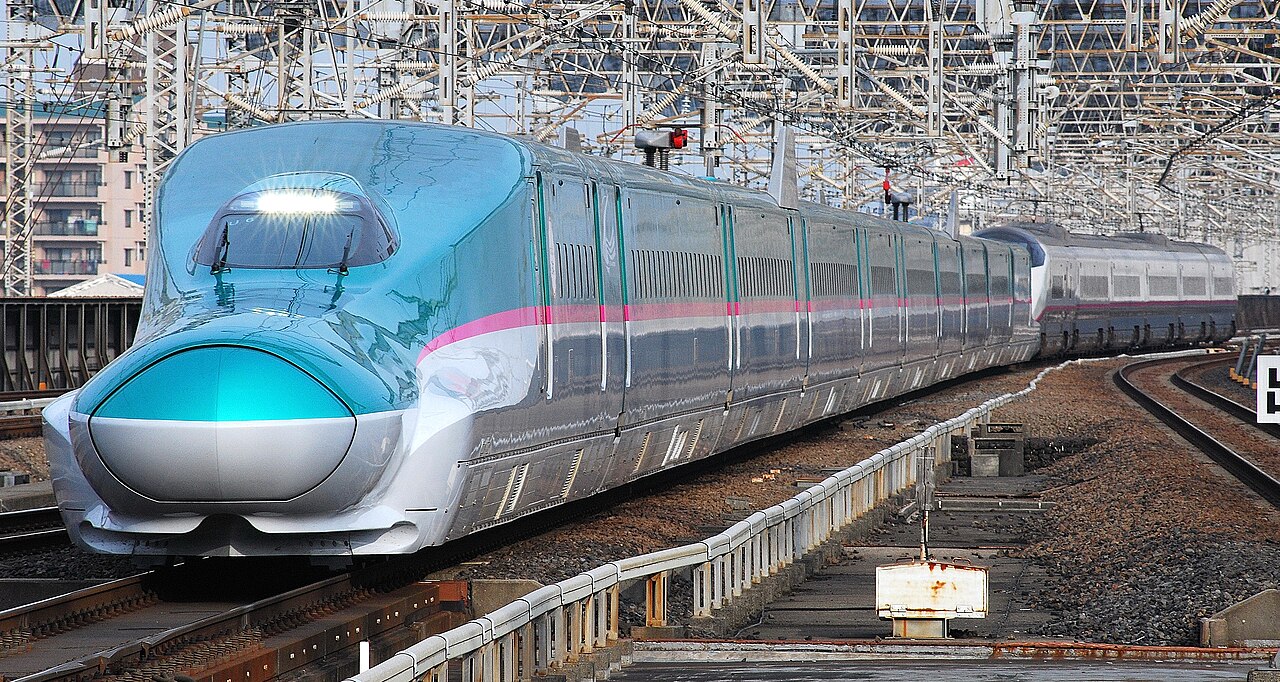
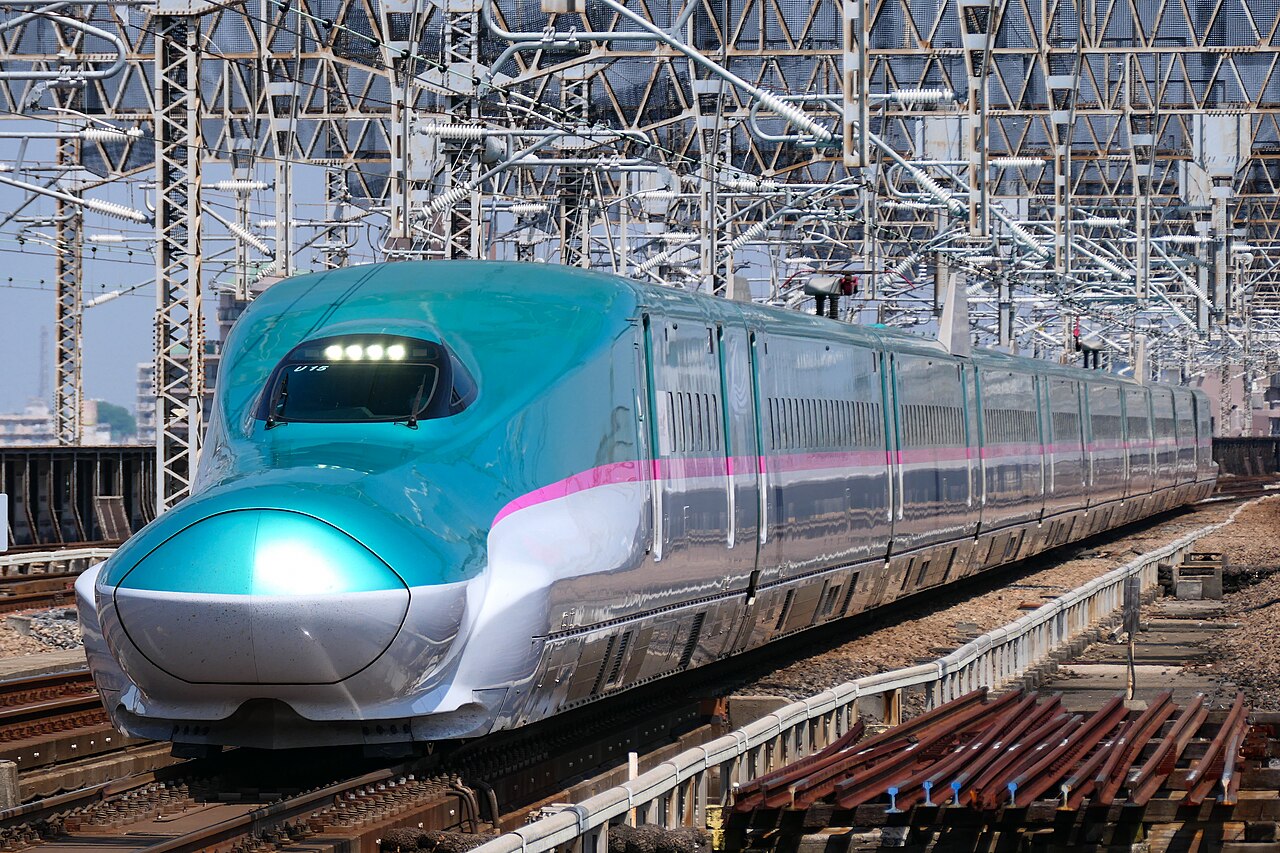
The turning point came in 2011. The line had been extended again to Shin-Aomori on 4 December 2010, and on 19 November 2011 E5 series trainsets capable of 320 km/h entered service, some working Hayate trains. The E5 brought with it the new Hayabusa, which took over the Hayate's role as the fastest train on the line; Hayate became a complementary service, progressively cut back as runs were converted to Hayabusa, though E5 Hayate services still run at 275 km/h. Hayate had also coupled with Komachi between Tokyo and Morioka, where the Komachi cars detached for Akita via the Akita Shinkansen, but all Komachi now couple with Hayabusa instead, so every Hayate runs alone.
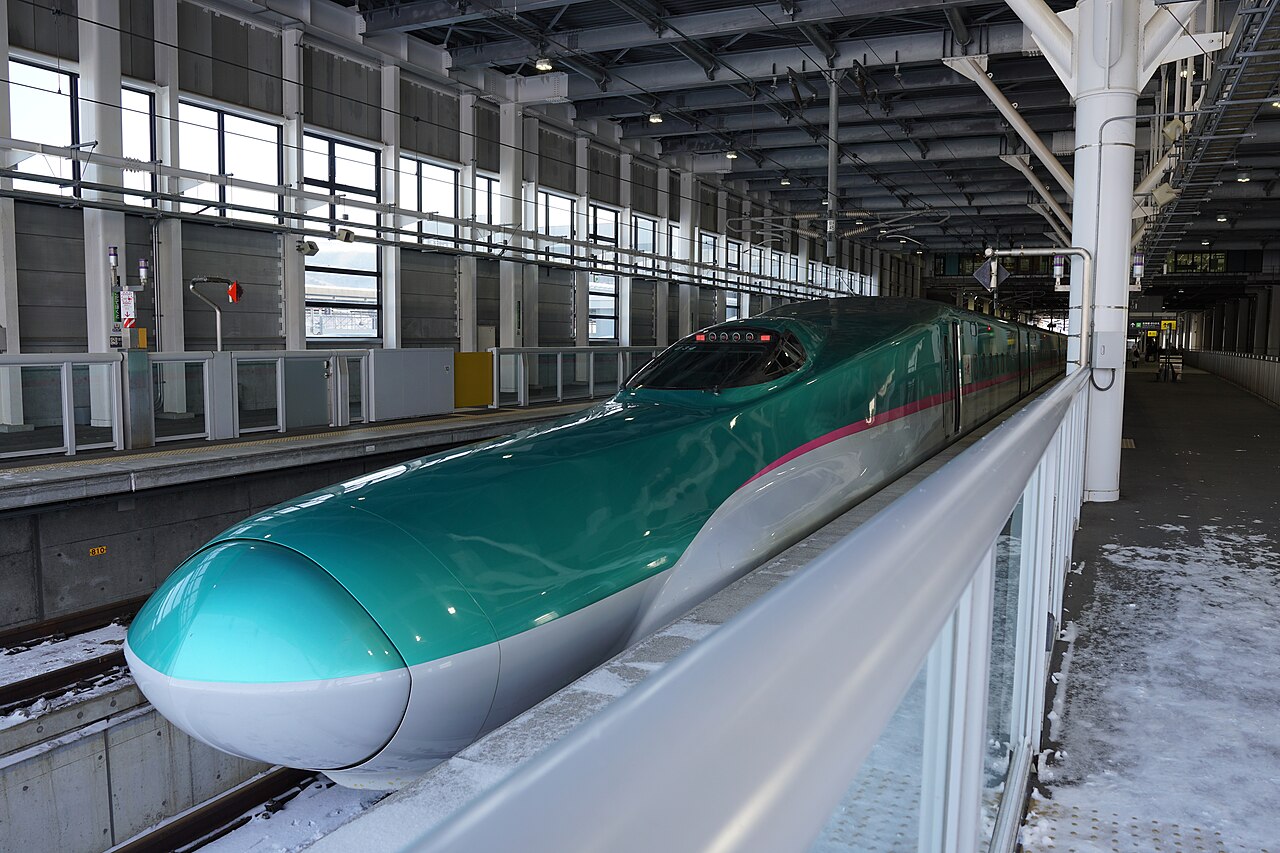
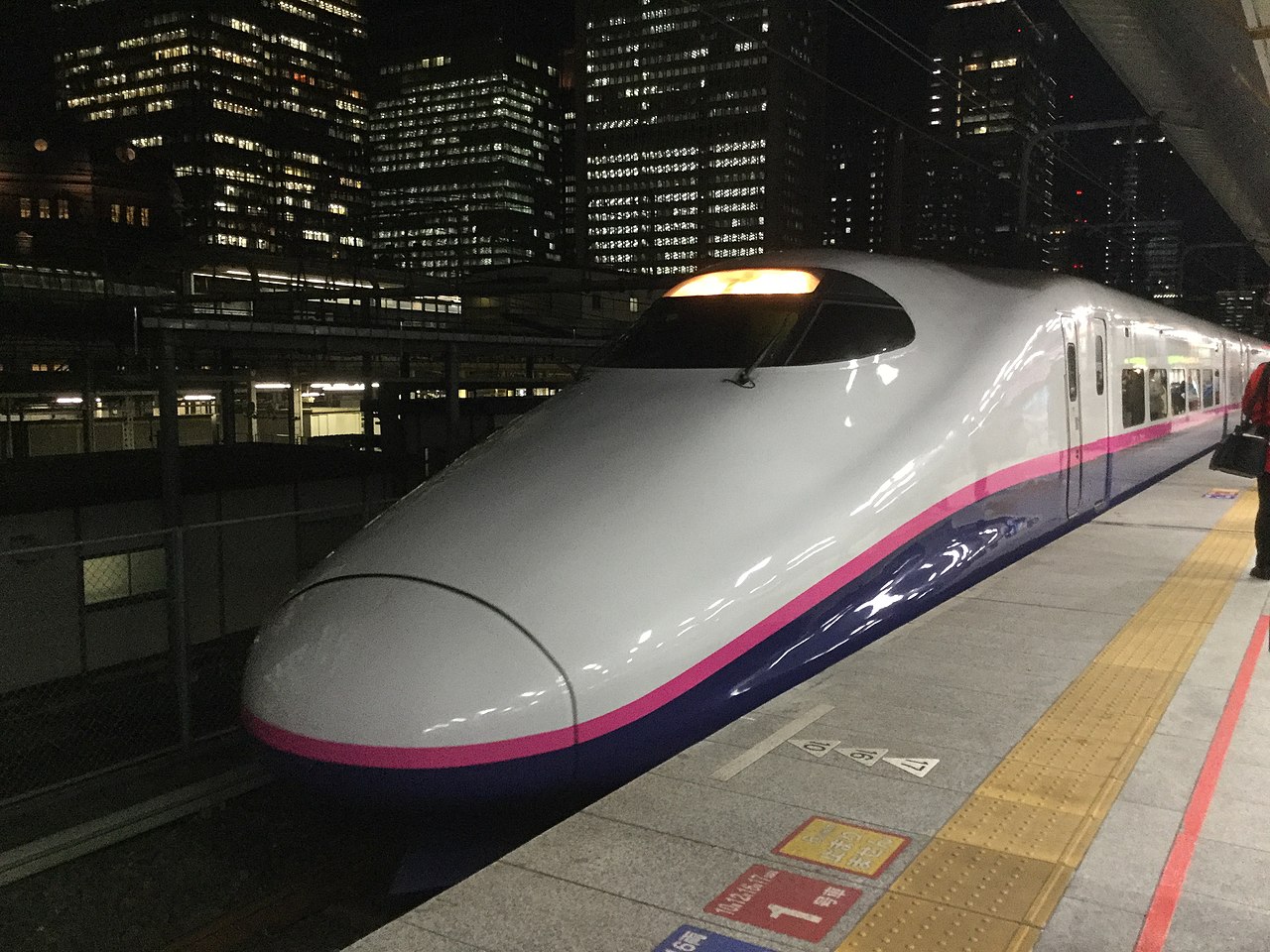
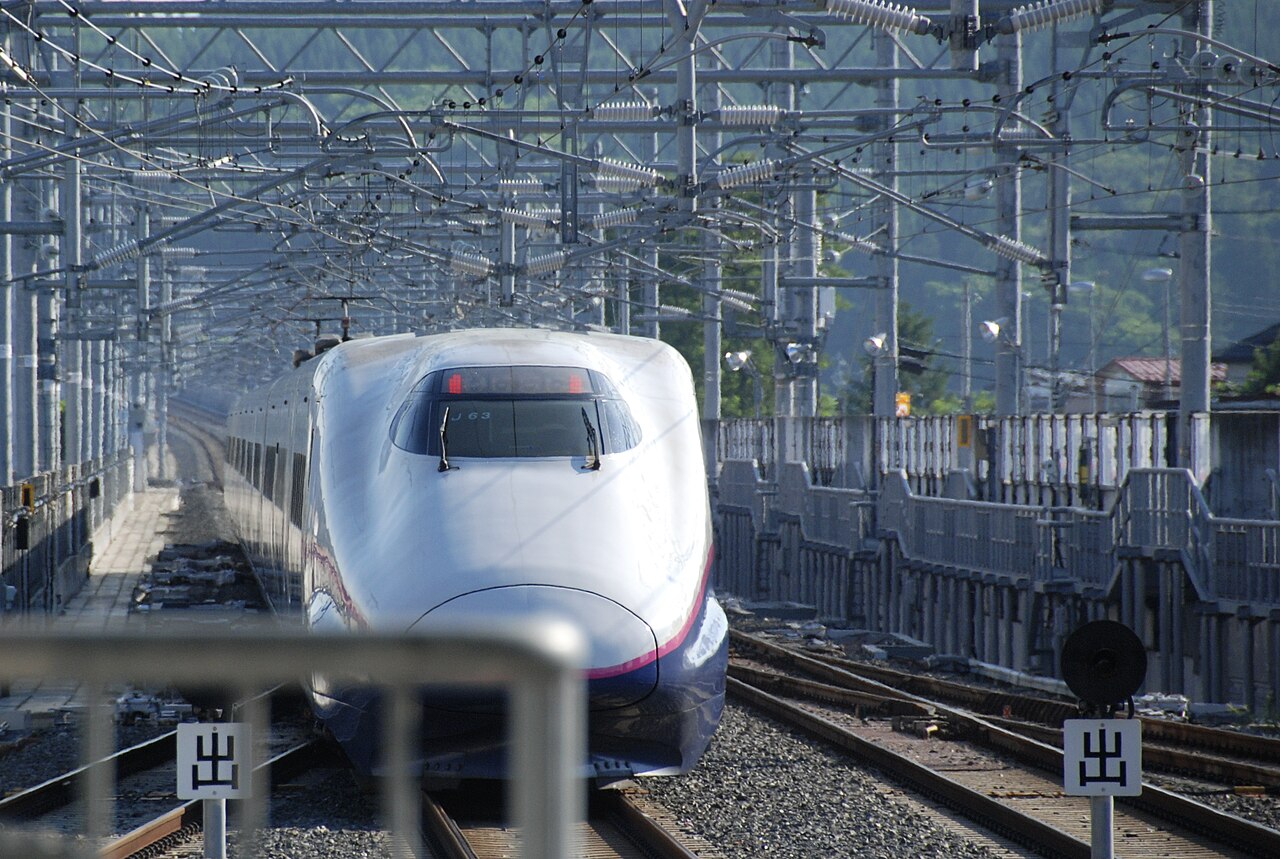
From 26 March 2016, with the opening of the Hokkaido Shinkansen from Shin-Aomori to Shin-Hakodate-Hokuto, the Hayate name came to cover services running between Morioka, Shin-Aomori and the northern terminus of Shin-Hakodate-Hokuto, formed of ten-car E5 or H5 series sets; on the Hokkaido section the top speed is 260 km/h. As of the 2020 timetable two round trips run daily — northbound 91 and 93 in the morning, southbound 98 and 100 in the evening — taking about 2 hours 9 minutes from Morioka and 1 hour 6 minutes from Shin-Aomori. The former E2 series worked the service from its 2002 debut until 16 March 2019.
Timeline
- 2002Hayate service inaugurated on 1 December with the Tōhoku Shinkansen extension to Hachinohe, running Tokyo–Hachinohe (15 round trips) plus one Sendai–Hachinohe round trip as the line's fastest, all-reserved service with 10-car E2 series at 275 km/h.
- 2005On 10 December, Tokyo–Morioka Hayate services began, created by making the fast Yamabiko all-reserved and folding it into Hayate.
- 2007On 18 March, all Hayate cars became non-smoking.
- 2010On 4 December, the Tōhoku Shinkansen was extended from Hachinohe to Shin-Aomori, and Hachinohe-terminating Hayate services were extended to Shin-Aomori.
- 2011On 19 November, E5 series sets (capable of 320 km/h) entered Hayate service; Gran Class sales and coupling with E3 series Komachi began. The new Hayabusa took over the role of fastest train, leaving Hayate as a complementary 275 km/h service.
- 2014On 15 March, coupled operation with the Akita Shinkansen Komachi ended, so Hayate trains thereafter ran alone.
- 2016On 26 March, with the opening of the Hokkaido Shinkansen (Shin-Aomori–Shin-Hakodate-Hokuto), Hayate began operating on the Morioka/Shin-Aomori–Shin-Hakodate-Hokuto sections using E5 or H5 series sets.
- 2019On 16 March, the last Tokyo-origin (Tokyo-departing, Morioka-bound) Hayate was folded into Hayabusa, ending regular Hayate services reaching Sendai and the capital region; the top speed inside the Seikan Tunnel was also raised to 160 km/h, shortening journey times.
Gallery 5 photos
Every photo for this page — tap any image to view it full-size. All from Wikimedia Commons (credit under each).