History
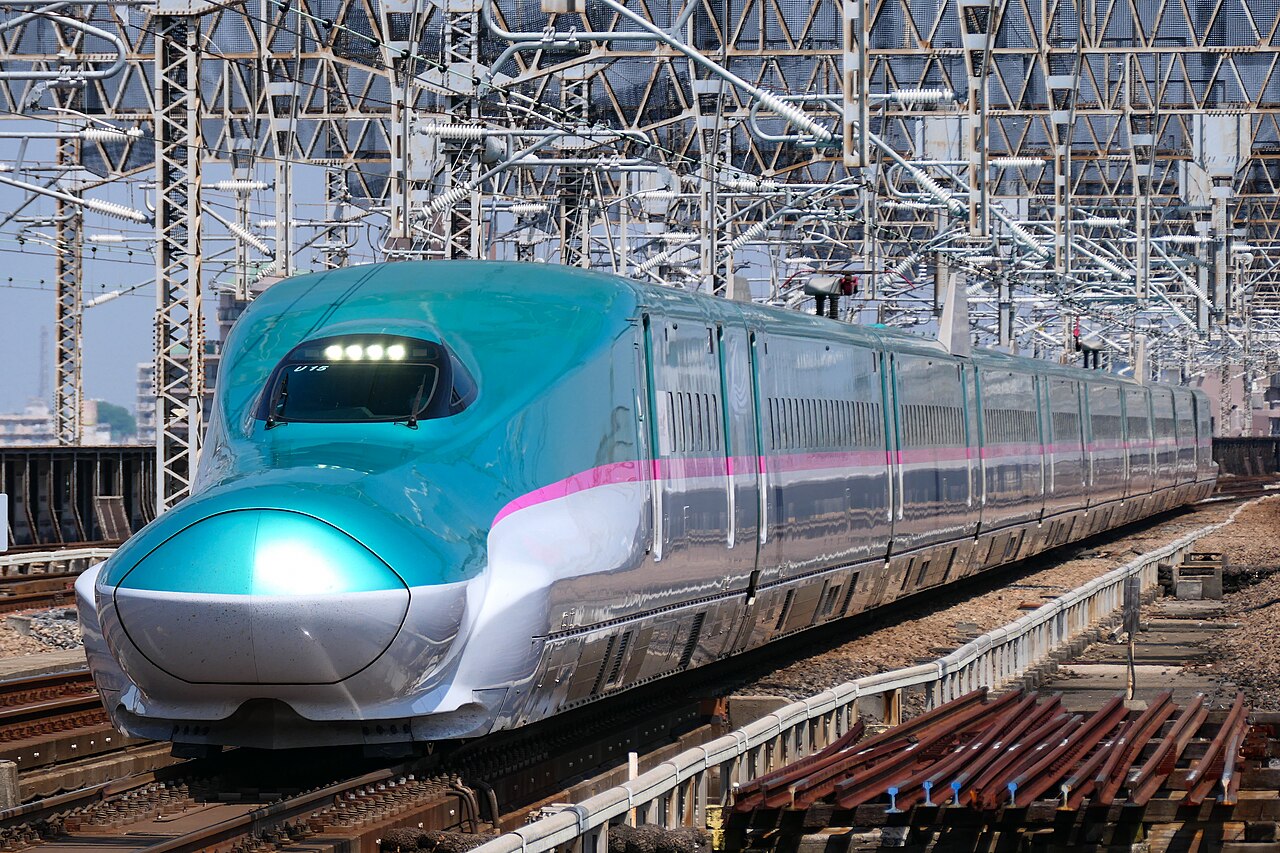
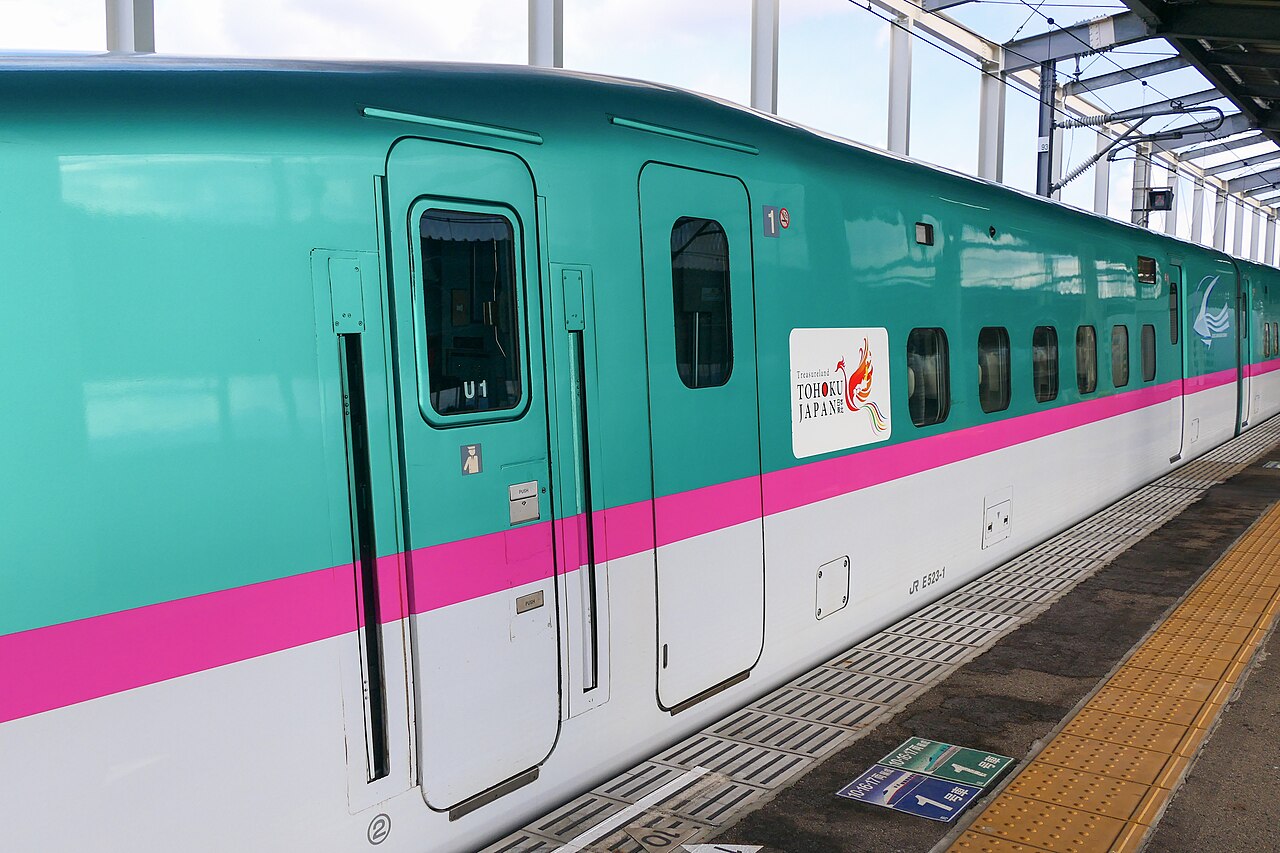
A pre-production prototype set, designated S11, was delivered to Sendai Depot in May 2009 for extensive test running on the Tohoku Shinkansen. Series production cars 1 through 5 were built by Hitachi at its Yamaguchi Prefecture plant, while cars 6 through 10 were built by Kawasaki Heavy Industries in Hyogo Prefecture. The first production sets entered revenue service on 5 March 2011, operating the newly established Hayabusa service between Tokyo and Shin-Aomori.
The E5 series features electric active suspension on all cars and can tilt up to 1.5 degrees, allowing it to maintain high speeds on curves with a radius of 4,000 metres. It uses DS-ATC (Automatic Train Control) and IGBT-VVVF traction technology. The trains initially operated at a maximum of 300 km/h, and this ceiling was raised to 320 km/h on the section between Utsunomiya and Morioka from 16 March 2013 — making the E5 the fastest regularly operating train in Japan at the time.
The E5 series operates the Hayabusa, Hayate, Yamabiko, and Nasuno services. On Hayabusa and Hayate runs, E5 sets are frequently coupled with E6 series Komachi sets, operating as a combined 17-car formation. When paired with E3 series sets, the formation's maximum speed was limited to 275 km/h; coupling with E6 sets raised this to 320 km/h.
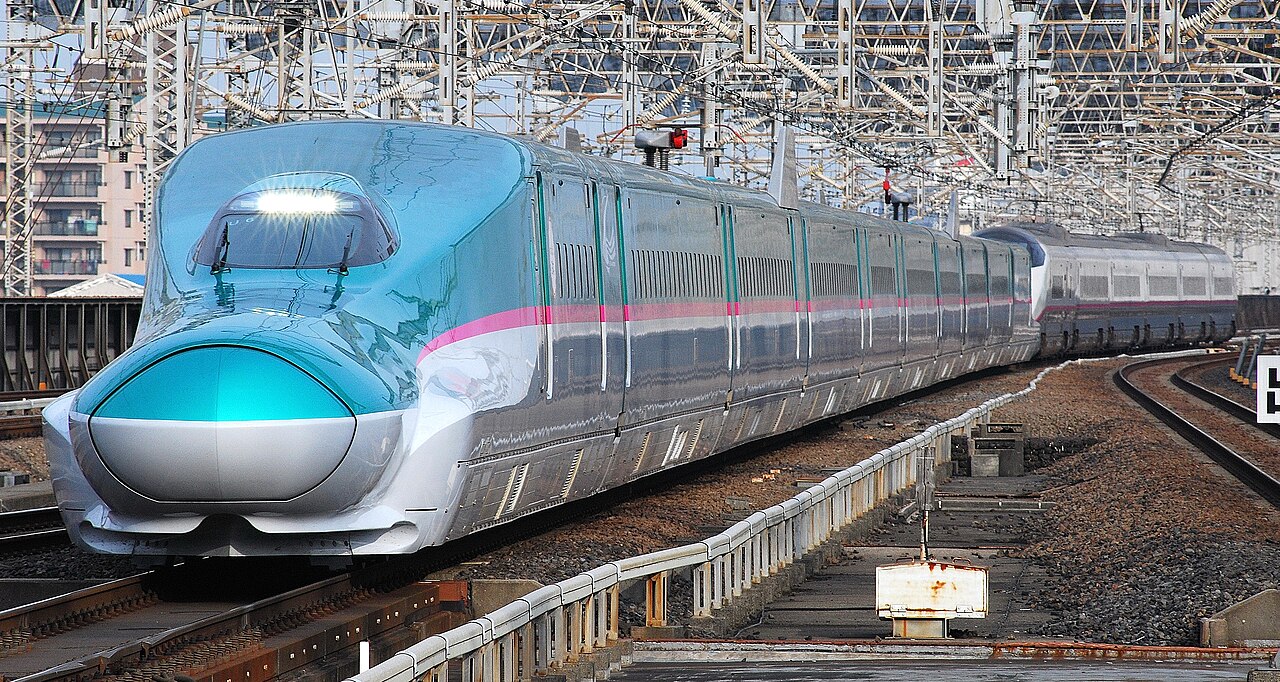
The H5 Series, operated by JR Hokkaido, is a closely related cold-weather derivative of the E5. Four H5 sets were ordered, with the first entering service on 26 March 2016 on the Hokkaido Shinkansen. H5 sets incorporate upgraded snowplows, reinforced inter-car connections, and stainless-steel underframes for electronics protection. Operating speeds on the Hokkaido Shinkansen are limited to 260 km/h, and to 160 km/h through the dual-gauge sections of the Seikan Tunnel. Following one set's withdrawal, three H5 sets remained in active service as of the article date.
The E5 series was awarded the 2012 Blue Ribbon Award by the Japan Railfan Club in May 2012.
Timeline
- 2009Pre-production prototype set S11 delivered to Sendai Depot in May for test running on Tohoku Shinkansen.
- 2011First E5 production sets enter revenue service on 5 March, operating the Hayabusa service between Tokyo and Shin-Aomori.
- 2012E5 series awarded the 2012 Blue Ribbon Award by the Japan Railfan Club in May.
- 2012E5 series introduced on some Nasuno all-stations services beginning 17 March.
- 2013Maximum speed raised to 320 km/h between Utsunomiya and Morioka from 16 March.
- 2016H5 series (cold-weather E5 derivative for JR Hokkaido) enters service on Hokkaido Shinkansen on 26 March.
Sources
Facts last verified 3 June 2026.
Gallery 4 photos
Every photo for this page — tap any image to view it full-size. All from Wikimedia Commons (credit under each).