History
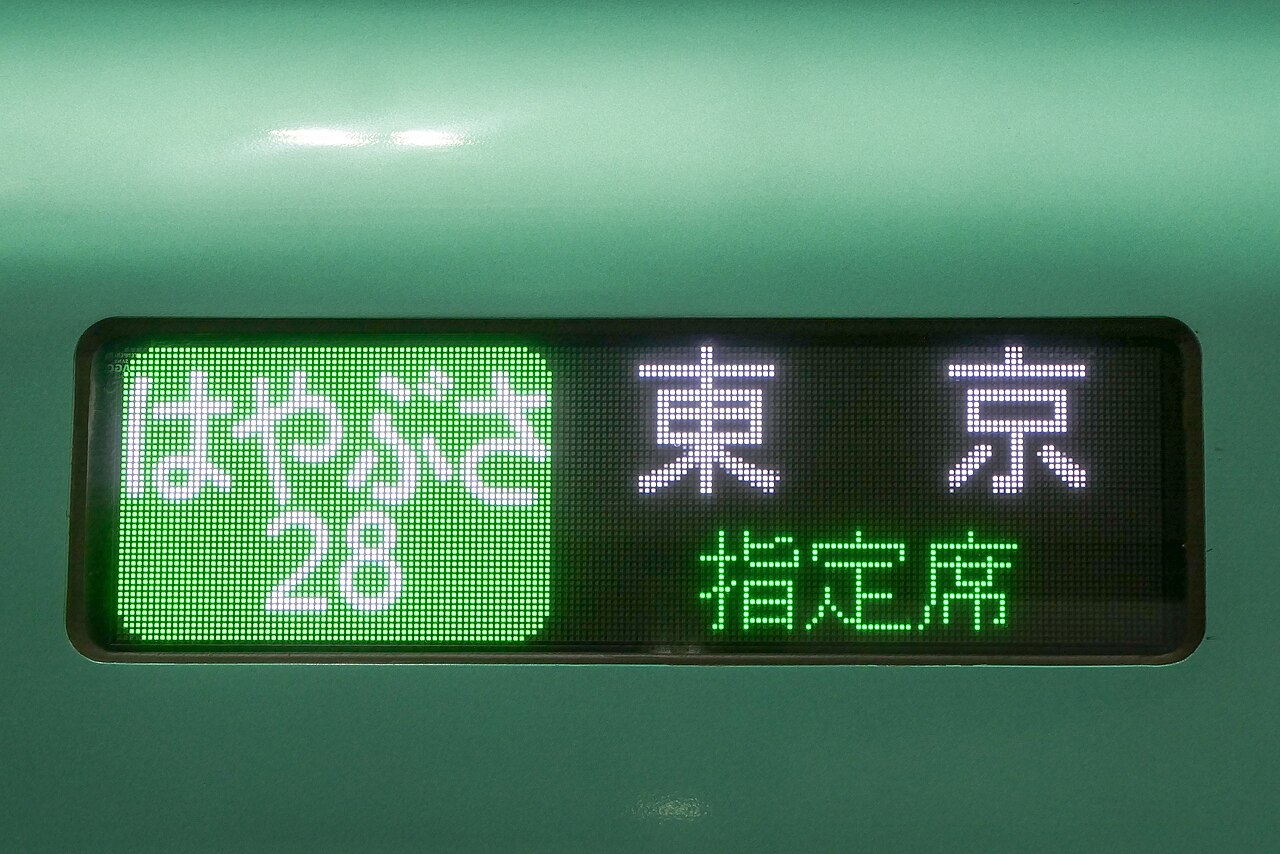
Only four ten-car sets were ordered, numbered H1 to H4 (40 vehicles in total), built by Hitachi and Kawasaki Heavy Industries between 2014 and 2015; the first set was shipped from Kawasaki's Kobe works to the Hakodate depot in October 2014, and test-running on the Hokkaido Shinkansen began on 1 December 2014, reaching 260 km/h on 26 December. The H5 has an identical maximum operating speed of 320 km/h to the E5 — the figure reached on the Tōhoku Shinkansen between Utsunomiya and Morioka — but speeds are limited to 260 km/h on the Hokkaido Shinkansen and to 160 km/h on the dual-gauge track through the undersea Seikan Tunnel linking Hokkaido with Honshu. The first JR Hokkaido type to use the "H" prefix (following JR East's "E" method), it works Hayabusa, Hayate, Yamabiko, and Nasuno services, frequently coupled with E6 series sets.
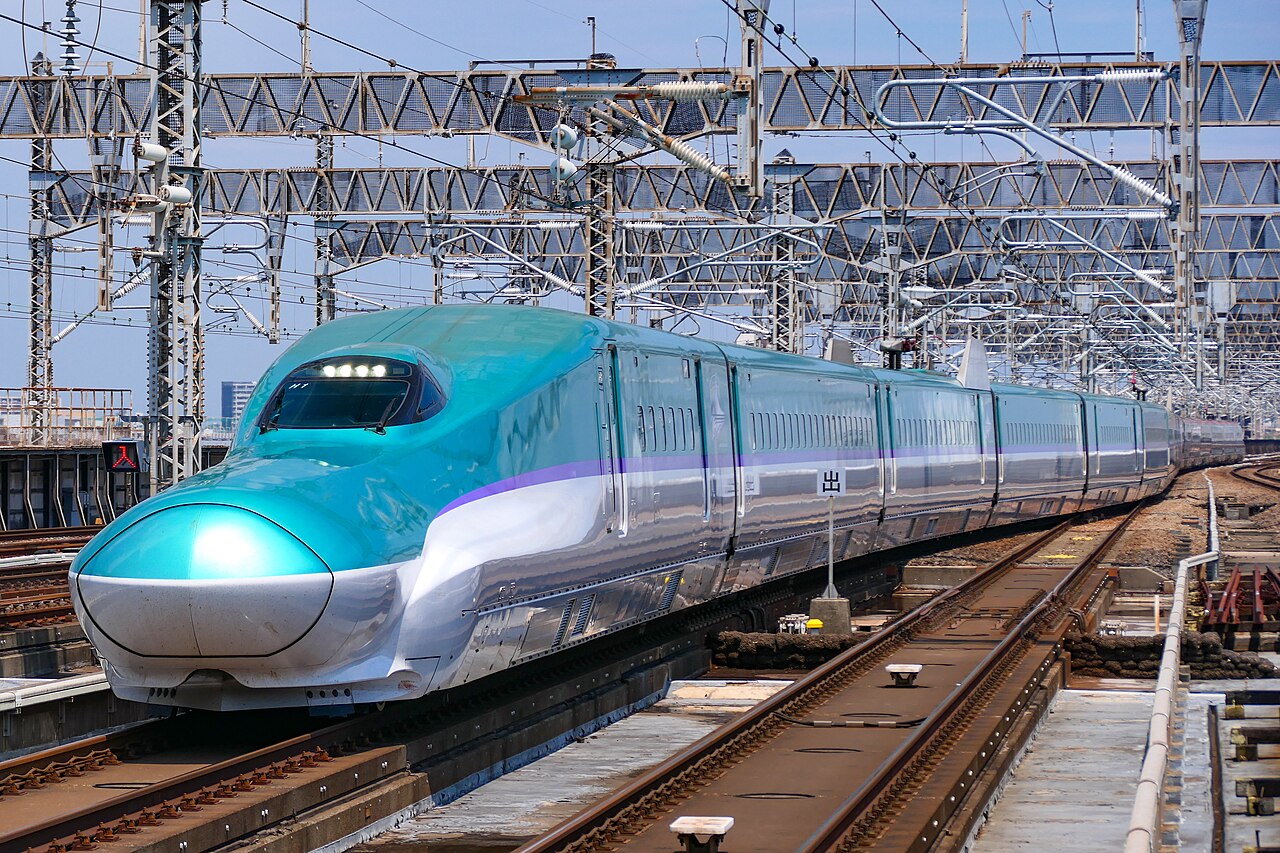
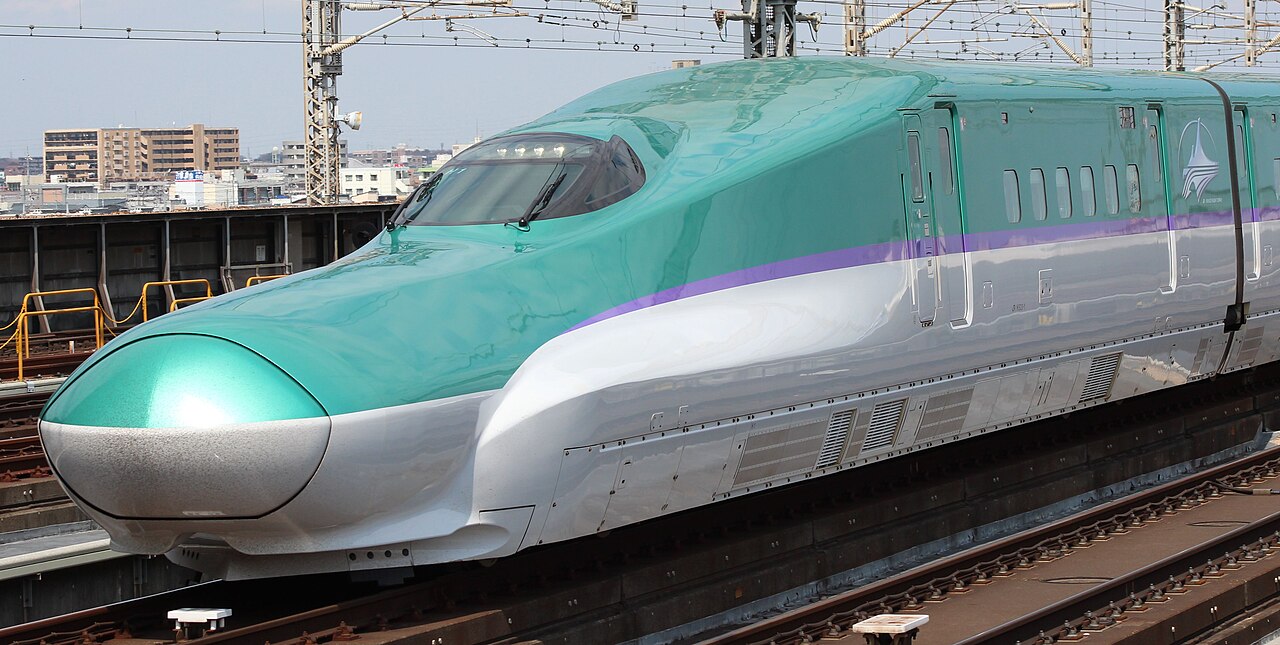
It differs from the E5 mainly in its bodyside stripe, which replaces the E5's "Hayate" pink with a "Saika" purple band intended to evoke the lilac, lupin, and lavender flowers for which Hokkaido is known, plus a logo combining an outline of Hokkaido with the gyrfalcon native to the island. The H5 also adds cold-weather adaptations — upgraded snowplows, reinforced inter-car connections, and a stainless-steel underframe replacing the E5's aluminium one — and a Hokkaido-themed interior whose ordinary-class cars carry a snowflake floor pattern. Following the withdrawal of set H2, which derailed in the 16 March 2022 Fukushima earthquake while running as a Yamabiko service and was struck from the register on 16 September 2022, three H5 sets remained in service.
Timeline
- 2014Details of the H5 series announced by JR Hokkaido in April; first set H1 shipped from Kawasaki Heavy Industries in Kobe to the Hakodate depot in October; slow-speed test-running on the Hokkaido Shinkansen begins 1 December, reaching 260 km/h on 26 December.
- 2016First H5 series set enters revenue service on 26 March with the partial opening of the Hokkaido Shinkansen (Shin-Aomori-Shin-Hakodate-Hokuto); E5 and H5 sets work interchangeably from this date.
- 2022Set H2, running as Yamabiko No. 223, derails in the 16 March Fukushima earthquake between Fukushima and Shiroishi-Zaō (no injuries) and is withdrawn on 16 September, reducing the fleet to three sets.
Sources
Facts last verified 3 June 2026.
Gallery 3 photos
Every photo for this page — tap any image to view it full-size. All from Wikimedia Commons (credit under each).