
History
The roots of the Tōhoku Shinkansen lie in the late 1960s, when Japan's rapid postwar economic expansion created pressure to extend high-speed rail beyond the Tōkaidō corridor. In May 1969, the Japanese cabinet approved the "New Comprehensive National Development Plan" (新全国総合開発計画), which explicitly called for the rapid construction of a new trunk line equivalent to what became the Tōhoku Shinkansen. The following year, in 1970, the Diet of Japan passed the Nationwide Shinkansen Railway Development Act, which established the statutory framework for planning and authorizing new shinkansen routes across the country. In January 1971, the Tōhoku Shinkansen route — designated as connecting Tokyo to Morioka — was formally announced as a basic plan. By April 1, 1971, the development plan was finalized, setting the maximum design speed at 260 km/h and designating Japanese National Railways (JNR) as the construction authority. Construction commenced in November 1971.
The Tokyo–Ōmiya Problem (1970s)
Construction of the southern portion — between Tokyo and Ōmiya — immediately encountered fierce local opposition, primarily from residents of Saitama Prefecture and northern Tokyo concerned about noise, vibration, and disruption during construction. This opposition caused repeated work stoppages and forced negotiated compromises. Among the concessions made were: the addition of the Saikyō Line (a parallel conventional-rail service), the creation of the Saitama New Urban Transit "New Shuttle" connecting Ōmiya to Ina, operating speed restrictions on the approach to Tokyo, a constrained track alignment in the Ōmiya vicinity, and — notably — the addition of a stop at Ueno Station, which had not been part of the original routing plan. The practical effect of these disputes was that the Tōhoku Shinkansen could not open at Tokyo or even Ueno in 1982; its initial southern terminus was the suburban station of Ōmiya, some 30 km north of central Tokyo.
Initial Opening: Ōmiya–Morioka (June 23, 1982)
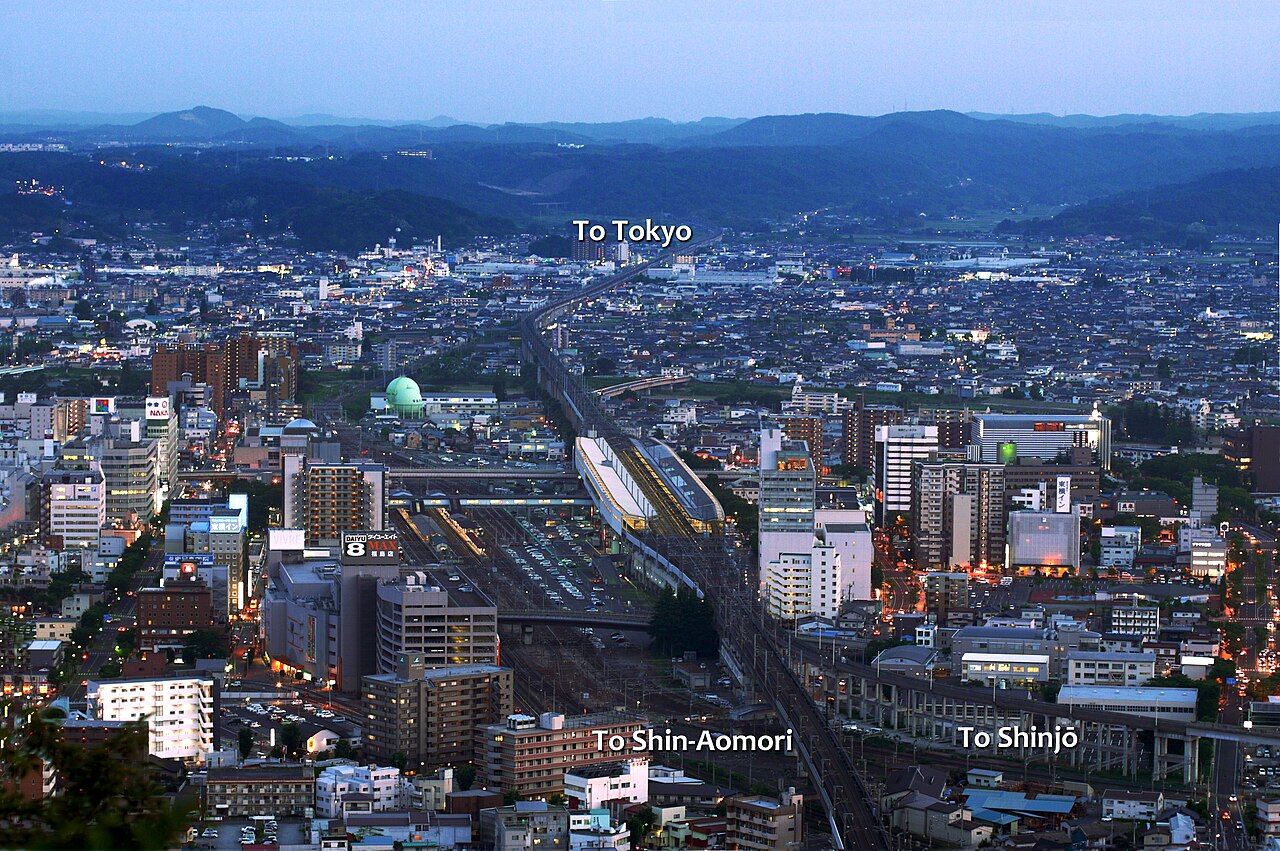
After years of construction through challenging terrain — including the mountainous spine of Honshu — the Tōhoku Shinkansen opened its first section on June 23, 1982, between Ōmiya and Morioka, spanning 495.2 km. Services were operated by JNR using the newly developed 200 Series Shinkansen, which had been designed specifically for the Tōhoku and Jōetsu routes. The 200 series entered service on the same day, capable of a maximum speed of 210 km/h at opening; later production batches would raise that to 240 km/h. Two named services began: Yamabiko (limited-stop) and Aoba (all-stops). On November 15, 1982, the companion Jōetsu Shinkansen also opened using the Ōmiya hub — the two lines sharing trackage south of Ōmiya when those sections eventually opened.
To bridge the gap between Ōmiya and central Tokyo, JNR introduced the "Shinkansen Relay" service: a conventional limited-express connecting Ueno with Ōmiya, allowing passengers to transfer. This stopgap ran from June 23, 1982 until its final day on March 13, 1985.
Ueno Extension (March 14, 1985)
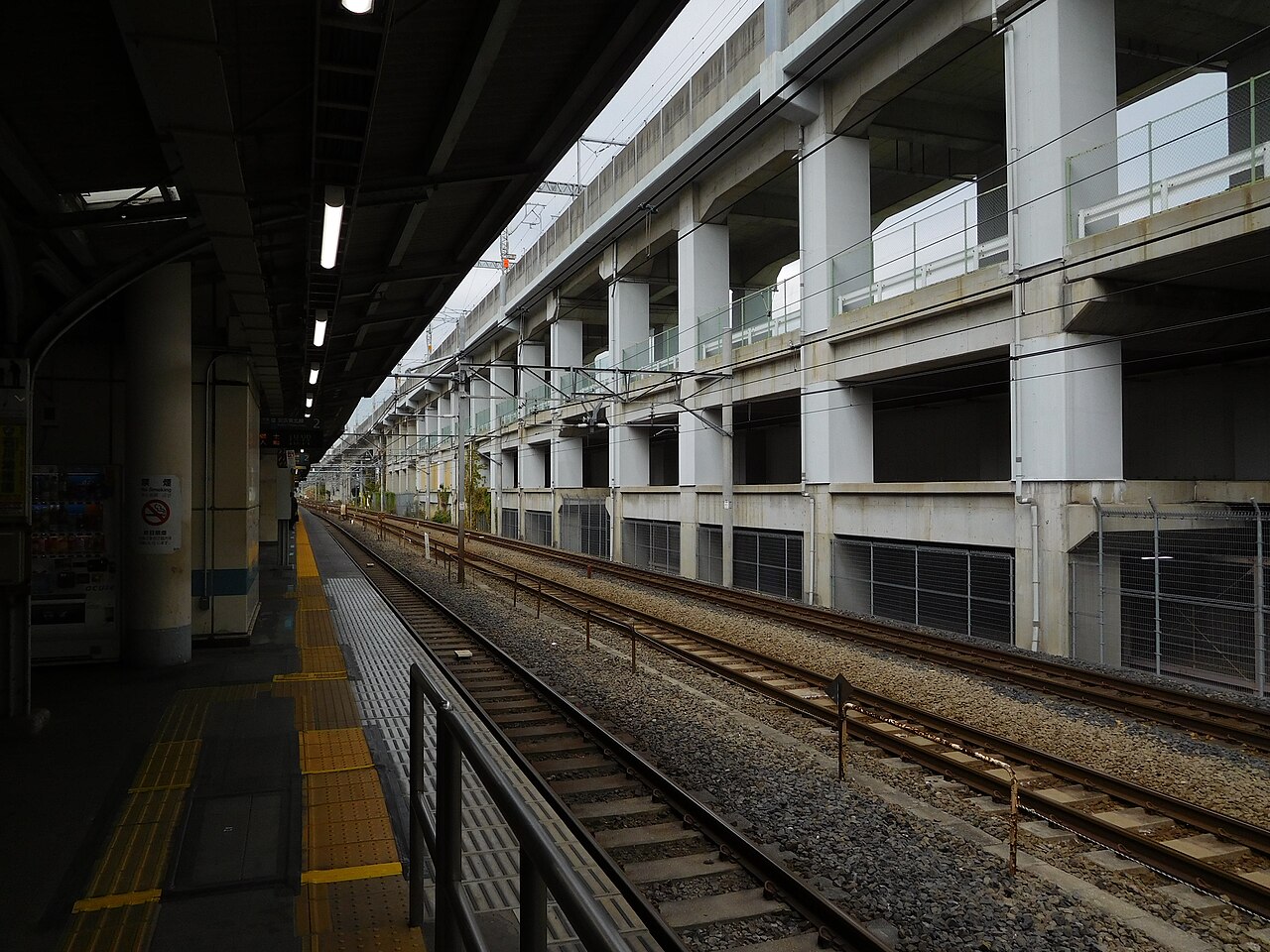
The extension from Ōmiya to Ueno — a 27.7 km addition — opened on March 14, 1985, finally bringing shinkansen services into the heart of Tokyo's Yamanote loop. The opening also permitted an increase in maximum operating speed to 240 km/h.
JNR Privatization (April 1, 1987)
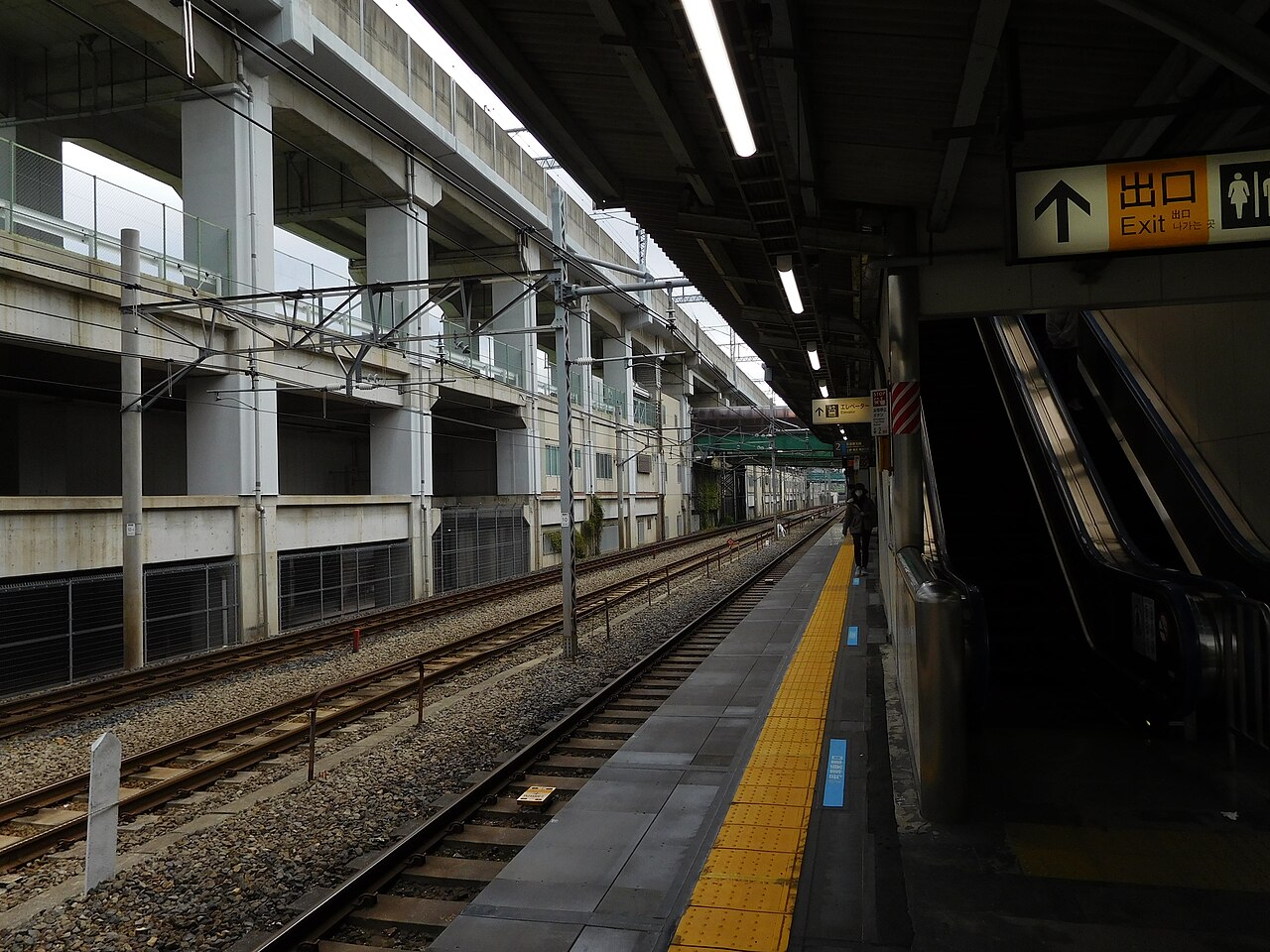
On April 1, 1987, Japanese National Railways was dissolved and its operations divided among regional JR companies. The Tōhoku Shinkansen passed to East Japan Railway Company (JR East), which assumed full operating responsibility. The 200 series fleet was transferred along with the infrastructure.
Tokyo Station Extension (June 20, 1991)
The final missing link — connecting Ueno to Tokyo Station through a short 3.6 km underground section — was completed and opened on June 20, 1991. This brought Tōhoku Shinkansen services into direct interchange with the Tōkaidō Shinkansen at Tokyo Station for the first time, dramatically simplifying long-distance travel for passengers from northern Japan heading westward. Journey times and the ability to market through-routes improved significantly.
Yamagata Mini-Shinkansen (July 1, 1992)
The first of two "mini-Shinkansen" branch lines opened on July 1, 1992: the Yamagata Shinkansen. Unlike purpose-built shinkansen, mini-shinkansen operate over former narrow-gauge (1,067 mm) lines that have been re-gauged to standard gauge (1,435 mm), retaining the original loading gauge. This requires specially designed rolling stock with a narrower body cross-section and caps maximum speed at 130 km/h on the converted section. The Ōu Main Line between Fukushima and Yamagata was re-gauged between 1988 and 1992. Service operates as Tsubasa, with trains running through from Tokyo via the Tōhoku Shinkansen, decoupling from a Yamabiko service at Fukushima. The 400 Series Shinkansen — a purpose-built mini-shinkansen unit capable of 240 km/h on standard shinkansen track and 130 km/h on the converted section — was introduced for these services. The Yamagata Shinkansen was subsequently extended to Shinjō on December 4, 1999.
Akita Mini-Shinkansen and E2/E3 Introduction (March 22, 1997)
The second mini-shinkansen branch, the Akita Shinkansen, opened on March 22, 1997, extending through-running from Morioka south to Akita via a gauge-converted section of the Tazawako Line and Ōu Main Line. The Tazawako Line (75 km between Morioka and Ōmagari) was converted to standard gauge; a parallel standard-gauge track was added over 51.7 km of the Ōu Main Line between Ōmagari and Akita. Named services operate as Komachi, typically coupled with Yamabiko or (later) Hayabusa services on the main trunk between Tokyo and Morioka. The opening of the Akita Shinkansen also brought two important new rolling stock introductions: the E3 Series for Komachi services (the mini-shinkansen variant capable of 275 km/h on shinkansen track) and the E2 Series, which debuted on the Tōhoku main line in March 1997 on Yamabiko services, capable of 275 km/h. At the same time, maximum operating speed on the Tōhoku Shinkansen was raised to 275 km/h — a significant step toward modern performance levels.
Morioka–Hachinohe Extension (December 1, 2002)
Construction north of Morioka — part of the so-called "Seibi Shinkansen" (planned shinkansen) network authorized in 1973 — proceeded during the 1990s. On December 1, 2002, the line opened between Morioka and Hachinohe, a distance of 96.6 km, bringing high-speed rail to the southern part of Aomori Prefecture for the first time. A new named service, Hayate, was introduced for this section, operating all-stops between Morioka and Hachinohe/Shin-Aomori. The opening also saw the introduction of digital ATC (DS-ATC), improving headway management and reliability. The route to this point crossed some of Japan's most demanding terrain, including the 25.8 km Iwate-Ichinohe Tunnel, which was briefly the world's longest land railway tunnel at its completion in 2000, before being surpassed in 2005.
Hachinohe–Shin-Aomori Extension and Full Line Completion (December 4, 2010)
The final section of the Tōhoku Shinkansen — 81.8 km from Hachinohe to Shin-Aomori — opened on December 4, 2010, completing the full 674.9 km route from Tokyo to Aomori Prefecture. This section included the 26.5 km Hakkōda Tunnel, which upon its completion in 2005 had taken the record as the world's longest land railway tunnel. From its 1971 authorization to this 2010 completion, the full-line project had taken 39 years.
Hayabusa Service and the 300–320 km/h Era (2011–2013)
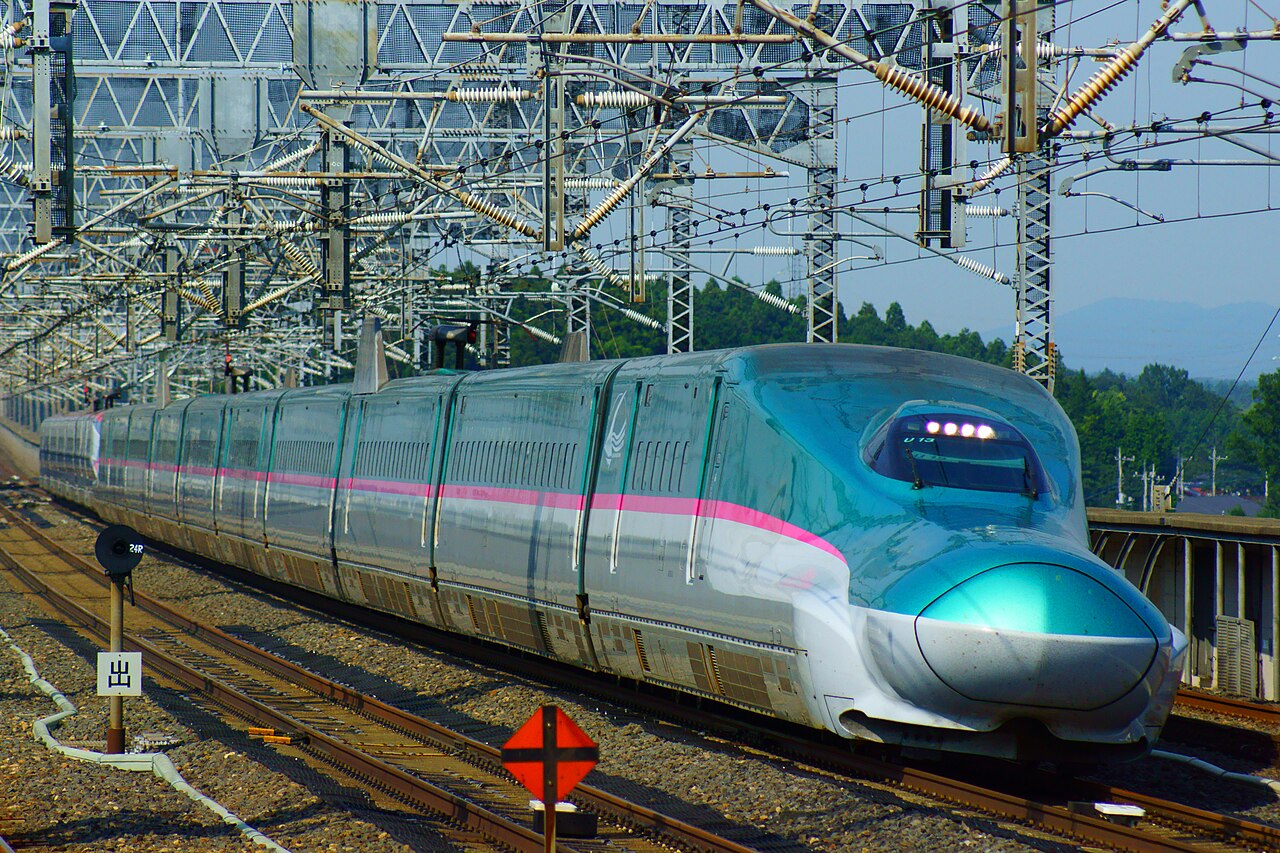
On March 5, 2011 — just six days before the catastrophic earthquake — JR East launched Hayabusa services between Tokyo and Shin-Aomori using the newly developed E5 Series Shinkansen at a maximum speed of 300 km/h. The E5 series, built for aerodynamic efficiency with a distinctive 15-metre nose, represented a new generation of shinkansen technology. The Hayabusa brand was chosen to evoke speed and precision.
Six days later, on March 11, 2011, the magnitude-9.0 Tōhoku earthquake and tsunami struck, suspending all Tōhoku Shinkansen services. JR East estimated approximately 1,100 separate repairs were required along the line between Ōmiya and Iwate-Numakunai, including collapsed station roofs and bent power pylons. Service was restored in stages: Tokyo–Nasushiobara reopened March 15; Morioka–Shin-Aomori on March 22; Morioka–Ichinoseki on April 7; Nasushiobara–Fukushima on April 12; the full line by around April 30, initially at reduced speeds. Full-speed operations were not restored until September 23, 2011, and maximum speeds during the interim were capped at 275 km/h.
On March 16, 2013, the maximum operating speed on the Utsunomiya–Morioka section was raised to 320 km/h — the fastest regular commercial rail service in Japan. Simultaneously, the E6 Series entered revenue service on March 16, 2013 on new Super Komachi services replacing the E3 on the Akita Shinkansen, capable of 320 km/h on the Tōhoku trunk and 130 km/h on the local section. From March 15, 2014, all Komachi services transitioned fully to E6 sets, and the 320 km/h ceiling applied across all coupled Hayabusa/Komachi formations.
Hokkaido Shinkansen Extension (March 26, 2016)
On March 26, 2016, shinkansen services were extended beyond Shin-Aomori via the Seikan Tunnel — the world's longest undersea railway tunnel — to Shin-Hakodate-Hokuto in Hokkaido, inaugurating the Hokkaido Shinkansen. JR Hokkaido's H5 Series, visually similar to the E5 but operated by a different company, entered service on this route; speeds are limited to 260 km/h on the Hokkaido section and 160 km/h through the Seikan Tunnel's dual-gauge section (which also carries freight). Through Hayabusa services now operate from Tokyo to Shin-Hakodate-Hokuto, covering 823.7 km in approximately 3 hours 57 minutes. A further extension to Sapporo is planned, delayed in December 2024 to fiscal year 2038.
E8 Series and Recent Developments (2024–2026)
On March 16, 2024, the E8 Series Shinkansen entered revenue service on Tsubasa operations of the Yamagata Shinkansen, replacing the E3 series. The E8 is capable of 300 km/h on the Tōhoku Shinkansen main line — a significant uplift from the E3's 275 km/h ceiling — and 130 km/h on the Yamagata section. JR East has ordered 15 seven-car sets for delivery between 2022 and 2026.
On September 19, 2024, an unprecedented incident occurred when a coupled Hayabusa/Komachi formation separated while in motion between Furukawa and Sendai — the first such mid-journey uncoupling in Shinkansen history. A further coupling incident occurred between Ueno and Ōmiya on March 6, 2025, prompting JR East to temporarily suspend all coupled-formation operations.
In March 2026, JR East inaugurated the first dedicated freight-only Shinkansen service in history, using a modified seven-car E3 series set, operating one daily weekday return trip between Tokyo and Morioka. While the JR Group had been carrying cargo on passenger Shinkansen trains since 2021, this marked the first Shinkansen service dedicated solely to freight.
Significance
The Tōhoku Shinkansen, at 674.9 km, is Japan's longest shinkansen line and one of the longest high-speed rail lines operated by a single company in the world. Its 320 km/h operating speed remains the fastest commercially operated speed in Japan. The line brought Aomori — historically one of Japan's most geographically isolated prefectures — within three hours of Tokyo, transforming economic and social links across the Tōhoku region. Its staged construction over four decades and its resilience following the 2011 earthquake have made it a symbol of both Japanese rail engineering and national recovery.
Timeline
- 1969Japanese cabinet approves 'New Comprehensive National Development Plan' (新全国総合開発計画), explicitly including a Tōhoku Shinkansen-equivalent trunk line.
- 1970Diet of Japan passes the Nationwide Shinkansen Railway Development Act, establishing the legal framework for new shinkansen route planning.
- 1971April 1: Tōhoku Shinkansen development plan finalized (Tokyo–Morioka), maximum design speed 260 km/h, JNR as construction authority. November 1971: construction commences.
- 1973November: Government approves development plan for the Morioka–Aomori extension and four other 'Seibi Shinkansen' routes.
- 1982June 23: Tōhoku Shinkansen opens between Ōmiya and Morioka (495.2 km) using 200 Series Shinkansen at 210 km/h. Yamabiko and Aoba services begin. Shinkansen Relay service (Ueno–Ōmiya conventional rail) begins same day. November 15: Jōetsu Shinkansen opens its initial section.
- 1985March 14: Ueno–Ōmiya extension (27.7 km) opens, maximum speed raised to 240 km/h. Shinkansen Relay service ends March 13.
- 1987April 1: JNR privatized and dissolved; East Japan Railway Company (JR East) assumes operation of the Tōhoku Shinkansen.
- 1991June 20: Tokyo–Ueno underground extension (3.6 km) opens, completing the link into Tokyo Station and connecting with the Tōkaidō Shinkansen.
- 1992July 1: Yamagata Shinkansen (Fukushima–Yamagata, mini-shinkansen) opens with 400 Series on Tsubasa services, first mini-shinkansen branch off the Tōhoku main line.
- 1994July: E1 Series ('Max' double-deck trains) enters service on Yamabiko/Aoba services.
- 1997March 22: Akita Shinkansen (Morioka–Akita, mini-shinkansen) opens; E3 Series introduced on Komachi services. E2 Series introduced on Yamabiko services. Maximum operating speed raised to 275 km/h.
- 1997December: E4 Series ('Max' double-deck trains) enters service on Yamabiko/Nasuno services.
- 1999December 4: Yamagata Shinkansen extended from Yamagata to Shinjō.
- 2000Iwate-Ichinohe Tunnel (25.8 km) completed — briefly the world's longest land railway tunnel.
- 2002December 1: Morioka–Hachinohe extension (96.6 km) opens; Hayate service introduced; DS-ATC signalling adopted.
- 2005Hakkōda Tunnel (26.5 km) on the Hachinohe–Shin-Aomori extension completed, surpassing Iwate-Ichinohe as world's longest land railway tunnel.
- 2008December 20: E3-2000 series enters service on Yamagata Shinkansen Tsubasa services, beginning phased replacement of 400 series.
- 2010April 18: 400 Series fully retired from Yamagata Shinkansen Tsubasa services.
- 2010December 4: Hachinohe–Shin-Aomori extension (81.8 km) opens, completing the full 674.9 km Tokyo–Shin-Aomori route after 39 years from authorization.
- 2011March 5: Hayabusa service launches Tokyo–Shin-Aomori using new E5 Series at 300 km/h.
- 2011March 11: 2011 Tōhoku earthquake and tsunami suspends all services; ~1,100 repairs required Ōmiya–Iwate-Numakunai. Speeds temporarily capped at 275 km/h after phased reopening (full service April 30; full speed September 23, 2011).
- 2011November: 200 Series retired from regular Tōhoku Shinkansen revenue service (final public run April 14, 2013).
- 2012September: E4 Series retired from Tōhoku Shinkansen services.
- 2013March 16: Maximum speed raised to 320 km/h (Utsunomiya–Morioka), the fastest commercial rail speed in Japan. E6 Series (Super Komachi) enters service on Akita Shinkansen at 300 km/h on Tōhoku main section.
- 2013April 14: Final public run of 200 Series (set K47), completing the transition to modern rolling stock.
- 2014March 15: All Komachi services transition fully to E6 Series; E6 now operates at 320 km/h on Tōhoku Shinkansen.
- 2016March 26: Hokkaido Shinkansen (Shin-Aomori–Shin-Hakodate-Hokuto, 148.8 km) opens via Seikan Tunnel; H5 Series enters service under JR Hokkaido; Hayabusa services extended through.
- 2021February 13: Magnitude 7.1 Fukushima earthquake damages infrastructure between Shin-Shirakawa and Furukawa; Nasushiobara–Morioka suspended. Full restoration achieved March 26, 2021.
- 2024March 16: E8 Series enters service on Yamagata Shinkansen Tsubasa services, capable of 300 km/h on Tōhoku main line (up from E3's 275 km/h).
- 2024September 19: First-ever mid-journey uncoupling of a coupled Hayabusa/Komachi formation (between Furukawa and Sendai) in Shinkansen history.
- 2025March 6: Second uncoupling incident (Ueno–Ōmiya); JR East temporarily suspends coupled-formation operations.
- 2026March: JR East launches first freight-only Shinkansen service in history, operating a modified seven-car E3 set once daily (weekdays) between Tokyo and Morioka.
Sources
Facts last verified 3 June 2026.