History
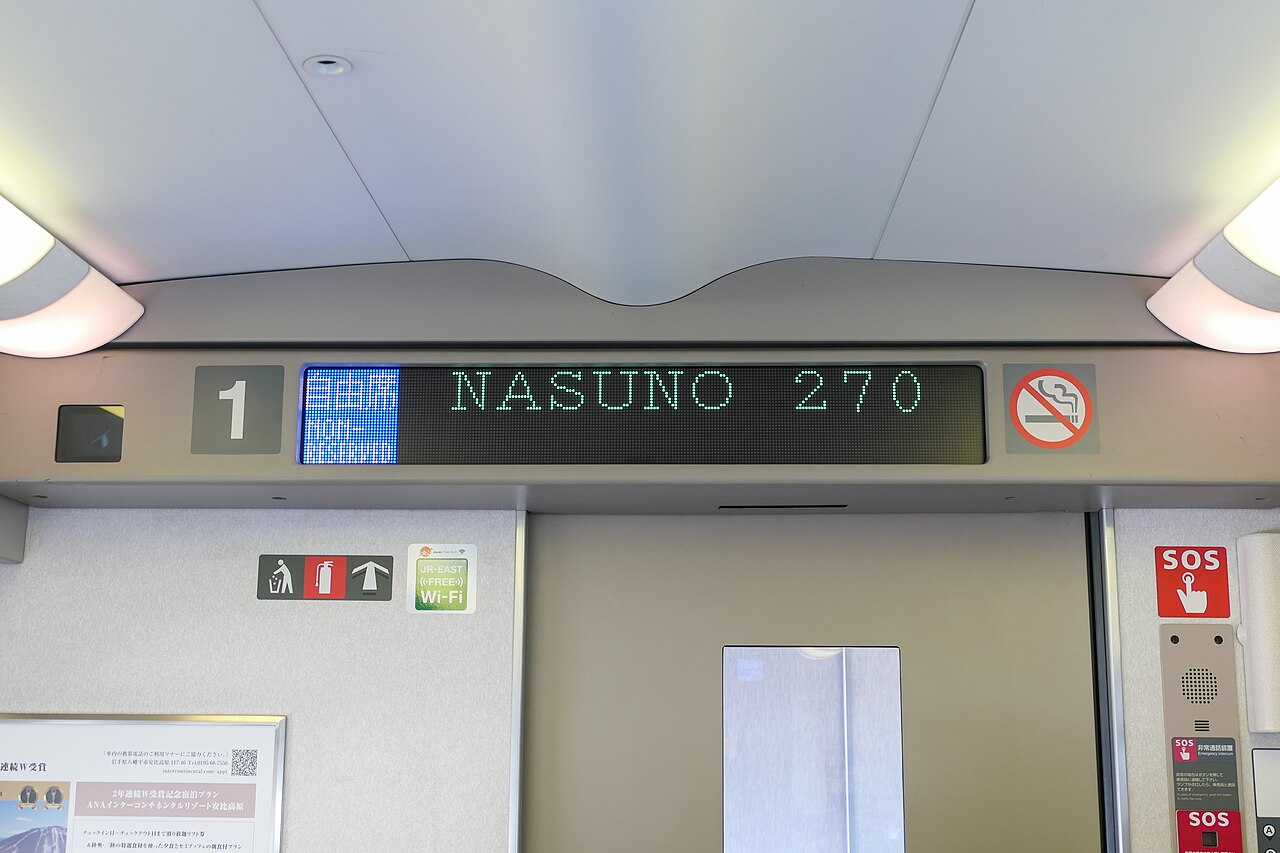
It was created on 1 December 1995 (the name was adopted on 10 December 1995), when the Tokyo–Nasushiobara workings of the all-stations Aoba and Max Aoba were split into the short-distance Shinkansen Nasuno and Max Nasuno. Its core riders are Tokyo–Oyama/Utsunomiya commuters, students and business travellers; later revisions extended some daytime trains to Kōriyama. The name comes from the Nasu Highlands and Nasu Onsen along the line between Utsunomiya and Kōriyama, and was the first Shinkansen name to use an on'yomi reading — the only one until the Hakutaka began in 2015.
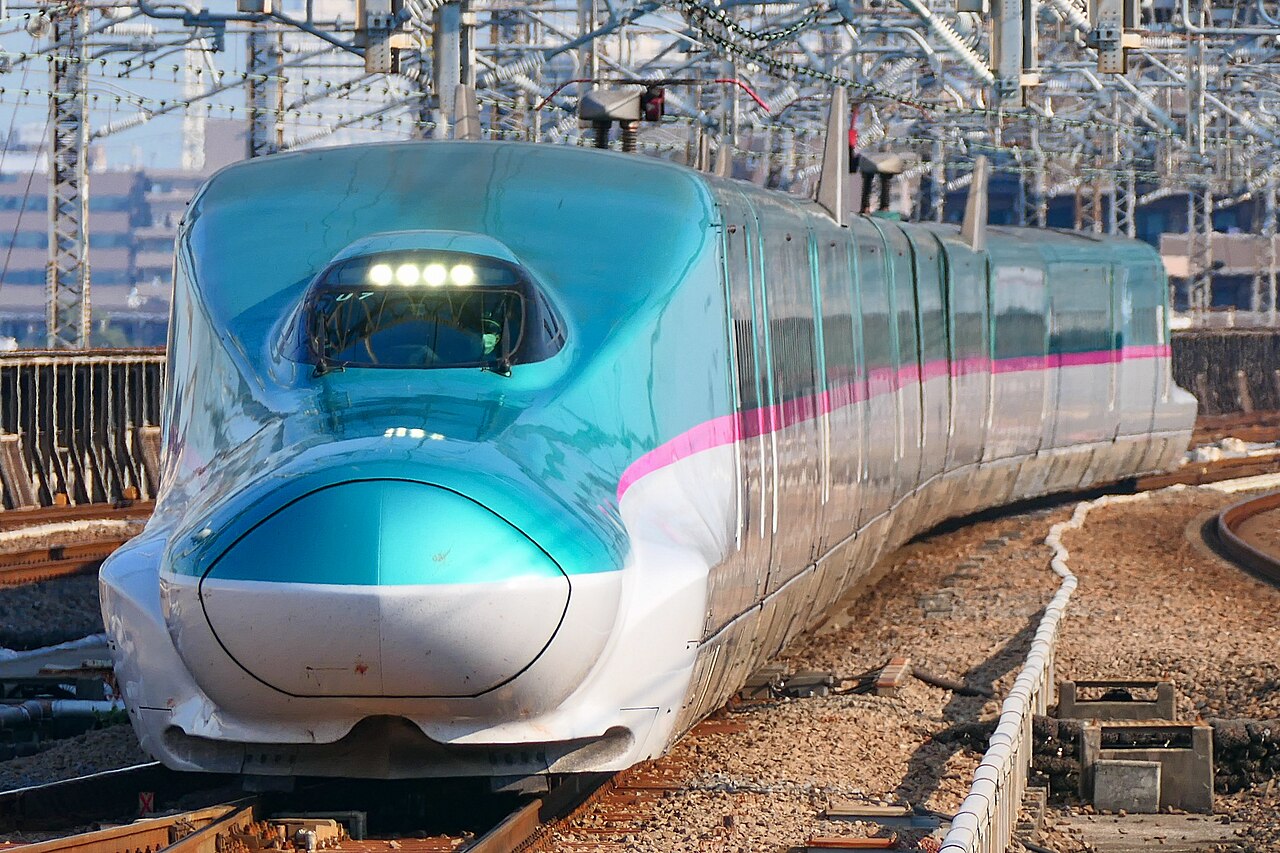
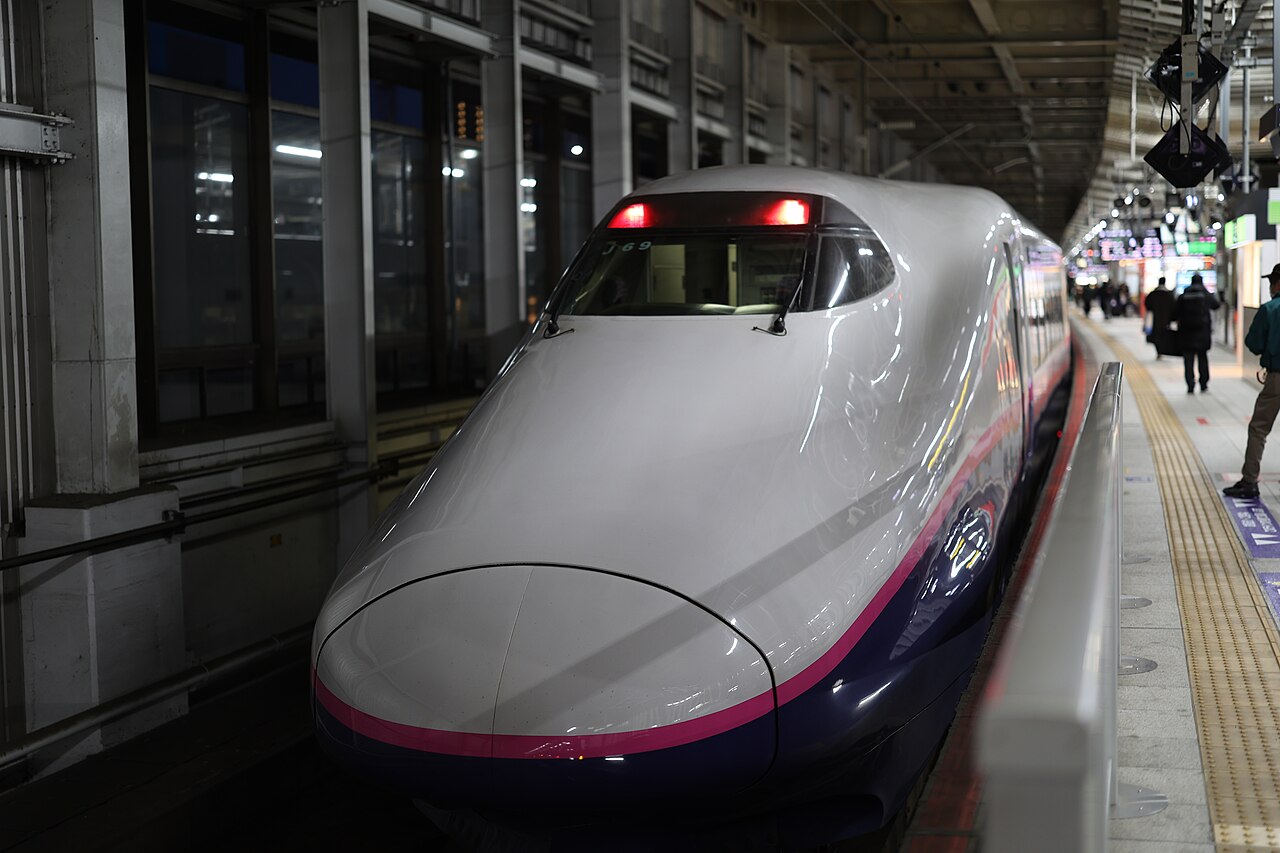
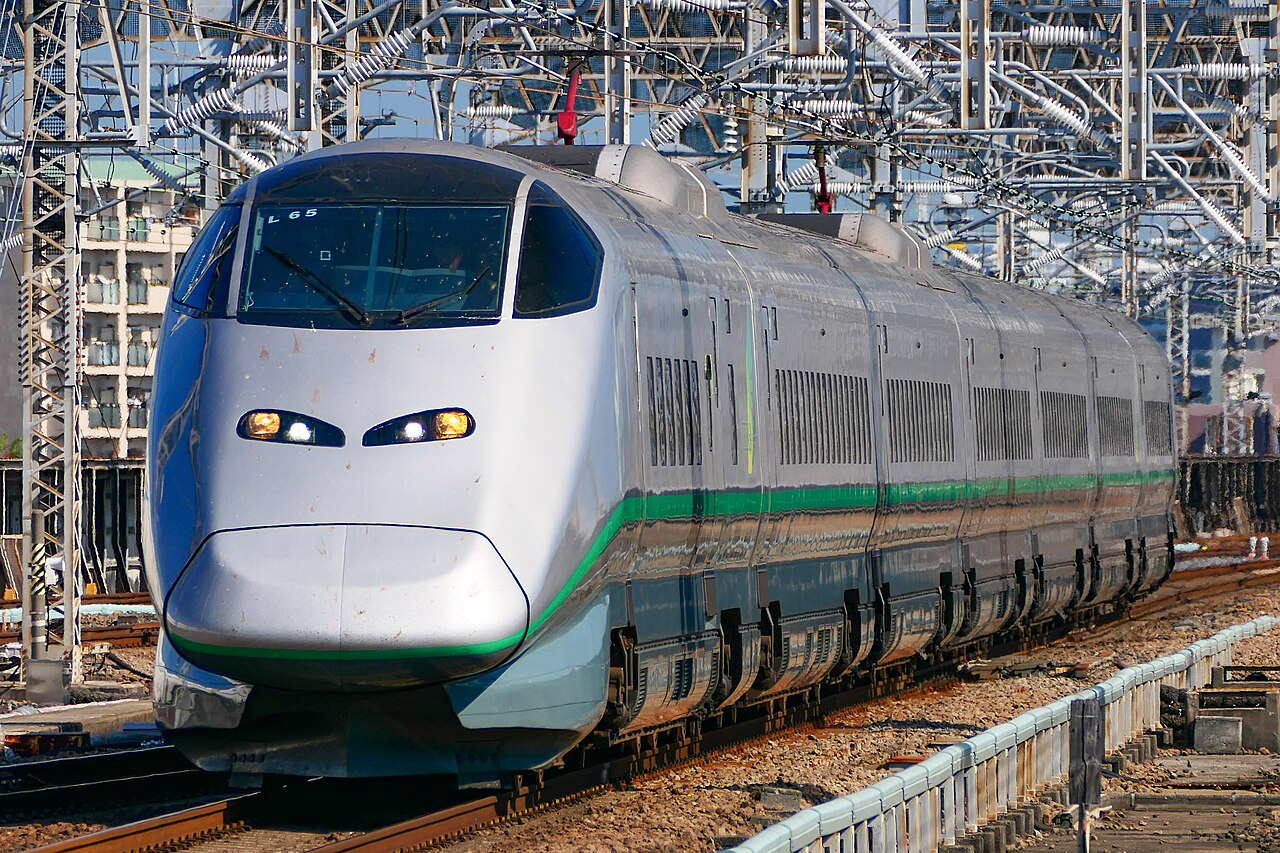
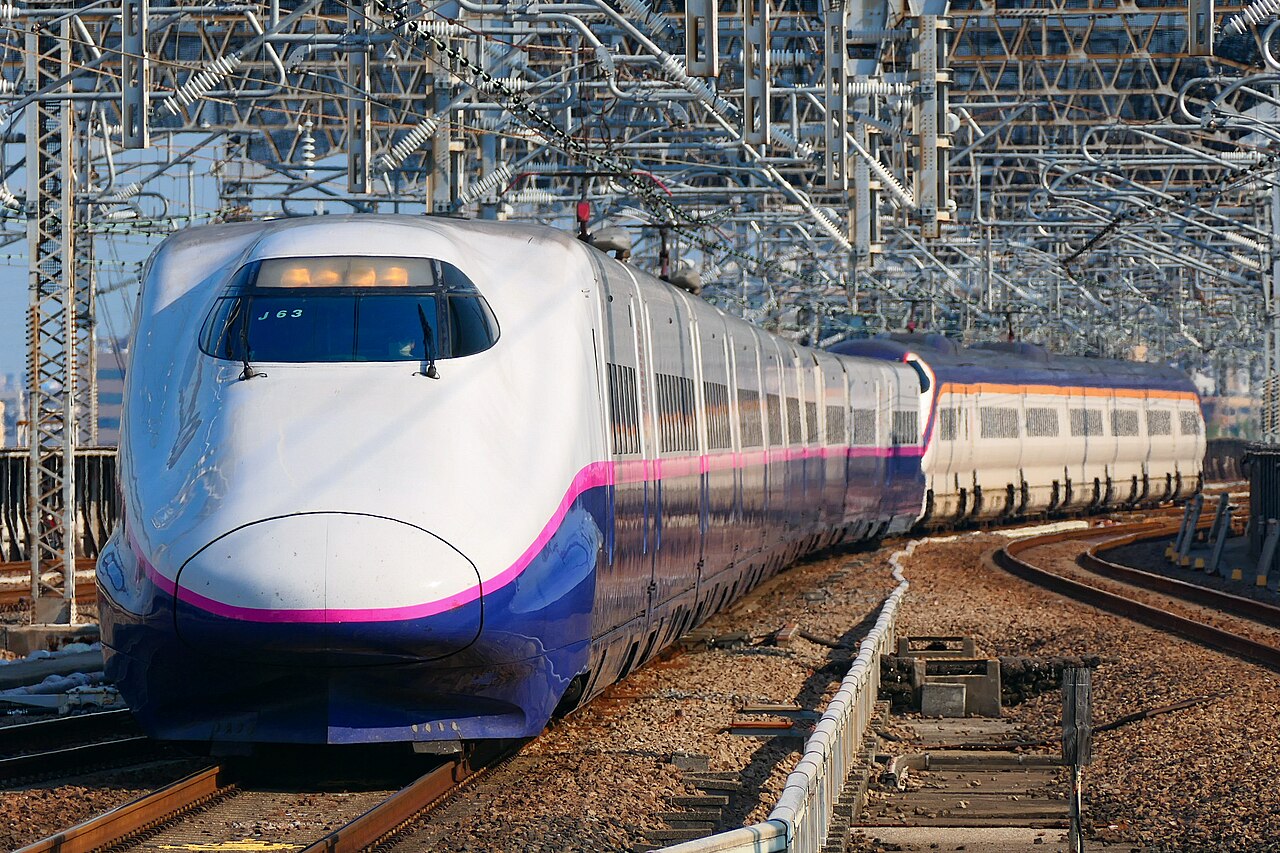
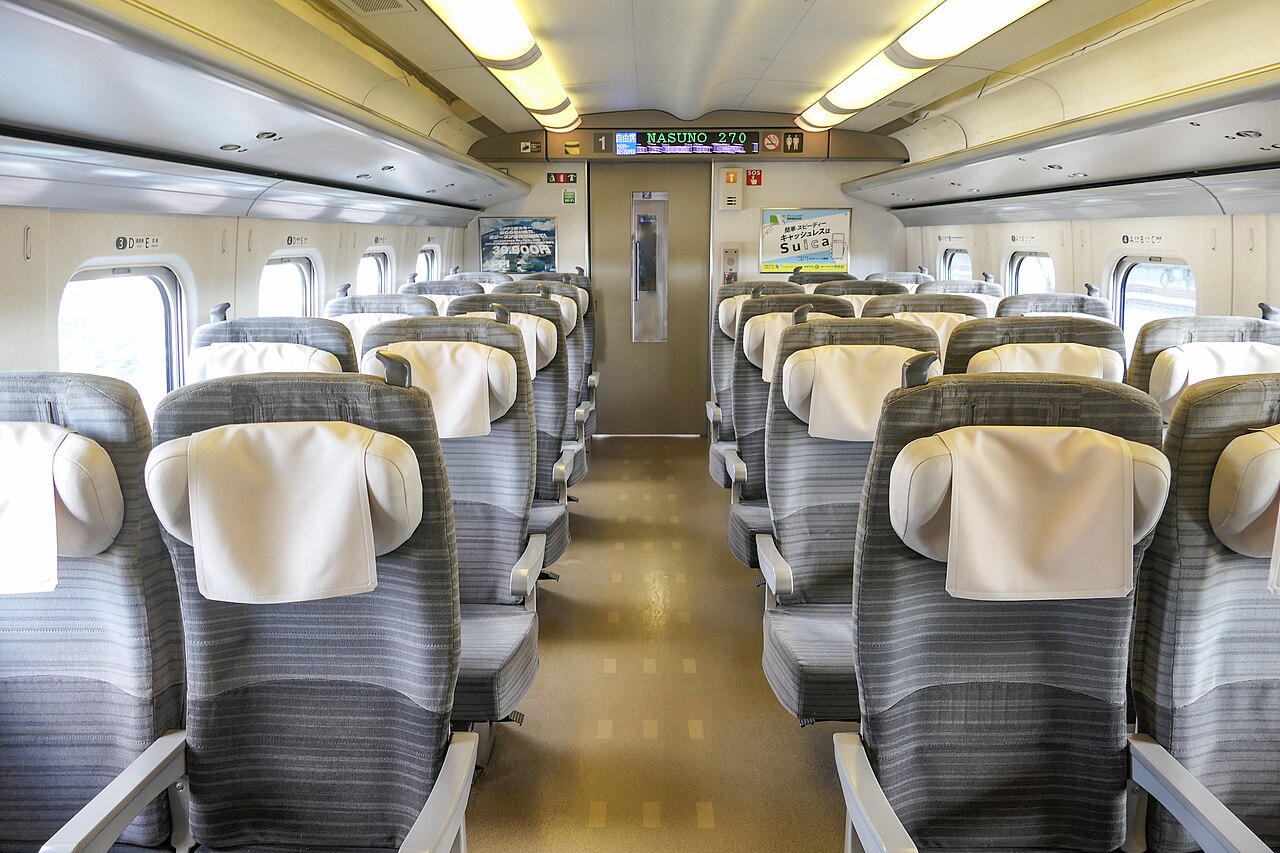
There are 16 weekday round trips and 13 on Saturdays and holidays, plus one daily Oyama-to-Tokyo working, numbered 251 to 282. Rolling stock has turned over heavily: the current stock is the E2 (since March 1997) and E5 series (since 17 March 2012), with former 200 series (1995–2011), E1 Max Nasuno (1994–1999) and E4 Max Nasuno (1997–2012). E3, E6 and E8 sets also couple to E5, and E5 trains offer Gran Class at a fare cheaper than the Hayabusa, Hayate and Yamabiko but without a dedicated attendant. Disruptions include an April 2011 emergency extension to Fukushima after the earthquake, and January 2026 running south of Ōmiya only using E7 sets.
Timeline
- 1959The name Nasuno is first introduced (22 September 1959) for semi-express services between Ueno in Tokyo and Kuroiso on the Tōhoku Main Line; it was an intermittent/peak-season semi-express run with 157 series 'Nikkō-type' sets.
- 1985The conventional Nasuno is upgraded to a Limited Express on 14 March 1985, using 185 series rolling stock; it was renamed 'New Limited Express (shin-tokkyū) Nasuno' (新特急なすの, an L-tokkyū/エル特急 brand).
- 1995The Nasuno name is adopted for new all-stations Tōhoku Shinkansen services (JA: 1 December 1995; EN: 10 December 1995), splitting the Tokyo–Nasushiobara Aoba/Max Aoba workings into the short-distance Shinkansen Nasuno and Max Nasuno; the Shinjuku conventional services were renamed Ohayō Tochigi and Hometown Tochigi.
- 1997E2 series and E3 series 0-class sets enter service on 22 March 1997 (E2 in service since March 1997); the all-stations Aoba and Max Aoba are abolished on 1 October 1997, with local service thereafter covered by Nasuno as far as Kōriyama and further stations by the Yamabiko.
- 1998Two Tokyo–Nasushiobara Nasuno round trips are extended north to Kōriyama (8 December 1998 dia revision).
- 2012E5 series Nasuno service begins on 17 March 2012, introducing Gran Class (seating only) and ending regular 16-car E4 Max Nasuno workings; on 29 September 2012 the E4 series ends regular service and the Max Nasuno name is abolished, with all trains unified under the name Nasuno.
- 2013E6 series Nasuno service begins on 16 March 2013, coupled to E5 series sets.
- 2015Onboard sales (車内販売) on the Nasuno are abolished entirely on 14 March 2015.
Gallery 6 photos
Every photo for this page — tap any image to view it full-size. All from Wikimedia Commons (credit under each).