History
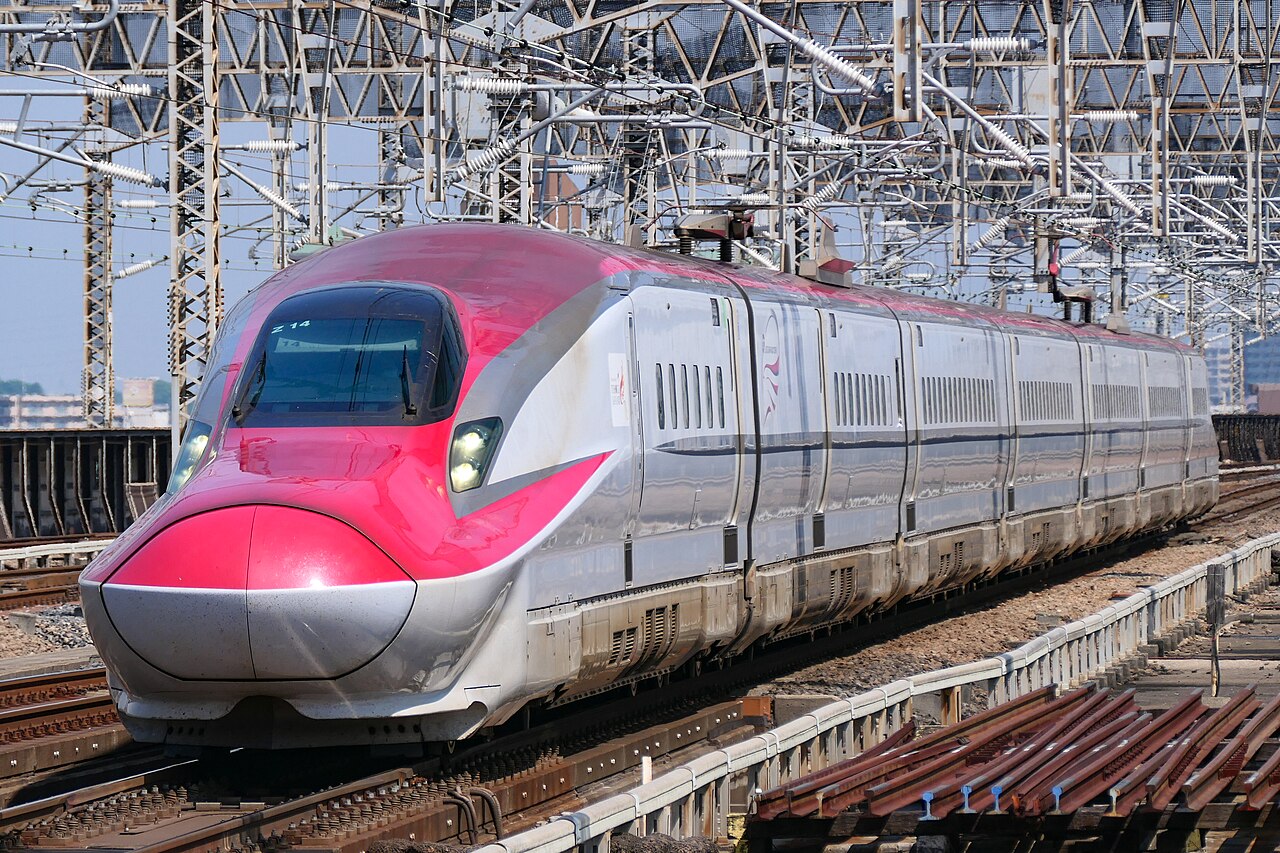
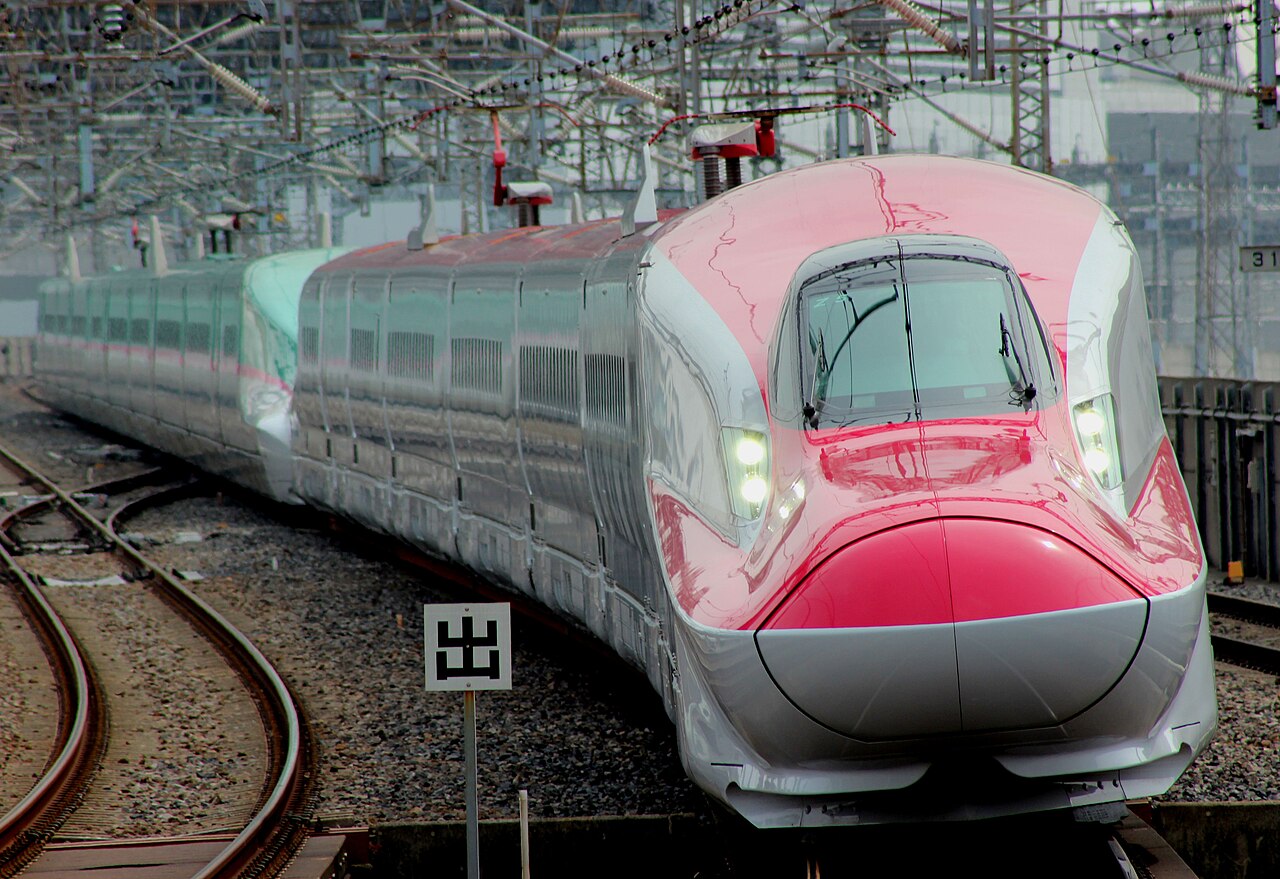
The type was developed to replace the E3 series on Komachi services and to raise the Tōhoku Shinkansen maximum, on which the E6 can run at up to 320 km/h, up from the 275 km/h to which the E3 had been limited. On the Tōhoku Shinkansen the seven-car E6 runs coupled to an E5 or H5 series train working a Hayabusa service, being attached or detached at Morioka. When revenue service began on 16 March 2013 the trains ran under the name Super Komachi and initially reached a maximum of 300 km/h on the Tōhoku Shinkansen; from the 15 March 2014 timetable revision that maximum was raised to 320 km/h, while the Akita Shinkansen tracks remained at 130 km/h, cutting Tokyo–Akita journey times by an average of 12 minutes.
By that revision the E6 had replaced all of the earlier E3 series trains on Komachi services, and the service name reverted to simply Komachi. A total of 24 seven-car trainsets (168 vehicles) were built by Hitachi and Kawasaki Heavy Industries. The styling was overseen by the Japanese industrial designer Ken Okuyama, and in May 2014 the E6 series was awarded the Laurel Prize by the Japan Railfan Club.
Timeline
- 2013Revenue service begins on 16 March on new Super Komachi services; the seven-car E6 runs coupled to E5/H5 sets and initially operates at a maximum 300 km/h on the Tōhoku Shinkansen (130 km/h on the Akita Shinkansen).
- 2014From the 15 March timetable revision the E6 has replaced all E3 series trains on Komachi services and the maximum Tōhoku Shinkansen speed is raised to 320 km/h; the service name reverts to Komachi. The type is awarded the 2014 Laurel Prize in May.
- 2022Set Z9, coupled with H5 series set H2 working Yamabiko 223, derails during the 2022 Fukushima earthquake between Fukushima and Shiroishi-Zaō with no injuries; the set is subsequently withdrawn.
Sources
Facts last verified 3 June 2026.
Gallery 4 photos
Every photo for this page — tap any image to view it full-size. All from Wikimedia Commons (credit under each).