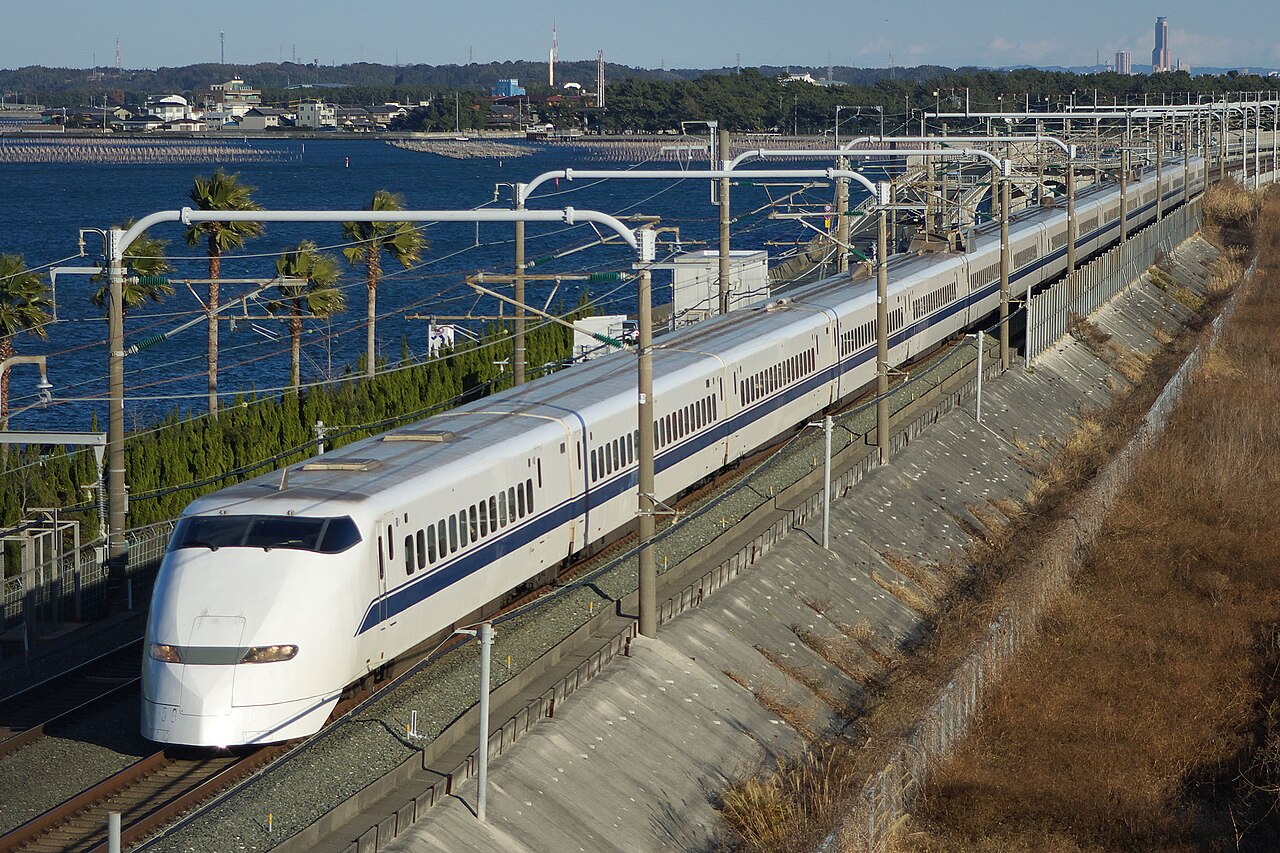
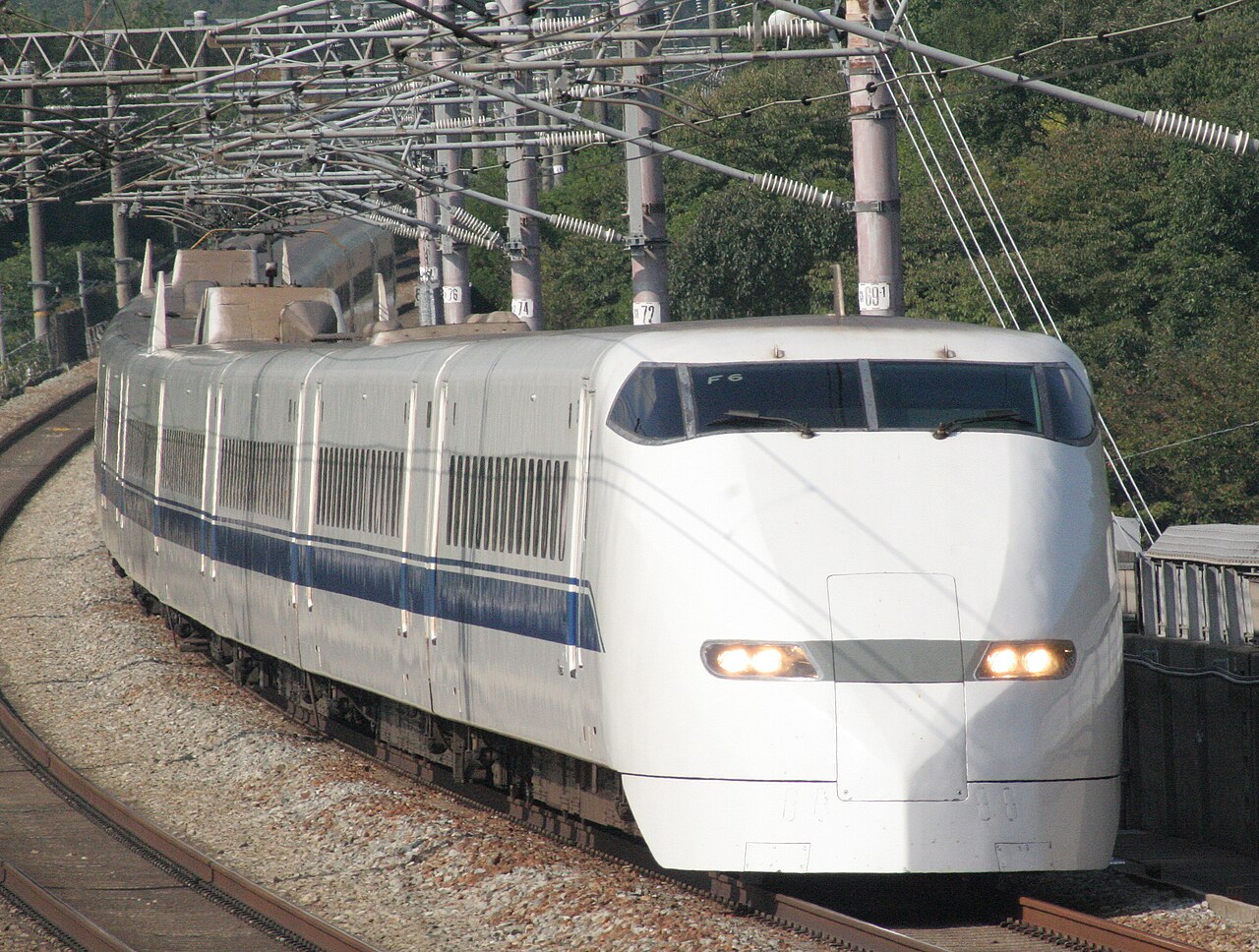
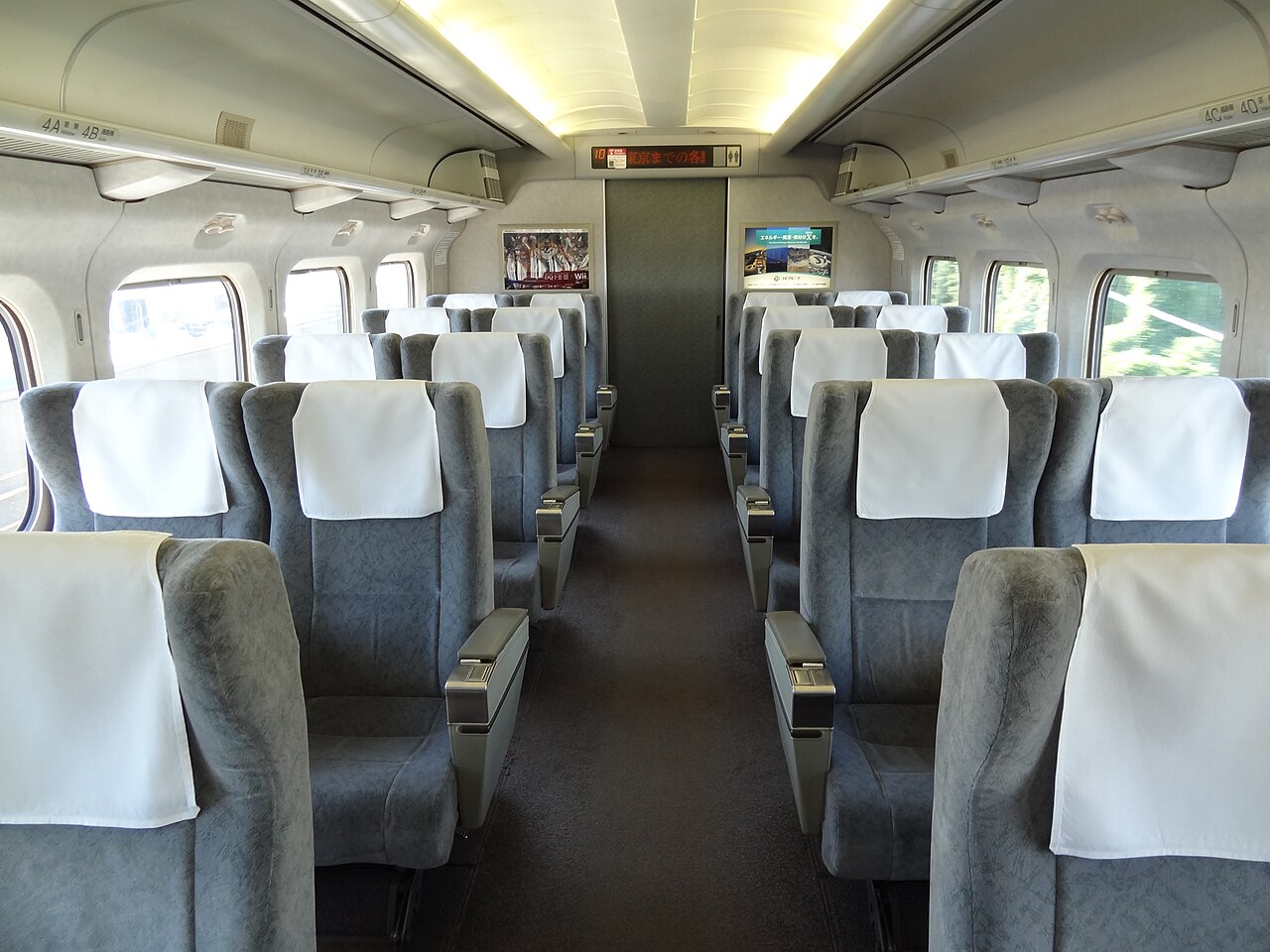
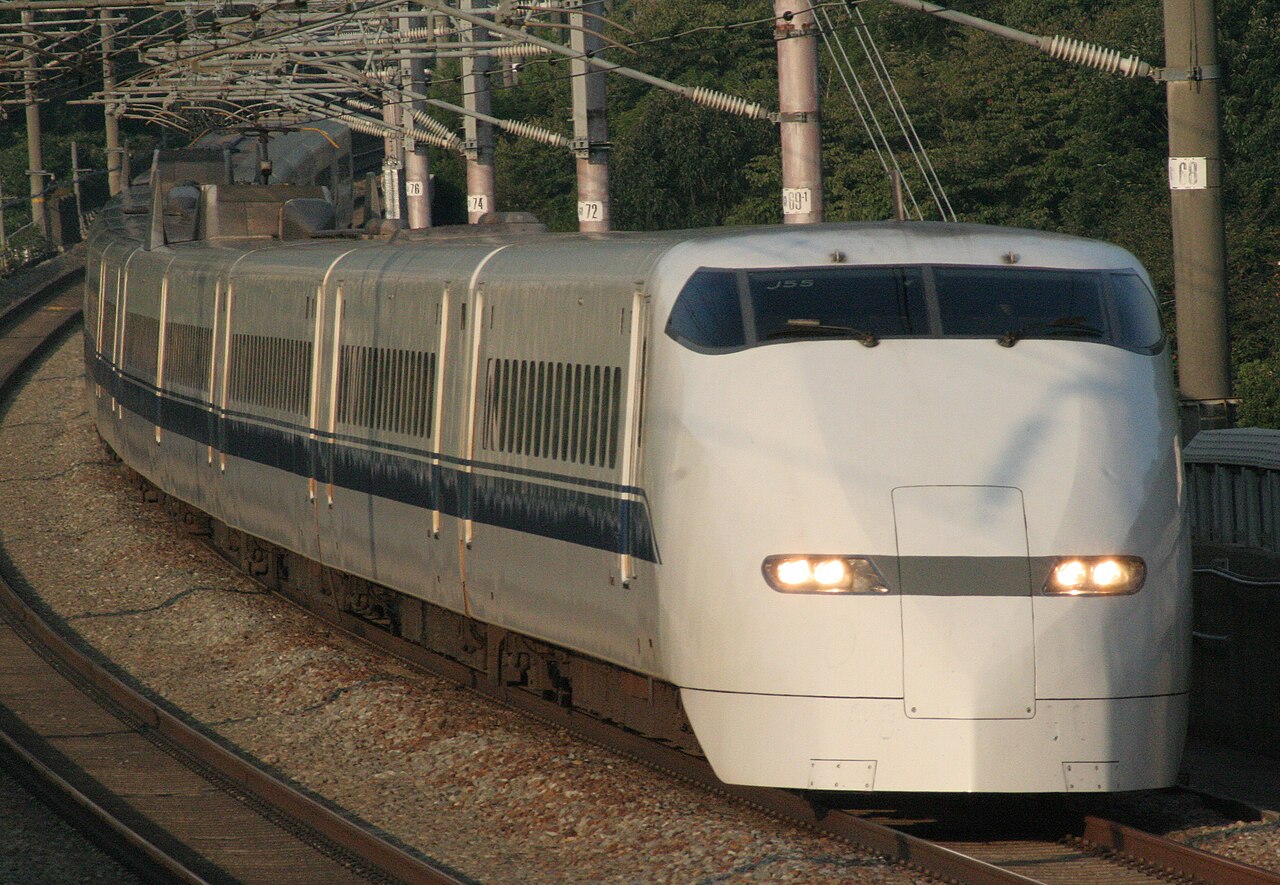
History
It was also notable as the first Shinkansen to use three-phase AC induction traction motors in place of direct-current units, controlled by a GTO-thyristor PWM-converter and VVVF-inverter system, and the first to be fitted with VVVF-controlled regenerative braking; lightweight bolsterless bogies further reduced weight. From March 1993 the type took over hourly through Nozomi services between Tokyo and Hakata, and JR West built nine of its own 300-3000 ("F") sets so that both operators ran the type across the Tokaido and San'yo lines.
As newer 500, 700 and N700 series equipment arrived, the 300 series was progressively demoted to slower Hikari and Kodama duties and removed from regular Nozomi work from December 2001. After a long career the type was completely withdrawn following its final runs in March 2012, ending around twenty years of service. The 300 series was awarded the Laurel Prize in 1993.
Timeline
- 1992Revenue service begins on 14 March, launching the premium Nozomi service on the Tokaido Shinkansen at a maximum of 270 km/h (first production set J2 delivered February 1992).
- 1993Hourly through Nozomi services begin between Tokyo and Hakata from the 18 March timetable revision; JR West introduces its 300-3000 ("F") sets; the type is awarded the Laurel Prize.
- 2001The 300 series is removed from regularly scheduled Nozomi services from December.
- 2012The last remaining sets are withdrawn following their final runs on 16 March, ending operation alongside the 100 series at the 17 March timetable revision.
Sources
Facts last verified 3 June 2026.
Gallery 4 photos
Every photo for this page — tap any image to view it full-size. All from Wikimedia Commons (credit under each).