History
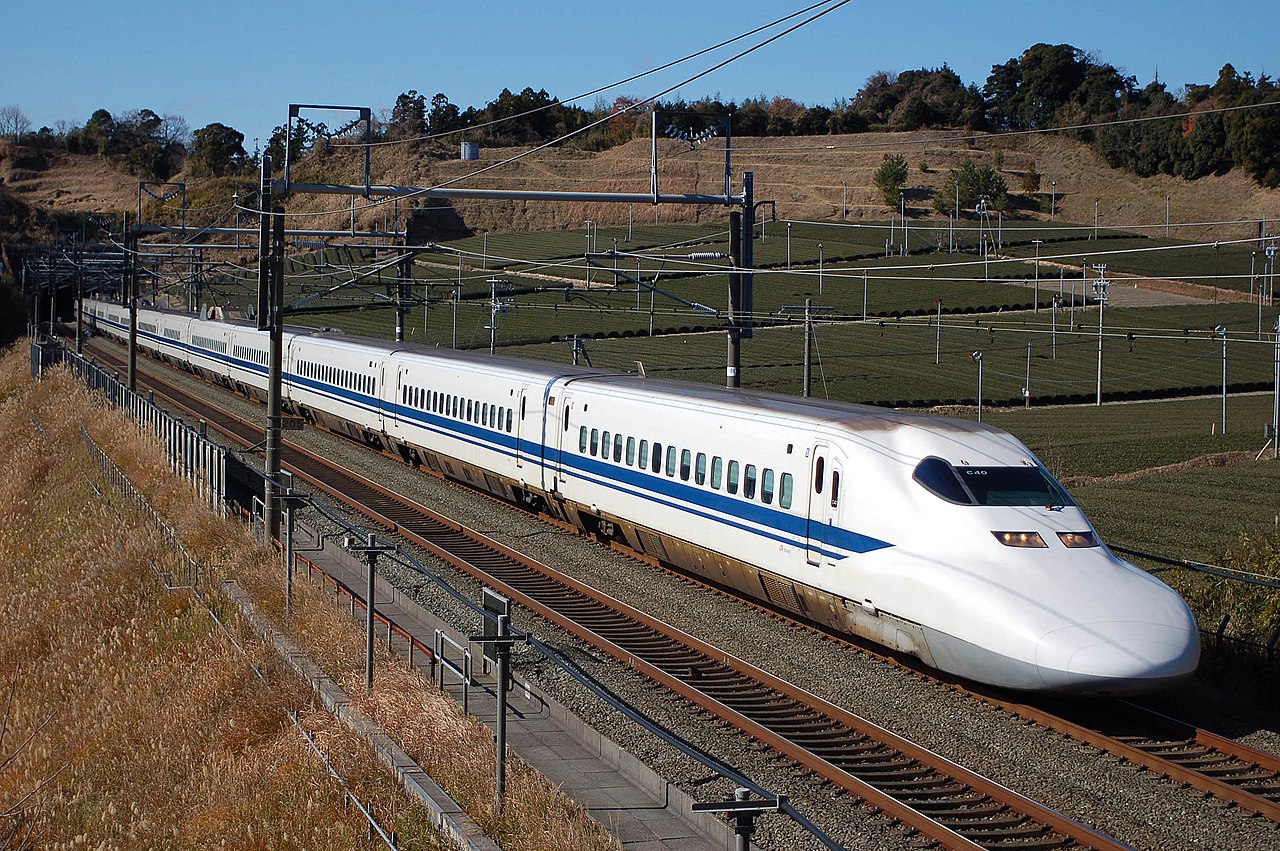
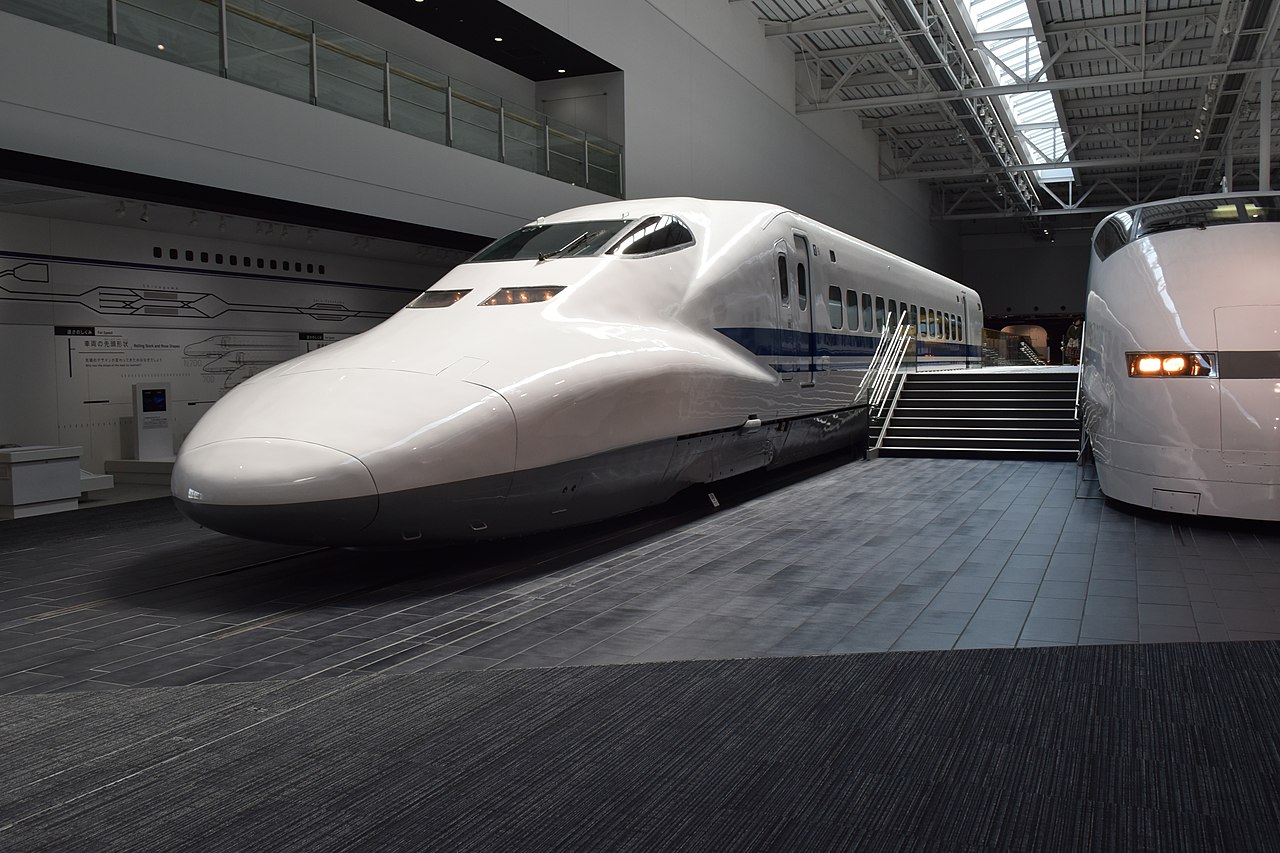
The train's most recognizable feature is its flat, broad nose, widely likened to a duck-bill. Its purpose was aerodynamic rather than cosmetic: to suppress the tunnel boom — the pressure wave a train pushes ahead of itself when it enters a tunnel at speed, which can produce a sharp report at the far portal. The 500 series had addressed the same problem with an extremely long 15-metre nose, but that solution cost interior space and seating capacity. For the 700 series the designers instead applied the aircraft "area rule," adding a full-width horizontal flare below the older wedge shape, treating it like an aircraft wing while narrowing the cab section to act like a vertical tail fin. This let them hold the nose to roughly 9.25 metres while still taming the tunnel pressure wave and reducing the side-to-side body sway that had been an unresolved complaint since the 300 series. The team that developed the styling, including the designer Tetsuo Fukuda, named the form the "aero-stream" shape; it is the resemblance to a duck-bill (kamonohashi in Japanese) that gave the train its enduring nickname.
Ride quality was the other headline goal. Following yaw dampers between vehicles, semi-active suspension on every car, improved air springs, and inter-car dampers were fitted specifically to address the ride-comfort complaints that had accumulated against the 300 series. The body was built from aluminium alloy using a double-skin construction with damping material, which kept the structure light and relatively quiet. The traction system used IGBT-based PWM converters and VVVF inverter control, a step up from the GTO-based equipment of the 300 and 500 series that reduced the magnetic whine those earlier trains were known for. The result, by the figures in the Japanese source, was a measurably more efficient train: energy consumption per passenger at 270 km/h was about 14.7 kWh, against 16.0 kWh for the 300 series and 17.5 kWh for the original 0 series.
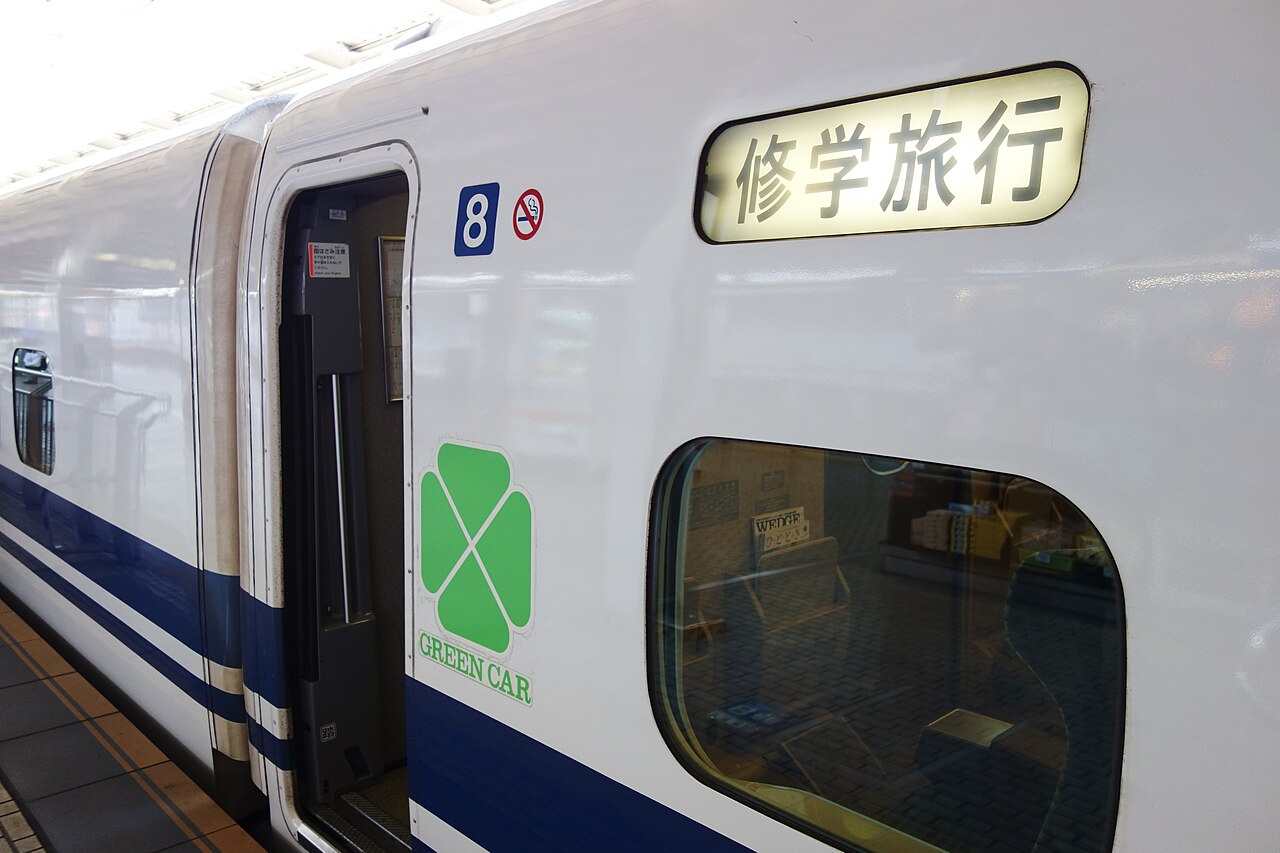
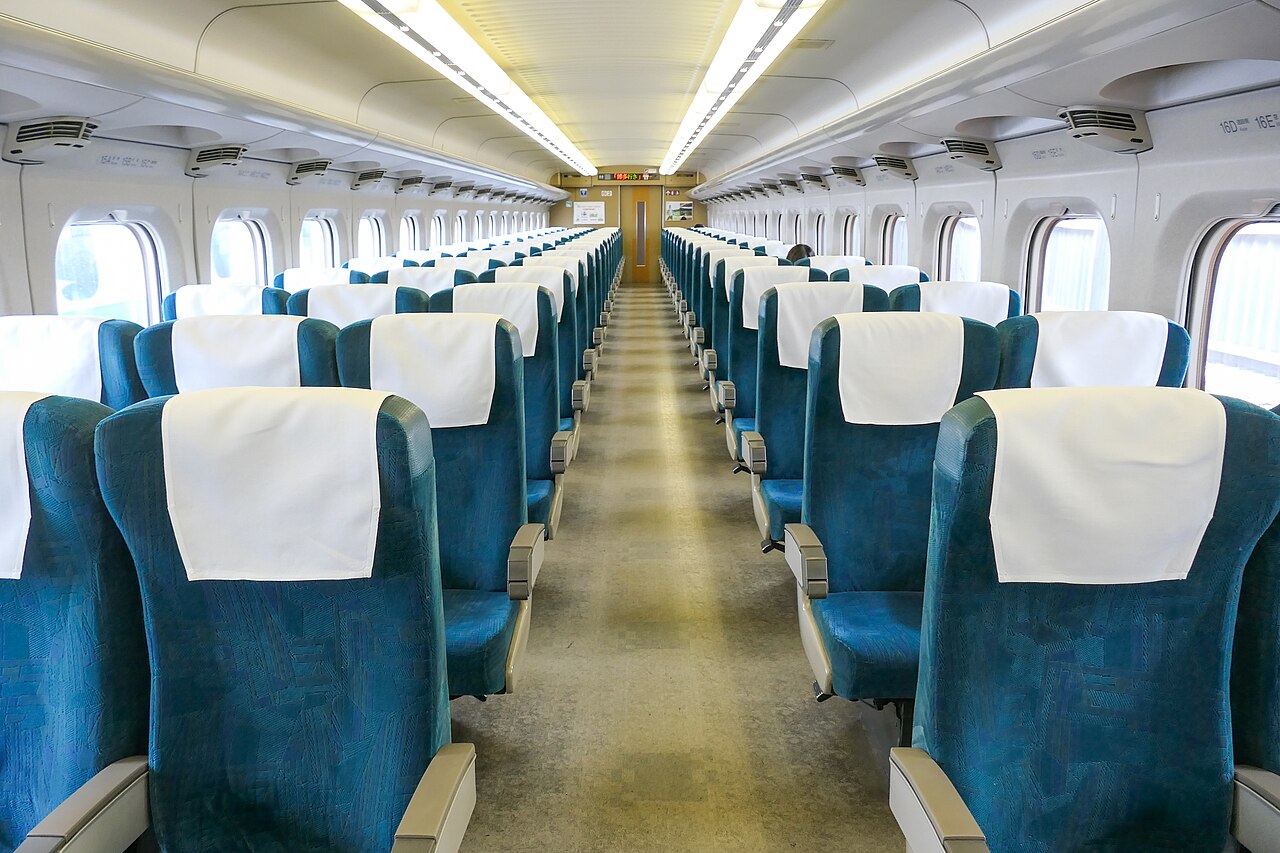
In service the 16-car sets wore the familiar white livery with blue stripes below the windows and worked Nozomi, Hikari, and Kodama duties on the Tokaido and San'yo lines. JR Central's fleet, the 700-0 "C" sets, was ordered to take over Tokyo-to-Hakata Nozomi services from the 300 series. Their interior layout broadly followed that of the 300 series, with three Green-class (first-class) vehicles, a standard-class seat pitch of 104 cm and a Green-class pitch of 116 cm; the central gangways were widened by 3 cm to 60 cm and ceilings raised by 65 mm to 2.2 metres, and the refreshment counters of the 300 and 500 series were dropped in favour of drink vending machines placed in cars 3, 7, 11, and 15. The initial JR Central order ran to 17 sets, with the first four ready for the introduction of three daily return Nozomi runs from March 1999; service was increased to five daily from July 1999 and expanded again that October, and 700 series stock reached Tokaido Hikari services from late 2000. Sets from C25, introduced from May 2001, added minor refinements such as power outlets at the car ends for laptop users and grab handles on the aisle seats, and a further batch of six sets (C55 to C60) was ordered in December 2003 to add capacity for services connected with the 2005 Aichi Expo. JR West's 16-car 700-3000 "B" sets, of which fifteen were delivered between June 2001 and January 2006, were introduced on through Hikari services running from Tokyo and, after the timetable change accompanying the opening of Shinagawa Station in October 2003 sharply increased Nozomi frequencies, were pressed into Nozomi work as well; they rode on the same bogies as JR West's 500 series and carried distinguishing details such as LED destination indicators and "JR 700" cab-side logos. A pre-series set, C0, had been delivered in October 1997 and run endurance trials mainly between Tokyo and Shin-Osaka — including a spell tested as an eight-car formation on the San'yo Shinkansen — before being rebuilt to full production standard and renumbered C1 in September 1999; it was officially withdrawn in January 2013.
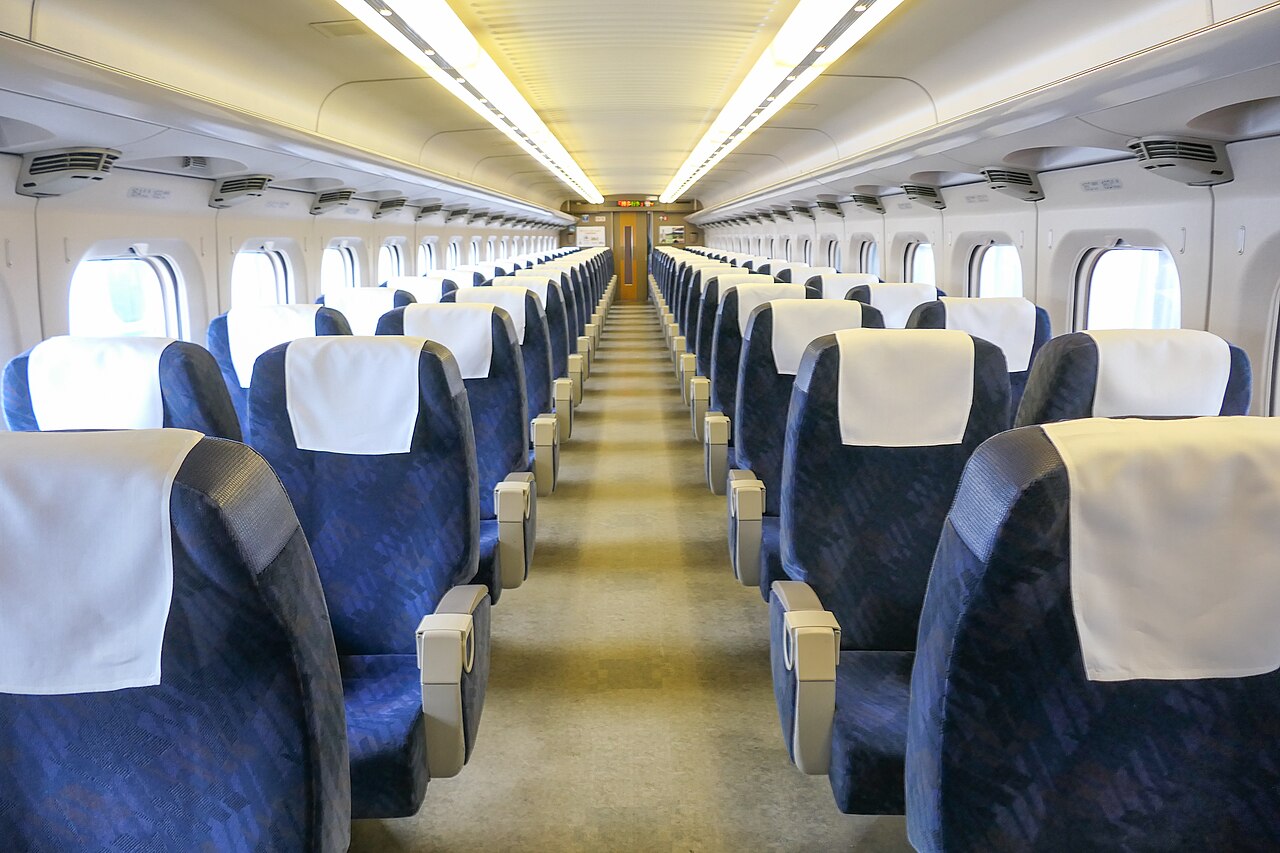
JR West also created a distinct San'yo variant. The eight-car 700-7000 "E" sets were introduced for new limited-stop Hikari Rail Star services between Shin-Osaka and Hakata from 11 March 2000, replacing the older 0 series "West Hikari" trains. Visually they stood apart from their JR Central siblings, carrying a variation of the 500 series livery in which the blue waistline band was replaced by a band of yellow, with "Rail Star" logos applied along the sides; sixteen of these sets were built. As single-class trains without Green-class accommodation, they offered roomier 2+2 reserved seating in cars 4 to 8 rather than the usual 2+3 arrangement. After Hikari services running solely on the San'yo Shinkansen were largely replaced by Sakura services from 2011, the Rail Star sets shifted mainly to Kodama duties between Shin-Osaka and Hakata, where they continue to run.
As N700-series deliveries built up, the 700 series was steadily pushed down the service hierarchy on the Tokaido. By the Japanese account, the C sets left regular Nozomi work at the March 2012 timetable revision, withdrew from scheduled Tokaido Hikari duties at the March 2017 revision, and from the March 2019 revision were reduced to just two-and-a-half daily Kodama round trips before their final removal. JR Central also refined the type in service: between October 2008 and June 2009 its fleet of sixty 700 series sets was modified to raise acceleration from the original 1.6 to 2.0 km/h/s on the Tokaido Shinkansen to give the timetable more flexibility. One set, C46, had earlier been run on test from late January 2003 fitted experimentally with streamlined bogie covers and flush diaphragm covers between the rear cars; those covers were removed before the set entered service, but the flush diaphragm idea was carried forward to the N700 series.
The 700 series was a numerically large fleet: 1,328 vehicles in 91 sets were built — 60 C sets, 15 B sets, and 16 E sets — and the JR Central plus JR West rosters together held that full 1,328-vehicle total each year from 2006 through 2011 before withdrawals began to bite. The Japanese source records the cost of a single 16-car set at about 4 billion yen (4,000 million yen), notably less than the roughly 5 billion yen of a contemporary 16-car 500 series set, which fit the type's brief of comfort and economy over outright speed.
Operating speed reflects a split between the two lines the type served, and this distinction matters for any single headline figure. On the San'yo Shinkansen the 700 series runs at a maximum revenue speed of 285 km/h, while on the Tokaido Shinkansen, with its older alignment between Tokyo and Shin-Osaka, it was restricted to 270 km/h; the design maximum, set by the automatic train control ceiling, was 300 km/h. The nose, notably, was optimized on the assumption of a 285 km/h ceiling, which is part of why the successor N700 series adopted a different "aero double-wing" form, extending the nose by a further 1.5 metres for higher-speed running.
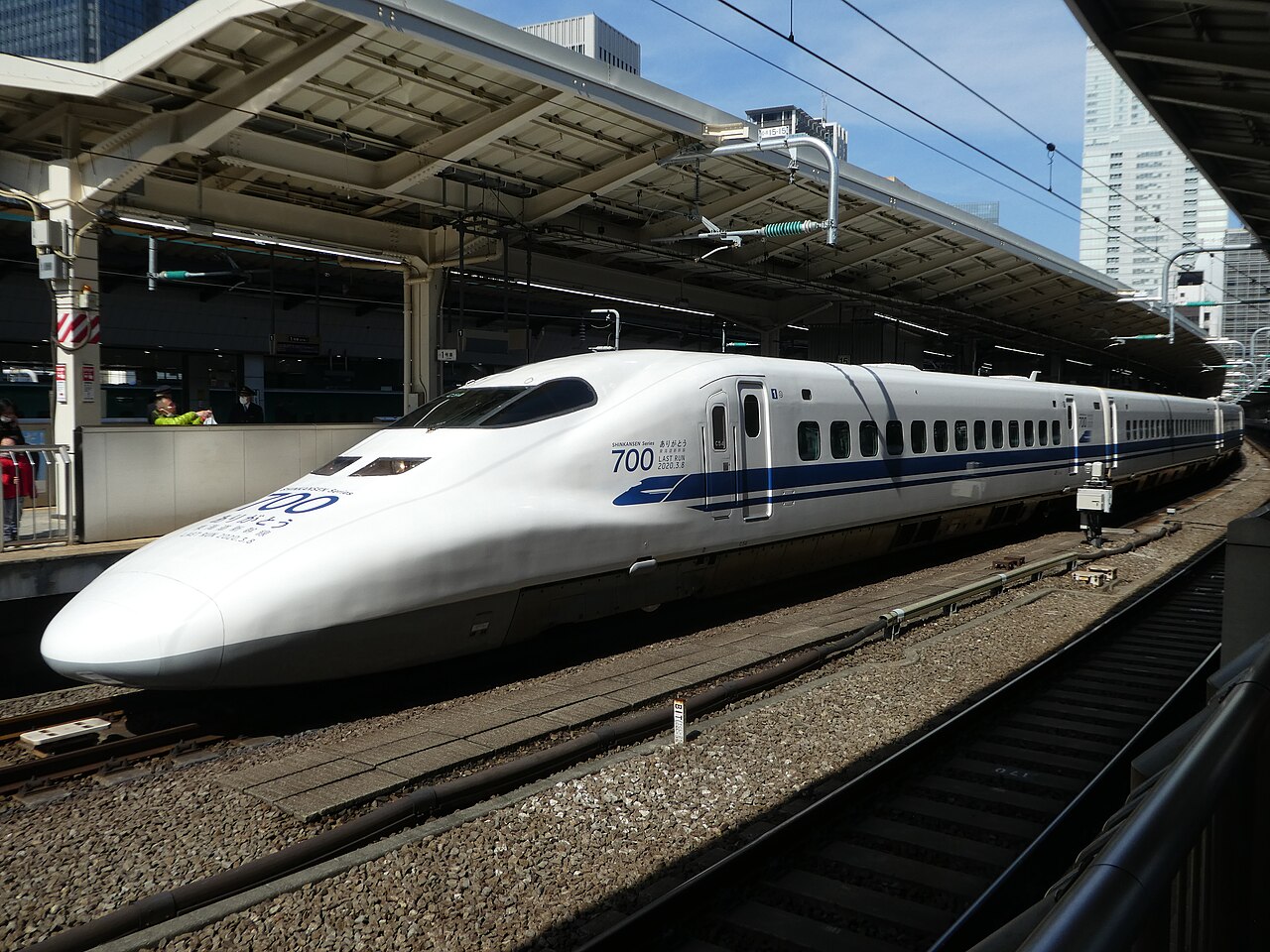
Withdrawal came in stages. JR Central announced that its Tokaido fleet would be unified on the N700A type, and the 700 series was removed from regularly scheduled Tokaido services from 1 December 2019, when the C sets ended their fixed-timetable duties. A commemorative final run, branded "Thank you Tokaido Shinkansen 700 series, Nozomi 315," had been scheduled for 8 March 2020, but it was cancelled because of the spread of COVID-19 in Japan; as a result the last 700 series Tokaido Shinkansen run instead took place on 1 March 2020. Withdrawals of individual sets had in fact begun much earlier, with the first C set (C4) scrapped in July 2011, and during fiscal 2011 eight of JR Central's C sets (C11 to C18) were transferred to JR West to replace its remaining 300 series fleet; the Japanese source notes that sets such as C11 and C12 were registered on JR West's books the day before they were struck from JR Central's, so they briefly belonged to both companies. Among the variants, the JR Central 700-0 C sets were retired from service on 28 February 2020, the JR West 700-3000 B sets ended fixed-timetable operation on 13 March 2020 with the final set withdrawn in 2021 (the B4 set had been retained as a wave-demand reserve before its scrapping), and the eight-car 700-7000 Rail Star sets remained in service.
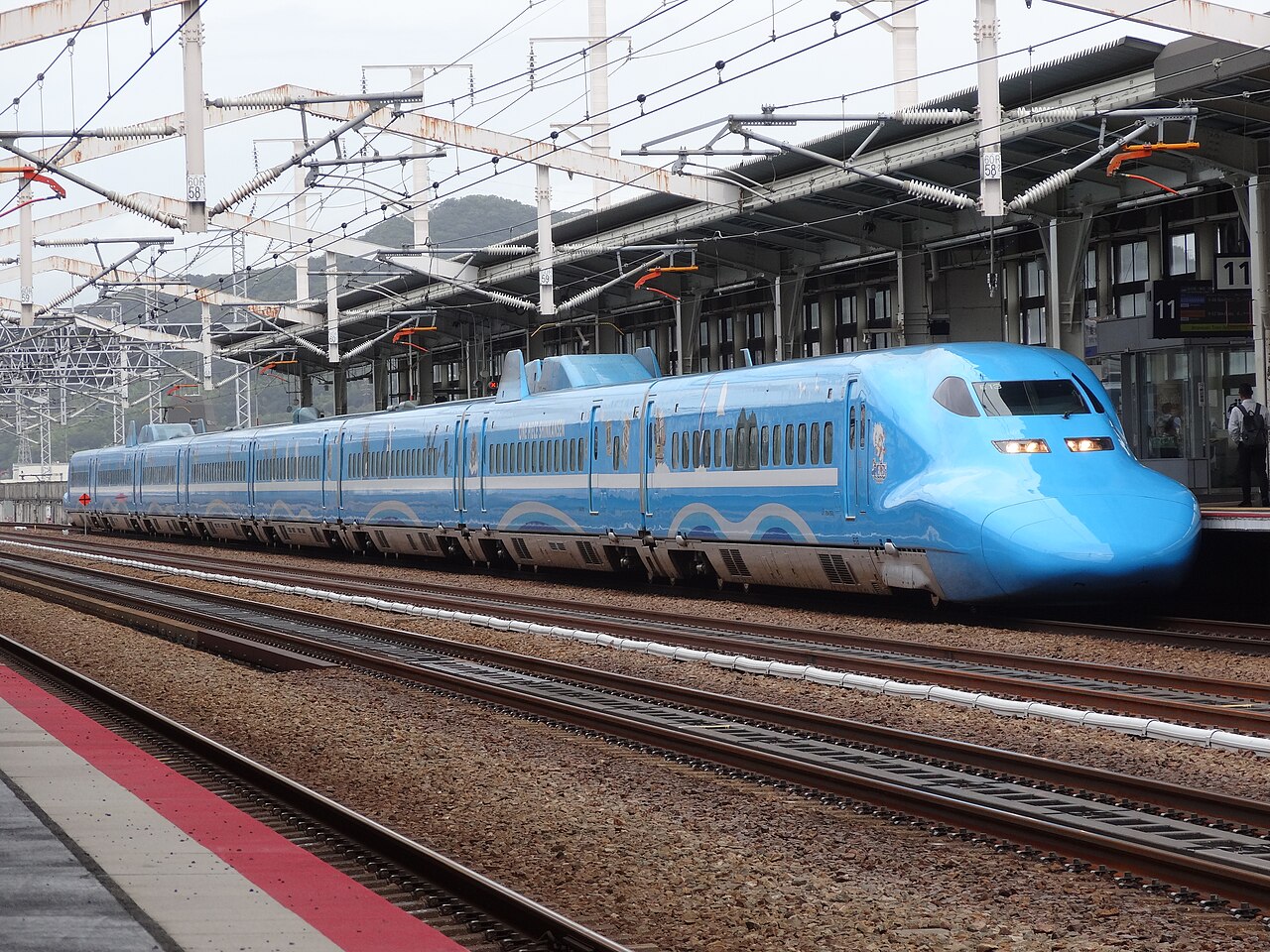
Beyond the Tokaido finale the type lives on. The eight-car Hikari Rail Star sets continue in San'yo service, primarily on Kodama runs, so the 700 series remains in revenue operation even though it has disappeared from the Tokaido. The design also seeded an unusually broad family: two Class 923 "Doctor Yellow" trains, used for track and overhead-wire diagnostic work on the Tokaido and San'yo lines, were based on the 700 series; the JR Kyushu 800 series and Taiwan High Speed Rail's 700T were directly developed from it; and the later N700 and N700S series descend from the same lineage. One vehicle has been preserved: car 723-9001, from the original prototype set C1 built in 1997 by Kawasaki Heavy Industries, has been displayed at the SCMaglev and Railway Park in Nagoya since January 2014. The type received the Japan Railfan Club's Laurel Prize in 2000. In a late flourish, JR West unveiled the first of three "One Piece Shinkansen" eight-car sets (set E13) on 9 April 2025, with operation scheduled to begin on 12 April 2025.
Timeline
- 1996Development announced; the type carries the working designation "N300" during the design phase.
- 1997Pre-series 16-car set C0 completed in autumn (delivered October); construction of the type runs 1997-2006.
- 1999Revenue service begins on 13 March; first JR Central C sets enter Tokaido Nozomi service, displacing the 300 series.
- 2000Eight-car Hikari Rail Star "E" sets (700-7000) enter San'yo service between Shin-Osaka and Hakata from 11 March; 700 series wins the Laurel Prize.
- 2001JR West's 16-car 700-3000 "B" sets enter service on through Hikari (and later Nozomi) duties.
- 2003After Shinagawa Station opens in October, increased Nozomi frequencies put 700 series sets onto additional Nozomi services.
- 2011First withdrawal: C set scrapped in July; eight JR Central C sets transferred to JR West to replace its 300 series fleet.
- 2019700 series removed from regularly scheduled Tokaido Shinkansen services from 1 December (C sets end fixed-timetable operation).
- 2020Final 700 series Tokaido Shinkansen run takes place 1 March (commemorative 8 March run cancelled due to COVID-19); JR West B sets end fixed-timetable operation 13 March; type continues on San'yo Kodama.
- 2025JR West unveils the first "One Piece Shinkansen" eight-car set on 9 April; operation scheduled from 12 April.
Sources
Facts last verified 3 June 2026.
Gallery 5 photos
Every photo for this page — tap any image to view it full-size. All from Wikimedia Commons (credit under each).