歴史
一方、青森県内では東周りルートと西周りルートをめぐる誘致合戦が繰り広げられ、最終的に東周りルートが採用された。1972年7月3日に基本計画が東京都〜青森市に改正され、1973年11月には盛岡市〜青森市間を含む5路線の整備計画が決定された(いわゆる「整備新幹線」)。
大宮駅以南の区間では、沿線住民(埼玉県・東京都北部)による騒音・振動への反対運動が激化し、工事の一時中断を余儀なくされた。交渉の結果、埼京線の整備、ニューシャトル(新交通システム)の新設、大宮付近での速度制限、当初計画になかった上野駅停車などが条件として盛り込まれた。
1982年(昭和57年)6月23日、大宮駅〜盛岡駅間(495.2 km)が開業し、200系電車による「やまびこ」(速達)と「あおば」(各駅停車)の運転が始まった。最高速度は210 km/h。大宮〜上野間は在来線特急「新幹線リレー号」で補完された。1985年(昭和60年)3月14日に上野駅〜大宮駅間(27.7 km)が開業し、最高速度が240 km/hに引き上げられた。1987年(昭和62年)4月1日の国鉄分割民営化により、JR東日本が東北新幹線の運営を引き継いだ。1991年(平成3年)6月20日には東京駅〜上野駅間(3.6 km)が開業し、全国の新幹線ネットワークと直結した。
1992年(平成4年)7月1日、山形新幹線(福島〜山形)が開業し、400系電車による「つばさ」の運転が開始された。在来線(奥羽本線)を標準軌に改軌した「ミニ新幹線」方式を採用し、在来線区間の最高速度は130 km/h。1997年(平成9年)3月22日には秋田新幹線(盛岡〜秋田)が開業し、E3系電車による「こまち」が運転を開始。同時にE2系が「やまびこ」に導入され、東北新幹線の最高速度が275 km/hに引き上げられた。
2002年(平成14年)12月1日、盛岡駅〜八戸駅間(96.6 km)が開業し、「はやて」の運転が始まった。DS-ATCも同時に導入された。2010年(平成22年)12月4日、八戸駅〜新青森駅間(81.8 km)が開業し、全線674.9 kmが開通した。整備計画決定から約39年をかけての全線開業であった。
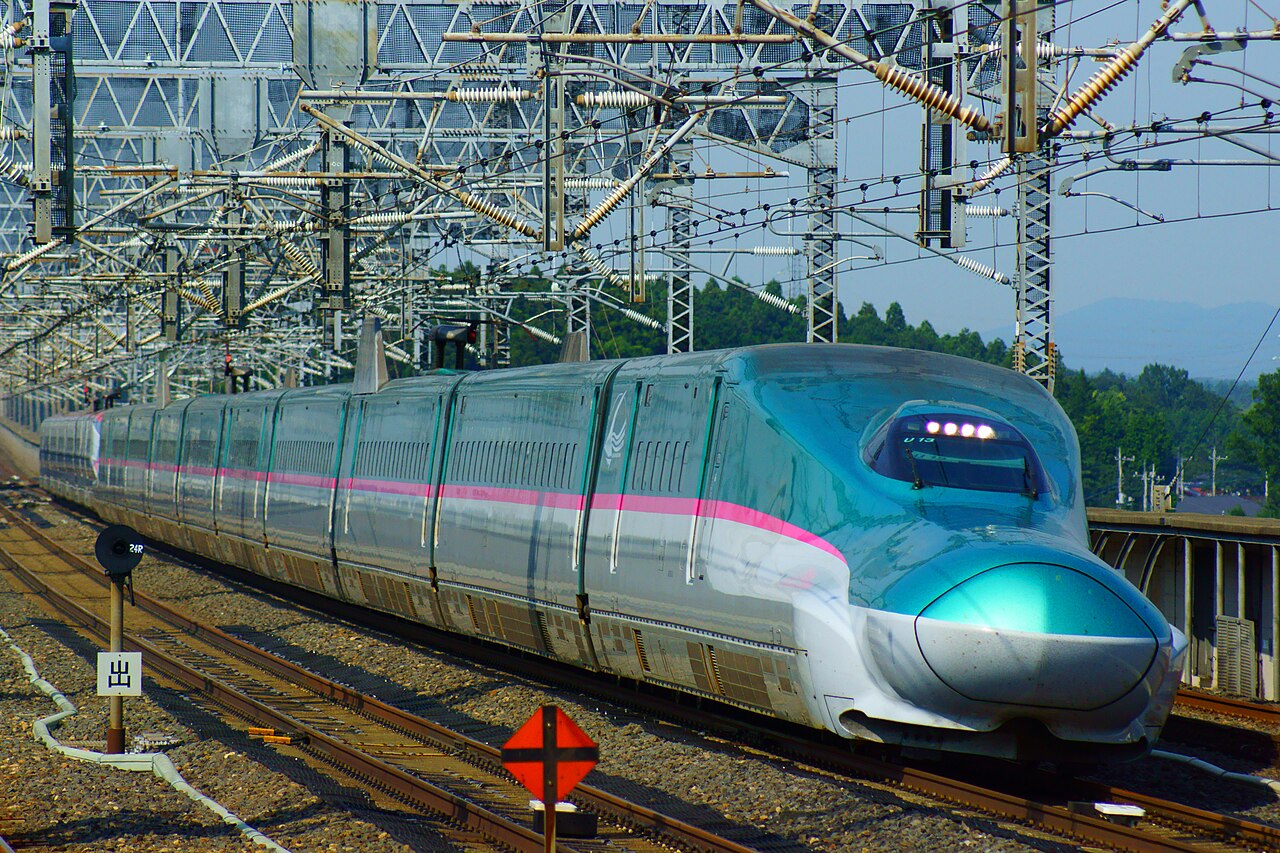
2011年(平成23年)3月5日、E5系電車を使用した「はやぶさ」が運転を開始し、最高速度が300 km/hに引き上げられた。同年3月11日の東北地方太平洋沖地震(M9.0)により全線で運転を見合わせ、大宮〜岩手二戸間だけで約1,100か所の補修が必要とされた。2011年9月23日に全線で通常速度運転を再開。2013年(平成25年)3月16日には宇都宮駅〜盛岡駅間で最高速度320 km/hの営業運転を開始し、国内最速となった。同日、E6系「スーパーこまち」も運転を開始した。
2016年(平成28年)3月26日、北海道新幹線(新青森〜新函館北斗、148.8 km)が開業。H5系(JR北海道)が投入され、「はやぶさ」の直通運転が実現した。2024年(令和6年)3月16日にはE8系が山形新幹線「つばさ」に投入され、東北新幹線区間での最高速度が300 km/hに向上した。
日本最長の新幹線として、東北新幹線は東北地方の経済・社会発展に大きく貢献している。宇都宮〜盛岡間での320 km/h営業運転は国内最速であり、東京〜新青森間の最短所要時間は2時間58分(2021年時点)を誇る。全線の約35%がトンネルで構成され、八甲田トンネル(26.5 km)はその最長例である。
年表
- 1969Japanese cabinet approves 'New Comprehensive National Development Plan' (新全国総合開発計画), explicitly including a Tōhoku Shinkansen-equivalent trunk line.
- 1970Diet of Japan passes the Nationwide Shinkansen Railway Development Act, establishing the legal framework for new shinkansen route planning.
- 1971April 1: Tōhoku Shinkansen development plan finalized (Tokyo–Morioka), maximum design speed 260 km/h, JNR as construction authority. November 1971: construction commences.
- 1973November: Government approves development plan for the Morioka–Aomori extension and four other 'Seibi Shinkansen' routes.
- 1982June 23: Tōhoku Shinkansen opens between Ōmiya and Morioka (495.2 km) using 200 Series Shinkansen at 210 km/h. Yamabiko and Aoba services begin. Shinkansen Relay service (Ueno–Ōmiya conventional rail) begins same day. November 15: Jōetsu Shinkansen opens its initial section.
- 1985March 14: Ueno–Ōmiya extension (27.7 km) opens, maximum speed raised to 240 km/h. Shinkansen Relay service ends March 13.
- 1987April 1: JNR privatized and dissolved; East Japan Railway Company (JR East) assumes operation of the Tōhoku Shinkansen.
- 1991June 20: Tokyo–Ueno underground extension (3.6 km) opens, completing the link into Tokyo Station and connecting with the Tōkaidō Shinkansen.
- 1992July 1: Yamagata Shinkansen (Fukushima–Yamagata, mini-shinkansen) opens with 400 Series on Tsubasa services, first mini-shinkansen branch off the Tōhoku main line.
- 1994July: E1 Series ('Max' double-deck trains) enters service on Yamabiko/Aoba services.
- 1997March 22: Akita Shinkansen (Morioka–Akita, mini-shinkansen) opens; E3 Series introduced on Komachi services. E2 Series introduced on Yamabiko services. Maximum operating speed raised to 275 km/h.
- 1997December: E4 Series ('Max' double-deck trains) enters service on Yamabiko/Nasuno services.
- 1999December 4: Yamagata Shinkansen extended from Yamagata to Shinjō.
- 2000Iwate-Ichinohe Tunnel (25.8 km) completed — briefly the world's longest land railway tunnel.
- 2002December 1: Morioka–Hachinohe extension (96.6 km) opens; Hayate service introduced; DS-ATC signalling adopted.
- 2005Hakkōda Tunnel (26.5 km) on the Hachinohe–Shin-Aomori extension completed, surpassing Iwate-Ichinohe as world's longest land railway tunnel.
- 2008December 20: E3-2000 series enters service on Yamagata Shinkansen Tsubasa services, beginning phased replacement of 400 series.
- 2010April 18: 400 Series fully retired from Yamagata Shinkansen Tsubasa services.
- 2010December 4: Hachinohe–Shin-Aomori extension (81.8 km) opens, completing the full 674.9 km Tokyo–Shin-Aomori route after 39 years from authorization.
- 2011March 5: Hayabusa service launches Tokyo–Shin-Aomori using new E5 Series at 300 km/h.
- 2011March 11: 2011 Tōhoku earthquake and tsunami suspends all services; ~1,100 repairs required Ōmiya–Iwate-Numakunai. Speeds temporarily capped at 275 km/h after phased reopening (full service April 30; full speed September 23, 2011).
- 2011November: 200 Series retired from regular Tōhoku Shinkansen revenue service (final public run April 14, 2013).
- 2012September: E4 Series retired from Tōhoku Shinkansen services.
- 2013March 16: Maximum speed raised to 320 km/h (Utsunomiya–Morioka), the fastest commercial rail speed in Japan. E6 Series (Super Komachi) enters service on Akita Shinkansen at 300 km/h on Tōhoku main section.
- 2013April 14: Final public run of 200 Series (set K47), completing the transition to modern rolling stock.
- 2014March 15: All Komachi services transition fully to E6 Series; E6 now operates at 320 km/h on Tōhoku Shinkansen.
- 2016March 26: Hokkaido Shinkansen (Shin-Aomori–Shin-Hakodate-Hokuto, 148.8 km) opens via Seikan Tunnel; H5 Series enters service under JR Hokkaido; Hayabusa services extended through.
- 2021February 13: Magnitude 7.1 Fukushima earthquake damages infrastructure between Shin-Shirakawa and Furukawa; Nasushiobara–Morioka suspended. Full restoration achieved March 26, 2021.
- 2024March 16: E8 Series enters service on Yamagata Shinkansen Tsubasa services, capable of 300 km/h on Tōhoku main line (up from E3's 275 km/h).
- 2024September 19: First-ever mid-journey uncoupling of a coupled Hayabusa/Komachi formation (between Furukawa and Sendai) in Shinkansen history.
- 2025March 6: Second uncoupling incident (Ueno–Ōmiya); JR East temporarily suspends coupled-formation operations.
- 2026March: JR East launches first freight-only Shinkansen service in history, operating a modified seven-car E3 set once daily (weekdays) between Tokyo and Morioka.
出典
事実確認日:2026年6月3日
ギャラリー 2枚
このページの全写真 ― 画像をタップすると原寸大で表示します。すべてウィキメディア・コモンズより(各写真の下にクレジット)。