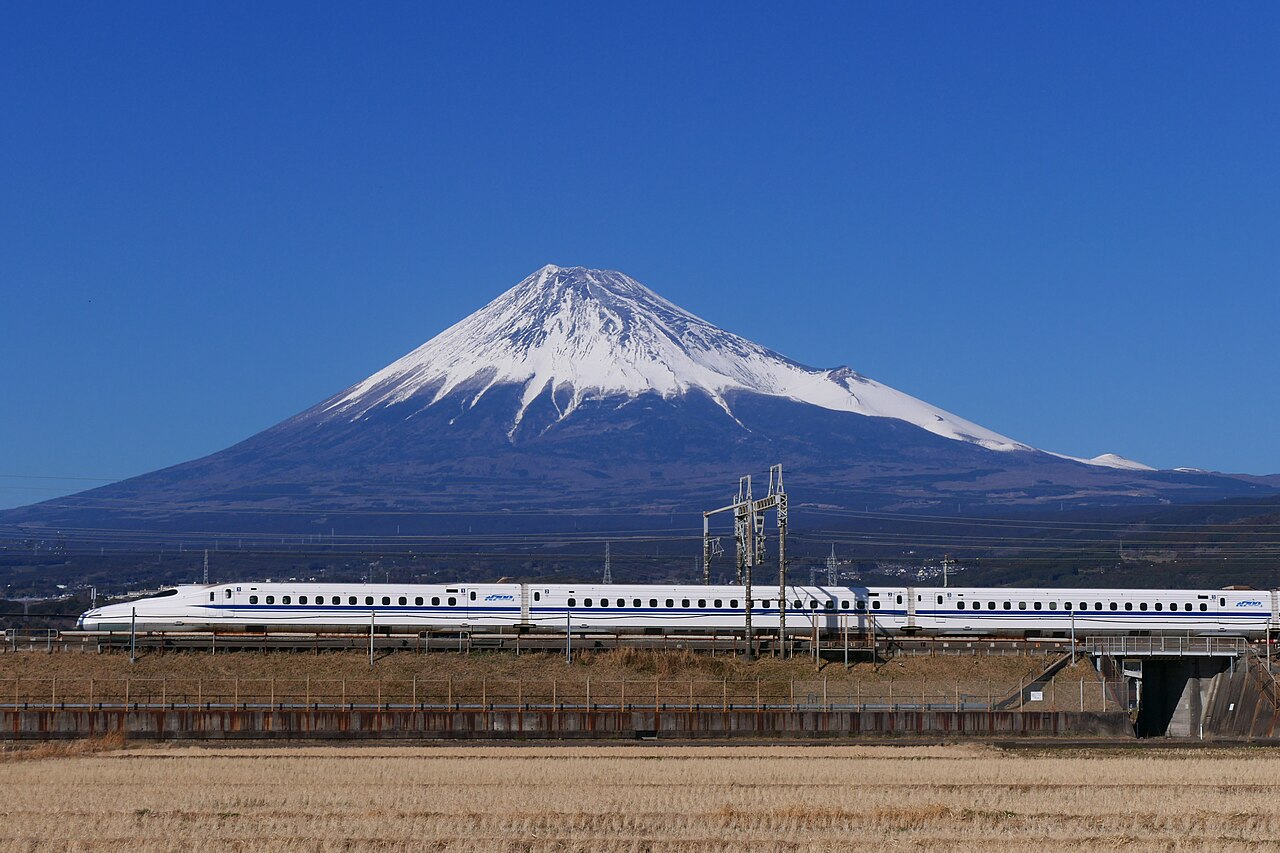
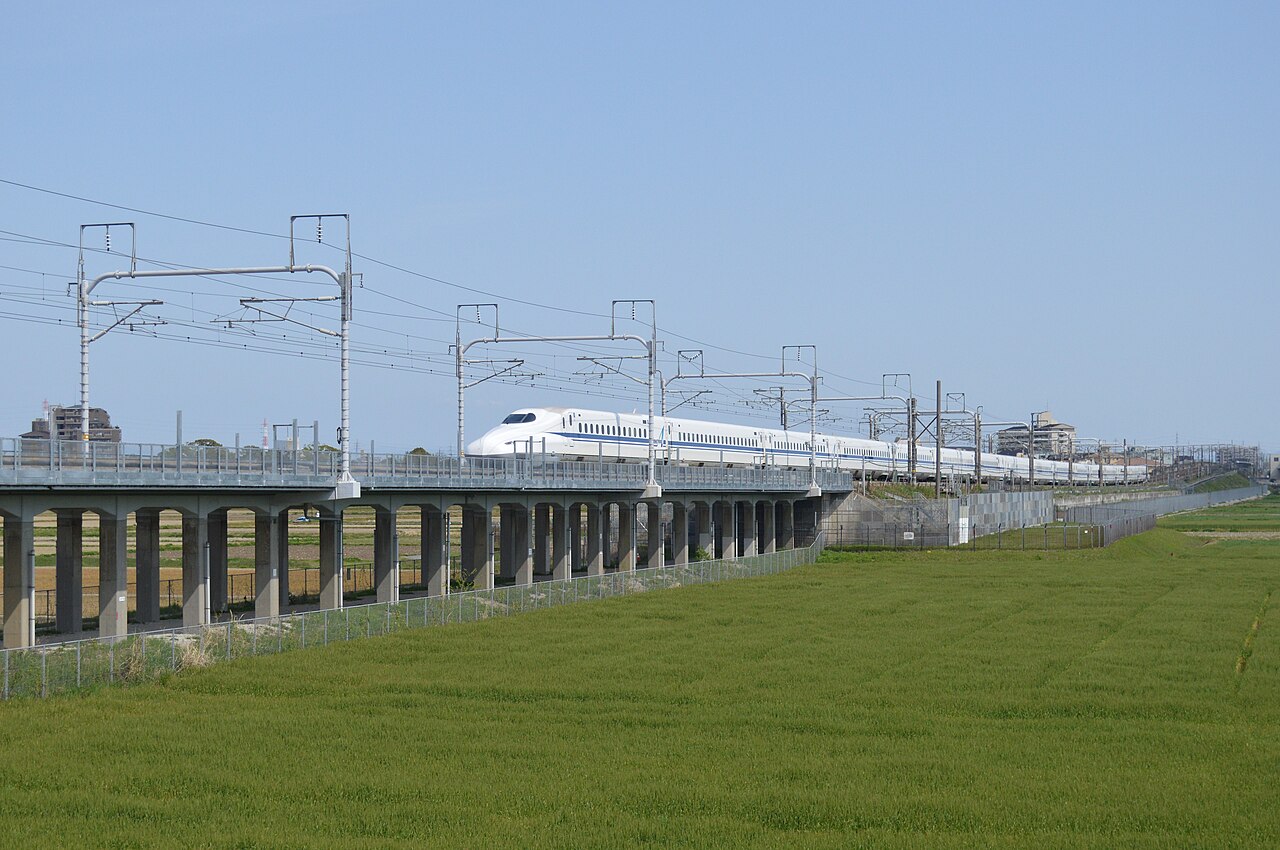
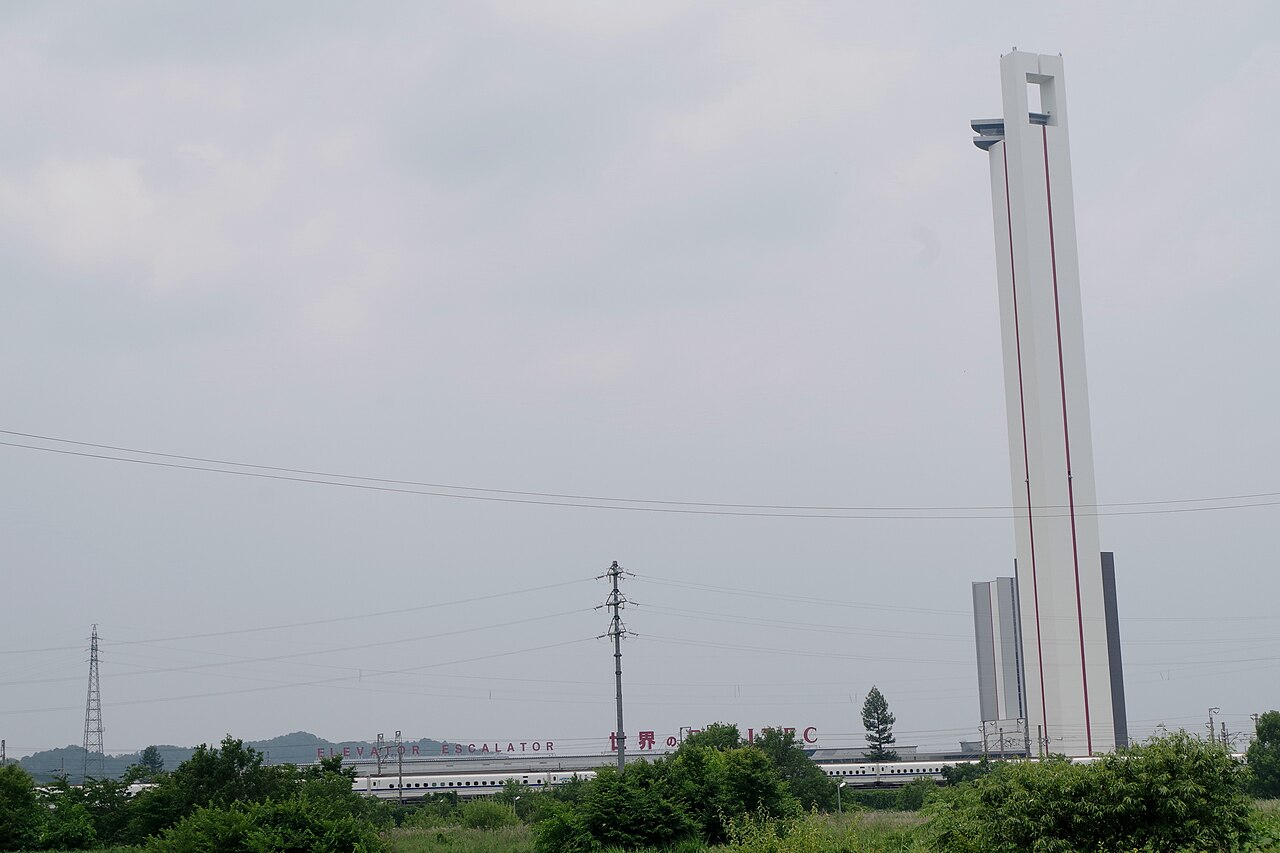
歴史
「弾丸列車」と呼ばれた高速鉄道構想は1930年代末の政府計画に始まるが、戦争により実現しなかった。戦後の高度経済成長期には東海道本線の輸送力が需要の約2倍にまで逼迫し、新線建設が急務となった。1958年12月に国会で建設計画が承認され、1959年4月20日に着工。十河信二・国鉄総裁と島秀雄・技師長が計画を主導したが、工費の大幅超過により両名は開業前に辞任した。建設費の不足を補うため1959年に世界銀行から8,000万ドルの融資を受け(総事業費の約15%)、1981年に完済した。
1964年10月1日、東京オリンピック開幕9日前に開業。「ひかり1号」が東京発、「ひかり2号」が新大阪発として同時に出発した。軌道安定のため当初は最高160キロに制限されたが、1965年11月のダイヤ改正で210キロに引き上げられ、東京〜大阪間は「ひかり」で3時間10分となった。
車両は0系(1964年導入、1999年に東海道から引退)、100系(1985年導入、二階建て車を初採用)、300系(1992年導入、「のぞみ」を新設し270キロ運転)、700系(1999年導入)、N700系(2007年導入、車体傾斜を採用)と進化した。2015年3月のダイヤ改正で最高速度が285キロに引き上げられ、2020年7月1日にN700S系が営業運転を開始した。
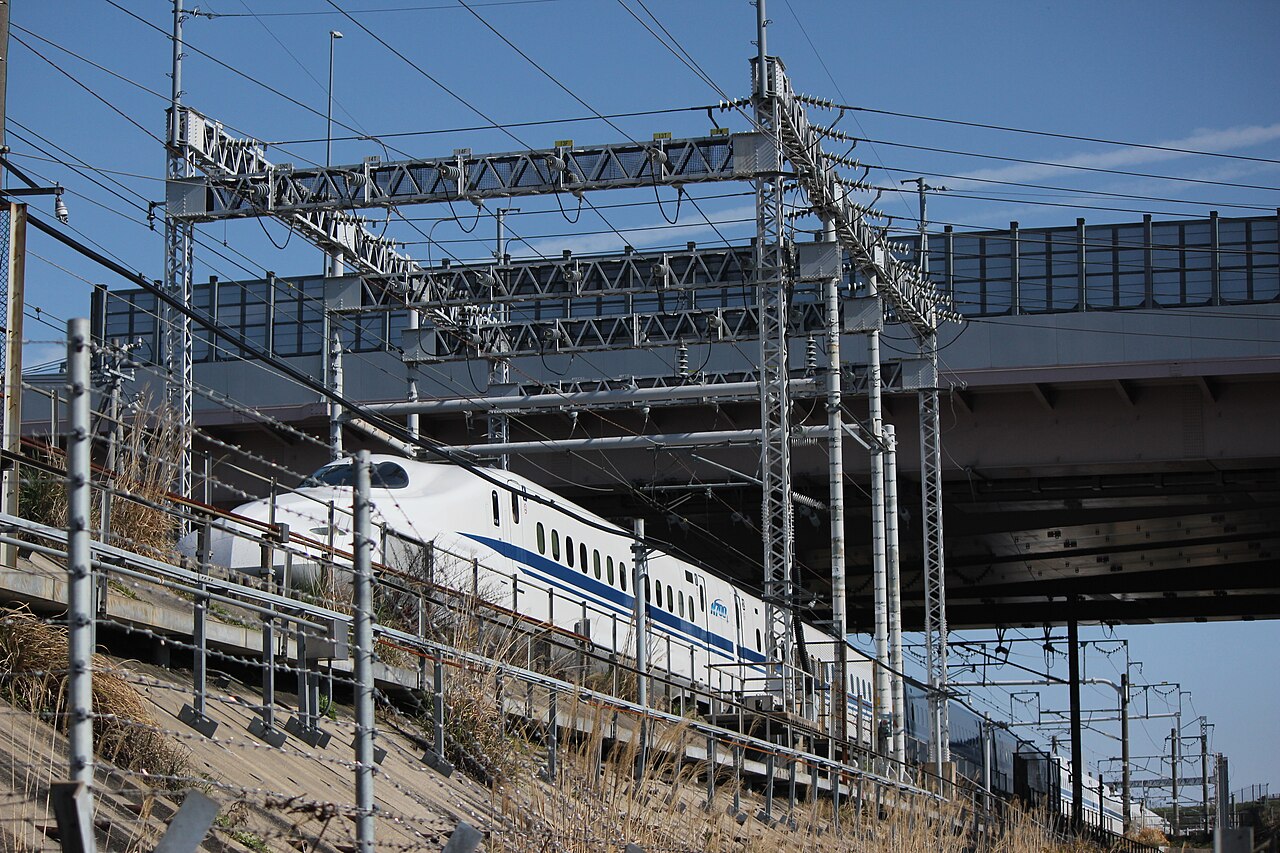
累計旅客数は1976年に10億人を突破。1987年4月1日の国鉄分割民営化によりJR東海が運営を継承した。2023年度の年間旅客数は約1億5,800万人、1日あたり約43.2万人、年間収入は約1兆2,479億円にのぼる。ピーク時には片道1時間あたり最大17本(のぞみ13・ひかり2・こだま2)が運行される、世界でも有数の高密度路線である。
年表
- 1958December: the National Diet approves the Tōkaidō Shinkansen project, allocating ¥194.8 billion of the ¥300 billion estimated cost.
- 195920 April: construction begins. A World Bank loan of US$80 million (of $200M requested) is secured.
- 19641 October: the line opens, nine days before the Tokyo Olympics. Hikari 1 (Tokyo) and Hikari 2 (Shin-Osaka) depart simultaneously. Speed capped at 160 km/h; Hikari 4h / Kodama 5h. 0 series in service.
- 1965November: timetables revised to 210 km/h; Hikari Tokyo–Osaka 3h10m, Kodama 4h.
- 1976Cumulative ridership reaches 1 billion passengers.
- 1981The World Bank loan is fully repaid.
- 19851 October: 100 series introduced, with the first Shinkansen double-deck cars.
- 19871 April: JNR privatised; the Tōkaidō Shinkansen transfers to JR Central.
- 1992March: 300 series introduced; the Nozomi super-express launches at 270 km/h, cutting Tokyo–Osaka to 2h30m.
- 1997November: 500 series (JR West) introduced; 300 km/h on the San'yō, limited to 270 km/h on the Tōkaidō.
- 19990 series withdrawn from Tōkaidō service on 18 September after 35 years. 700 series introduced in July.
- 2000Designated a joint Historic Mechanical Engineering Landmark and IEEE Milestone.
- 2003100 series withdrawn (September). Shinagawa Station opens (October), enabling Nozomi timetable expansion.
- 20071 July: N700 series introduced, with the first active body-tilting on the Tōkaidō.
- 2010500 series withdrawn from Tōkaidō service (February); continues on the San'yō Shinkansen.
- 2012300 series fully retired (16 March).
- 20138 February: dedicated N700A new-build sets enter service.
- 201514 March: maximum operating speed raised to 285 km/h, the current ceiling.
- 2020700 series runs its final scheduled Tōkaidō service (1 March). N700S introduced (1 July).
- 2023FY2023 ridership ~158 million / ~432,000 daily; annual revenue ~¥1.2479 trillion; single-day record of 471 trains on 10 August.
出典
事実確認日:2026年6月3日
ギャラリー 3枚
このページの全写真 ― 画像をタップすると原寸大で表示します。すべてウィキメディア・コモンズより(各写真の下にクレジット)。